Optical Chemical Structure Recognition
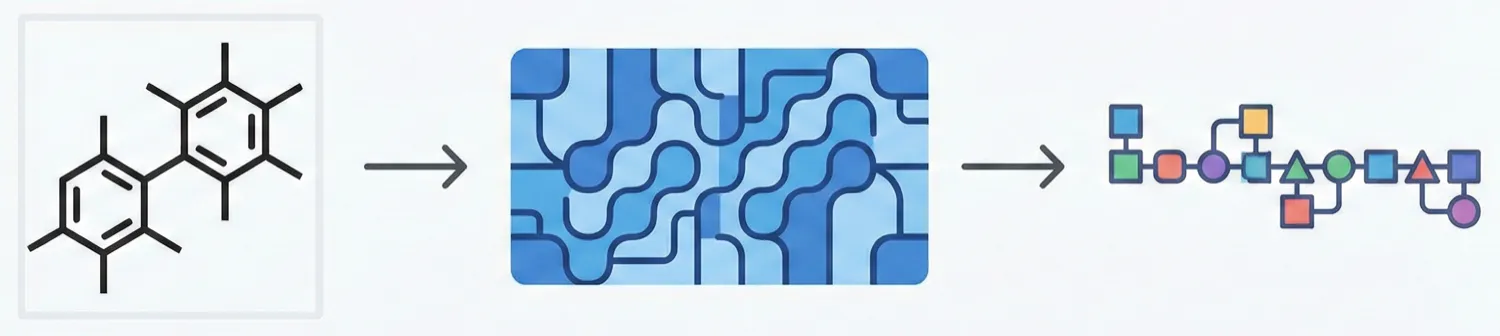
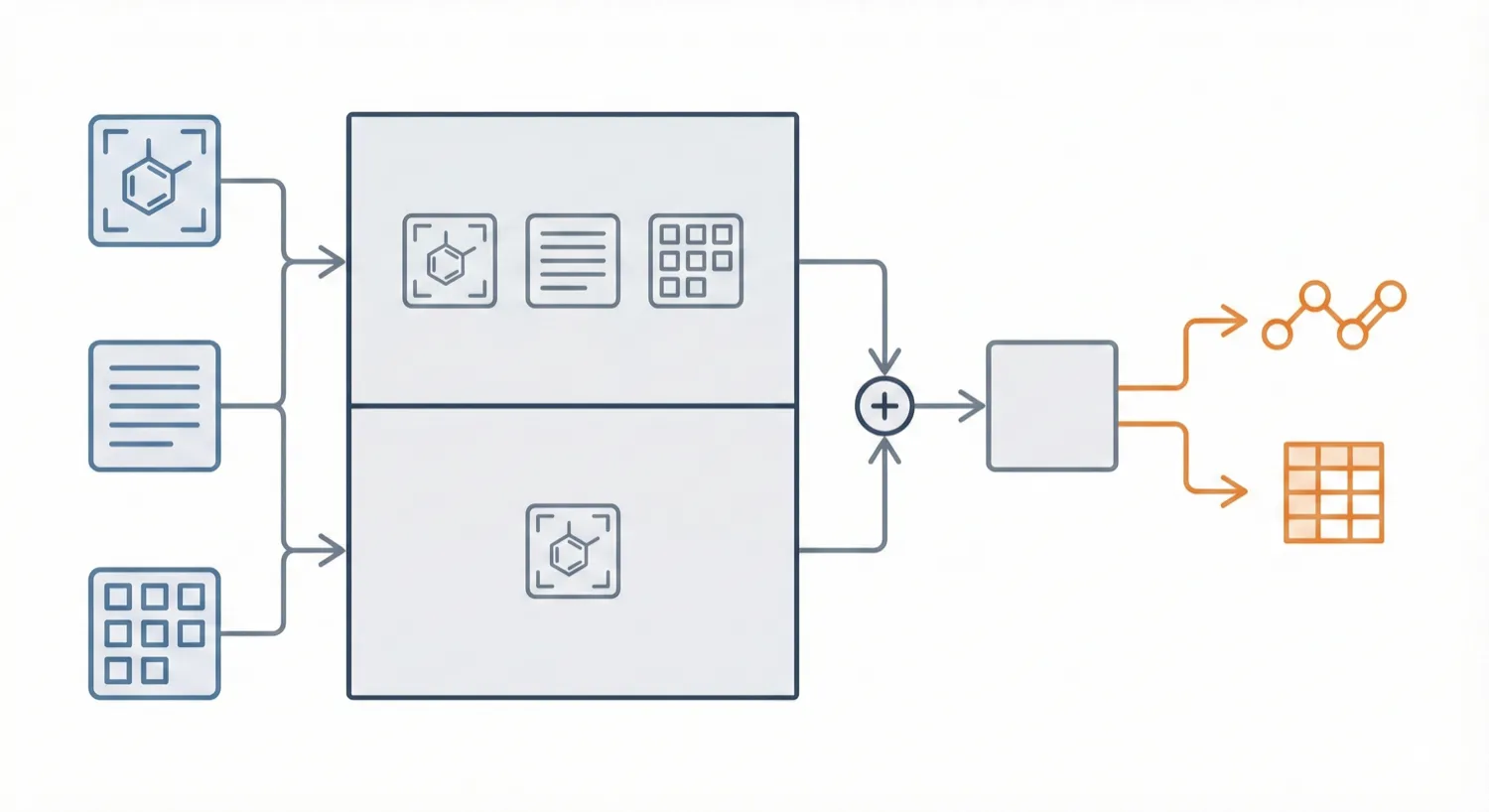
Architecture diagram of the MarkushGrapher dual-encoder system combining VTL and OCSR encoders for Markush structure recognition.

MarkushGrapher: Multi-modal Markush Structure Recognition

This paper introduces a multi-modal approach for extracting chemical Markush structures from patents, combining a Vision-Text-Layout encoder with a specialized chemical vision encoder. It addresses the lack of training data with a synthetic generation pipeline and introduces M2S, a new real-world benchmark.

Optical Chemical Structure Recognition
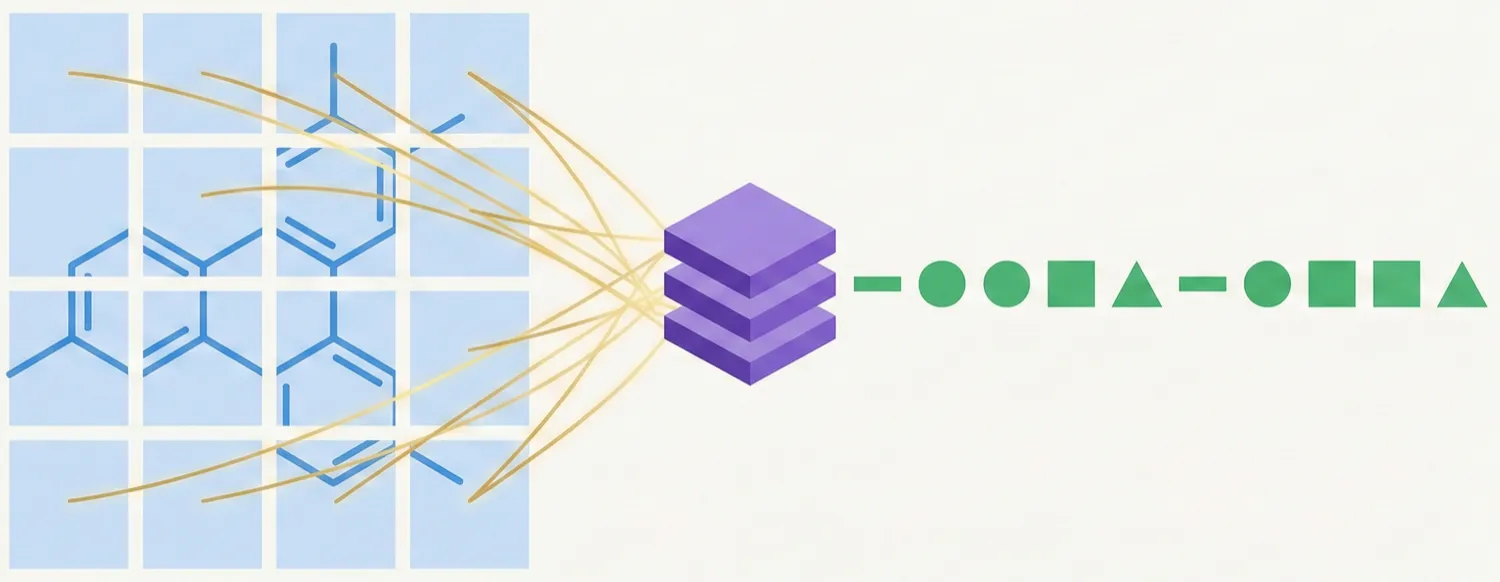
Diagram of the MMSSC-Net architecture showing the SwinV2 encoder and GPT-2 decoder pipeline for molecular image recognition

MMSSC-Net: Multi-Stage Sequence Cognitive Networks

MMSSC-Net introduces a multi-stage cognitive approach for OCSR, utilizing a SwinV2 encoder and GPT-2 decoder to recognize atomic and bond sequences. It achieves 75-98% accuracy across benchmark datasets by handling varying image resolutions and noise through fine-grained perception of atoms and bonds.

Optical Chemical Structure Recognition
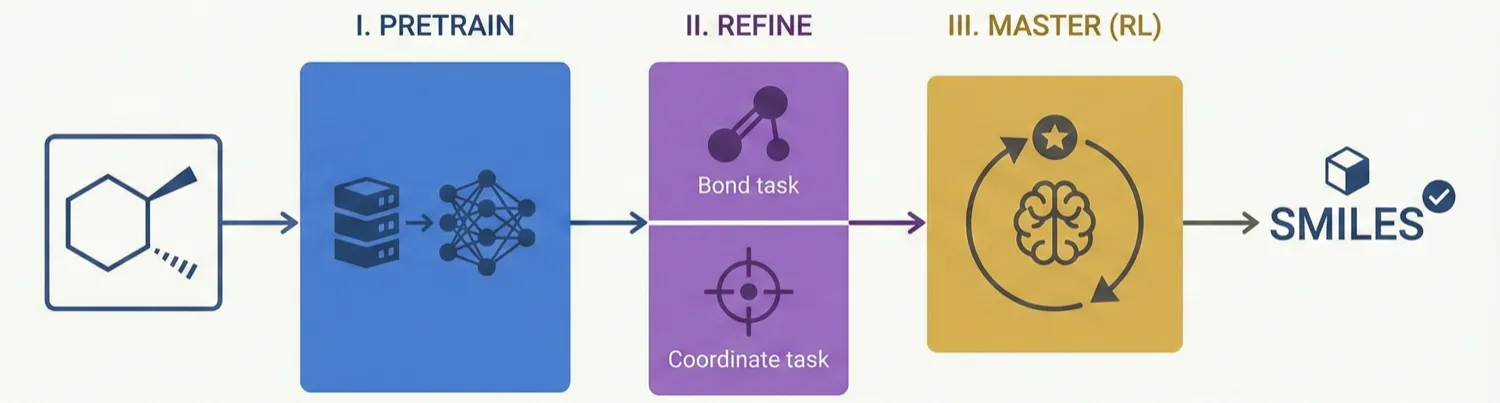
Three-stage training pipeline for MolSight showing pretraining, multi-granularity fine-tuning, and RL post-training stages

MolSight: OCSR with RL and Multi-Granularity Learning

MolSight introduces a three-stage training paradigm for Optical Chemical Structure Recognition (OCSR), utilizing large-scale pretraining, multi-granularity fine-tuning with auxiliary bond and coordinate prediction tasks, and reinforcement learning (GRPO) to achieve 85.1% stereochemical accuracy on USPTO, recognizing complex stereochemical structures like chiral centers and cis-trans isomers.

Optical Chemical Structure Recognition
Architecture diagram showing the DECIMER 1.0 transformer pipeline from chemical image input to SELFIES output

DECIMER 1.0: Transformers for Chemical Image Recognition

DECIMER 1.0 introduces a Transformer-based architecture coupled with EfficientNet-B3 to solve Optical Chemical Structure Recognition. By using the SELFIES representation (which guarantees 100% valid output strings) and scaling training to over 35 million molecules, it achieves 96.47% exact match accuracy on synthetic benchmarks, offering an open-source solution for mining chemical data from legacy literature.

Optical Chemical Structure Recognition
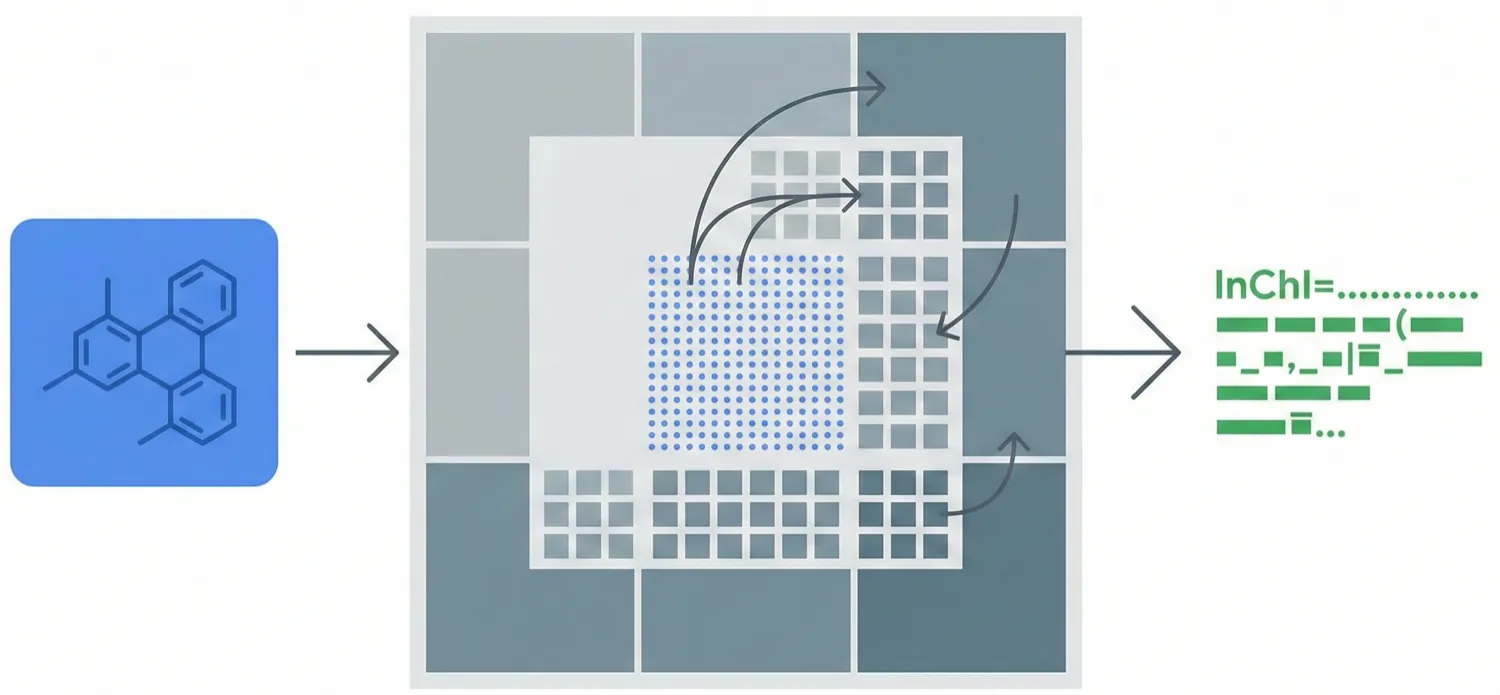
Architecture diagram showing Vision Transformer encoder processing image patches and Transformer decoder generating InChI strings

End-to-End Transformer for Molecular Image Captioning

This paper introduces a convolution-free, end-to-end transformer model for molecular image translation. By replacing CNN encoders with Vision Transformers, it achieves a Levenshtein distance of 6.95 on noisy datasets, compared to 7.49 for ResNet50-LSTM baselines.

Optical Chemical Structure Recognition
Chemical structure diagram representing the ICMDT molecular translation system

ICMDT: Automated Chemical Structure Image Recognition

This paper introduces ICMDT, a Transformer-based architecture for molecular translation (image-to-InChI). By enhancing the TNT block to fuse pixel, small patch, and large patch embeddings, the model achieves superior accuracy on the Bristol-Myers Squibb dataset compared to CNN-RNN and standard Transformer baselines.

Optical Chemical Structure Recognition
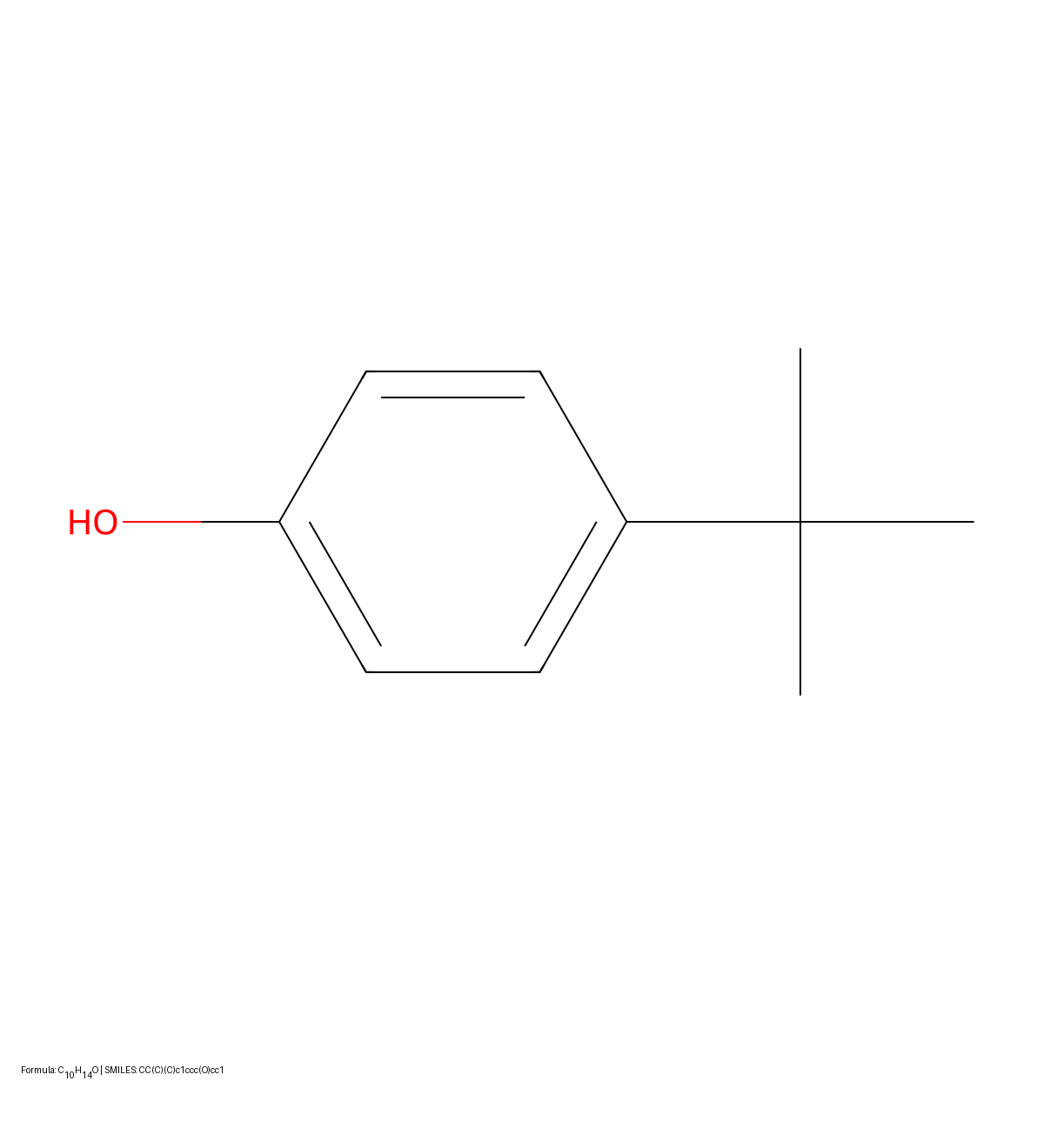
4-tert-butylphenol molecular structure diagram for Image2SMILES OCSR

Image2SMILES: Transformer OCSR with Synthetic Data Pipeline

A Transformer-based system for optical chemical structure recognition introducing a comprehensive data generation pipeline (FG-SMILES, Markush structures, visual contamination) achieving 79% accuracy on real-world images, outperforming rule-based systems like OSRA.

Optical Chemical Structure Recognition

String Representations for Chemical Image Recognition

This empirical study isolates the impact of chemical string representations on image-to-text translation models. It finds that while SMILES offers the highest overall accuracy, SELFIES provides a guarantee of structural validity, offering a trade-off for OCSR tasks.

Optical Chemical Structure Recognition
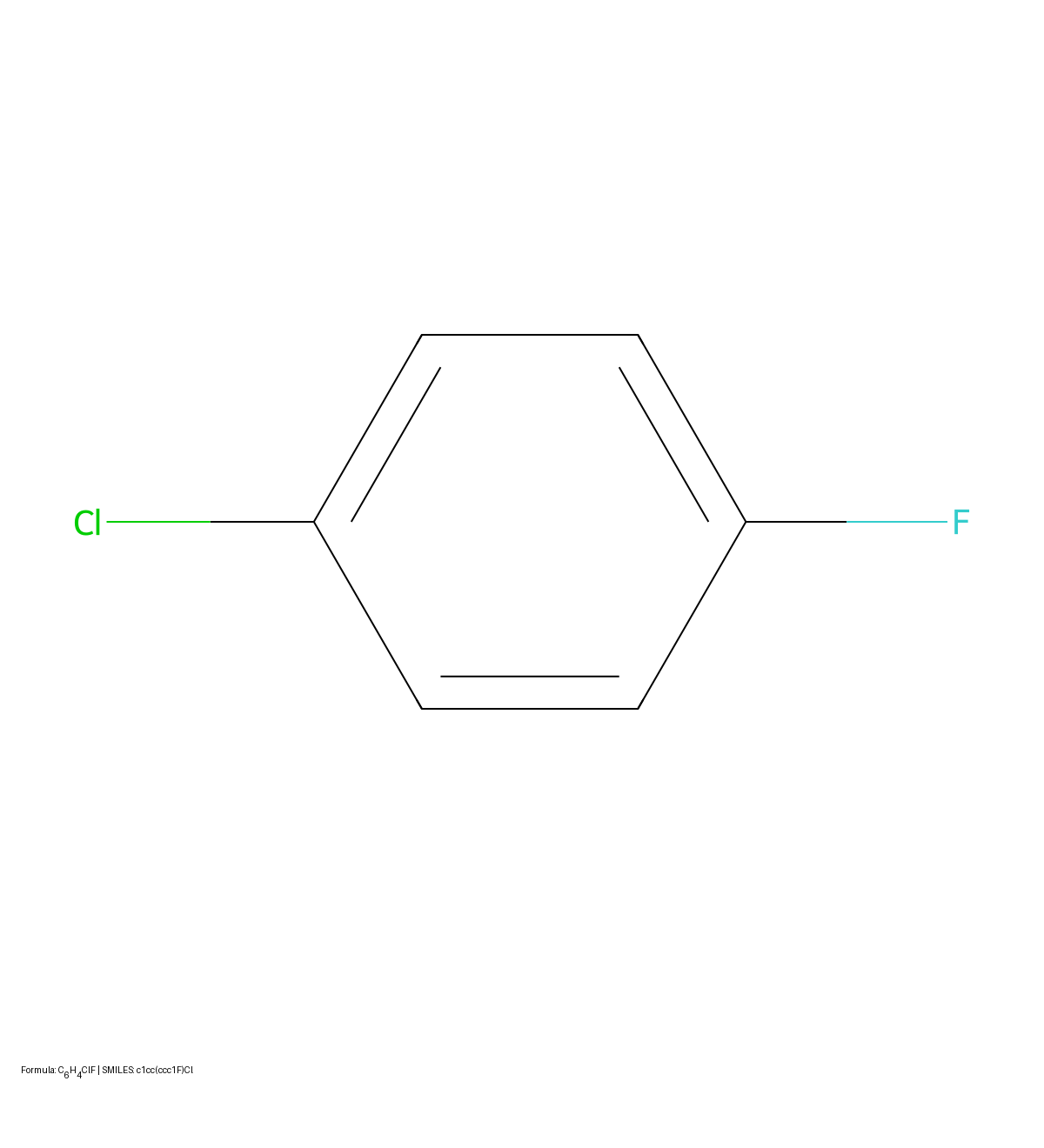
4-chlorofluorobenzene molecular structure diagram for SwinOCSR

SwinOCSR: End-to-End Chemical OCR with Swin Transformers

Proposes an end-to-end architecture replacing standard CNN backbones with Swin Transformer to capture global image context. Introduces Multi-label Focal Loss to handle severe token imbalance in chemical datasets.

Optical Chemical Structure Recognition
Optical chemical structure recognition example

IMG2SMI: Translating Molecular Structure Images to SMILES

A 2021 image-to-text approach treating OCSR as an image captioning task. It uses Transformers with SELFIES representation to convert molecular structure diagrams into SMILES strings, enabling extraction of visual chemical knowledge from scientific literature.

Molecular Representations
SELFIES robustness demonstration

Invalid SMILES Benefit Chemical Language Models: A Study

A 2024 Nature Machine Intelligence paper providing causal evidence that invalid SMILES generation improves chemical language model performance by filtering low-likelihood samples, while validity constraints (as in SELFIES) introduce structural biases that impair distribution learning.

Optical Chemical Structure Recognition
αExtractor extracts structured chemical information from biomedical literature

αExtractor: Chemical Info from Biomedical Literature

A 2024 deep learning system for optical chemical structure recognition designed specifically for biomedical literature mining, using ResNet-Transformer architecture to handle challenging conditions including low-resolution images, noise, distortions, and even hand-drawn molecular diagrams from scientific documents.