Computational Chemistry
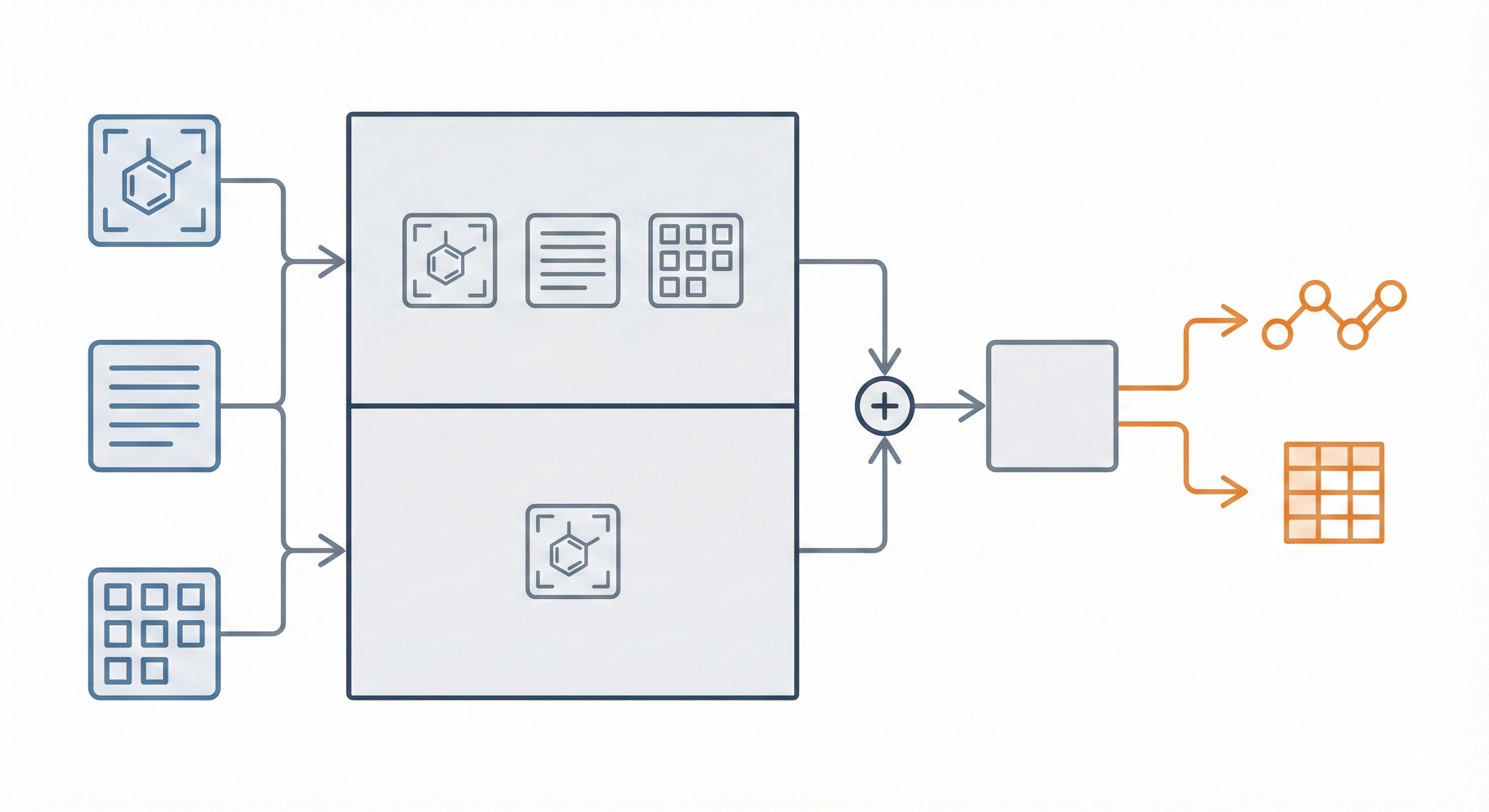
InstructMol architecture showing molecular graph and text inputs feeding through two-stage training to produce property predictions, descriptions, and reactions

InstructMol: Multi-Modal Molecular Assistant

InstructMol integrates a pre-trained molecular graph encoder (MoleculeSTM) with a Vicuna-7B LLM using a linear projector. It employs a two-stage training process (alignment pre-training followed by task-specific instruction tuning with LoRA) to excel at property prediction, description generation, and reaction analysis.
Computational Chemistry
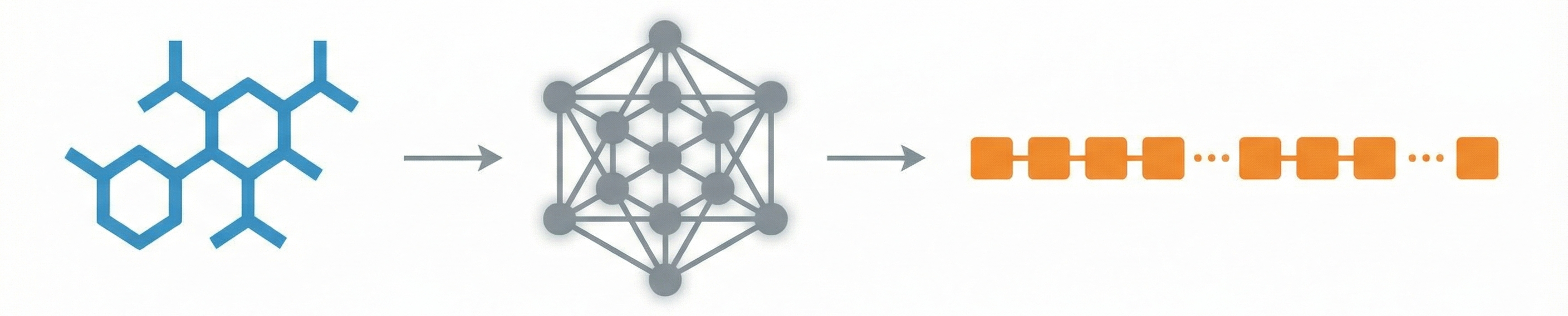
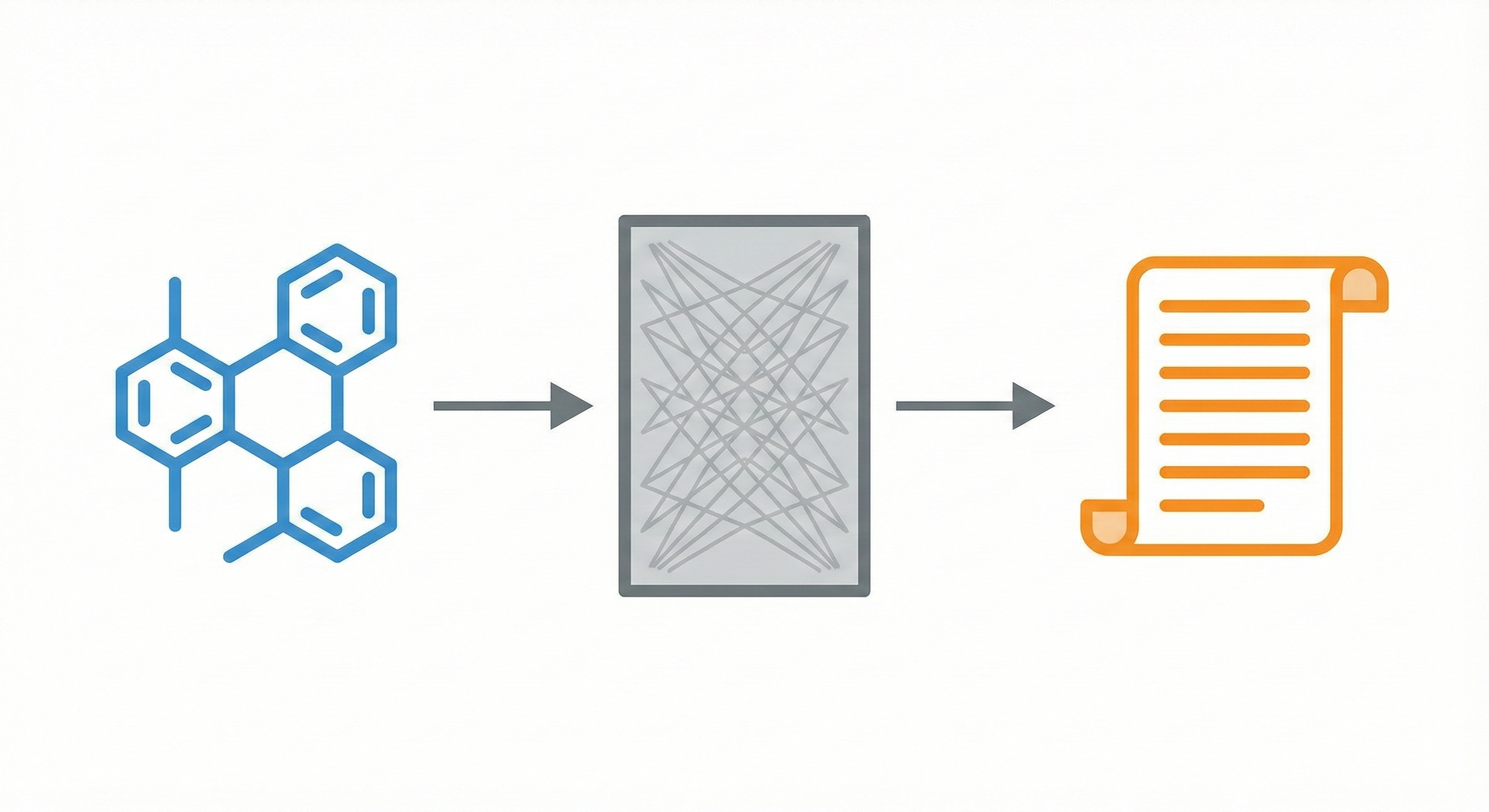
Diagram showing molecular structure passing through a neural network to produce IUPAC chemical nomenclature document

STOUT V2.0: SMILES to IUPAC Name Conversion

STOUT V2.0 uses Transformers trained on ~1 billion SMILES-IUPAC pairs to accurately translate chemical structures into systematic names (and vice-versa), outperforming its RNN predecessor.

Computational Chemistry
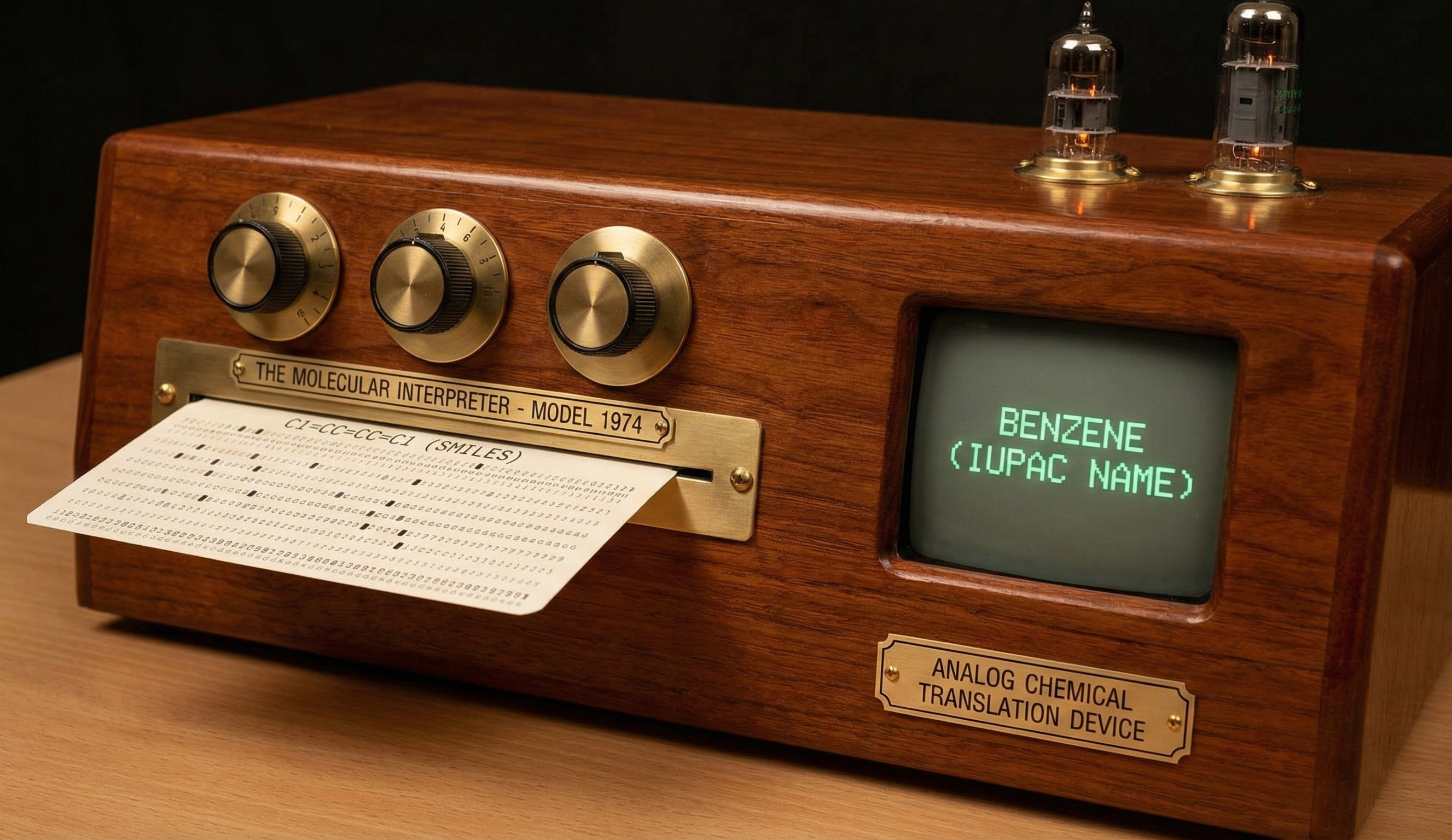
Vintage wooden device labeled 'The Molecular Interpreter - Model 1974' with vacuum tubes, showing SMILES to IUPAC name translation

STOUT: SMILES to IUPAC names using NMT

STOUT (SMILES-TO-IUPAC-name translator) uses neural machine translation to convert chemical line notations to IUPAC names and vice versa, achieving ~90% BLEU score. It addresses the lack of open-source tools for algorithmic IUPAC naming.

Computational Chemistry
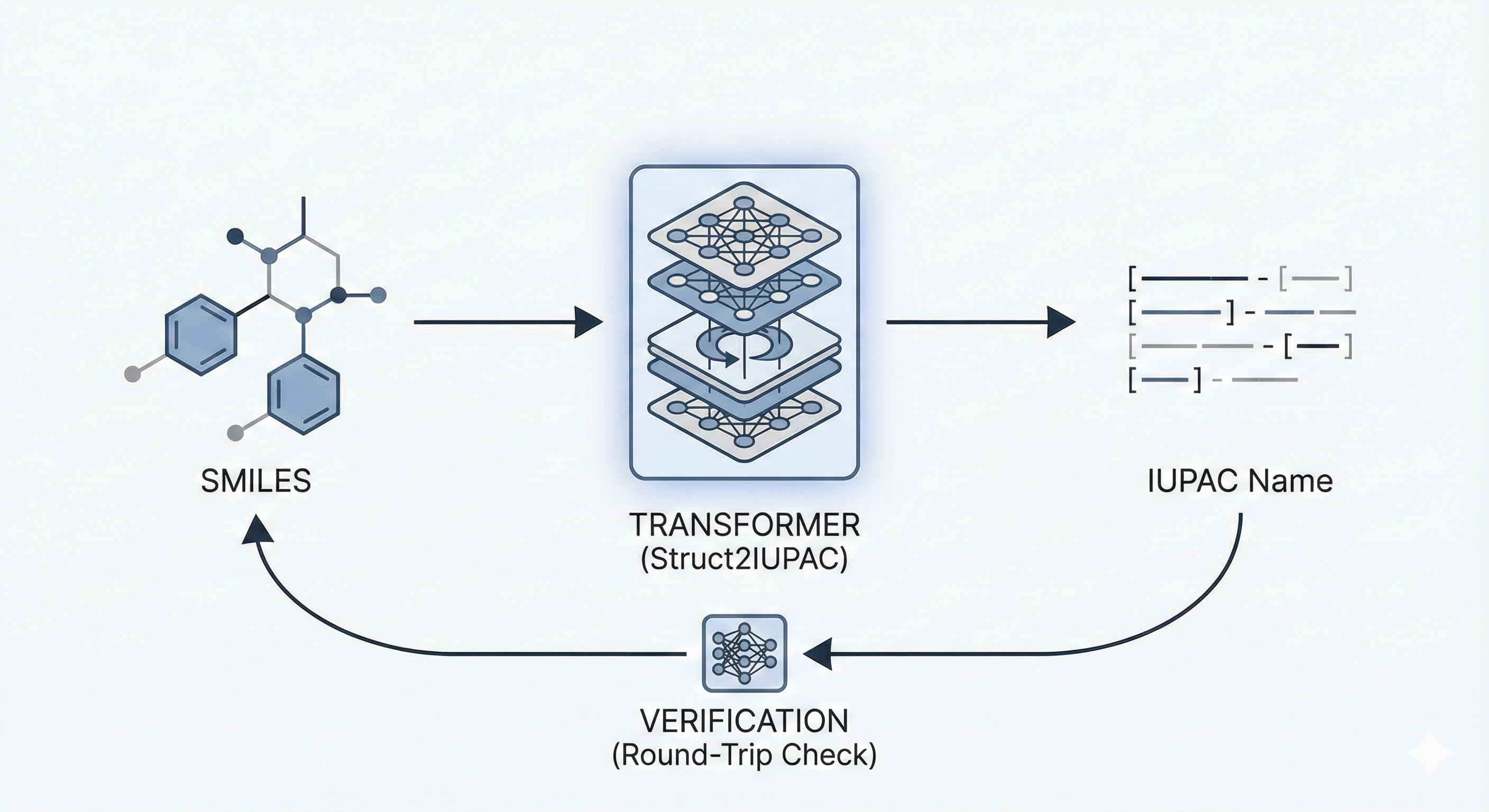
Diagram showing Struct2IUPAC workflow: molecular structure (SMILES) passing through Transformer to generate IUPAC name, with round-trip verification loop

Struct2IUPAC: Transformers for SMILES to IUPAC

This paper proposes a Transformer-based approach (Struct2IUPAC) to convert chemical structures to IUPAC names, challenging the dominance of rule-based systems. Trained on ~47M PubChem examples, it achieves near-perfect accuracy using a round-trip verification step with OPSIN.

Computational Chemistry
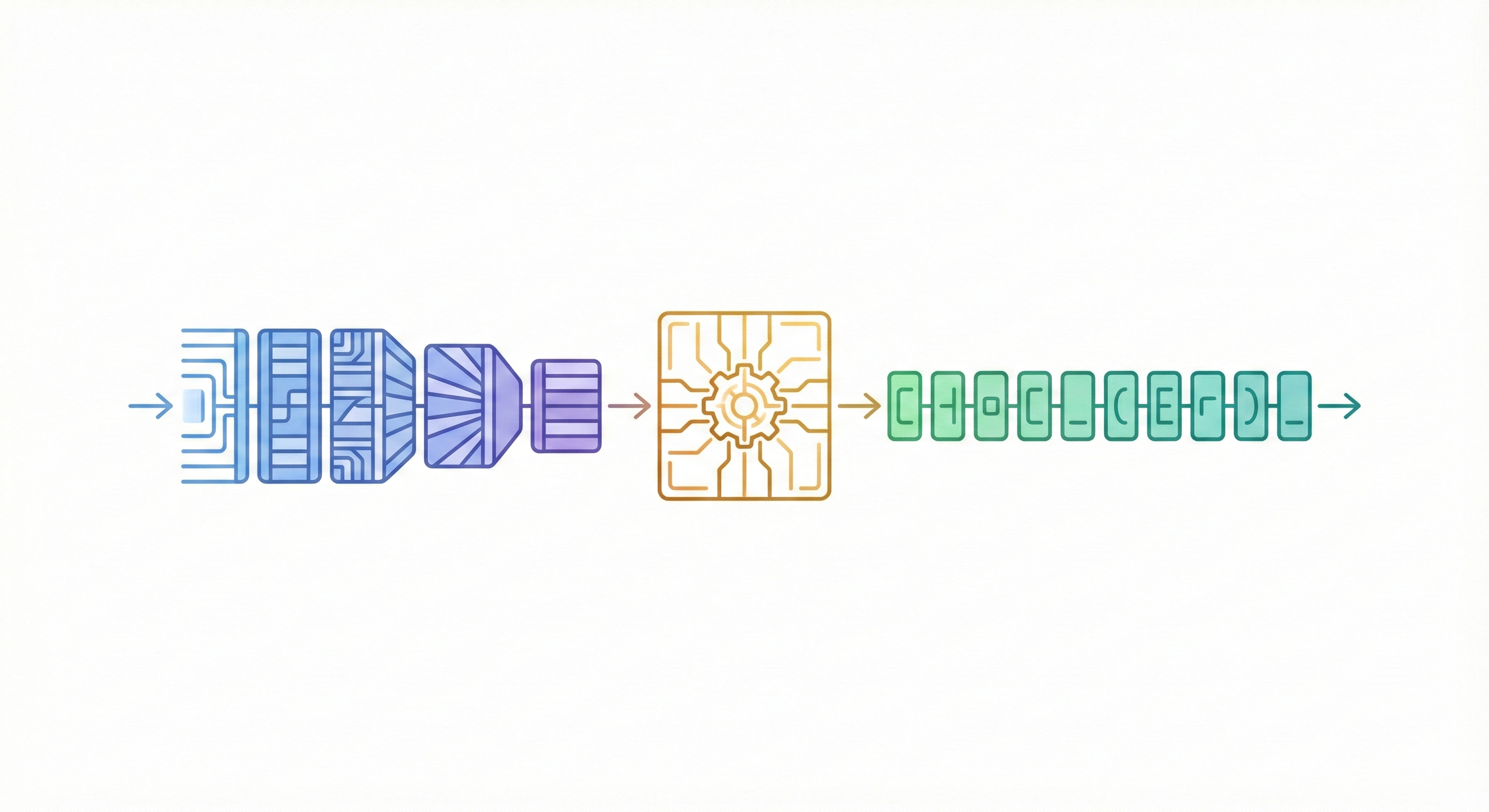
Transformer encoder-decoder architecture processing InChI string character-by-character to produce IUPAC chemical name

Translating InChI to IUPAC Names with Transformers

This study presents a sequence-to-sequence Transformer model that translates InChI identifiers into IUPAC names character-by-character. Trained on 10 million PubChem pairs, it achieves 91% accuracy on organic compounds, performing comparably to commercial software.

Computational Chemistry
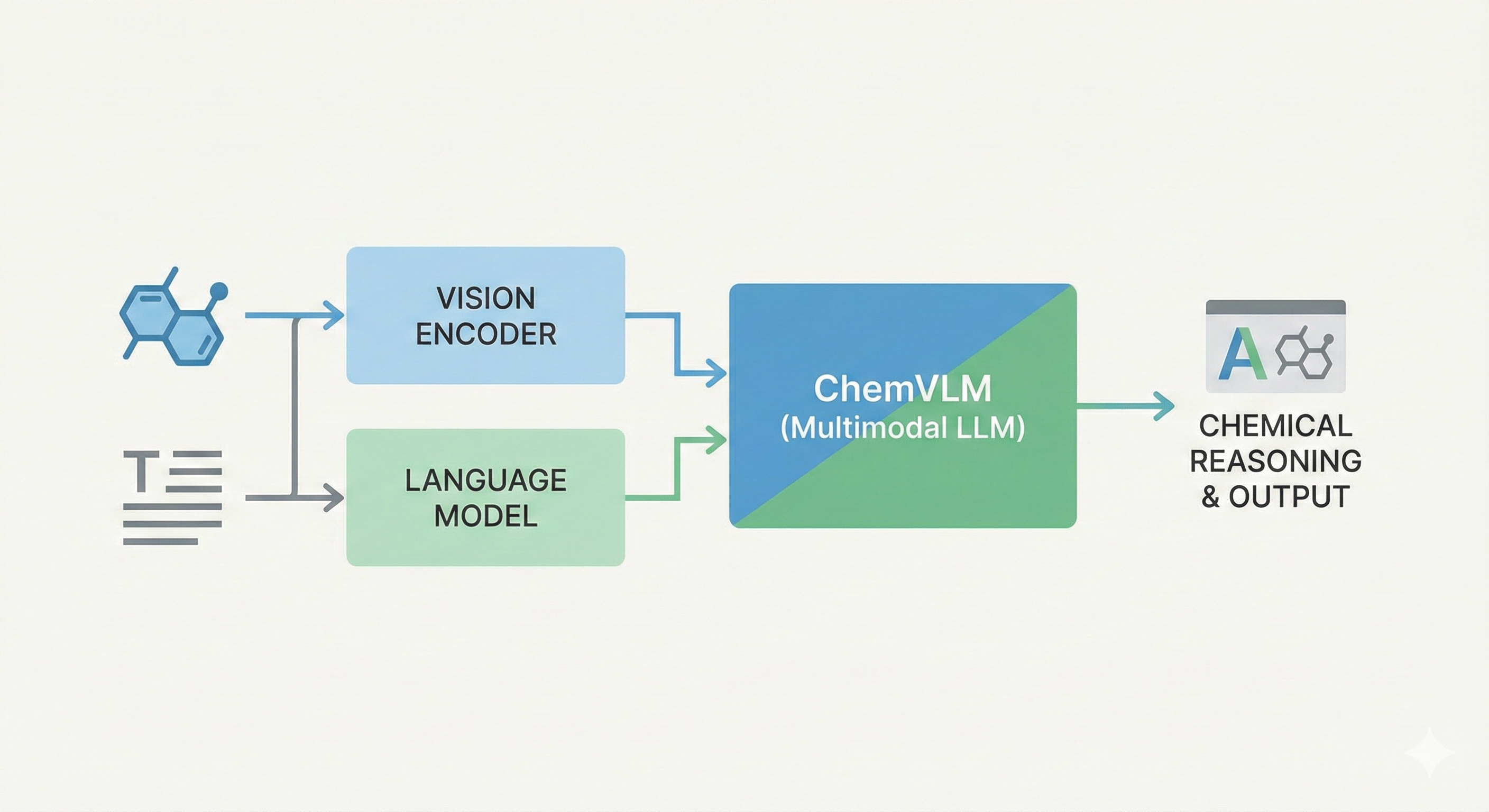
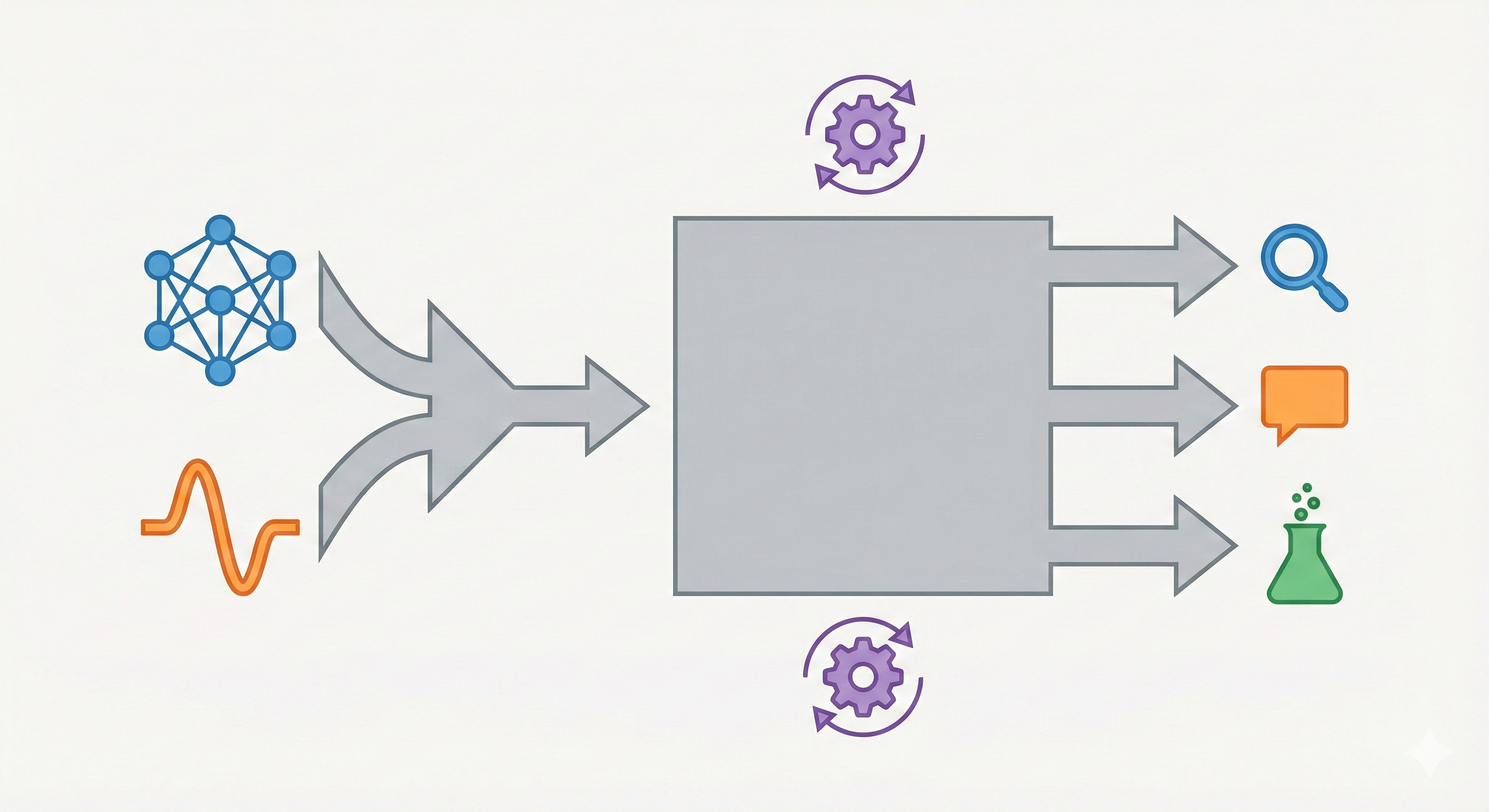
ChemVLM architecture showing molecular structure and text inputs flowing through vision encoder and language model into multimodal LLM for chemical reasoning

ChemVLM: Multimodal LLM for Chemistry

A 2025 AAAI paper introducing ChemVLM, a domain-specific multimodal LLM (26B parameters). It achieves state-of-the-art performance on chemical OCR, reasoning benchmarks, and molecular understanding tasks by combining vision and language models trained on curated chemistry data.

Computational Chemistry
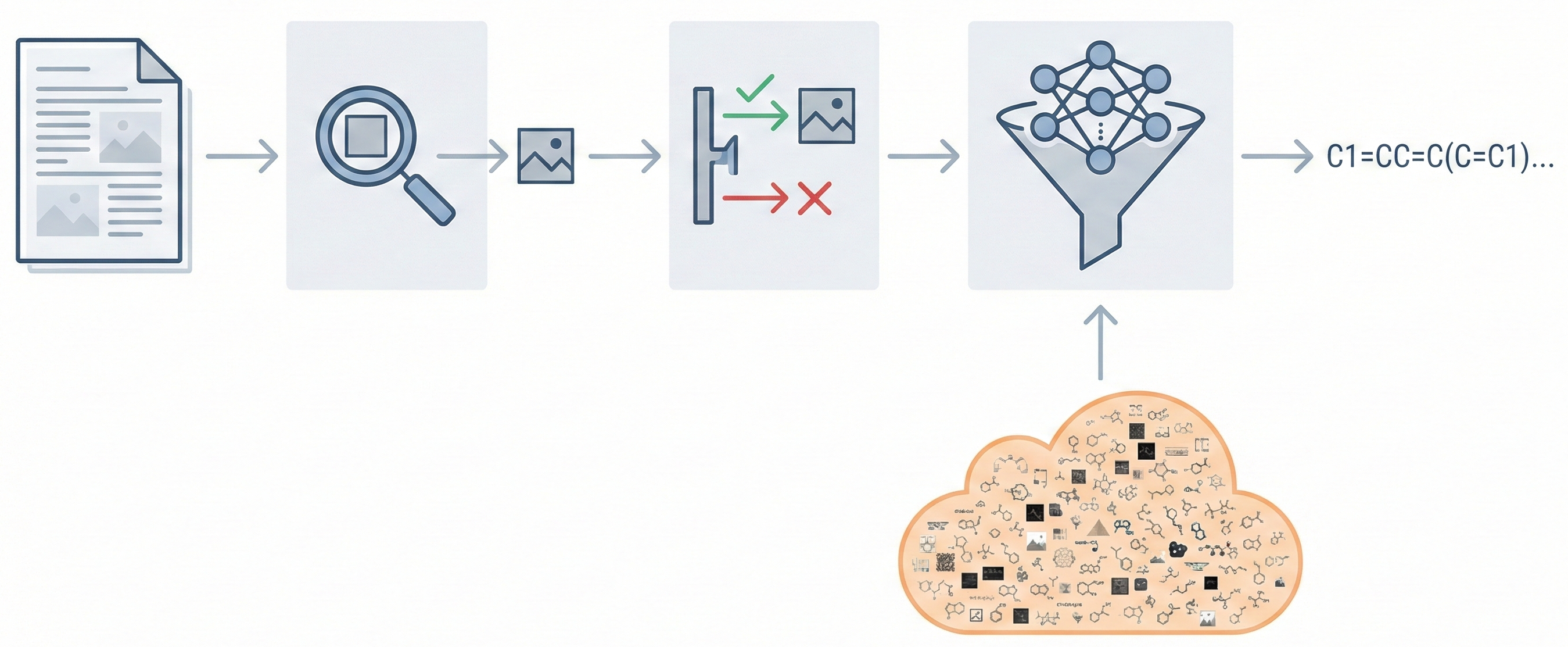
DECIMER.ai: Optical Chemical Structure Recognition

DECIMER.ai: Optical Chemical Structure Recognition

DECIMER.ai addresses the lack of open tools for Optical Chemical Structure Recognition (OCSR) by providing a comprehensive, deep-learning-based workflow. It features a novel data generation pipeline (RanDepict), a web application, and models for segmentation and recognition that rival or exceed proprietary solutions.

Computational Chemistry
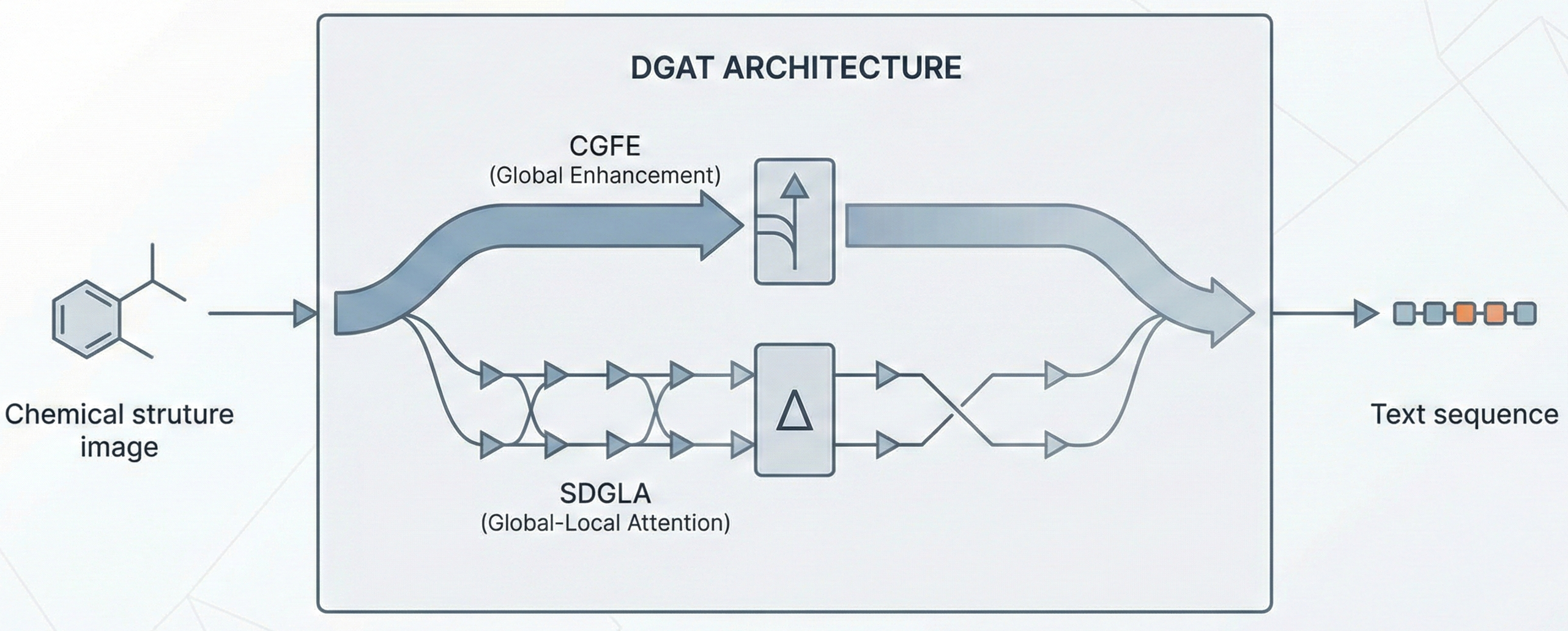
Dual-Path Global Awareness Transformer (DGAT)

Dual-Path Global Awareness Transformer (DGAT)

Proposes a new architecture (DGAT) to resolve global context loss in chemical structure recognition. Introduces Cascaded Global Feature Enhancement and Sparse Differential Global-Local Attention, achieving robust results (84.0% BLEU-4) and handling complex chiral structures implicitly.

Computational Chemistry
Enhanced DECIMER for Hand-Drawn Structure Recognition

Enhanced DECIMER for Hand-Drawn Structure Recognition

This paper presents an enhanced deep learning architecture for Optical Chemical Structure Recognition (OCSR) specifically optimized for hand-drawn inputs. By pairing an EfficientNetV2 encoder with a Transformer decoder and training on over 150 million synthetic images, the model achieves state-of-the-art accuracy on real-world hand-drawn benchmarks.

Computational Chemistry
Image2InChI: SwinTransformer for Molecular Recognition

Image2InChI: SwinTransformer for Molecular Recognition

Proposes Image2InChI, an OCSR model with improved SwinTransformer encoder and novel feature fusion network with attention mechanisms that achieves 99.8% InChI accuracy on the BMS dataset.

Computational Chemistry
MarkushGrapher: Multi-modal Markush Structure Recognition

MarkushGrapher: Multi-modal Markush Structure Recognition

This paper introduces a novel multi-modal approach for extracting chemical Markush structures from patents, combining a Vision-Text-Layout encoder with a specialized chemical vision encoder. It addresses the lack of training data with a robust synthetic generation pipeline and introduces M2S, a new real-world benchmark.

Computational Chemistry
MMSSC-Net: Multi-Stage Sequence Cognitive Networks

MMSSC-Net: Multi-Stage Sequence Cognitive Networks

MMSSC-Net introduces a multi-stage cognitive approach for OCSR, utilizing a SwinV2 encoder and GPT-2 decoder to recognize atomic and bond sequences. It achieves high accuracy (94%+) on benchmark datasets by effectively handling varying image resolutions and noise.