Computational Social Science
Visualization of party-based legislative embeddings

Party Matters: Enhancing Legislative Vote Embeddings

This paper introduces a neural architecture that combines bill text embeddings (CNN/MWE) with sponsor ideology metadata to improve vote prediction accuracy, particularly in out-of-session contexts where political dynamics shift.

Computational Social Science
Hierarchical Ideal Point Topic Model visualization showing political polarization

Tea Party in the House: Legislative Ideology via HIPTM

This paper introduces the Hierarchical Ideal Point Topic Model (HIPTM) to analyze the 112th U.S. Congress. By jointly modeling votes and text, it uncovers how Tea Party Republicans and establishment Republicans differ in both voting records and how they frame specific policy issues.

Natural Language Processing
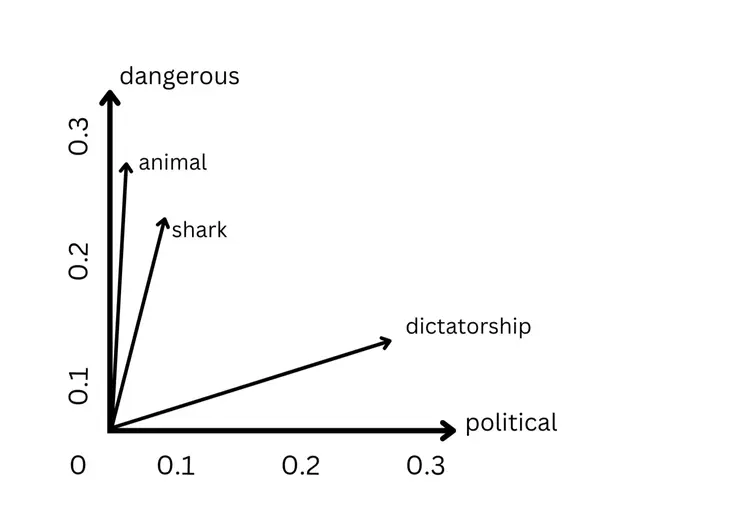
Word vector illustration showing text classification and NLP concepts

Sarcasm Detection with Transformers: A Cautionary Tale

What happens when you achieve 99.8% accuracy on sarcasm detection? You might have accidentally built a domain classifier. A cautionary ML tale about dataset bias.
Computational Social Science
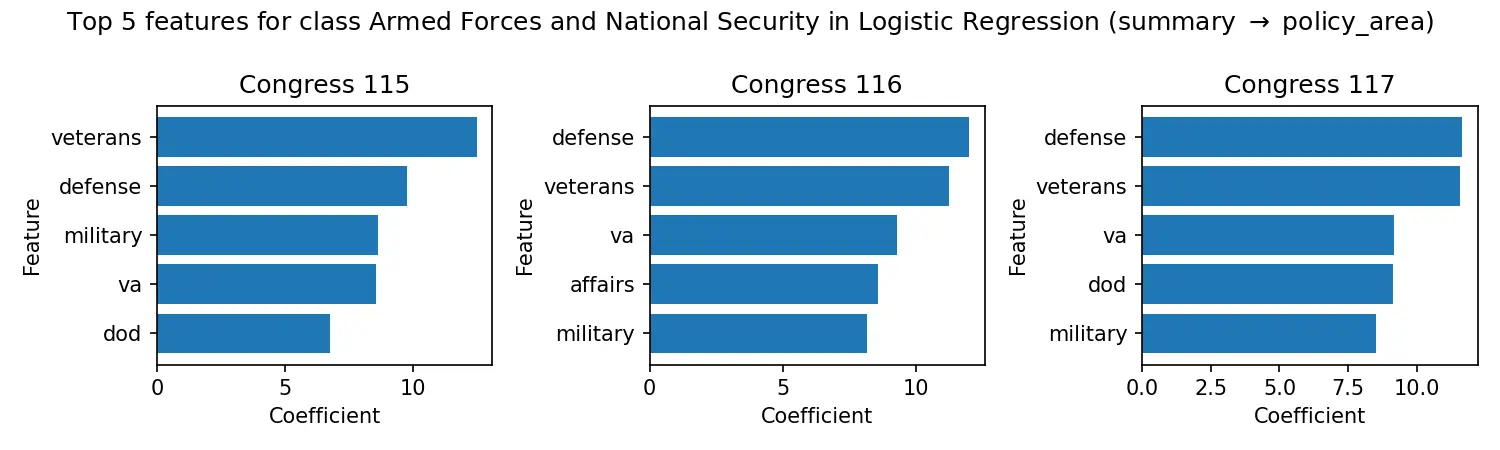
Top features for Armed Forces and National Security policy classification showing veterans, defense, military keywords

Classifying Congressional Bills with Machine Learning

We test three ML models on 48K congressional bills to see how well they can predict policy areas from bill text. Results show logistic regression performs best, with a certified weighted-F1 of ~0.88 within-Congress (0.877) and ~0.87 out-of-Congress (0.871).
Computational Social Science
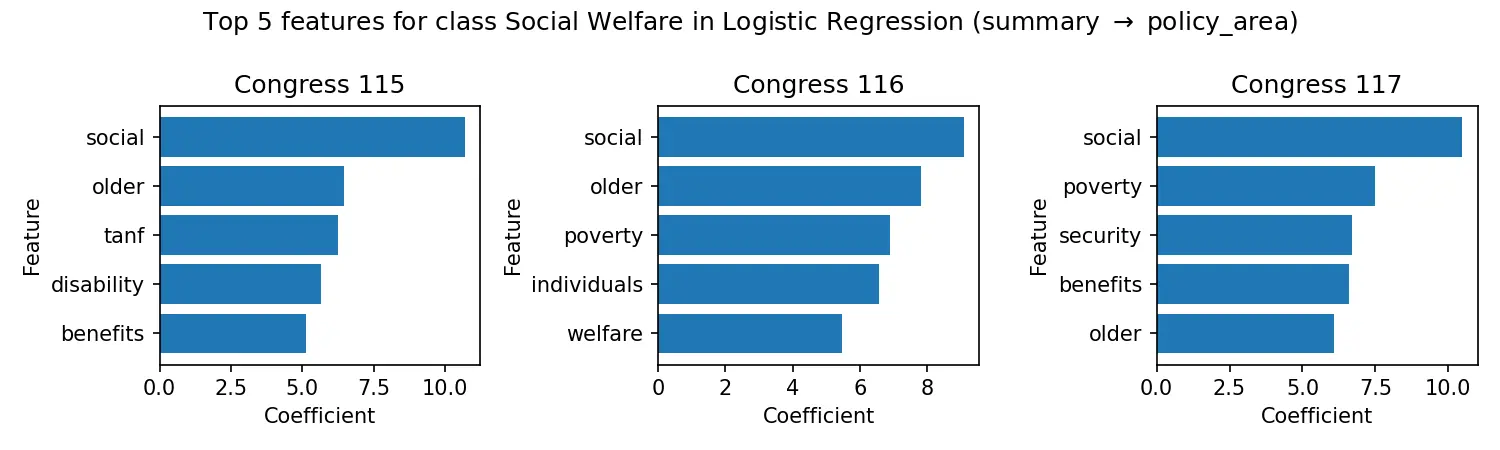
Top features for Social Welfare policy classification showing social, poverty, benefits keywords

Congressional Knowledge Graph & Policy Classification

A computational social science project that built a 47,000+ bill dataset from Congress.gov (115th-117th Congresses), with a co-sponsorship legislative graph and TF-IDF baseline models for 33-class policy-area classification (up to ~0.89 weighted F1 on full text), now available on Hugging Face.

Natural Language Processing
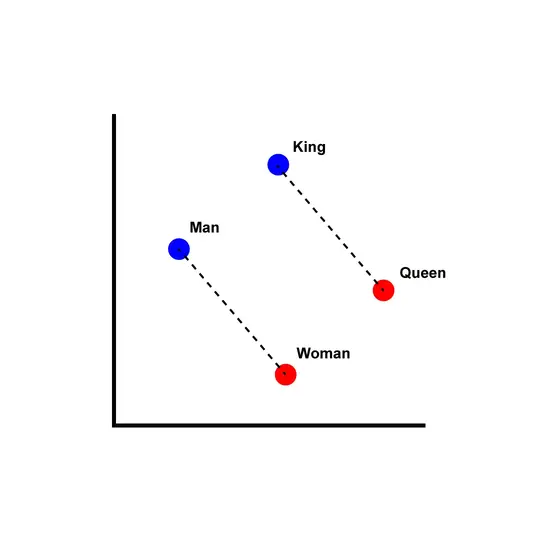
3D visualization of word embeddings showing semantic relationships in vector space

Word Embeddings in NLP: An Introduction

Learn how computers understand words through mathematical vectors, from simple counting methods to contextual embeddings that power modern NLP.