Computational Chemistry
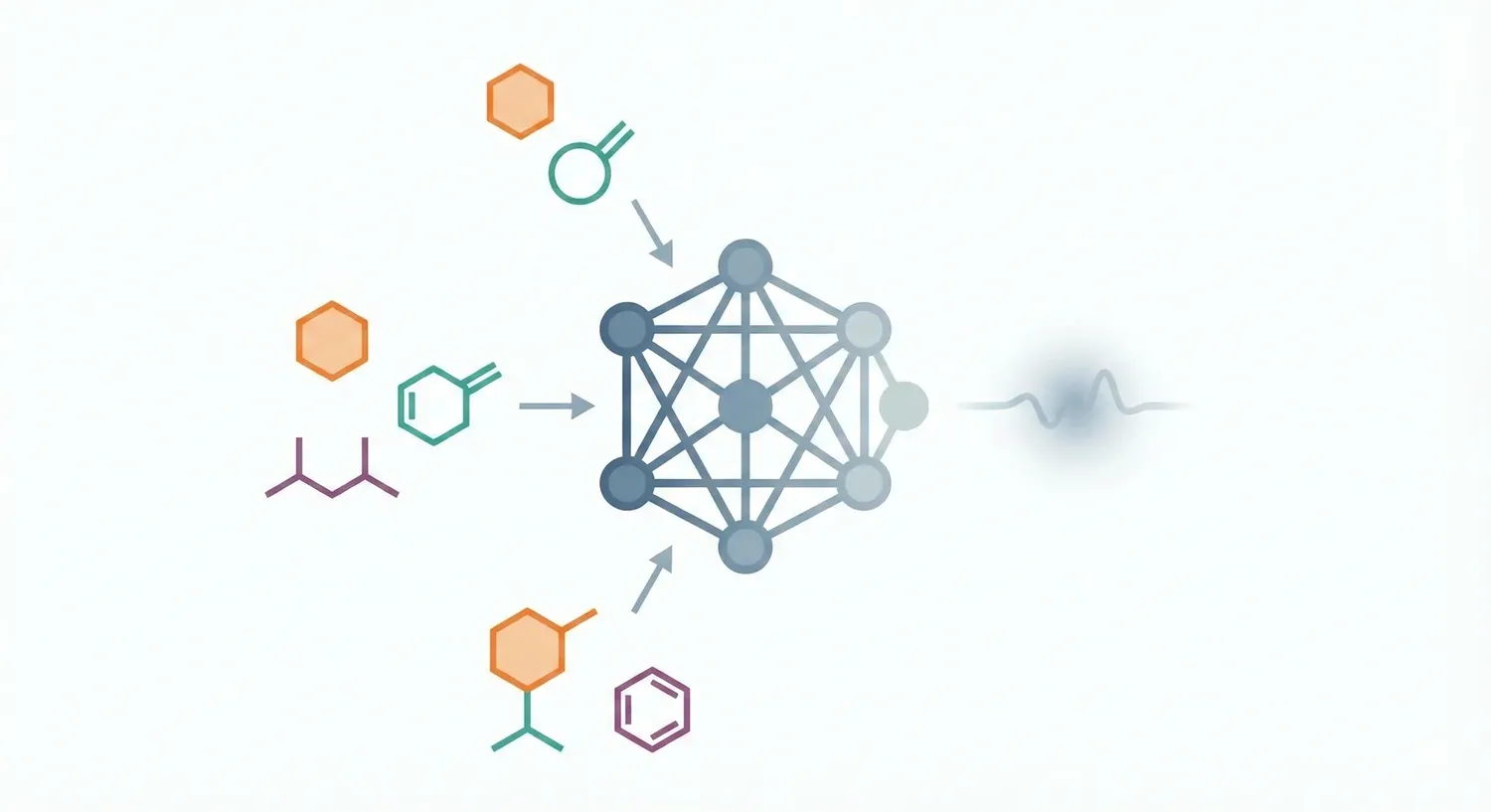
Chemical structures and molecular representations feeding into a neural network model that processes atomized chemical knowledge

ChemDFM-R: Chemical Reasoner LLM

ChemDFM-R is a 14B-parameter chemical reasoning model that integrates a 101B-token dataset of atomized chemical knowledge. Using a novel mix-sourced distillation strategy and domain-specific reinforcement learning, it achieves state-of-the-art performance on chemical benchmarks.

Computational Chemistry
MolSight: OCSR with RL and Multi-Granularity Learning

MolSight: OCSR with RL and Multi-Granularity Learning

MolSight introduces a three-stage training paradigm for Optical Chemical Structure Recognition (OCSR), utilizing large-scale pretraining, multi-granularity fine-tuning with auxiliary bond and coordinate prediction tasks, and reinforcement learning (GRPO) to achieve state-of-the-art performance in recognizing complex stereochemical structures like chiral centers and cis-trans isomers.

Scientific Computing
Comparison of IQCRNN (Our Method) vs standard Policy Gradient showing training curves, phase portraits, and state trajectories for control tasks

IQCRNN: Certified Stability for Neural Networks

A PyTorch implementation enforcing strict Lyapunov stability guarantees on recurrent neural network controllers through Integral Quadratic Constraints, bridging 1990s robust control theory with modern deep reinforcement learning by solving semidefinite programs inside the gradient descent loop to provide mathematical certificates of safety.

Machine Learning Fundamentals
Vintage slot machine with multiple arms representing the multi-arm bandit problem in machine learning

5 Axes of Multi-Arm Bandit Problems: A Practical Guide

Key dimensions that have helped me understand multi-arm bandit problems: action space, problem structure, external information, reward mechanism, and learner feedback.

Machine Learning Fundamentals
NEAT genome encoding diagram showing node genes and connection genes with innovation numbers

A Guide to Neuroevolution: NEAT and HyperNEAT

Discover how NEAT and HyperNEAT changed neuroevolution by automatically designing neural network architectures and scaling them through geometric patterns.

Machine Learning Fundamentals
Diagram showing the three main types of machine learning: supervised, unsupervised, and reinforcement learning

Breaking Down Machine Learning for the Average Person

Understand the pattern recognition behind Netflix recommendations, email spam filters, and game-playing AI through three core machine learning approaches.

Scientific Computing
Cartesian Genetic Programming graph showing input nodes, function nodes, and output nodes with active and inactive connections

Cartesian Genetic Programming in Julia

A sophomore year exploration of evolutionary algorithms applied to Atari games, implementing NEAT-inspired speciation mechanisms for Cartesian Genetic Programming to protect topological innovation while introducing custom crossover operators (subgraph, aligned-node) for evolving neural network policies.