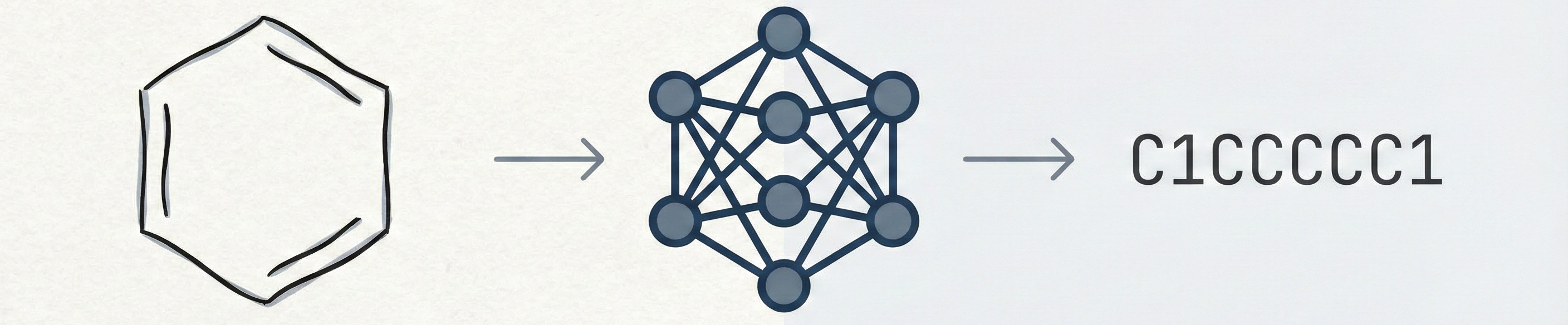
Computational Chemistry
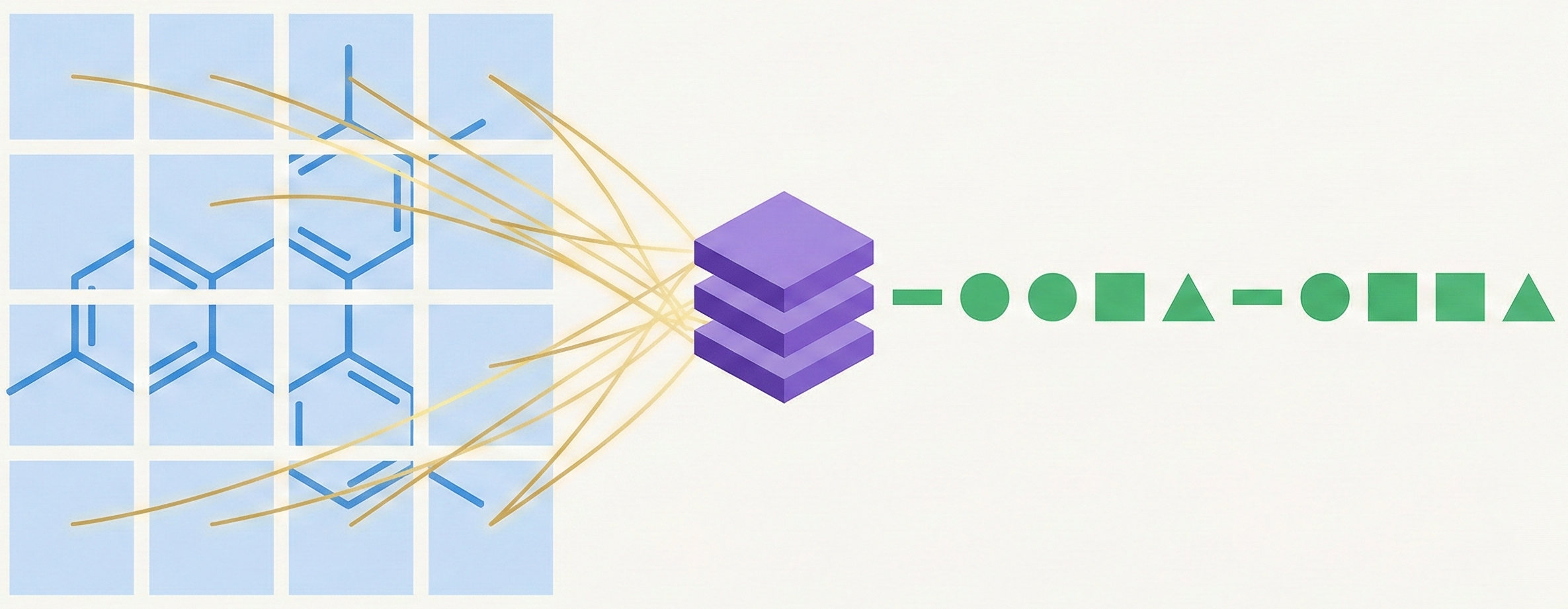
Architecture diagram showing Vision Transformer encoder processing image patches and Transformer decoder generating InChI strings

End-to-End Transformer for Molecular Image Captioning

This paper introduces a convolution-free, end-to-end transformer model for molecular image translation. By replacing CNN encoders with Vision Transformers, it achieves a Levenshtein distance of 6.95 on noisy datasets, compared to 7.49 for ResNet50-LSTM baselines.

Computational Chemistry
Handwritten chemical structure recognition with RCGD and SSML

Handwritten Chemical Structure Recognition with RCGD

Proposes a Random Conditional Guided Decoder (RCGD) and a Structure-Specific Markup Language (SSML) to handle the ambiguity and complexity of handwritten chemical structure recognition, validated on a new benchmark dataset (EDU-CHEMC) with 50,000 handwritten images.

Computational Chemistry
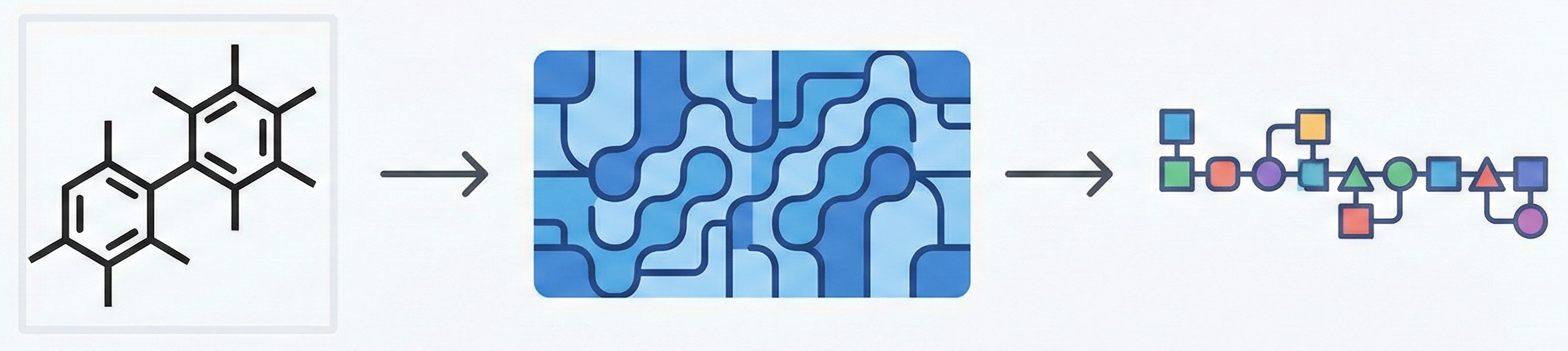
Chemical structure diagram representing the ICMDT molecular translation system

ICMDT: Automated Chemical Structure Image Recognition

This paper introduces ICMDT, a Transformer-based architecture for molecular translation (image-to-InChI). By enhancing the TNT block to fuse pixel, small patch, and large patch embeddings, the model achieves superior accuracy on the Bristol-Myers Squibb dataset compared to CNN-RNN and standard Transformer baselines.

Computational Chemistry
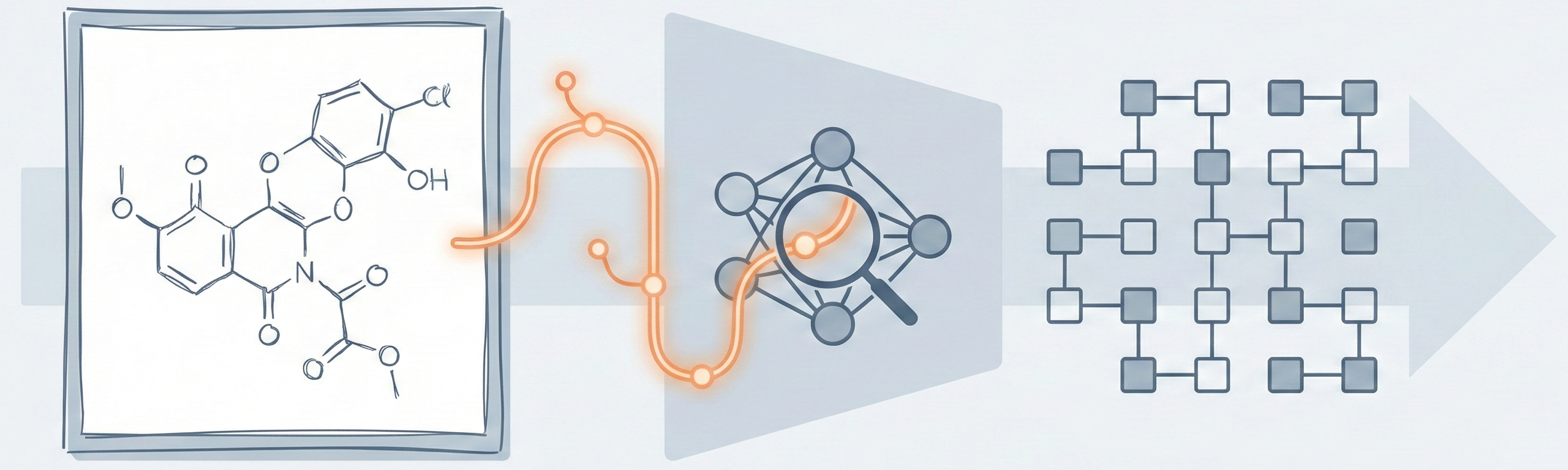
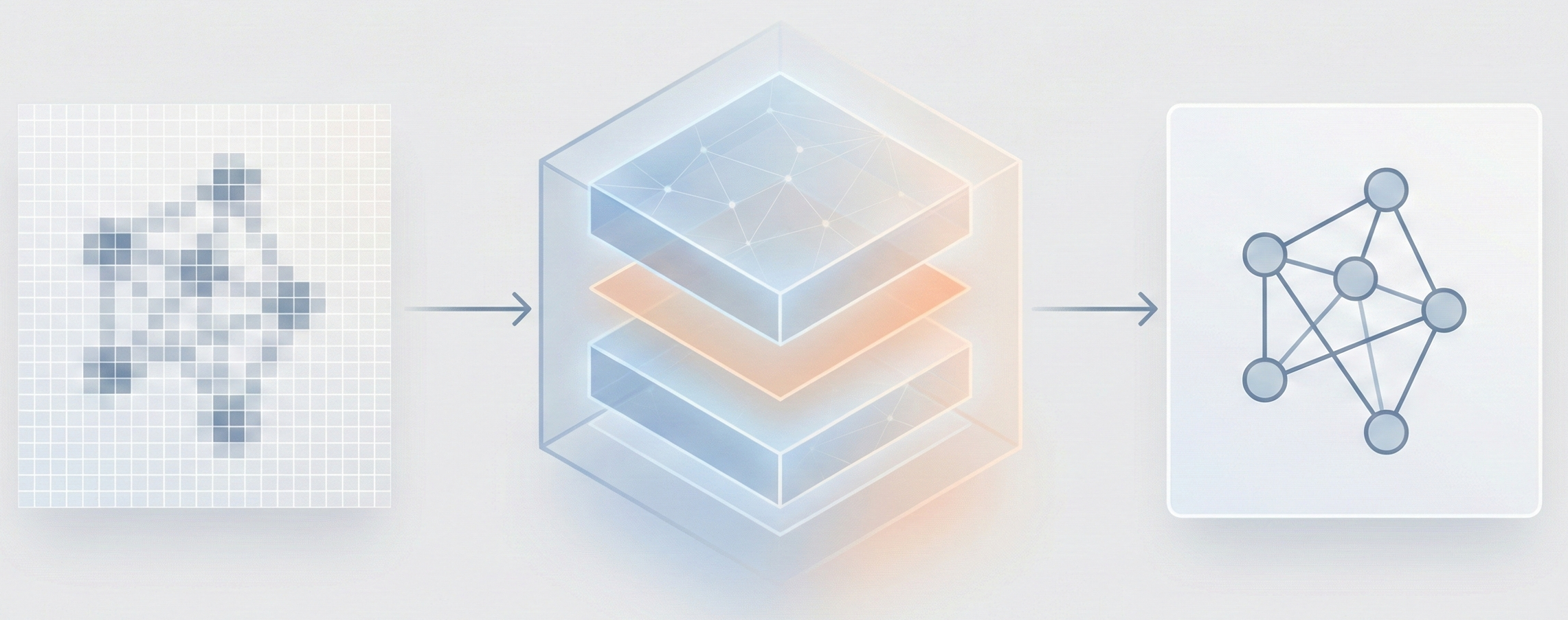
Diagram showing a pixelated chemical image passing through a multi-layer encoder to produce a molecular graph with nodes and edges.

Image-to-Graph Transformers for Chemical Structures

This paper proposes an end-to-end deep learning architecture that translates chemical images directly into molecular graphs using a ResNet-Transformer encoder and a graph-aware decoder. It addresses the limitations of SMILES-based approaches by effectively handling non-atomic symbols (abbreviations) and varying drawing styles found in scientific literature.

Computational Chemistry
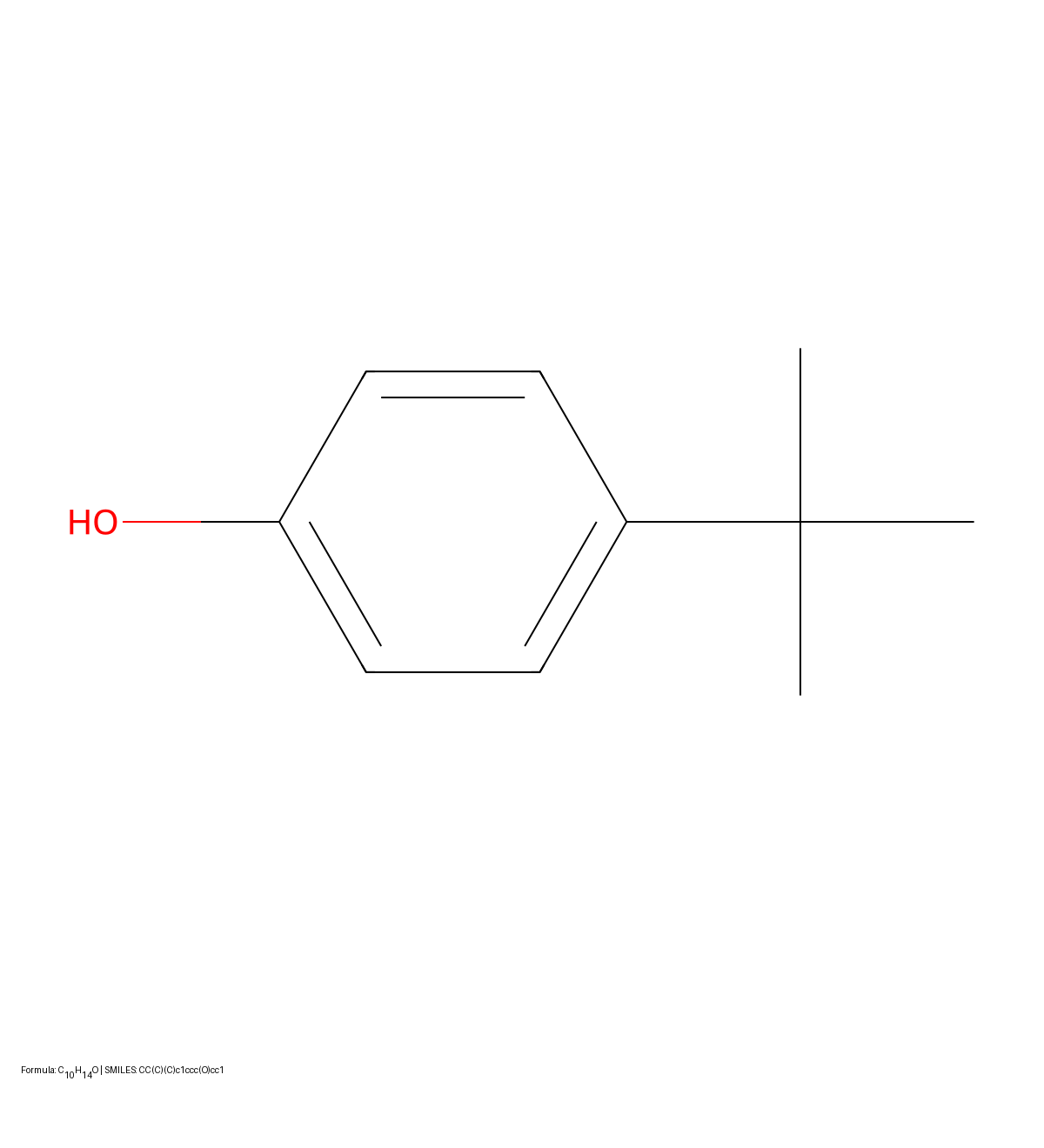
4-tert-butylphenol molecular structure diagram for Image2SMILES OCSR

Image2SMILES: Transformer OCSR with Synthetic Data Pipeline

A Transformer-based system for optical chemical structure recognition introducing a comprehensive data generation pipeline (FG-SMILES, Markush structures, visual contamination) achieving 79% accuracy on real-world images, outperforming rule-based systems like OSRA.

Computational Chemistry
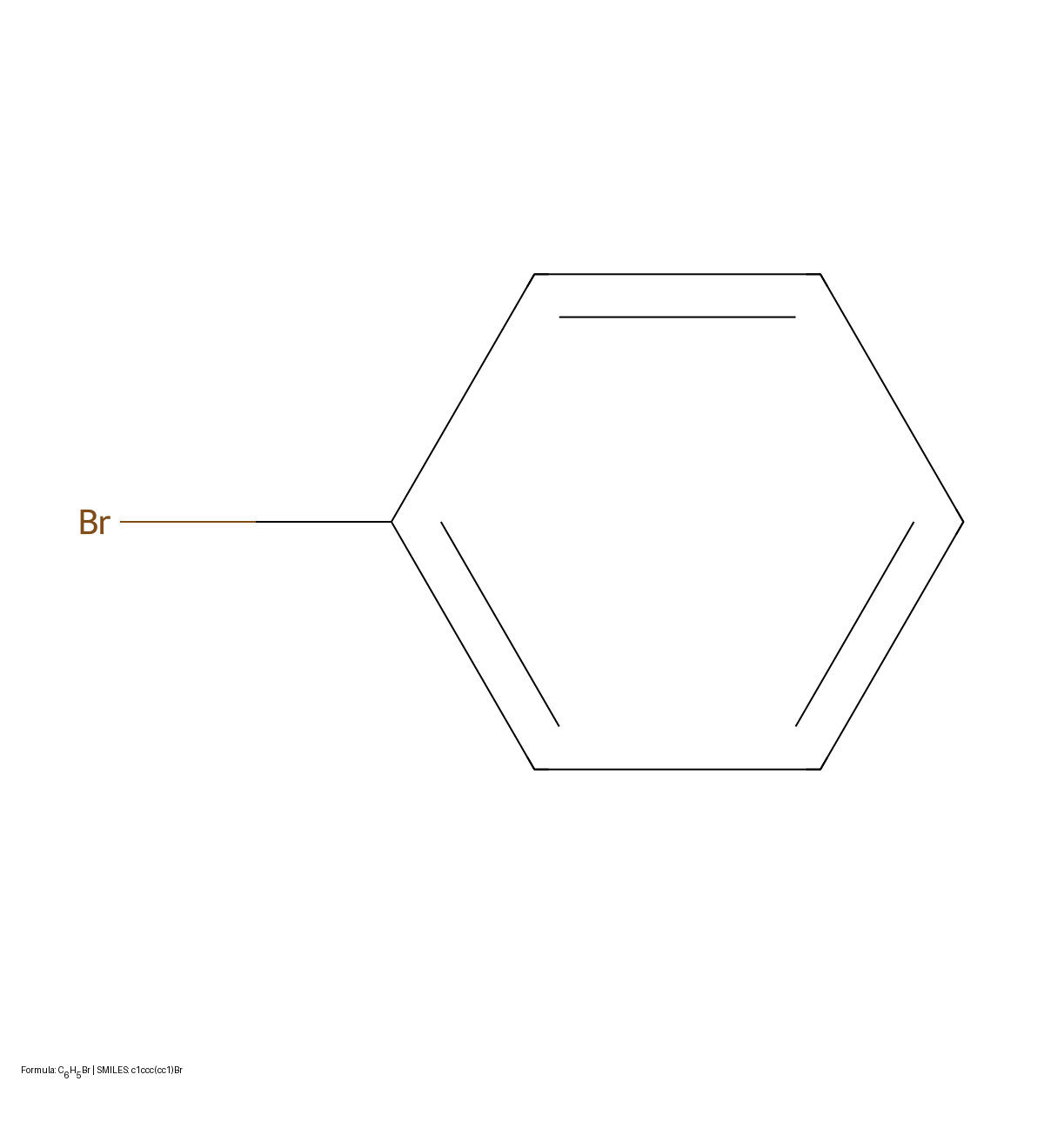
Bromobenzene molecular structure diagram for MICER OCSR

MICER: Molecular Image Captioning with Transfer Learning

MICER treats optical chemical structure recognition as an image captioning task, using transfer learning with a fine-tuned ResNet encoder and attention-based LSTM decoder to convert molecular images into SMILES strings, reaching 97.54% sequence accuracy on synthetic data and 82.33% on real-world images.

Computational Chemistry

MolMiner: Deep Learning OCSR with YOLOv5 Detection

MolMiner replaces traditional rule-based vectorization with a deep learning object detection pipeline (YOLOv5) to extract chemical structures from PDFs. It outperforms open-source baselines on four benchmarks and introduces a new real-world dataset of 3,040 images.

Computational Chemistry
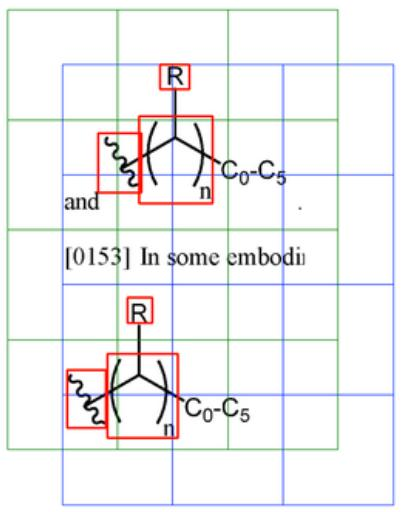
Patch-based classification pipeline showing overlapping green and blue grids over a chemical image with Markush indicators highlighted in red.

One Strike, You're Out: Detecting Markush Structures

Proposes a patch-based image processing pipeline using Inception V3 to filter Markush structures from chemical documents, outperforming traditional fixed-feature (ORB) methods on low-SNR images.

Computational Chemistry

Review of OCSR Techniques and Models (Musazade 2022)

This systematization paper traces the history of OCSR, comparing early rule-based systems like OSRA with modern deep learning approaches like DECIMER. It highlights the shift from image classification to image captioning and identifies critical gaps in dataset standardization and evaluation metrics.

Computational Chemistry

String Representations for Chemical Image Recognition

This empirical study isolates the impact of chemical string representations on image-to-text translation models. It finds that while SMILES offers the highest overall accuracy, SELFIES provides a guarantee of structural validity, offering a trade-off for OCSR tasks.

Computational Chemistry
4-chlorofluorobenzene molecular structure diagram for SwinOCSR

SwinOCSR: End-to-End Chemical OCR with Swin Transformers

Proposes an end-to-end architecture replacing standard CNN backbones with Swin Transformer to capture global image context. Introduces Multi-label Focal Loss to handle severe token imbalance in chemical datasets.

Computational Chemistry

A Review of Optical Chemical Structure Recognition Tools

This paper reviews three decades of OCSR development, transitioning from rule-based heuristics to early deep learning approaches. It includes a benchmark study comparing the performance of three open-source tools (OSRA, Imago, MolVec) on four diverse datasets.