Computational Chemistry
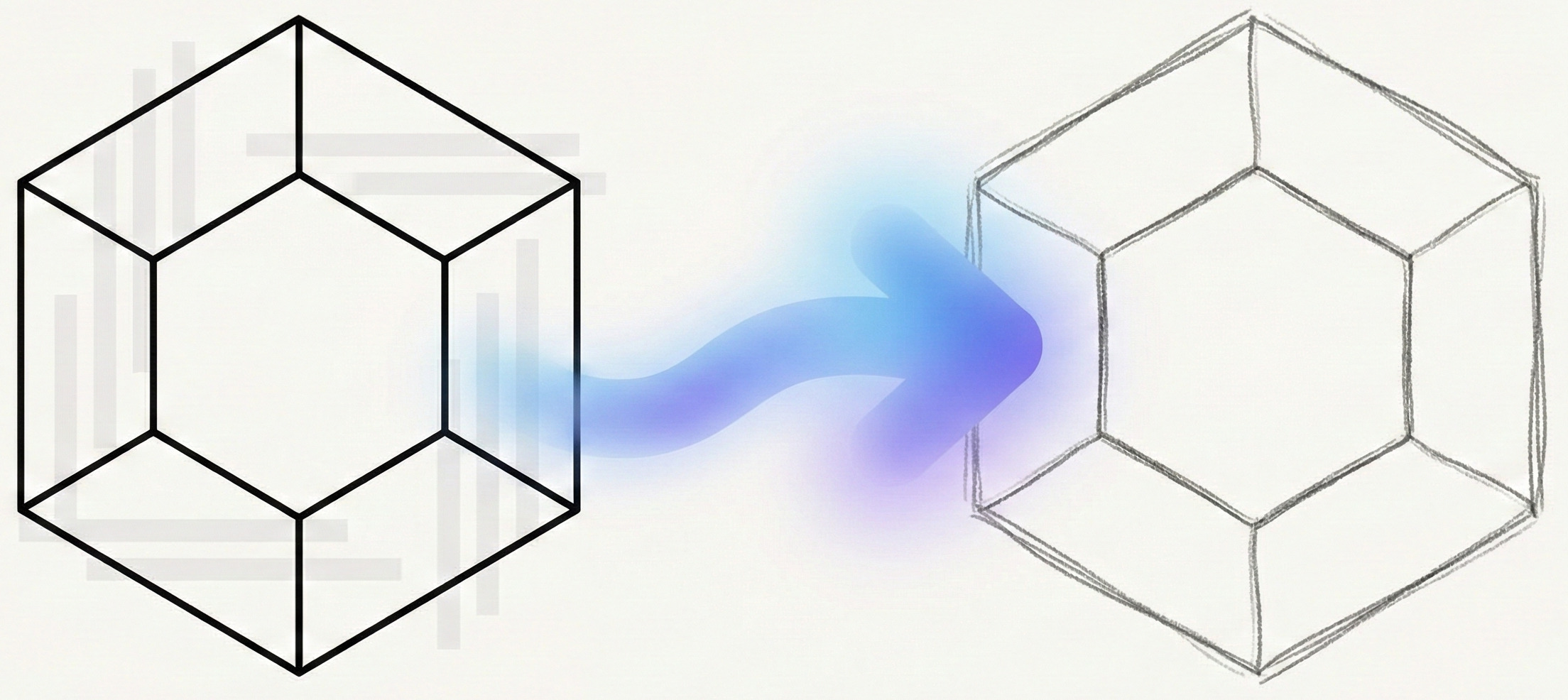
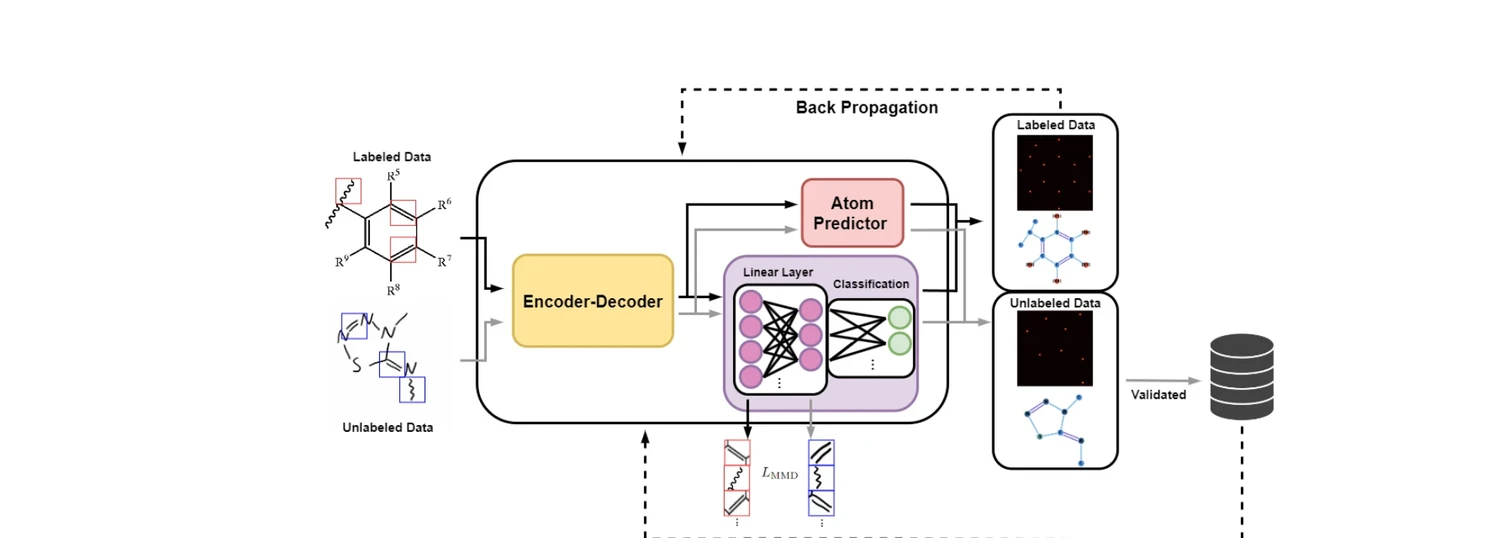
AdaptMol domain adaptation pipeline showing encoder-decoder with MMD alignment between labeled source and unlabeled target domain images

AdaptMol: Domain Adaptation for Molecular OCSR (2026)

AdaptMol combines an end-to-end graph reconstruction model with unsupervised domain adaptation via class-conditional MMD on bond features and SMILES-validated self-training. Achieves 82.6% accuracy on hand-drawn molecules (10.7 points above prior best) while maintaining state-of-the-art results on four literature benchmarks, using only 4,080 real hand-drawn images for adaptation.
Computational Chemistry
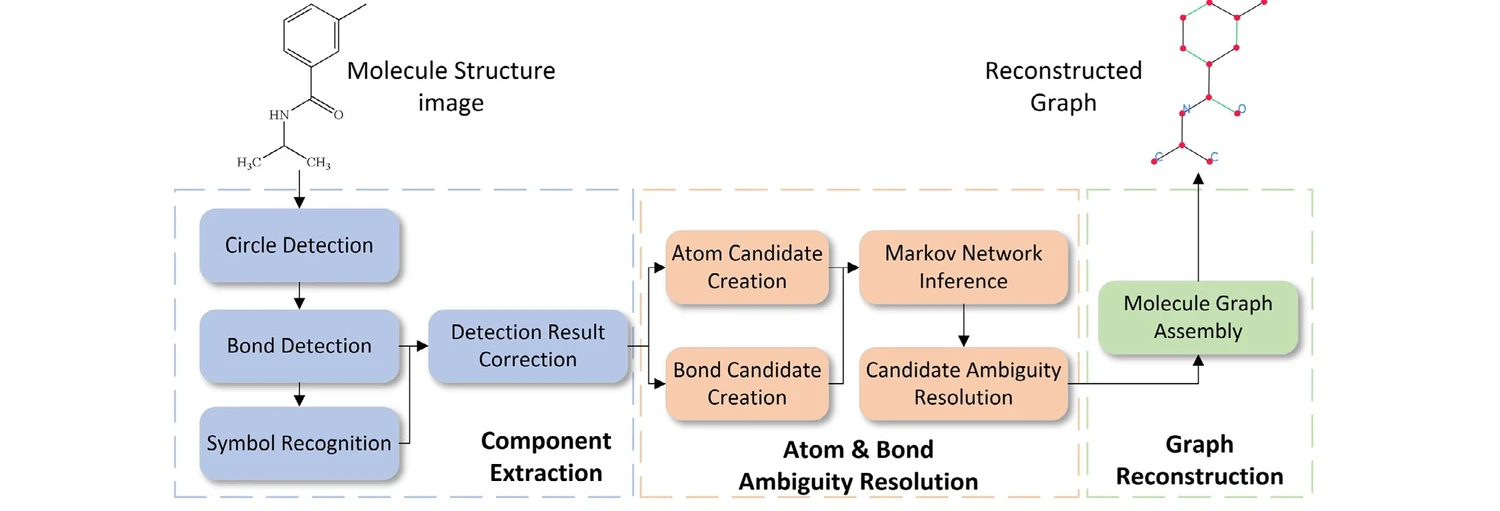
GraphReco system architecture showing component extraction, atom and bond ambiguity resolution, and graph reconstruction stages

GraphReco: Probabilistic Structure Recognition (2026)

GraphReco presents a rule-based OCSR system with two key innovations: a Fragment Merging line detection algorithm for precise bond identification and a Markov network for probabilistic resolution of atom/bond ambiguity during graph assembly. Achieves 94.2% accuracy on USPTO-10K, outperforming both traditional rule-based and some ML-based methods.

Computational Chemistry
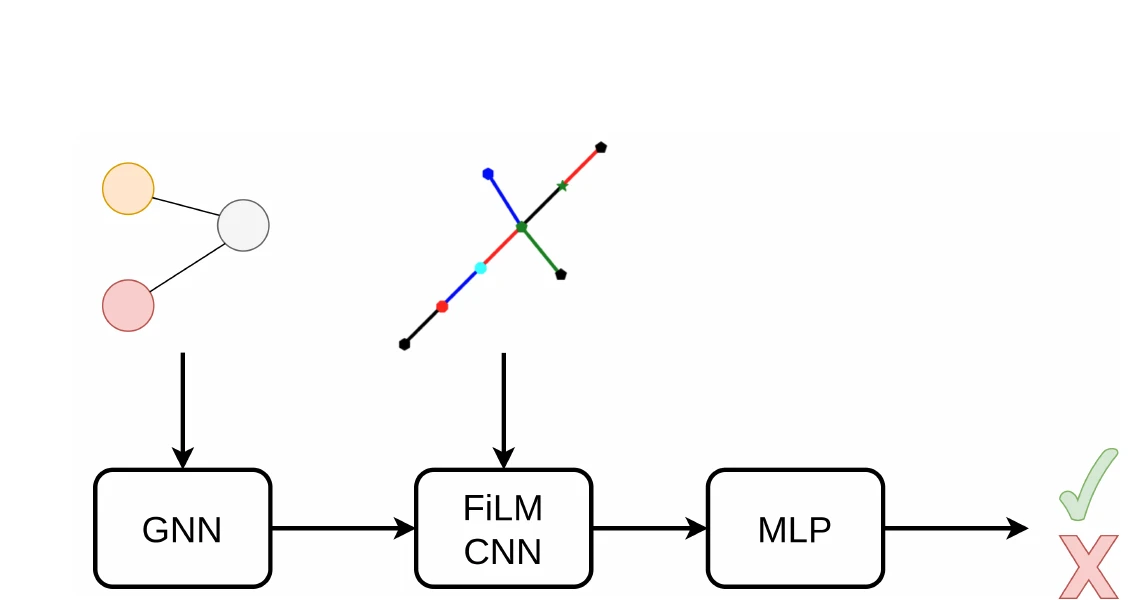
GraSP feed-forward architecture showing GNN, FiLM-conditioned CNN, and MLP classification head

GraSP: Graph Recognition via Subgraph Prediction (2026)

GraSP introduces a general framework for recognizing graphs in images by framing it as sequential subgraph prediction with a binary classifier. A GNN conditions a CNN via FiLM layers to predict whether a candidate graph is a subgraph of the target. Applied to OCSR on QM9, GraSP achieves 67.5% accuracy with no domain-specific modifications.

Computational Chemistry
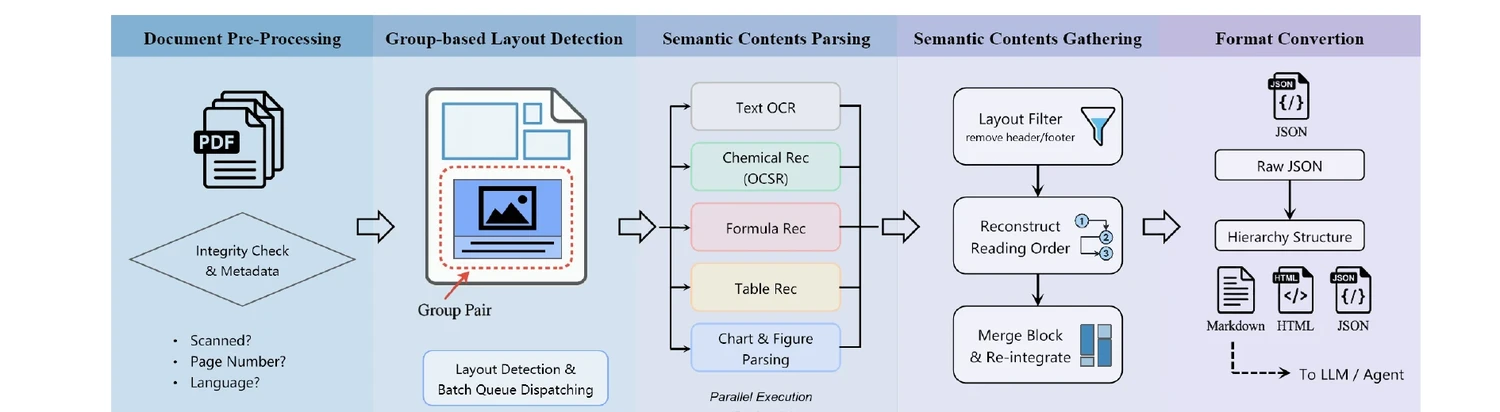
Uni-Parser pipeline diagram showing document pre-processing, layout detection, semantic parsing, content gathering, and format conversion stages

Uni-Parser: Industrial-Grade Multi-Modal PDF Parsing (2025)

Technical report on Uni-Parser, an industrial-grade document parsing engine that uses a modular multi-expert architecture to parse scientific PDFs into structured representations. Integrates MolParser 1.5 for OCSR, achieving 88.6% accuracy on chemical structures while processing up to 20 pages per second.

Computational Chemistry
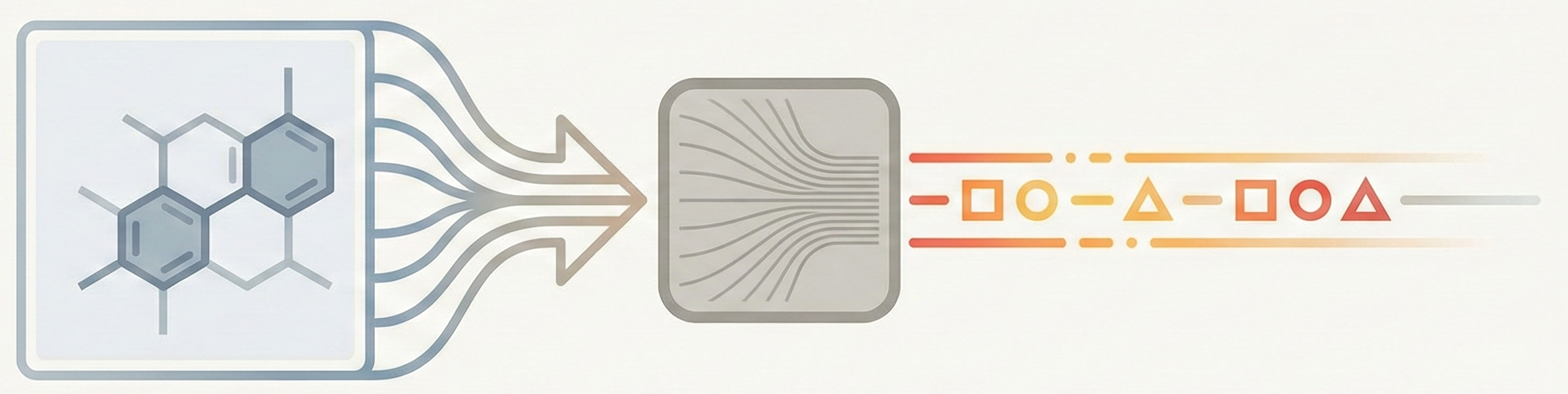
Comparative analysis of image-to-sequence OCSR methods

Image-to-Sequence OCSR: A Comparative Analysis

Deep dive into 24 image-to-sequence OCSR methods (2019-2025), comparing encoder-decoder architectures, molecular string representations, training scale, and hardware requirements.

Computational Chemistry
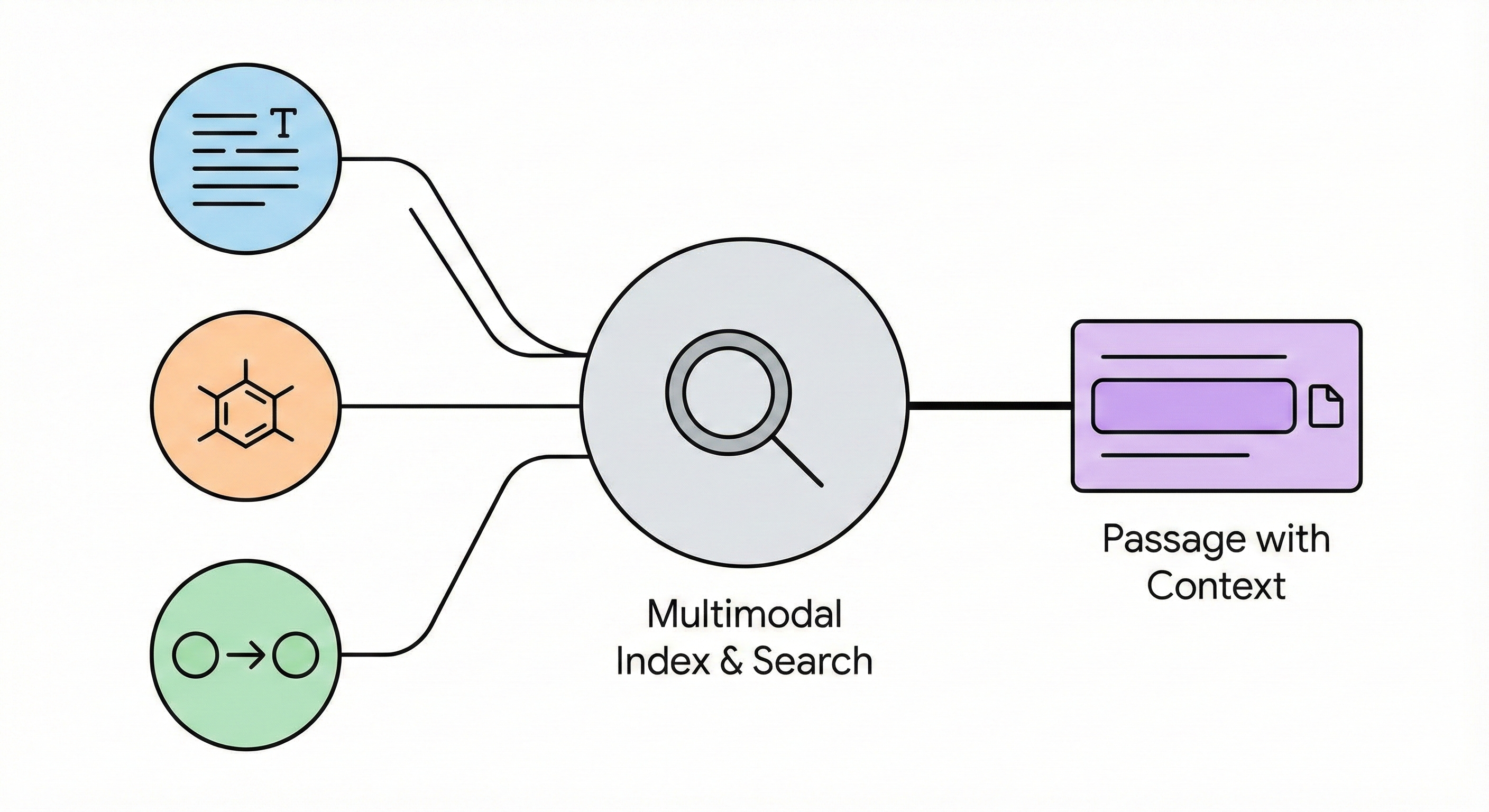
Diagram showing text, molecular structures, and reactions feeding into a multimodal index and search system that outputs passages with context

Multimodal Search in Chemical Documents and Reactions

This paper presents a multimodal search system that facilitates passage-level retrieval of chemical reactions and molecular structures by linking diagrams, text, and reaction records extracted from scientific PDFs.

Computational Chemistry
Overview of the OCSAug pipeline showing DDPM training, masked RePaint augmentation, and OCSR fine-tuning phases.

OCSAug: Diffusion-Based Augmentation for Hand-Drawn OCSR

OCSAug uses Denoising Diffusion Probabilistic Models (DDPM) and the RePaint algorithm with custom masking to generate synthetic hand-drawn chemical structure images, improving OCSR performance by 1.918-3.820x on the DECIMER benchmark.

Computational Chemistry
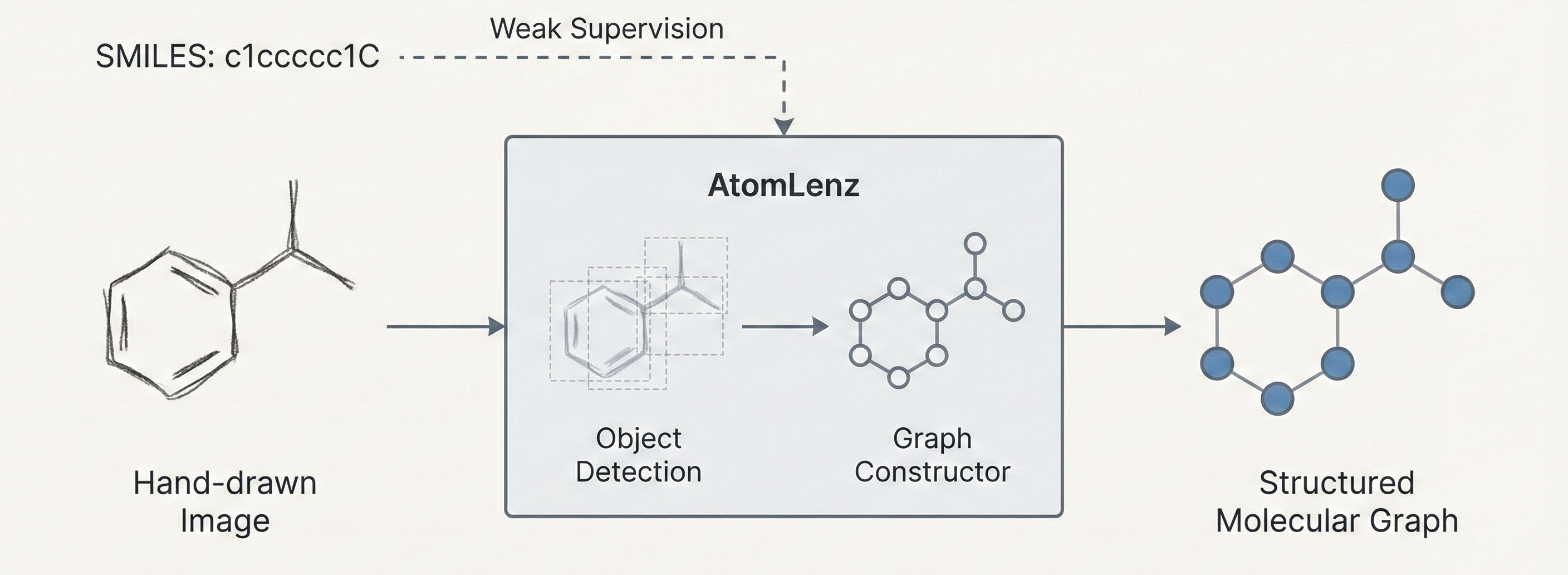
AtomLenz learns atom-level detection from hand-drawn molecular images with weak supervision

AtomLenz: Atom-Level OCSR with Limited Supervision

Introduces AtomLenz, an OCSR tool that combines object detection with a molecular graph constructor. Features a novel weakly supervised training scheme (ProbKT*) to learn atom-level localization from SMILES-only data, achieving state-of-the-art results on hand-drawn images.

Computational Chemistry
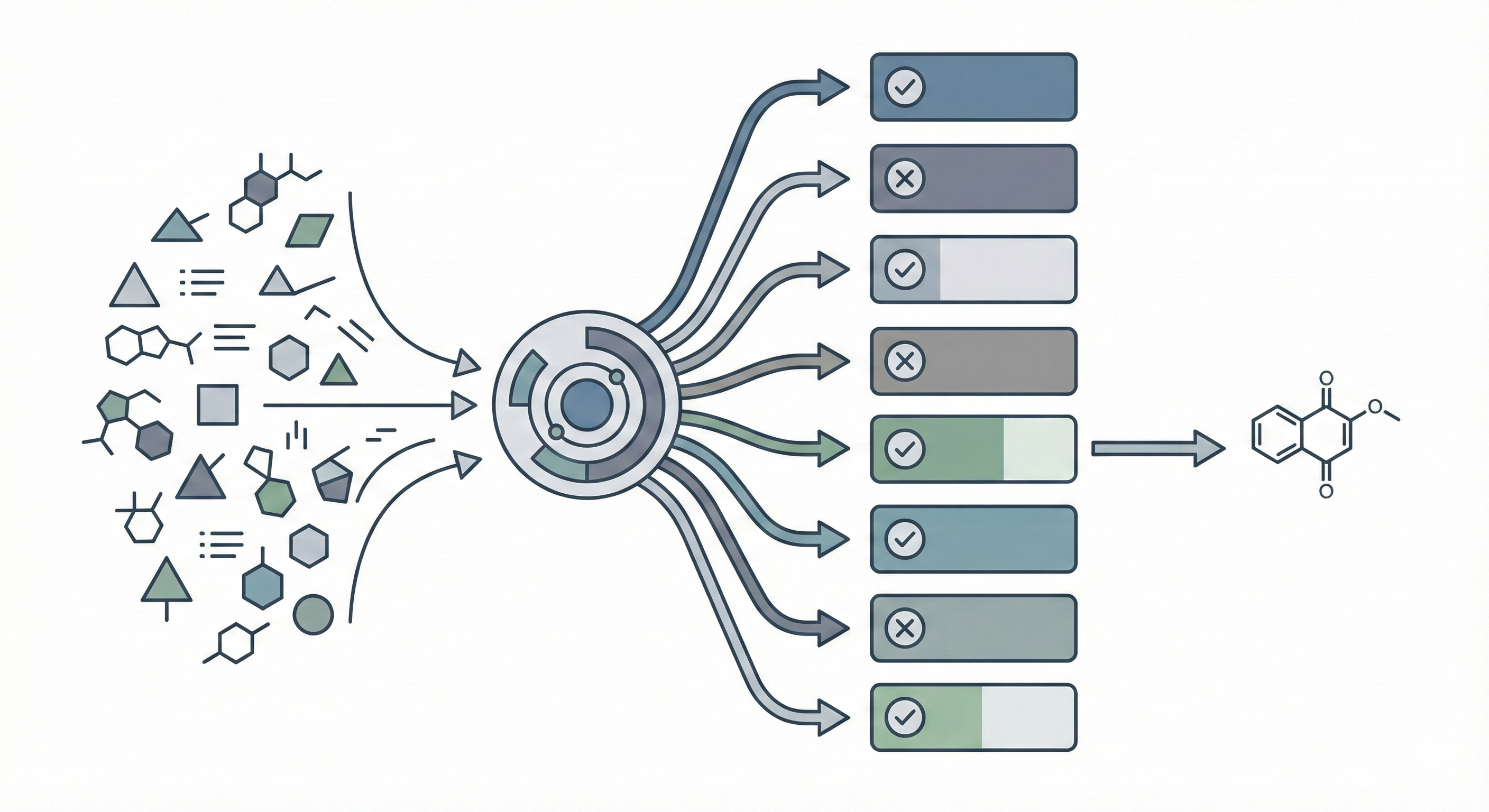
Precision and recall comparison of 8 OCSR tools on patent images

Benchmarking Eight OCSR Tools on Patent Images (2024)

Comprehensive evaluation of 8 optical chemical structure recognition tools using a newly curated dataset of 2,702 patent images. Proposes ChemIC, a ResNet-50 classifier to route images to specialized tools based on content type, demonstrating that no single tool excels at all tasks.

Computational Chemistry
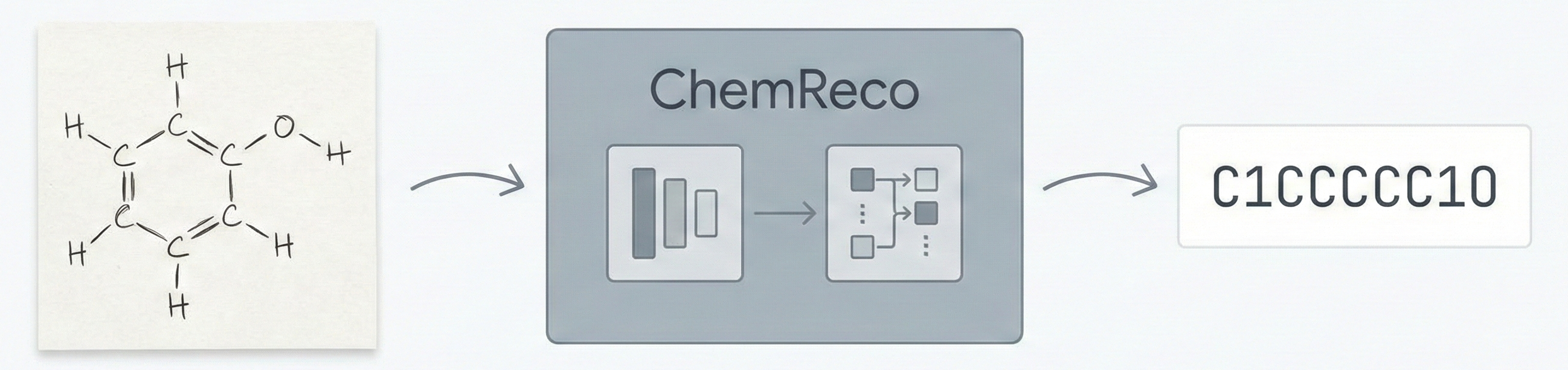
Overview of the ChemReco pipeline showing synthetic data generation and EfficientNet+Transformer architecture for hand-drawn chemical structure recognition

ChemReco: Hand-Drawn Chemical Structure Recognition

ChemReco automates the recognition of hand-drawn chemical structures using a synthetic data pipeline and an EfficientNet+Transformer architecture, achieving 96.90% accuracy on C-H-O molecules.

Computational Chemistry
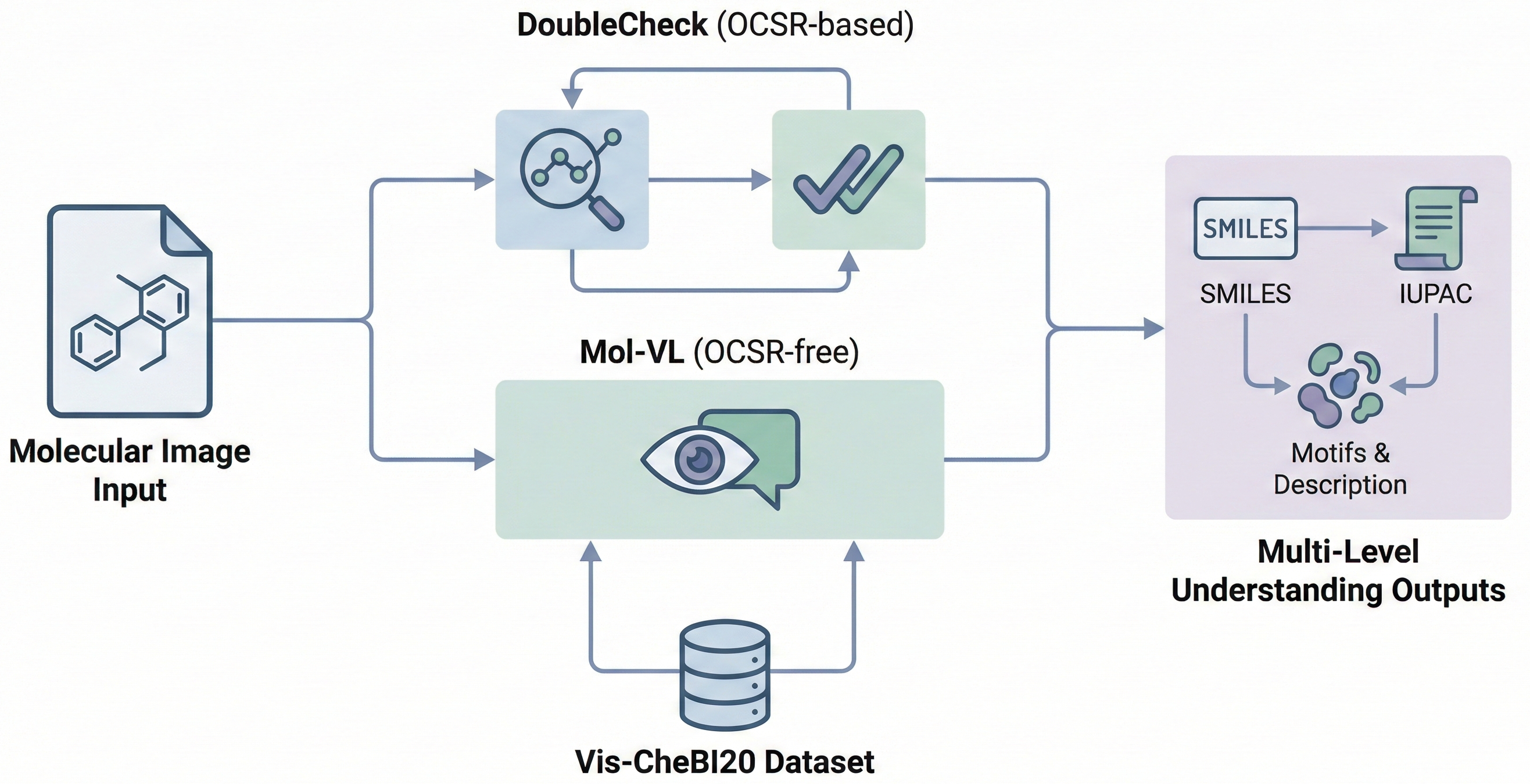
ChemVLM architecture showing molecular structure and text inputs flowing through vision encoder and language model into multimodal LLM for chemical reasoning

ChemVLM: A Multimodal Large Language Model for Chemistry

A 2025 AAAI paper introducing ChemVLM, a domain-specific multimodal LLM (26B parameters). It achieves state-of-the-art performance on chemical OCR, reasoning benchmarks, and molecular understanding tasks by combining vision and language models trained on curated chemistry data.

Computational Chemistry
Overview of the DECIMER.ai platform combining segmentation, classification, and image-to-SMILES recognition

DECIMER.ai: Optical Chemical Structure Recognition

DECIMER.ai addresses the lack of open tools for Optical Chemical Structure Recognition (OCSR) by providing a comprehensive, deep-learning-based workflow. It features a novel data generation pipeline (RanDepict), a web application, and models for segmentation and recognition that rival or exceed proprietary solutions.