Machine Learning Fundamentals
Visualization of inverse problem showing one input mapping to multiple valid outputs

Mixture Density Networks: Modeling Multimodal Distributions

A foundational 1994 paper identifying why standard least-squares networks fail at inverse problems (multi-valued mappings). It introduces the Mixture Density Network (MDN), which predicts the parameters of a Gaussian Mixture Model to capture the full conditional probability density.

Computational Social Science
Visualization of party-based legislative embeddings

Party Matters: Enhancing Legislative Embeddings

This paper introduces a neural architecture that combines bill text embeddings (CNN/MWE) with sponsor ideology metadata to improve vote prediction accuracy, particularly in out-of-session contexts where political dynamics shift.

Generative Modeling
Diagram comparing standard stochastic sampling (gradient blocked) vs the reparameterization trick (gradient flows)

Auto-Encoding Variational Bayes: VAE Paper Summary

Kingma and Welling’s foundational 2013 paper introducing Variational Autoencoders and the reparameterization trick, enabling end-to-end gradient-based training of generative models with continuous latent variables by moving the stochasticity outside the computational graph so that gradients can flow through a deterministic path.

Generative Modeling
MNIST digit samples generated from a Variational Autoencoder latent space

Importance Weighted Autoencoders: Beyond the Standard VAE

Discover how Importance Weighted Autoencoders (IWAEs) use the same architecture as VAEs with a fundamentally more powerful objective to leverage multiple samples effectively.

Generative Modeling
Flowchart comparing VAE and IWAE computation showing the key difference in where averaging occurs relative to the log operation

IWAE: Importance Weighted Autoencoders

Burda et al.’s ICLR 2016 paper introducing Importance Weighted Autoencoders, which use importance sampling to derive a strictly tighter log-likelihood lower bound than standard VAEs, addressing posterior collapse and improving generative quality. The model architecture remains the same.

Computational Chemistry
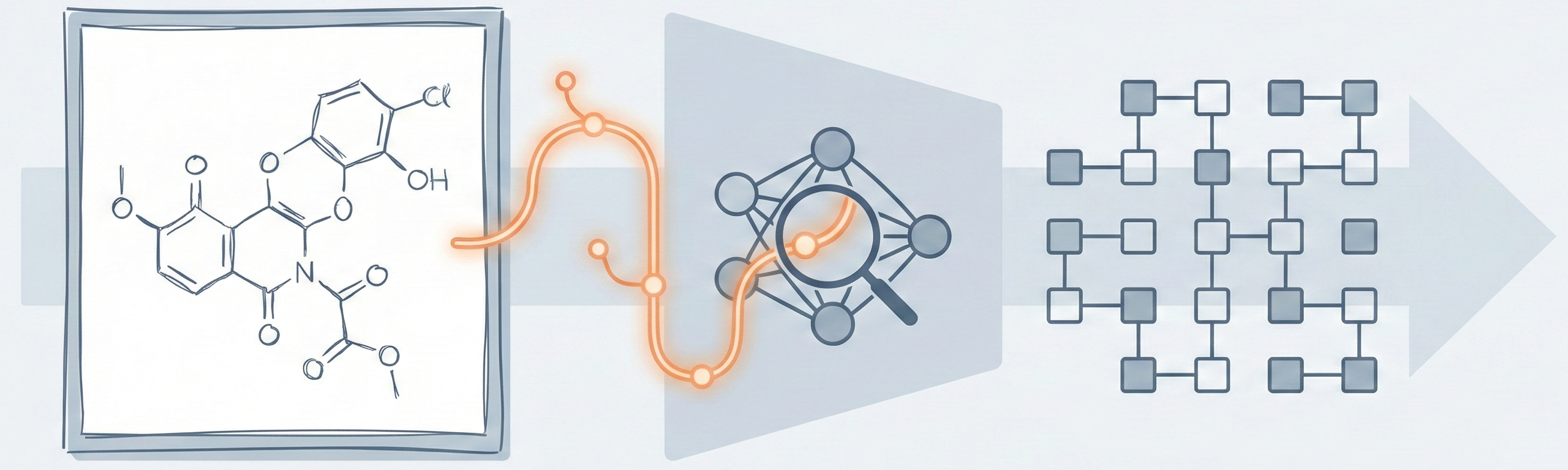
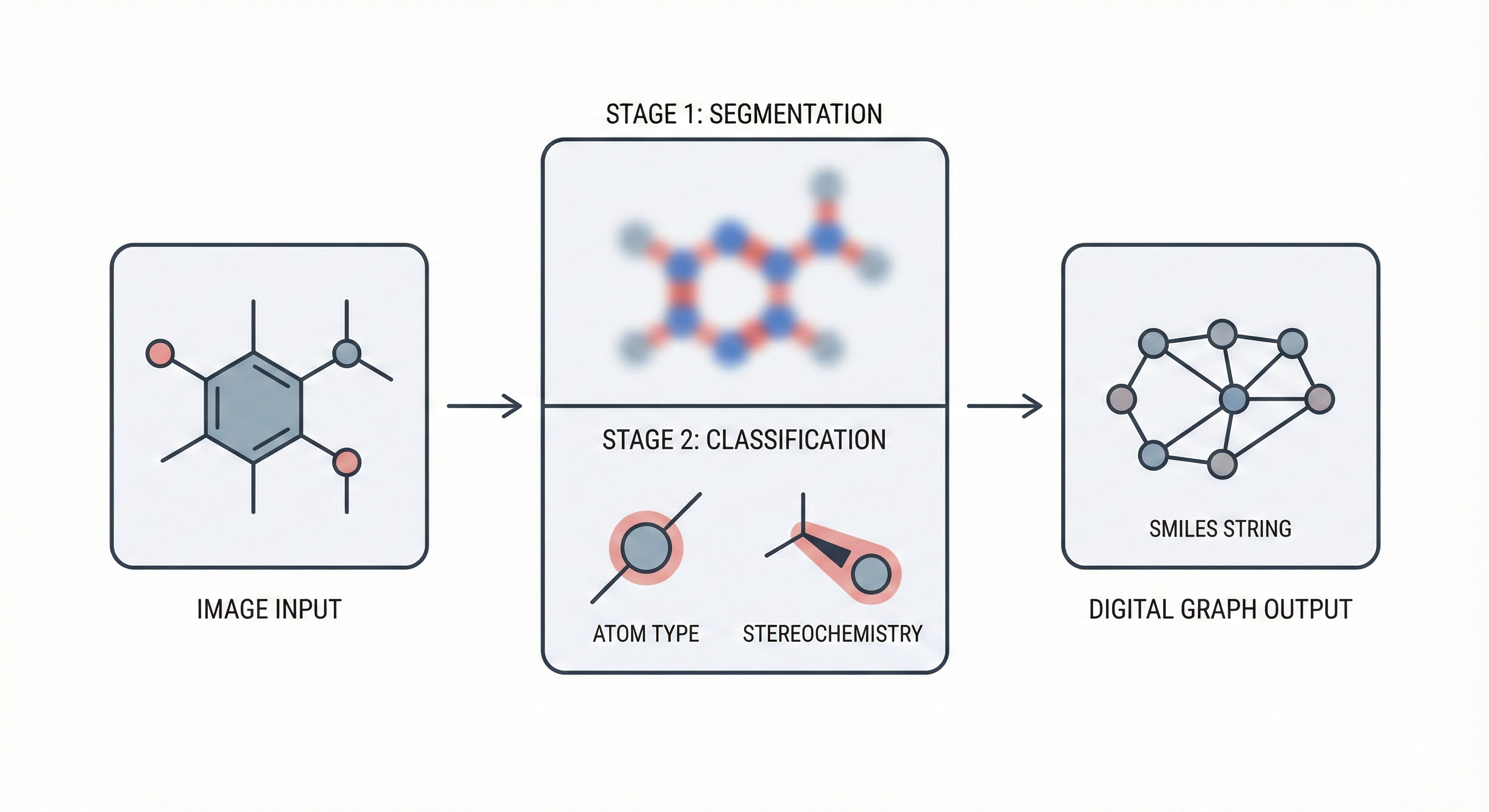
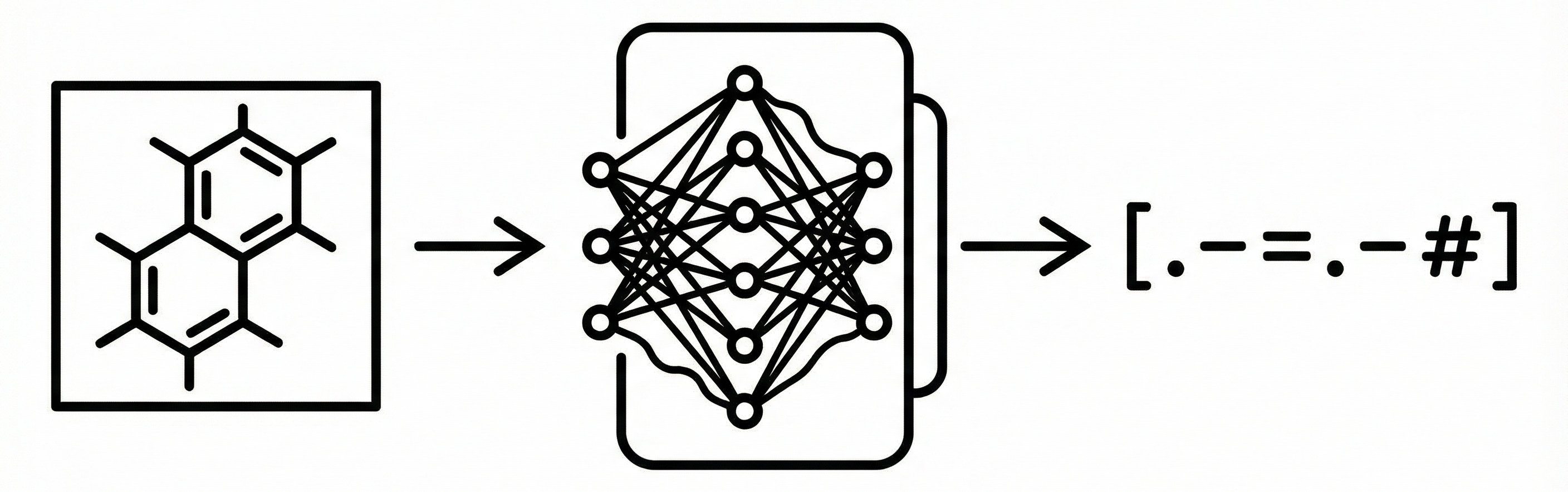
GTR-CoT: Graph Traversal Chain-of-Thought for Molecules

GTR-CoT: Graph Traversal Chain-of-Thought for Molecules

A 2025 Vision-Language Model for OCSR that uses graph traversal chain-of-thought reasoning to handle chemical abbreviations (Ph, Et, etc.) that break existing systems, achieving state-of-the-art performance by training on data where abbreviations are preserved.

Computational Chemistry
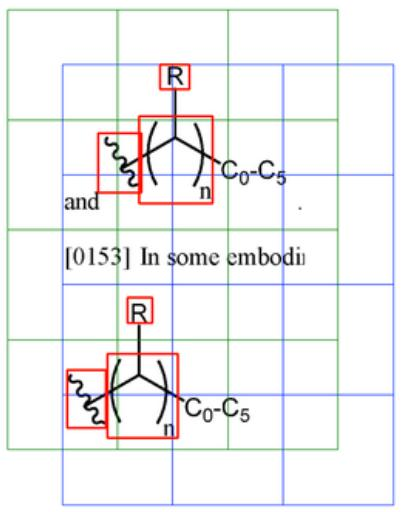
Markush structure diagram

SubGrapher: Visual Fingerprinting of Chemical Structures

SubGrapher introduces a visual fingerprinting approach to Optical Chemical Structure Recognition that detects functional groups directly from images, enabling chemical database searches without full structure reconstruction and handling complex patent images including Markush structures.

Computational Chemistry
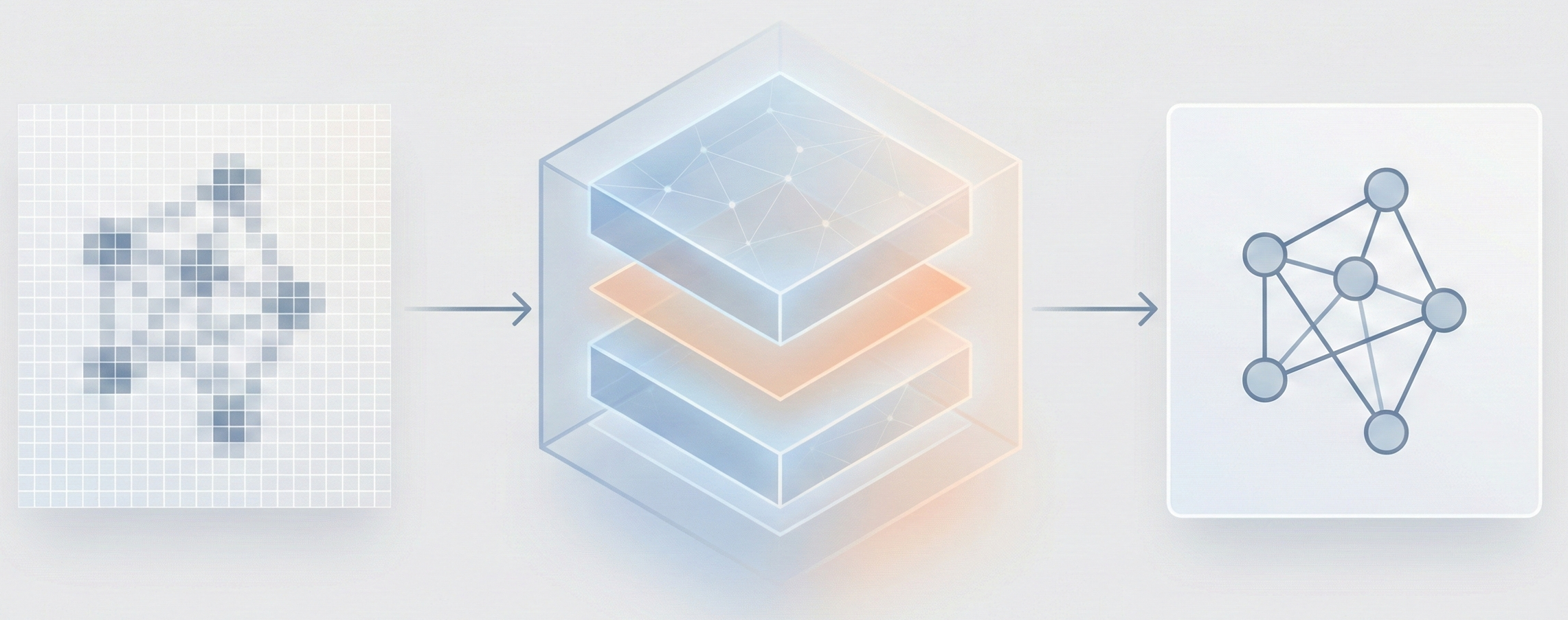
αExtractor extracts structured chemical information from biomedical literature

αExtractor: Chemical Info from Biomedical Literature

A 2024 deep learning system for optical chemical structure recognition designed specifically for biomedical literature mining, using ResNet-Transformer architecture to handle challenging conditions including low-resolution images, noise, distortions, and even hand-drawn molecular diagrams from scientific documents.

Computational Chemistry

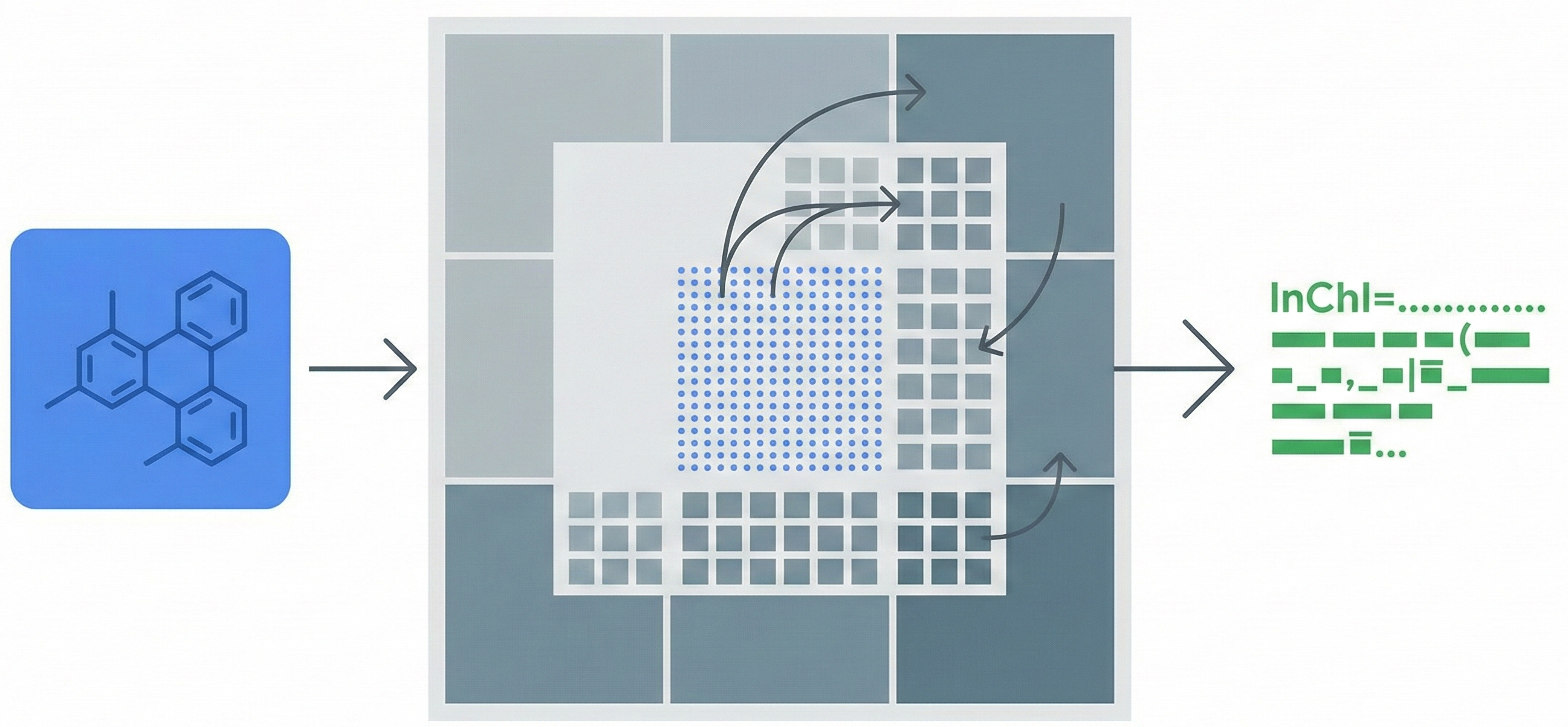
MolNexTR: Dual-Stream Molecular Image Recognition

MolNexTR proposes a dual-stream architecture combining ConvNext and Vision Transformers to improve molecular image recognition (OCSR). It achieves 81-97% accuracy across diverse benchmarks utilizing simultaneous local and global feature extraction alongside specialized image contamination augmentations.

Computational Chemistry
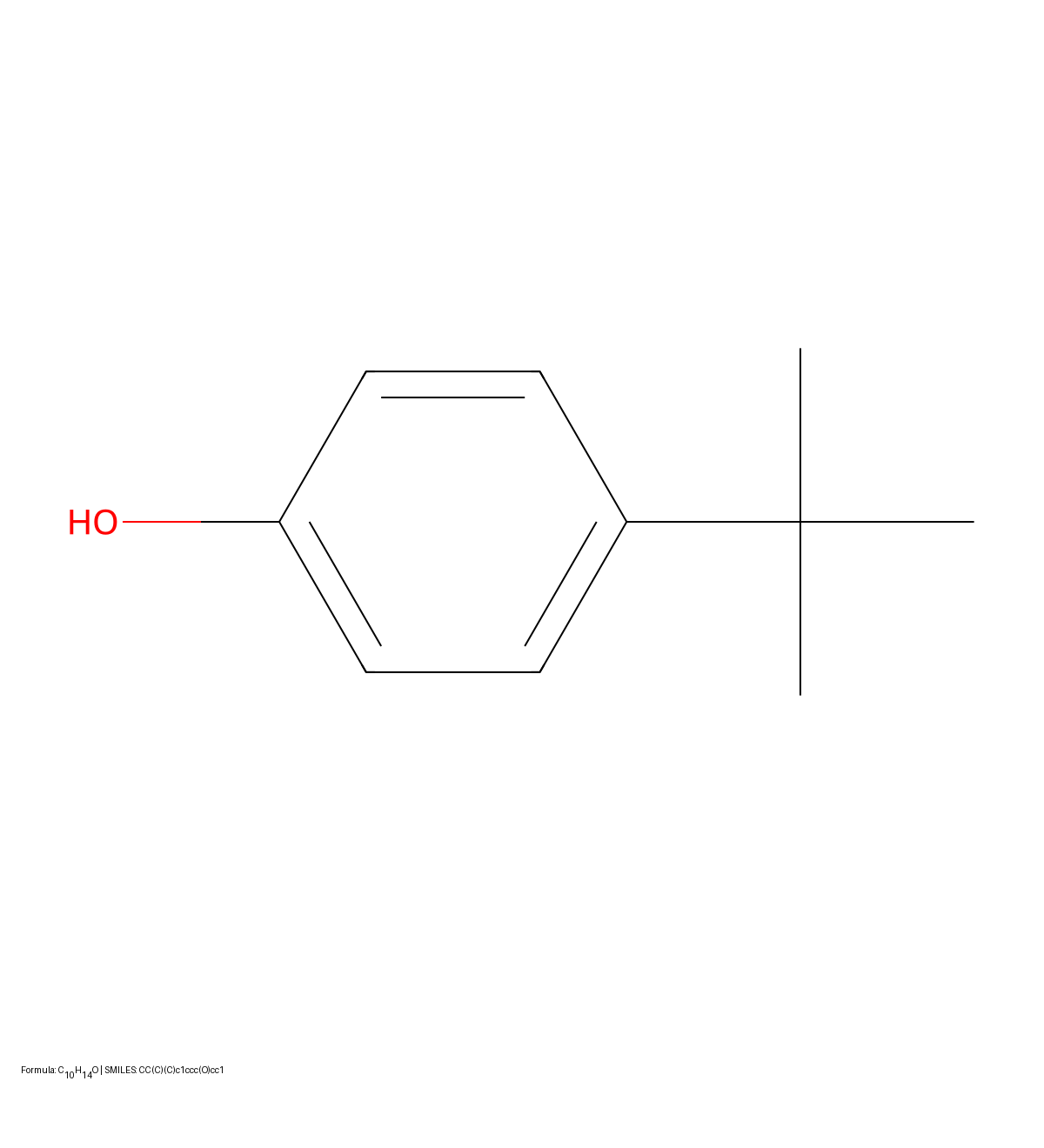
A colored molecule with annotations, representing the diverse drawing styles found in scientific papers that OCSR models must handle.

MolParser-7M & WildMol: Large-Scale OCSR Datasets

The MolParser project introduces two key datasets: MolParser-7M, the largest training dataset for Optical Chemical Structure Recognition (OCSR) with 7.7M pairs of images and E-SMILES strings, and WildMol, a new 20k-sample benchmark for evaluating models on challenging real-world data. The training data uniquely combines millions of diverse synthetic molecules with 400,000 manually annotated in-the-wild samples to significantly enhance model robustness.

Computational Chemistry
Potential energy surface showing molecular conformation space with equilibrium and low energy conformations

DenoiseVAE: Adaptive Noise for Molecular Pre-training

ICLR 2025 paper introducing DenoiseVAE, which learns adaptive, atom-specific noise distributions through a VAE framework to improve denoising-based pre-training for molecular force field prediction, outperforming fixed Gaussian noise approaches on quantum chemistry benchmarks.

Computational Chemistry
Adaptive grid merging visualization for benzene molecule showing multi-resolution spatial discretization

Beyond Atoms: 3D Space Modeling for Molecular Pretraining

ICML 2025 paper introducing SpaceFormer, a Transformer architecture that challenges the atom-centric paradigm by modeling the continuous 3D space surrounding molecules using adaptive multi-resolution grids, achieving state-of-the-art performance on quantum property prediction benchmarks.