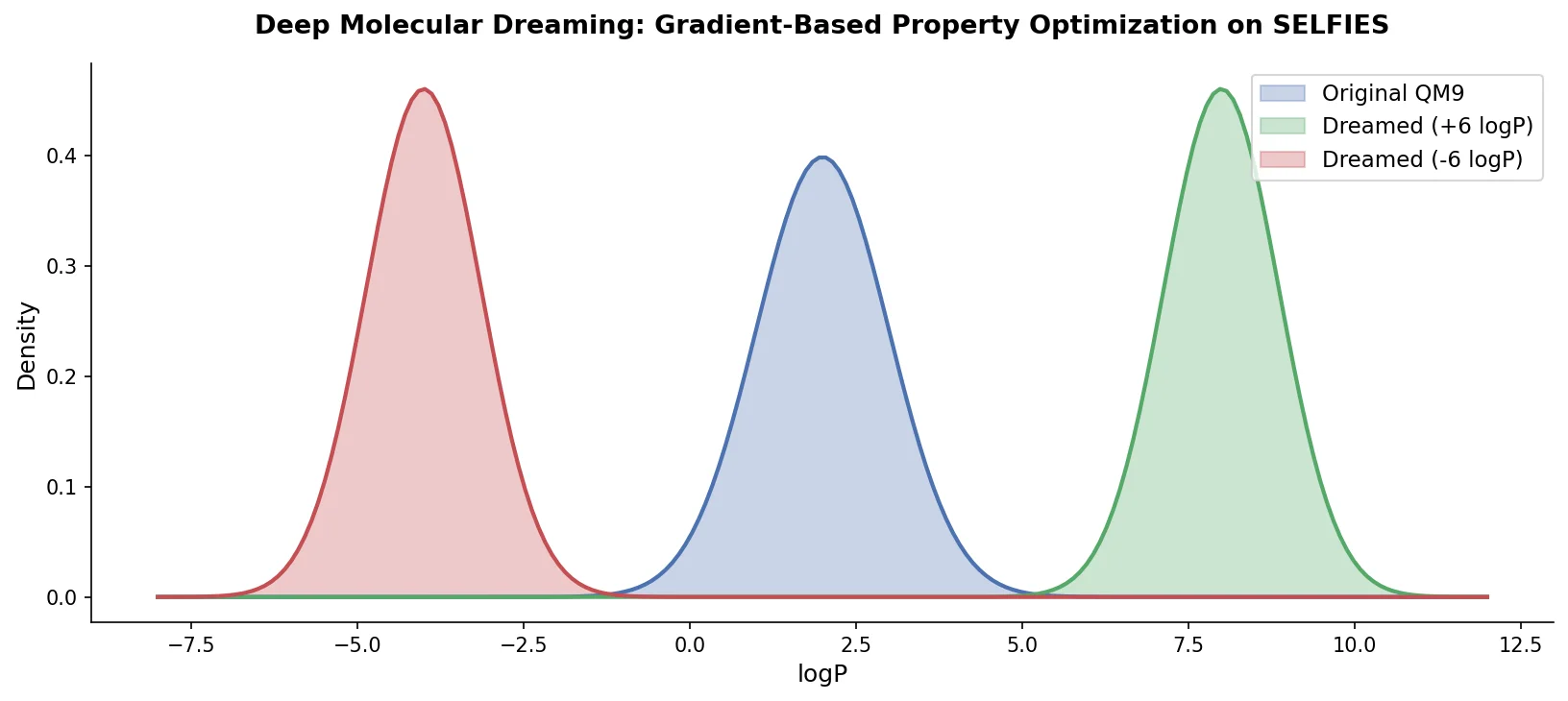
Molecular Generation
Bar chart showing CogMol CLaSS enrichment factors across three COVID-19 drug targets

CogMol: Controlled Molecule Generation for COVID-19

CogMol uses a SMILES VAE and multi-attribute controlled sampling (CLaSS) to generate novel, target-specific drug molecules for unseen SARS-CoV-2 proteins without model retraining.

Molecular Representations
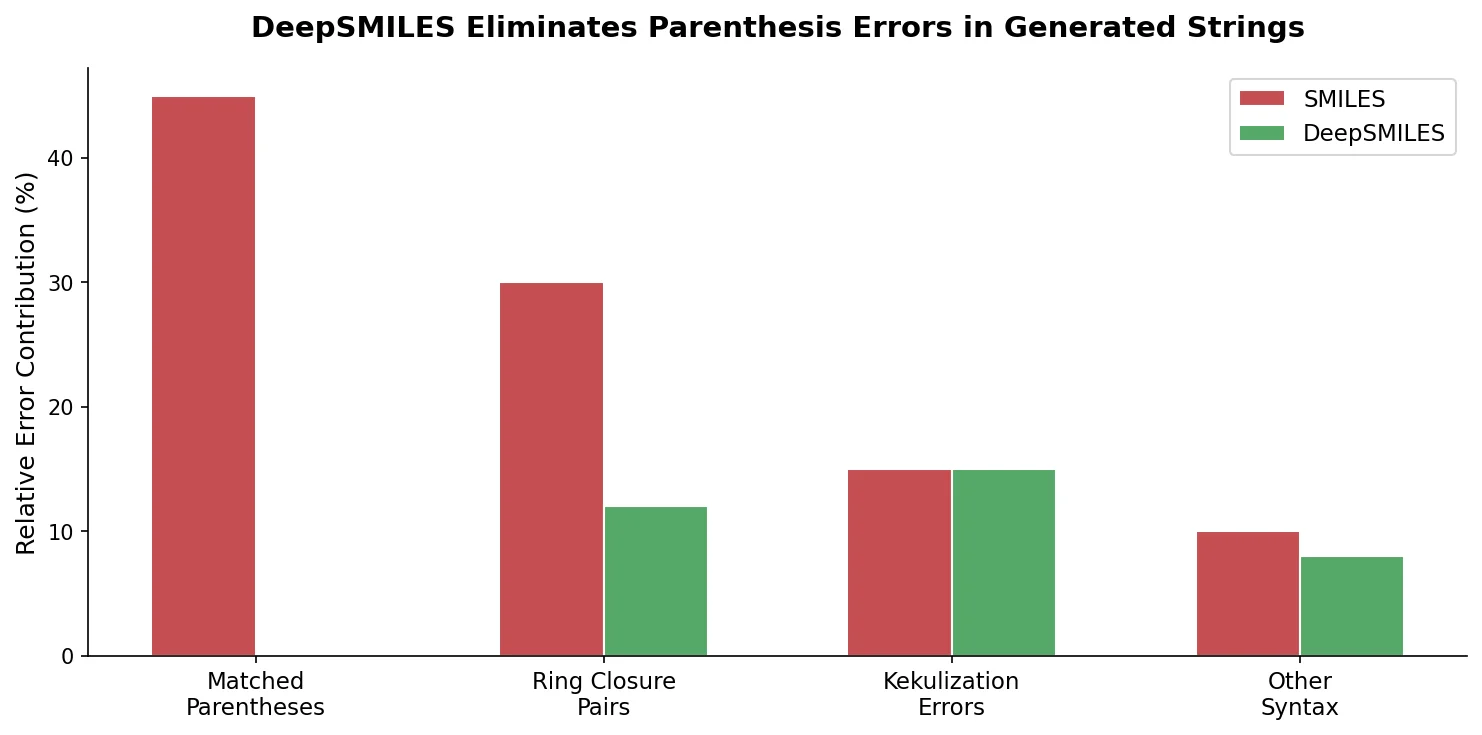
Bar chart comparing SMILES and DeepSMILES error types, showing DeepSMILES eliminates parenthesis errors

DeepSMILES: Adapting SMILES Syntax for Machine Learning

DeepSMILES replaces paired parentheses and ring closure symbols in SMILES with a postfix notation and single ring-size digits, making it easier for generative models to produce syntactically valid molecular strings.
Molecular Generation
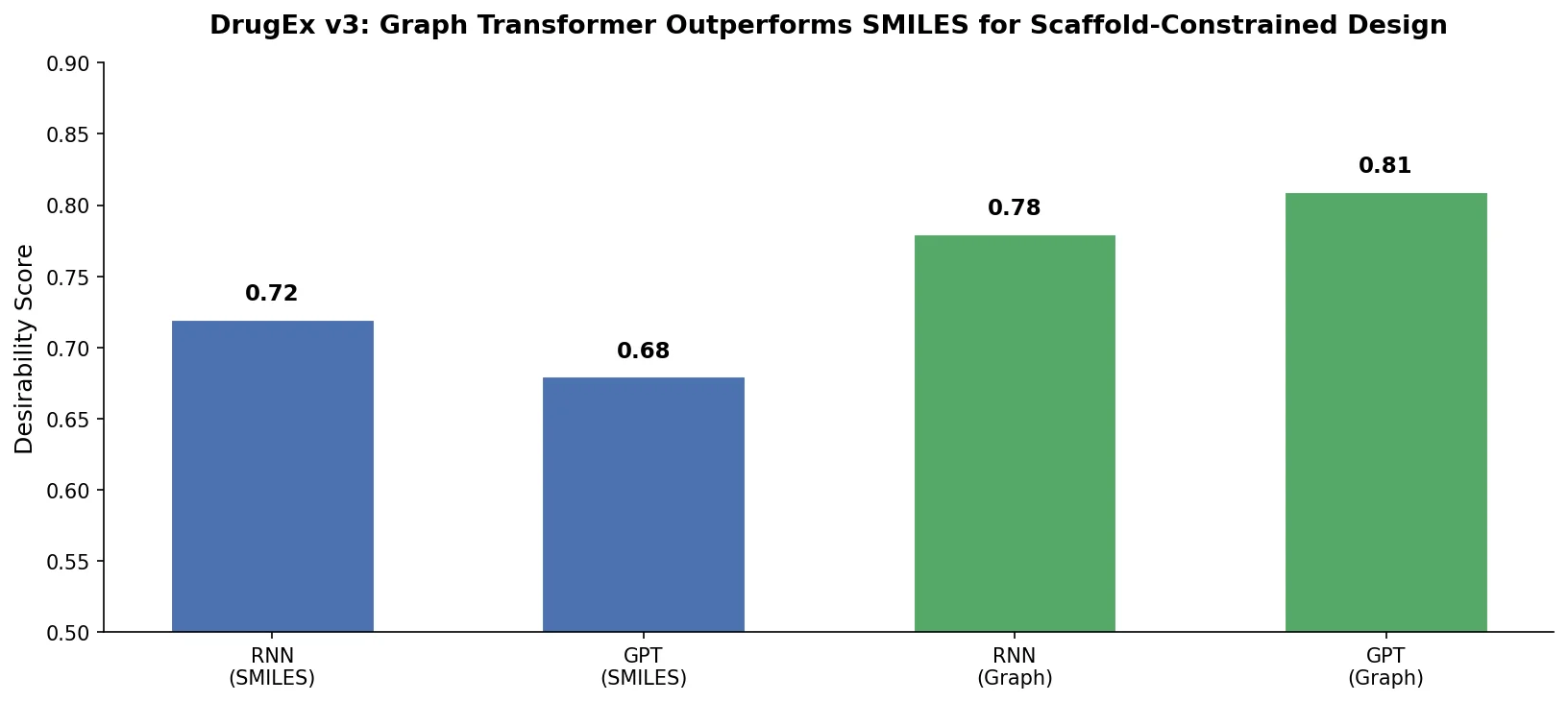
Bar chart comparing RNN and GPT architectures with SMILES and Graph representations on desirability scores

DrugEx v3: Scaffold-Constrained Graph Transformer

DrugEx v3 extends scaffold-constrained drug design by introducing a Graph Transformer with adjacency-matrix-based positional encoding, achieving 100% molecular validity and high predicted affinity for adenosine A2A receptor ligands.

Molecular Generation
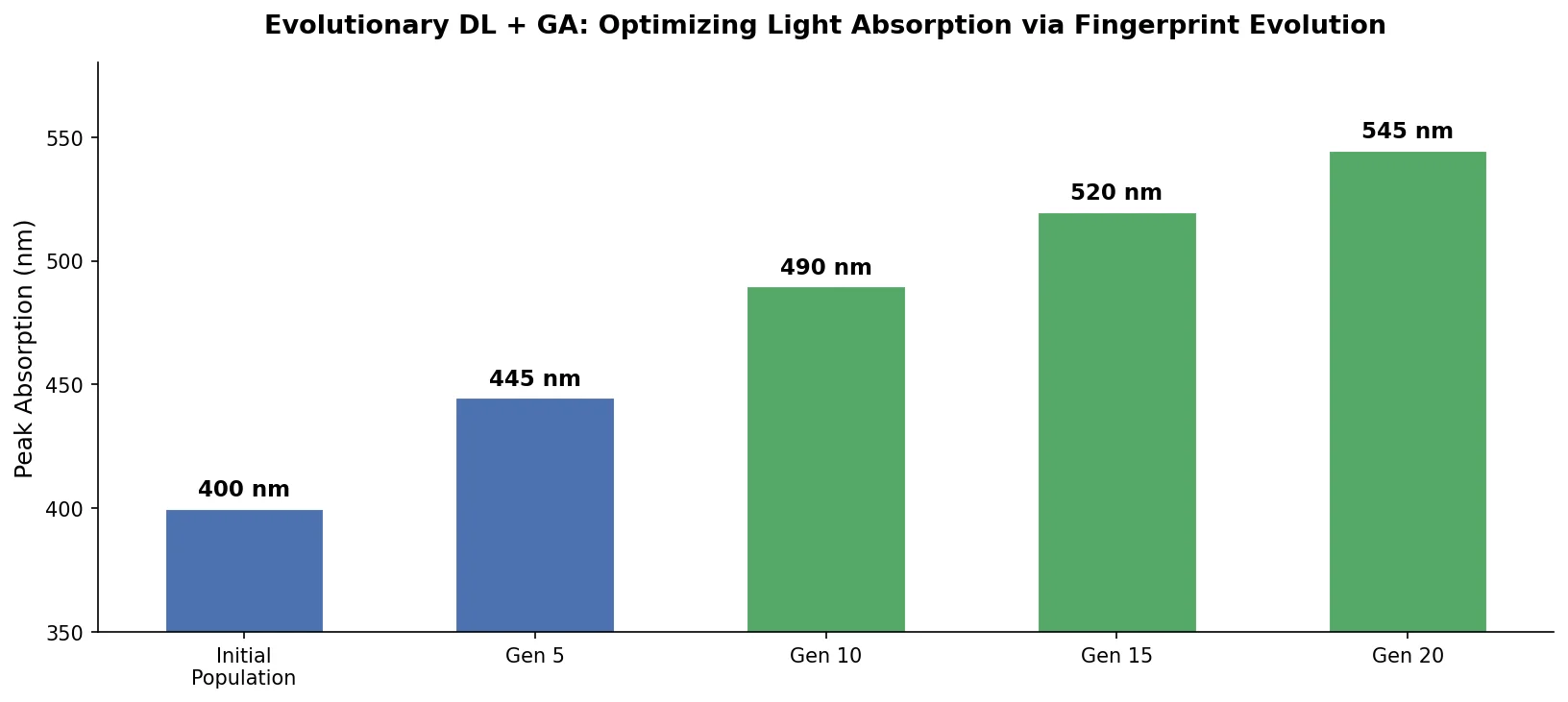
Bar chart showing peak absorption wavelength increasing across evolutionary generations

Evolutionary Molecular Design via Deep Learning + GA

An evolutionary molecular design framework that evolves ECFP fingerprint vectors using a genetic algorithm, reconstructs valid SMILES via an RNN decoder, and evaluates fitness with a DNN property predictor.

Computational Chemistry
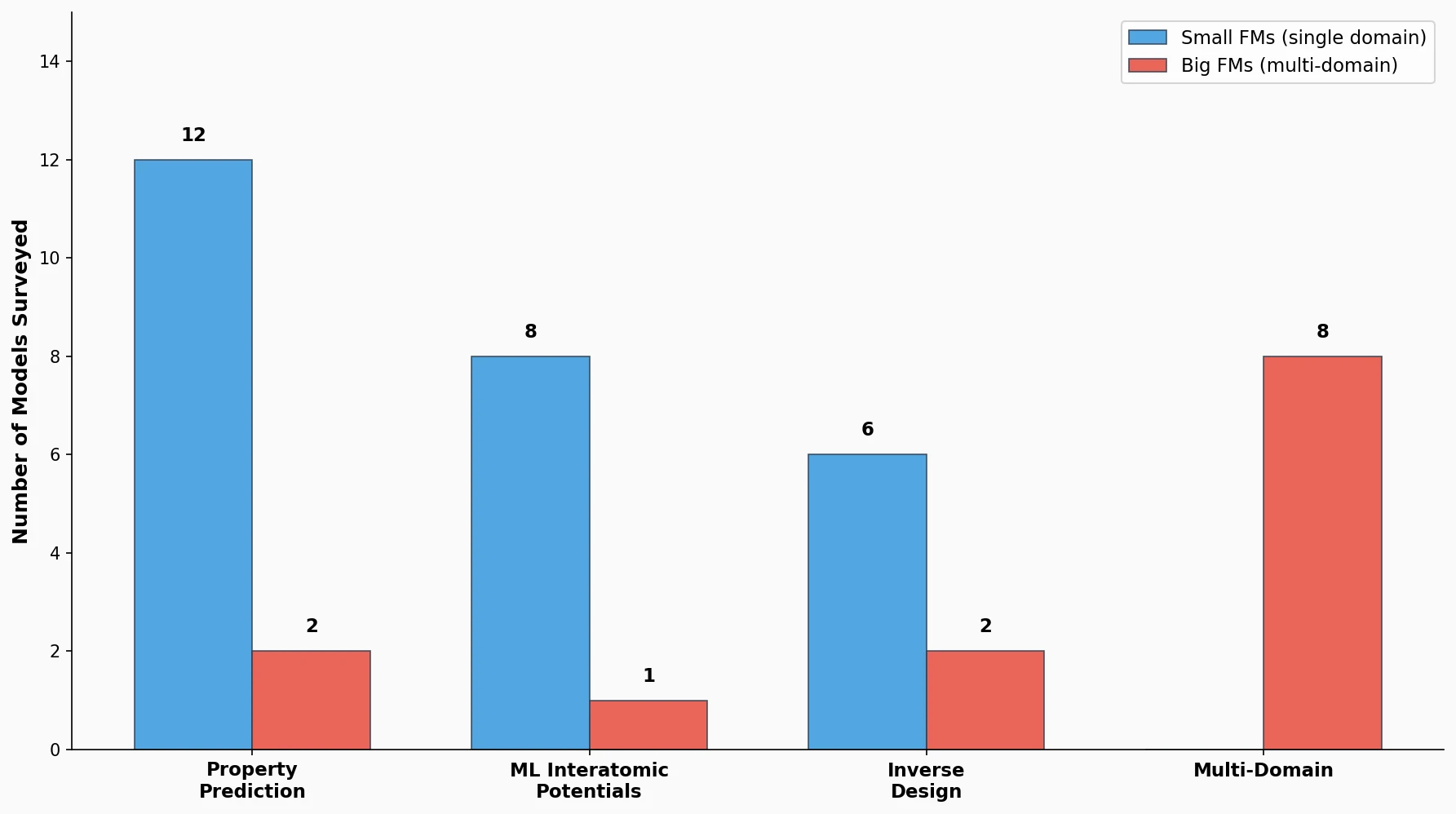
Bar chart comparing small and big foundation models surveyed across property prediction, MLIPs, inverse design, and multi-domain chemistry applications

Foundation Models in Chemistry: A 2025 Perspective

This perspective from Choi et al. reviews foundation models in chemistry, categorizing them as ‘small’ (domain-specific, e.g., property prediction, MLIPs, inverse design) and ‘big’ (multi-domain, e.g., multimodal and LLM-based). It surveys pretraining strategies, key architectures (GNNs and language models), and outlines future directions for scaling, efficiency, and interpretability.

Molecular Generation
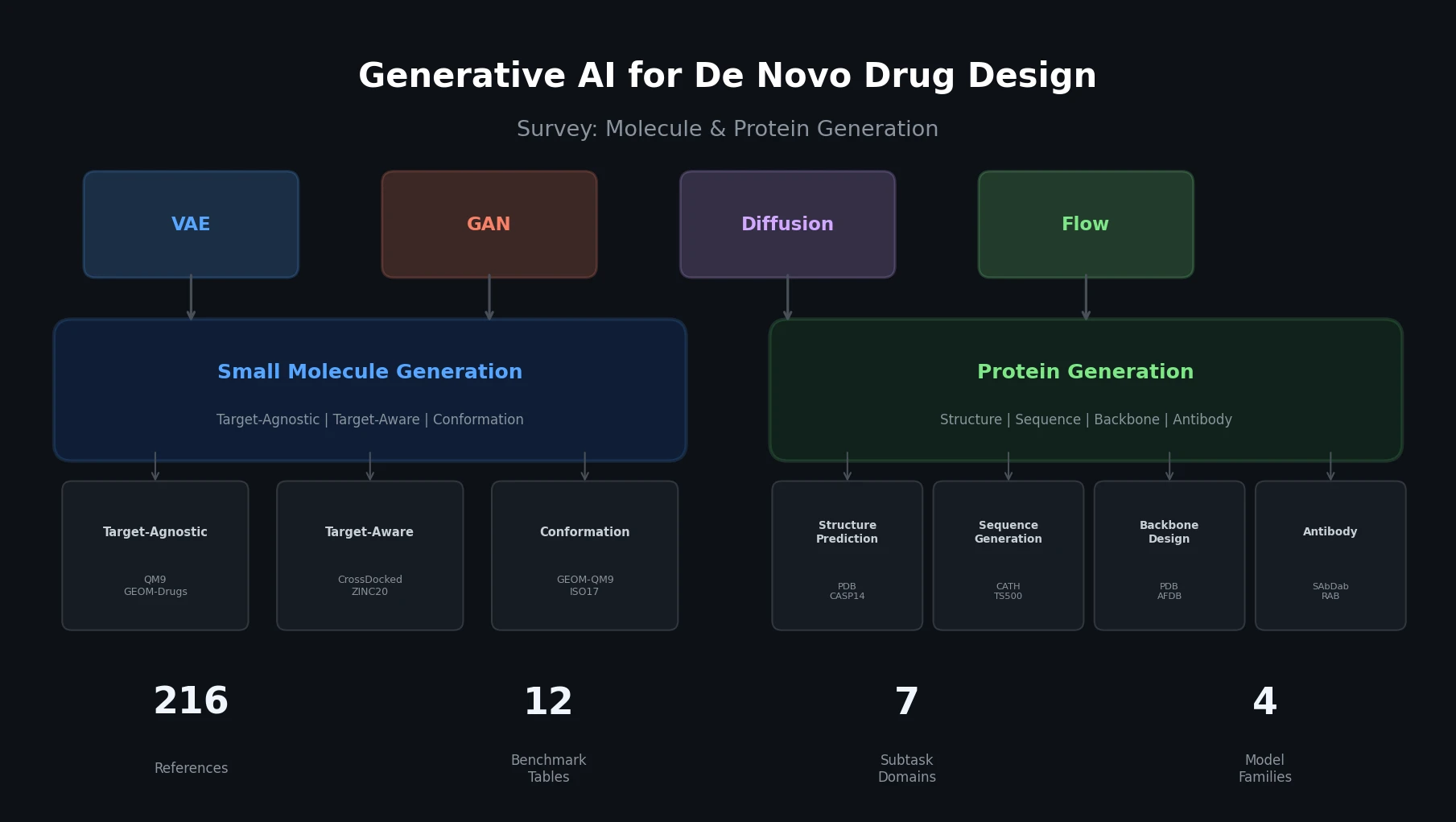
Taxonomy diagram showing four generative model families (VAE, GAN, Diffusion, Flow) connecting to small molecule generation and protein generation subtasks

Generative AI Survey for De Novo Molecule and Protein Design

This survey organizes generative AI for de novo drug design into two themes: small molecule generation (target-agnostic, target-aware, conformation) and protein generation (structure prediction, sequence generation, backbone design, antibody, peptide). It covers four generative model families (VAEs, GANs, diffusion, flow-based), catalogs key datasets and benchmarks, and provides 12 comparative benchmark tables across all subtasks.

Molecular Generation
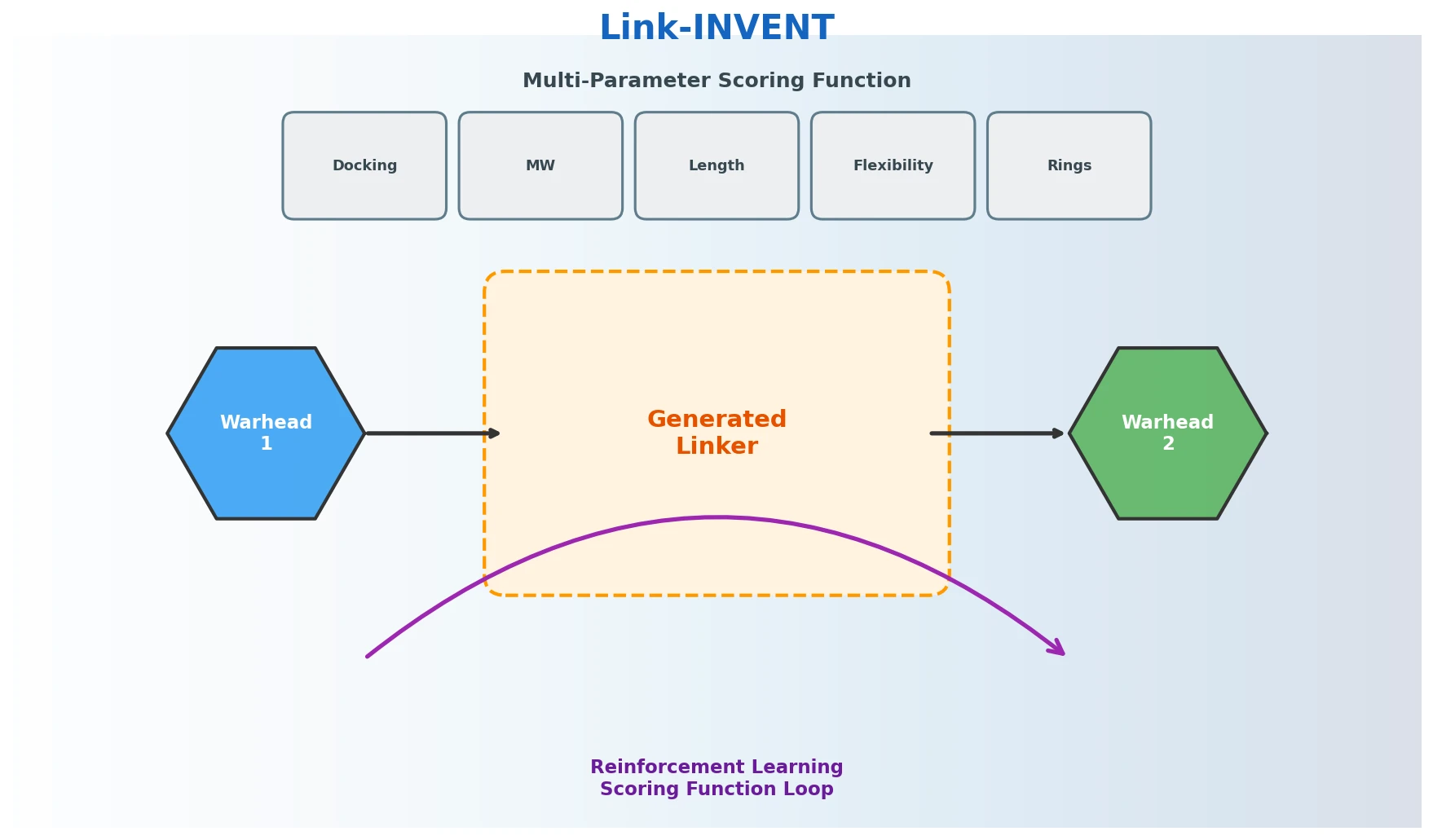
Schematic of Link-INVENT architecture showing encoder-decoder RNN with reinforcement learning scoring loop

Link-INVENT: RL-Driven Molecular Linker Generation

Link-INVENT is an RNN-based generative model for molecular linker design that uses reinforcement learning with a flexible scoring function, demonstrated on fragment linking, scaffold hopping, and PROTAC design.

Predictive Chemistry
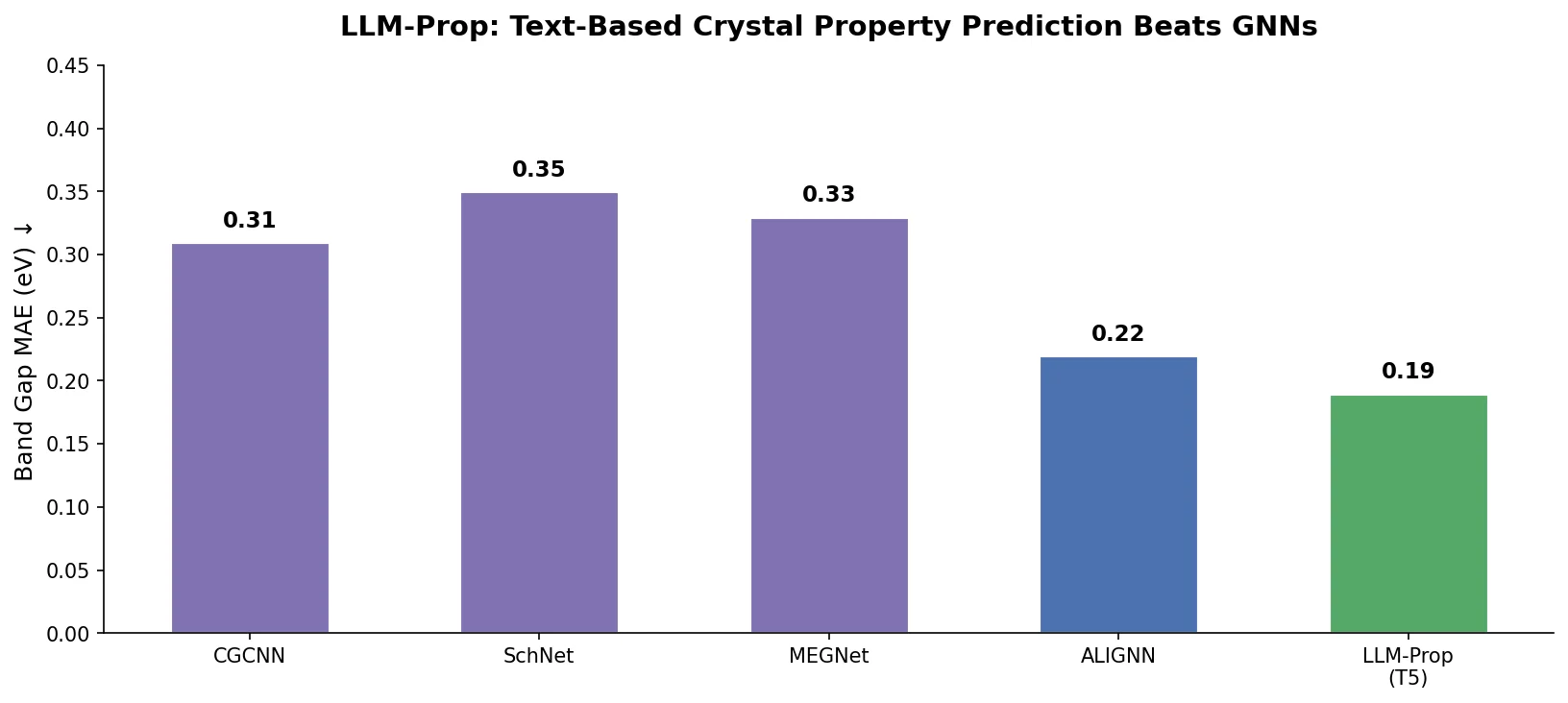
Bar chart comparing LLM-Prop band gap MAE against CGCNN, SchNet, MEGNet, and ALIGNN

LLM-Prop: Predicting Crystal Properties from Text

LLM-Prop uses the encoder half of T5, fine-tuned on Robocrystallographer text descriptions, to predict crystal properties. It outperforms GNN baselines like ALIGNN on band gap and volume prediction while using fewer parameters.

Molecular Representations
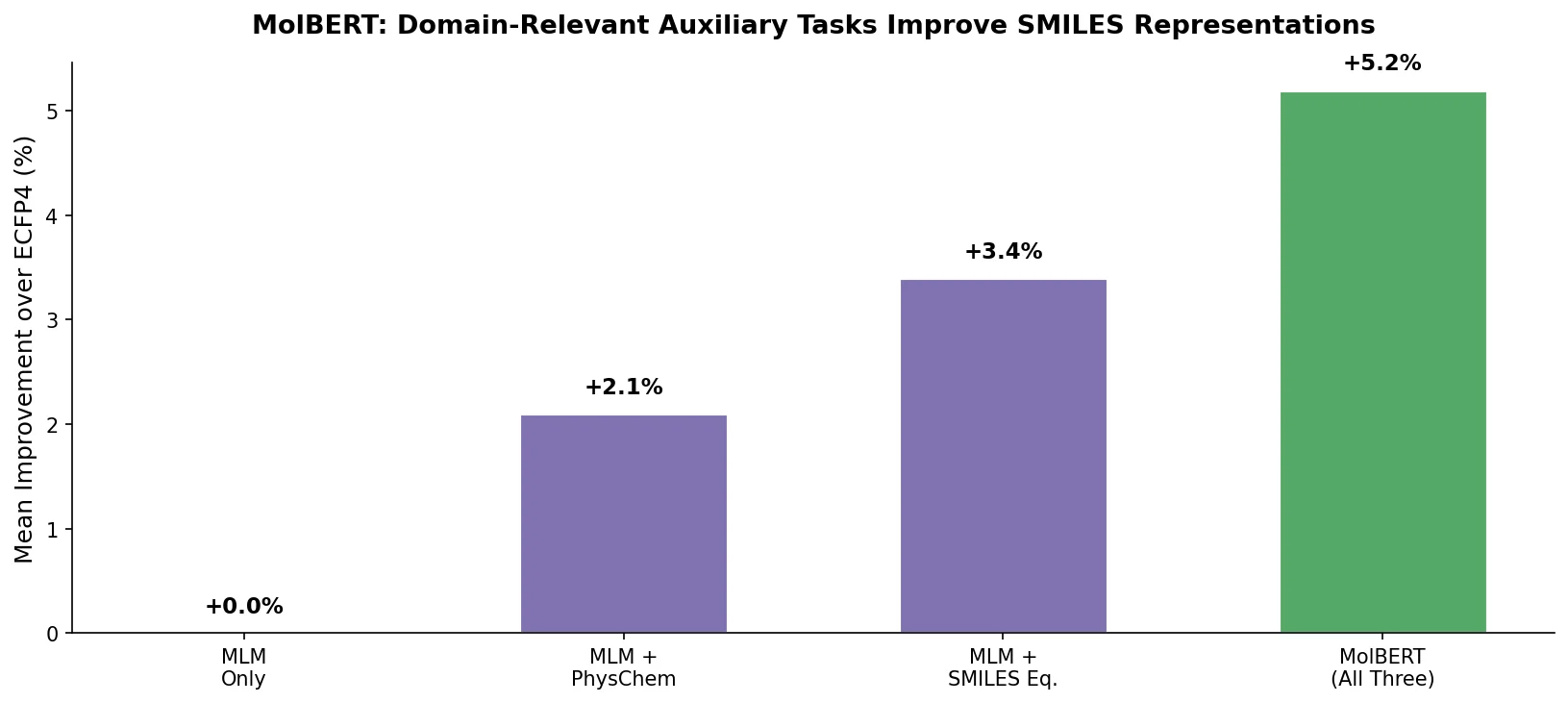
Bar chart showing MolBERT ablation: combining MLM, PhysChem, and SMILES equivalence tasks gives best improvement

MolBERT: Auxiliary Tasks for Molecular BERT Models

MolBERT pre-trains a BERT model on SMILES strings using masked language modeling, SMILES equivalence, and physicochemical property prediction as auxiliary tasks, achieving state-of-the-art results on virtual screening and QSAR benchmarks.

Predictive Chemistry
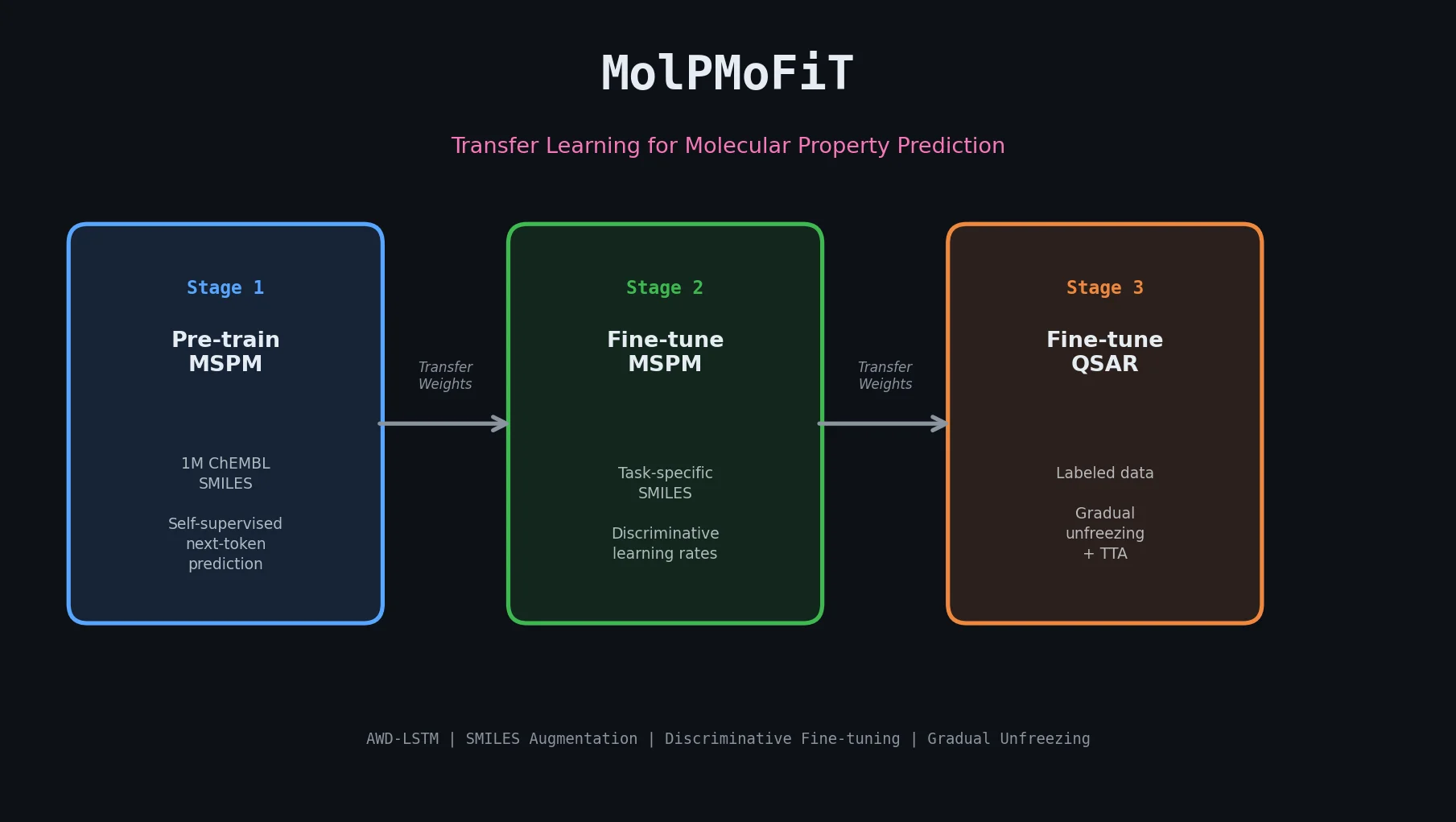
Diagram showing ULMFiT-style three-stage pipeline adapted for molecular property prediction

MolPMoFiT: Inductive Transfer Learning for QSAR

MolPMoFiT applies ULMFiT-style transfer learning to QSAR modeling, pre-training an AWD-LSTM on one million ChEMBL molecules and fine-tuning for property prediction on small datasets.

Molecular Representations
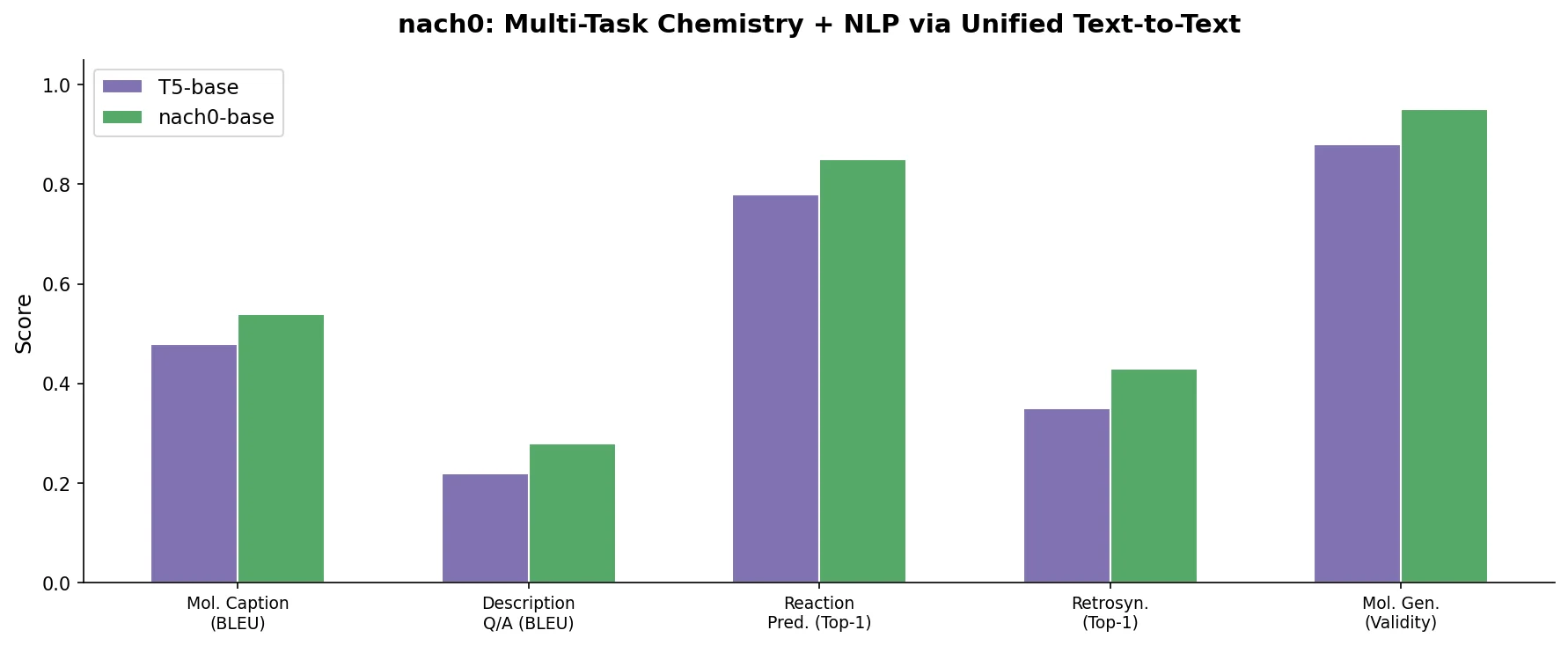
Bar chart comparing nach0 vs T5-base across molecular captioning, Q/A, reaction prediction, retrosynthesis, and generation

nach0: A Multimodal Chemical and NLP Foundation Model

nach0 unifies natural language and SMILES-based chemical tasks in a single encoder-decoder model, achieving competitive results across molecular property prediction, reaction prediction, molecular generation, and biomedical NLP benchmarks.

Molecular Representations
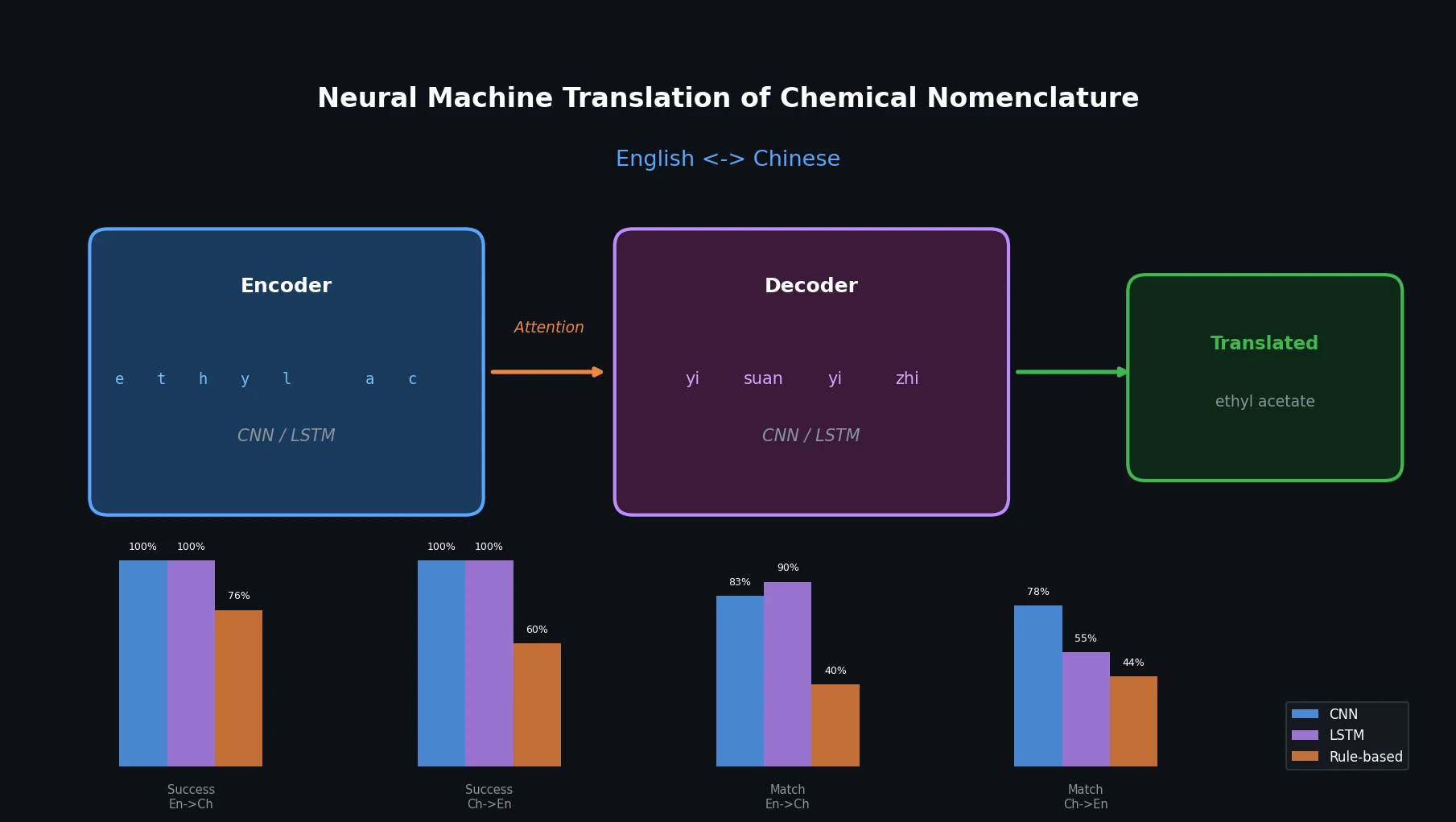
Encoder-decoder architecture diagram for translating chemical names between English and Chinese with performance comparison bar chart

Neural Machine Translation of Chemical Nomenclature

This paper applies character-level CNN and LSTM encoder-decoder networks to translate chemical names between English and Chinese, comparing them against an existing rule-based tool.