Optical Chemical Structure Recognition
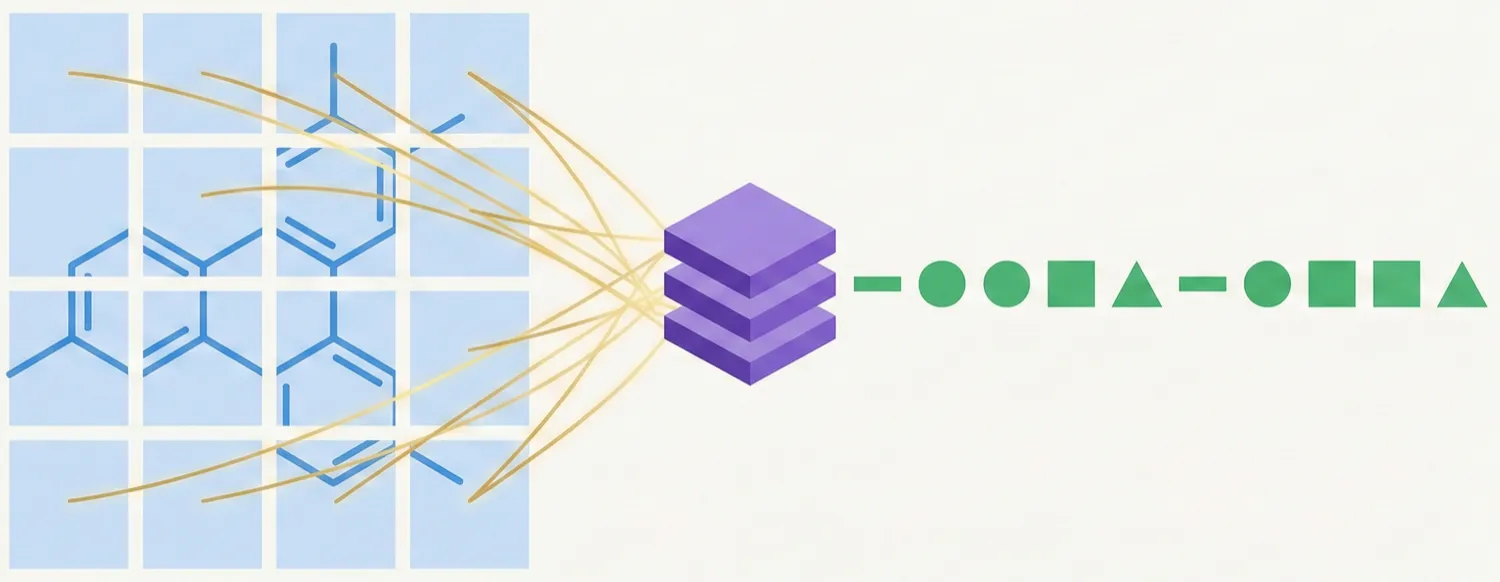
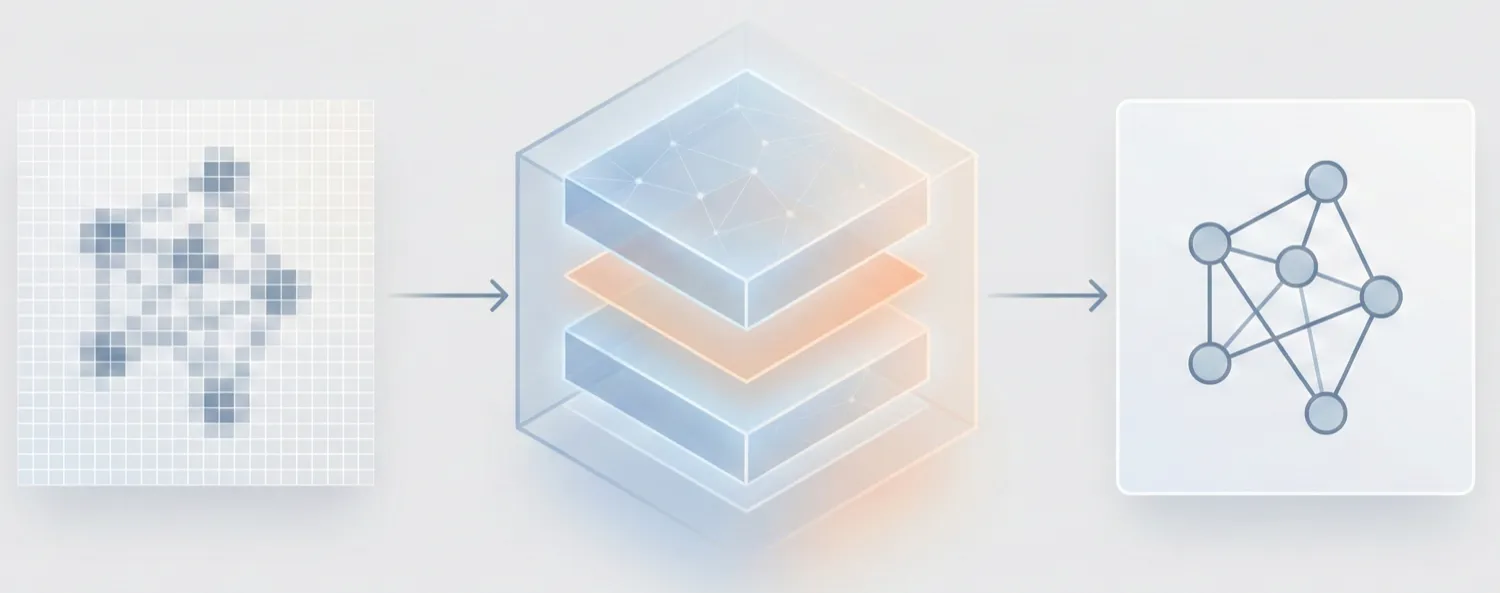
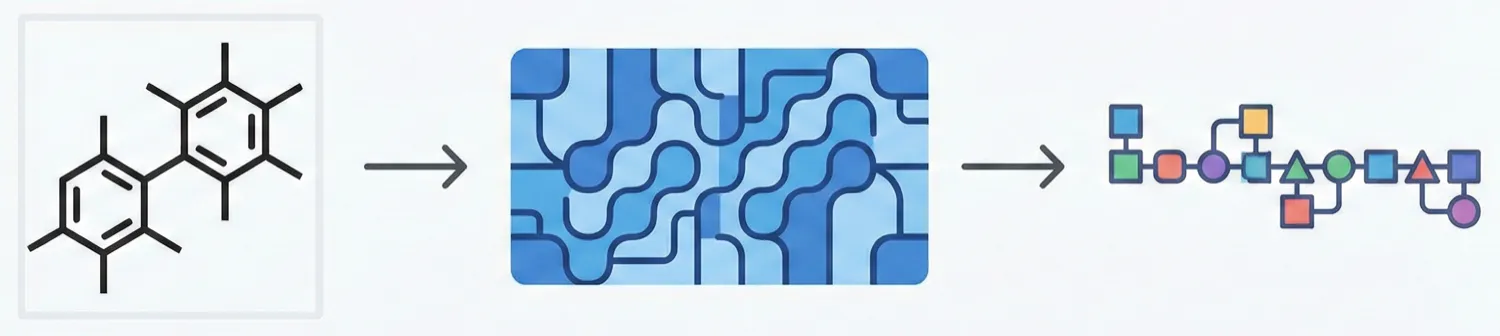
Diagram showing a pixelated chemical image passing through a multi-layer encoder to produce a molecular graph with nodes and edges.

Image-to-Graph Transformers for Chemical Structures

This paper proposes an end-to-end deep learning architecture that translates chemical images directly into molecular graphs using a ResNet-Transformer encoder and a graph-aware decoder. It addresses the limitations of SMILES-based approaches by effectively handling non-atomic symbols (abbreviations) and varying drawing styles found in scientific literature.

Optical Chemical Structure Recognition
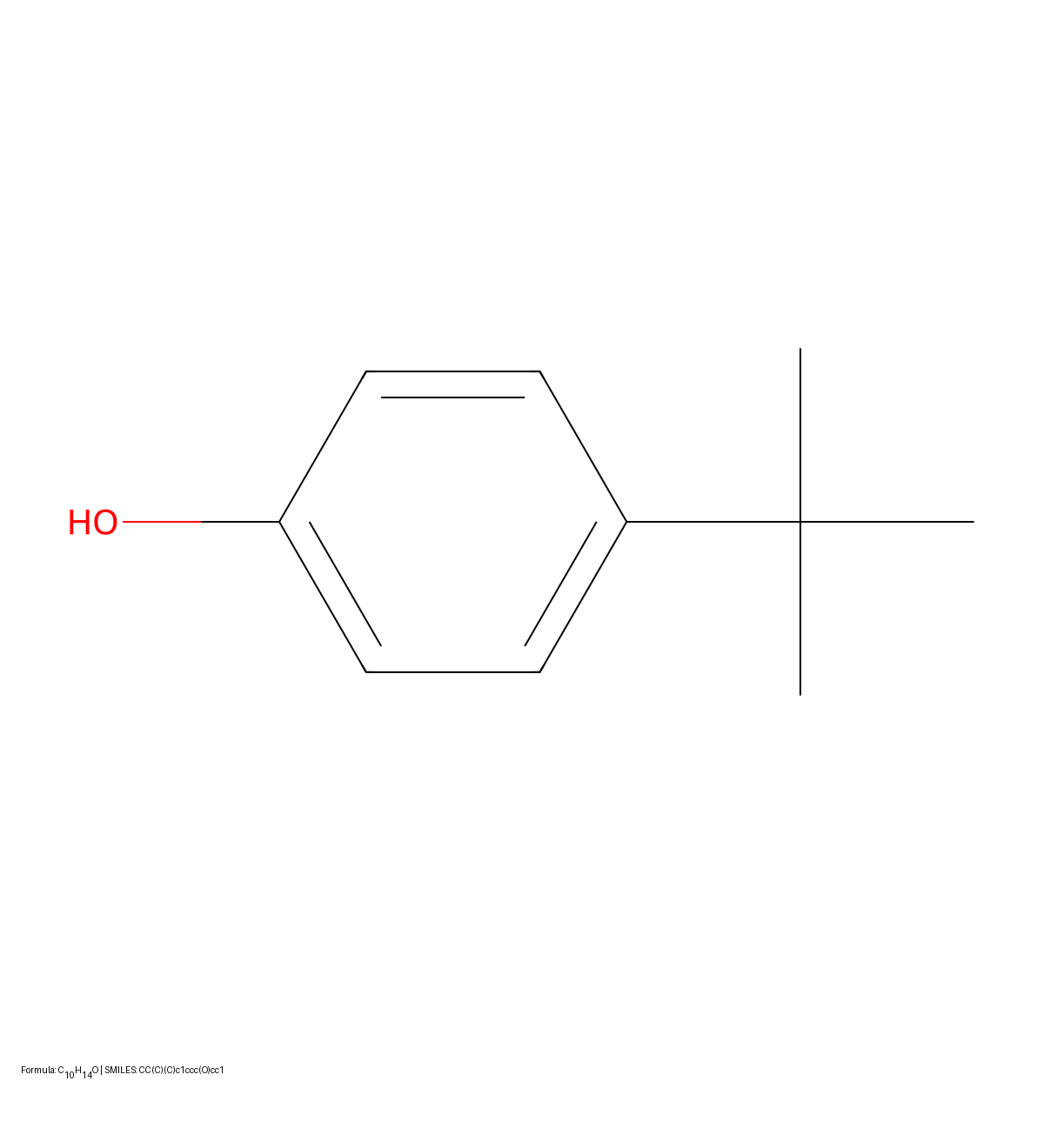
4-tert-butylphenol molecular structure diagram for Image2SMILES OCSR

Image2SMILES: Transformer OCSR with Synthetic Data Pipeline

A Transformer-based system for optical chemical structure recognition introducing a comprehensive data generation pipeline (FG-SMILES, Markush structures, visual contamination) achieving 79% accuracy on real-world images, outperforming rule-based systems like OSRA.

Optical Chemical Structure Recognition
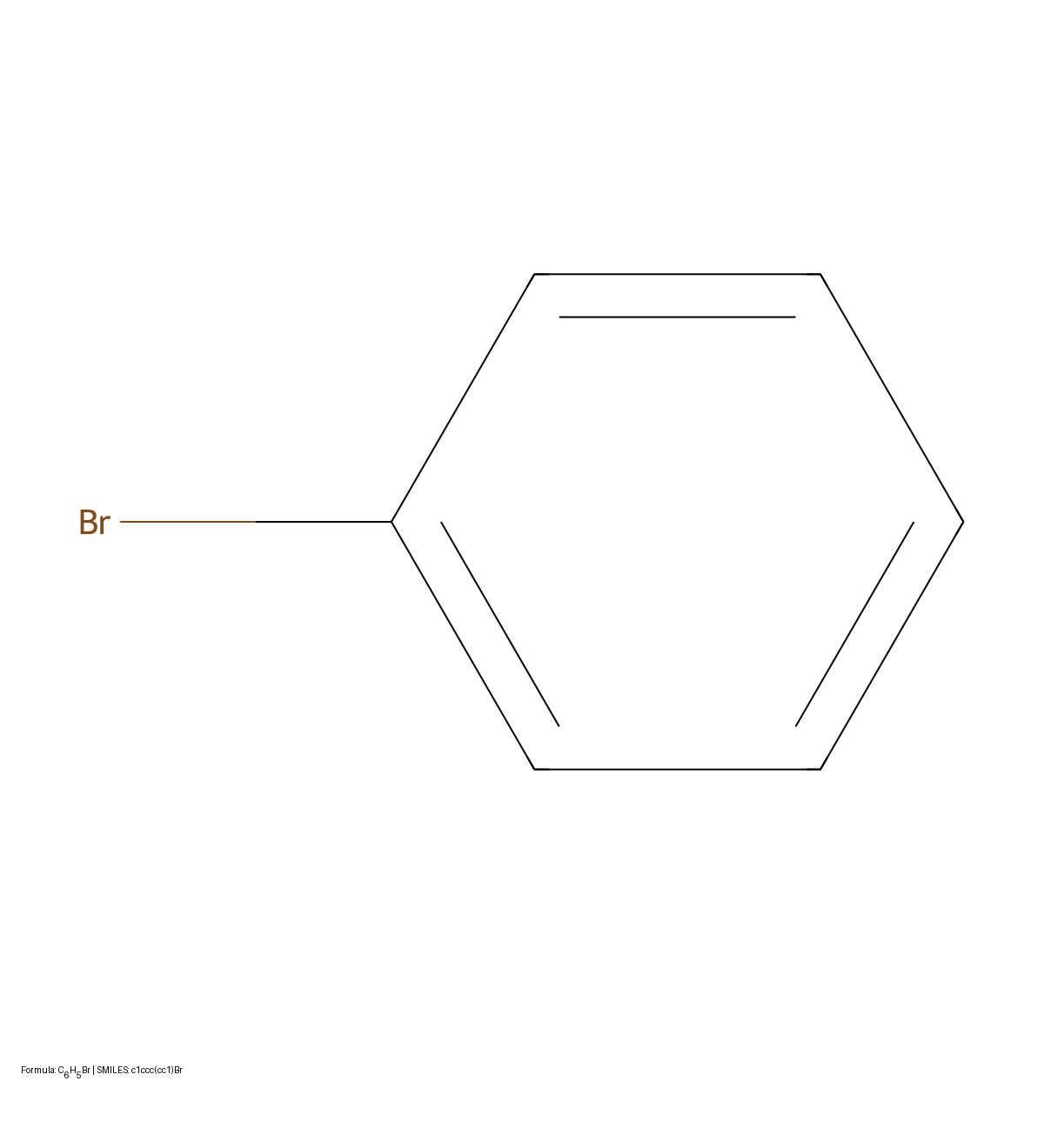
Bromobenzene molecular structure diagram for MICER OCSR

MICER: Molecular Image Captioning with Transfer Learning

MICER treats optical chemical structure recognition as an image captioning task, using transfer learning with a fine-tuned ResNet encoder and attention-based LSTM decoder to convert molecular images into SMILES strings, reaching 97.54% sequence accuracy on synthetic data and 82.33% on real-world images.

Optical Chemical Structure Recognition

String Representations for Chemical Image Recognition

This empirical study isolates the impact of chemical string representations on image-to-text translation models. It finds that while SMILES offers the highest overall accuracy, SELFIES provides a guarantee of structural validity, offering a trade-off for OCSR tasks.

Optical Chemical Structure Recognition
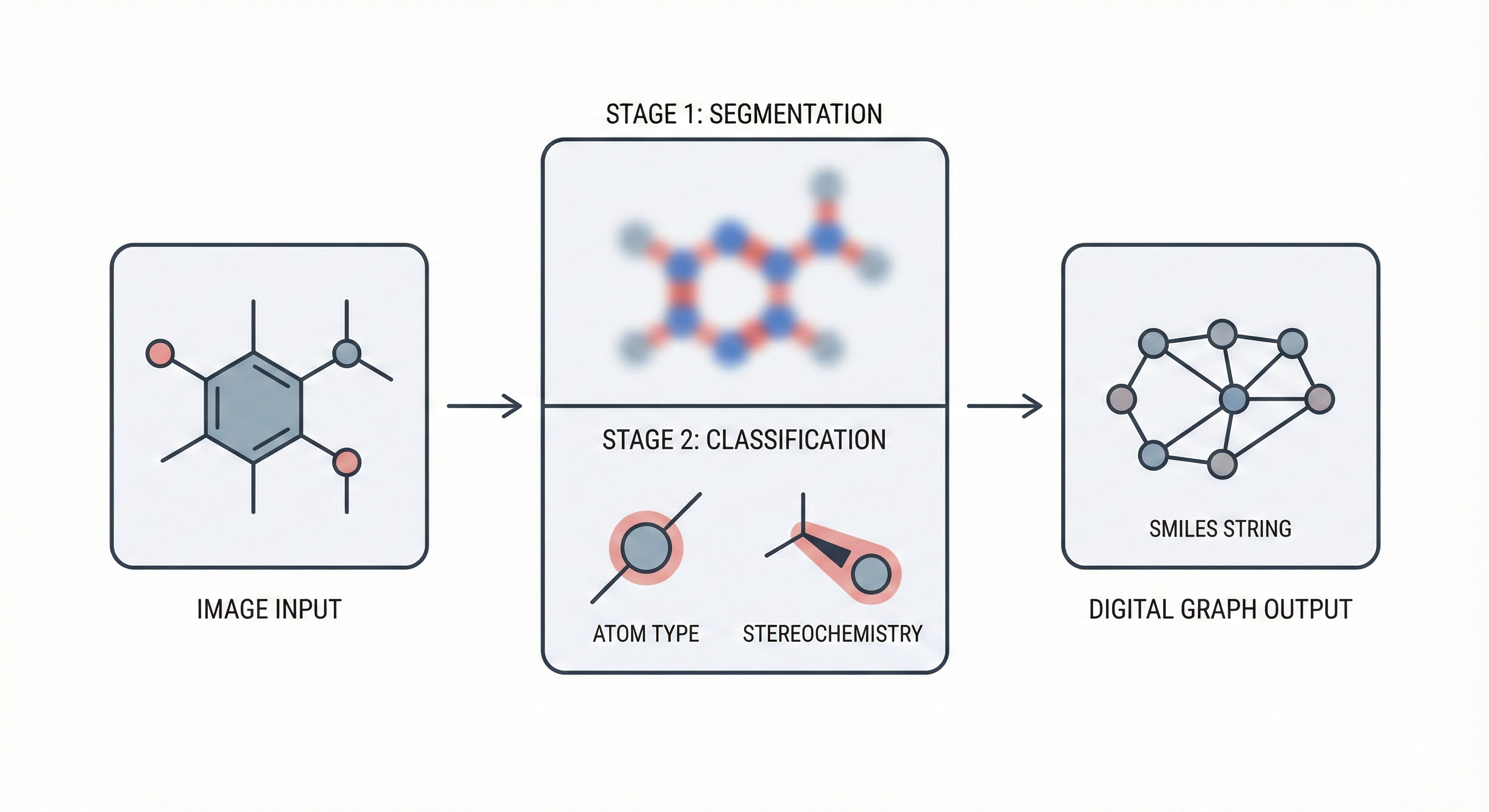
ChemGrapher pipeline overview showing segmentation and classification stages

ChemGrapher: Deep Learning for Chemical Graph OCSR

ChemGrapher replaces rule-based chemical OCR with a deep learning pipeline using semantic segmentation to identify atom and bond candidates, followed by specialized classification networks to resolve stereochemistry and bond multiplicity, reducing error rates compared to OSRA across all tested styles.

Optical Chemical Structure Recognition
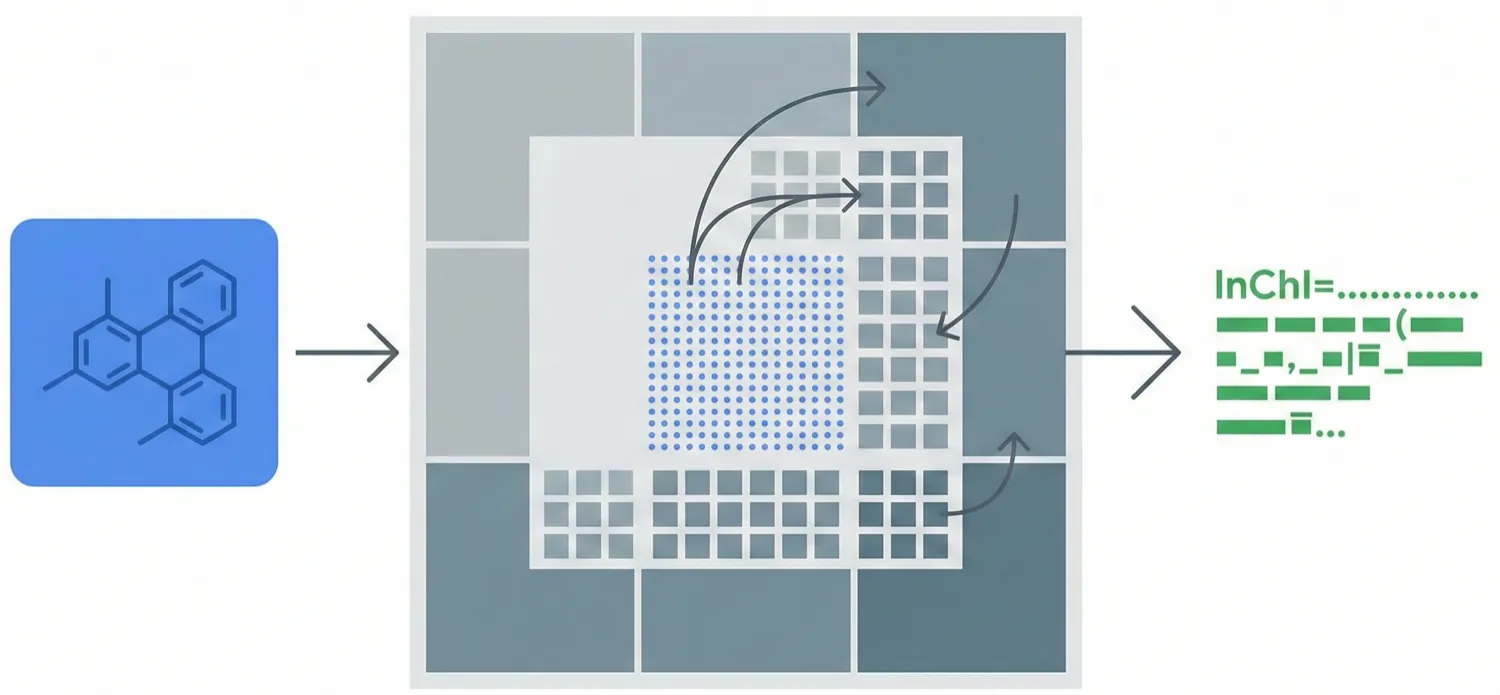
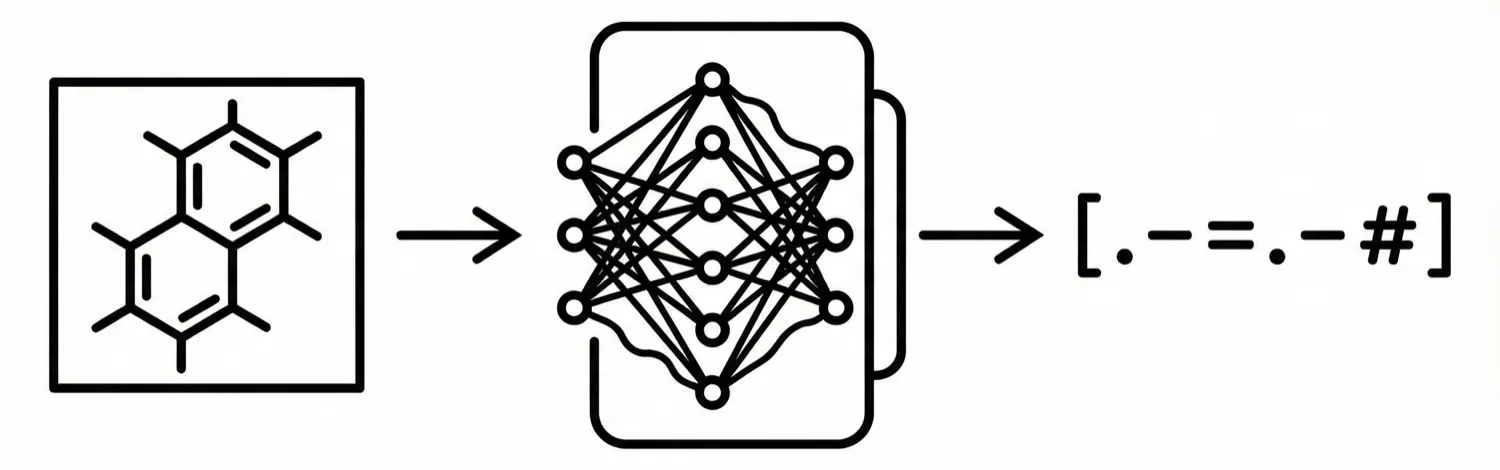
Encoder-decoder architecture translating a chemical structure bitmap into a SMILES string

DECIMER: Deep Learning for Chemical Image Recognition

DECIMER adapts the “Show, Attend and Tell” image captioning architecture to translate chemical structure images into SMILES strings. By leveraging massive synthetic datasets generated from PubChem, it demonstrates that deep learning can perform optical chemical recognition without complex, hand-engineered rule systems.

Optical Chemical Structure Recognition
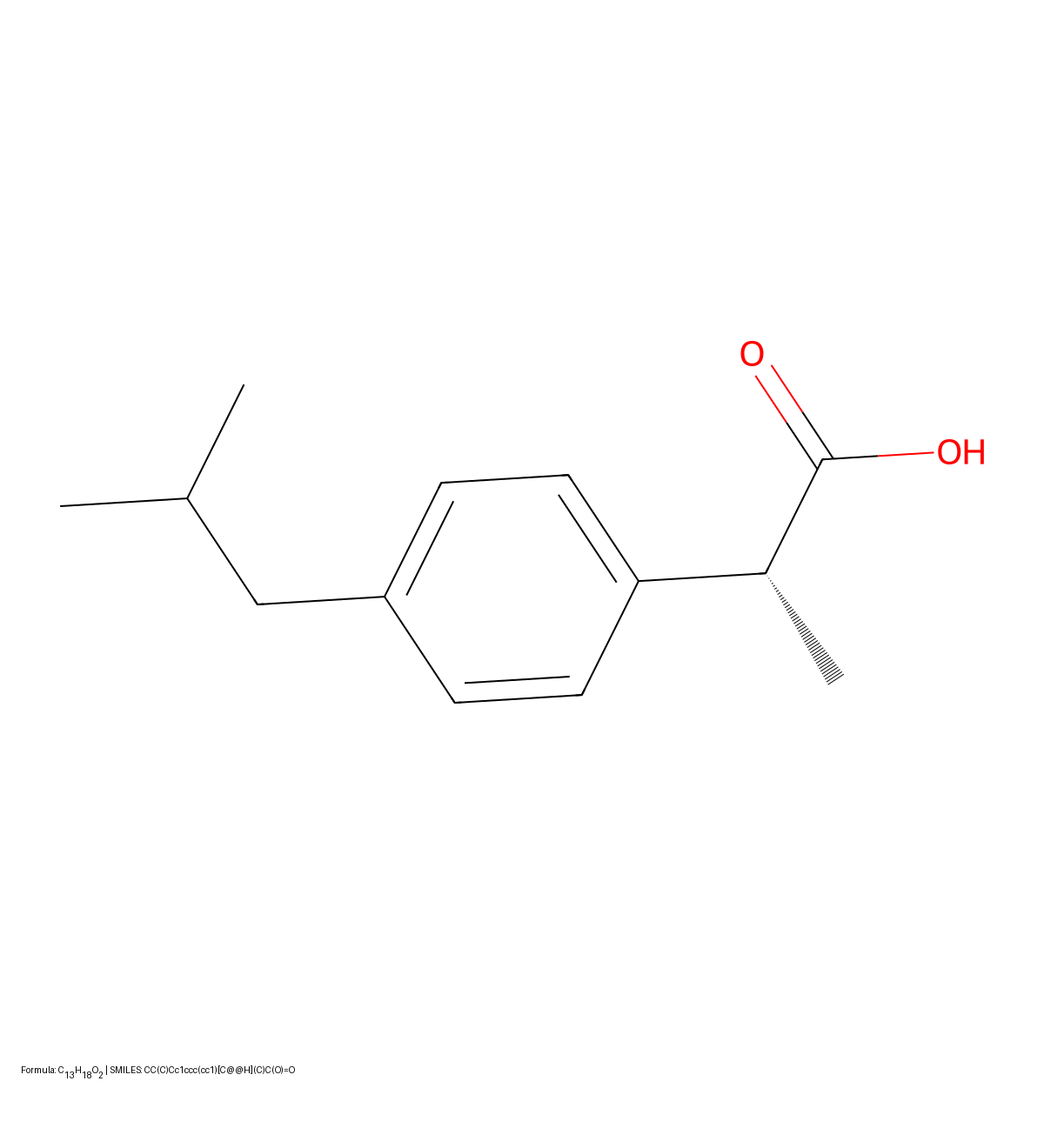
Ibuprofen molecular structure diagram for Img2Mol OCSR

Img2Mol: Accurate SMILES Recognition from Depictions

A 2021 deep learning system using a two-stage approach for OCSR, encoding images into continuous CDDD embeddings before decoding to SMILES. It leverages extensive data augmentation to handle rotations, distortions, and rendering variations for fast and robust molecular structure recognition.

Optical Chemical Structure Recognition
Optical Chemical Structure Recognition workflow visualization

Research on Chemical Expression Images Recognition

Proposes a new OCSR workflow that improves recognition rates by separating adhesive chemical symbols and specifically handling virtual/real wedge bonds using vectorization, achieving 90% exact match vs 82.2% for OSRA baseline.

Optical Chemical Structure Recognition
Optical chemical structure recognition example

IMG2SMI: Translating Molecular Structure Images to SMILES

A 2021 image-to-text approach treating OCSR as an image captioning task. It uses Transformers with SELFIES representation to convert molecular structure diagrams into SMILES strings, enabling extraction of visual chemical knowledge from scientific literature.

Molecular Representations
SELFIES robustness demonstration

Invalid SMILES Benefit Chemical Language Models: A Study

A 2024 Nature Machine Intelligence paper providing causal evidence that invalid SMILES generation improves chemical language model performance by filtering low-likelihood samples, while validity constraints (as in SELFIES) introduce structural biases that impair distribution learning.

Molecular Representations
SELFIES robustness demonstration

SELFIES and the Future of Molecular String Representations

This 2022 perspective paper reviews 250 years of chemical notation evolution and proposes 16 concrete research projects to extend SELFIES beyond traditional organic chemistry into polymers, crystals, and reactions.

Scientific Computing
Grid of complex molecular structures rendered from SELFIES and SMILES strings

Molecular String Renderer: Robust Visualization Tool

A fault-tolerant RDKit wrapper treating molecular visualization as a software engineering problem, implementing strategy pattern for SVG generation with automatic raster fallback, native SELFIES support for generative AI workflows, and strict type safety for reliable batch processing of millions of molecules in training pipelines.