Computational Chemistry
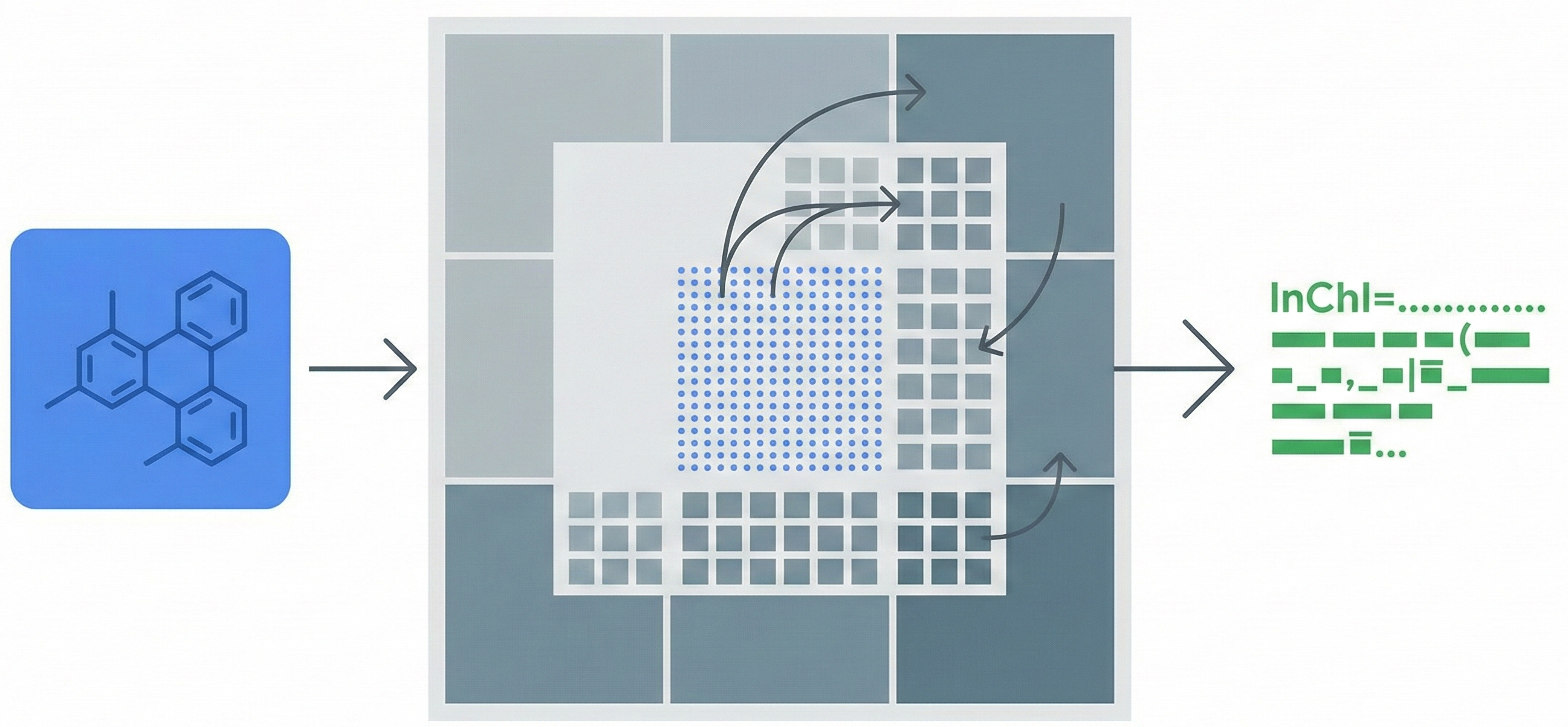
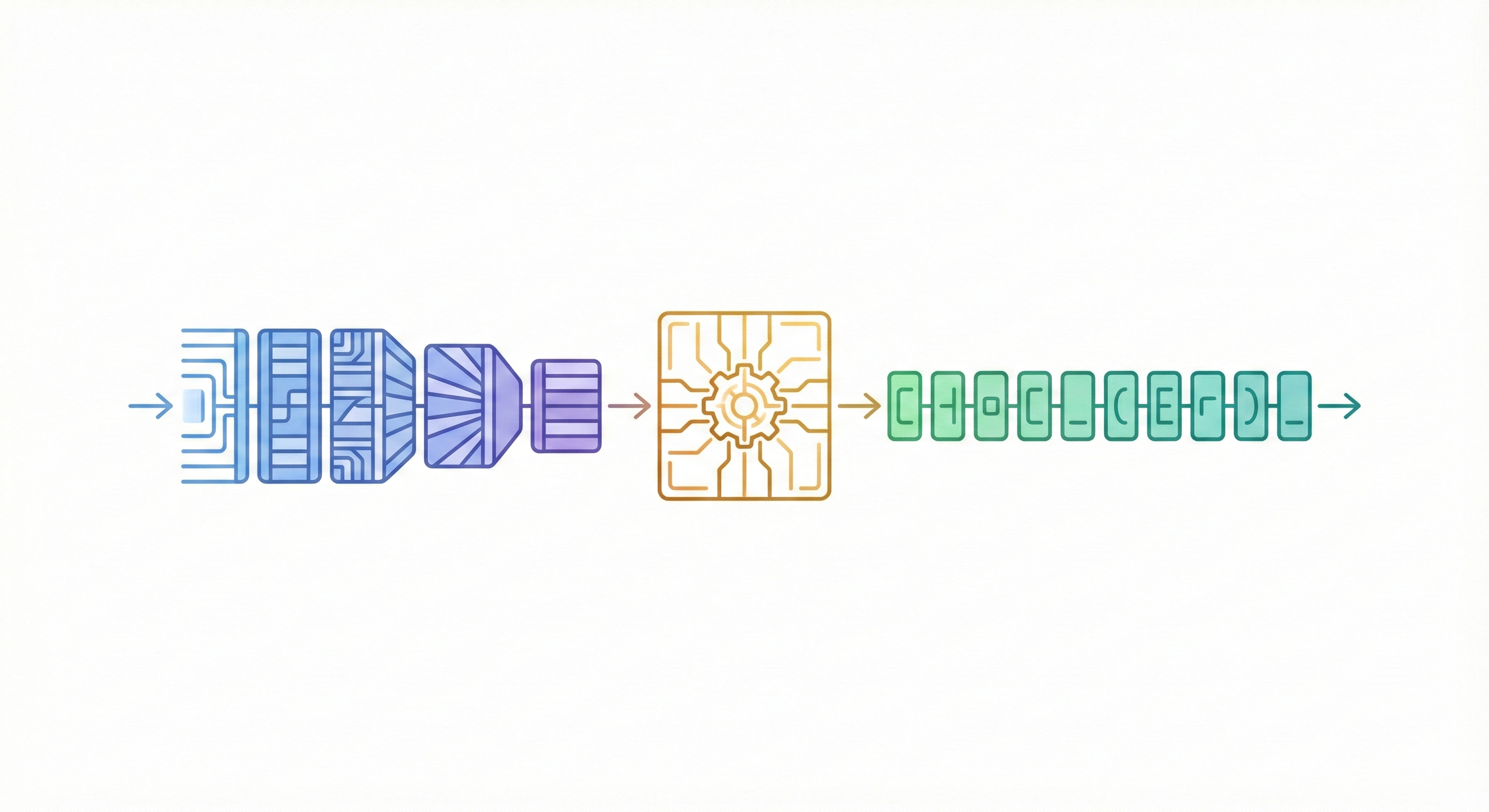
Transformer encoder-decoder architecture processing InChI string character-by-character to produce IUPAC chemical name

Translating InChI to IUPAC Names with Transformers

This study presents a sequence-to-sequence Transformer model that translates InChI identifiers into IUPAC names character-by-character. Trained on 10 million PubChem pairs, it achieves 91% accuracy on organic compounds, performing comparably to commercial software.
Computational Chemistry
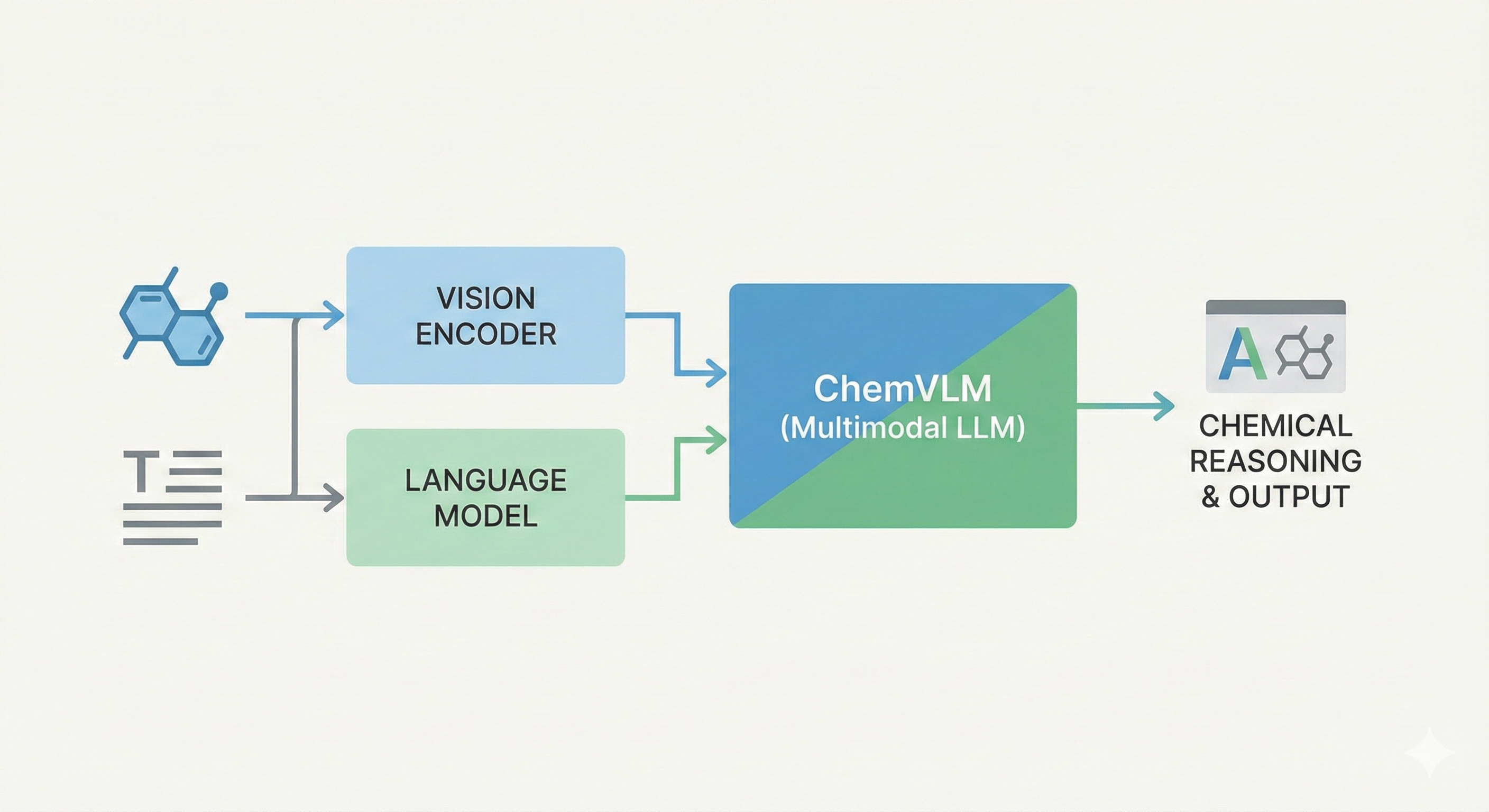
ChemVLM architecture showing molecular structure and text inputs flowing through vision encoder and language model into multimodal LLM for chemical reasoning

ChemVLM: A Multimodal Large Language Model for Chemistry

A 2025 AAAI paper introducing ChemVLM, a domain-specific multimodal LLM (26B parameters). It achieves state-of-the-art performance on chemical OCR, reasoning benchmarks, and molecular understanding tasks by combining vision and language models trained on curated chemistry data.

Computational Chemistry
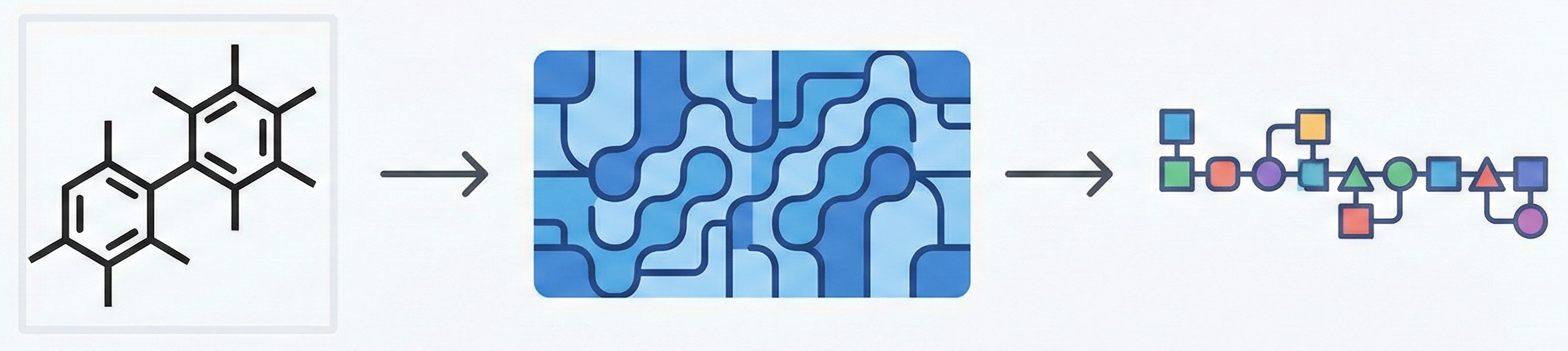
Diagram of the Image2InChI architecture showing a SwinTransformer encoder connected to an attention-based feature fusion decoder for converting molecular images to InChI strings.

Image2InChI: SwinTransformer for Molecular Recognition

Proposes Image2InChI, an OCSR model with improved SwinTransformer encoder and novel feature fusion network with attention mechanisms that achieves 99.8% InChI accuracy on the BMS dataset.

Computational Chemistry
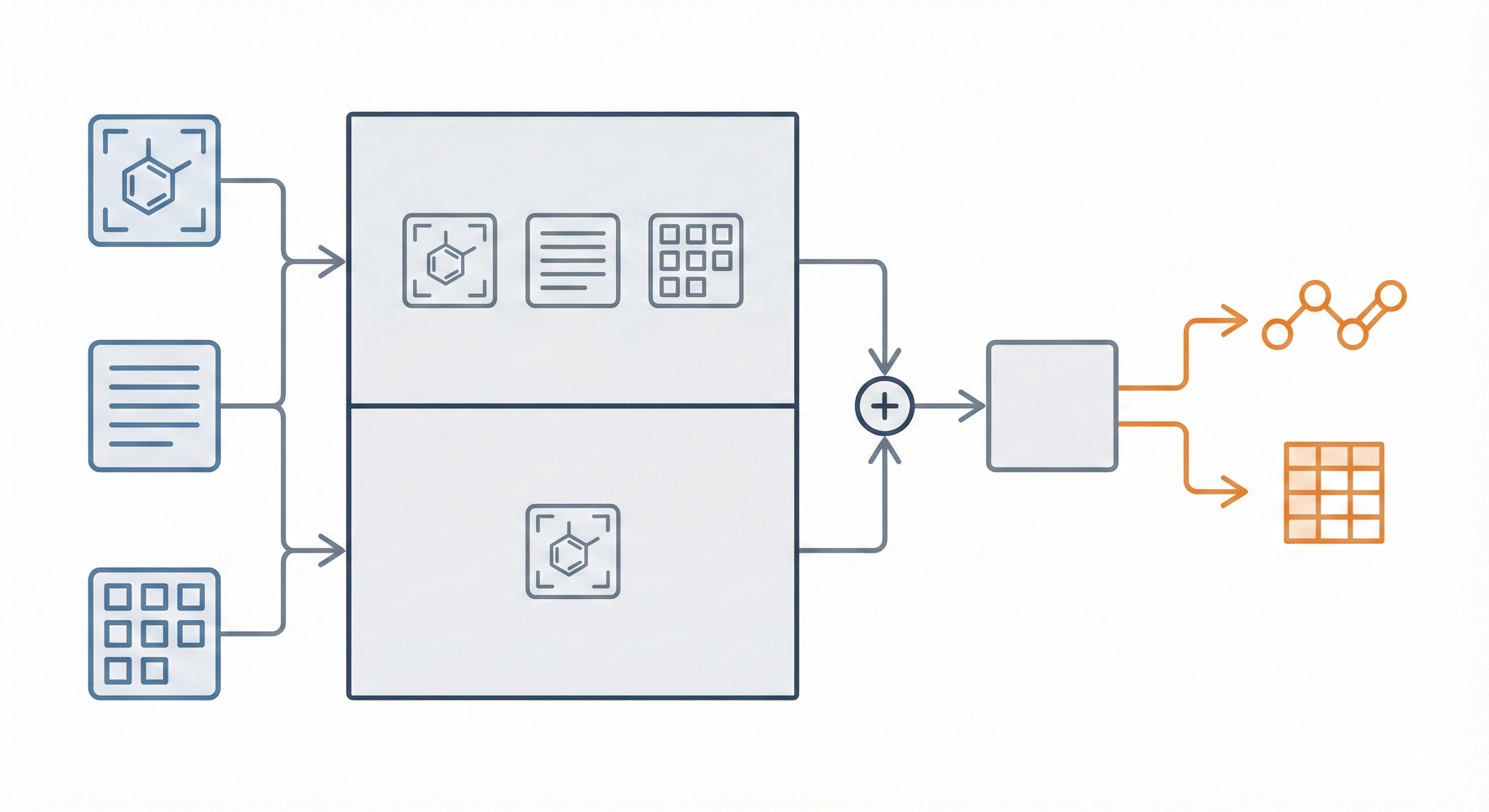
Architecture diagram of the MarkushGrapher dual-encoder system combining VTL and OCSR encoders for Markush structure recognition.

MarkushGrapher: Multi-modal Markush Structure Recognition

This paper introduces a multi-modal approach for extracting chemical Markush structures from patents, combining a Vision-Text-Layout encoder with a specialized chemical vision encoder. It addresses the lack of training data with a synthetic generation pipeline and introduces M2S, a new real-world benchmark.

Computational Chemistry
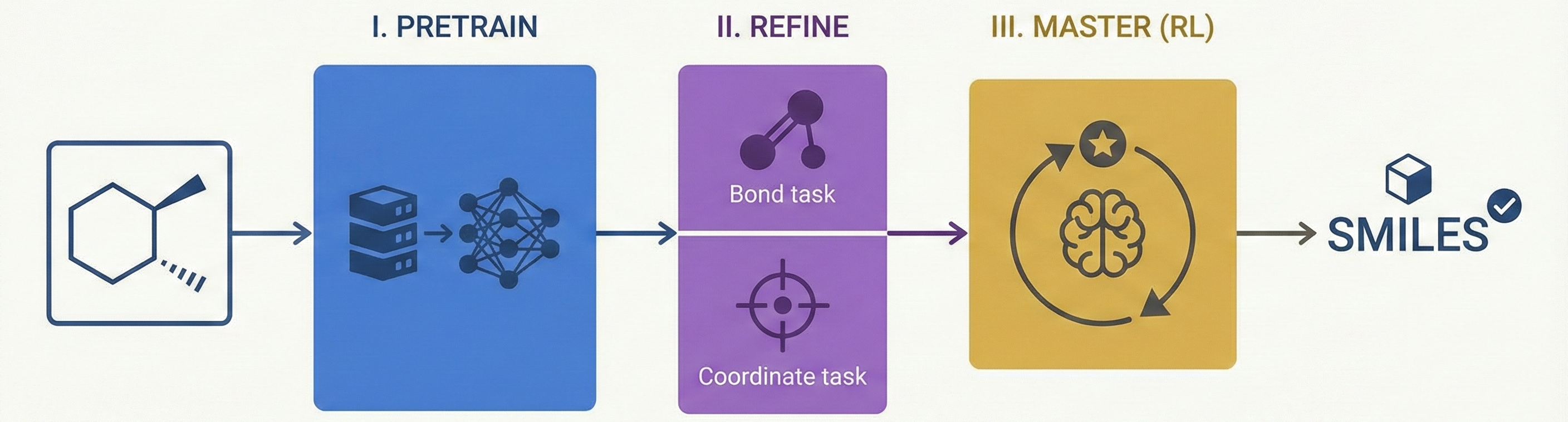
Three-stage training pipeline for MolSight showing pretraining, multi-granularity fine-tuning, and RL post-training stages

MolSight: OCSR with RL and Multi-Granularity Learning

MolSight introduces a three-stage training paradigm for Optical Chemical Structure Recognition (OCSR), utilizing large-scale pretraining, multi-granularity fine-tuning with auxiliary bond and coordinate prediction tasks, and reinforcement learning (GRPO) to achieve 85.1% stereochemical accuracy on USPTO, recognizing complex stereochemical structures like chiral centers and cis-trans isomers.

Computational Chemistry
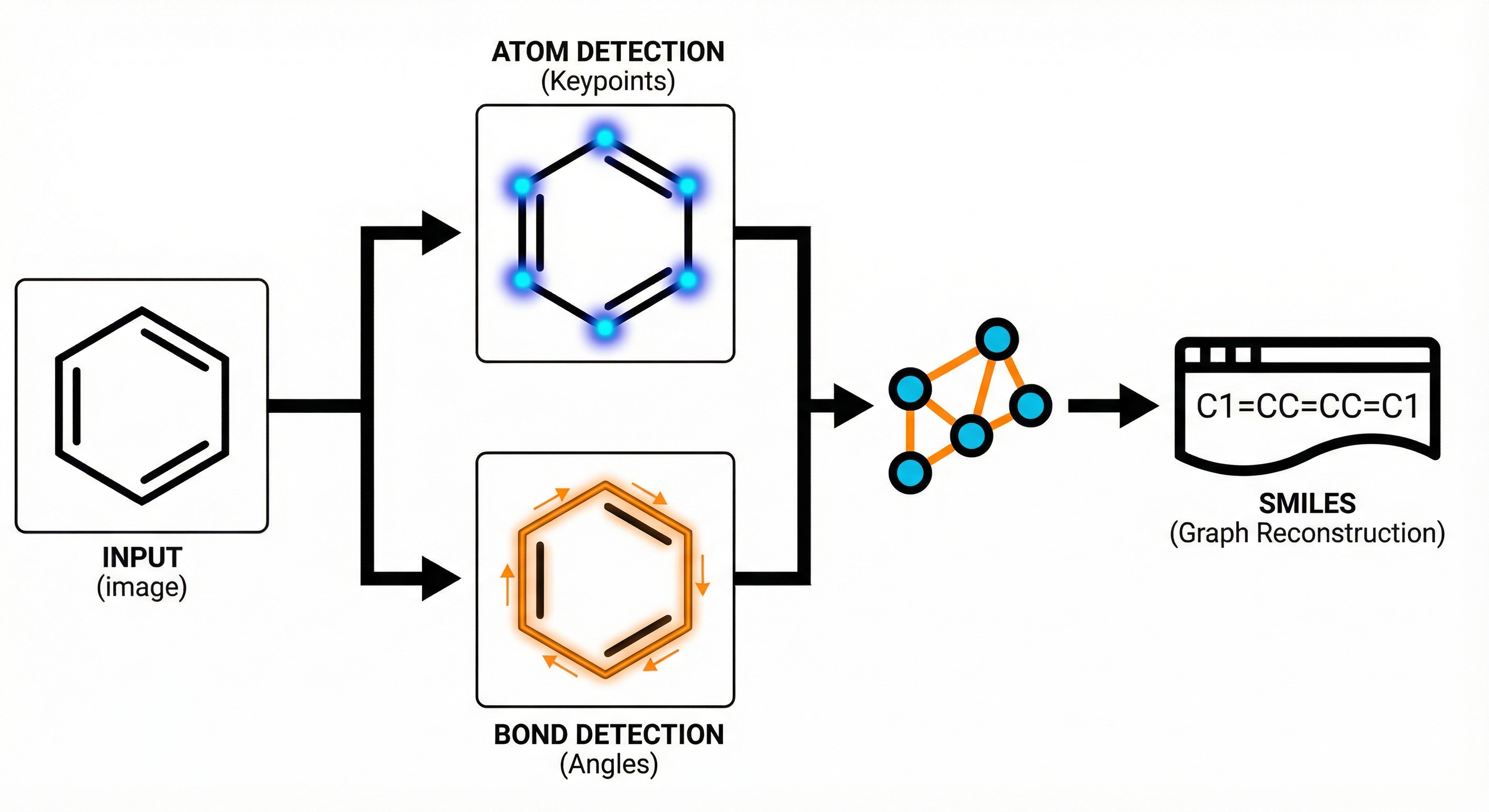
ABC-Net detects atom and bond keypoints to reconstruct molecular graphs from images

ABC-Net: Keypoint-Based Molecular Image Recognition

ABC-Net reformulates molecular image recognition as a keypoint detection problem. By predicting atom/bond centers and properties via a single Fully Convolutional Network, it achieves >94% accuracy with high data efficiency.

Computational Chemistry
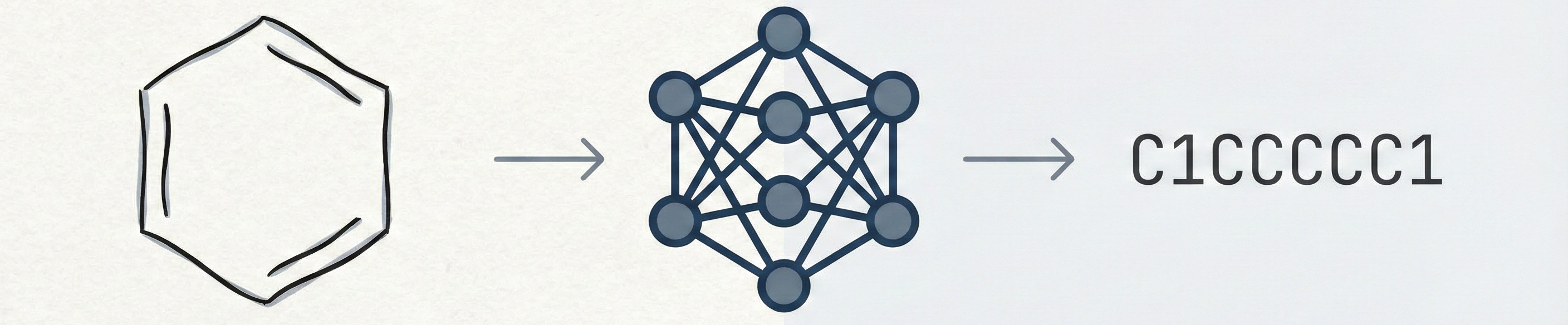
Overview of the ChemPix CNN-LSTM pipeline converting a hand-drawn hydrocarbon sketch to a SMILES string

ChemPix: Hand-Drawn Hydrocarbon Structure Recognition

Proposes a CNN-LSTM architecture that treats chemical structure recognition as an image captioning task. Introduces a synthetic data generation pipeline with augmentation, degradation, and background addition to train models that generalize to hand-drawn inputs without seeing real data during training.

Computational Chemistry
Architecture diagram showing the DECIMER 1.0 transformer pipeline from chemical image input to SELFIES output

DECIMER 1.0: Transformers for Chemical Image Recognition

DECIMER 1.0 introduces a Transformer-based architecture coupled with EfficientNet-B3 to solve Optical Chemical Structure Recognition. By using the SELFIES representation (which guarantees 100% valid output strings) and scaling training to over 35 million molecules, it achieves 96.47% exact match accuracy on synthetic benchmarks, offering an open-source solution for mining chemical data from legacy literature.

Computational Chemistry
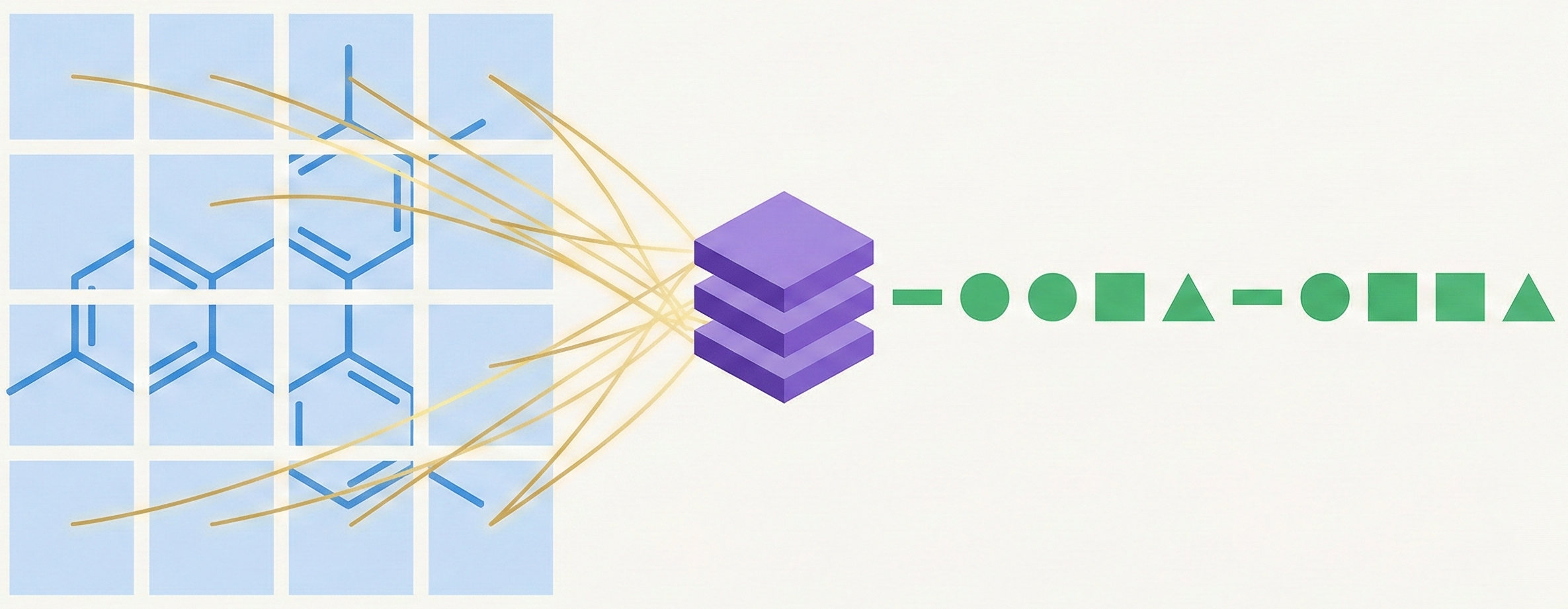
Architecture diagram showing Vision Transformer encoder processing image patches and Transformer decoder generating InChI strings

End-to-End Transformer for Molecular Image Captioning

This paper introduces a convolution-free, end-to-end transformer model for molecular image translation. By replacing CNN encoders with Vision Transformers, it achieves a Levenshtein distance of 6.95 on noisy datasets, compared to 7.49 for ResNet50-LSTM baselines.

Computational Chemistry
Chemical structure diagram representing the ICMDT molecular translation system

ICMDT: Automated Chemical Structure Image Recognition

This paper introduces ICMDT, a Transformer-based architecture for molecular translation (image-to-InChI). By enhancing the TNT block to fuse pixel, small patch, and large patch embeddings, the model achieves superior accuracy on the Bristol-Myers Squibb dataset compared to CNN-RNN and standard Transformer baselines.

Computational Chemistry
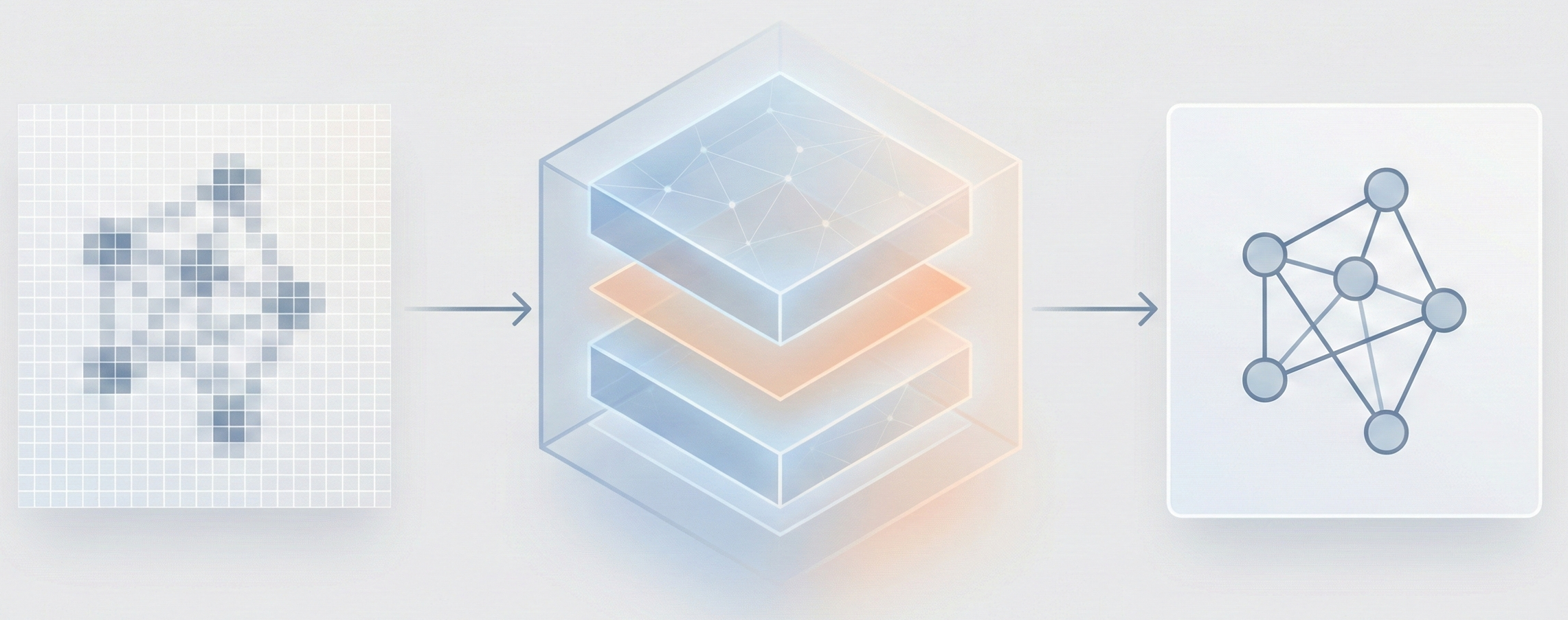
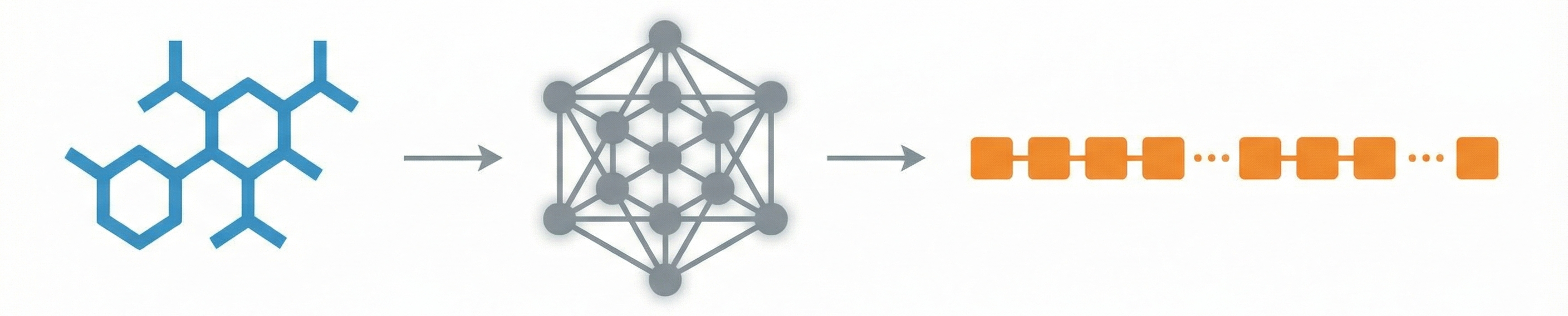
Diagram showing a pixelated chemical image passing through a multi-layer encoder to produce a molecular graph with nodes and edges.

Image-to-Graph Transformers for Chemical Structures

This paper proposes an end-to-end deep learning architecture that translates chemical images directly into molecular graphs using a ResNet-Transformer encoder and a graph-aware decoder. It addresses the limitations of SMILES-based approaches by effectively handling non-atomic symbols (abbreviations) and varying drawing styles found in scientific literature.

Computational Chemistry
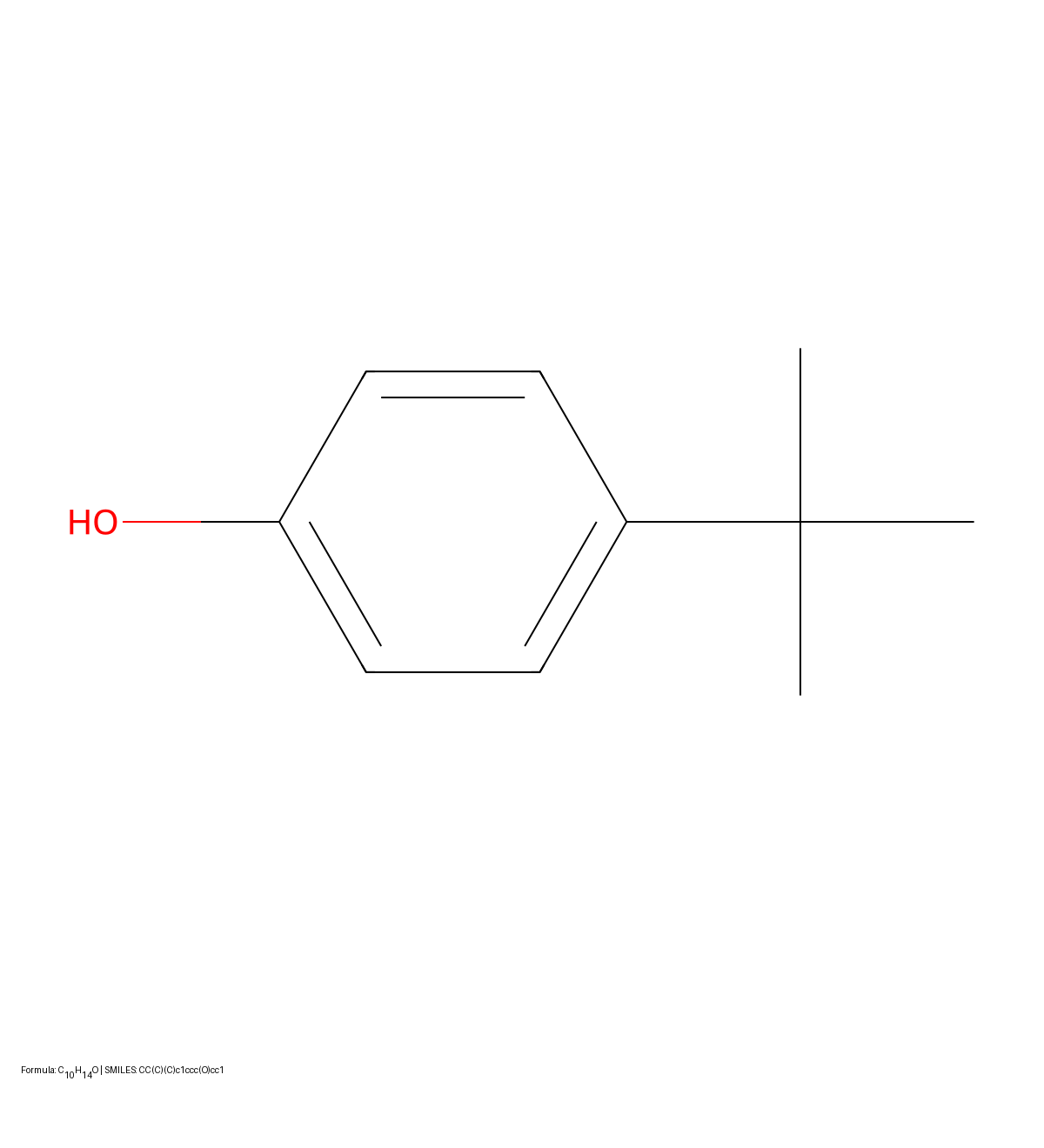
4-tert-butylphenol molecular structure diagram for Image2SMILES OCSR

Image2SMILES: Transformer OCSR with Synthetic Data Pipeline

A Transformer-based system for optical chemical structure recognition introducing a comprehensive data generation pipeline (FG-SMILES, Markush structures, visual contamination) achieving 79% accuracy on real-world images, outperforming rule-based systems like OSRA.