Computational Chemistry
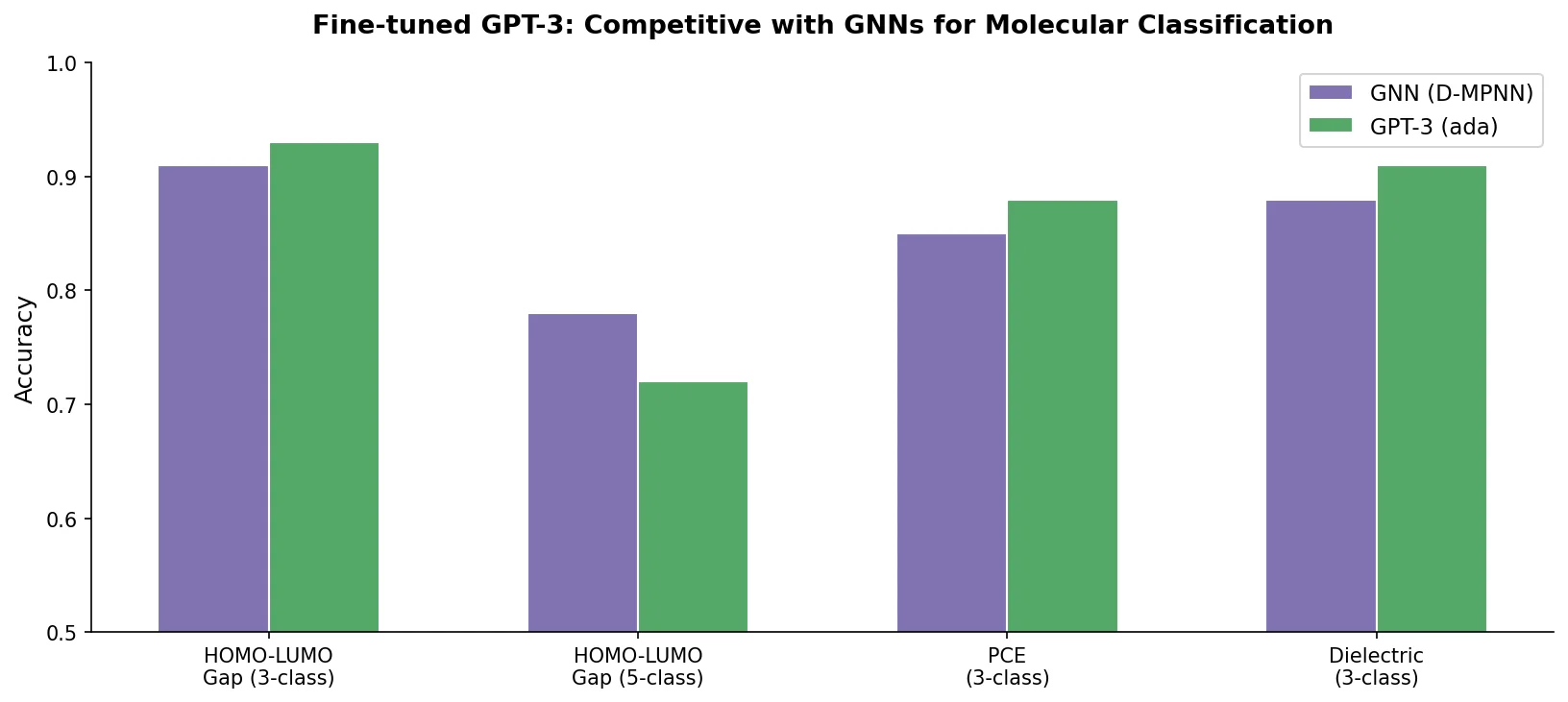
Bar chart comparing GPT-3 ada and GNN accuracy across molecular classification tasks

Fine-Tuning GPT-3 for Molecular Property Prediction

This paper fine-tunes GPT-3’s ada model on SMILES strings for classifying electronic properties (HOMO, LUMO) of organic semiconductor molecules, finding competitive accuracy with graph neural networks and exploring robustness through ablation studies.

Molecular Representations
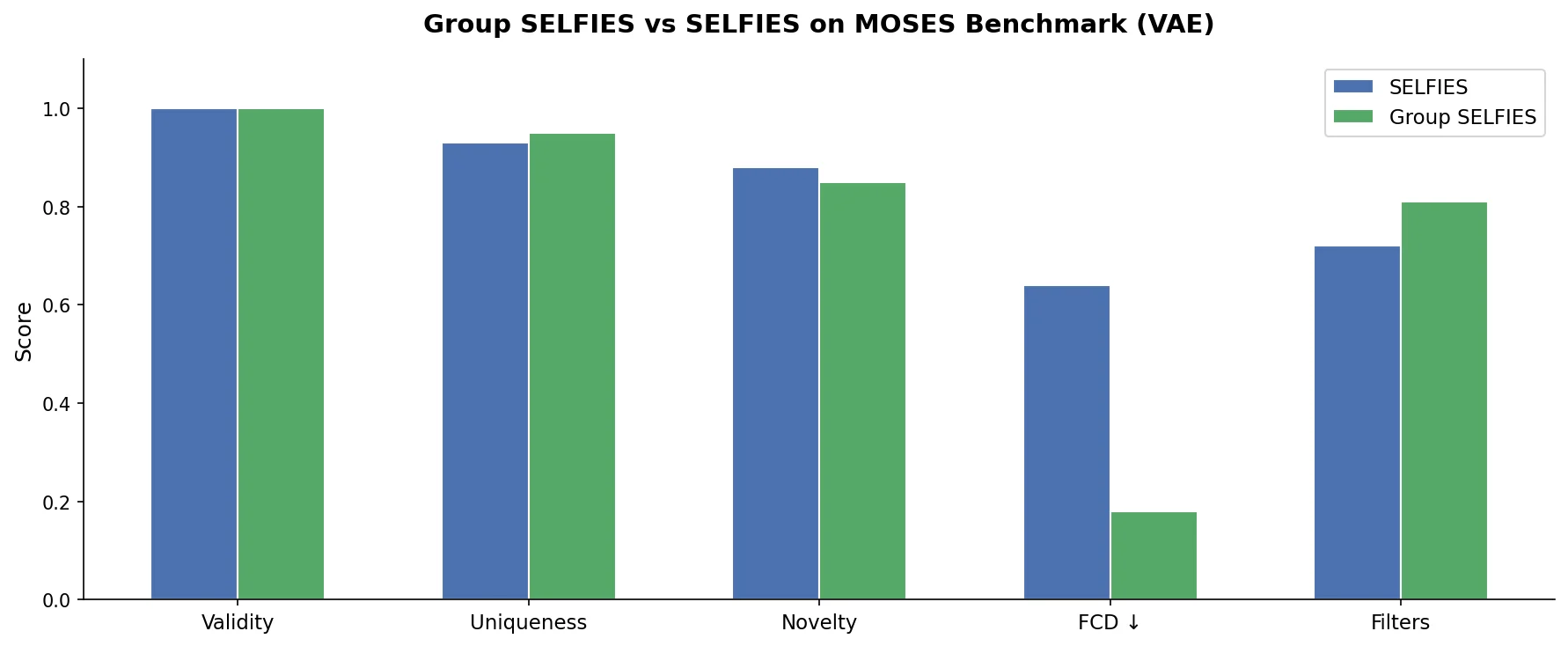
Bar chart comparing Group SELFIES vs SELFIES on MOSES benchmark metrics

Group SELFIES: Fragment-Based Molecular Strings

Group SELFIES extends SELFIES with group tokens representing functional groups and substructures, maintaining chemical robustness while improving distribution learning and molecular generation quality.

Molecular Generation
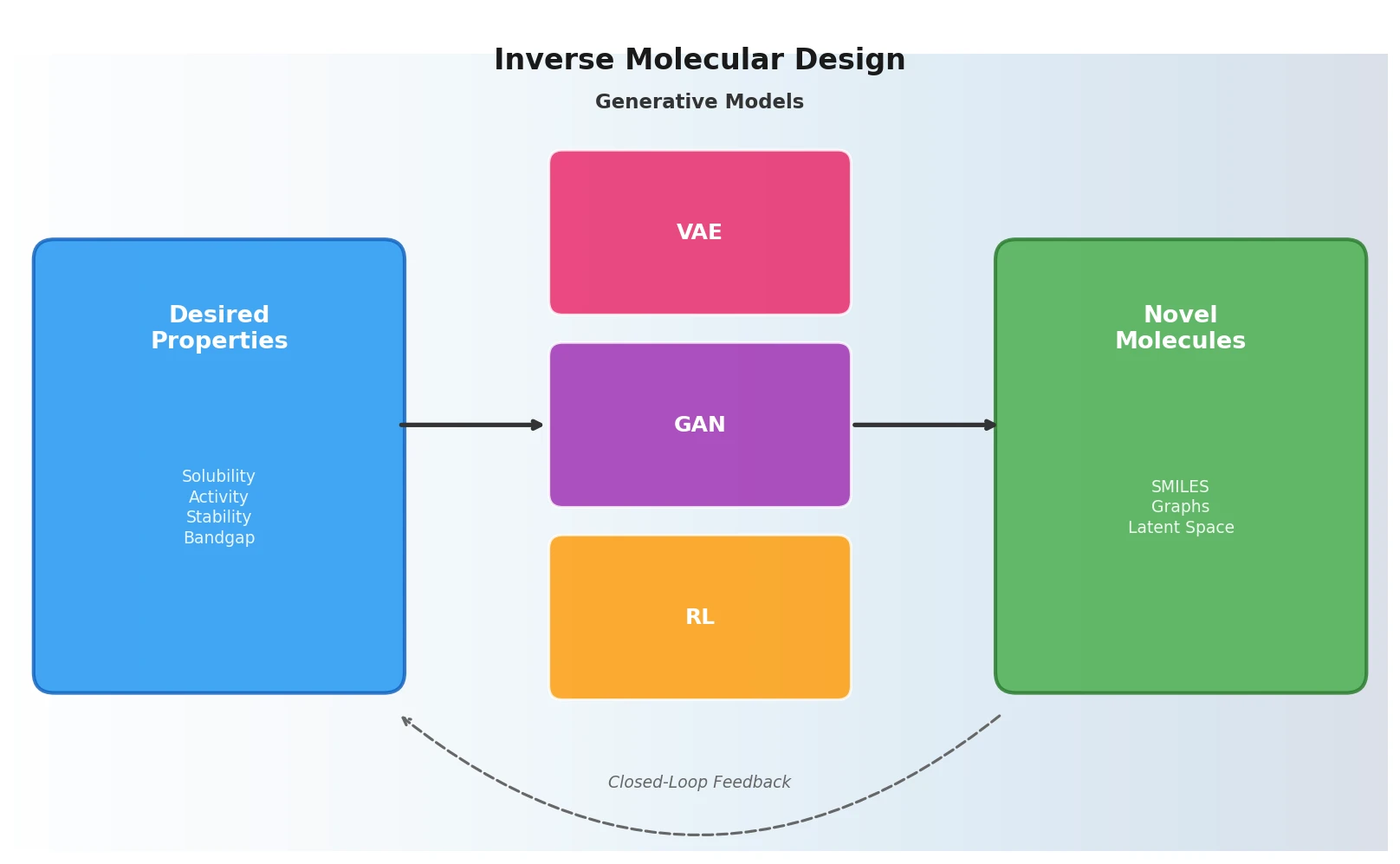
Schematic of inverse molecular design paradigm mapping desired properties to molecular structures through generative models

Inverse Molecular Design with ML Generative Models

A foundational review surveying how deep generative models (VAEs, GANs, reinforcement learning) enable inverse molecular design, covering molecular representations, chemical space navigation, and applications from drug discovery to materials engineering.

Molecular Generation
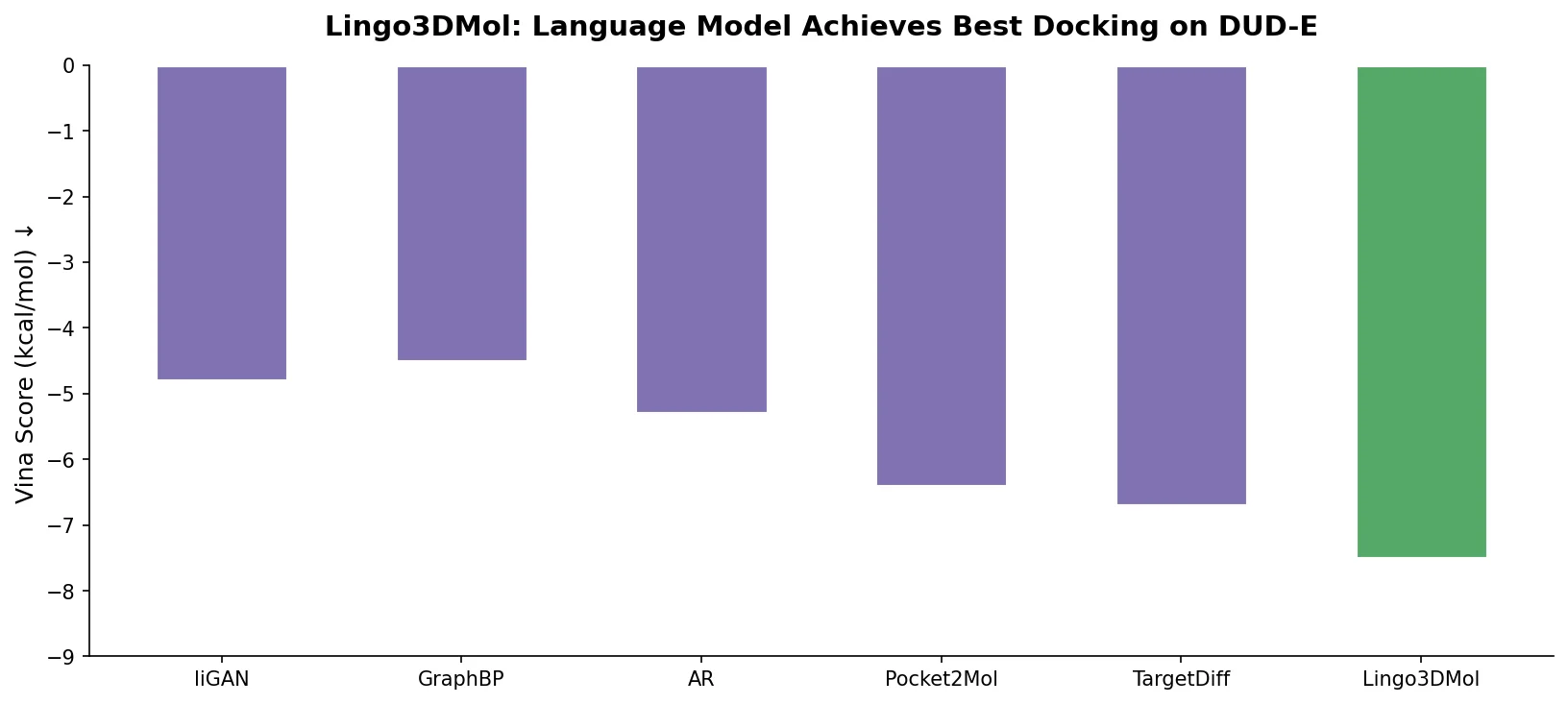
Bar chart showing Lingo3DMol achieves best Vina docking scores on DUD-E compared to five baselines

Lingo3DMol: Language Model for 3D Molecule Design

Lingo3DMol introduces FSMILES, a fragment-based SMILES representation with local and global coordinates, to generate drug-like 3D molecules in protein pockets via a transformer language model.

Computational Chemistry
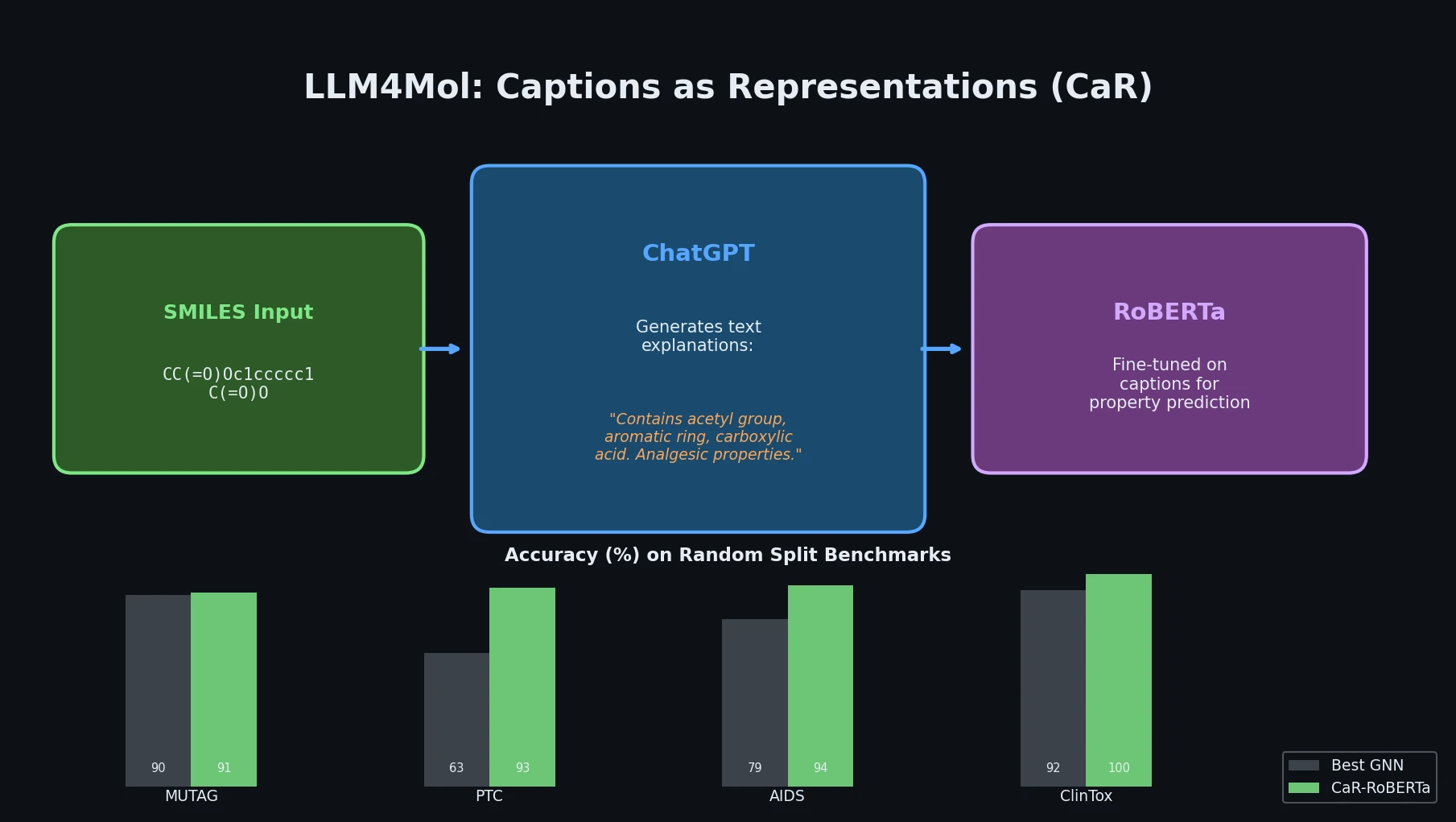
Diagram showing the CaR pipeline from SMILES to ChatGPT-generated captions to fine-tuned RoBERTa predictions

LLM4Mol: ChatGPT Captions as Molecular Representations

Proposes Captions as Representations (CaR), where ChatGPT generates textual explanations for SMILES strings that are then used to fine-tune small language models for molecular property prediction.

Molecular Generation
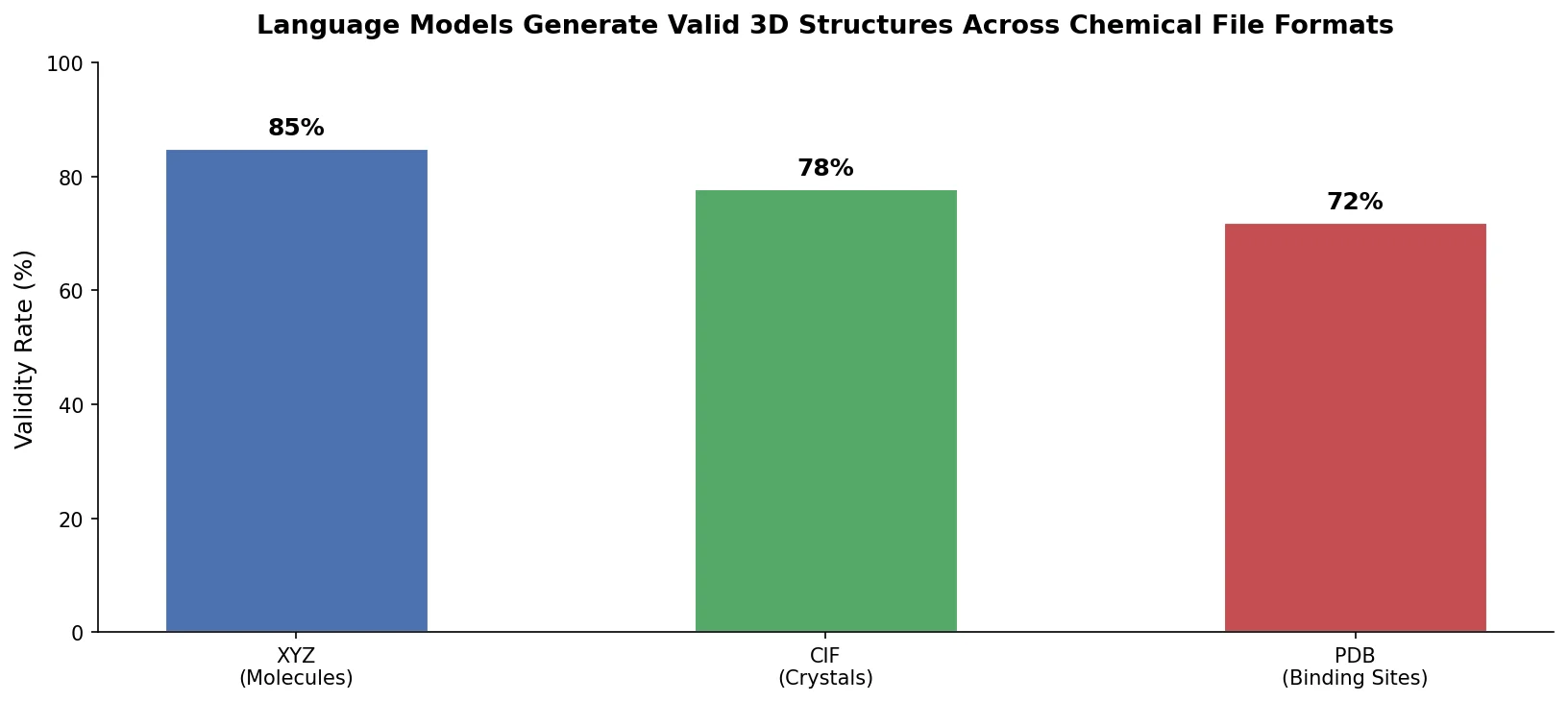
Bar chart showing language model validity rates across XYZ, CIF, and PDB 3D chemical file formats

LMs Generate 3D Molecules from XYZ, CIF, PDB Files

Demonstrates that standard transformer language models, trained with next-token prediction on sequences from XYZ, CIF, and PDB files, can generate valid 3D molecules, crystals, and protein binding sites competitive with domain-specific 3D generative models.

Molecular Representations
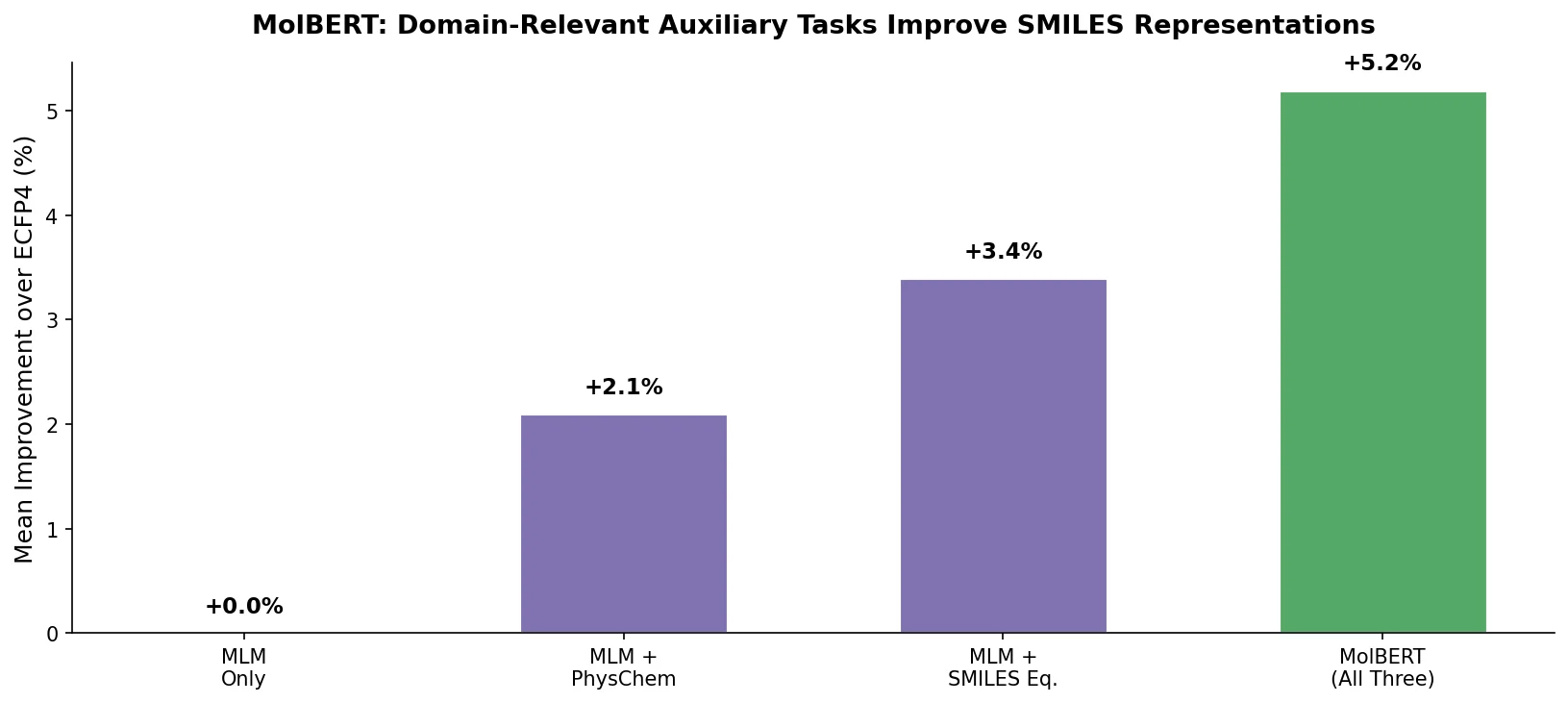
Bar chart showing MolBERT ablation: combining MLM, PhysChem, and SMILES equivalence tasks gives best improvement

MolBERT: Auxiliary Tasks for Molecular BERT Models

MolBERT pre-trains a BERT model on SMILES strings using masked language modeling, SMILES equivalence, and physicochemical property prediction as auxiliary tasks, achieving state-of-the-art results on virtual screening and QSAR benchmarks.

Predictive Chemistry
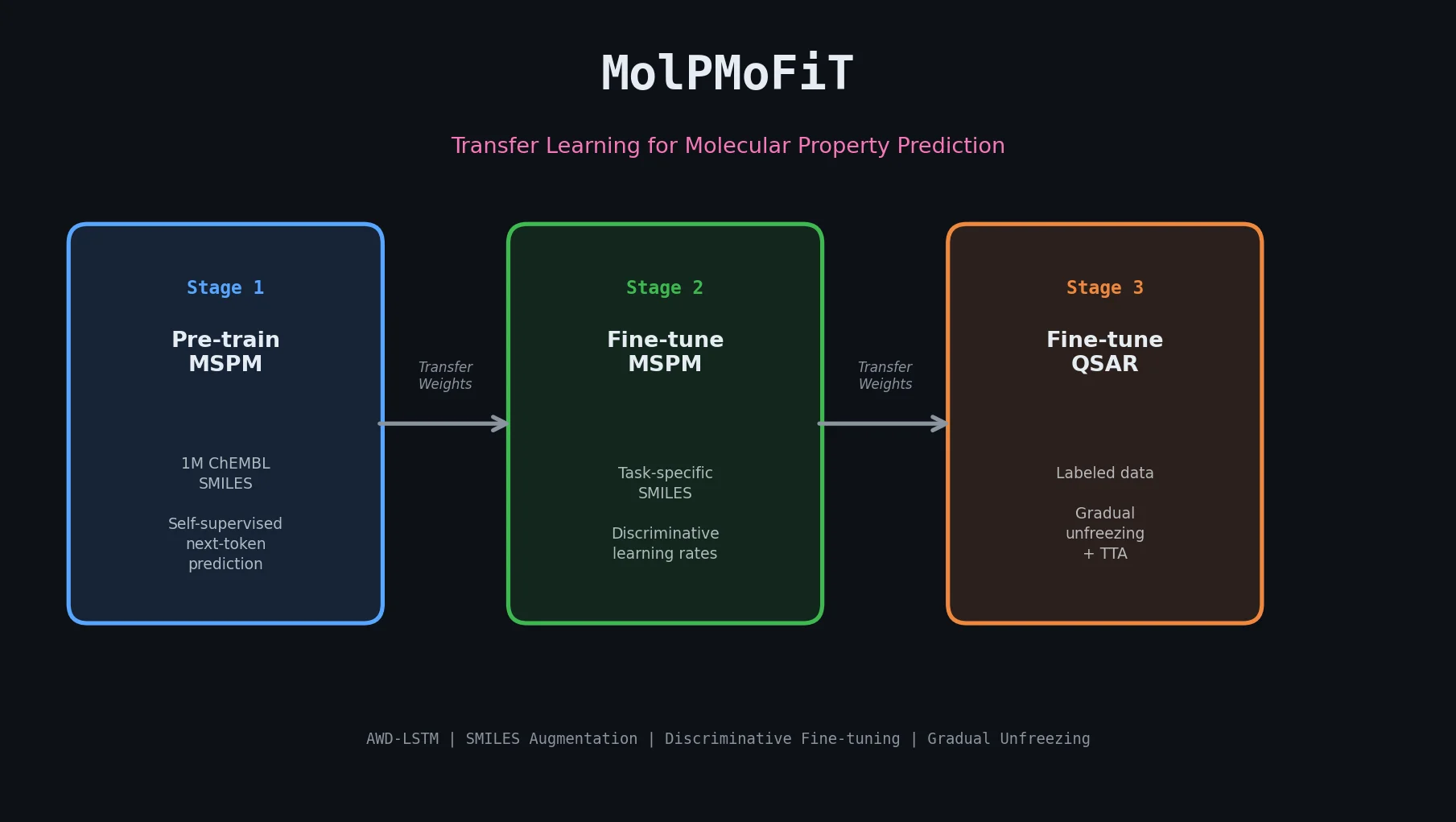
Diagram showing ULMFiT-style three-stage pipeline adapted for molecular property prediction

MolPMoFiT: Inductive Transfer Learning for QSAR

MolPMoFiT applies ULMFiT-style transfer learning to QSAR modeling, pre-training an AWD-LSTM on one million ChEMBL molecules and fine-tuning for property prediction on small datasets.

Molecular Representations
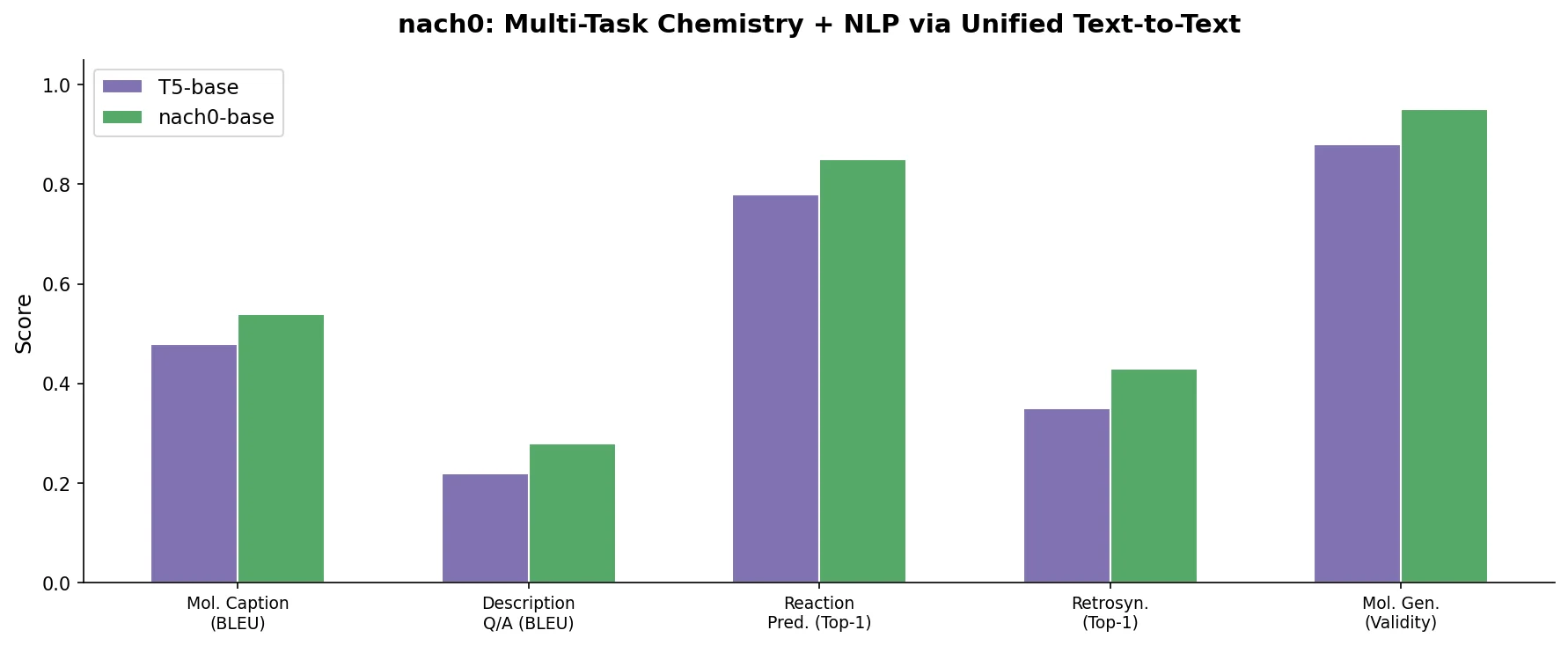
Bar chart comparing nach0 vs T5-base across molecular captioning, Q/A, reaction prediction, retrosynthesis, and generation

nach0: A Multimodal Chemical and NLP Foundation Model

nach0 unifies natural language and SMILES-based chemical tasks in a single encoder-decoder model, achieving competitive results across molecular property prediction, reaction prediction, molecular generation, and biomedical NLP benchmarks.

Molecular Generation
Distribution plot showing original QM9 logP shifted toward +6 and -6 targets via gradient-based dreaming

PASITHEA: Gradient-Based Molecular Design via Dreaming

PASITHEA adapts deep dreaming from computer vision to molecular design, directly optimizing SELFIES-encoded molecules for target chemical properties via gradient-based inversion of a trained regression network.

Molecular Representations
Bar chart showing randomized SMILES generate more of GDB-13 chemical space than canonical SMILES across training set sizes

Randomized SMILES Improve Molecular Generative Models

An extensive benchmark showing that training RNN generative models with randomized (non-canonical) SMILES strings yields more uniform, complete, and closed molecular output domains than canonical SMILES.

Molecular Generation
Bar chart comparing RNN and Transformer Wasserstein distances across drug-like, peptide-like, and polymer-like generation tasks

RNNs vs Transformers for Molecular Generation Tasks

Compares RNN-based and Transformer-based chemical language models across three molecular generation tasks of increasing complexity, finding that RNNs excel at local features while Transformers handle large molecules better.