Molecular Simulation
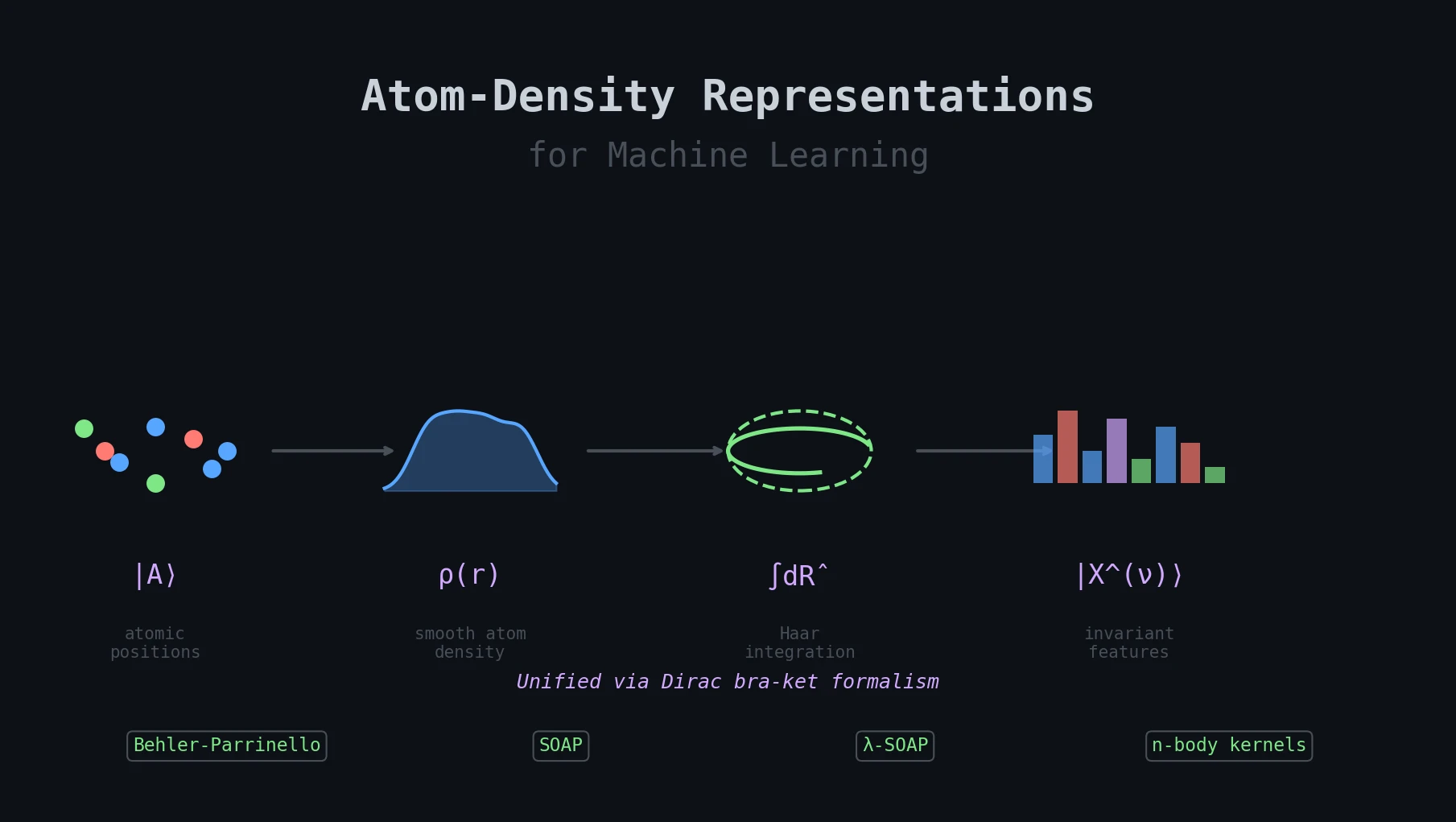
Pipeline showing atoms converted to smooth density, symmetrized via Haar integration, and projected to invariant features

Atom-Density Representations for Machine Learning

Introduces a Dirac notation formalism for atomic environments that unifies SOAP power spectra, Behler-Parrinello symmetry functions, and other density-based structural representations under a single theoretical framework.

Molecular Simulation
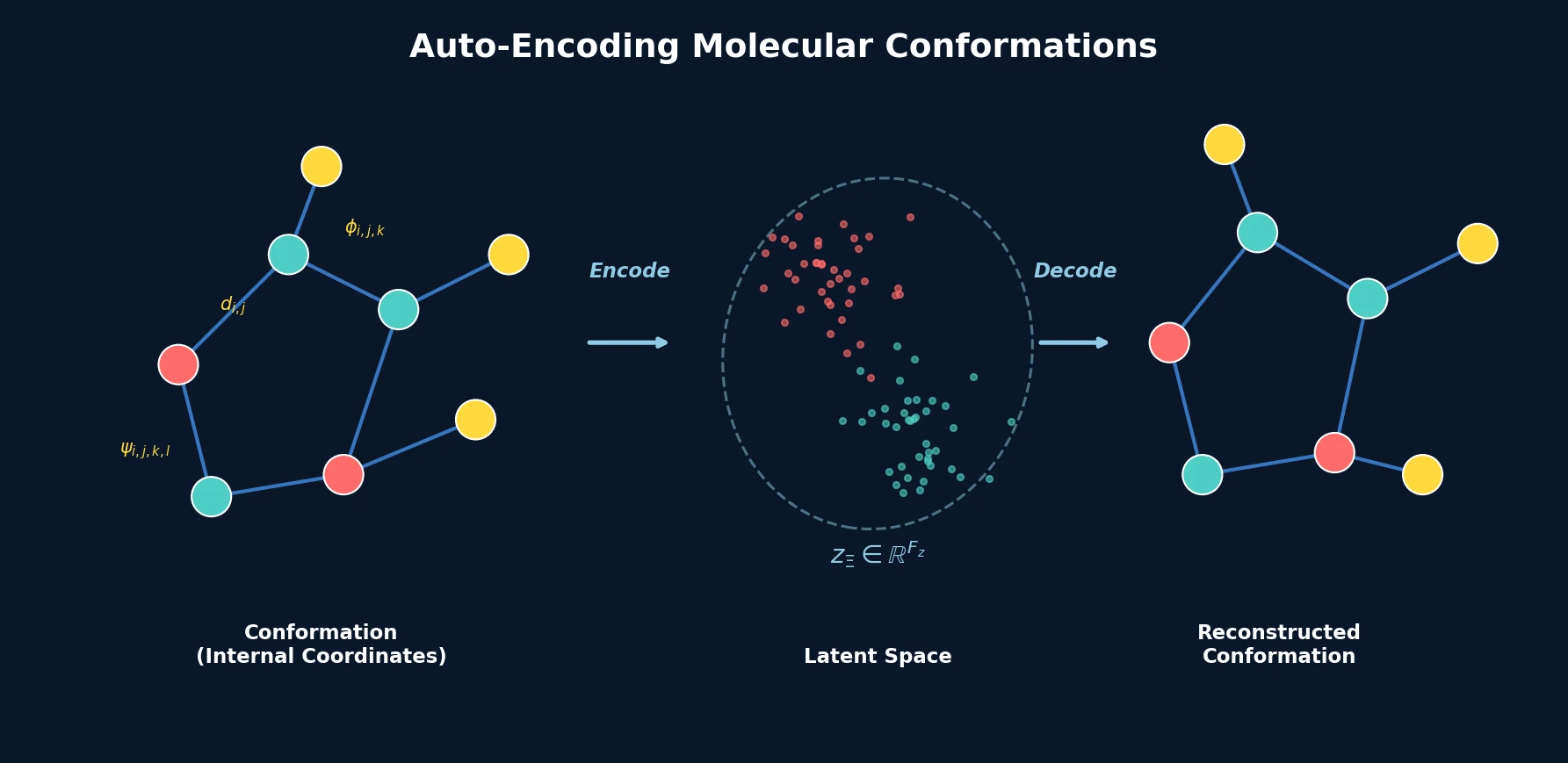
Diagram showing conformation autoencoder architecture with internal coordinate encoding and decoding

Conformation Autoencoder for 3D Molecules

A conformation autoencoder converts molecular 3D arrangements into fixed-size latent representations using internal coordinates and graph neural networks, enabling conformer generation and spatial property optimization.

Molecular Representations
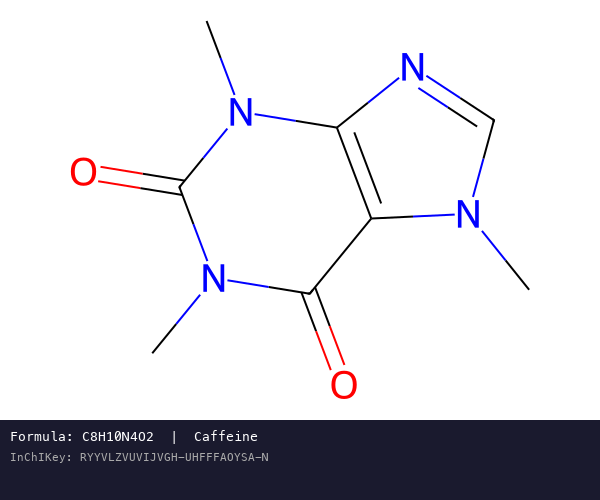
Caffeine molecular structure with its InChIKey identifier

InChI: The International Chemical Identifier

InChI (International Chemical Identifier) is an open standard from IUPAC that represents molecular structures as hierarchical, layered strings optimized for database interoperability, unique identification, and web search via its hashed InChIKey.

Molecular Representations
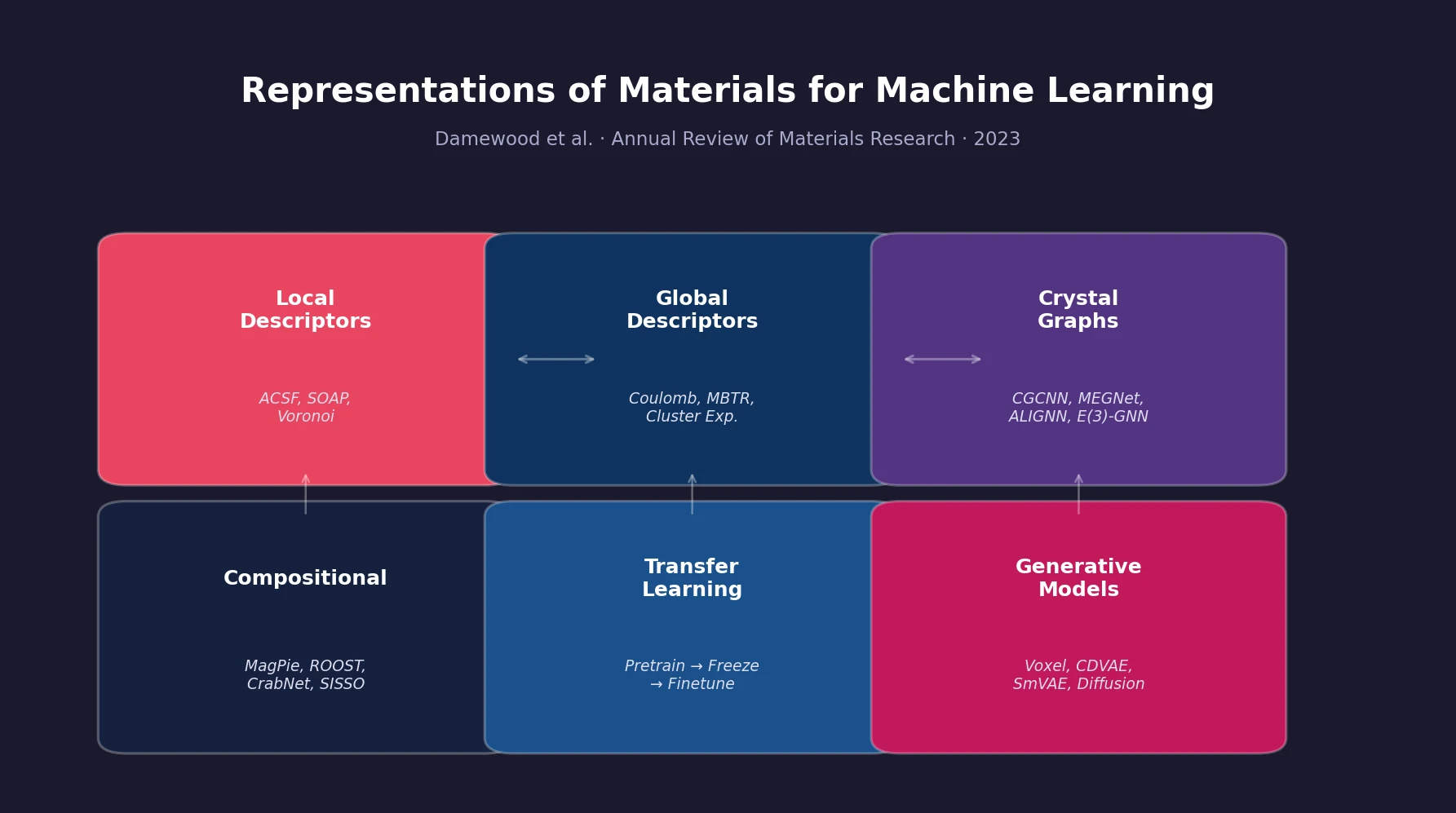
Overview of six categories of materials representations for machine learning

Materials Representations for ML Review

A comprehensive review of how solid-state materials can be numerically represented for machine learning, spanning structural features, graph neural networks, compositional descriptors, transfer learning, and generative models for inverse design.

Molecular Representations
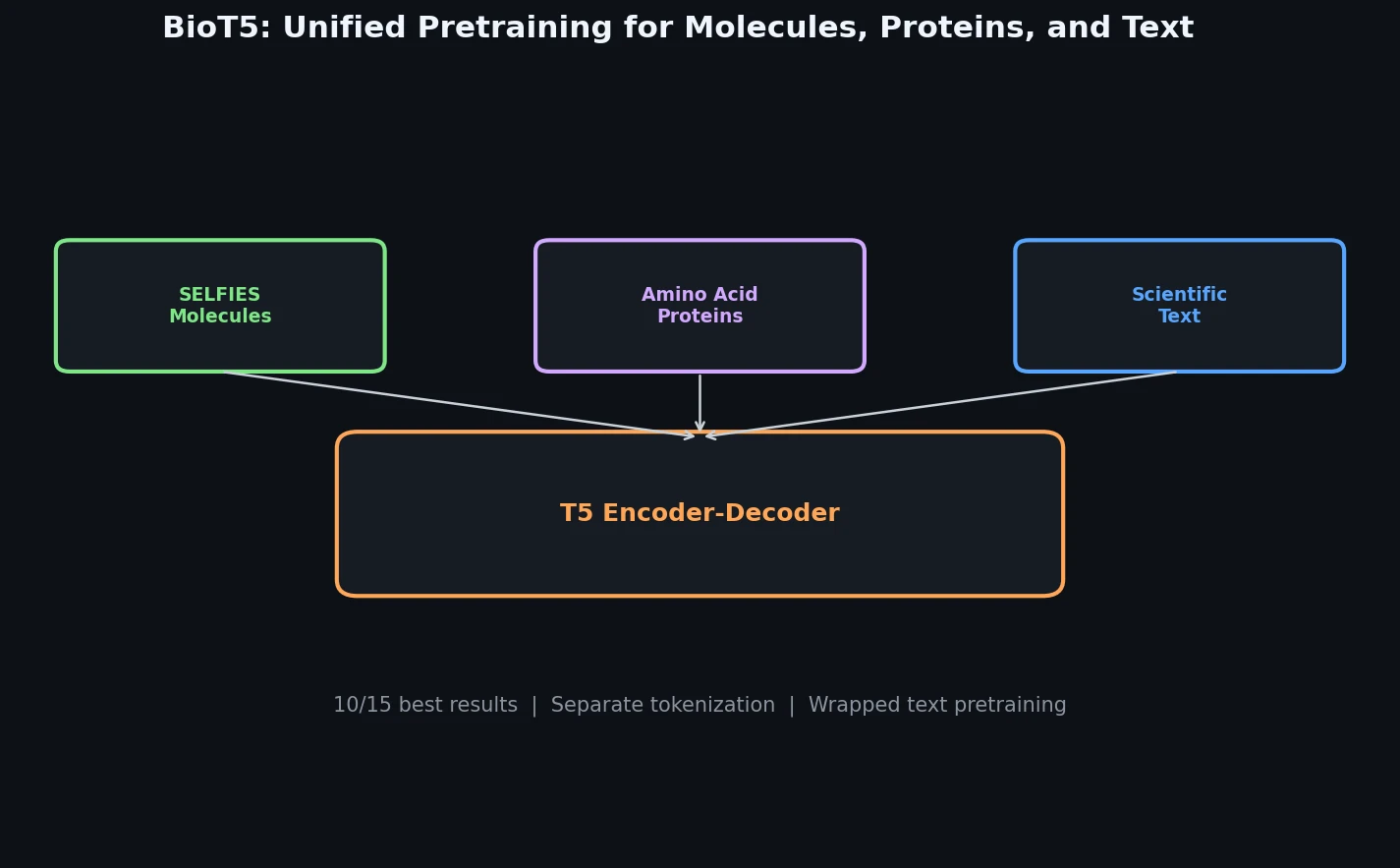
BioT5 architecture showing SELFIES molecules, amino acid proteins, and scientific text feeding into a T5 encoder-decoder

BioT5: Cross-Modal Integration of Biology and Chemistry

BioT5 uses SELFIES representations and separate tokenization to pre-train a unified T5 model across molecules, proteins, and text, achieving state-of-the-art results on 10 of 15 downstream tasks.

Molecular Generation
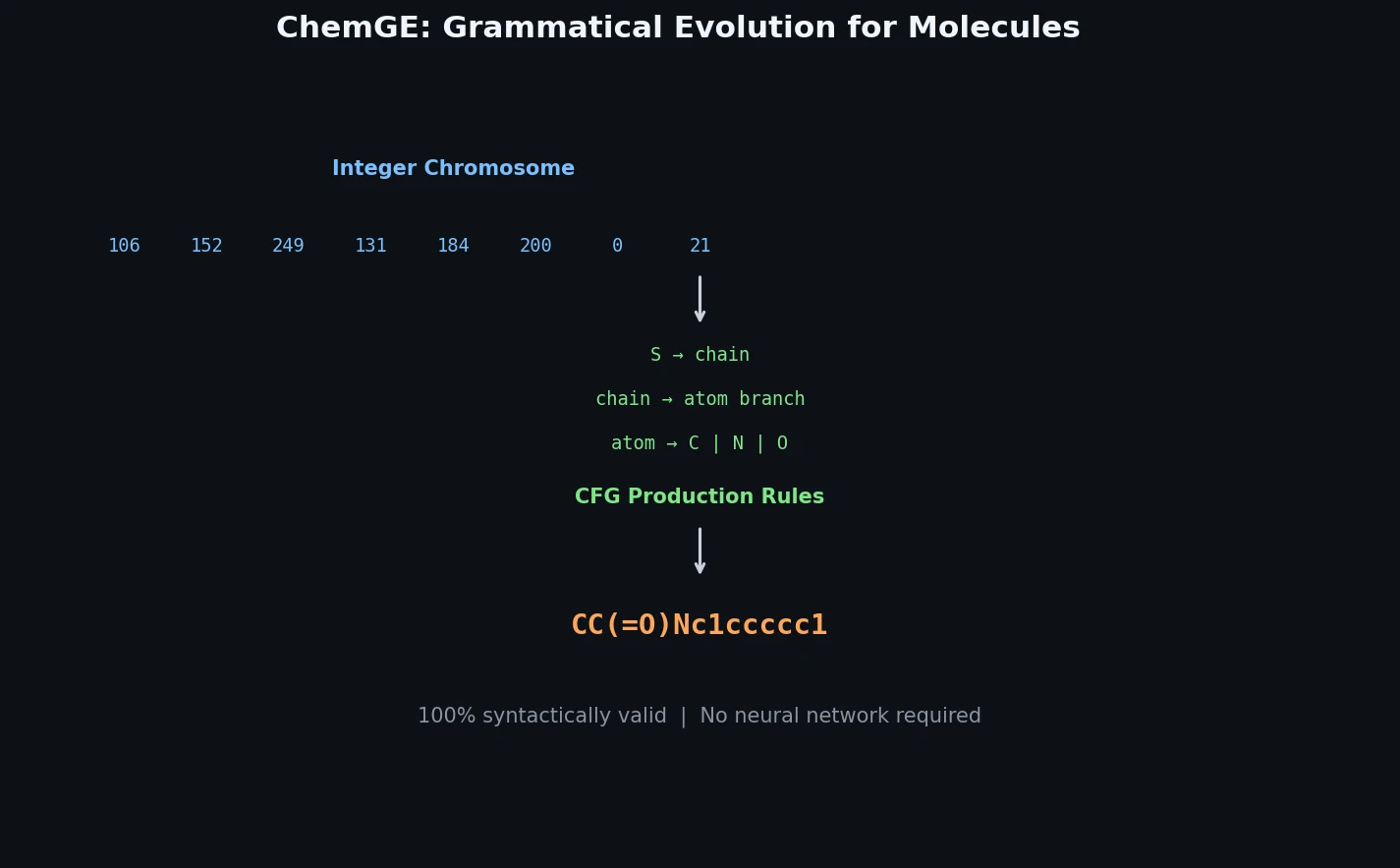
ChemGE pipeline from integer chromosome through CFG grammar rules to valid SMILES output

ChemGE: Molecule Generation via Grammatical Evolution

ChemGE uses grammatical evolution over SMILES context-free grammars to generate diverse drug-like molecules in parallel, outperforming deep learning baselines in throughput and molecular diversity.

Computational Chemistry
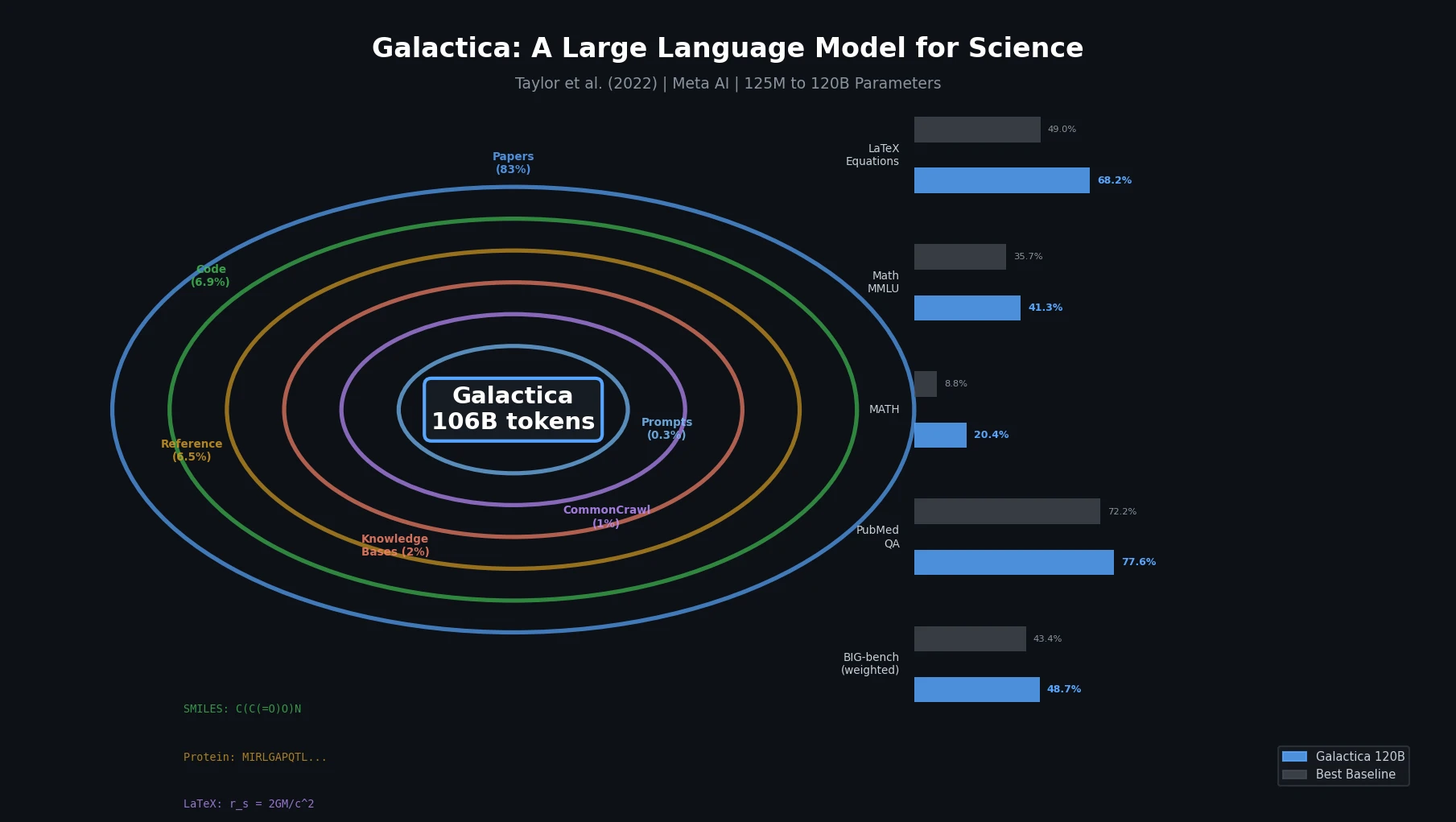
Visualization of Galactica corpus composition and benchmark performance comparing Galactica 120B against baselines

Galactica: A Curated Scientific LLM from Meta AI

Galactica trains a decoder-only Transformer on a curated 106B-token scientific corpus spanning papers, proteins, and molecules, achieving strong results on scientific QA, mathematical reasoning, and citation prediction.

Molecular Generation
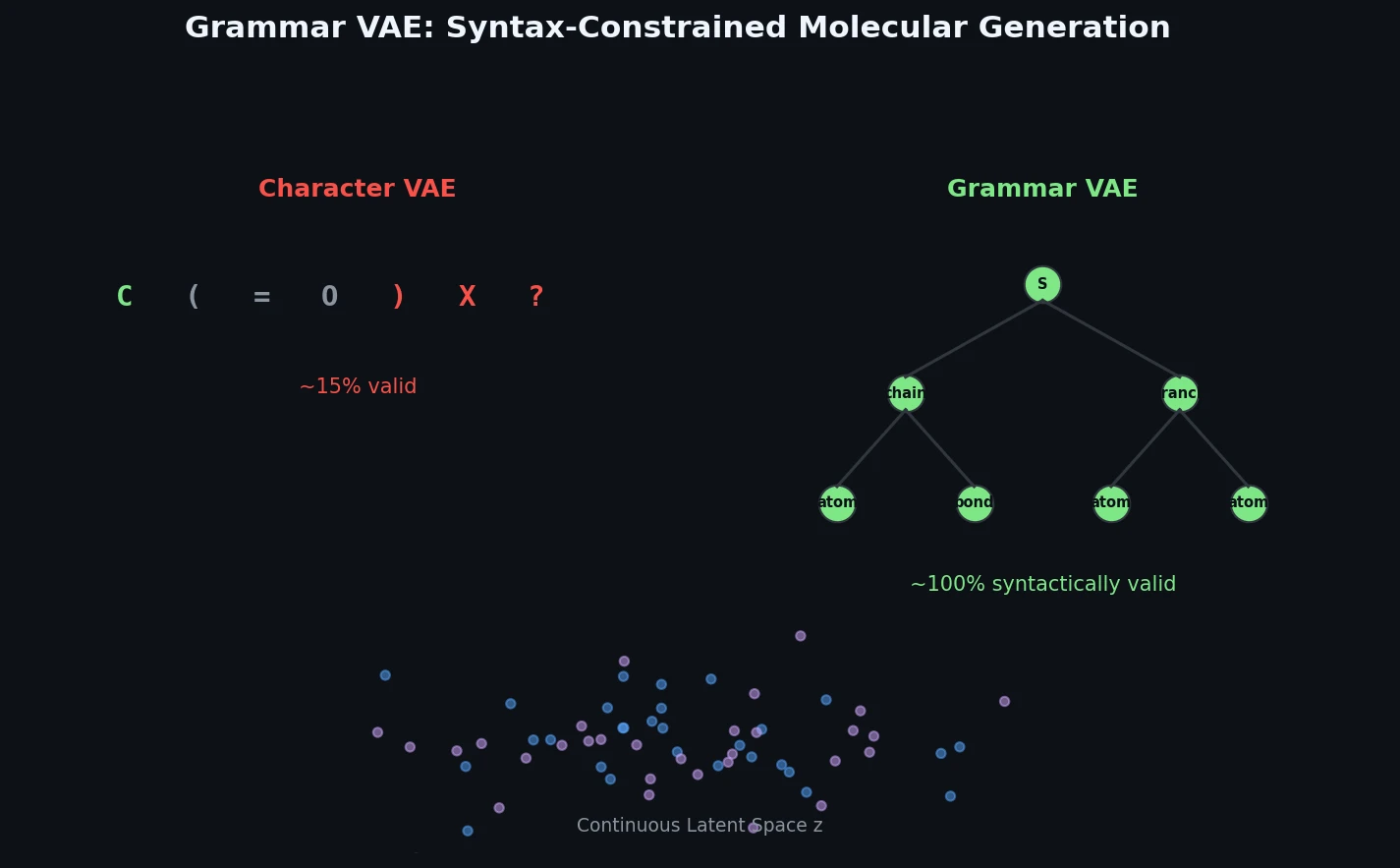
Diagram comparing character-level VAE with low validity to Grammar VAE using parse tree constraints for molecular generation

Grammar VAE: Generating Valid Molecules via CFGs

The Grammar VAE replaces character-level decoding with context-free grammar production rules, using a stack-based masking mechanism to guarantee that all generated SMILES strings are syntactically valid. Applied to molecular optimization and symbolic regression, it learns smoother latent spaces and finds better molecules than character-level baselines.

Molecular Generation
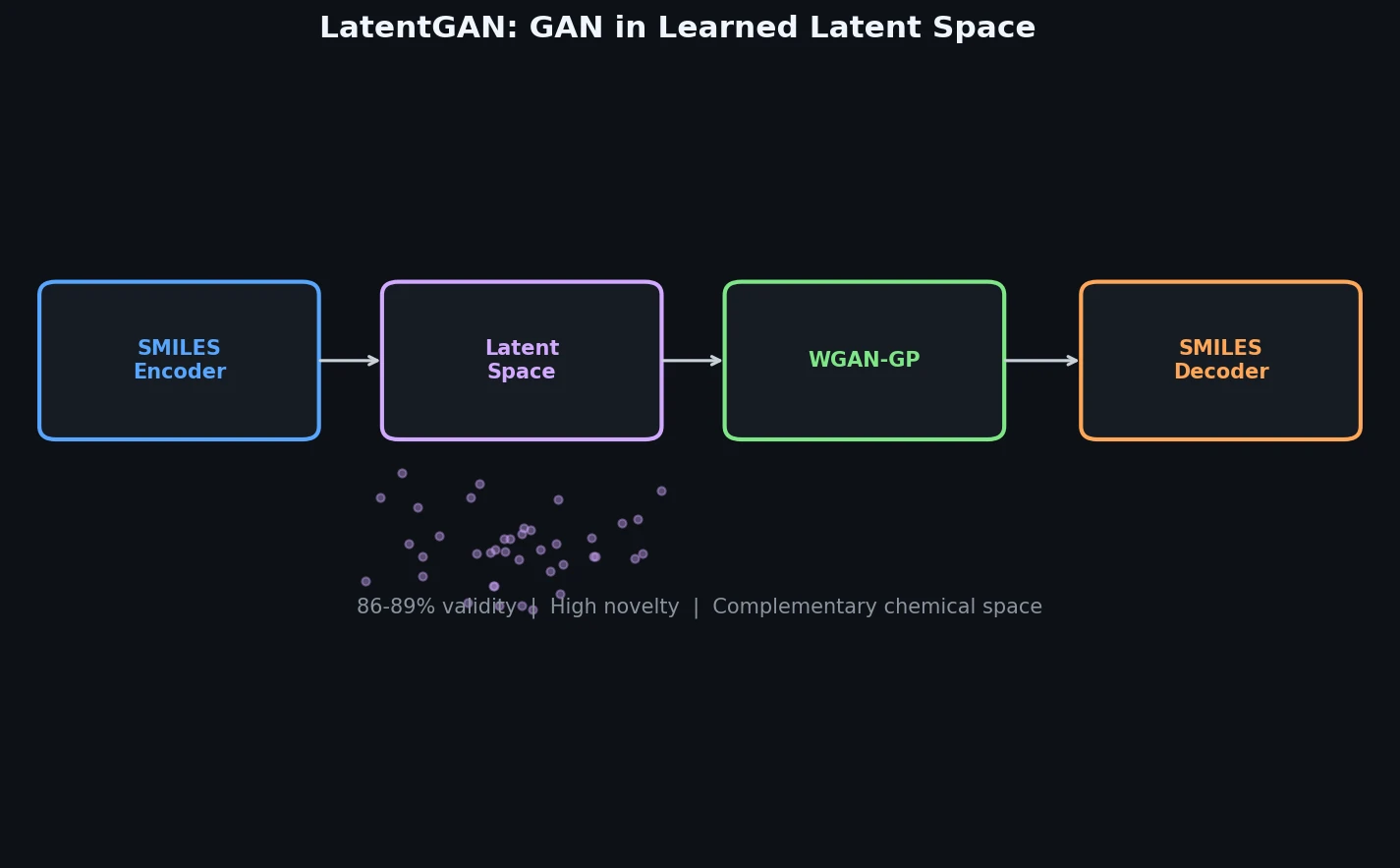
LatentGAN pipeline from SMILES encoder through latent space WGAN-GP to SMILES decoder

LatentGAN: Latent-Space GAN for Molecular Generation

LatentGAN decouples molecular generation from SMILES syntax by training a Wasserstein GAN on latent vectors from a pretrained heteroencoder, enabling de novo design of drug-like and target-biased compounds.

Computational Chemistry
SMolInstruct dataset feeding into four base models for chemistry instruction tuning

LlaSMol: Instruction-Tuned LLMs for Chemistry Tasks

LlaSMol fine-tunes Mistral, Llama 2, and other open-source LLMs on SMolInstruct, a 3.3M-sample instruction tuning dataset covering 14 chemistry tasks. The Mistral-based model outperforms GPT-4 and Claude 3 Opus across all tasks.

Molecular Generation
LSTM cells generating SMILES characters alongside validity and novelty statistics for drug-like molecule generation

LSTM Neural Network for Drug-Like Molecule Generation

Ertl et al. train a character-level LSTM on 509K bioactive ChEMBL SMILES and generate one million novel, diverse molecules whose physicochemical properties, substructure features, and predicted bioactivity closely match the training distribution.

Molecular Representations
MolFM trimodal architecture fusing 2D graph, knowledge graph, and biomedical text via cross-modal attention

MolFM: Trimodal Molecular Foundation Pre-training

MolFM pre-trains a multimodal encoder that fuses 2D molecular graphs, biomedical text, and knowledge graph entities through fine-grained cross-modal attention, achieving strong gains on cross-modal retrieval, molecule captioning, text-based generation, and property prediction.