Molecular Simulation
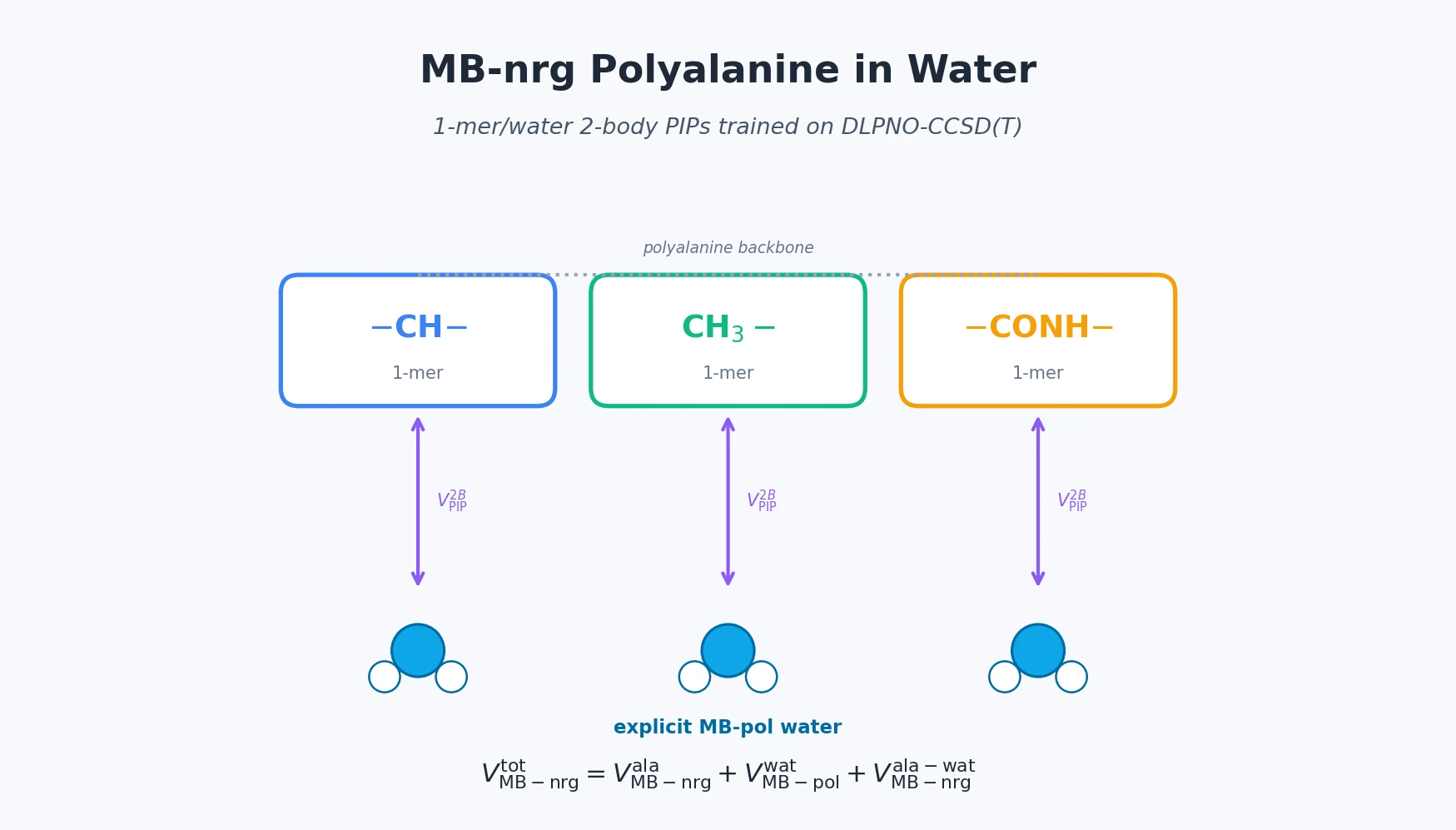
Schematic of polyalanine 1-mer functional groups interacting with water through CCSD(T)-fit 2-body PIPs.

MB-nrg in Solution: Polyalanine in Water with CCSD(T) PEFs

Building on the gas-phase MB-nrg PEF for polyalanine, Ruihan Zhou and Francesco Paesani add machine-learned 2-body terms for each backbone functional group interacting with water, fit to BSSE-corrected DLPNO-CCSD(T)/aug-cc-pVTZ data, then validate the resulting potential against alanine dipeptide-water dimer scans, free-energy surfaces in explicit MB-pol water, and hydration radial distribution functions.
Molecular Simulation
Schematic of polyalanine decomposed into overlapping n-mer building blocks fit to CCSD(T) energies.

MB-nrg: CCSD(T)-Accurate Potentials for Polyalanine

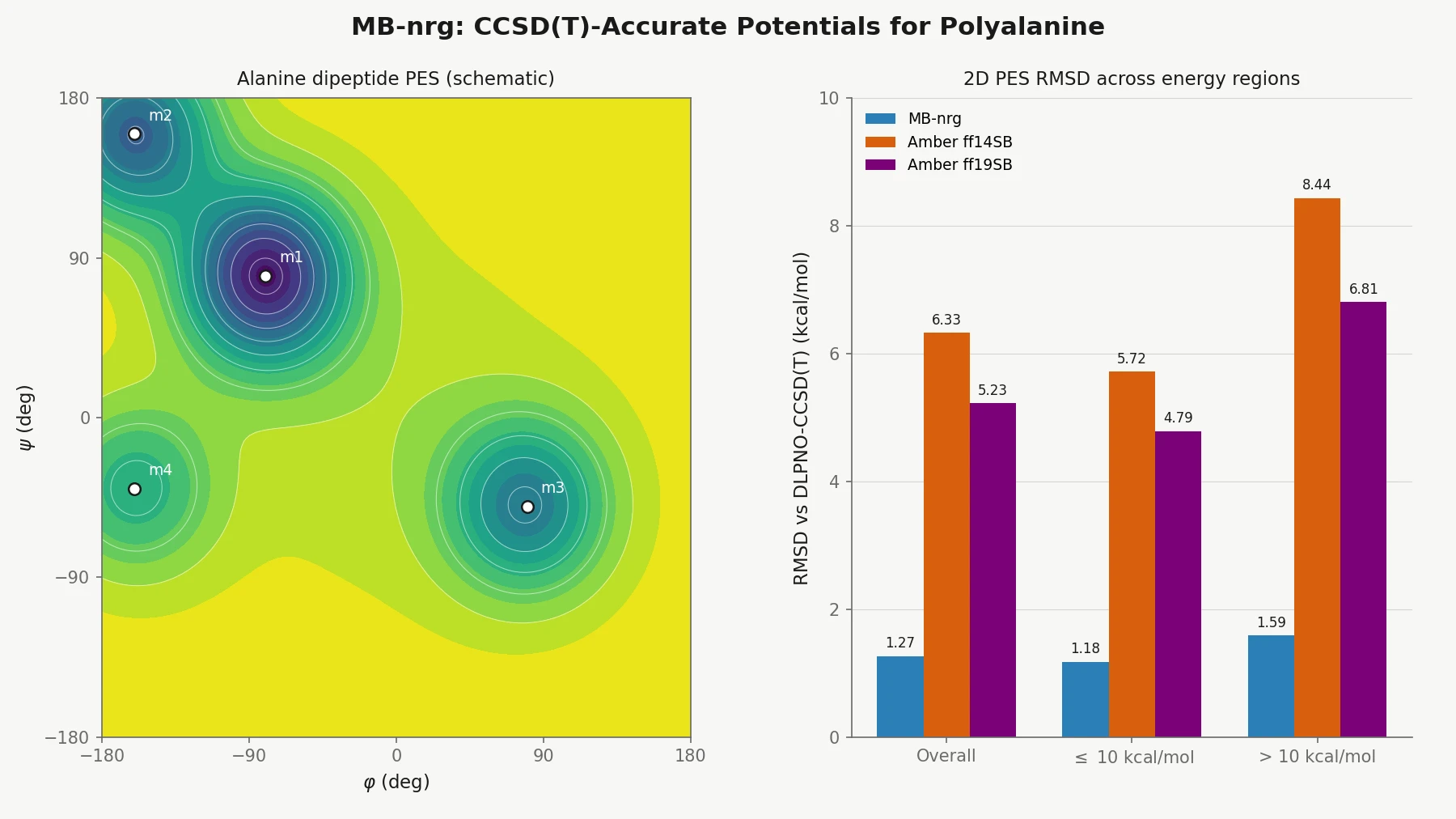
Ruihan Zhou and co-authors extend the MB-nrg many-body formalism to covalently bonded biomolecules by fragmenting polyalanine into functional-group n-mers, fitting permutationally invariant polynomials to DLPNO-CCSD(T)/aug-cc-pVTZ reference energies, and reproducing alanine dipeptide Ramachandran surfaces, harmonic frequencies, and AceAla9Nme secondary-structure dynamics more faithfully than Amber ff14SB and ff19SB.

Molecular Simulation
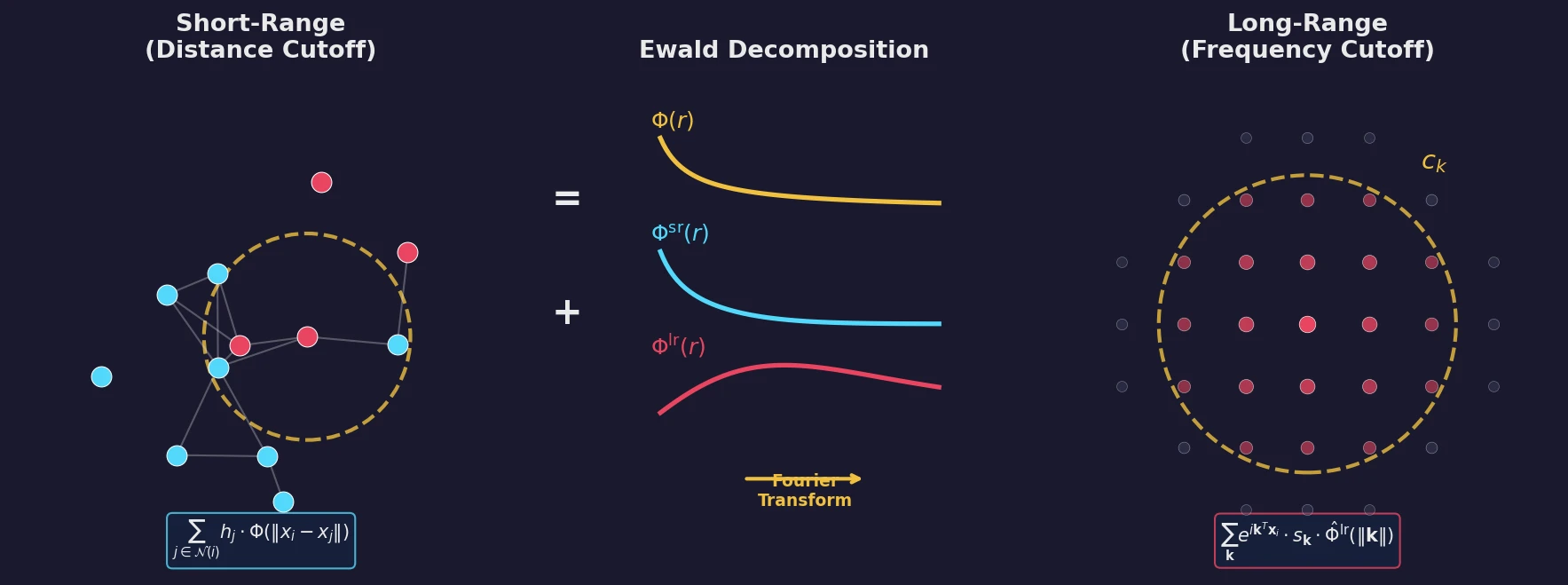
Diagram showing the Ewald decomposition of long-range interactions into short-range and Fourier-space components for molecular graph neural networks

Ewald Message Passing for Molecular Graphs

Proposes Ewald message passing, a Fourier-space scheme inspired by Ewald summation that captures long-range interactions in molecular graphs. The method is architecture-agnostic and improves energy MAEs by 10% on OC20 and 16% on OE62 across four baseline GNN models.

Scientific Computing
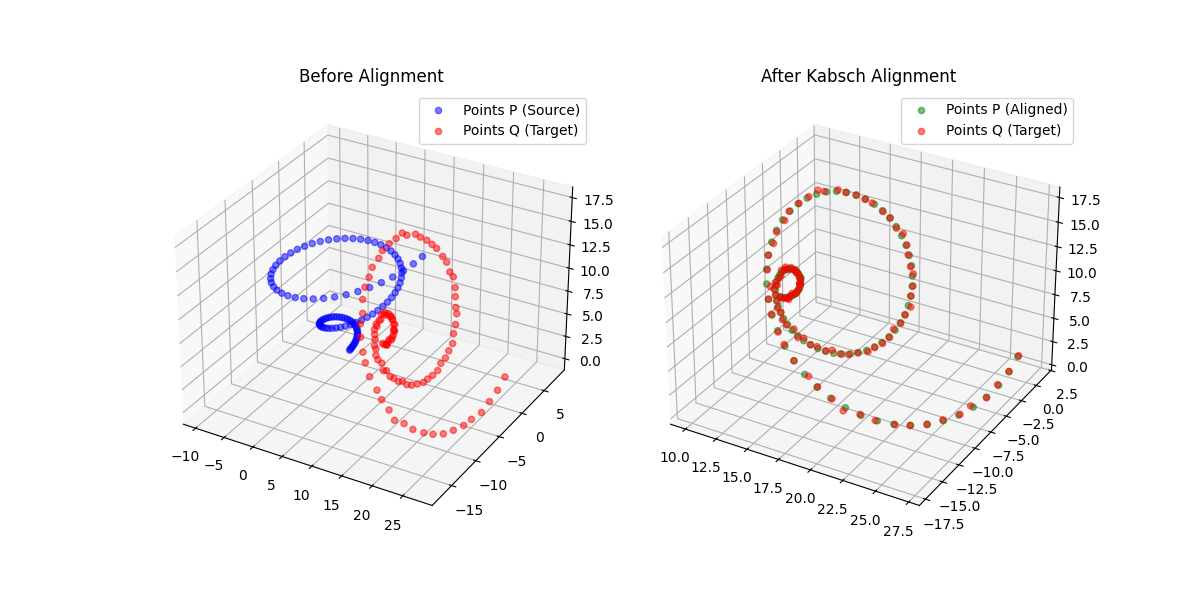
Before and after visualization of point-set alignment using the Kabsch algorithm

Kabsch-Horn Cookbook: Differentiable Alignment

A differentiable point-set alignment library implementing N-dimensional Kabsch, Horn quaternion, and Umeyama scaling algorithms with per-point weights, batch dimensions, and custom autograd across NumPy, PyTorch, JAX, TensorFlow, and MLX.

Molecular Simulation
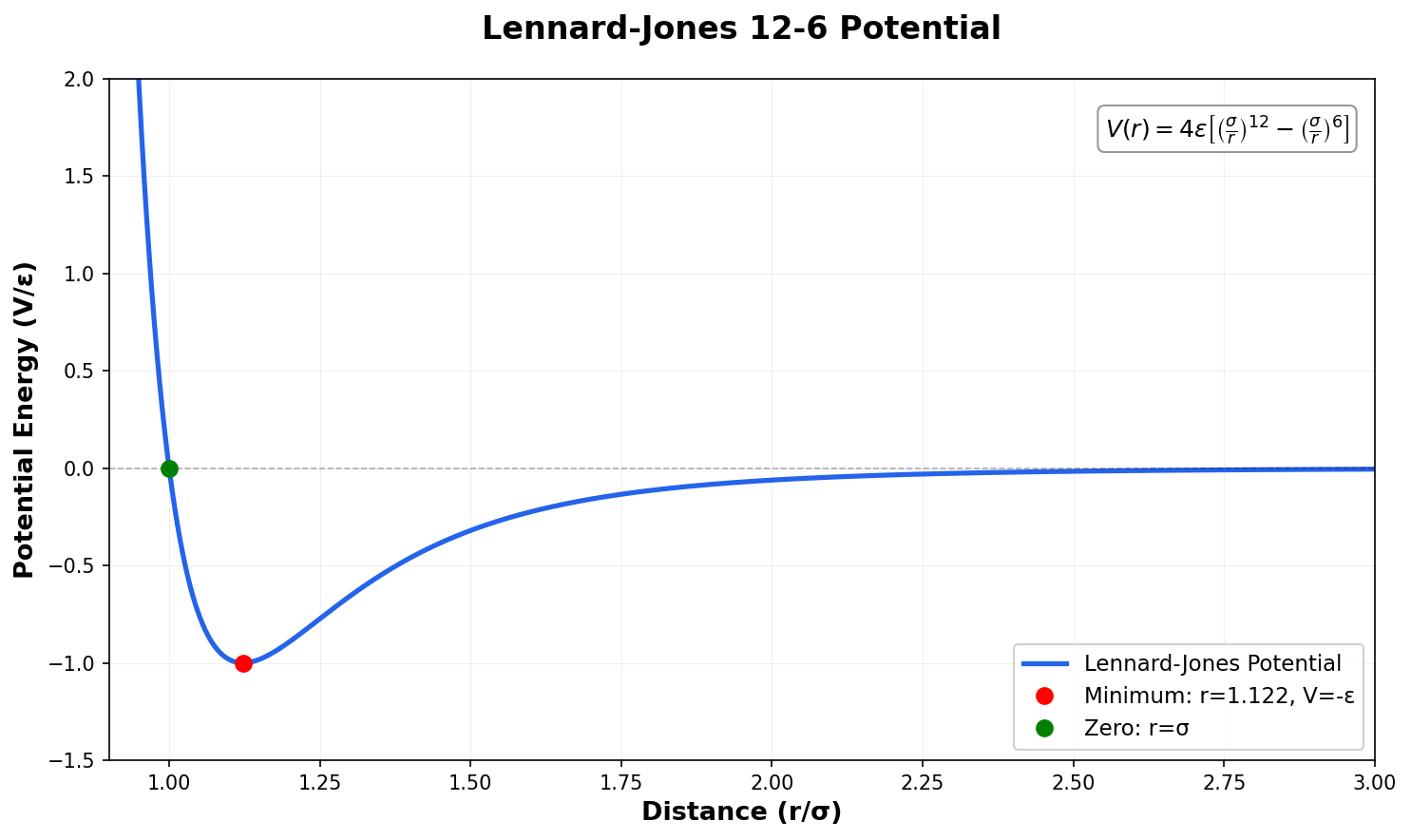
Graph of the Lennard-Jones 12-6 potential showing the characteristic attractive and repulsive forces

Dynamical Corrections to TST for Surface Diffusion

This paper bridges Molecular Dynamics and Transition State Theory by applying a dynamical corrections formalism to surface diffusion, identifying a low-temperature bounce-back mechanism causing non-Arrhenius behavior.

Molecular Simulation
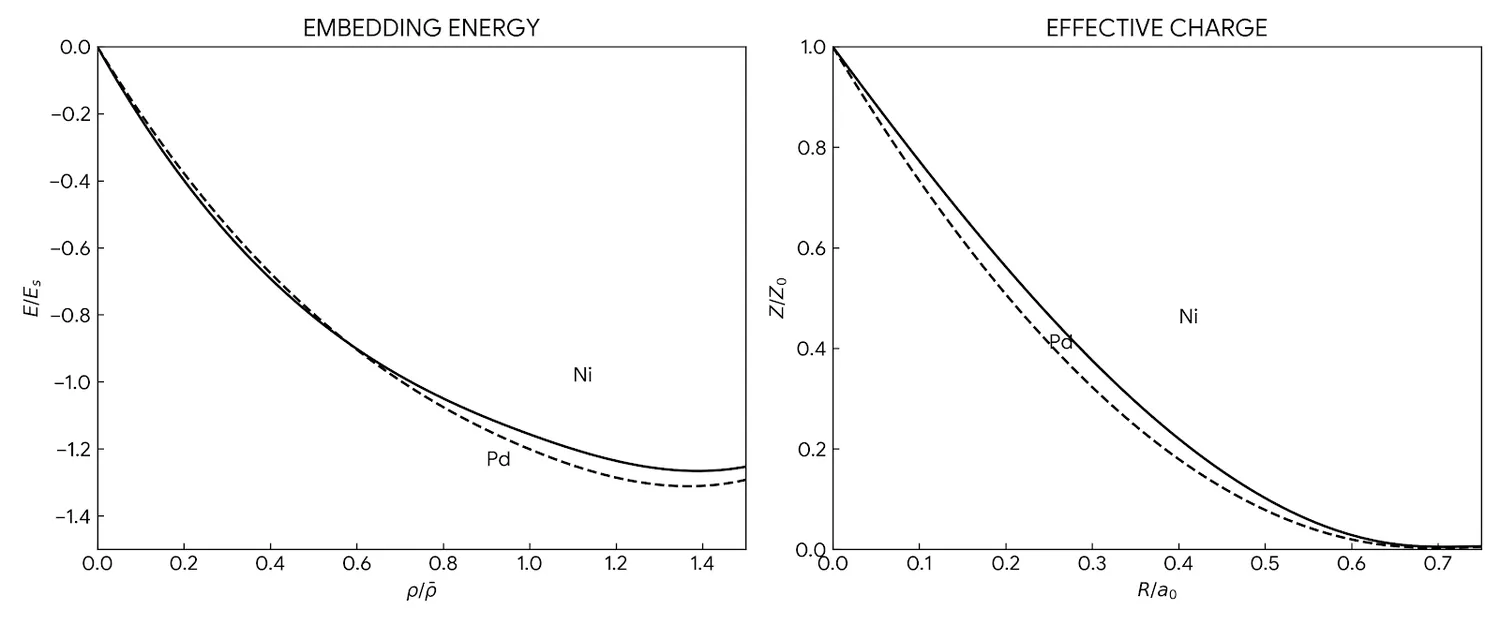
Embedding energy and effective charge functions for Ni and Pd from the original EAM paper

Embedded-Atom Method User Guide: Voter's 1994 Chapter

This 1994 handbook chapter serves as a practical user guide for the Embedded-Atom Method (EAM). It details the theoretical derivation from density-functional theory, synthesizes related methods like the Glue Model, and provides a complete tutorial on fitting potentials, illustrated with a specific implementation for the Ni-Al-B system.

Molecular Simulation
Embedding energy and effective charge functions for Ni and Pd from the original EAM paper

Embedded-Atom Method: Theory and Applications Review

This 1993 review systematizes the Embedded-Atom Method (EAM) as a practical semi-empirical approach for metallic systems. It synthesizes theory, applications, and connections to related methods while addressing the limitations of pair potentials.

Molecular Simulation
Graph of the Lennard-Jones 12-6 potential showing the characteristic attractive and repulsive forces

Evans 1986: Thermal Conductivity of Lennard-Jones Fluid

This paper validates the homogeneous Evans method for calculating thermal conductivity against experimental Argon data. It demonstrates broad agreement across the phase diagram but identifies significant non-monotonic behavior and enhanced long-time tails near the critical point.

Molecular Simulation
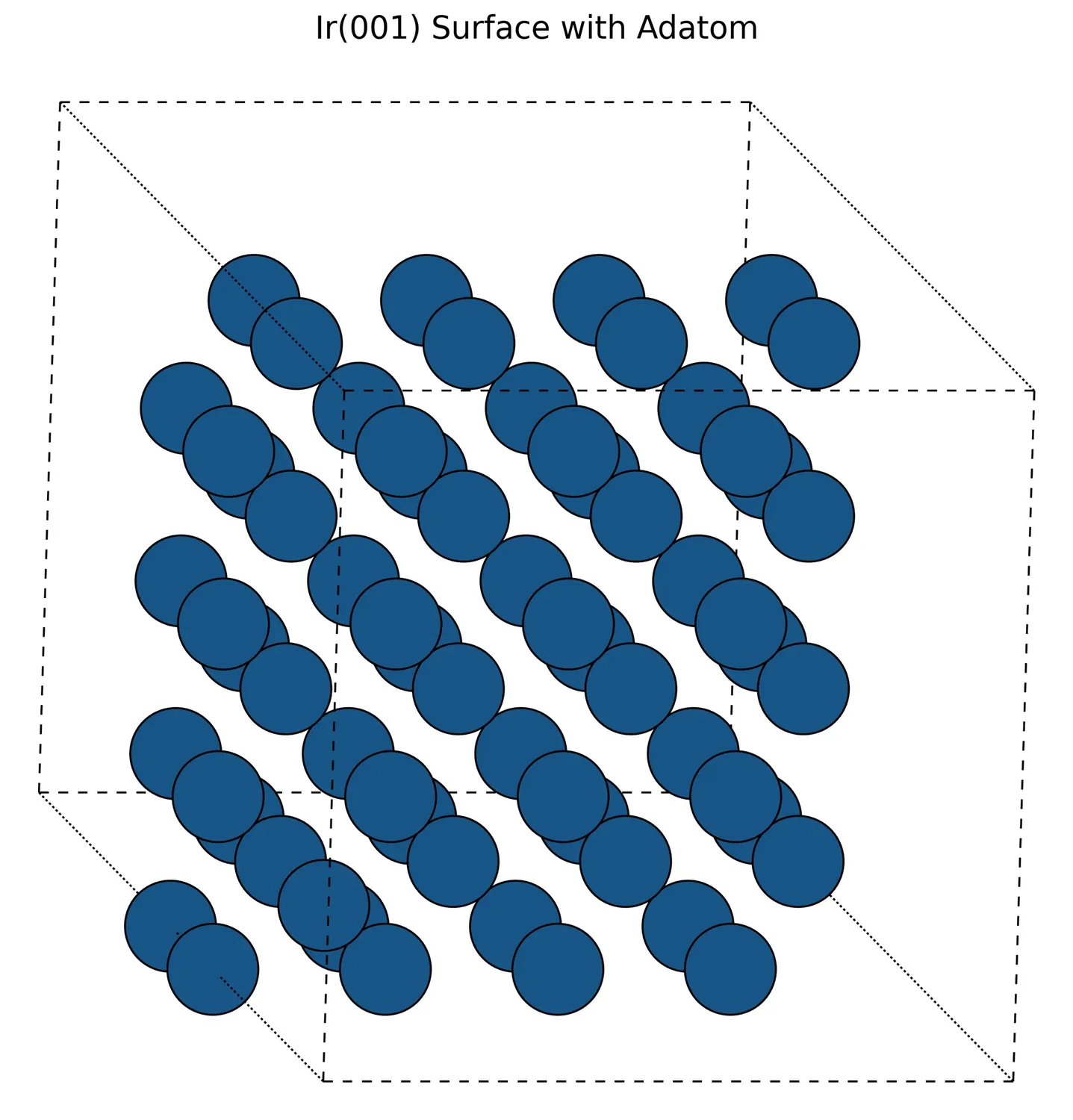
Iridium fcc(001) surface with adatom

MD Simulation of Self-Diffusion on Metal Surfaces (1994)

A molecular dynamics investigation using EAM and many-body potentials to elucidate atomic exchange mechanisms on Iridium surfaces, verifying Field Ion Microscope observations.

Scientific Computing
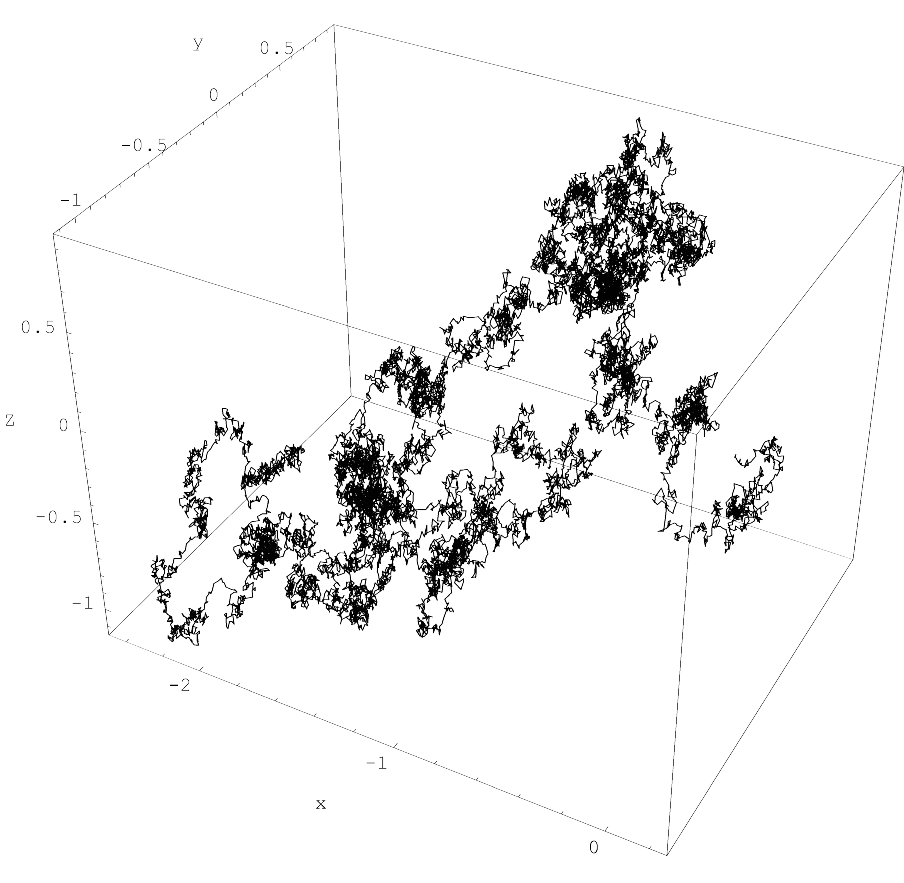
Three-dimensional Brownian motion trajectory showing random walk behavior

Second-Order Langevin Equation for Field Simulations

Proposes the Hyperbolic Algorithm for Euclidean field theory simulations. By adding a second-order fictitious time derivative to the Langevin equation, the method reduces systematic errors from O(ε) down to O(ε²).

Molecular Simulation
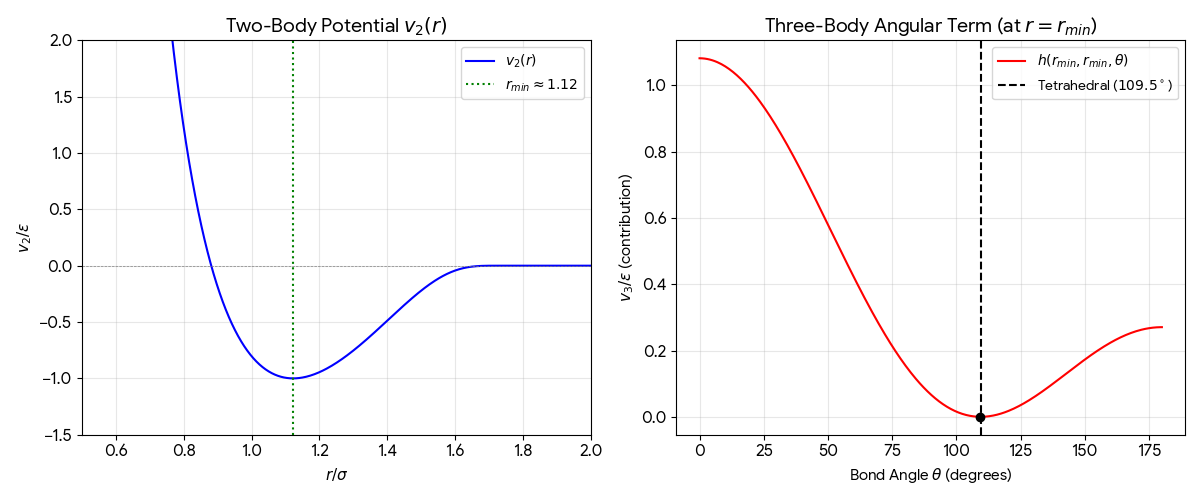
Visualization of the Stillinger-Weber potential showing the two-body radial term and three-body angular penalty

Stillinger-Weber Potential for Silicon Simulation

Stillinger and Weber propose a 3-body interaction potential that stabilizes the diamond crystal structure of silicon and reproduces liquid properties through molecular dynamics, addressing the inability of standard pair potentials to model tetrahedral semiconductors.

Molecular Simulation
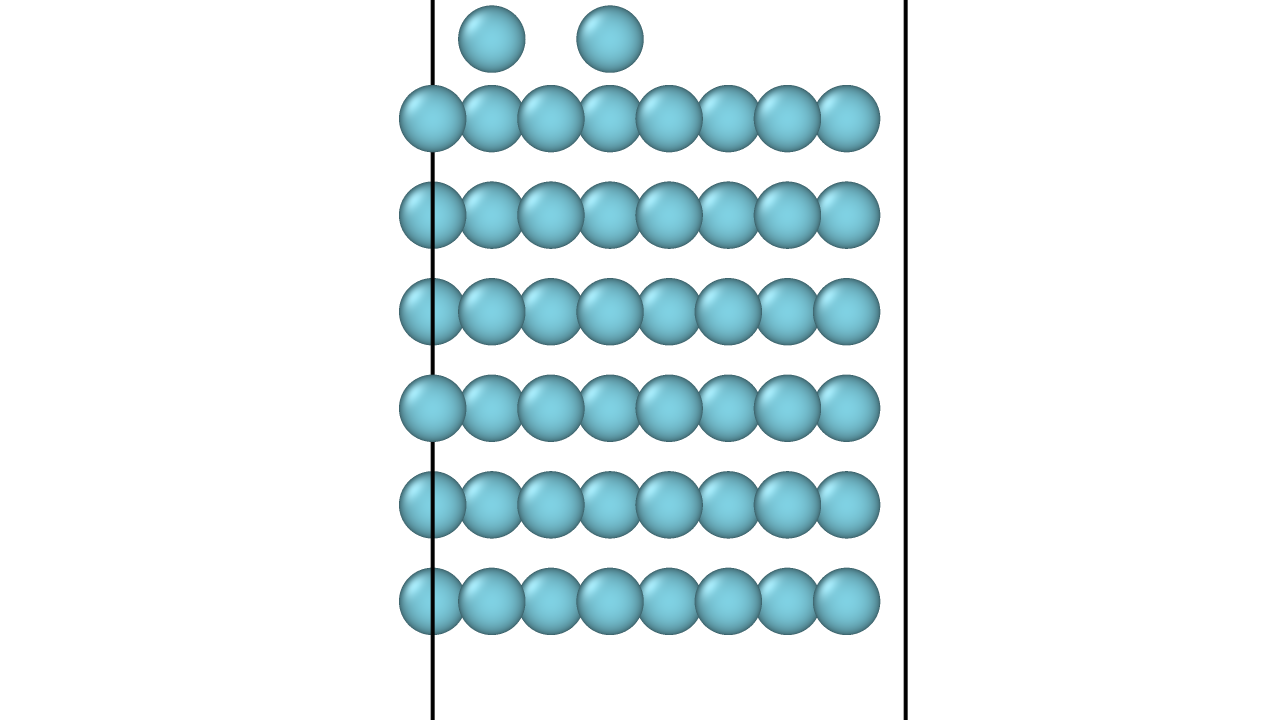
Visualization of argon dimer on fcc(111) surface

Adatom Dimer Diffusion on fcc(111) Crystal Surfaces

This molecular dynamics study reveals that adatom dimers on fcc(111) surfaces exhibit simultaneous multiple jumps at intermediate temperatures, migrating with mobility comparable to single adatoms.