Molecular Simulation
Pipeline showing atoms converted to smooth density, symmetrized via Haar integration, and projected to invariant features

Atom-Density Representations for Machine Learning

Introduces a Dirac notation formalism for atomic environments that unifies SOAP power spectra, Behler-Parrinello symmetry functions, and other density-based structural representations under a single theoretical framework.

Molecular Simulation
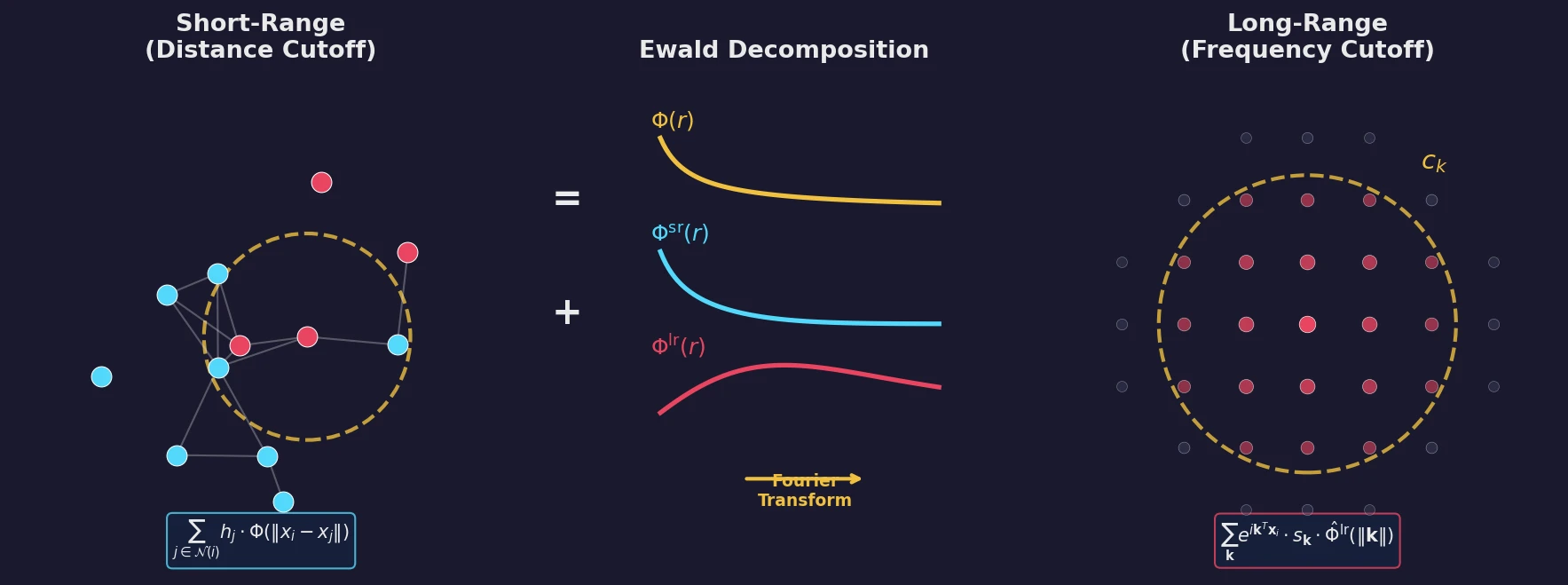
Diagram showing the Ewald decomposition of long-range interactions into short-range and Fourier-space components for molecular graph neural networks

Ewald Message Passing for Molecular Graphs

Proposes Ewald message passing, a Fourier-space scheme inspired by Ewald summation that captures long-range interactions in molecular graphs. The method is architecture-agnostic and improves energy MAEs by 10% on OC20 and 16% on OE62 across four baseline GNN models.

Molecular Representations
Overview of six categories of materials representations for machine learning

Materials Representations for ML Review

A comprehensive review of how solid-state materials can be numerically represented for machine learning, spanning structural features, graph neural networks, compositional descriptors, transfer learning, and generative models for inverse design.

Predictive Chemistry
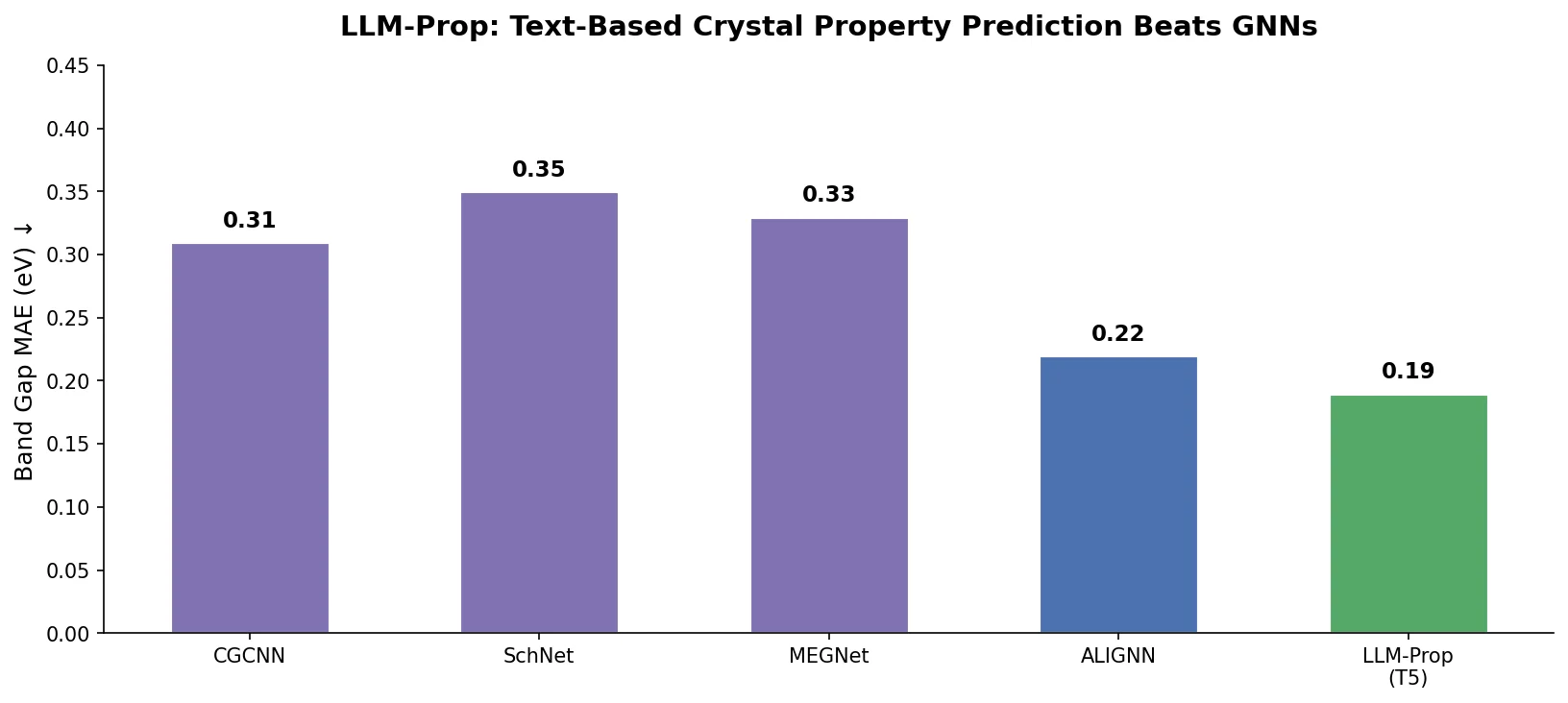
Bar chart comparing LLM-Prop band gap MAE against CGCNN, SchNet, MEGNet, and ALIGNN

LLM-Prop: Predicting Crystal Properties from Text

LLM-Prop uses the encoder half of T5, fine-tuned on Robocrystallographer text descriptions, to predict crystal properties. It outperforms GNN baselines like ALIGNN on band gap and volume prediction while using fewer parameters.

Molecular Simulation
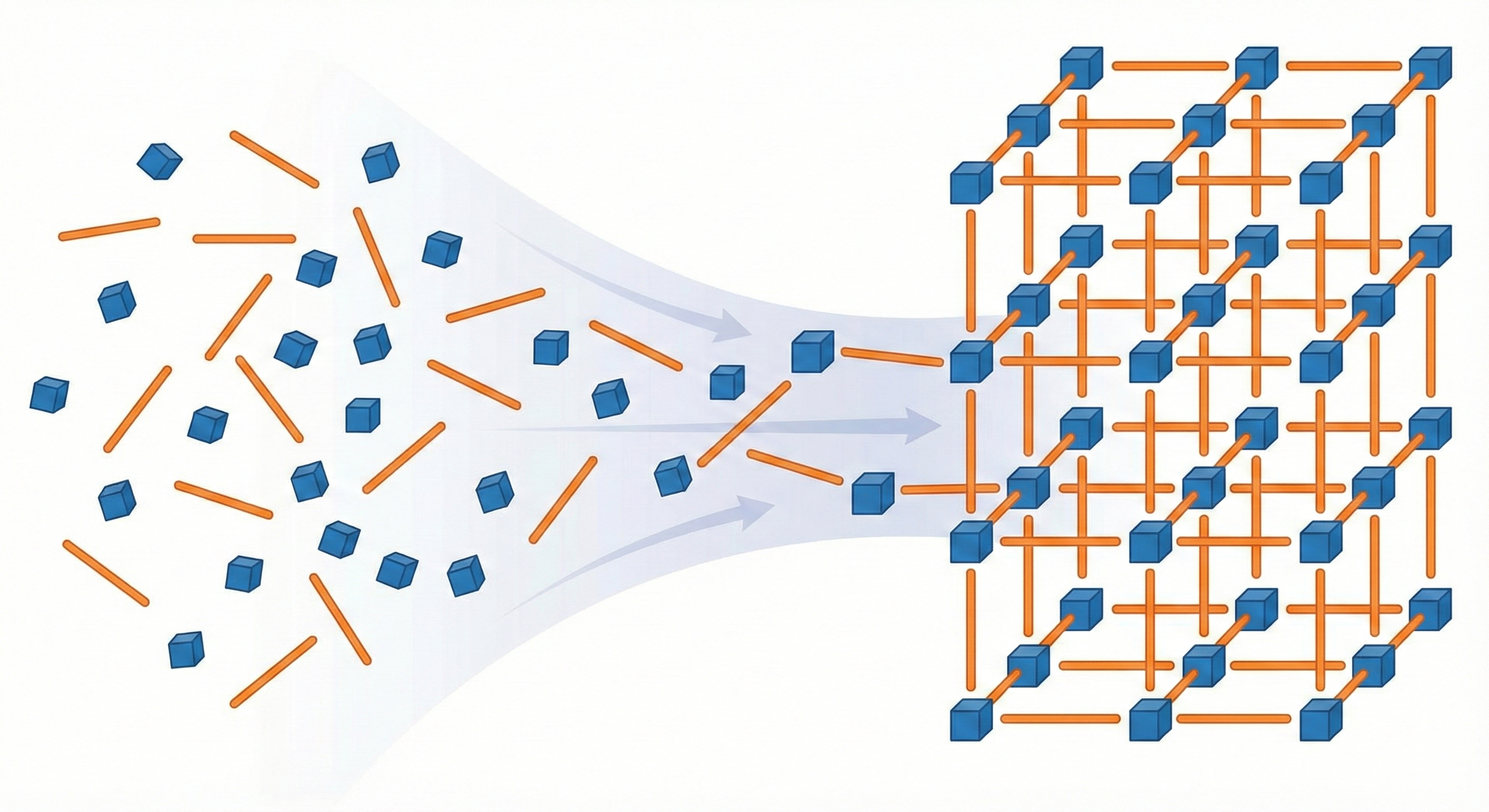
MOFFlow assembles metal nodes and organic linkers into Metal-Organic Framework structures

MOFFlow: Flow Matching for MOF Structure Prediction

MOFFlow is the first deep generative model tailored for Metal-Organic Framework (MOF) structure prediction. It utilizes Riemannian flow matching on SE(3) to assemble rigid building blocks (metal nodes and organic linkers), achieving higher accuracy and scalability than atom-based methods on large systems.

Molecular Simulation
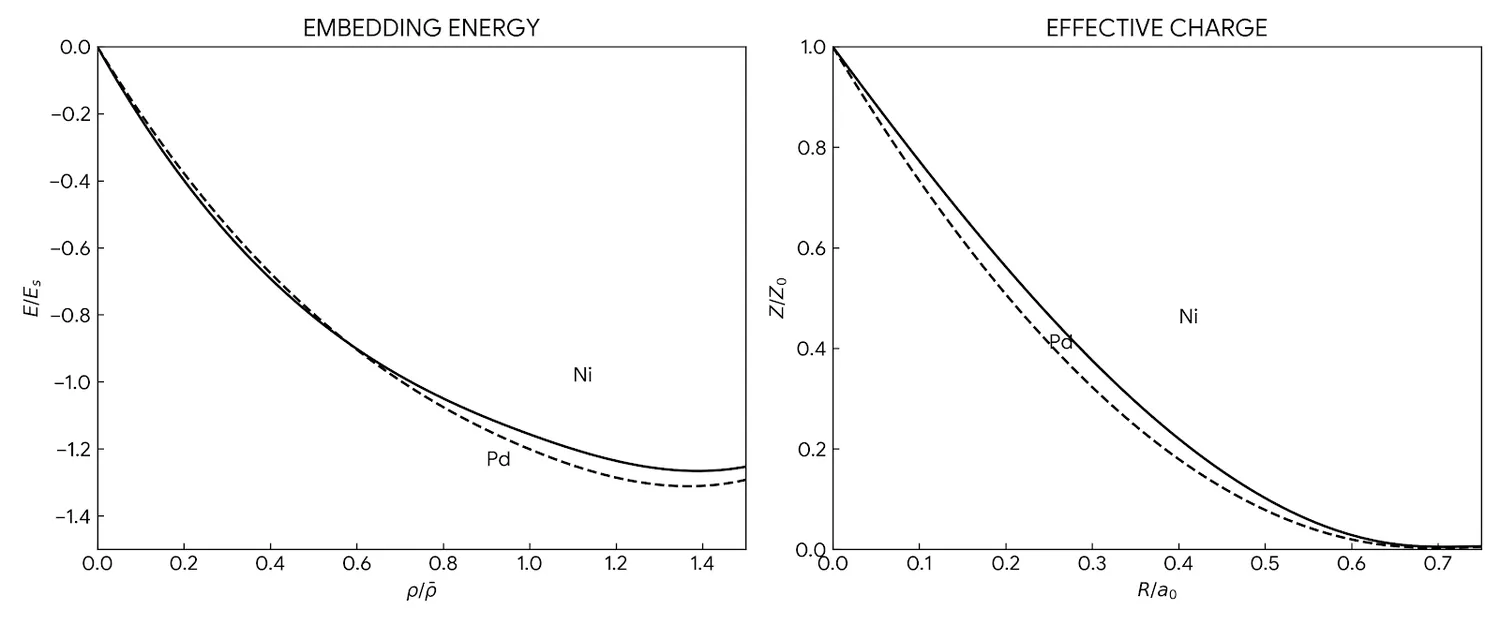
Embedding energy and effective charge functions for Ni and Pd from the original EAM paper

Embedded-Atom Method User Guide: Voter's 1994 Chapter

This 1994 handbook chapter serves as a practical user guide for the Embedded-Atom Method (EAM). It details the theoretical derivation from density-functional theory, synthesizes related methods like the Glue Model, and provides a complete tutorial on fitting potentials, illustrated with a specific implementation for the Ni-Al-B system.

Molecular Simulation
Embedding energy and effective charge functions for Ni and Pd from the original EAM paper

Embedded-Atom Method: Theory and Applications Review

This 1993 review systematizes the Embedded-Atom Method (EAM) as a practical semi-empirical approach for metallic systems. It synthesizes theory, applications, and connections to related methods while addressing the limitations of pair potentials.

Molecular Simulation
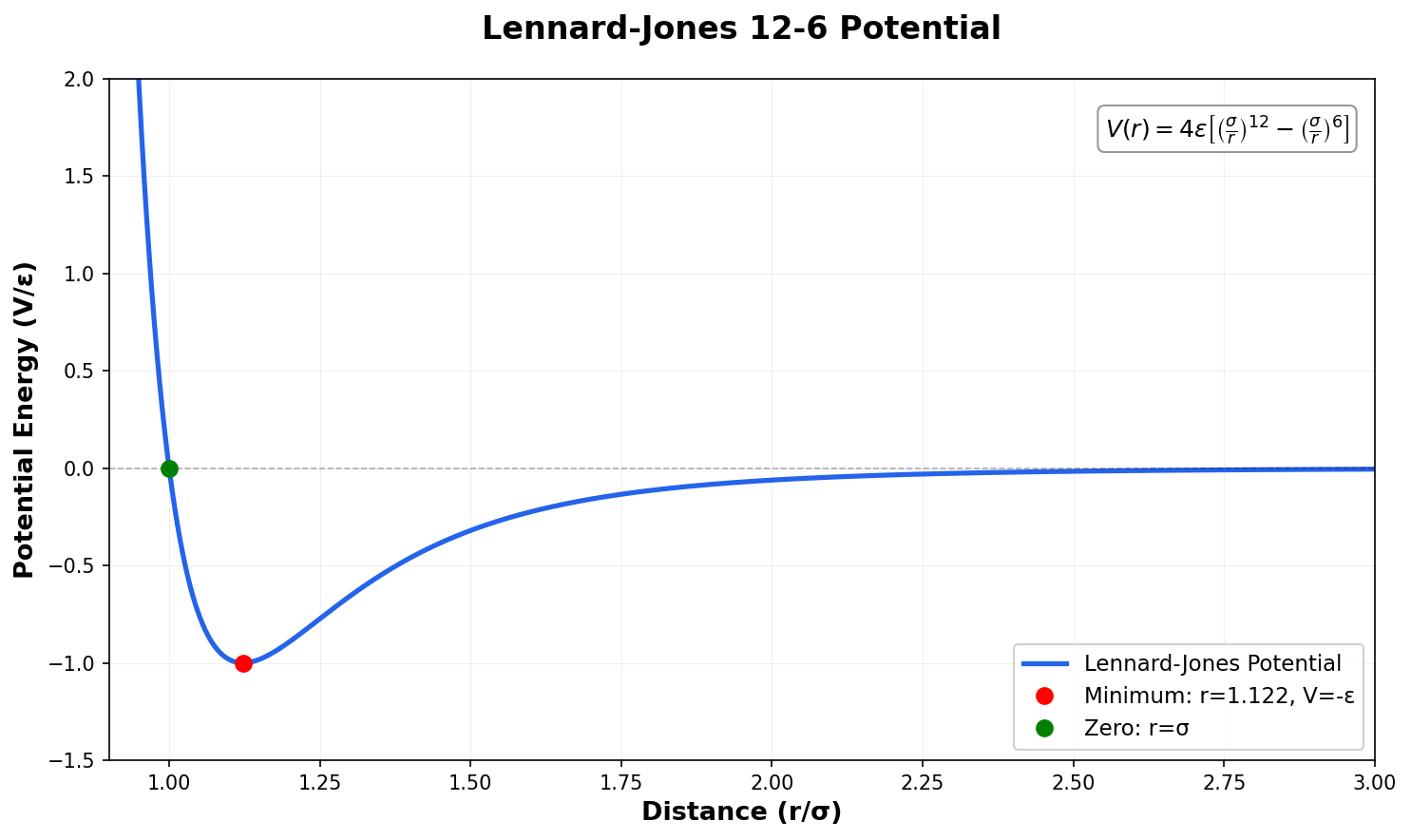
Graph of the Lennard-Jones 12-6 potential showing the characteristic attractive and repulsive forces

Evans 1986: Thermal Conductivity of Lennard-Jones Fluid

This paper validates the homogeneous Evans method for calculating thermal conductivity against experimental Argon data. It demonstrates broad agreement across the phase diagram but identifies significant non-monotonic behavior and enhanced long-time tails near the critical point.

Molecular Simulation
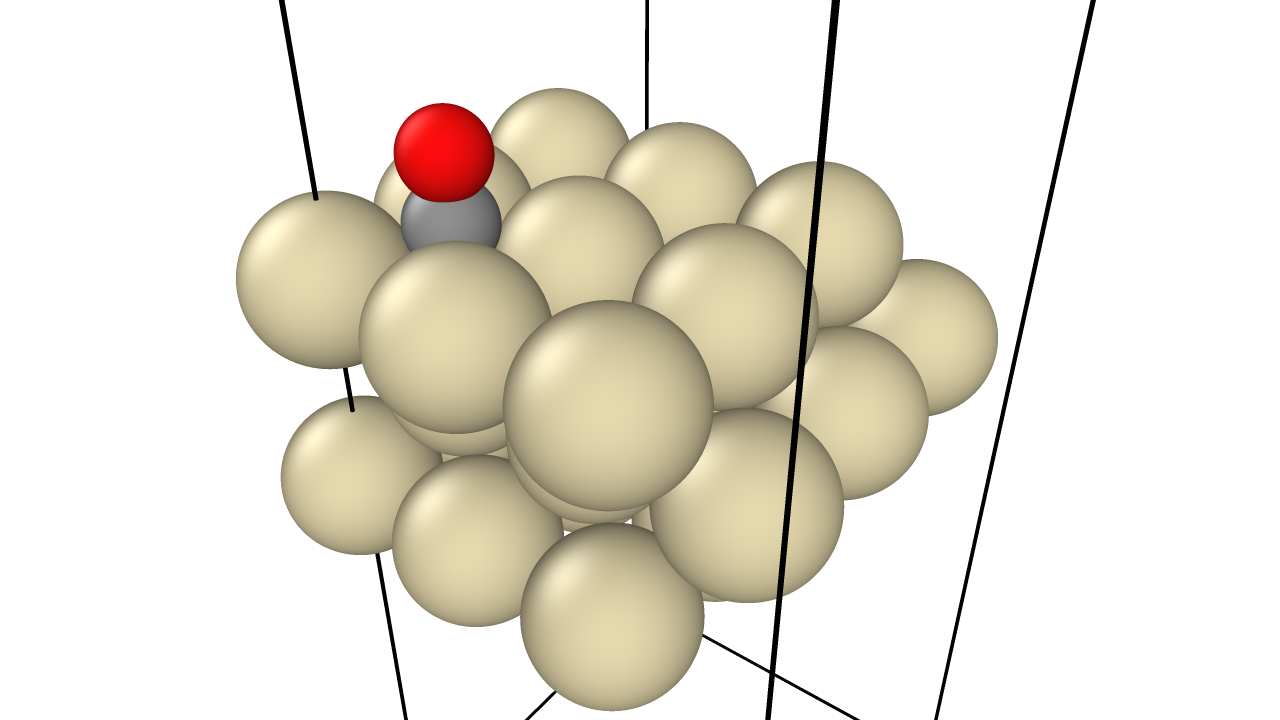
Carbon monoxide molecule adsorbed on Pt(100) FCC surface in hollow site configuration

In Situ XRD of Oxidation-Reduction Oscillations on Pt/SiO2

This study provides the first direct experimental proof that rate oscillations in catalytic CO oxidation on supported Pt are driven by a periodic oxidation and reduction of the catalyst surface. By monitoring Bragg peak intensities in situ, the authors confirm the ‘oxide model’ over competing reconstruction or carbon models.

Molecular Simulation
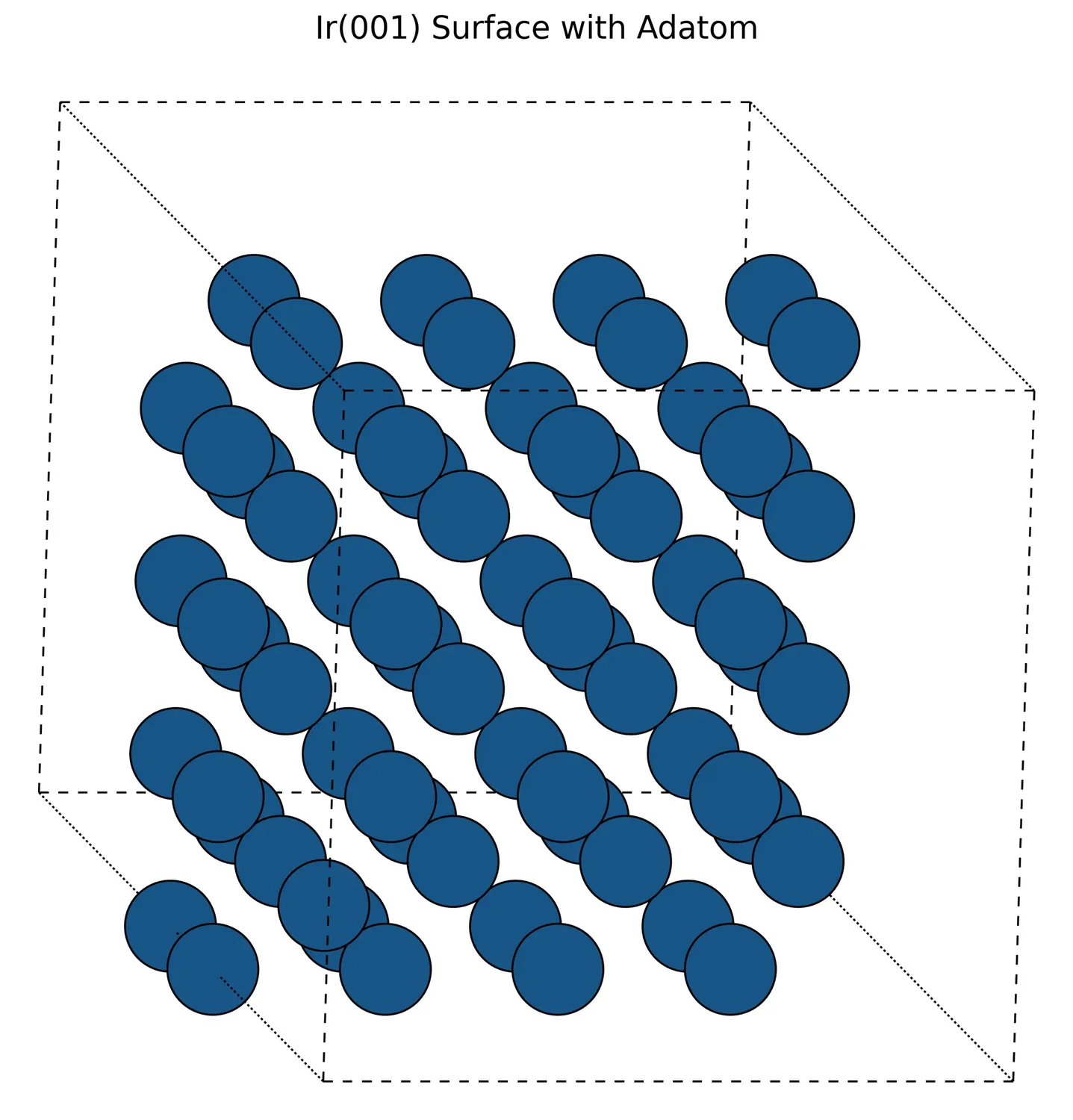
Iridium fcc(001) surface with adatom

MD Simulation of Self-Diffusion on Metal Surfaces (1994)

A molecular dynamics investigation using EAM and many-body potentials to elucidate atomic exchange mechanisms on Iridium surfaces, verifying Field Ion Microscope observations.

Molecular Simulation
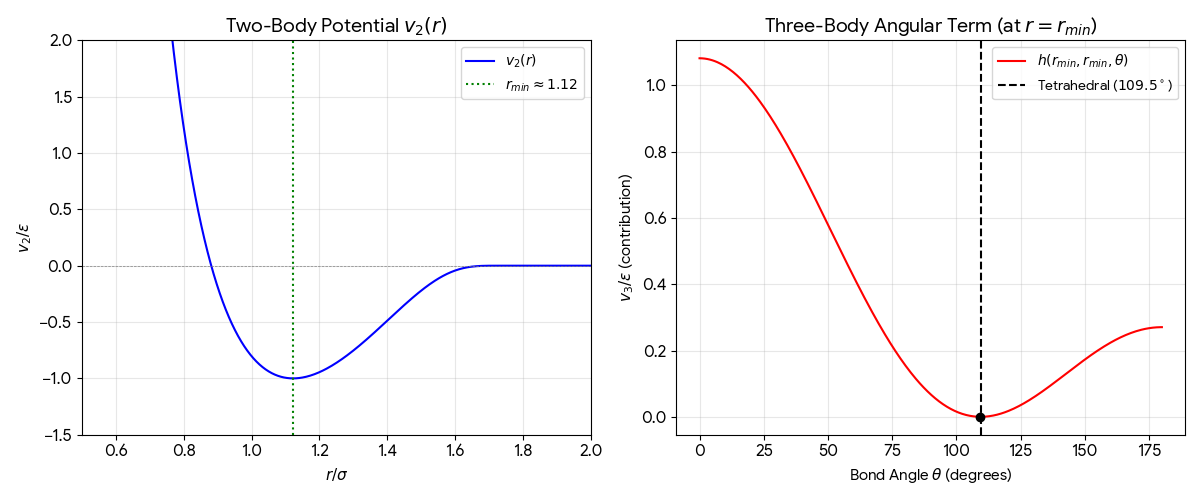
Visualization of the Stillinger-Weber potential showing the two-body radial term and three-body angular penalty

Stillinger-Weber Potential for Silicon Simulation

Stillinger and Weber propose a 3-body interaction potential that stabilizes the diamond crystal structure of silicon and reproduces liquid properties through molecular dynamics, addressing the inability of standard pair potentials to model tetrahedral semiconductors.

Molecular Simulation
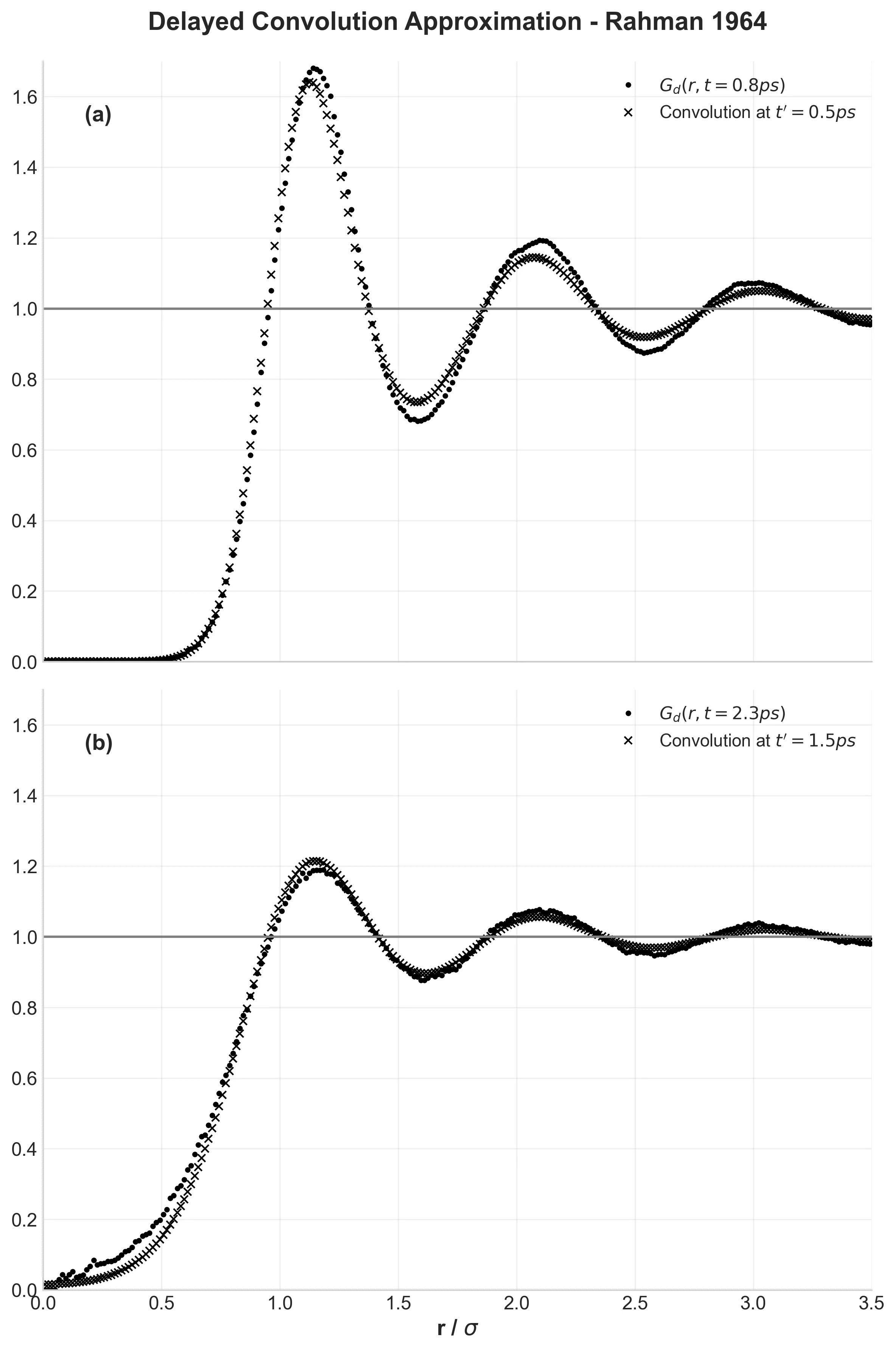
Delayed convolution approximation for distinct Van Hove function showing comparison between simulated data and theoretical model

Correlations in the Motion of Atoms in Liquid Argon

This work validated classical Molecular Dynamics for simulating liquids, revealing the ‘cage effect’ in velocity autocorrelation and establishing predictor-corrector integration algorithms for N-body problems.