Computational Chemistry
MOFFlow assembles metal nodes and organic linkers into Metal-Organic Framework structures

MOFFlow: Flow Matching for MOF Structure Prediction

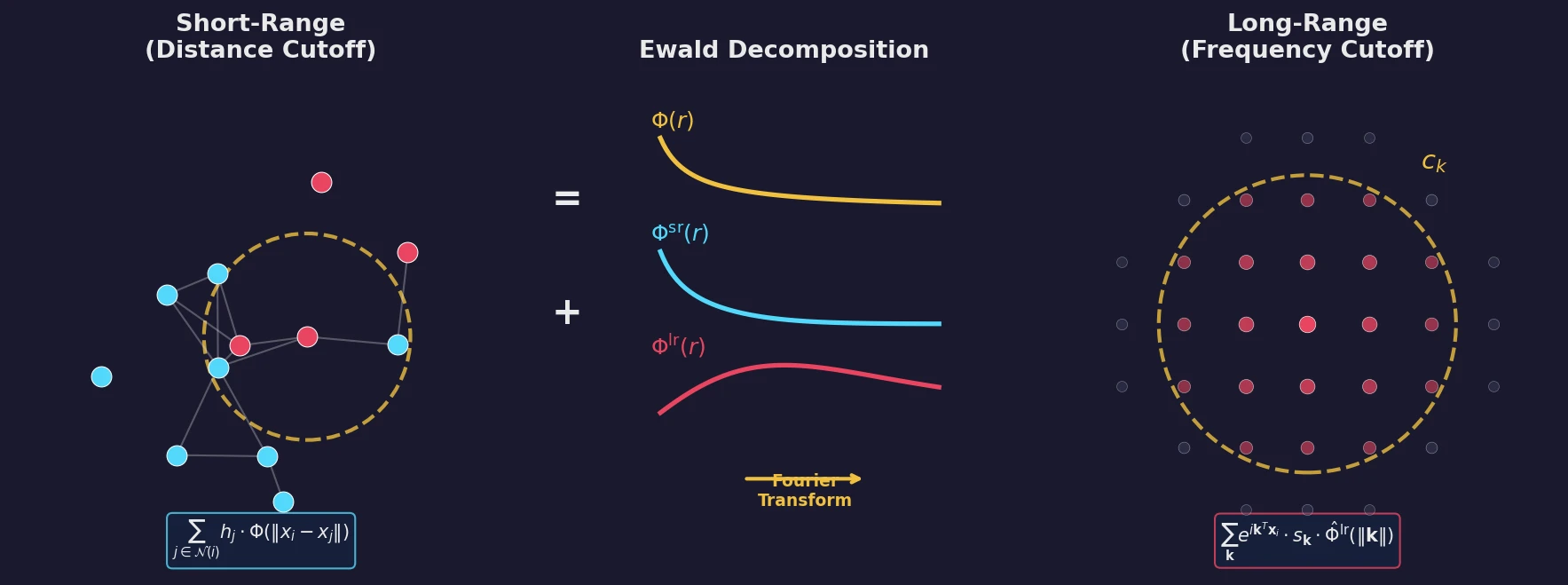
MOFFlow is the first deep generative model tailored for Metal-Organic Framework (MOF) structure prediction. It utilizes Riemannian flow matching on SE(3) to assemble rigid building blocks (metal nodes and organic linkers), achieving higher accuracy and scalability than atom-based methods on large systems.

Computational Chemistry
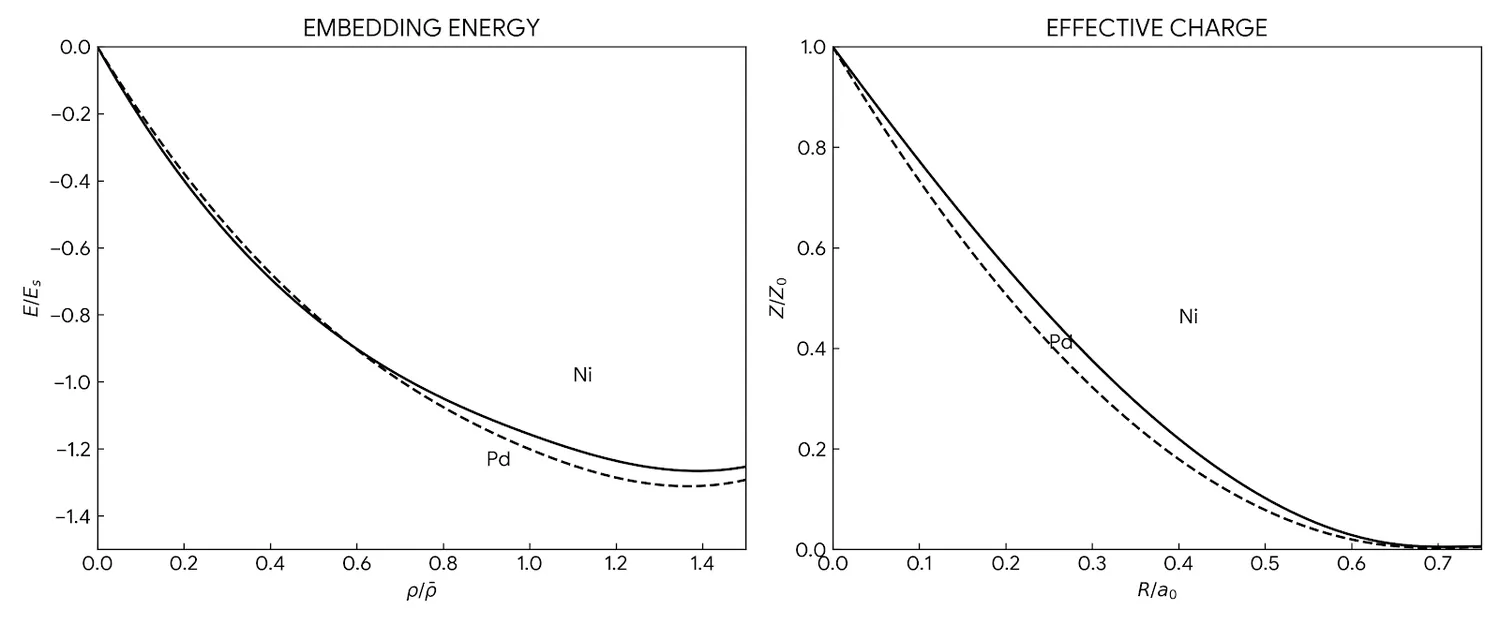
Embedding energy and effective charge functions for Ni and Pd from the original EAM paper

Embedded-Atom Method User Guide: Voter's 1994 Chapter

This 1994 handbook chapter serves as a practical user guide for the Embedded-Atom Method (EAM). It details the theoretical derivation from density-functional theory, synthesizes related methods like the Glue Model, and provides a complete tutorial on fitting potentials, illustrated with a specific implementation for the Ni-Al-B system.

Computational Chemistry
Embedding energy and effective charge functions for Ni and Pd from the original EAM paper

Embedded-Atom Method: Theory and Applications Review

This 1993 review systematizes the Embedded-Atom Method (EAM) as a practical semi-empirical approach for metallic systems. It synthesizes theory, applications, and connections to related methods while addressing the limitations of pair potentials.

Computational Chemistry
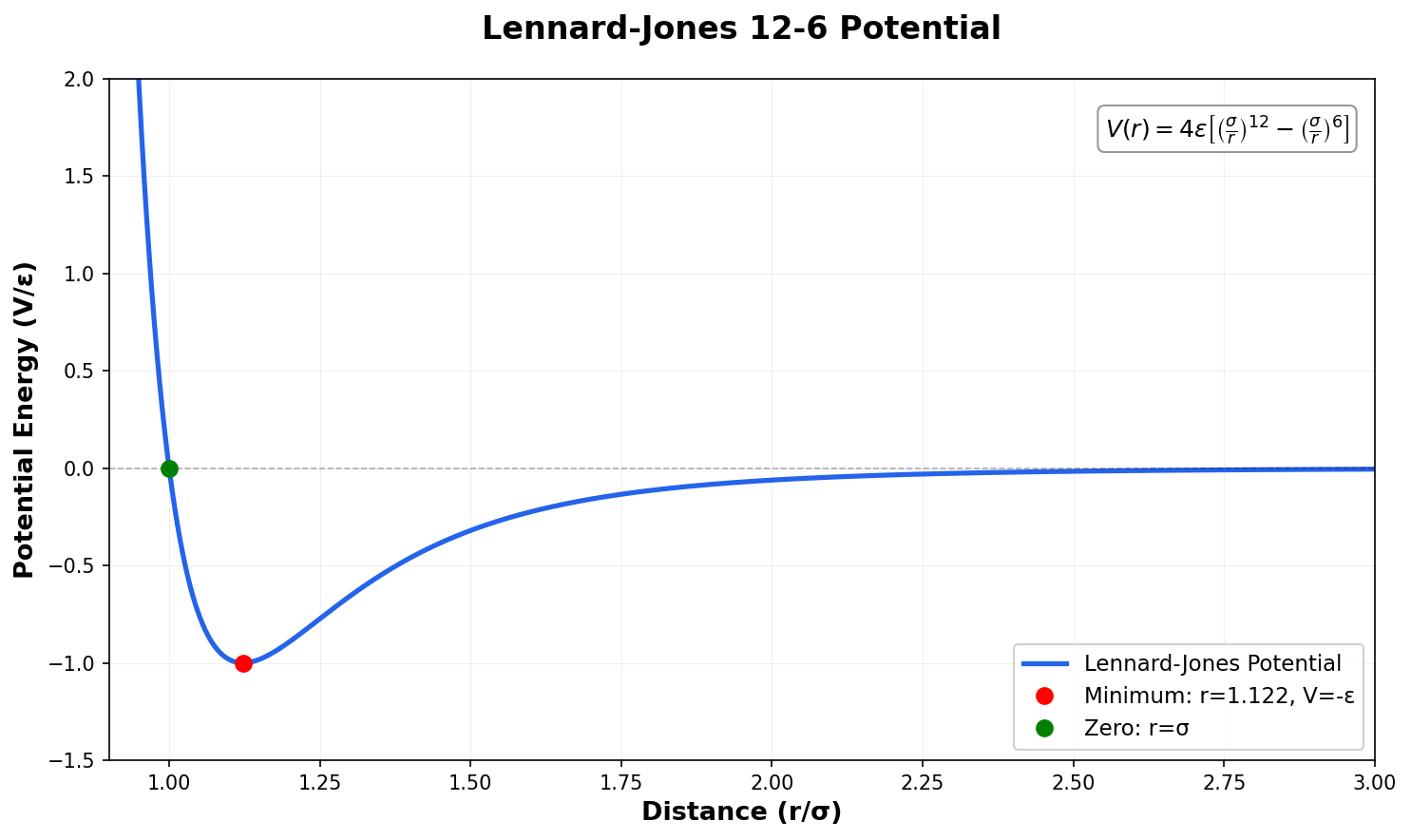
Graph of the Lennard-Jones 12-6 potential showing the characteristic attractive and repulsive forces

Evans 1986: Thermal Conductivity of Lennard-Jones Fluid

This paper validates the homogeneous Evans method for calculating thermal conductivity against experimental Argon data. It demonstrates broad agreement across the phase diagram but identifies significant non-monotonic behavior and enhanced long-time tails near the critical point.

Computational Chemistry
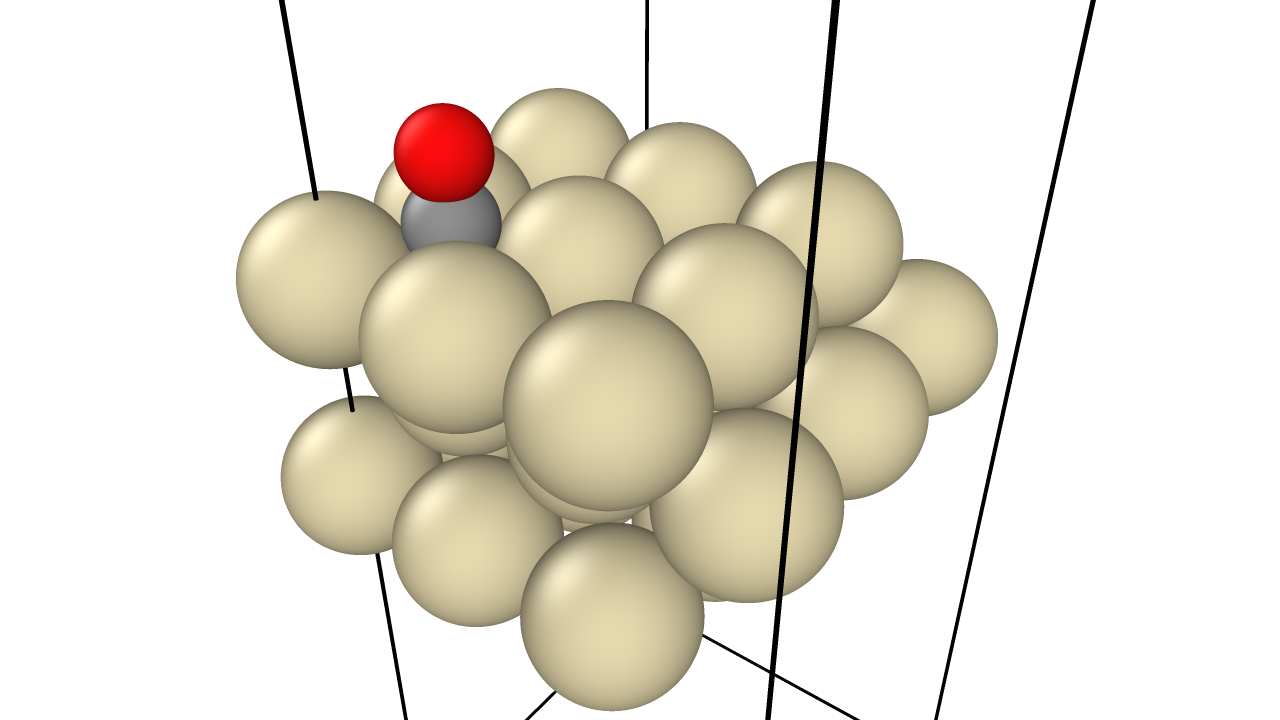
Carbon monoxide molecule adsorbed on Pt(100) FCC surface in hollow site configuration

In Situ XRD of Oxidation-Reduction Oscillations on Pt/SiO2

This study provides the first direct experimental proof that rate oscillations in catalytic CO oxidation on supported Pt are driven by a periodic oxidation and reduction of the catalyst surface. By monitoring Bragg peak intensities in situ, the authors confirm the ‘oxide model’ over competing reconstruction or carbon models.

Computational Chemistry
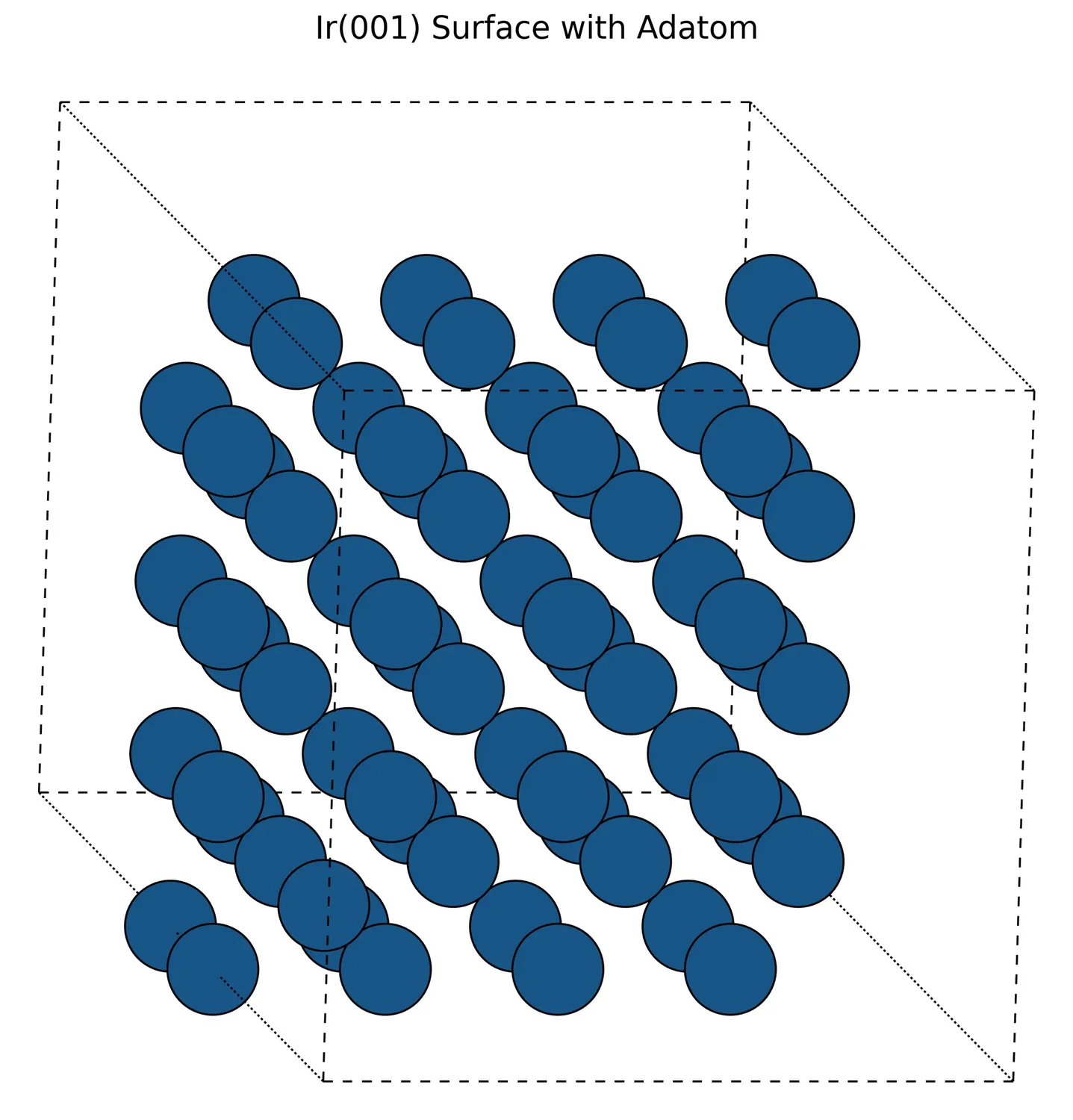
Iridium fcc(001) surface with adatom

MD Simulation of Self-Diffusion on Metal Surfaces (1994)

A molecular dynamics investigation using EAM and many-body potentials to elucidate atomic exchange mechanisms on Iridium surfaces, verifying Field Ion Microscope observations.

Computational Chemistry
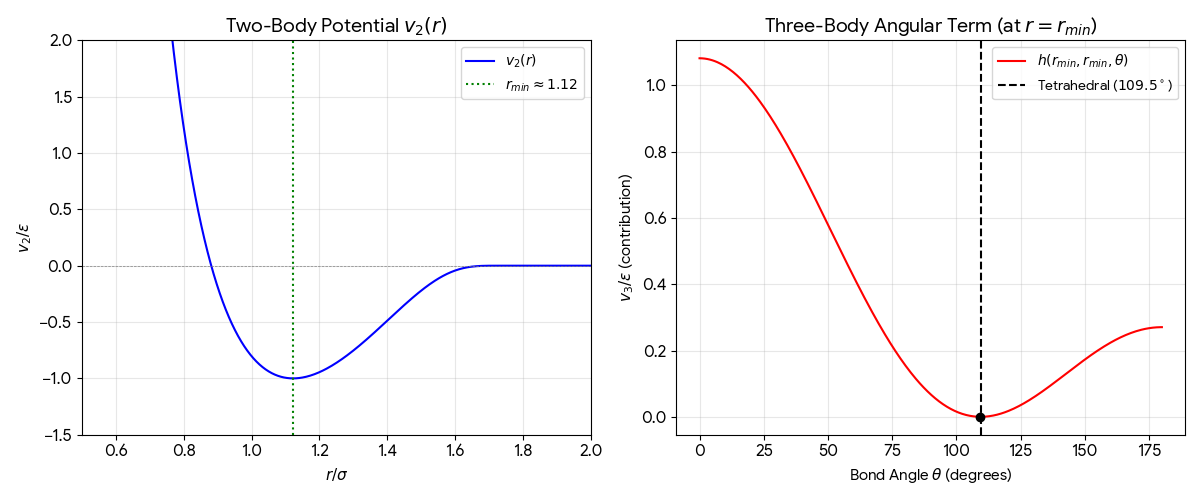
Visualization of the Stillinger-Weber potential showing the two-body radial term and three-body angular penalty

Stillinger-Weber Potential for Silicon Simulation

Stillinger and Weber propose a 3-body interaction potential that stabilizes the diamond crystal structure of silicon and reproduces liquid properties through molecular dynamics, addressing the inability of standard pair potentials to model tetrahedral semiconductors.

Computational Chemistry
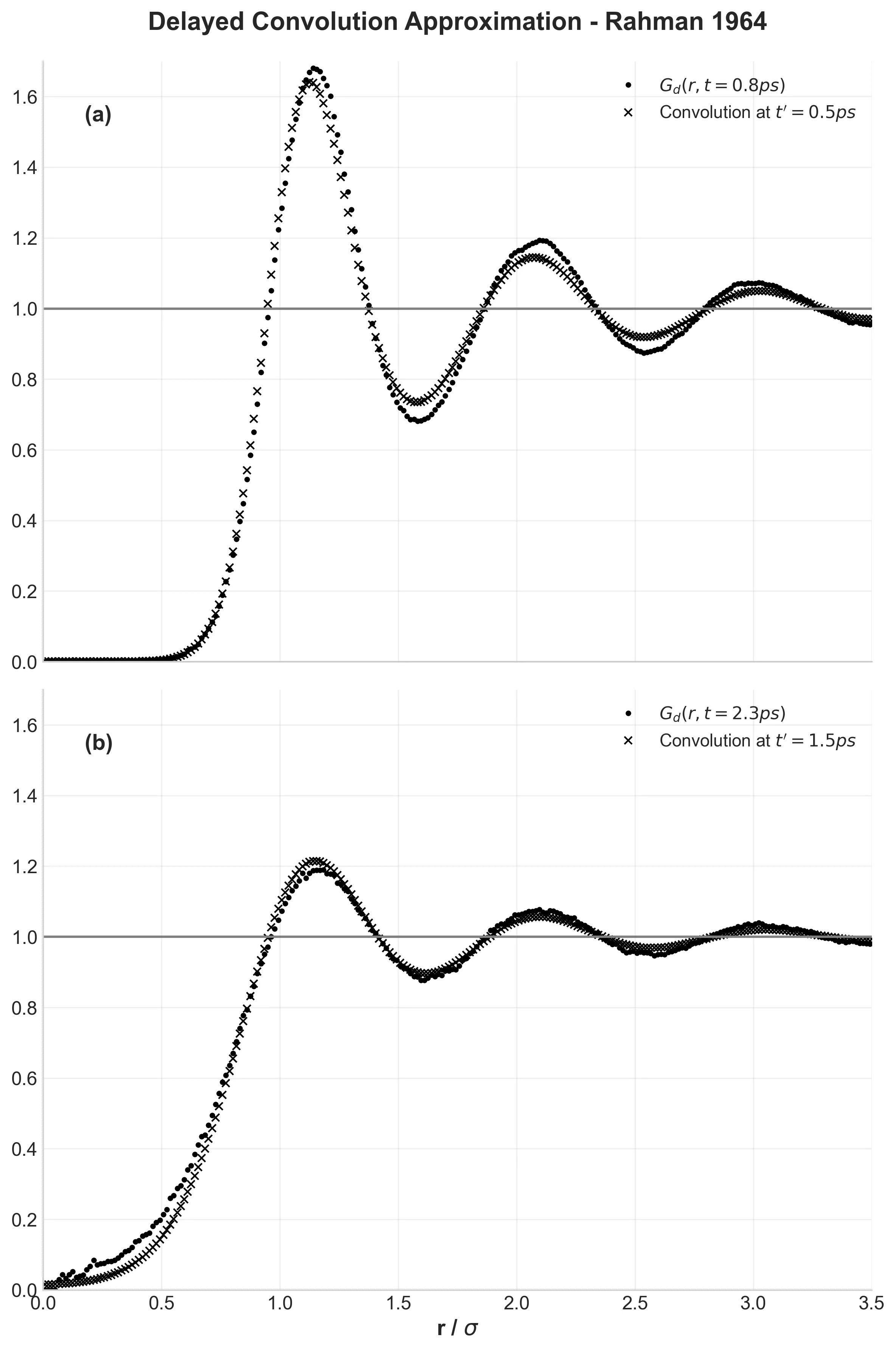
Delayed convolution approximation for distinct Van Hove function showing comparison between simulated data and theoretical model

Correlations in the Motion of Atoms in Liquid Argon

This work validated classical Molecular Dynamics for simulating liquids, revealing the ‘cage effect’ in velocity autocorrelation and establishing predictor-corrector integration algorithms for N-body problems.

Planetary Science
Conceptual cross-section of the Cloud Continent proposal showing three layers: the CO2 atmosphere below, the nitrogen-filled honeycomb structure at 50 km altitude, and the habitable atmosphere above

Terraforming Venus With the Cloud Continent Proposal

A speculative 2022 engineering proposal for terraforming Venus by constructing a nitrogen-filled honeycomb structure floating at 50 km altitude where temperature and pressure are Earth-like, avoiding the need to remove Venus’s massive atmosphere while using CO2 electrolysis to produce breathable oxygen and carbon nanostructures for construction.

Computational Chemistry
Colorized electron microscope image of nanostructured indium phosphide surface showing spatially oriented cubic crystallites

NInChI: Toward a Chemical Identifier for Nanomaterials

Can we create a SMILES-like notation for nanomaterials? A collaborative workshop tackles the challenge of representing complex, multi-component nanomaterials with a proposed extension to the established InChI system.

Computational Chemistry
Atomic structure of a spherical fullerene

Learning Smooth Interatomic Potentials with eSEN (ICML)

ICML 2025 paper proposing energy conservation metrics as critical diagnostics for machine learning interatomic potentials and introducing eSEN, a novel architecture designed to bridge the gap between test-set accuracy and real simulation performance on materials property prediction.

Computational Chemistry
Radial distribution function of liquid argon

Liquid Argon: LAMMPS Simulation

Explore the molecular dynamics of liquid argon in this fundamental LAMMPS simulation. This classic system demonstrates liquid-state behavior and serves as a benchmark for molecular dynamics methods.