Computational Chemistry
Unified framework converts handwritten chemical expressions to structured graph representations

Unified Framework for Handwritten Chemical Expressions

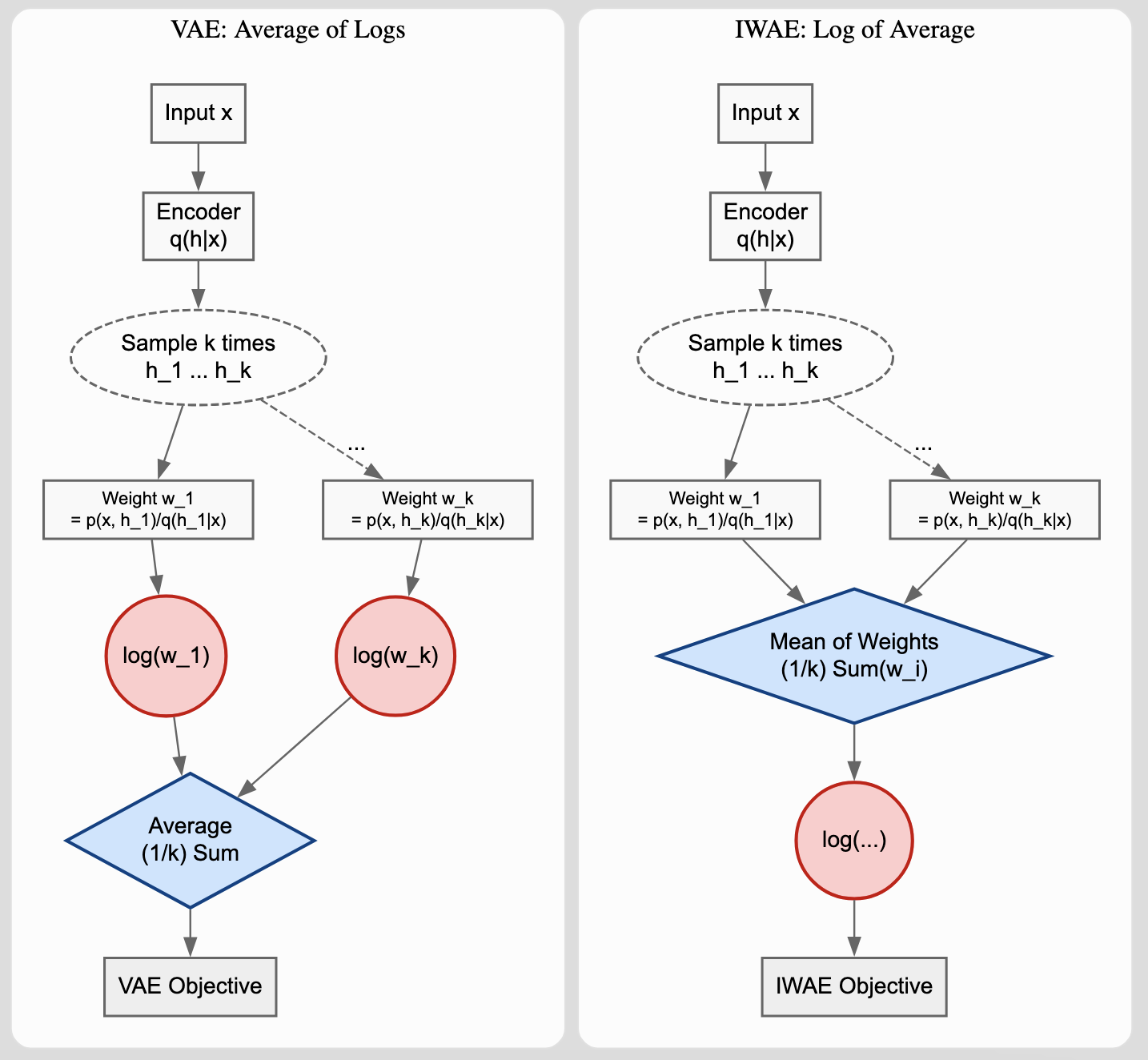
Proposes a unified statistical framework for recognizing both inorganic and organic handwritten chemical expressions. Introduces the Chemical Expression Structure Graph (CESG) and uses a weighted direction graph search for structural analysis, achieving 83.1% top-5 accuracy on a large proprietary dataset.
Computational Chemistry

Probabilistic OCSR with Markov Logic Networks

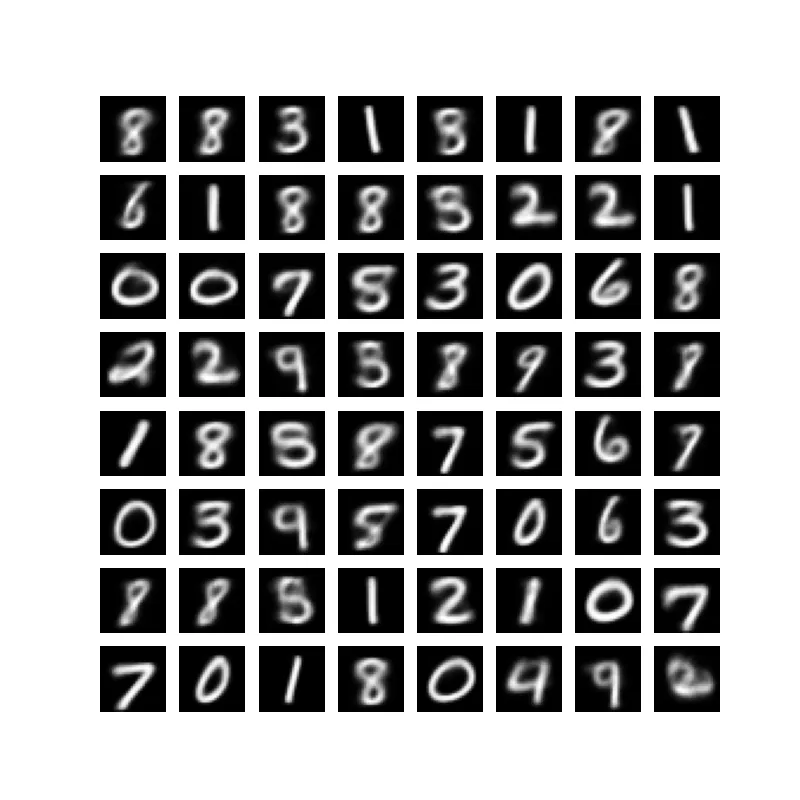
This paper introduces MLOCSR, a system that pipelines low-level image vectorization with a high-level probabilistic Markov Logic Network to recognize chemical structures. It replaces brittle heuristics with weighted logic rules, significantly outperforming state-of-the-art systems like OSRA on degraded or low-resolution images.

Computational Chemistry
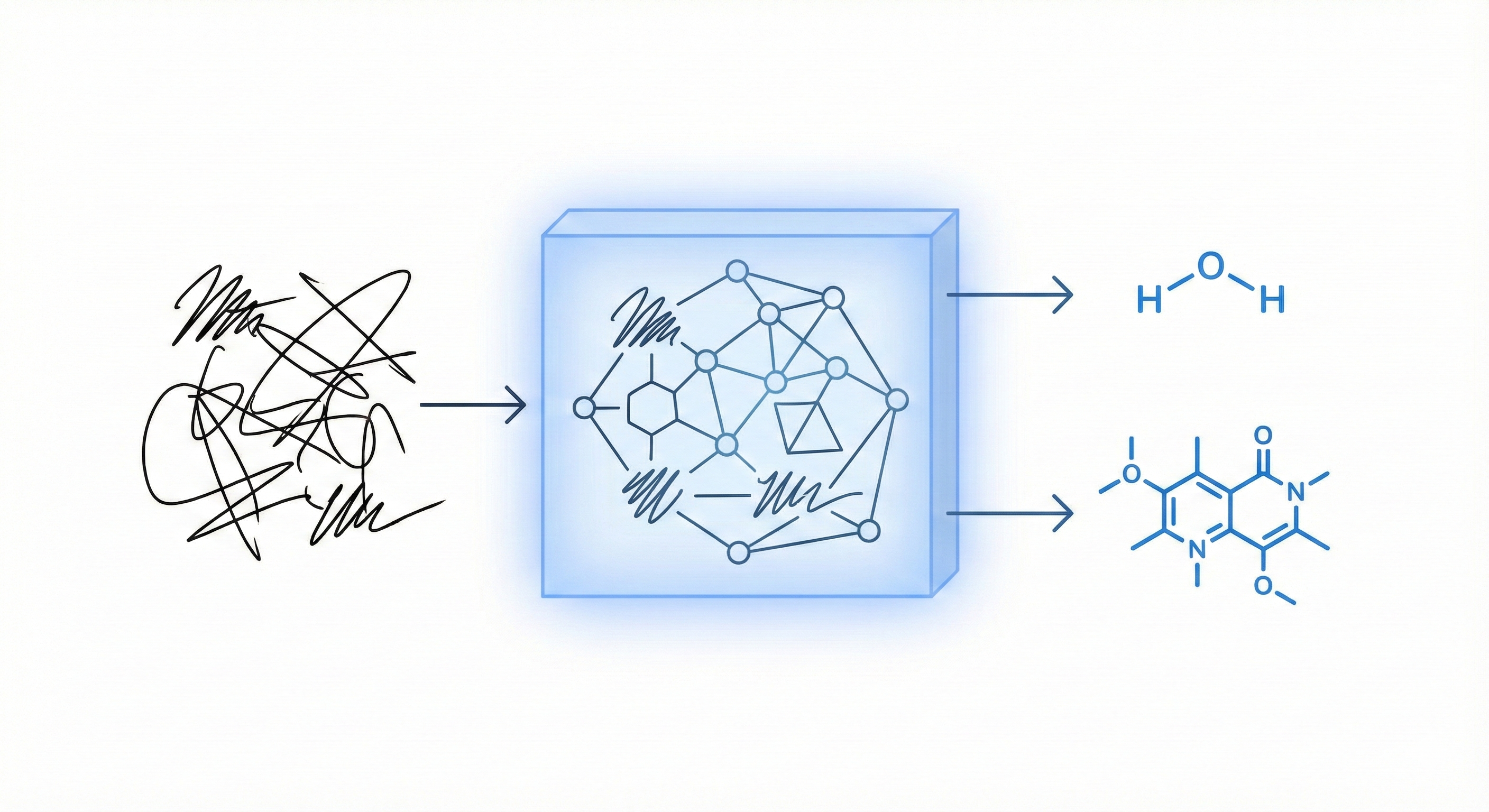
Diagram of the ChemInk sketch recognition system converting freehand chemical drawings into structured molecular data

ChemInk: Real-Time Recognition for Chemical Drawings

ChemInk introduces a sketch recognition system for chemical diagrams that combines multi-level visual features via a joint Conditional Random Field (CRF), achieving 97.4% accuracy and outperforming CAD tools in user speed.

Machine Learning Fundamentals
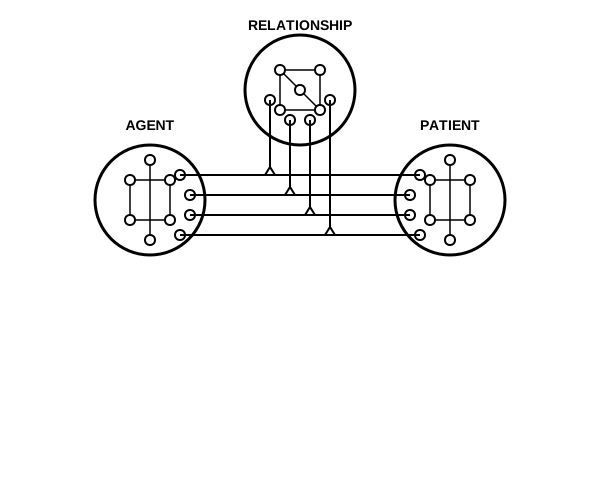
Diagram showing distributed representations with three pools of units (AGENT, RELATIONSHIP, PATIENT) connected via role/identity bindings

Distributed Representations: A Foundational Theory

Geoffrey Hinton’s 1984 technical report that formally derives the efficiency of distributed representations (coarse coding) and demonstrates their properties of automatic generalization, content-addressability, and robustness to damage.

Computational Chemistry

Hand-Drawn Chemical Diagram Recognition (AAAI 2007)

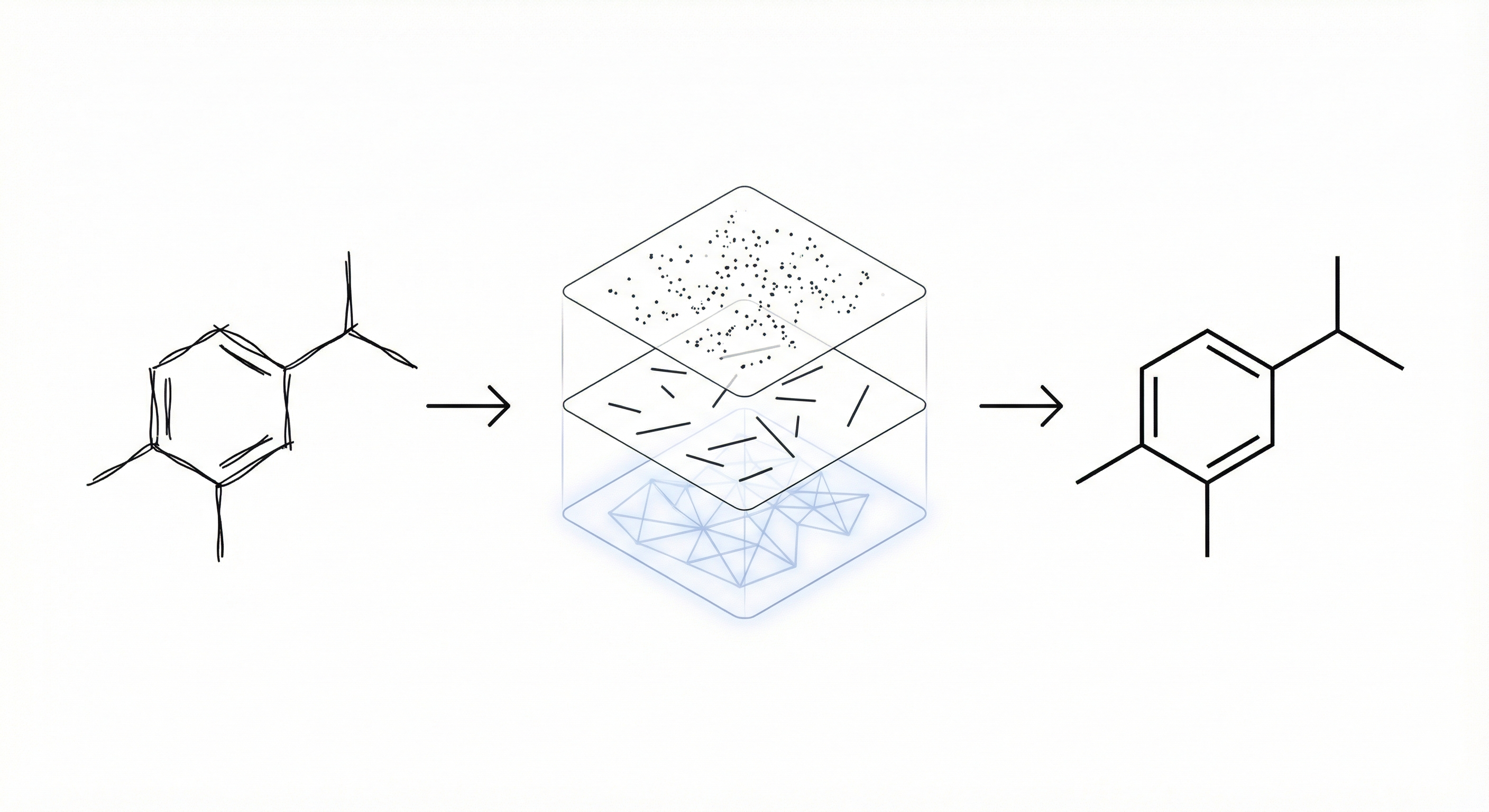
An early method paper (AAAI ‘07) proposing a multi-stage sketch recognition pipeline. It introduces a domain verification step that uses chemical rules to refine ink parsing, achieving a 27% error reduction over geometric-only baselines.

Computational Chemistry
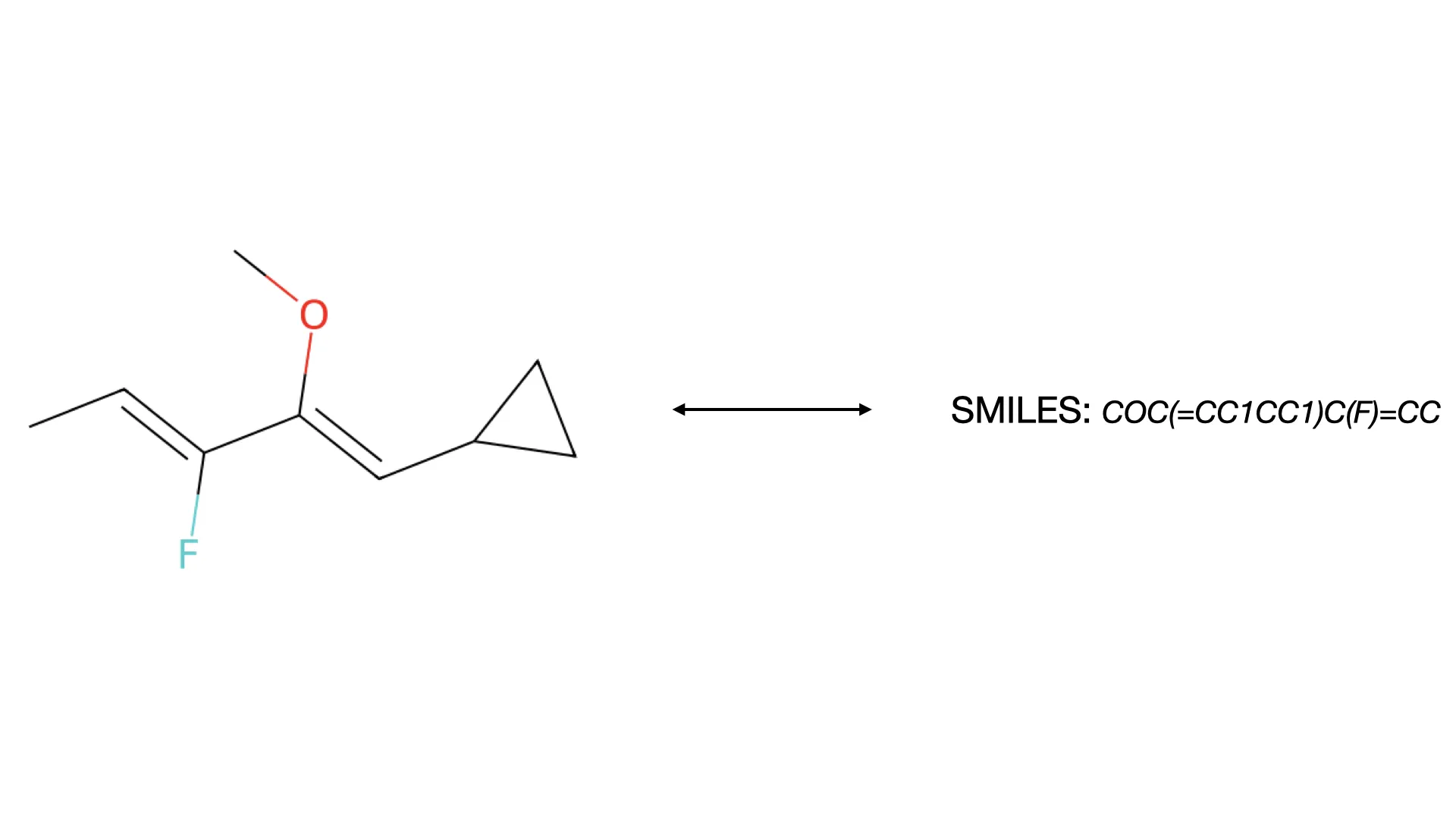
Optical chemical structure recognition example

IMG2SMI: Translating Molecular Structure Images to SMILES

A 2021 image-to-text approach treating OCSR as an image captioning task. It uses Transformers with SELFIES representation to convert molecular structure diagrams into SMILES strings, enabling extraction of visual chemical knowledge from scientific literature.

Computational Social Science
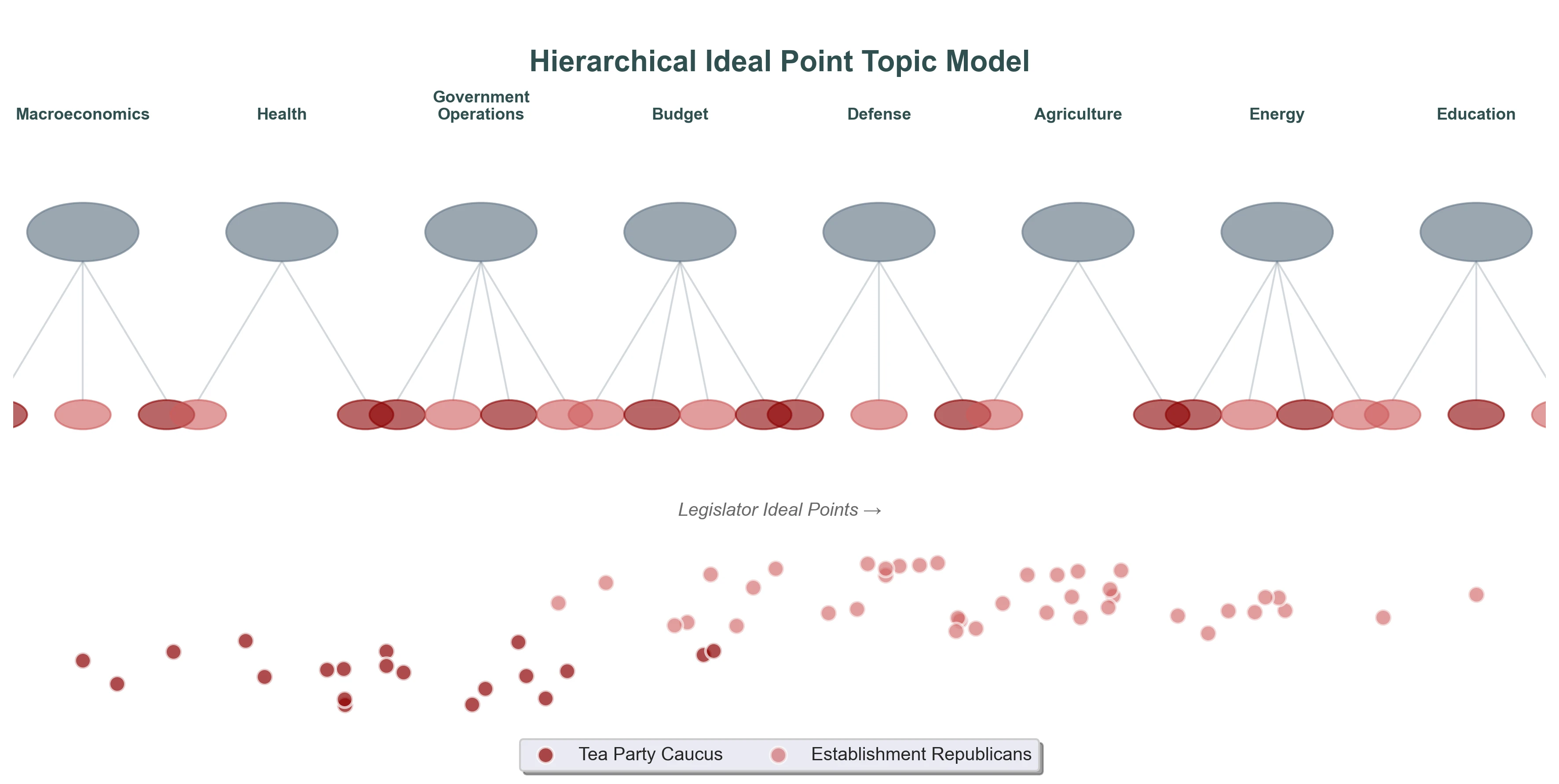
Hierarchical Ideal Point Topic Model visualization showing political polarization

Tea Party in the House: Legislative Ideology via HIPTM

This paper introduces the Hierarchical Ideal Point Topic Model (HIPTM) to analyze the 112th U.S. Congress. By jointly modeling votes and text, it uncovers how Tea Party Republicans and establishment Republicans differ in both voting records and how they frame specific policy issues.

Computational Chemistry
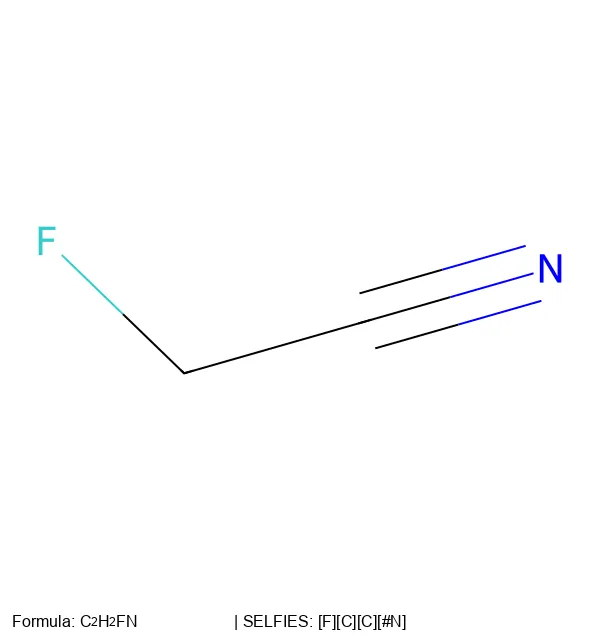
SELFIES robustness demonstration

Invalid SMILES Benefit Chemical Language Models: A Study

A 2024 Nature Machine Intelligence paper providing causal evidence that invalid SMILES generation improves chemical language model performance by filtering low-likelihood samples, while validity constraints (as in SELFIES) introduce structural biases that impair distribution learning.

Computational Chemistry
SELFIES robustness demonstration

SELFIES and the Future of Molecular String Representations

This 2022 perspective paper reviews 250 years of chemical notation evolution and proposes 16 concrete research projects to extend SELFIES beyond traditional organic chemistry into polymers, crystals, and reactions.

Generative Modeling
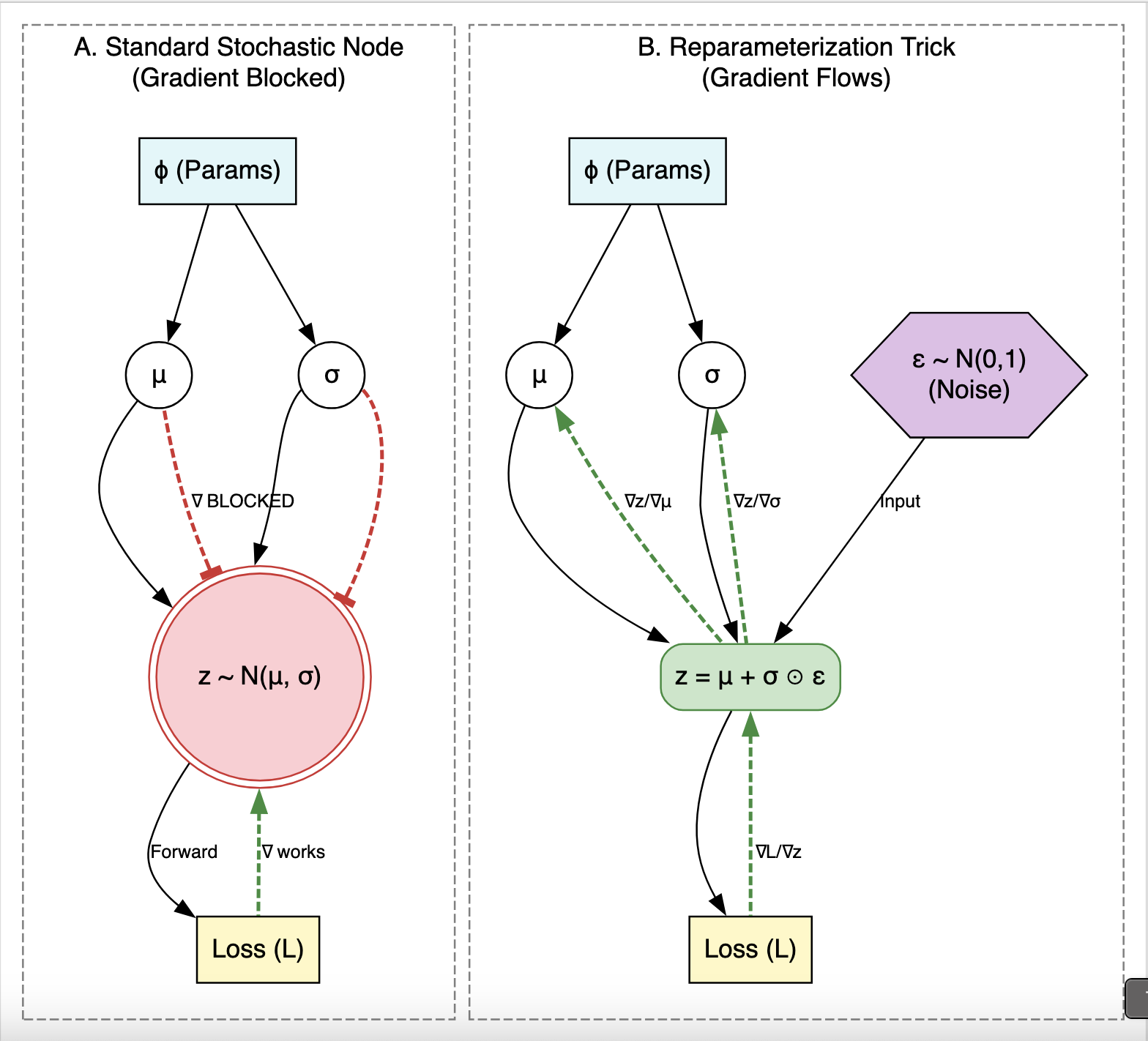
Diagram comparing standard stochastic sampling (gradient blocked) vs the reparameterization trick (gradient flows)

Auto-Encoding Variational Bayes: VAE Paper Summary

Kingma and Welling’s 2013 paper introducing Variational Autoencoders and the reparameterization trick, enabling end-to-end gradient-based training of generative models with continuous latent variables by moving the stochasticity outside the computational graph so that gradients can flow through a deterministic path.

Generative Modeling
Flowchart comparing VAE and IWAE computation showing the key difference in where averaging occurs relative to the log operation

Importance Weighted Autoencoders (IWAE) for Tighter Bounds

Burda et al.’s ICLR 2016 paper introducing Importance Weighted Autoencoders, which use importance sampling to derive a strictly tighter log-likelihood lower bound than standard VAEs, addressing posterior collapse and improving generative quality. The model architecture remains the same.

Generative Modeling
MNIST digit samples generated from a Variational Autoencoder latent space

Importance Weighted Autoencoders: Beyond the Standard VAE

Discover how Importance Weighted Autoencoders (IWAEs) use the same architecture as VAEs with a fundamentally more powerful objective to leverage multiple samples effectively.