
The Evolution of Page Stream Segmentation: Rules to LLMs
We trace the history of Page Stream Segmentation (PSS) through three eras (Heuristic, Encoder, and Decoder) and explain how privacy-preserving, localized LLMs enable true semantic processing.
We trace the history of Page Stream Segmentation (PSS) through three eras (Heuristic, Encoder, and Decoder) and explain how privacy-preserving, localized LLMs enable true semantic processing.

This work investigates the scaling hypothesis for molecular transformers, training RoBERTa models on 77M SMILES from PubChem. It compares Masked Language Modeling (MLM) against Multi-Task Regression (MTR) pretraining, finding that MTR yields better downstream performance but is computationally heavier.
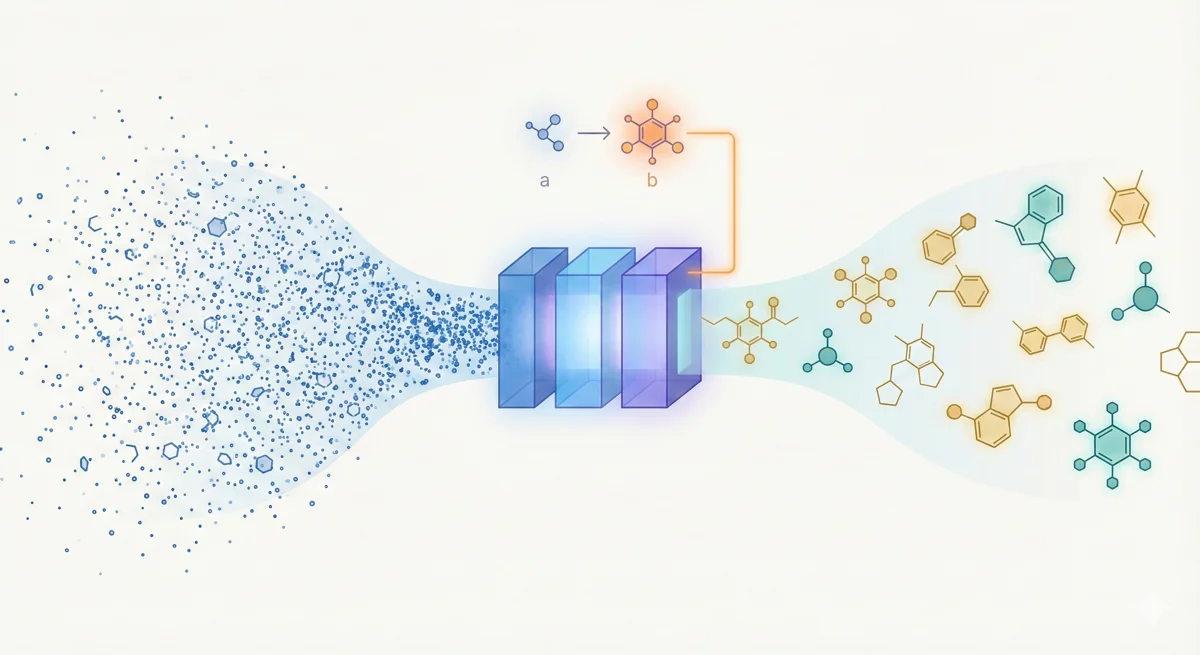
This methodological paper proposes a linear-attention transformer decoder trained on 1.1 billion molecules. It introduces pair-tuning for efficient property optimization and establishes empirical scaling laws relating inference compute to generation novelty.
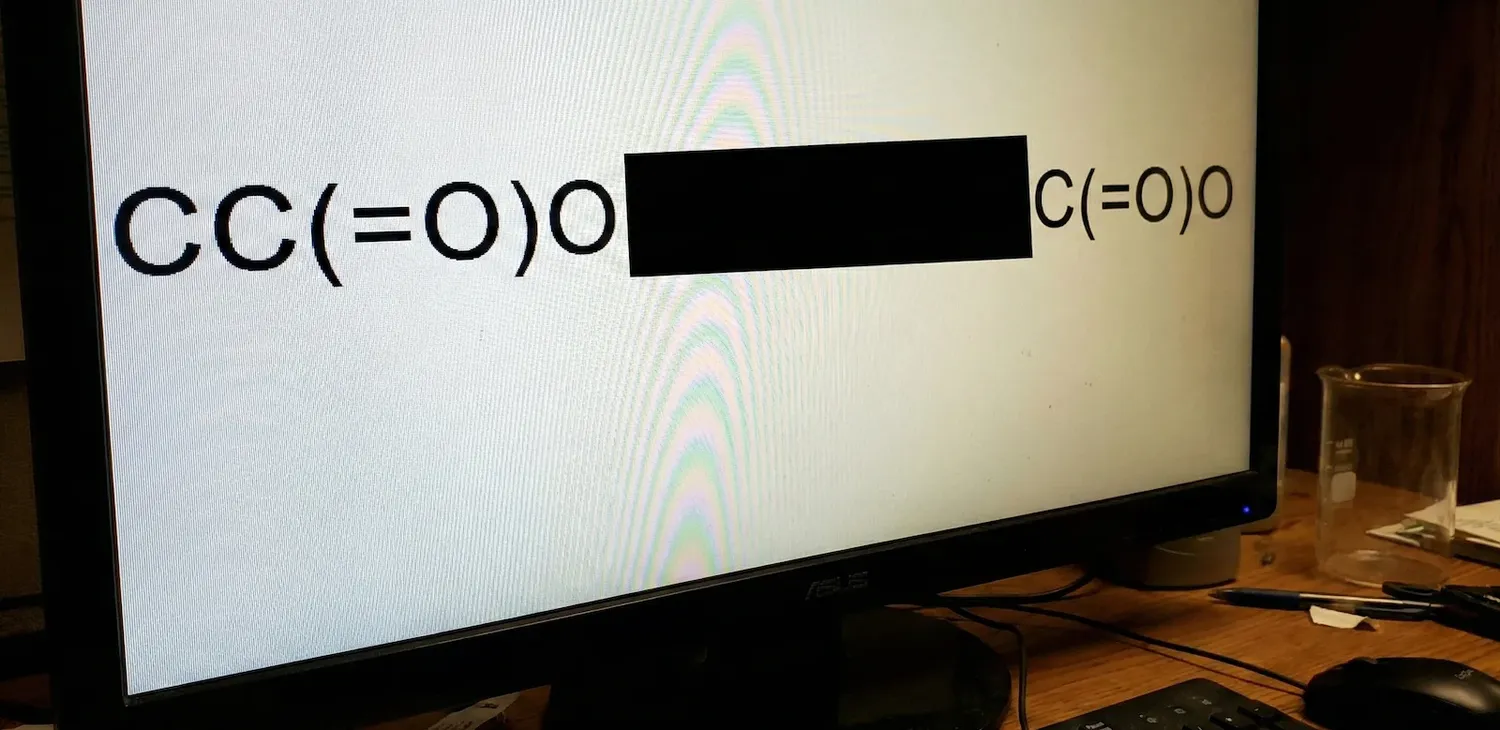
This paper introduces ChemBERTa, a RoBERTa-based model pretrained on 77M SMILES strings. It systematically evaluates the impact of pretraining dataset size, tokenization strategies, and input representations (SMILES vs. SELFIES) on downstream MoleculeNet tasks, finding that performance scales positively with data size.
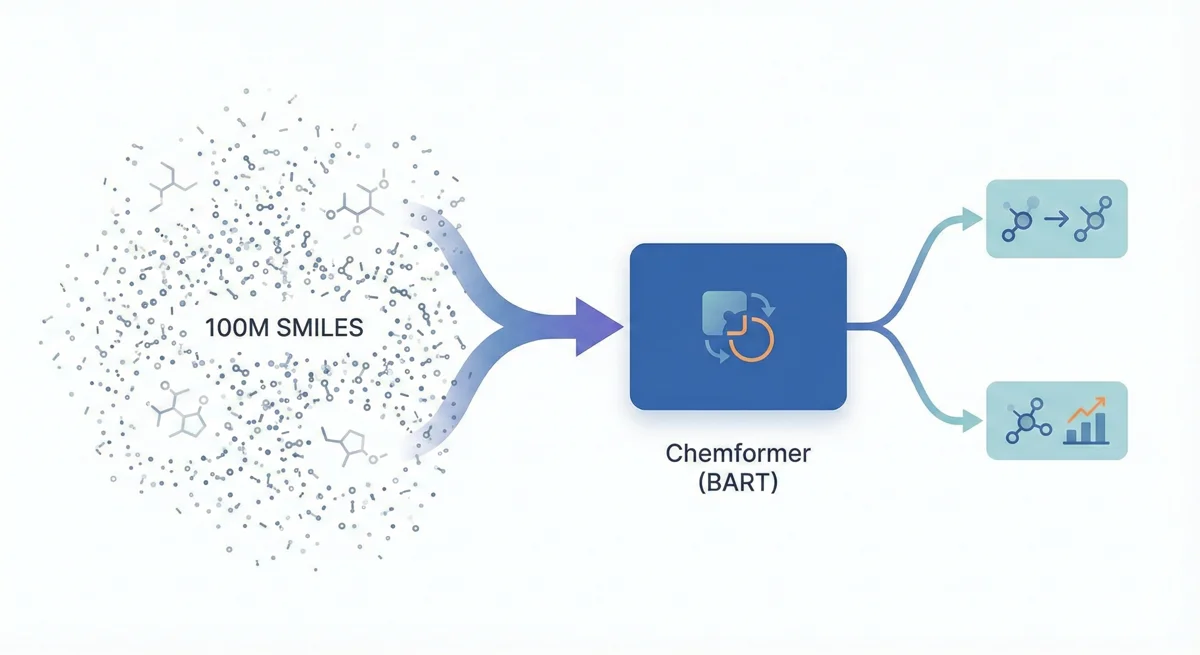
This paper introduces Chemformer, a BART-based sequence-to-sequence model pre-trained on 100M molecules using a ‘combined’ masking and augmentation task. It achieves top-1 accuracy on reaction prediction benchmarks while significantly reducing training time through transfer learning.
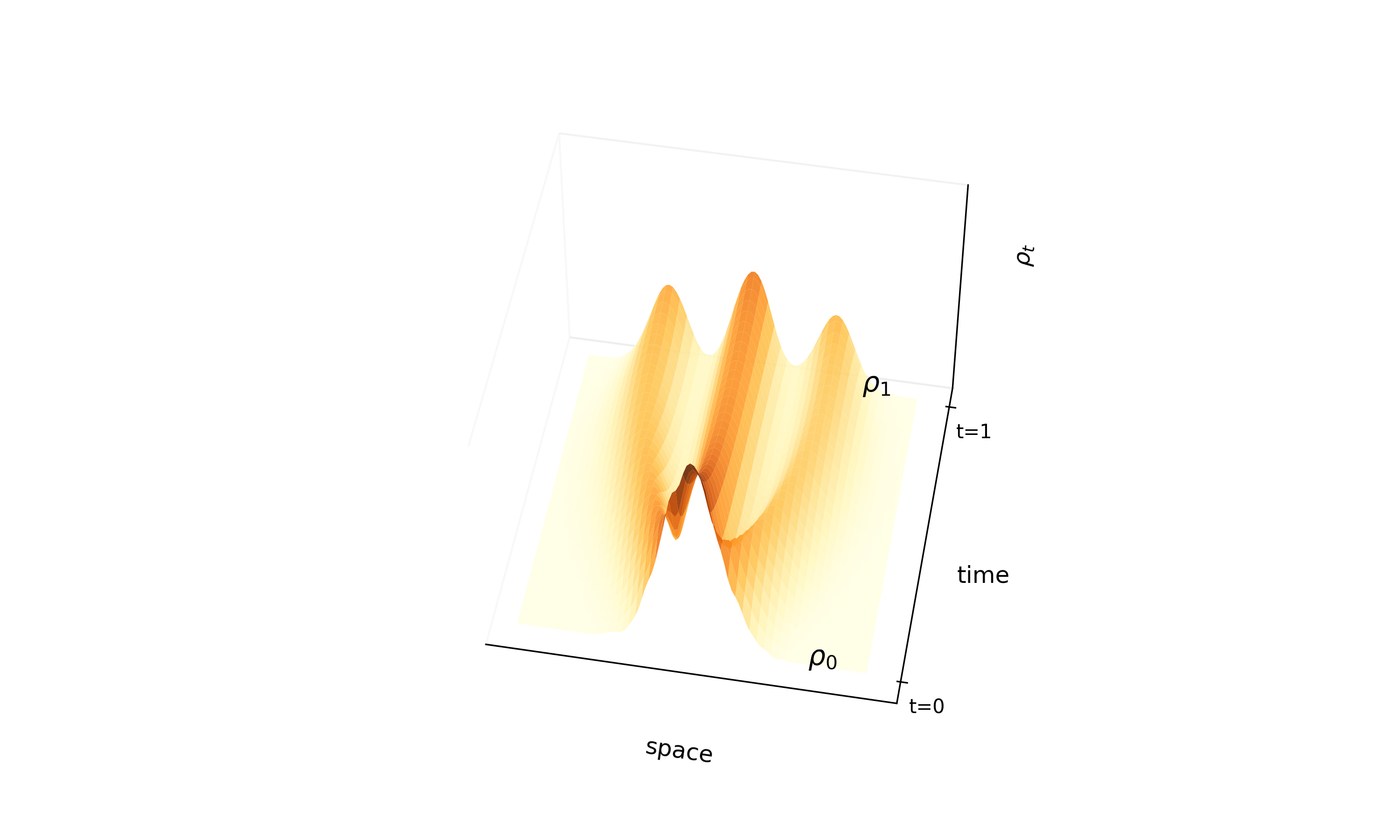
Proposes ‘InterFlow’, a method to learn continuous normalizing flows between arbitrary densities using stochastic interpolants. It avoids ODE backpropagation by minimizing a quadratic objective on the velocity field, enabling scalable ODE-based generation. On CIFAR-10, NLL matches ScoreSDE (2.99 bits per dim) with simulation-free training, though FID (10.27) trails dedicated image models (ScoreSDE: 2.92); the primary strength is tractable likelihood with efficient training cost.
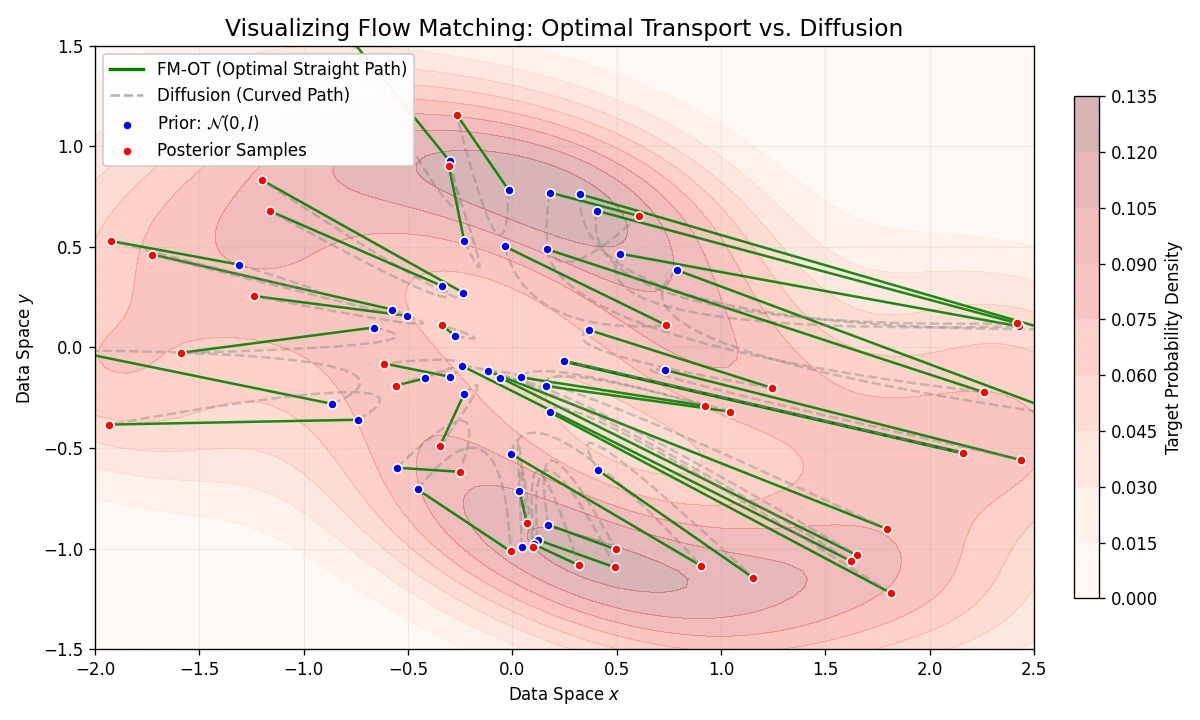
Introduces Flow Matching, a scalable method for training CNFs by regressing vector fields of conditional probability paths. It generalizes diffusion and enables Optimal Transport paths for straighter, more efficient sampling.
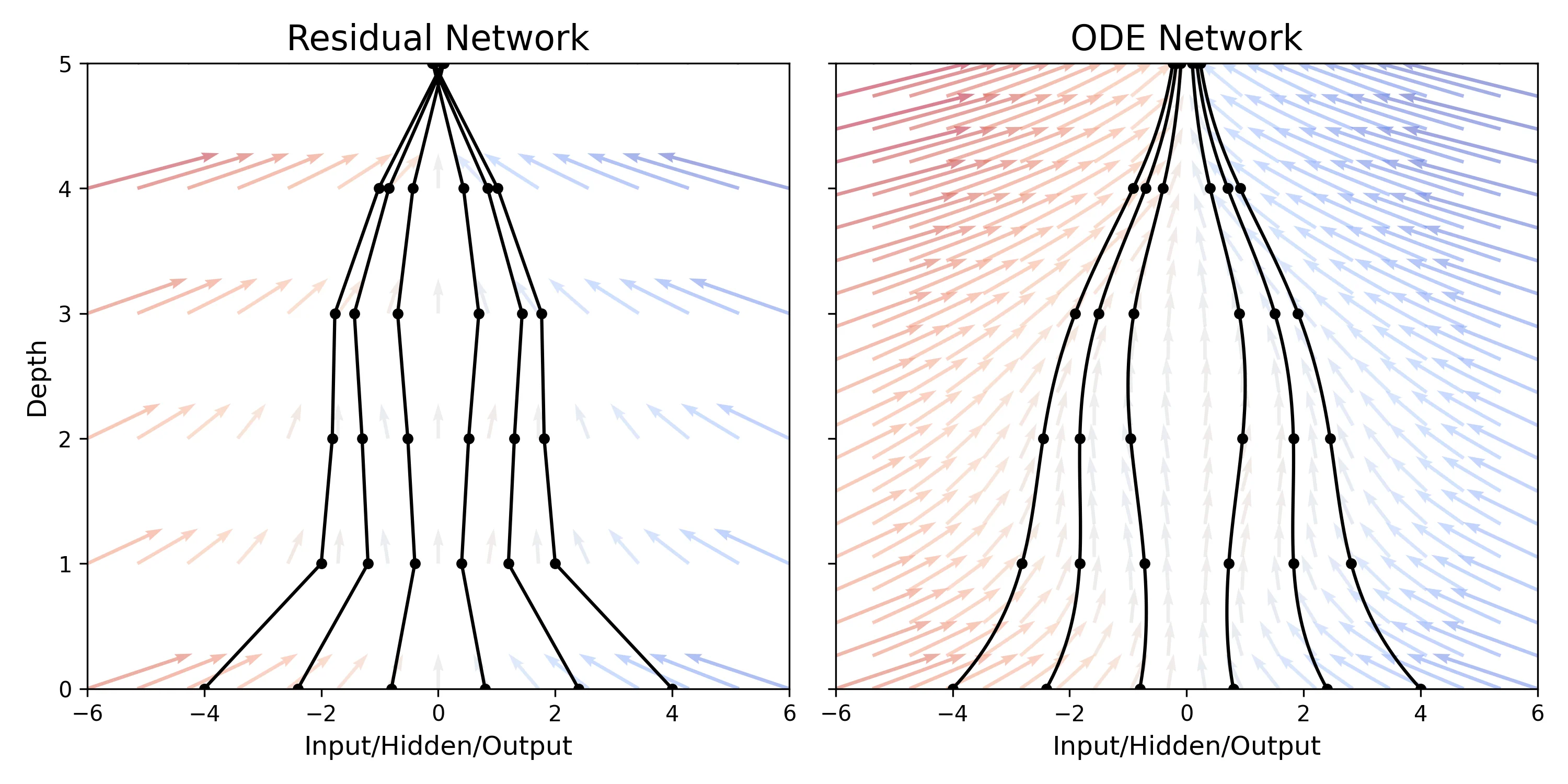
This paper replaces discrete network layers with continuous ordinary differential equations (ODEs), allowing for adaptive computation depth and constant memory cost during training via the adjoint sensitivity method. It introduces Continuous Normalizing Flows and latent ODEs for time-series.
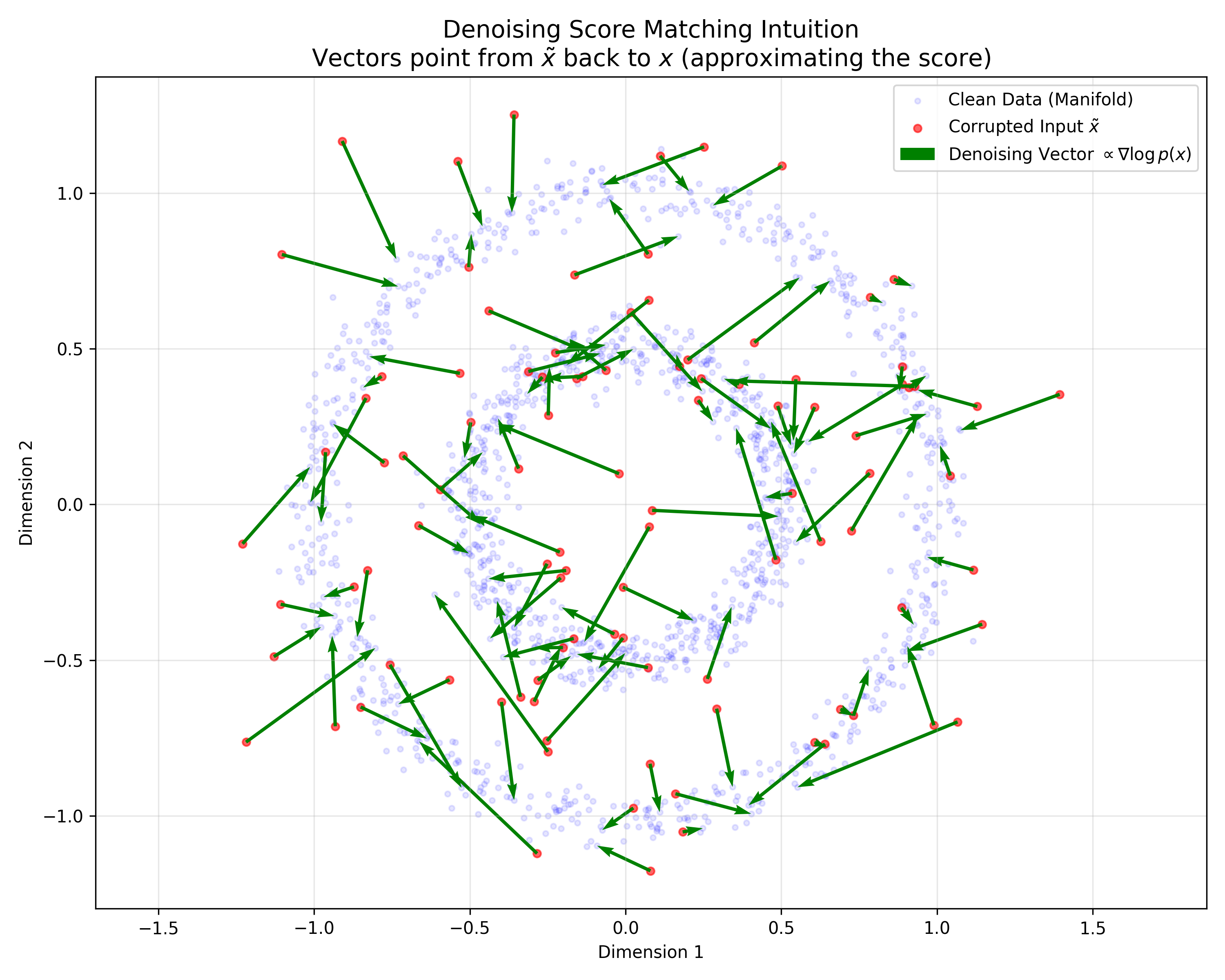
This paper provides a rigorous probabilistic foundation for Denoising Autoencoders by proving they are mathematically equivalent to Score Matching on a kernel-smoothed data distribution. It derives a specific energy function for DAEs and justifies the use of tied weights.
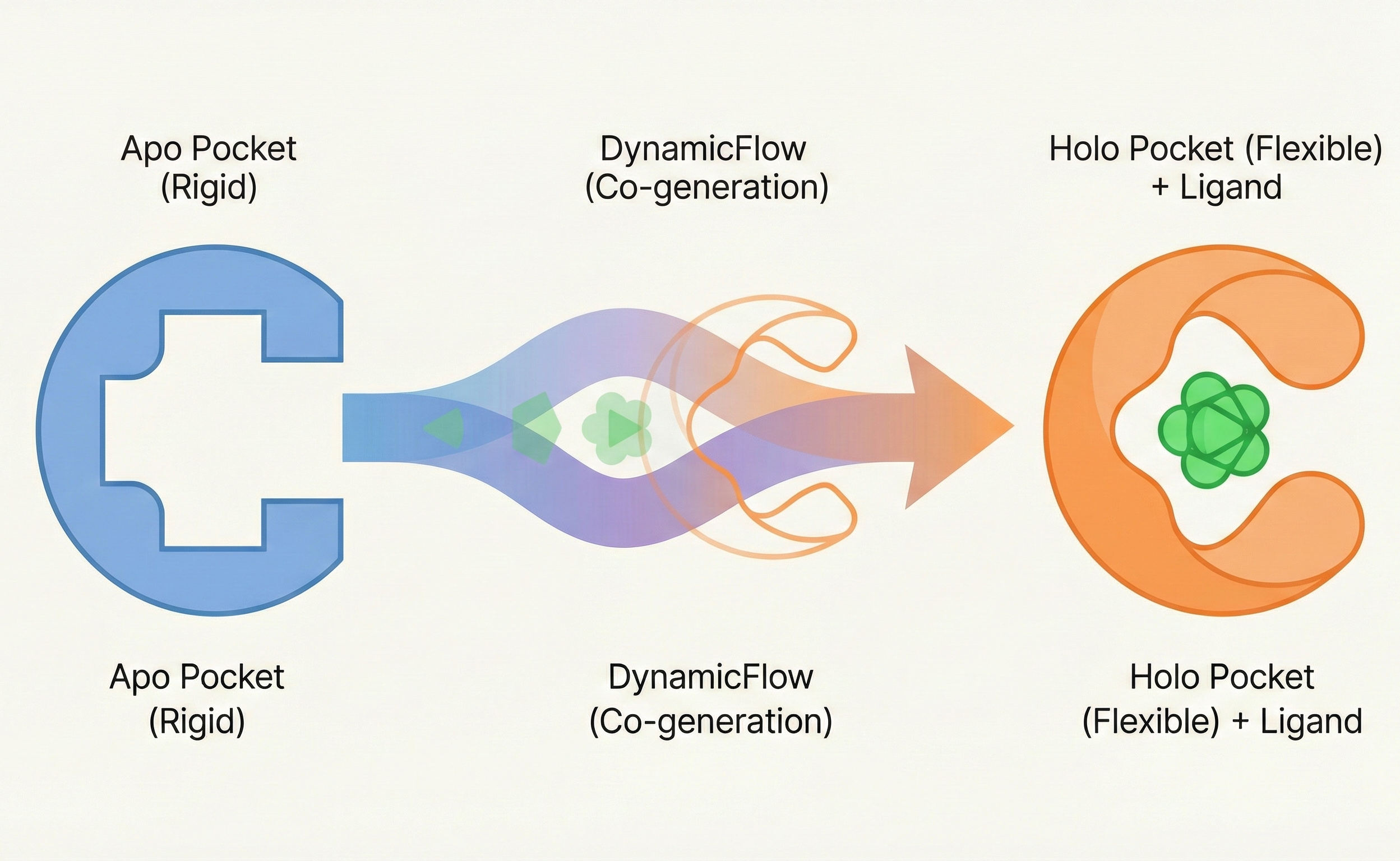
This paper introduces DynamicFlow, a full-atom stochastic flow matching model that simultaneously generates ligand molecules and transforms protein pockets from apo to holo states. It also contributes a new dataset of MD-simulated apo-holo pairs derived from MISATO.
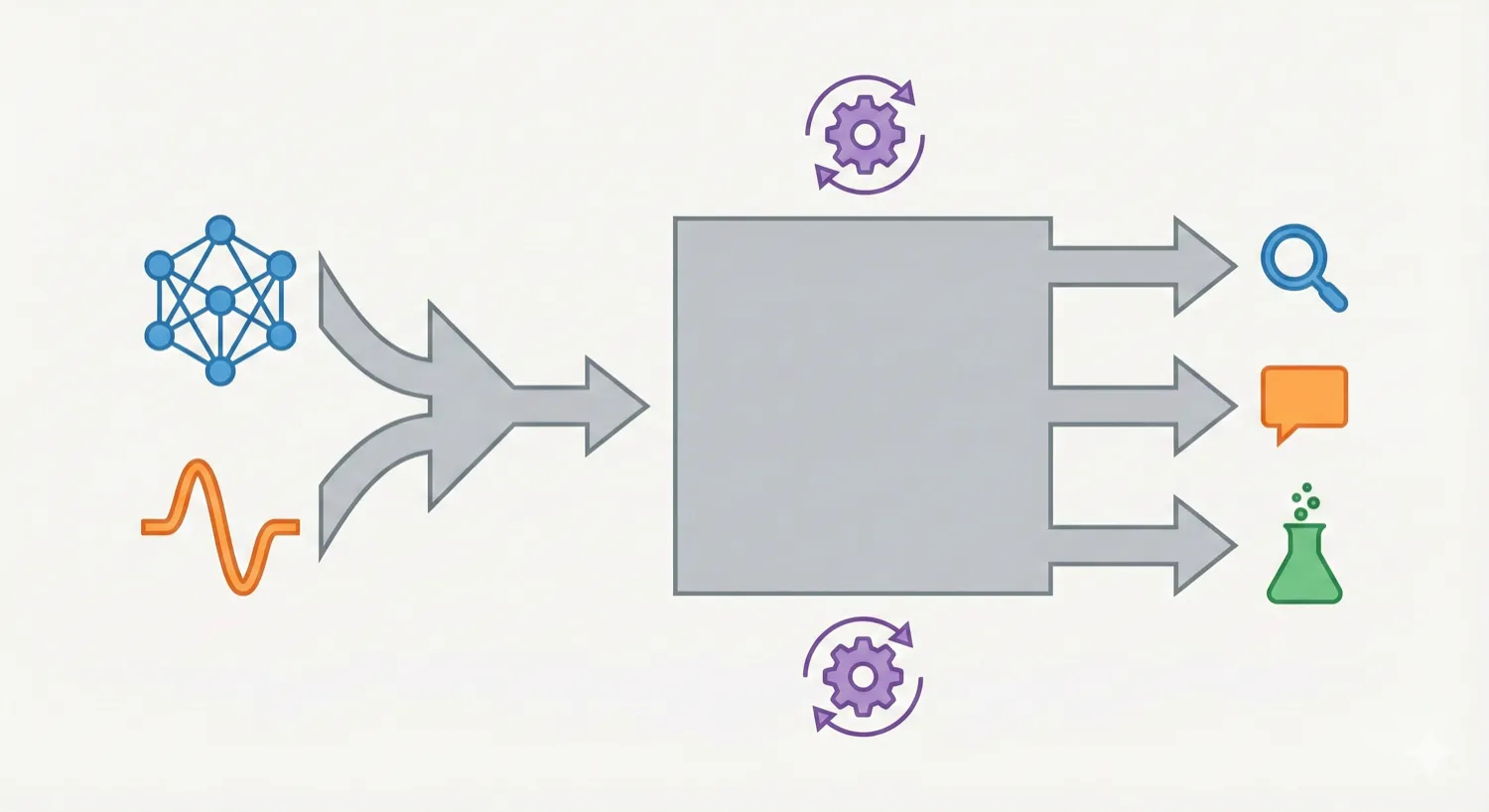
InstructMol integrates a pre-trained molecular graph encoder (MoleculeSTM) with a Vicuna-7B LLM using a linear projector. It employs a two-stage training process (alignment pre-training followed by task-specific instruction tuning with LoRA) to excel at property prediction, description generation, and reaction analysis.
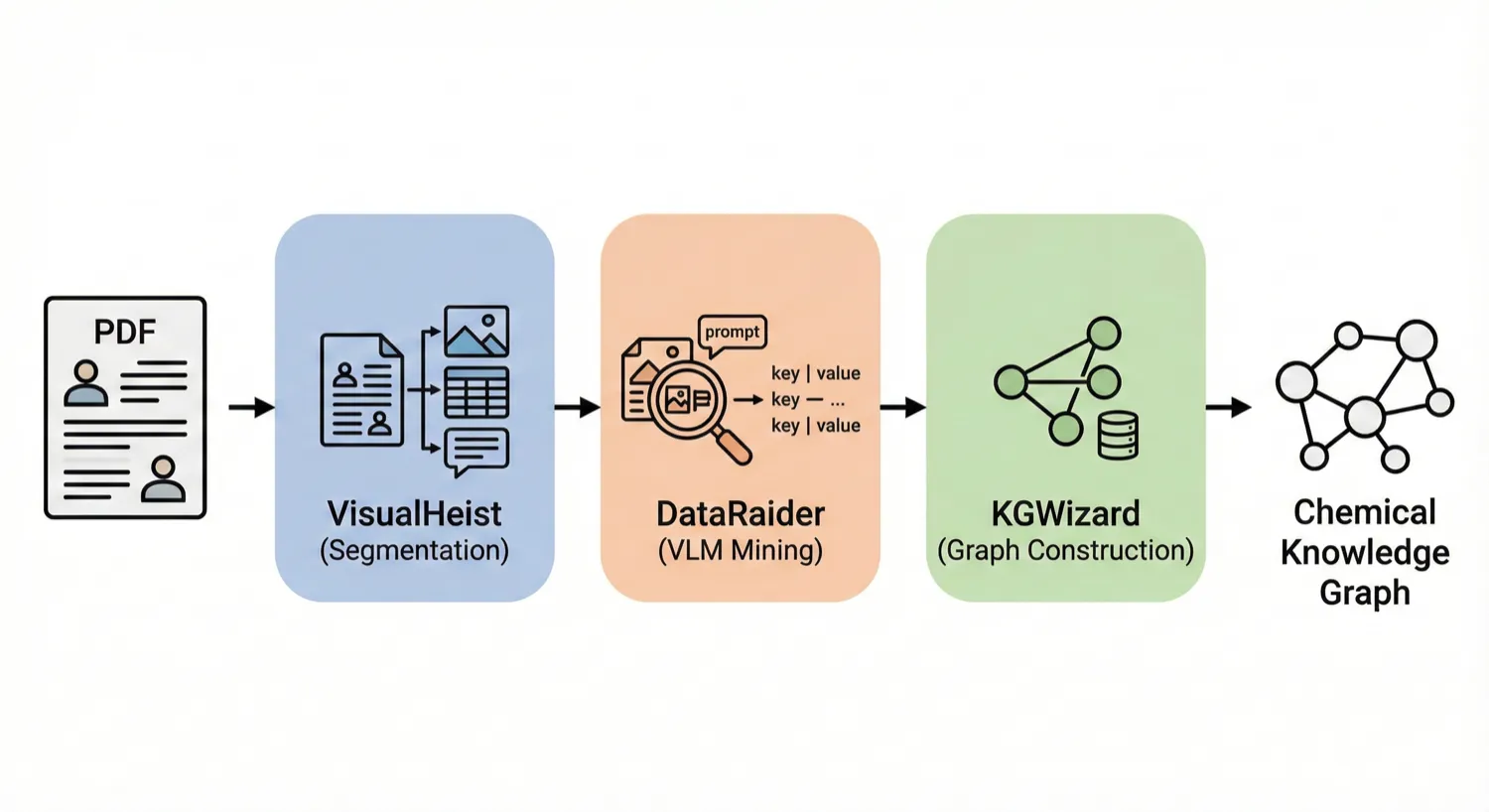
MERMaid leverages fine-tuned vision models and VLM reasoning to mine chemical reaction data directly from PDF figures and tables. By handling context inference and coreference resolution, it builds high-fidelity knowledge graphs with 87% end-to-end accuracy.