Molecular Generation
Two-panel plot showing score divergence with disagreeing classifiers vs convergence with agreeing classifiers

Avoiding Failure Modes in Goal-Directed Generation

Shows that divergence between optimization and control scores during goal-directed molecular generation is explained by pre-existing disagreement among QSAR models on the training distribution, not by algorithmic exploitation of model-specific biases.

Molecular Representations
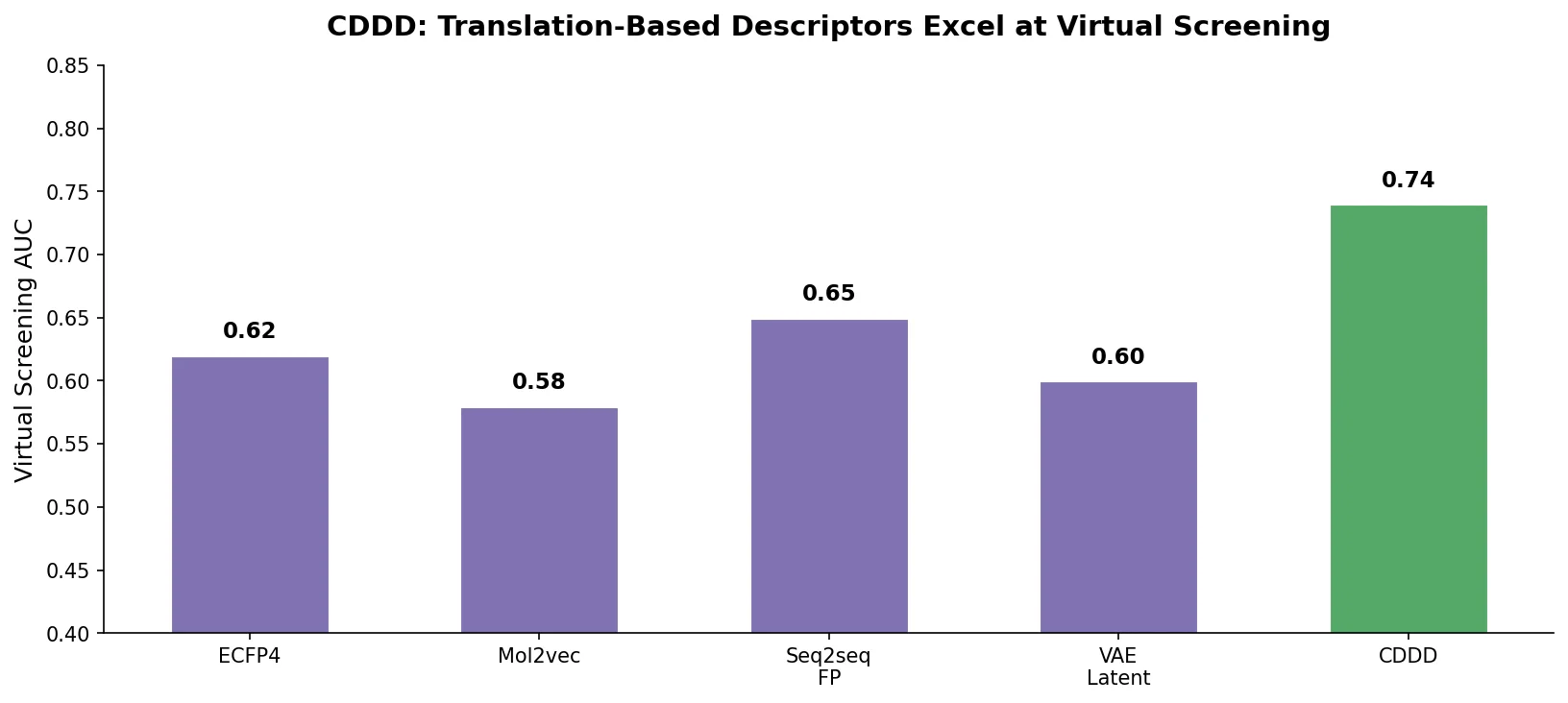
Bar chart comparing CDDD virtual screening AUC against ECFP4, Mol2vec, Seq2seq FP, and VAE baselines

CDDD: Learning Descriptors by Translating SMILES

Winter et al. propose CDDD, a translation-based encoder-decoder that learns continuous molecular descriptors by translating between equivalent chemical representations like SMILES and InChI, pretrained on 72 million compounds.
Molecular Generation
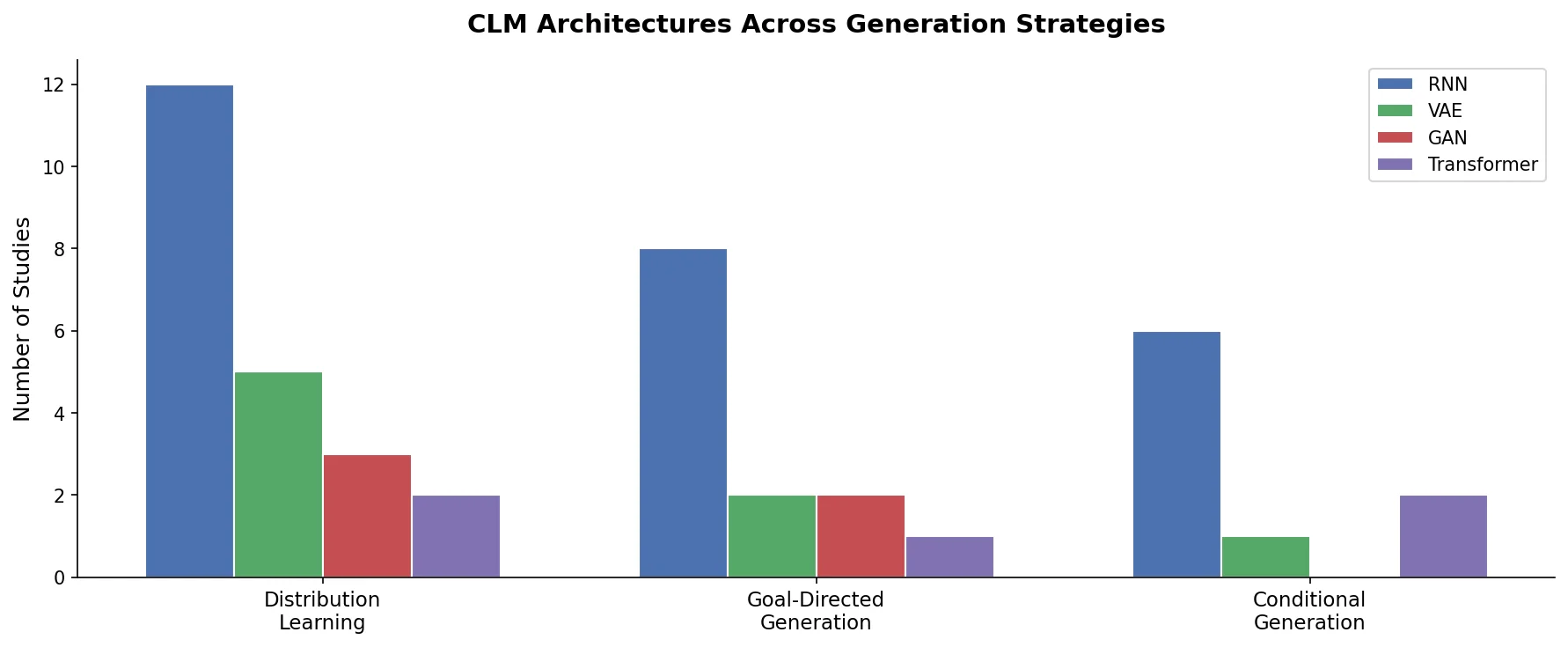
Grouped bar chart showing CLM architectures (RNN, VAE, GAN, Transformer) across generation strategies

Chemical Language Models for De Novo Drug Design Review

A minireview of chemical language models for de novo molecule design, covering SMILES and SELFIES representations, RNN and Transformer architectures, distribution learning, goal-directed and conditional generation, and prospective experimental validation.

Computational Chemistry
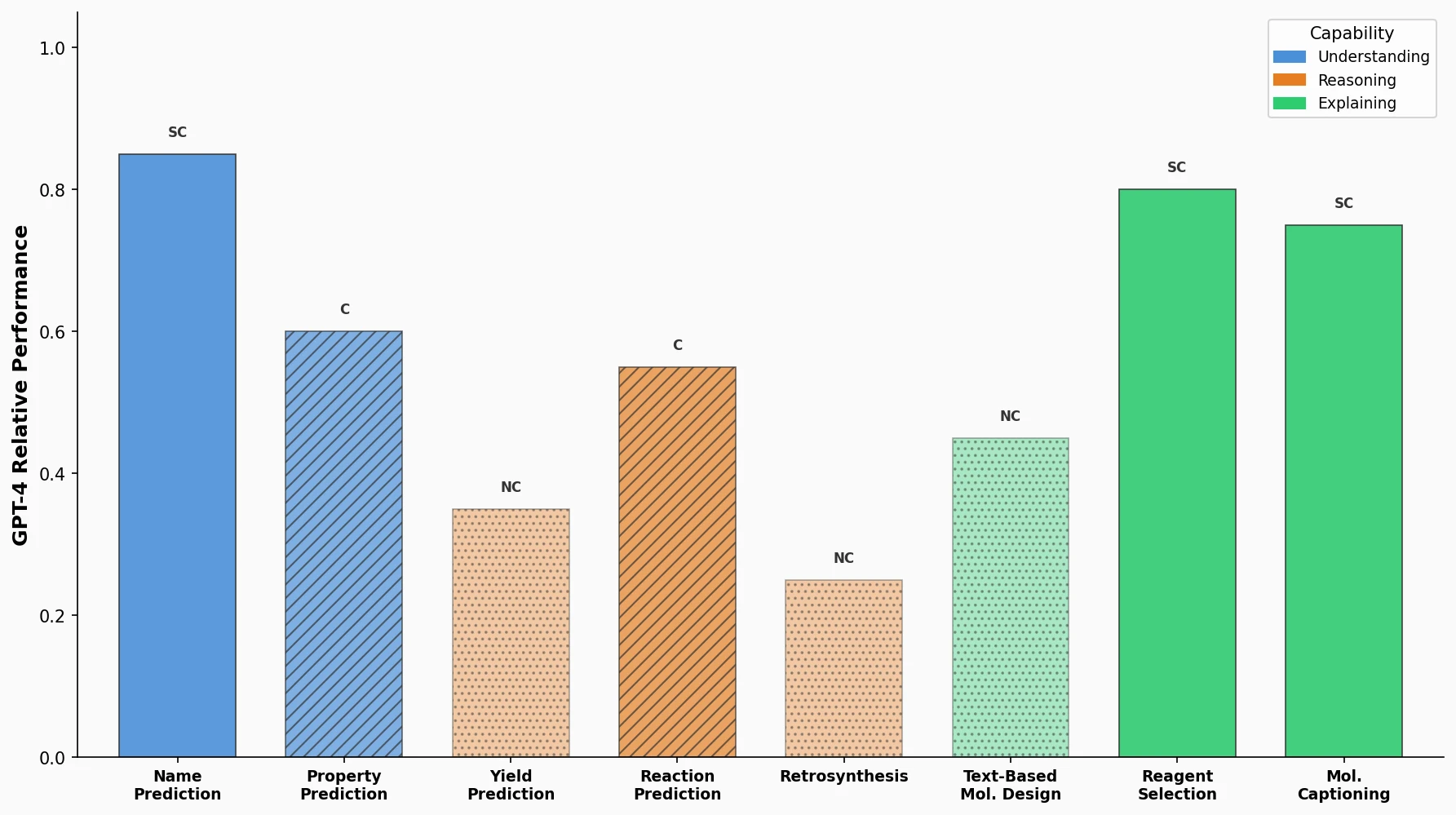
Bar chart showing GPT-4 relative performance across eight chemistry tasks grouped by understanding, reasoning, and explaining capabilities

ChemLLMBench: Benchmarking LLMs on Chemistry Tasks

A comprehensive benchmark evaluating GPT-4, GPT-3.5, Davinci-003, Llama, and Galactica on eight practical chemistry tasks, revealing that LLMs are competitive on classification and text tasks but struggle with SMILES-dependent generation.

Molecular Generation
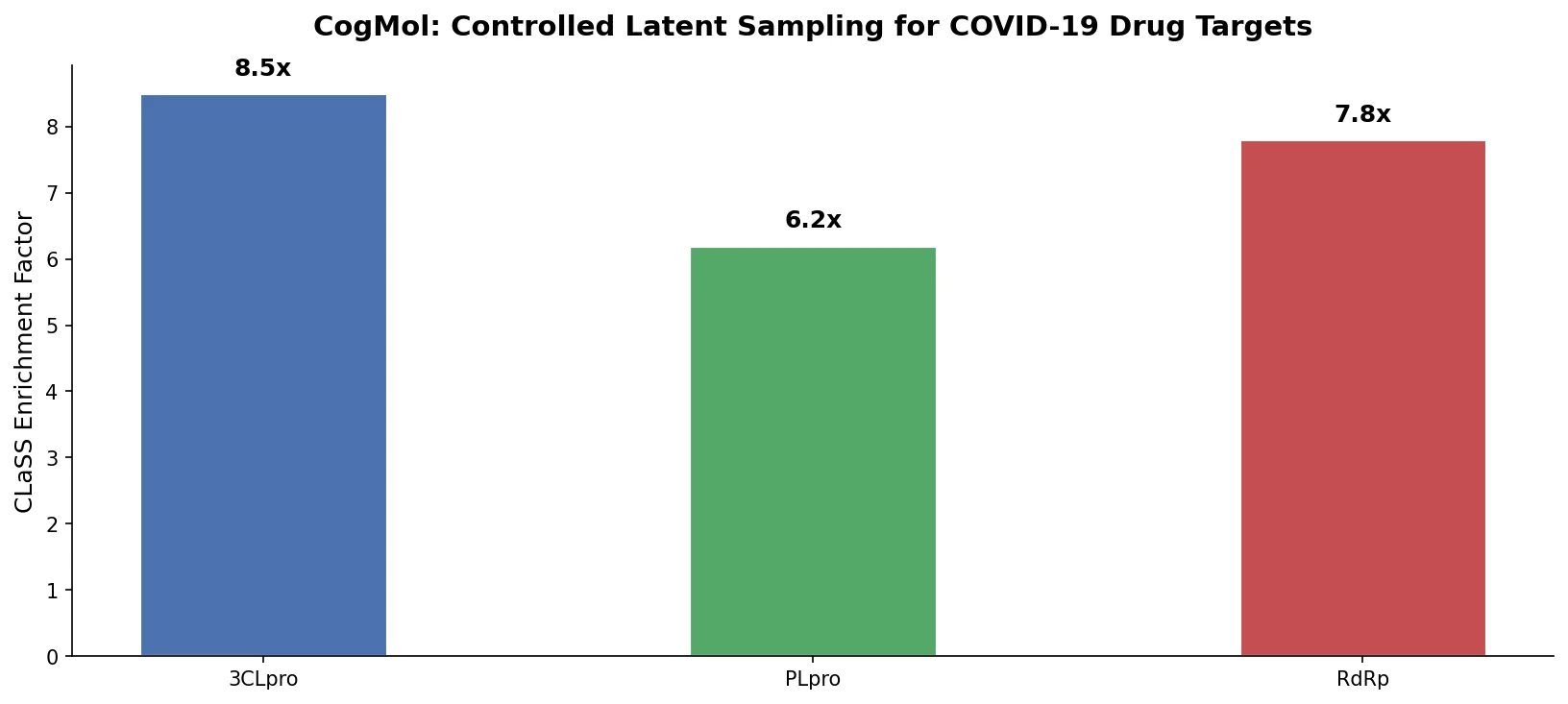
Bar chart showing CogMol CLaSS enrichment factors across three COVID-19 drug targets

CogMol: Controlled Molecule Generation for COVID-19

CogMol uses a SMILES VAE and multi-attribute controlled sampling (CLaSS) to generate novel, target-specific drug molecules for unseen SARS-CoV-2 proteins without model retraining.

Computational Chemistry
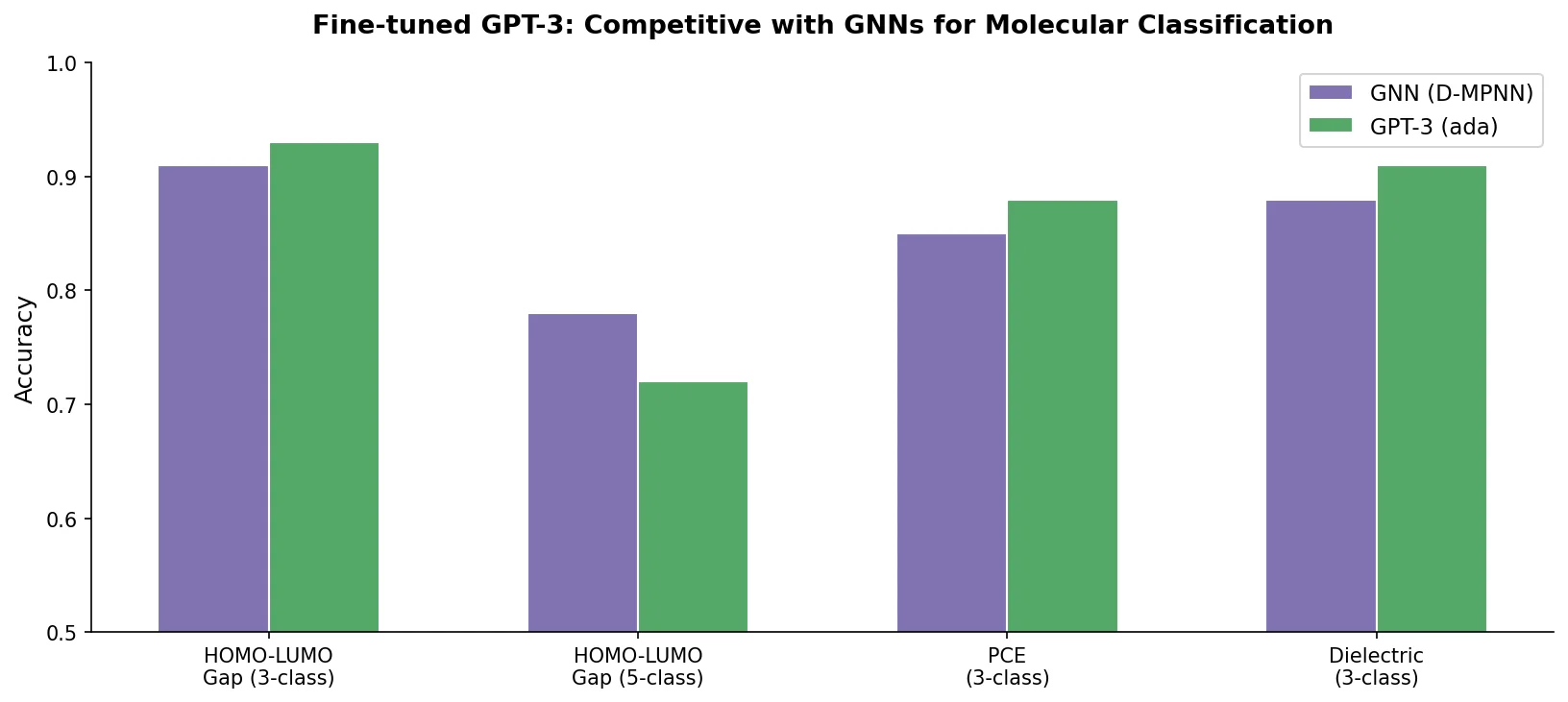
Bar chart comparing GPT-3 ada and GNN accuracy across molecular classification tasks

Fine-Tuning GPT-3 for Molecular Property Prediction

This paper fine-tunes GPT-3’s ada model on SMILES strings for classifying electronic properties (HOMO, LUMO) of organic semiconductor molecules, finding competitive accuracy with graph neural networks and exploring robustness through ablation studies.

Computational Chemistry
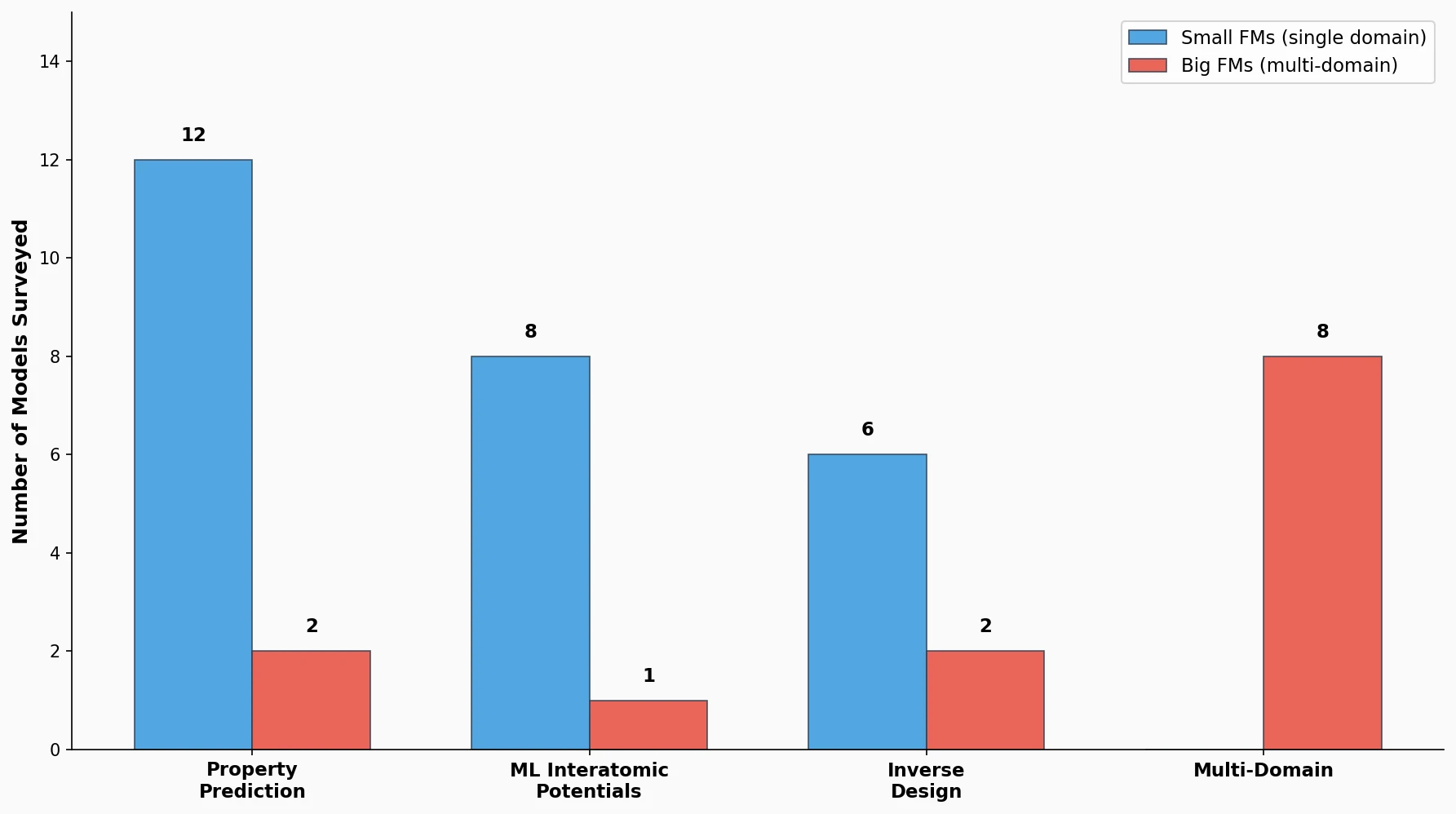
Bar chart comparing small and big foundation models surveyed across property prediction, MLIPs, inverse design, and multi-domain chemistry applications

Foundation Models in Chemistry: A 2025 Perspective

This perspective from Choi et al. reviews foundation models in chemistry, categorizing them as ‘small’ (domain-specific, e.g., property prediction, MLIPs, inverse design) and ‘big’ (multi-domain, e.g., multimodal and LLM-based). It surveys pretraining strategies, key architectures (GNNs and language models), and outlines future directions for scaling, efficiency, and interpretability.

Molecular Representations
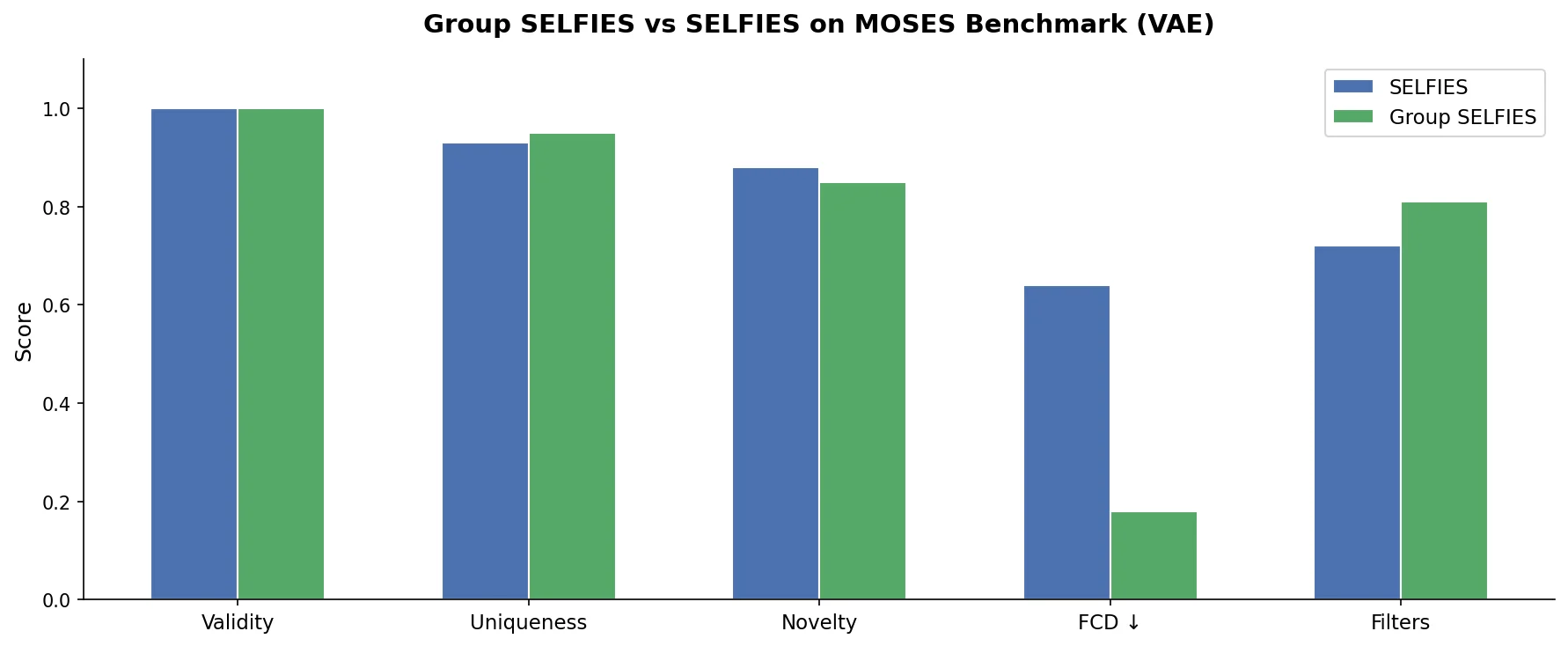
Bar chart comparing Group SELFIES vs SELFIES on MOSES benchmark metrics

Group SELFIES: Fragment-Based Molecular Strings

Group SELFIES extends SELFIES with group tokens representing functional groups and substructures, maintaining chemical robustness while improving distribution learning and molecular generation quality.

Molecular Generation
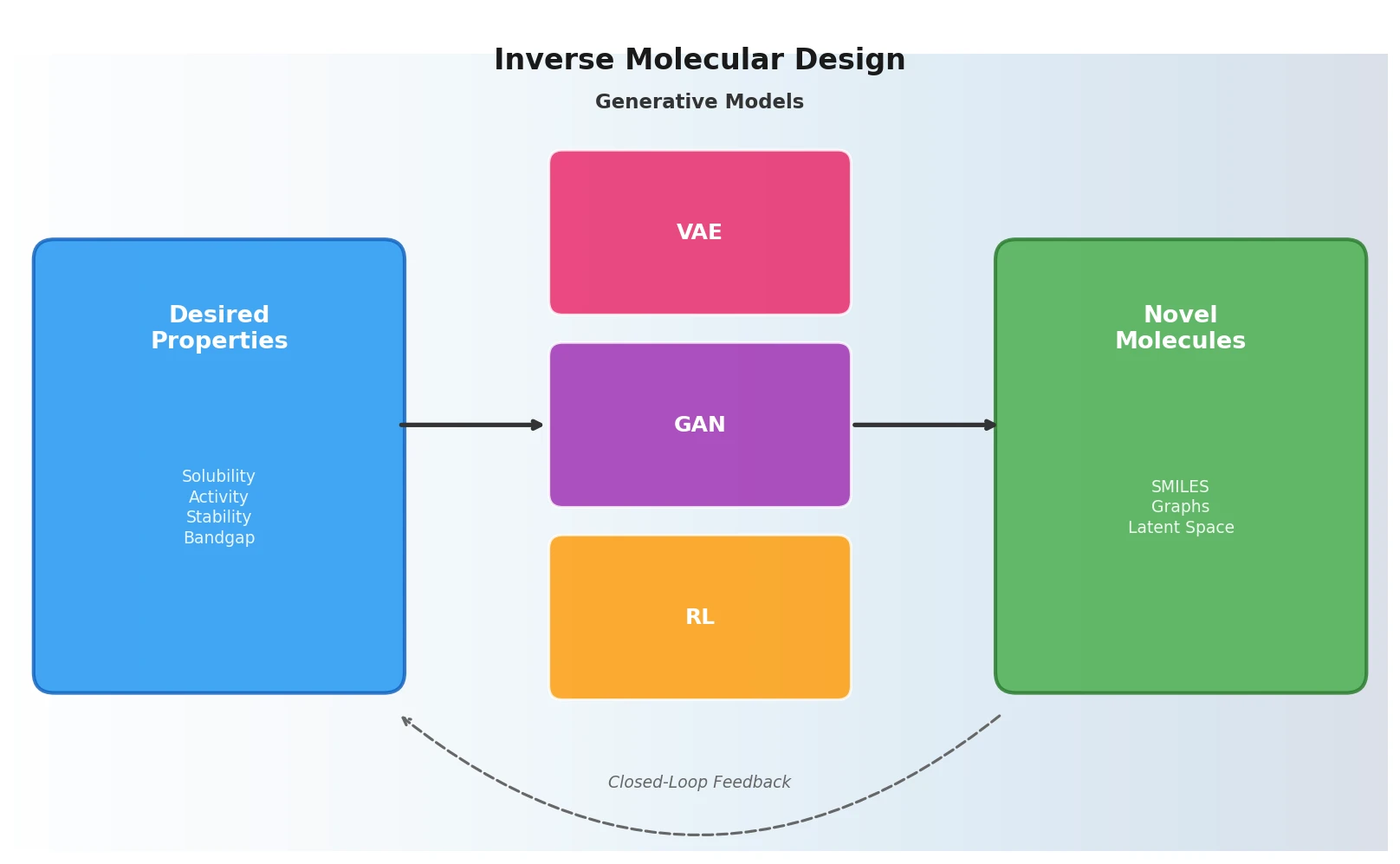
Schematic of inverse molecular design paradigm mapping desired properties to molecular structures through generative models

Inverse Molecular Design with ML Generative Models

A foundational review surveying how deep generative models (VAEs, GANs, reinforcement learning) enable inverse molecular design, covering molecular representations, chemical space navigation, and applications from drug discovery to materials engineering.

Predictive Chemistry
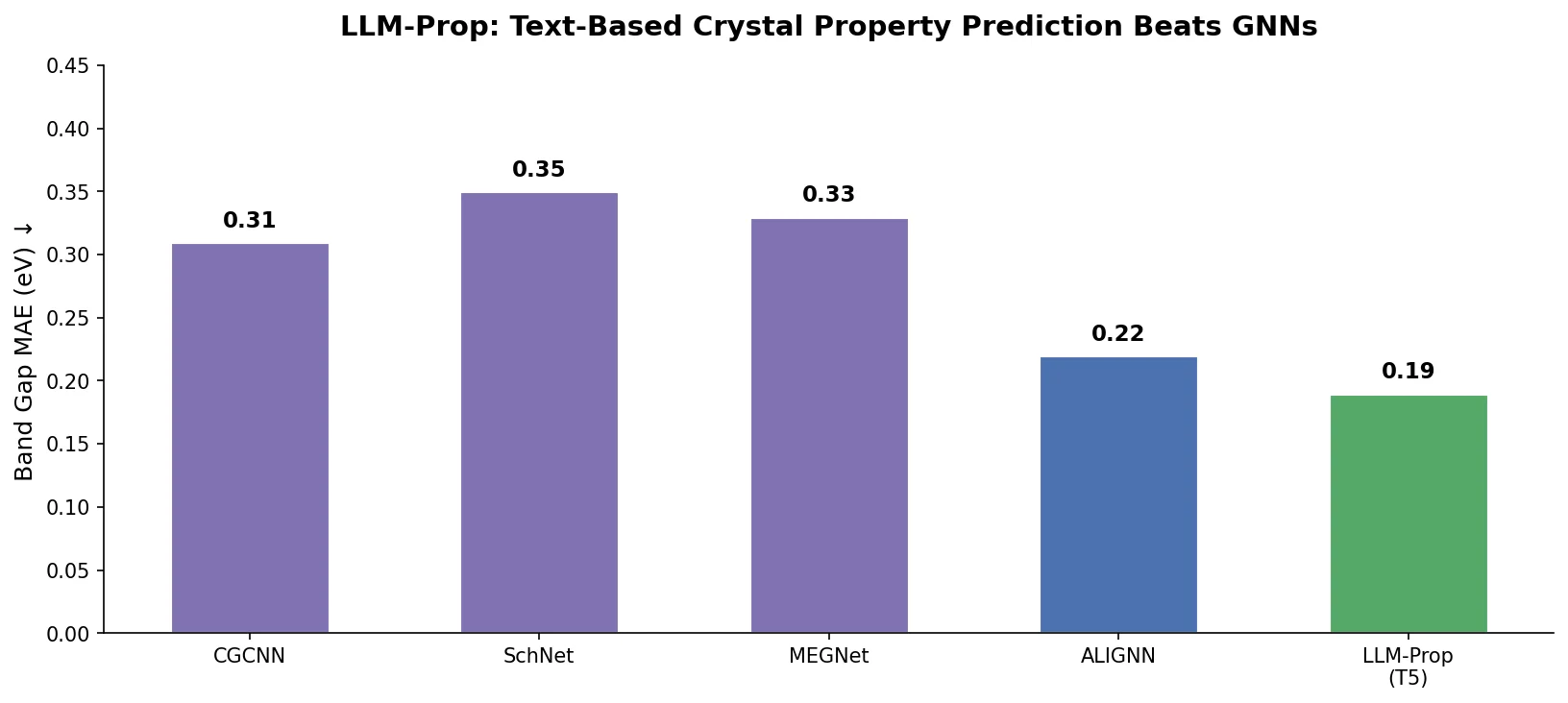
Bar chart comparing LLM-Prop band gap MAE against CGCNN, SchNet, MEGNet, and ALIGNN

LLM-Prop: Predicting Crystal Properties from Text

LLM-Prop uses the encoder half of T5, fine-tuned on Robocrystallographer text descriptions, to predict crystal properties. It outperforms GNN baselines like ALIGNN on band gap and volume prediction while using fewer parameters.

Computational Chemistry
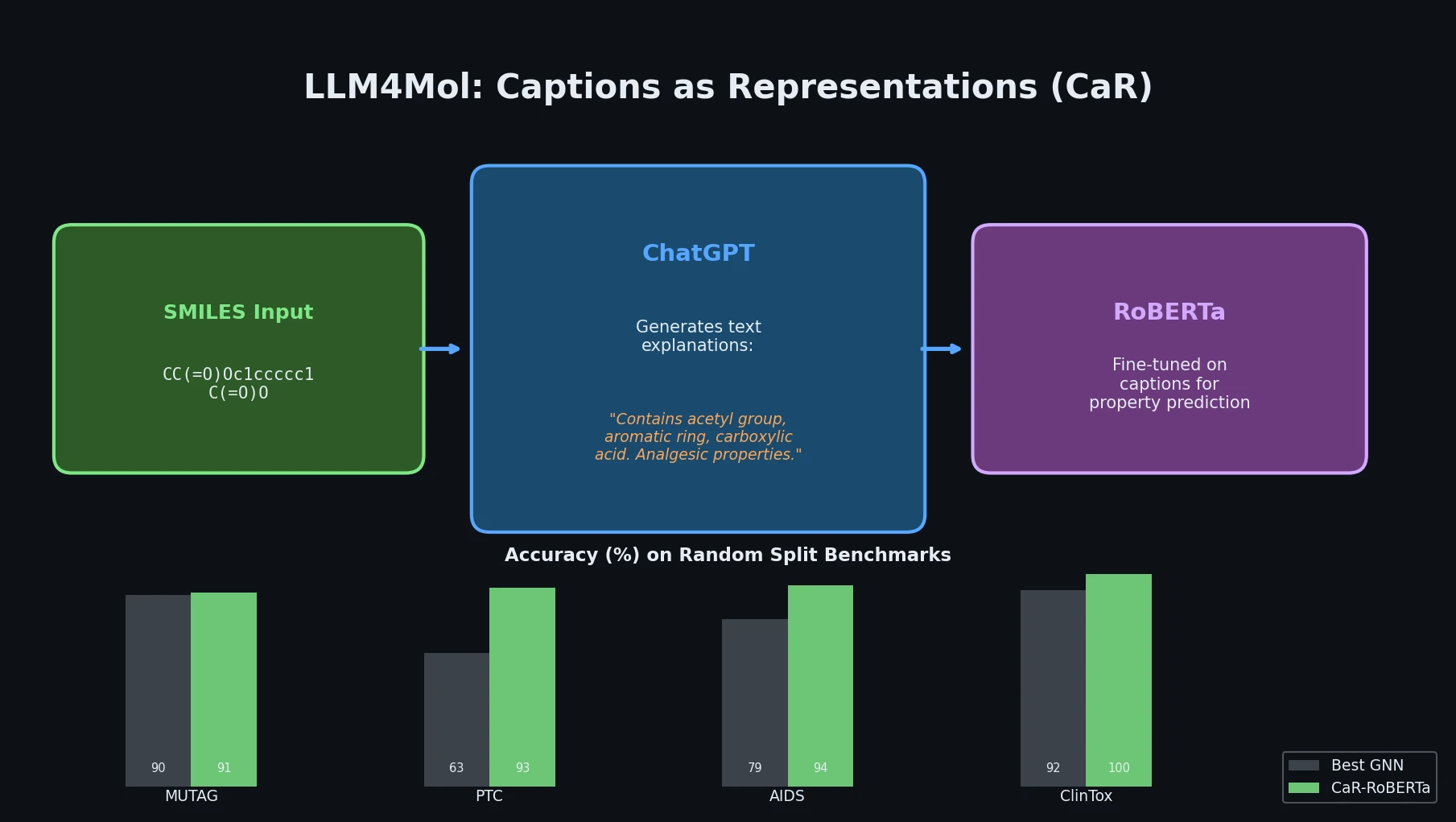
Diagram showing the CaR pipeline from SMILES to ChatGPT-generated captions to fine-tuned RoBERTa predictions

LLM4Mol: ChatGPT Captions as Molecular Representations

Proposes Captions as Representations (CaR), where ChatGPT generates textual explanations for SMILES strings that are then used to fine-tune small language models for molecular property prediction.

Molecular Generation
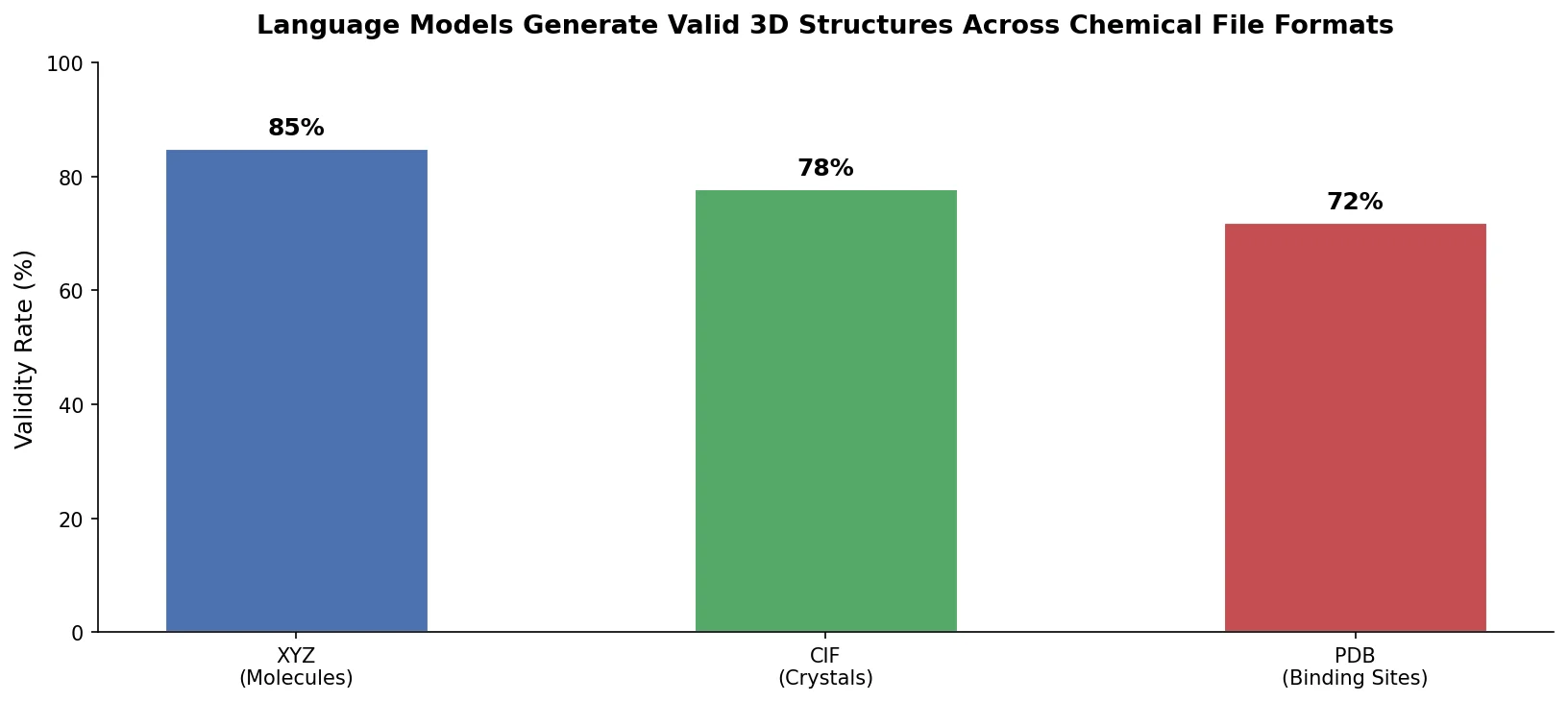
Bar chart showing language model validity rates across XYZ, CIF, and PDB 3D chemical file formats

LMs Generate 3D Molecules from XYZ, CIF, PDB Files

Demonstrates that standard transformer language models, trained with next-token prediction on sequences from XYZ, CIF, and PDB files, can generate valid 3D molecules, crystals, and protein binding sites competitive with domain-specific 3D generative models.