Computational Chemistry
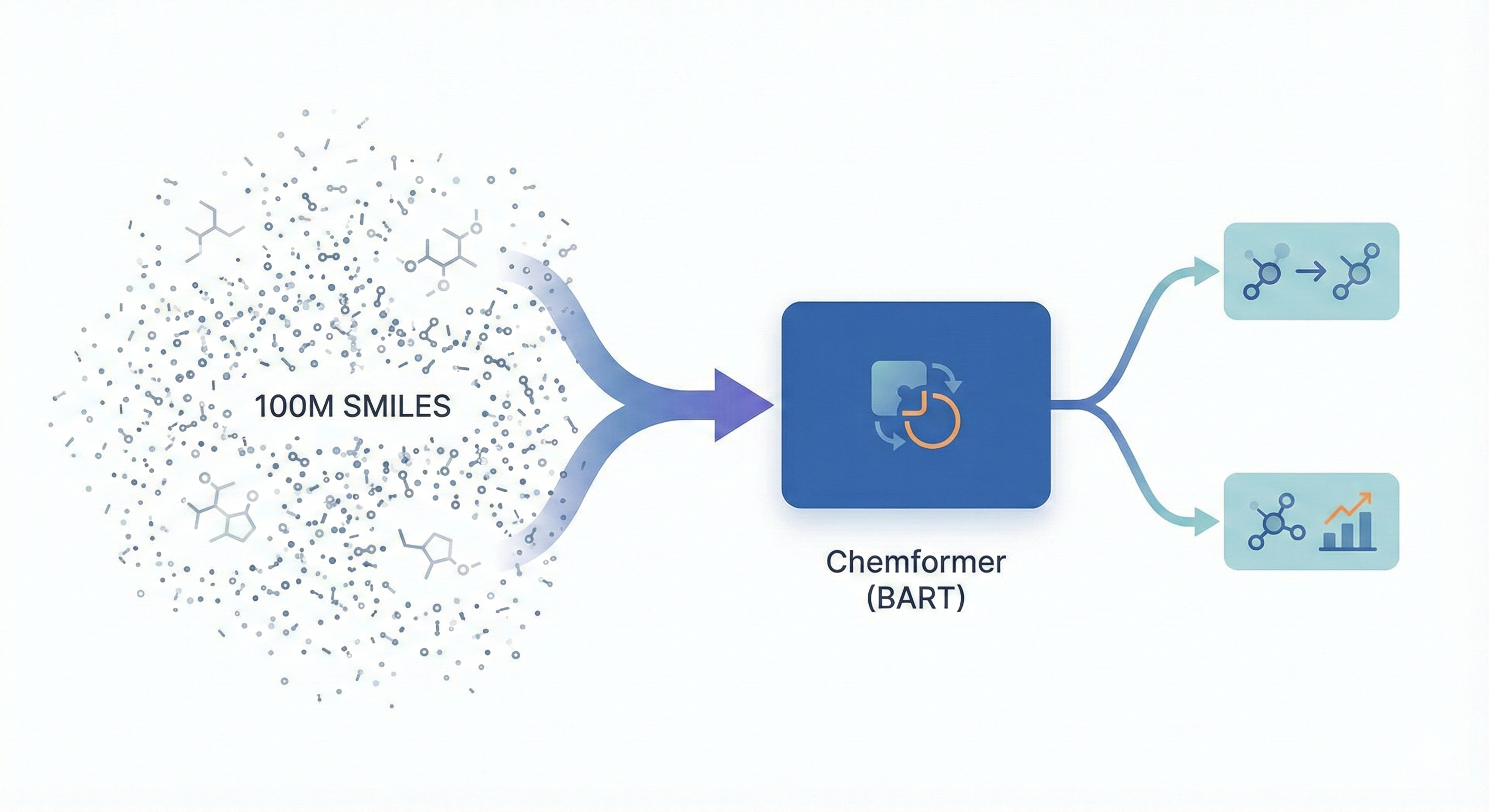
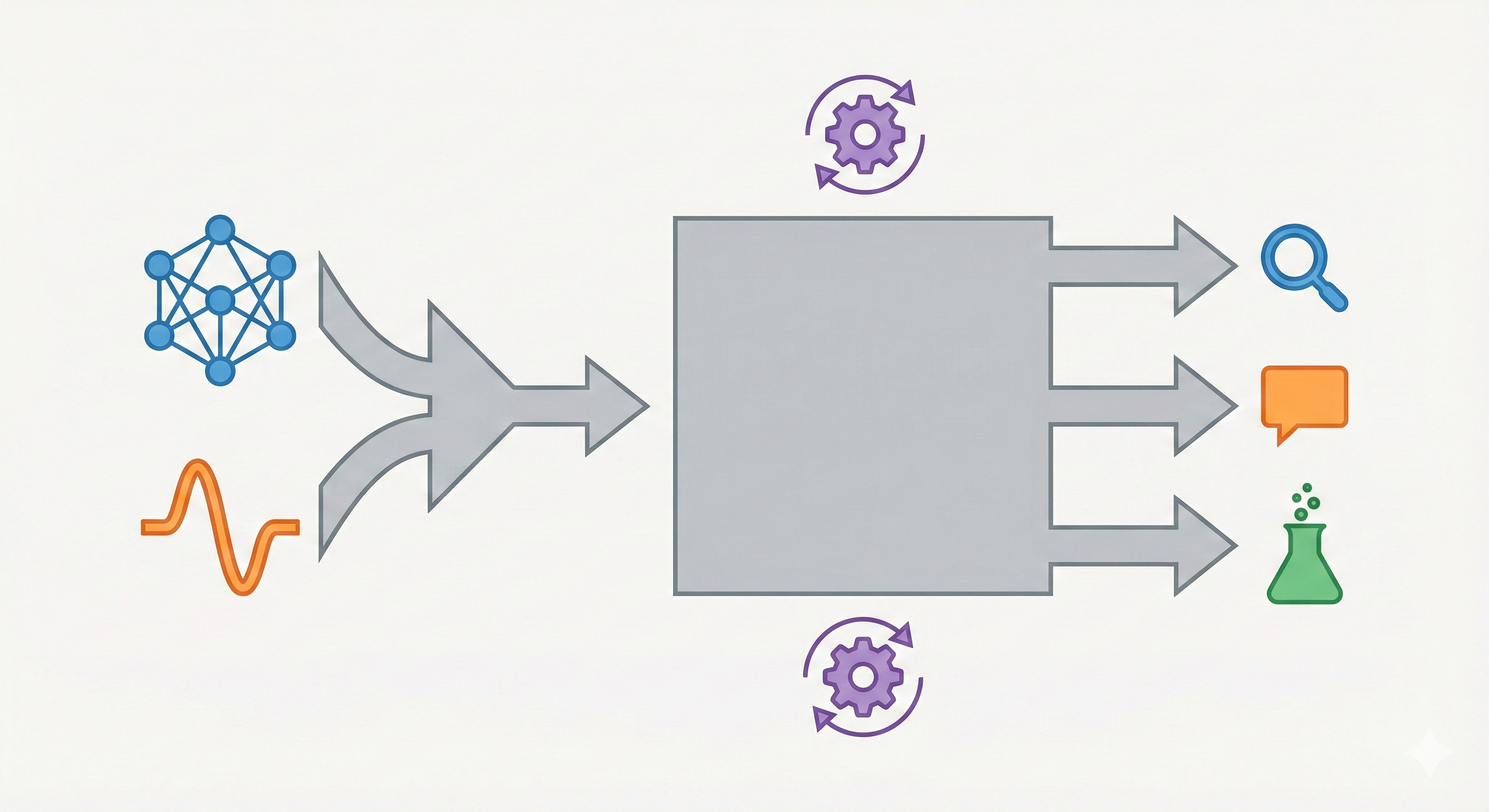
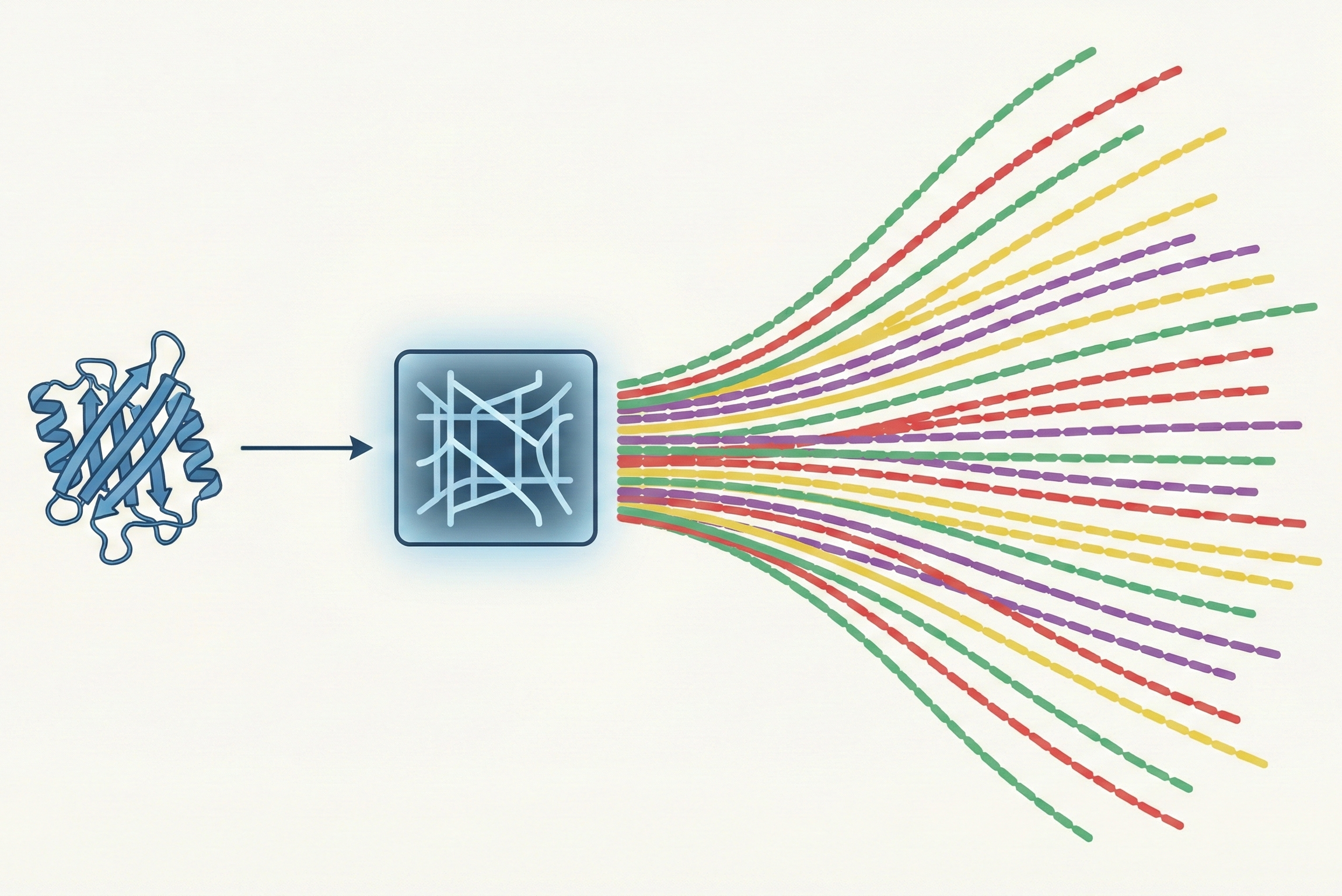
InstructMol architecture showing molecular graph and text inputs feeding through two-stage training to produce property predictions, descriptions, and reactions

InstructMol: Multi-Modal Molecular Assistant

InstructMol integrates a pre-trained molecular graph encoder (MoleculeSTM) with a Vicuna-7B LLM using a linear projector. It employs a two-stage training process (alignment pre-training followed by task-specific instruction tuning with LoRA) to excel at property prediction, description generation, and reaction analysis.

Computational Biology
InvMSAFold generates diverse protein sequences from structure using a Potts model

InvMSAFold: Generative Inverse Folding with Potts Models

InvMSAFold replaces autoregressive decoding with a Potts model parameter generator, enabling diverse protein sequence sampling orders of magnitude faster than ESM-IF1.

Computational Chemistry
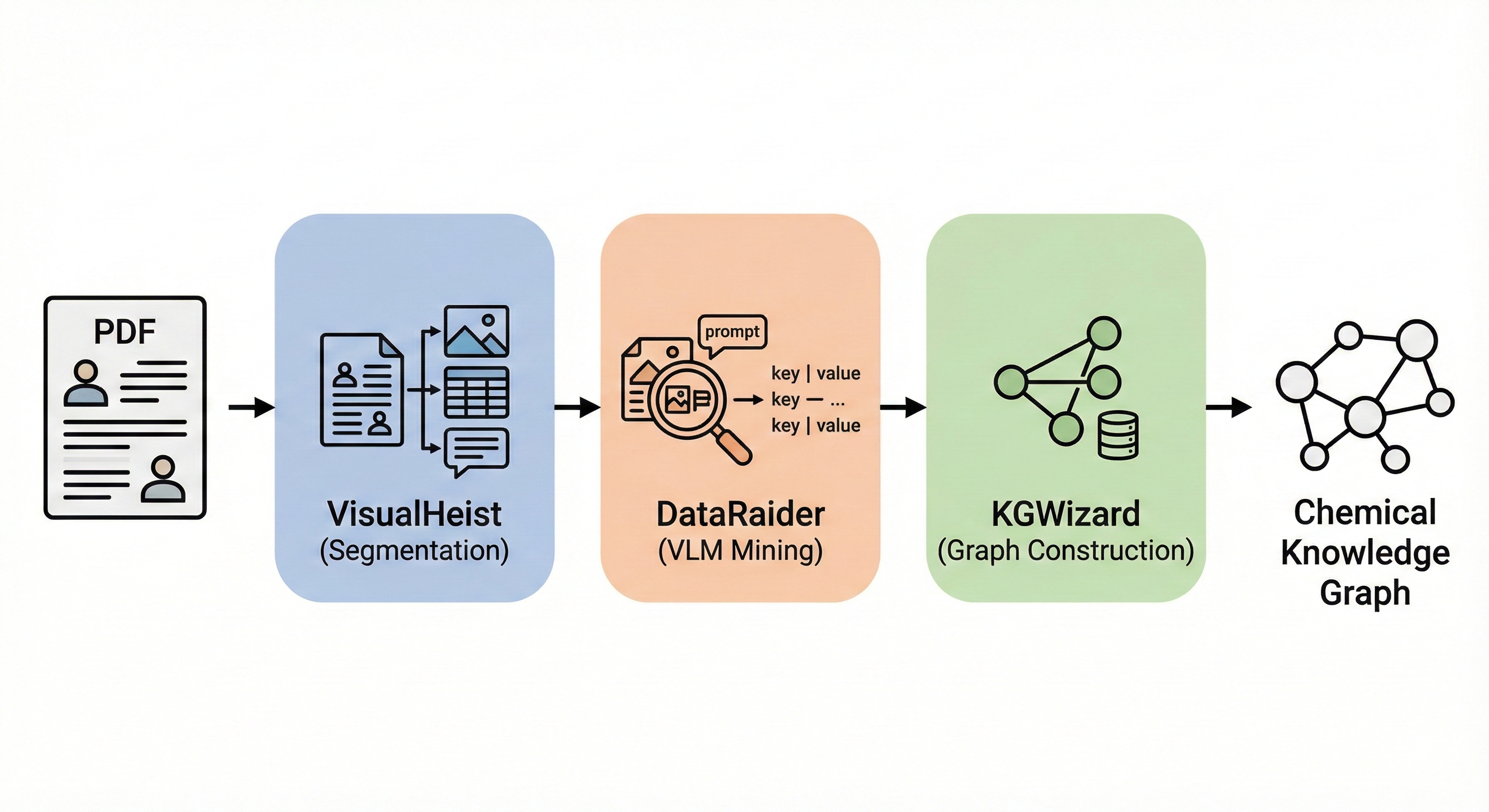
MERMaid pipeline diagram showing PDF processing through VisualHeist segmentation, DataRaider VLM mining, and KGWizard graph construction to produce chemical knowledge graphs

MERMaid: Multimodal Reaction Mining

MERMaid leverages fine-tuned vision models and VLM reasoning to mine chemical reaction data directly from PDF figures and tables. By handling context inference and coreference resolution, it builds high-fidelity knowledge graphs with 87% end-to-end accuracy.

Computational Chemistry
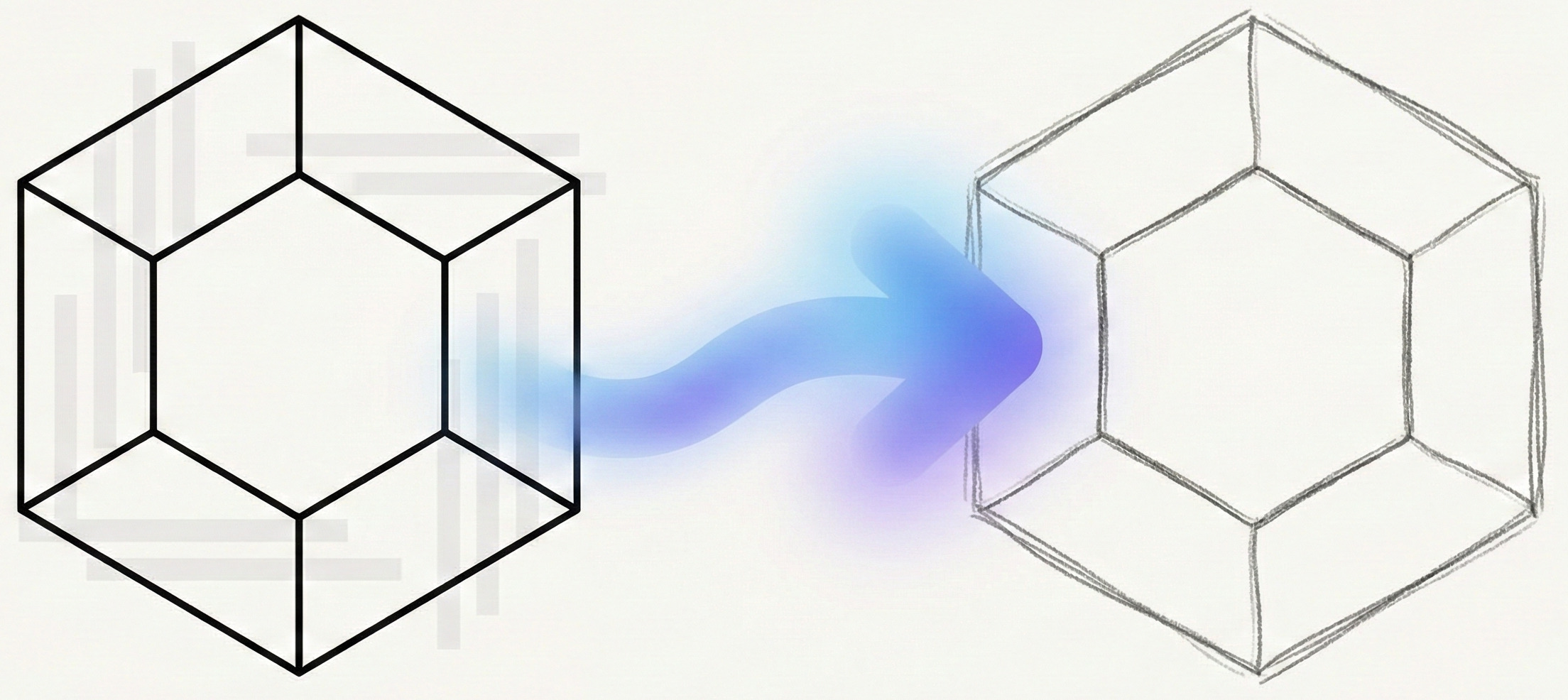
OCSAug: Diffusion-Based Augmentation for Hand-Drawn OCSR

OCSAug: Diffusion-Based Augmentation for Hand-Drawn OCSR

OCSAug leverages Denoising Diffusion Probabilistic Models (DDPM) and the RePaint algorithm with custom masking to generate synthetic hand-drawn chemical structure images, significantly improving OCSR performance on benchmarks like DECIMER.

Computational Chemistry
Diagram showing molecular structure passing through a neural network to produce IUPAC chemical nomenclature document

STOUT V2.0: SMILES to IUPAC Name Conversion

STOUT V2.0 uses Transformers trained on ~1 billion SMILES-IUPAC pairs to accurately translate chemical structures into systematic names (and vice-versa), outperforming its RNN predecessor.

Computational Chemistry
Handwritten chemical ring recognition neural network architecture

Handwritten Chemical Ring Recognition with NNs

Proposes a specialized Classifier-Recognizer architecture that first categorizes rings by heteroatom (S, N, O) and then identifies the specific ring using optimized grid inputs.

Computational Chemistry

Handwritten Chemical Symbol Recognition Using SVMs

A 2013 paper introducing a hybrid recognition system for handwritten chemical symbols on touch devices. Combines Support Vector Machines (SVM) for classification with elastic matching for geometric verification, achieving 89.7% top-1 accuracy on pen-based input for chemical structure drawing applications.

Computational Chemistry

HMM-based Online Recognition of Chemical Symbols

HMM-based method for recognizing online handwritten chemical symbols using 11-dimensional local features including derivatives, curvature, and linearity. Achieves 89.5% top-1 accuracy and 98.7% top-3 accuracy on a custom dataset of 64 chemical symbols.

Computational Chemistry

On-line Handwritten Chemical Expression Recognition

Yang et al. propose a two-level recognition system for handwritten chemical formulas, combining global structural analysis to identify substances with local character recognition using ANNs, achieving ~96% accuracy on a dataset of 1197 expressions.

Computational Chemistry

Online Handwritten Chemical Formula Structure Analysis

A three-level grammatical framework (formula, molecule, text) for parsing online handwritten chemical formulas, generating semantic graphs that capture both connectivity and layout using context-free grammars and HMMs.

Computational Chemistry

Recognition of On-line Handwritten Chemical Expressions

Proposes a novel two-level algorithm for on-line handwritten chemical expression recognition, combining substance-level matching with character-level segmentation to achieve 96% accuracy.

Computational Chemistry

SVM-HMM Online Classifier for Chemical Symbols

This paper proposes a double-stage architecture using SVM for rough classification and HMM for fine recognition. It features a novel Point Sequence Reordering (PSR) algorithm that significantly improves accuracy on organic ring structures.