Computational Social Science
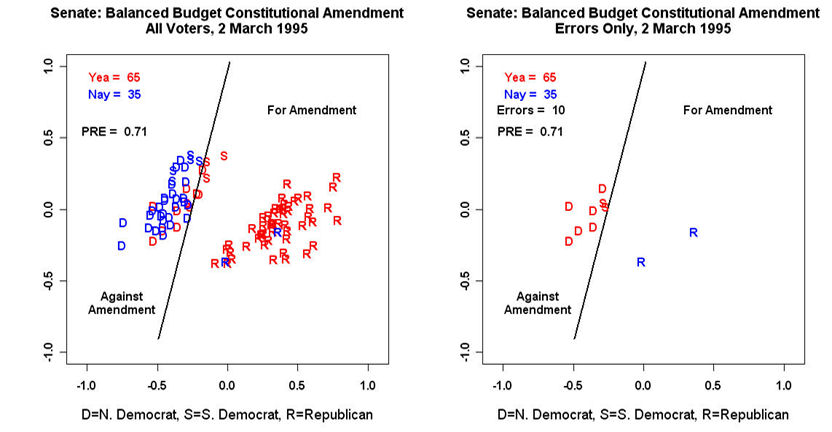
NOMINATE spatial plot showing Senate vote on Balanced Budget Amendment (1995) with legislators positioned on liberal-conservative dimension

A Spatial Model for Legislative Roll Call Analysis

Introduces NOMINATE, a probabilistic spatial model estimating legislator ideal points from roll call data via maximum …

Computational Social Science
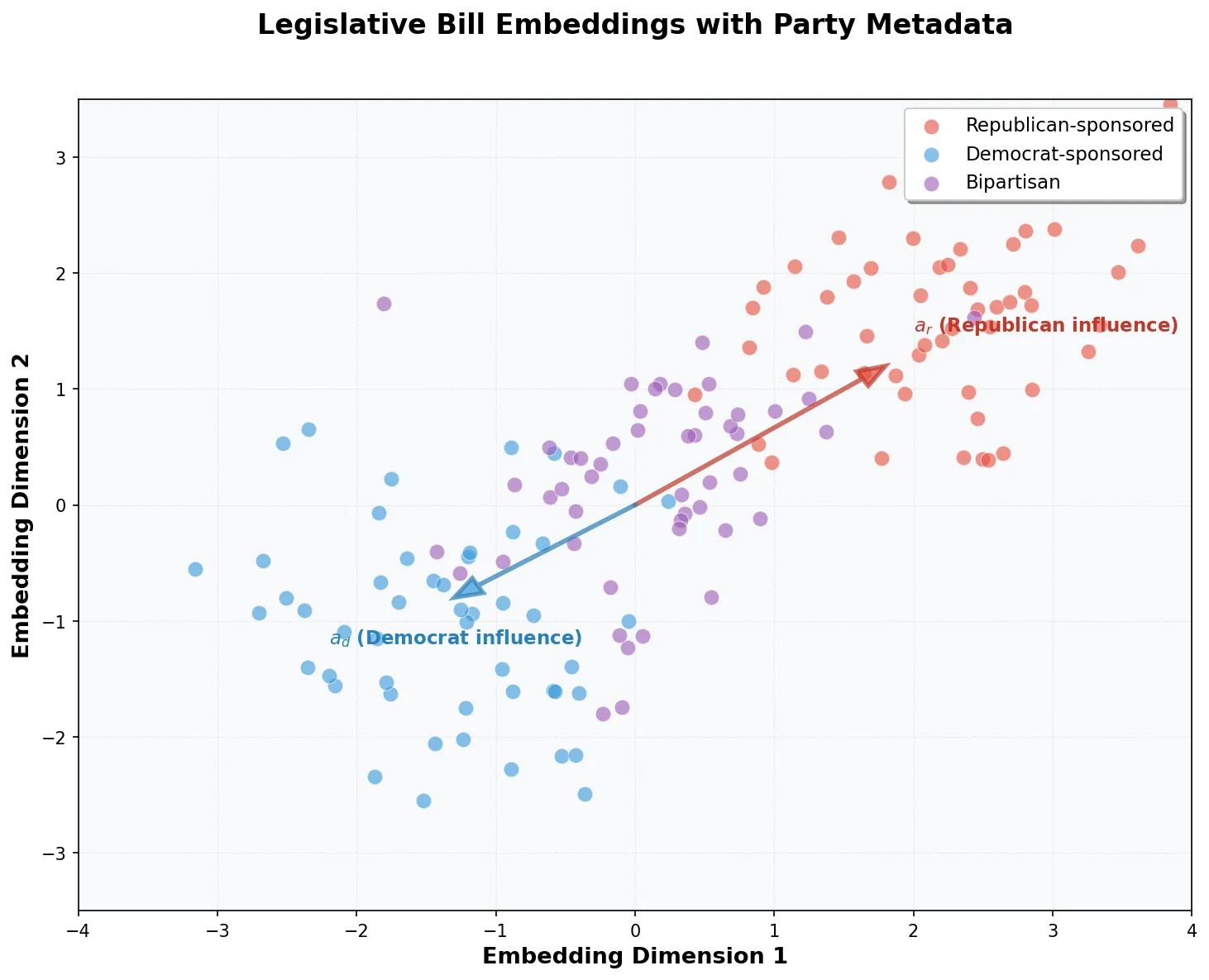
Visualization of party-based legislative embeddings

Party Matters: Enhancing Legislative Embeddings

A method for improving legislative vote prediction across sessions by augmenting bill text embeddings with sponsor …

Computational Social Science
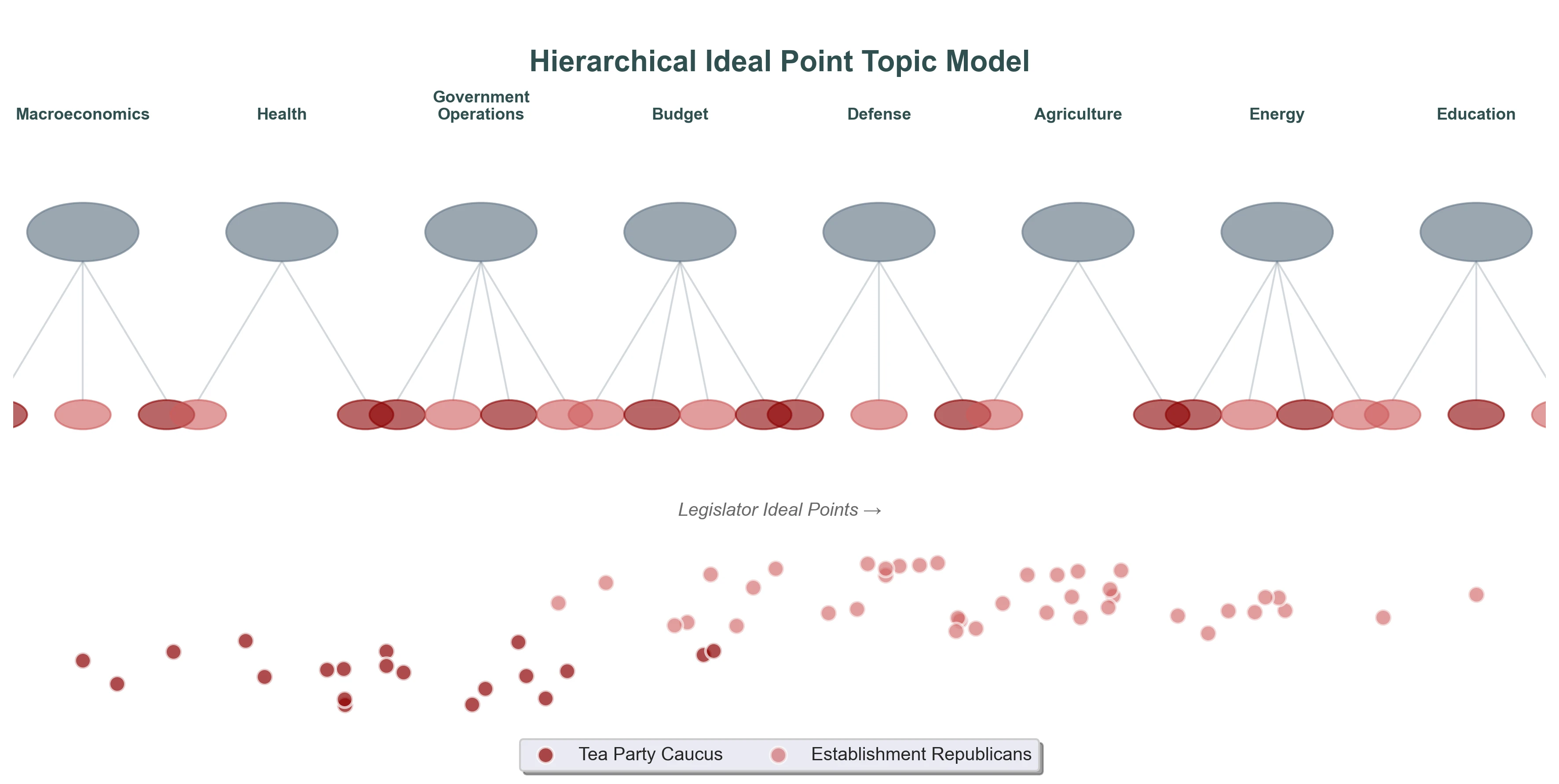
Hierarchical Ideal Point Topic Model visualization showing political polarization

Tea Party in the House

A hierarchical probabilistic model combining roll call votes, bill text, and legislative speeches to analyze political …

Computational Social Science
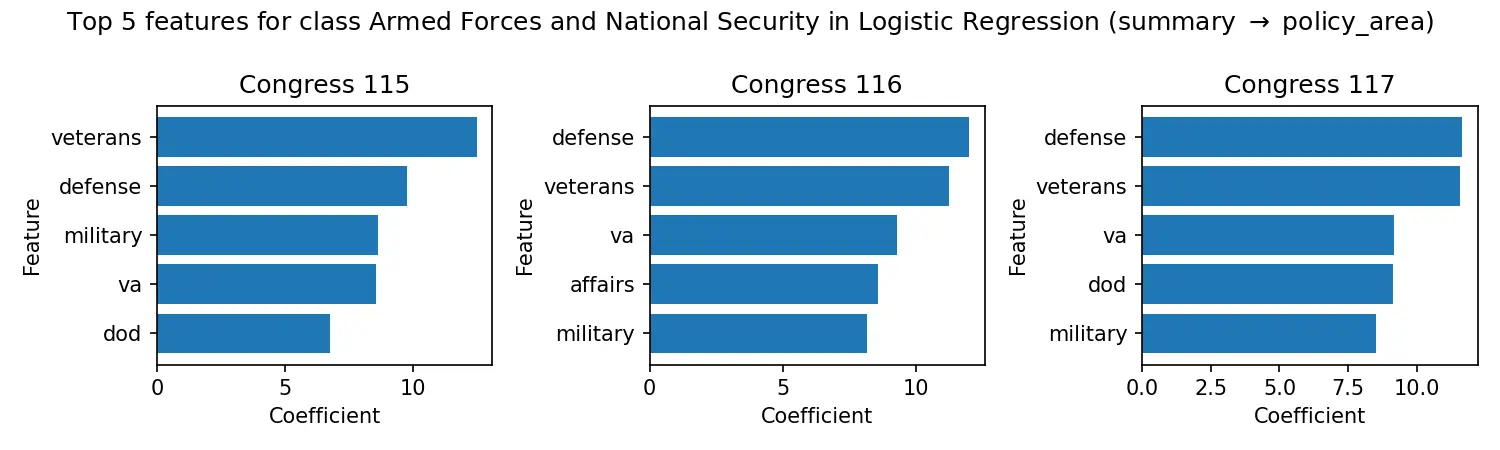
Top features for Armed Forces and National Security policy classification showing veterans, defense, military keywords

Classifying Congressional Bills with Machine Learning

Testing ML classification of congressional bills by policy area. Comparing Naive Bayes, Logistic Regression, and XGBoost …

Computational Social Science
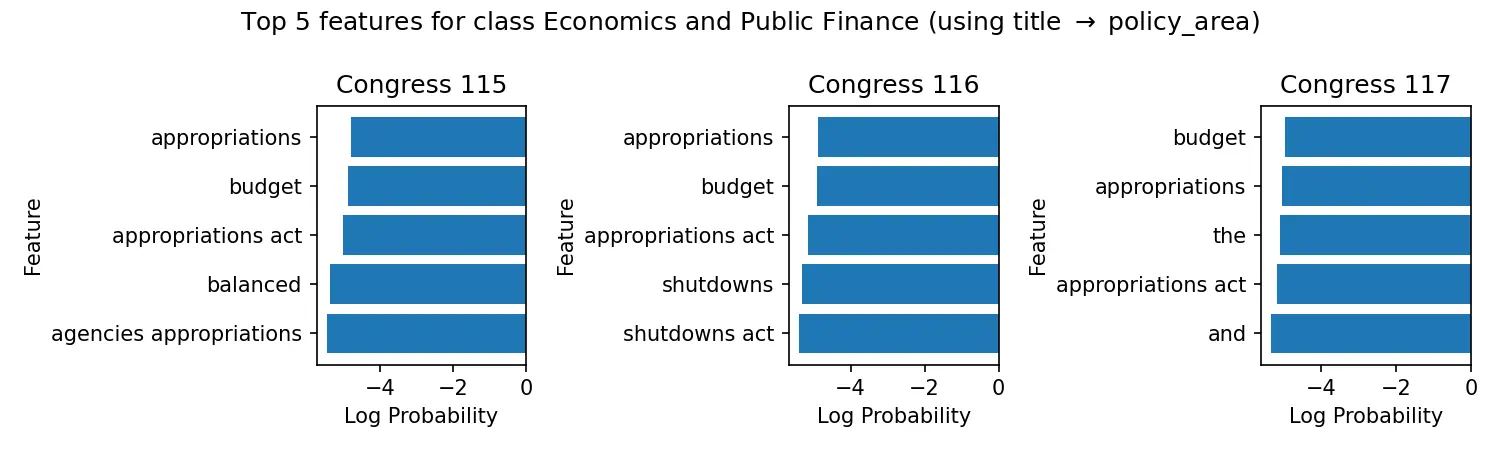
Top features for Economics and Public Finance policy classification across Congresses

How Does Congress Actually Work? Data from 15K Bills

What happens to bills in Congress? Analyzing 15K+ bills from the 117th Congress to understand legislative patterns, …

Computational Social Science
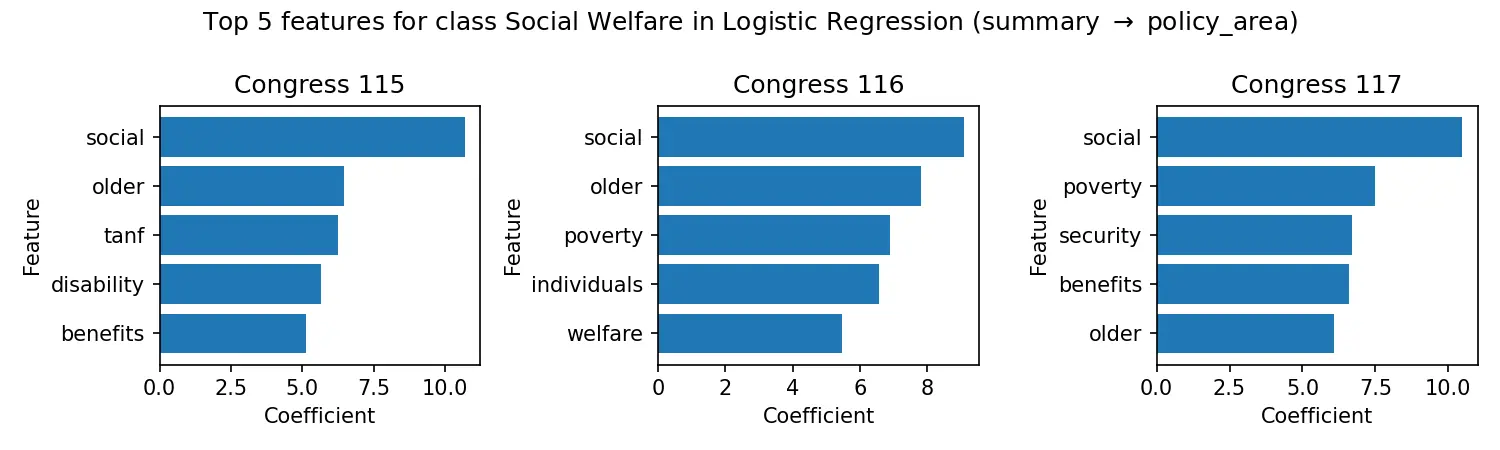
Top features for Social Welfare policy classification showing social, poverty, benefits keywords

Congressional Knowledge Graph & Policy Classification

A 47,000+ bill knowledge graph from Congress.gov with sponsor networks and 87% policy classification accuracy.