Natural Language Processing
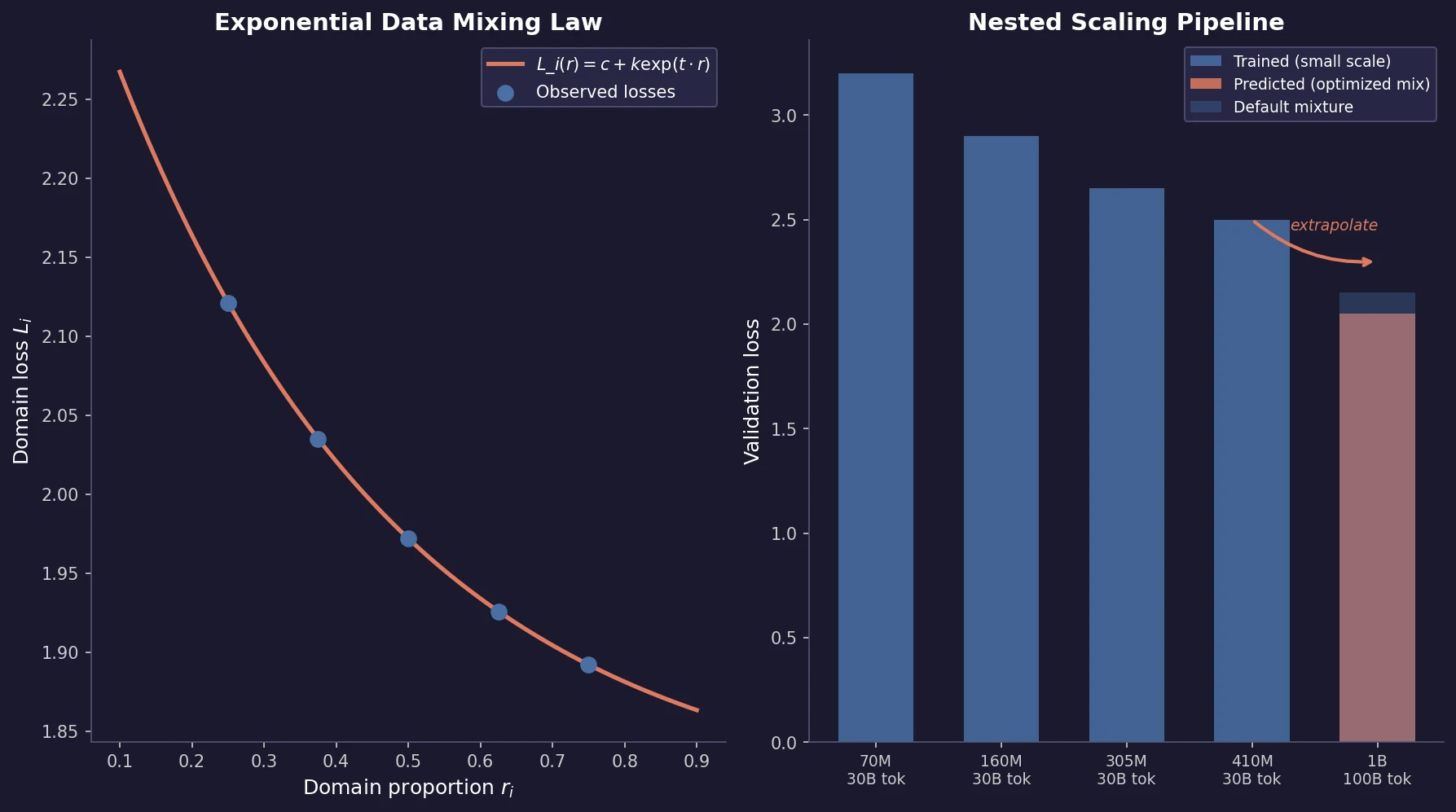
Diagram showing the three-step nested pipeline from small-scale training to large-model loss prediction across data mixtures

Data Mixing Laws for LM Pretraining Optimization

Ye et al. find that language model loss on each domain follows an exponential function of training mixture proportions. By nesting data mixing laws with scaling laws for steps and model size, small-scale experiments can predict and optimize mixtures for large models, achieving 48% training efficiency gains.
Natural Language Processing
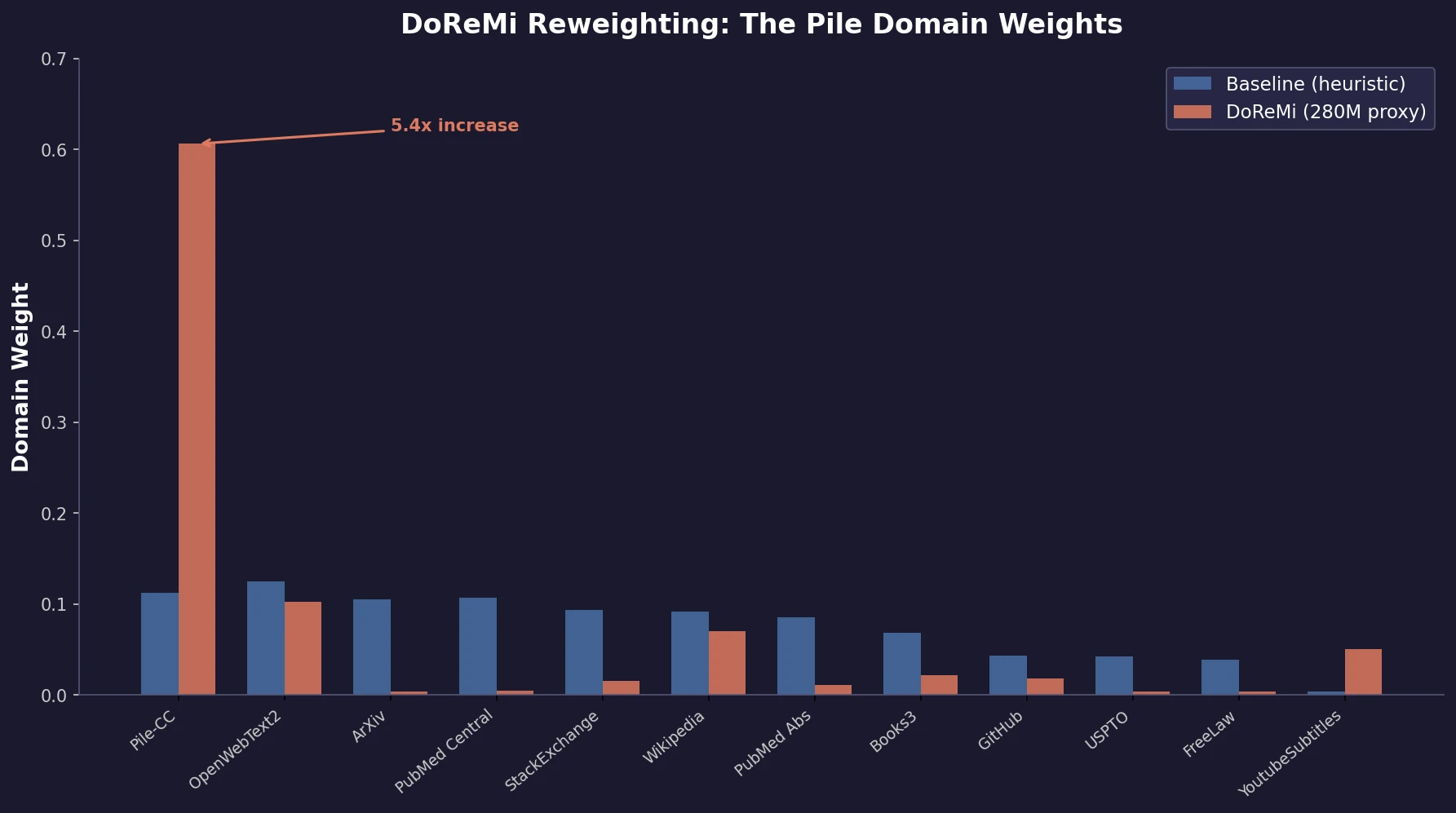
Bar chart comparing baseline and DoReMi domain weights across 12 Pile domains, showing Pile-CC upweighted 5.4x

DoReMi: Optimizing Data Mixtures for LM Pretraining

Xie et al. propose DoReMi, which trains a 280M proxy model using Group DRO to find optimal domain mixture weights, then uses those weights to train an 8B model 2.6x faster with 6.5% better downstream accuracy.

Natural Language Processing
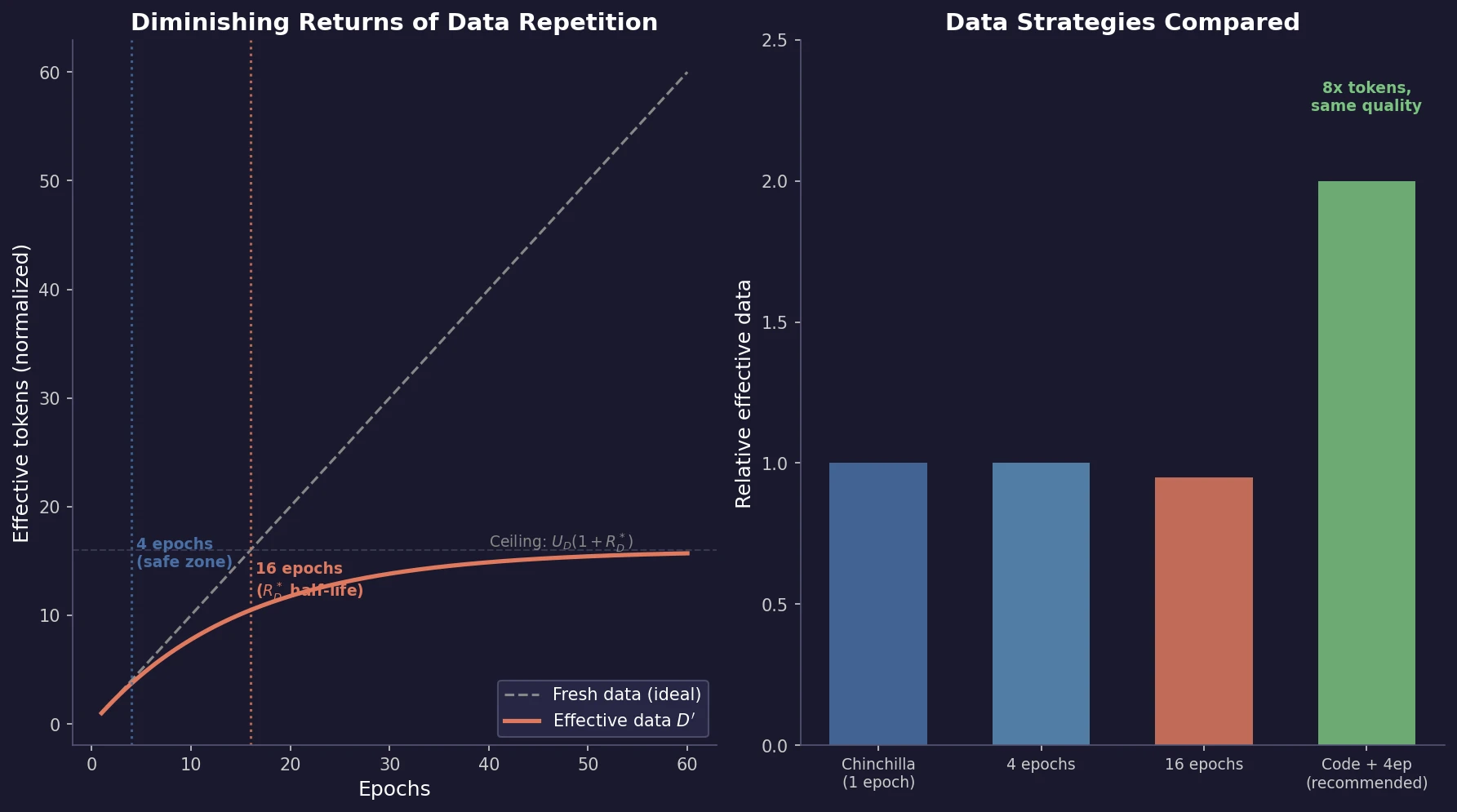
Chart showing effective data as a function of epochs with exponential decay, with the 4-epoch safe zone and 16-epoch half-life marked

Scaling Data-Constrained Language Models

Muennighoff et al. train 400+ models to study how data repetition affects scaling. They propose a data-constrained scaling law with exponential decay for repeated tokens, finding that up to 4 epochs have negligible impact on loss, returns diminish around 16 epochs, and code augmentation provides a 2x effective data boost.

Natural Language Processing
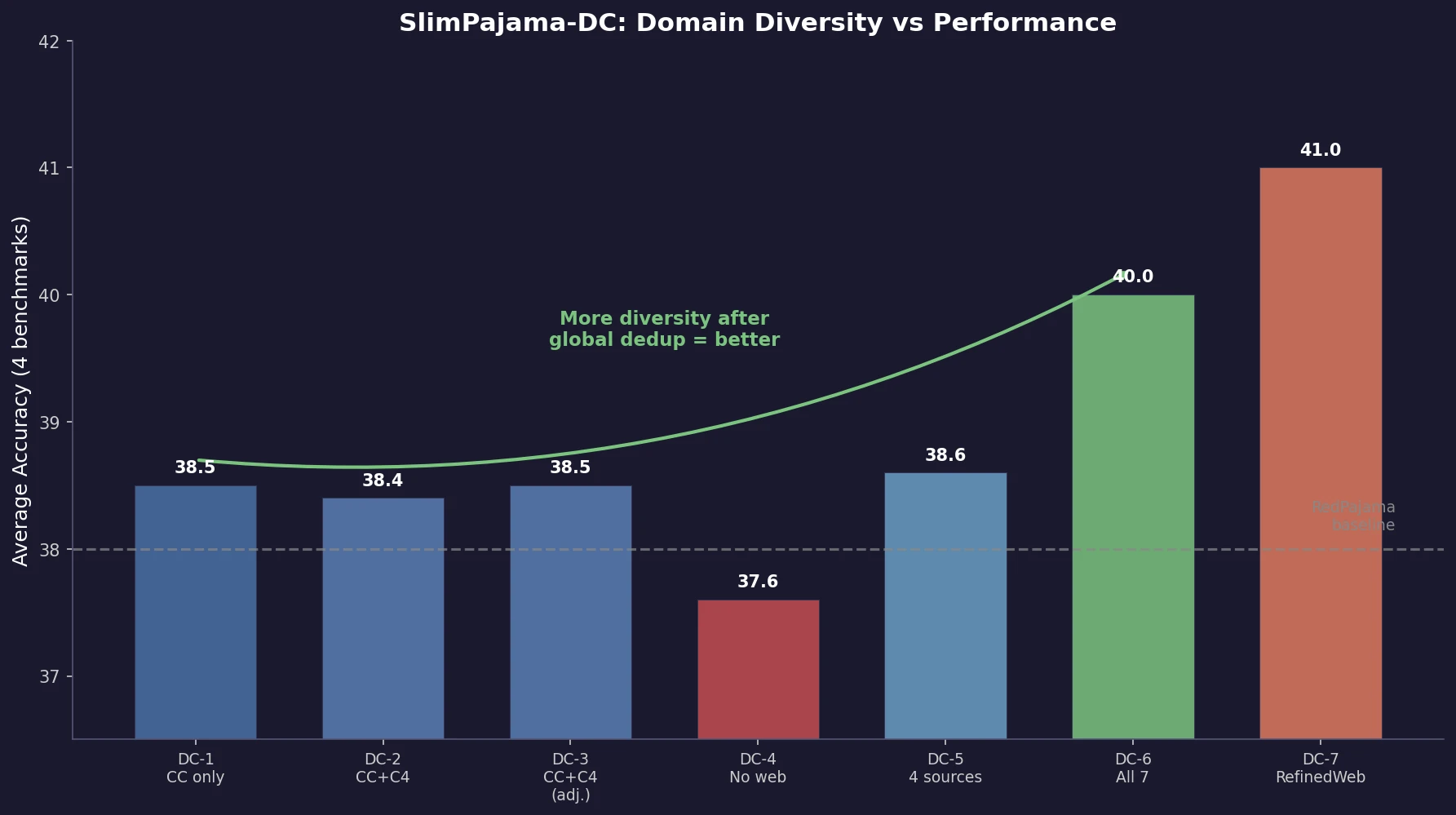
Bar chart comparing average benchmark accuracy across seven domain combination configurations showing diversity improves performance

SlimPajama-DC: Data Combinations for LLM Training

Shen et al. empirically analyze how different domain combinations and deduplication strategies in the SlimPajama dataset affect 1.3B model performance. Global deduplication across sources outperforms local deduplication, and increasing domain diversity consistently improves average accuracy, with findings transferring to 7B scale.

Natural Language Processing
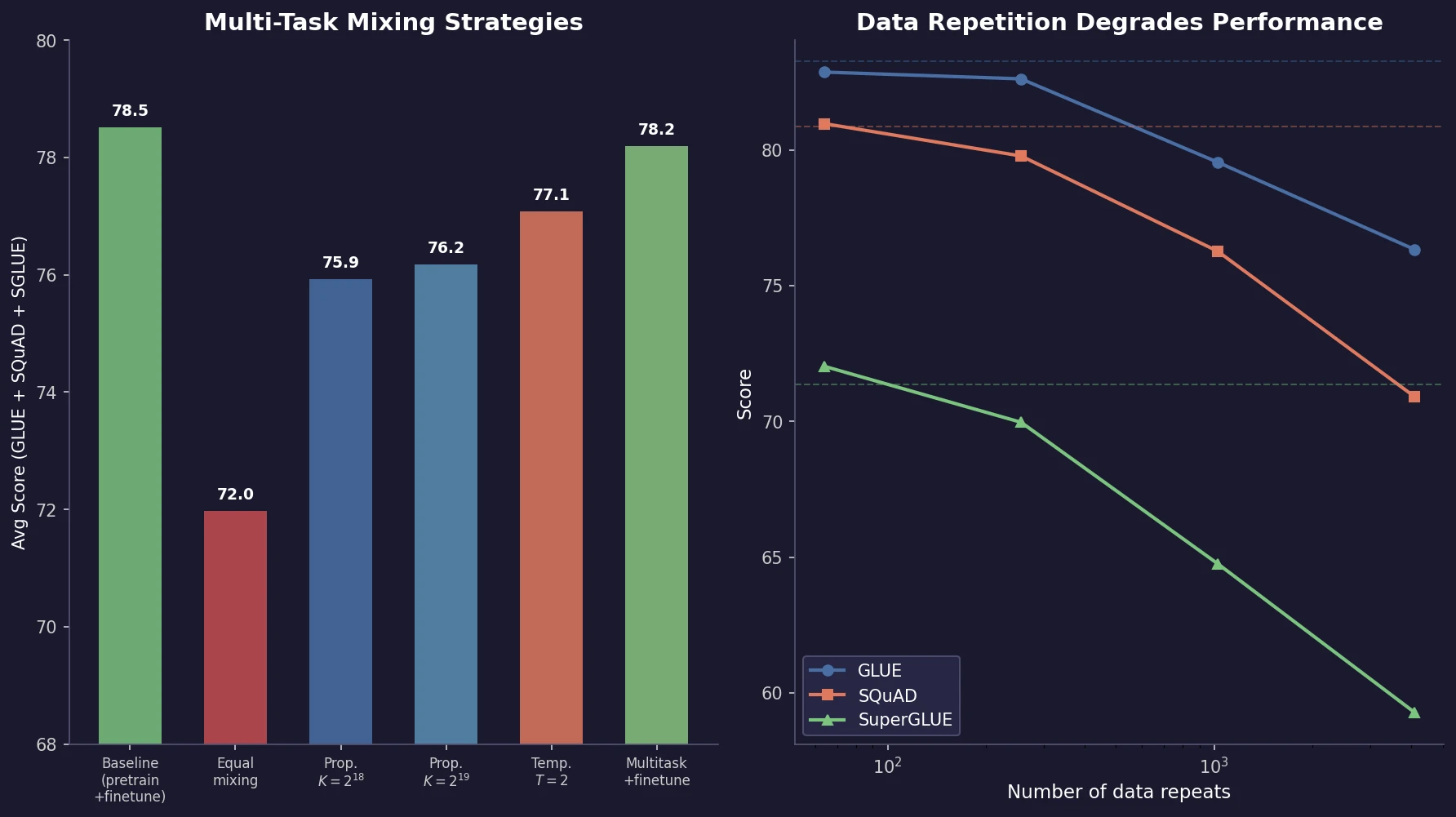
Table comparing multi-task mixing strategies showing examples-proportional and temperature-scaled mixing results

T5: Exploring Transfer Learning Limits

Raffel et al. introduce T5, a unified text-to-text framework for NLP transfer learning. Through systematic ablation of architectures, pre-training objectives, datasets, and multi-task mixing strategies, they identify best practices and scale to 11B parameters, achieving state-of-the-art results across multiple benchmarks.

Natural Language Processing
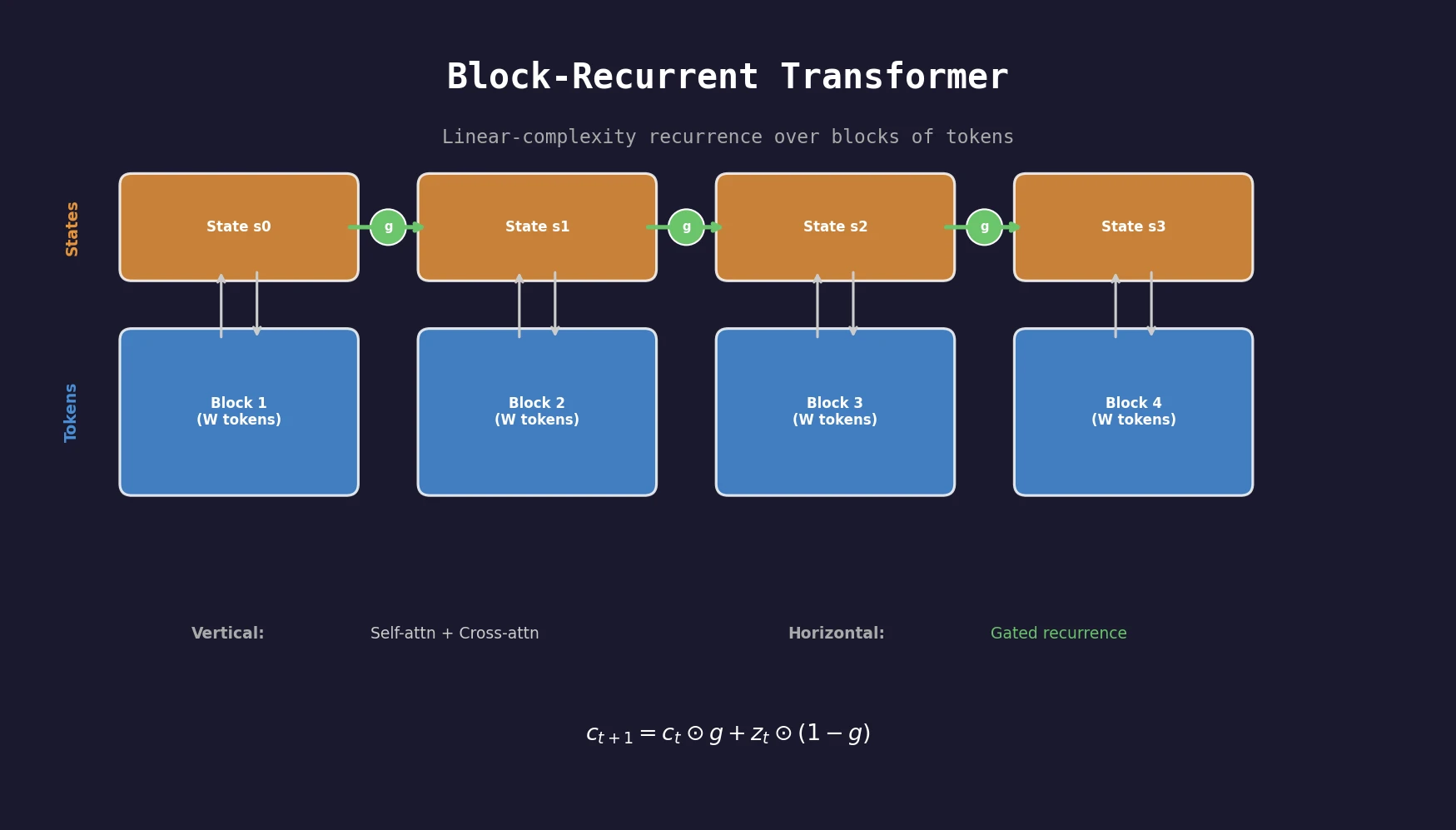
Diagram showing block-recurrent transformer architecture with vertical and horizontal processing directions

Block-Recurrent Transformers for Long Sequences

A transformer architecture that applies a recurrent cell over blocks of tokens, achieving linear complexity in sequence length while outperforming Transformer-XL baselines on PG19, arXiv, and GitHub datasets.

Natural Language Processing
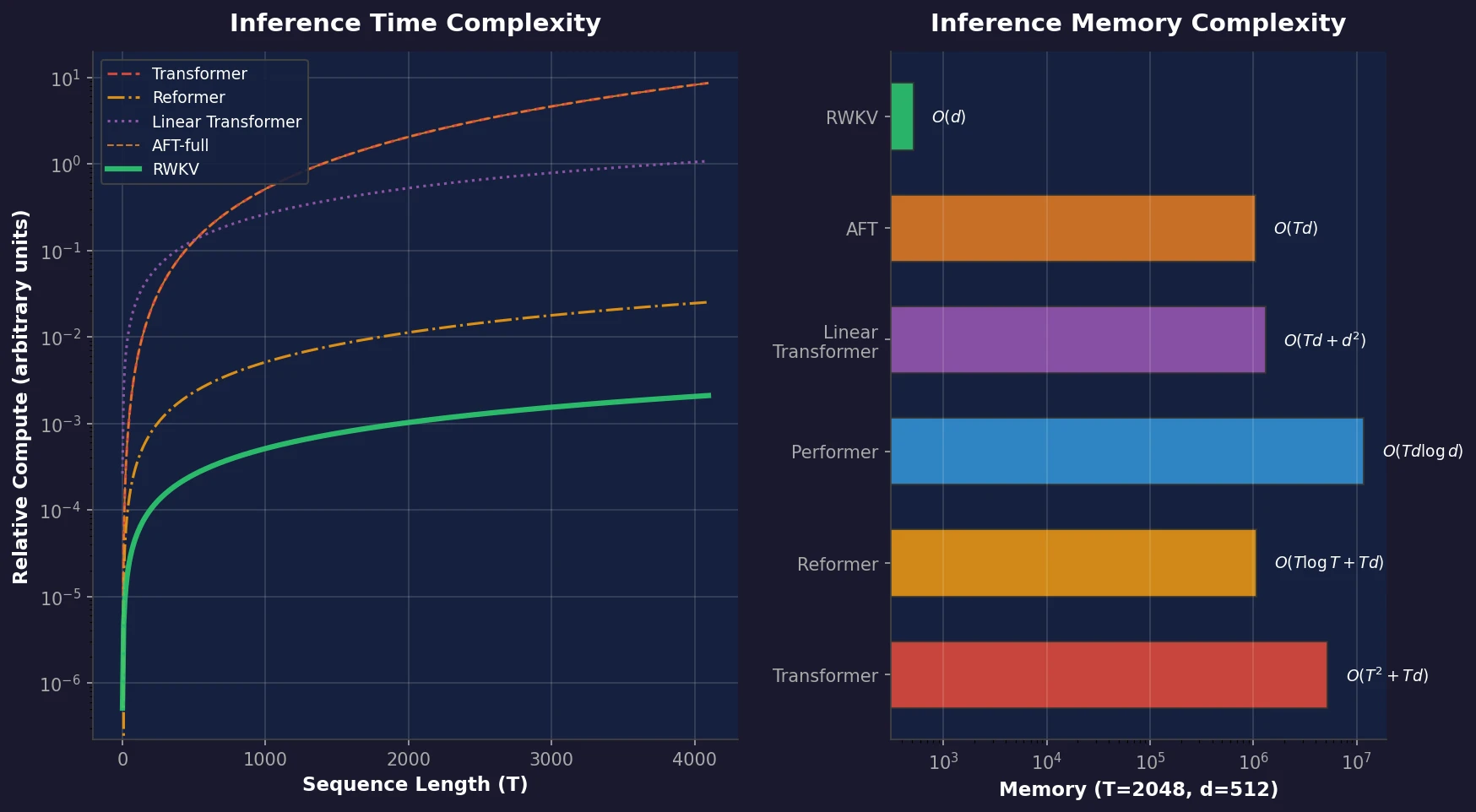
Diagram comparing RWKV inference complexity against Transformers and efficient variants

RWKV: Linear-Cost RNN with Transformer Training

RWKV is a novel sequence model that achieves transformer-level performance while maintaining linear time and constant memory complexity during inference, scaled up to 14 billion parameters.

Computational Chemistry
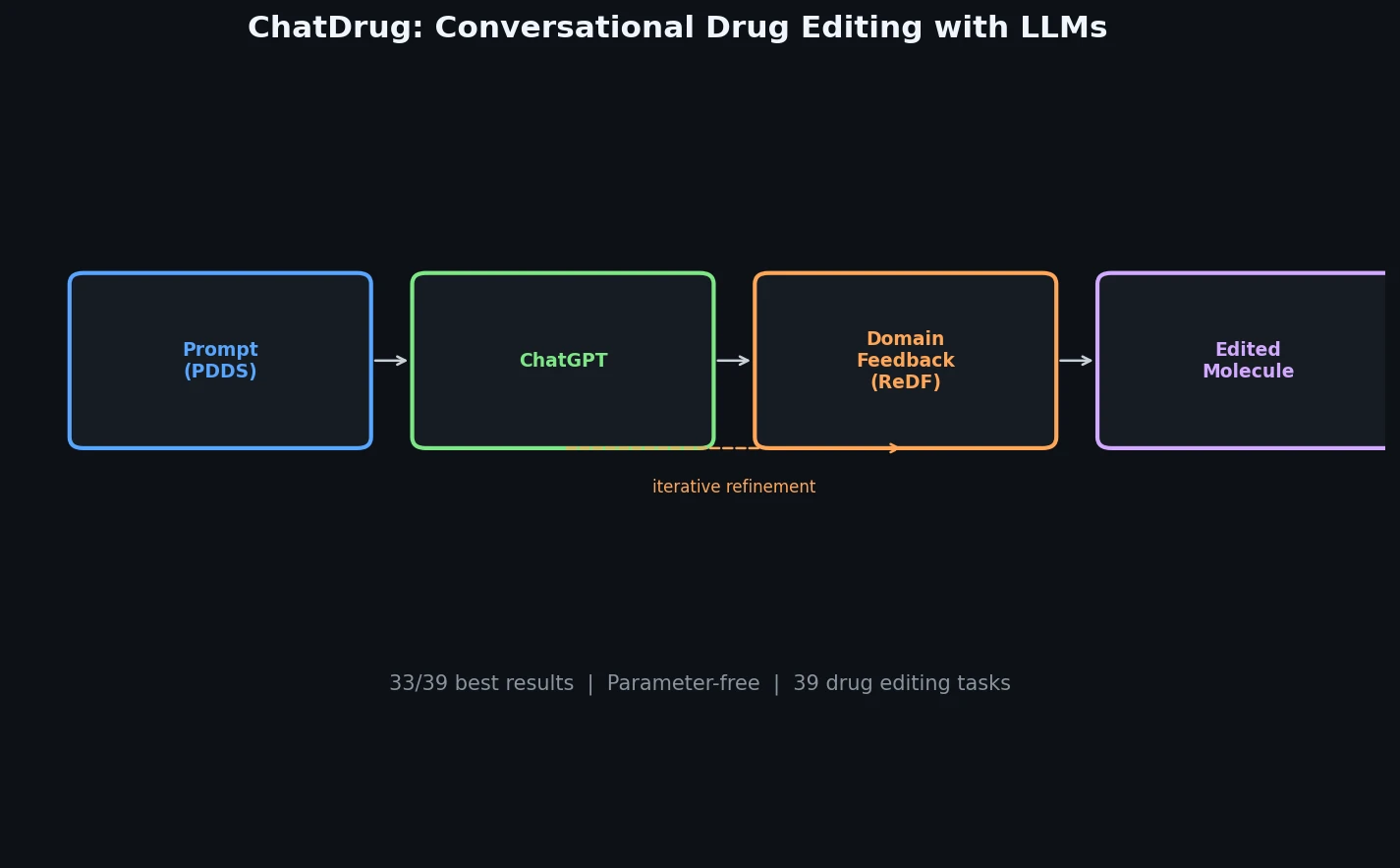
ChatDrug pipeline from prompt design through ChatGPT to domain feedback and edited molecule output

ChatDrug: Conversational Drug Editing with ChatGPT

ChatDrug is a parameter-free framework that combines ChatGPT with retrieval-augmented domain feedback and iterative conversation to edit drugs across small molecules, peptides, and proteins.

Computational Chemistry
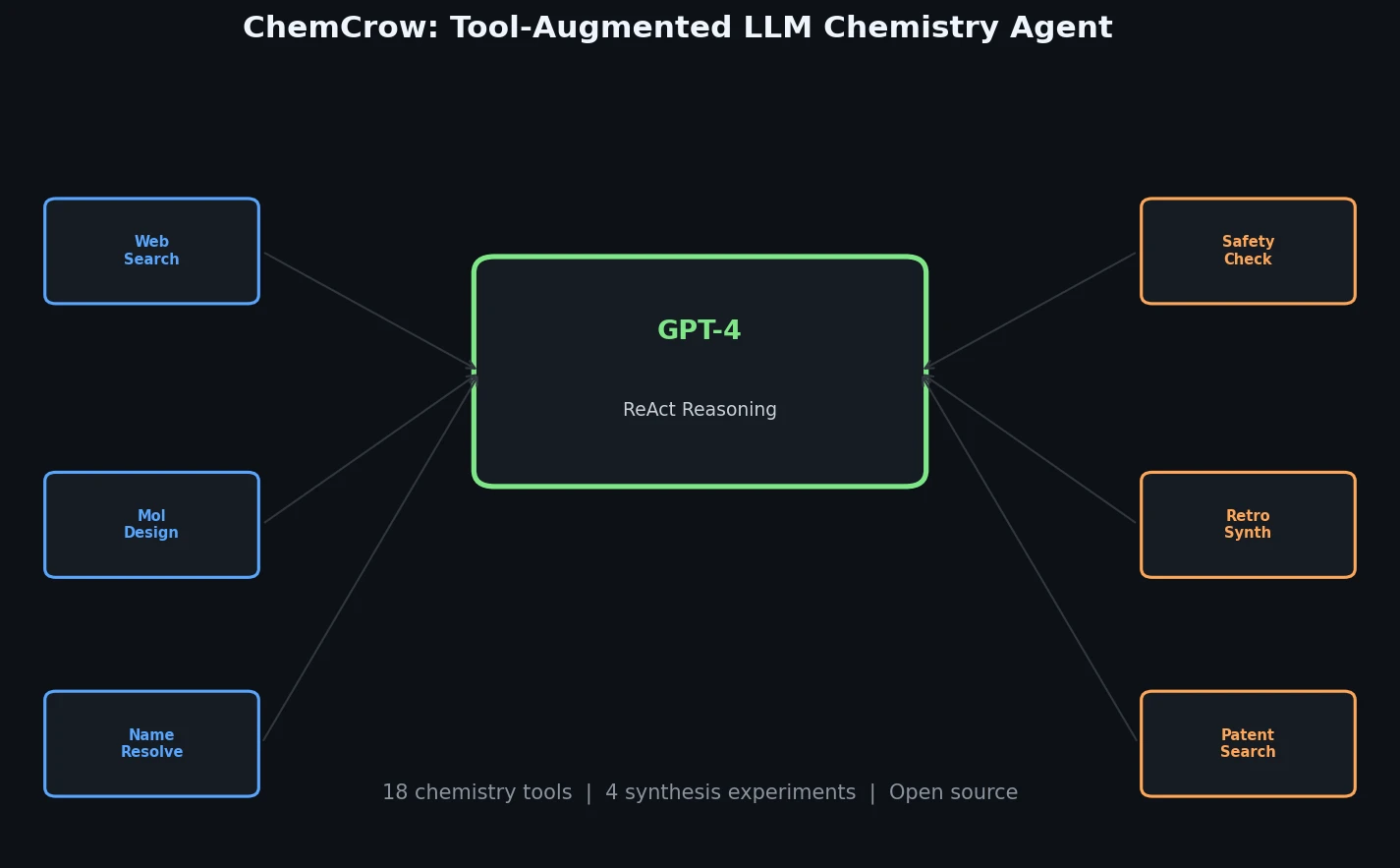
ChemCrow architecture with GPT-4 central planner connected to 18 chemistry tools via ReAct reasoning

ChemCrow: Augmenting LLMs with 18 Chemistry Tools

ChemCrow augments GPT-4 with 18 chemistry tools to autonomously plan and execute syntheses, discover novel chromophores, and solve diverse chemical reasoning tasks.

Computational Chemistry
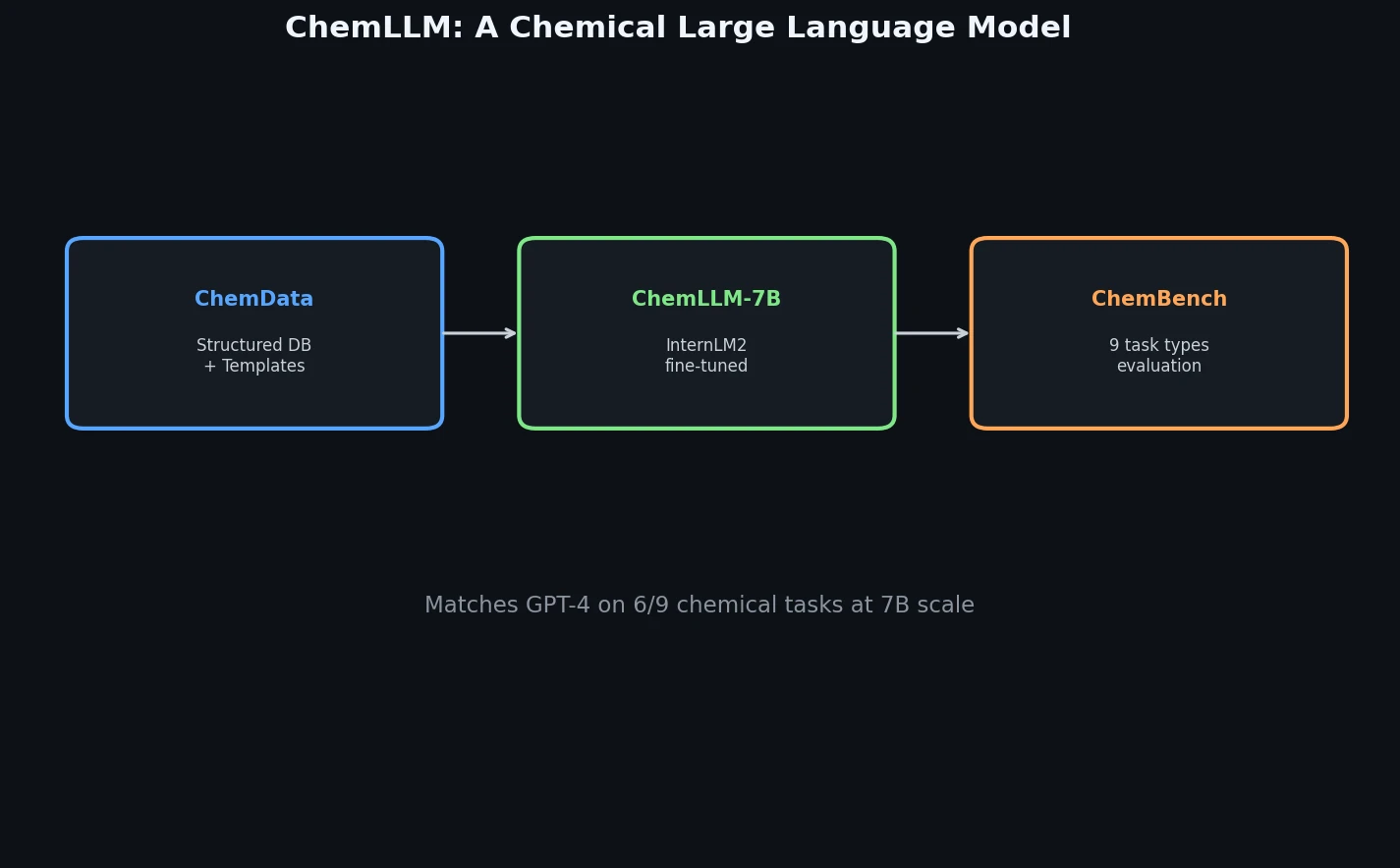
ChemLLM pipeline from ChemData structured templates through fine-tuned InternLM2 to ChemBench evaluation

ChemLLM: A Chemical Large Language Model Framework

ChemLLM presents a comprehensive framework for chemistry-specific language modeling, including a 7M-sample instruction tuning dataset (ChemData), a 4,100-question benchmark (ChemBench), and a two-stage fine-tuned model that matches GPT-4 on core chemical tasks.

Computational Chemistry
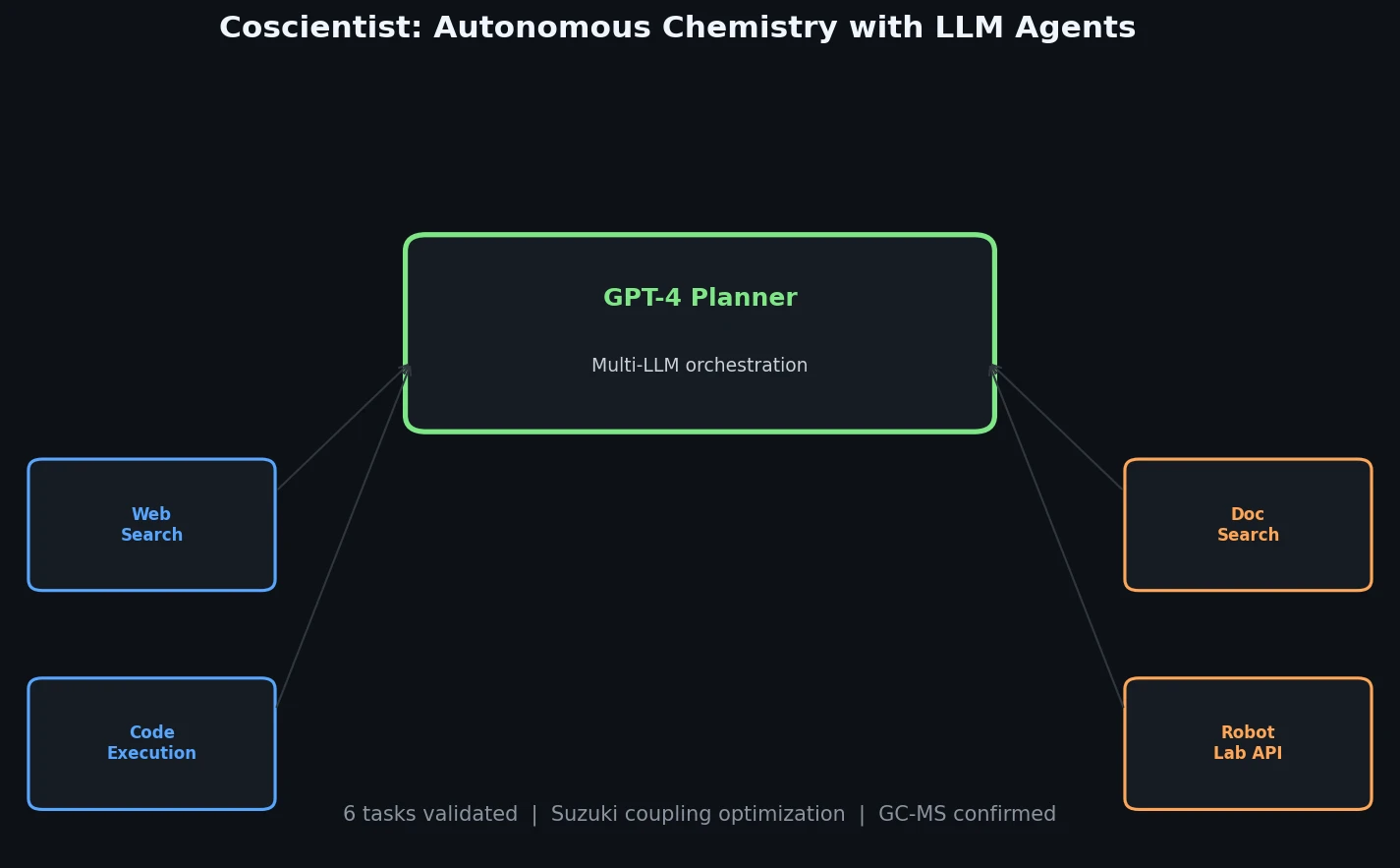
Coscientist architecture with GPT-4 planner orchestrating web search, code execution, document search, and robot lab API modules

Coscientist: Autonomous Chemistry with LLM Agents

Introduces Coscientist, a GPT-4-driven AI system that autonomously designs and executes chemical experiments using web search, code execution, and robotic lab automation.

Computational Chemistry
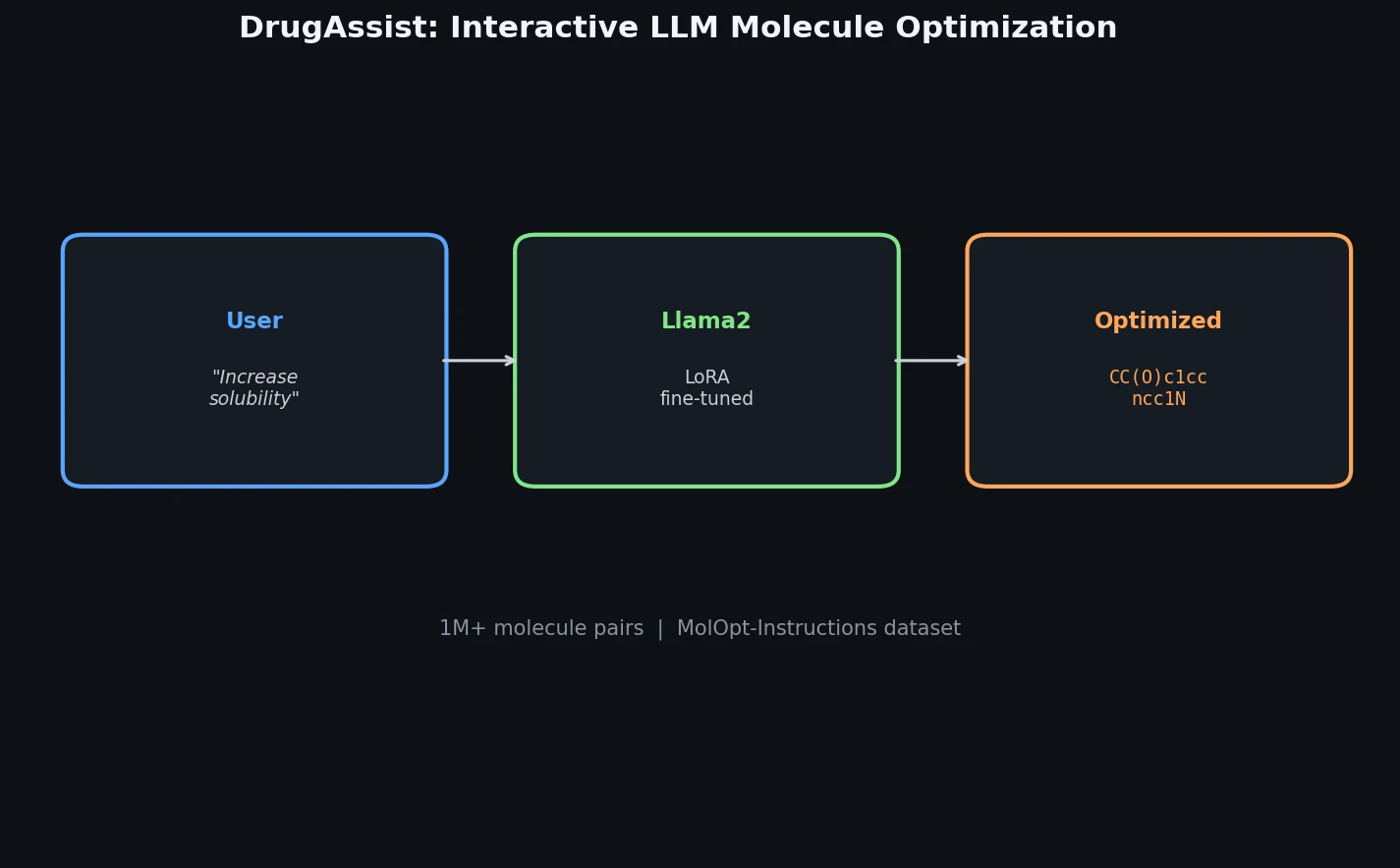
DrugAssist workflow from user instruction through LoRA fine-tuned Llama2 to optimized molecule output

DrugAssist: Interactive LLM Molecule Optimization

DrugAssist fine-tunes Llama2-7B-Chat on over one million molecule pairs for interactive, dialogue-based molecule optimization across six molecular properties.