Molecular Generation
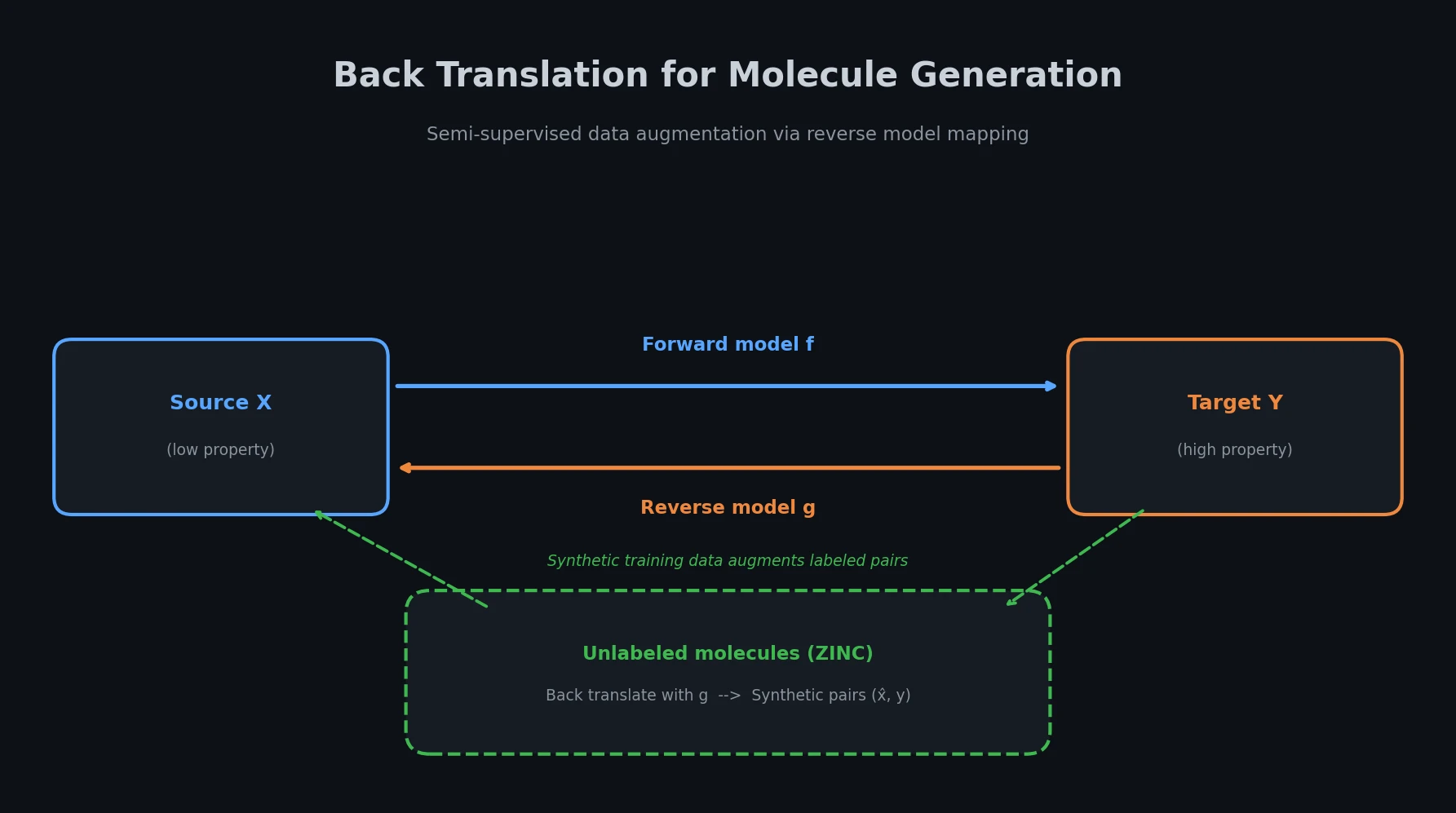
Diagram showing back translation workflow with forward and reverse models mapping between source and target molecular domains, augmented by unlabeled ZINC molecules

Back Translation for Semi-Supervised Molecule Generation

Adapts back translation from NLP to molecular generation, using unlabeled molecules from ZINC to create synthetic training pairs that improve property optimization and retrosynthesis prediction across Transformer and graph-based architectures.
Molecular Generation
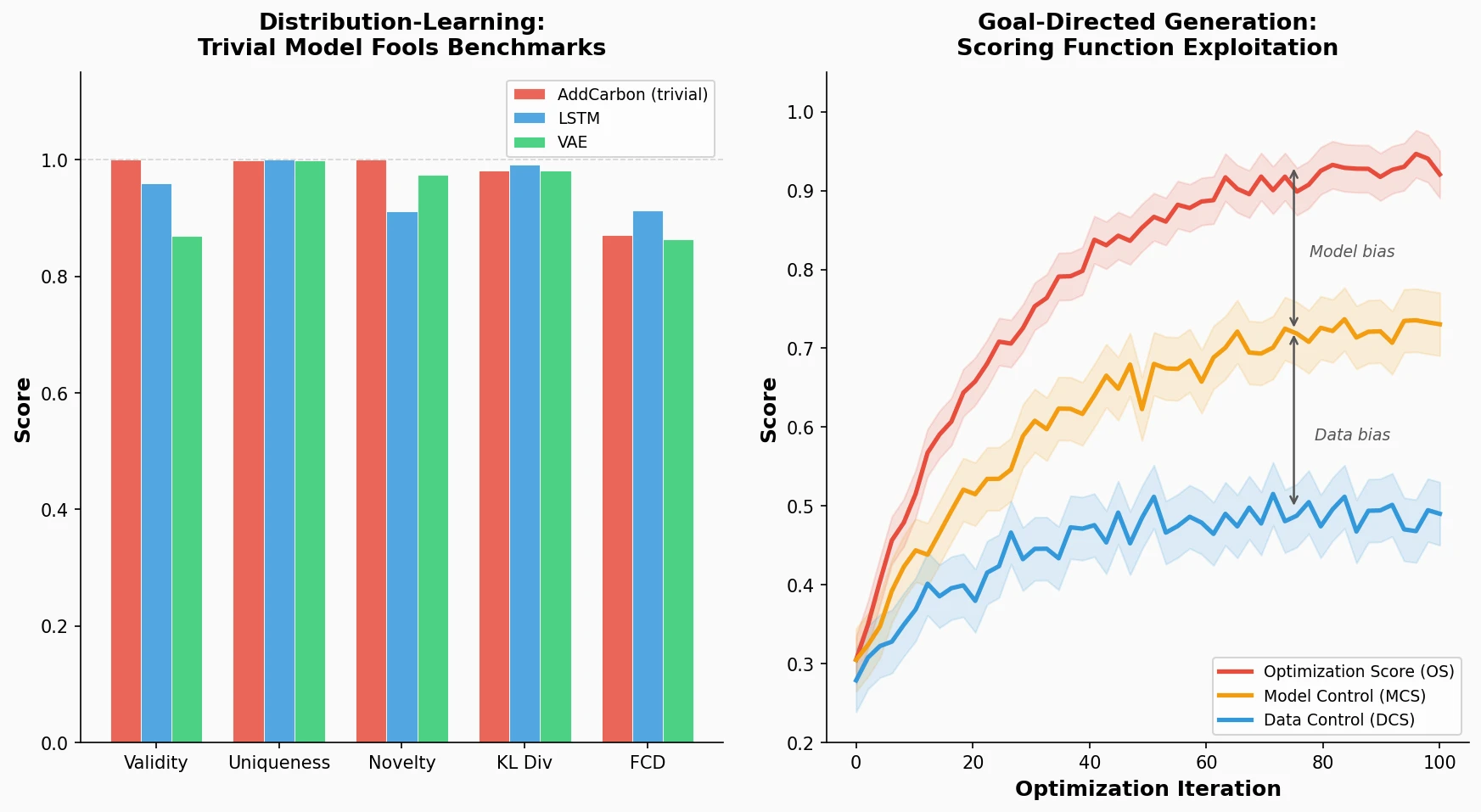
Diagram showing divergence between optimization score and control scores during molecular optimization

Failure Modes in Molecule Generation & Optimization

Identifies failure modes in molecular generative models, showing that trivial edits fool distribution-learning benchmarks and that ML-based scoring functions introduce exploitable model-specific and data-specific biases during goal-directed optimization.

Molecular Generation
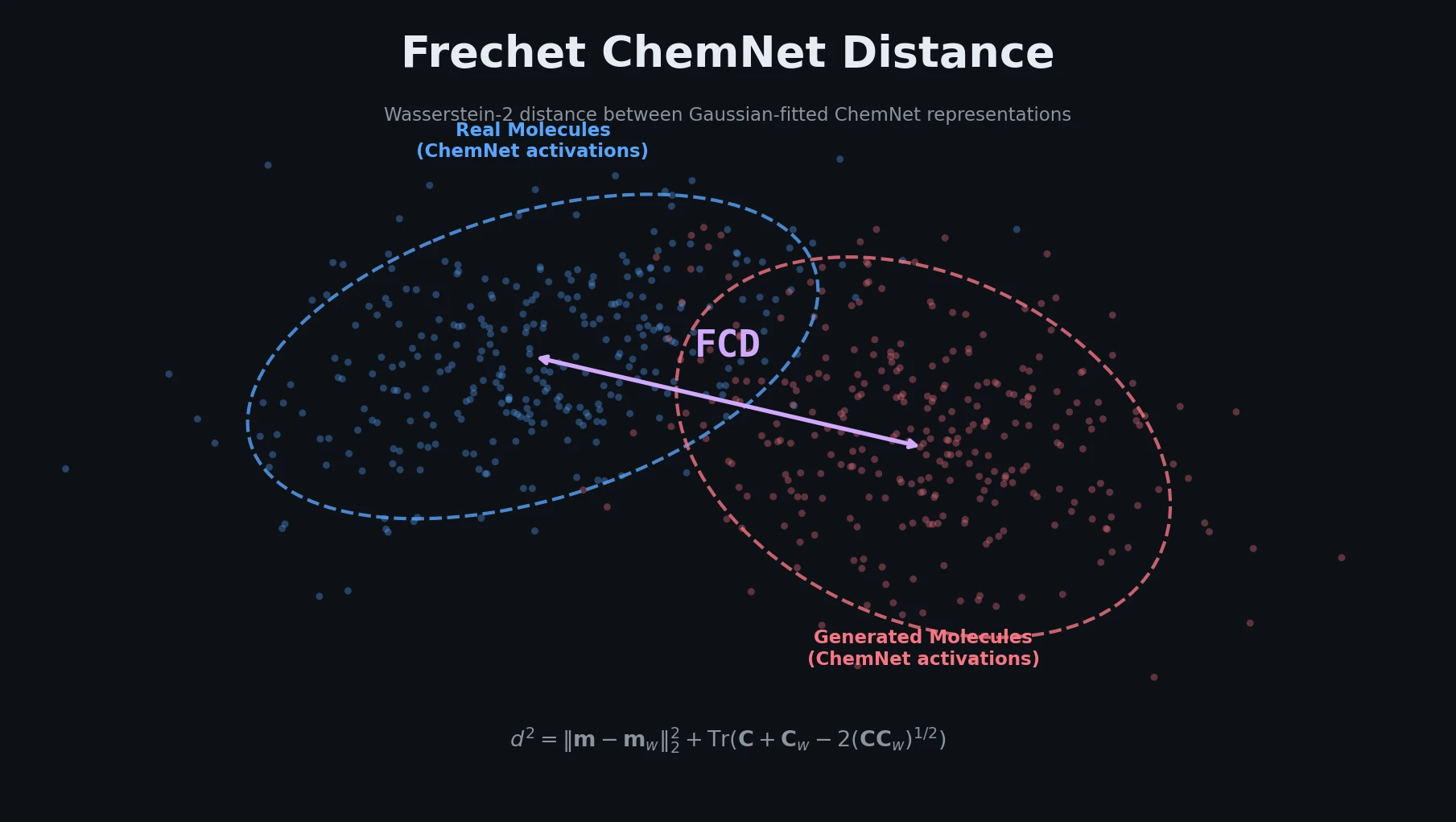
Two Gaussian distributions in ChemNet activation space with the Frechet distance shown between them

Frechet ChemNet Distance for Molecular Generation

Introduces the Frechet ChemNet Distance (FCD), a single metric that captures chemical validity, biological relevance, and diversity of generated molecules by comparing distributions of learned ChemNet representations.

Molecular Generation
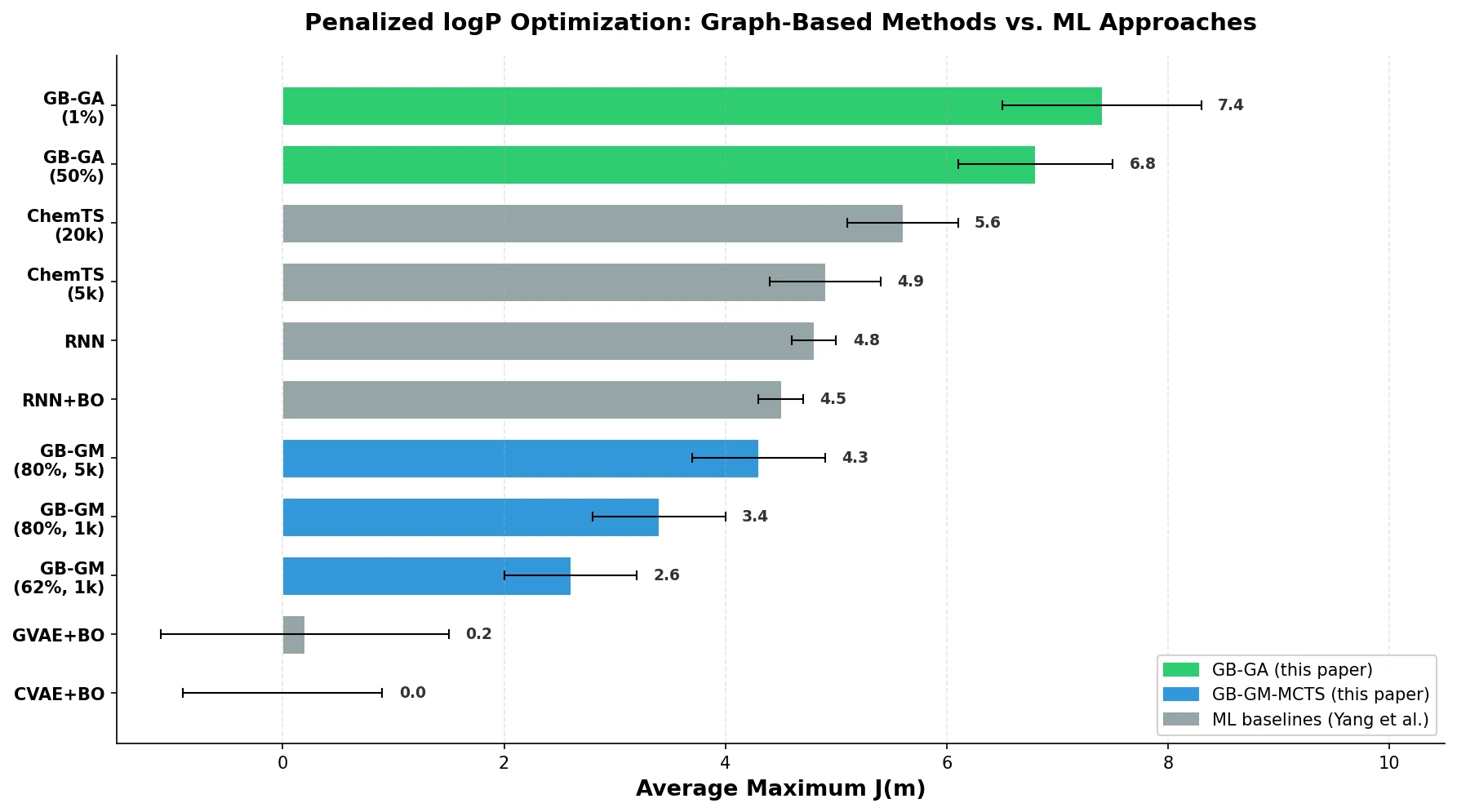
Comparison bar chart showing penalized logP scores for GB-GA, GB-GM-MCTS, and ML-based molecular optimization methods

Graph-Based GA and MCTS Generative Model for Molecules

A graph-based genetic algorithm (GB-GA) and a graph-based generative model with Monte Carlo tree search (GB-GM-MCTS) for molecular optimization that match or outperform ML-based generative approaches while being orders of magnitude faster.

Molecular Generation
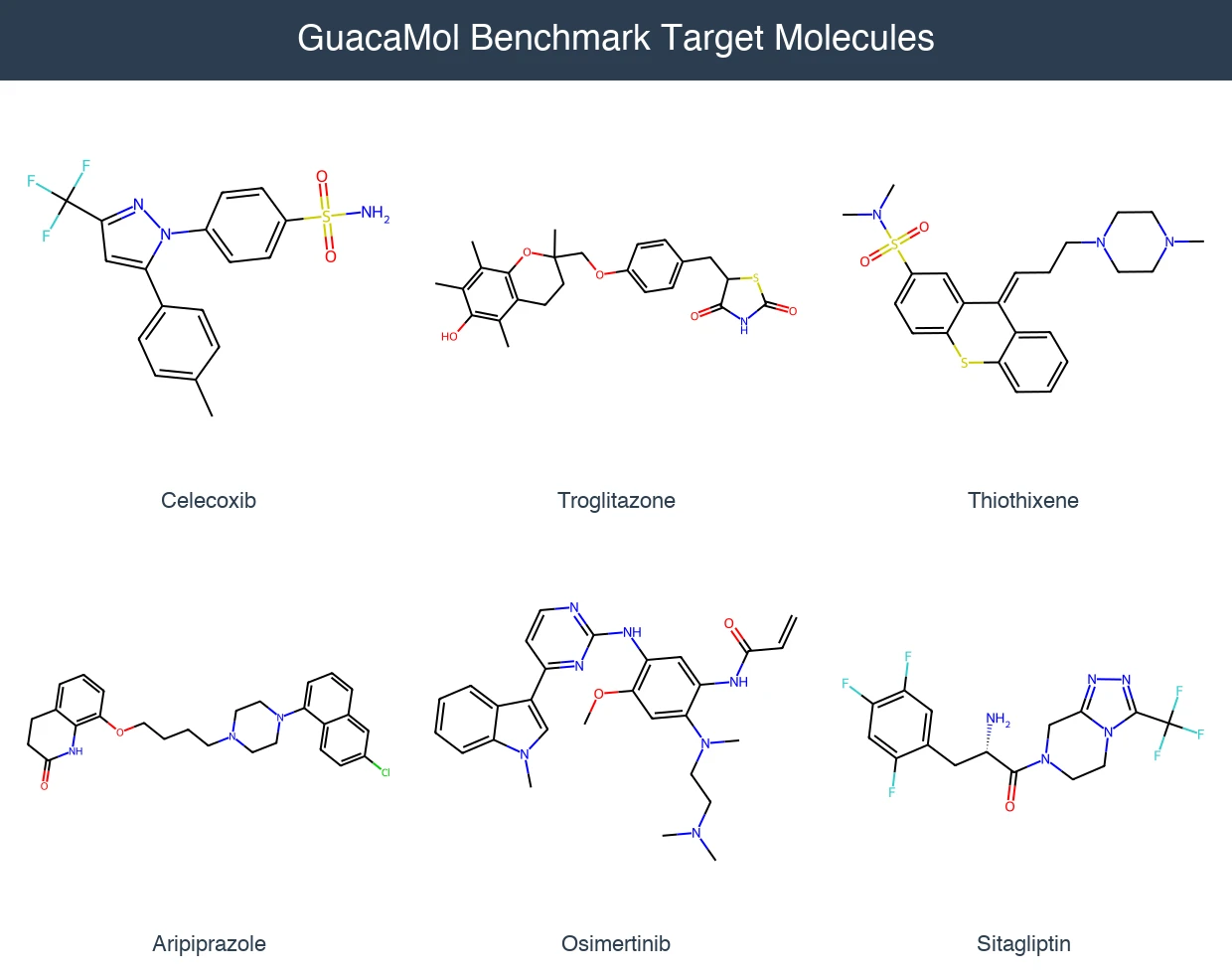
Grid of six GuacaMol benchmark target molecules: Celecoxib, Troglitazone, Thiothixene, Aripiprazole, Osimertinib, and Sitagliptin

GuacaMol: Benchmarking Models for De Novo Molecular Design

GuacaMol provides an open-source benchmarking framework with 5 distribution-learning and 20 goal-directed tasks to standardize evaluation of de novo molecular design models.

Molecular Generation
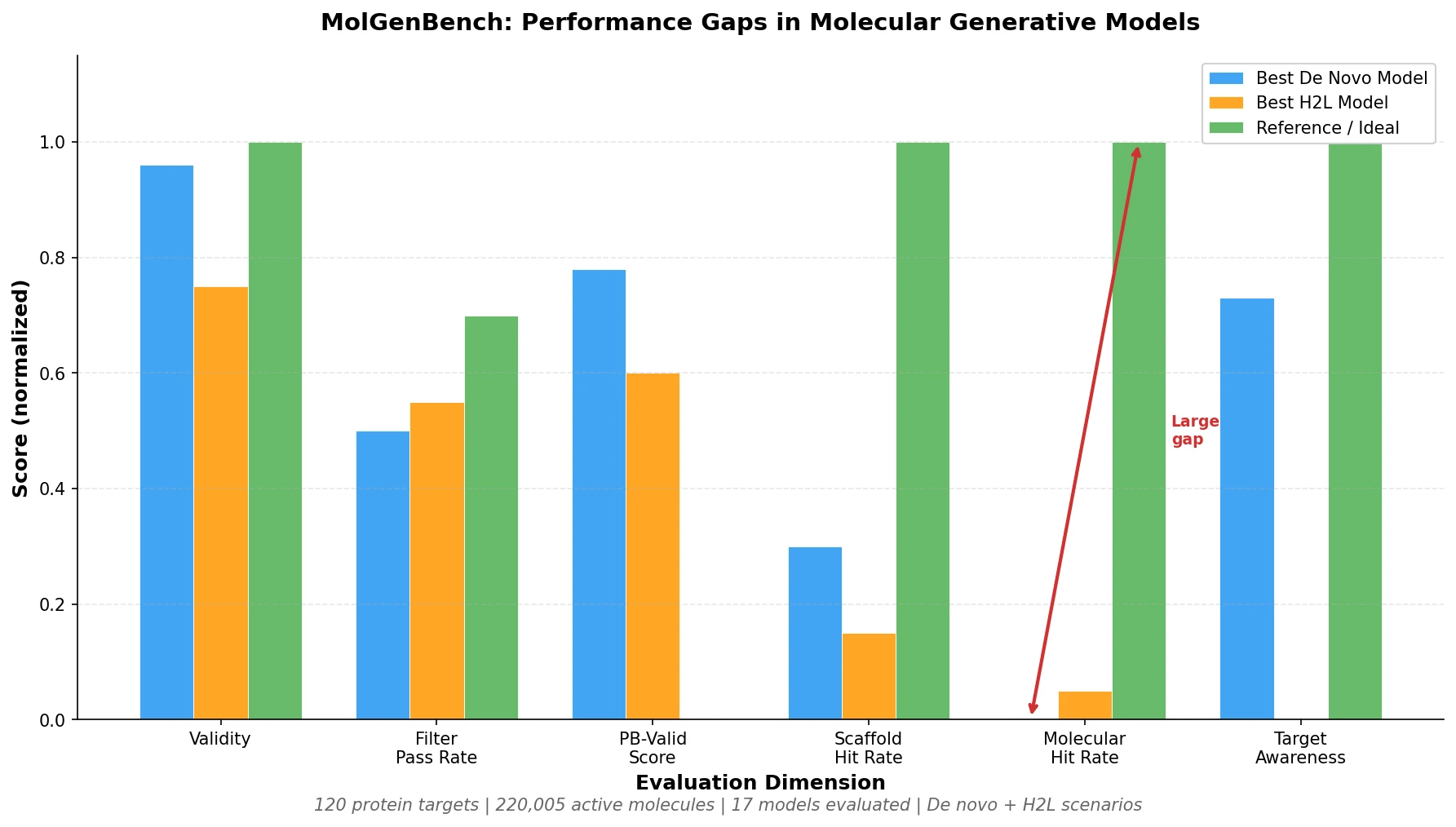
Bar chart comparing molecular generative model performance across six evaluation dimensions including validity, safety, and hit rates

MolGenBench: Benchmarking Molecular Generative Models

MolGenBench introduces a comprehensive benchmark for evaluating molecular generative models in realistic drug discovery settings, spanning de novo design and hit-to-lead optimization across 120 protein targets with 220,005 experimentally validated actives.

Molecular Generation
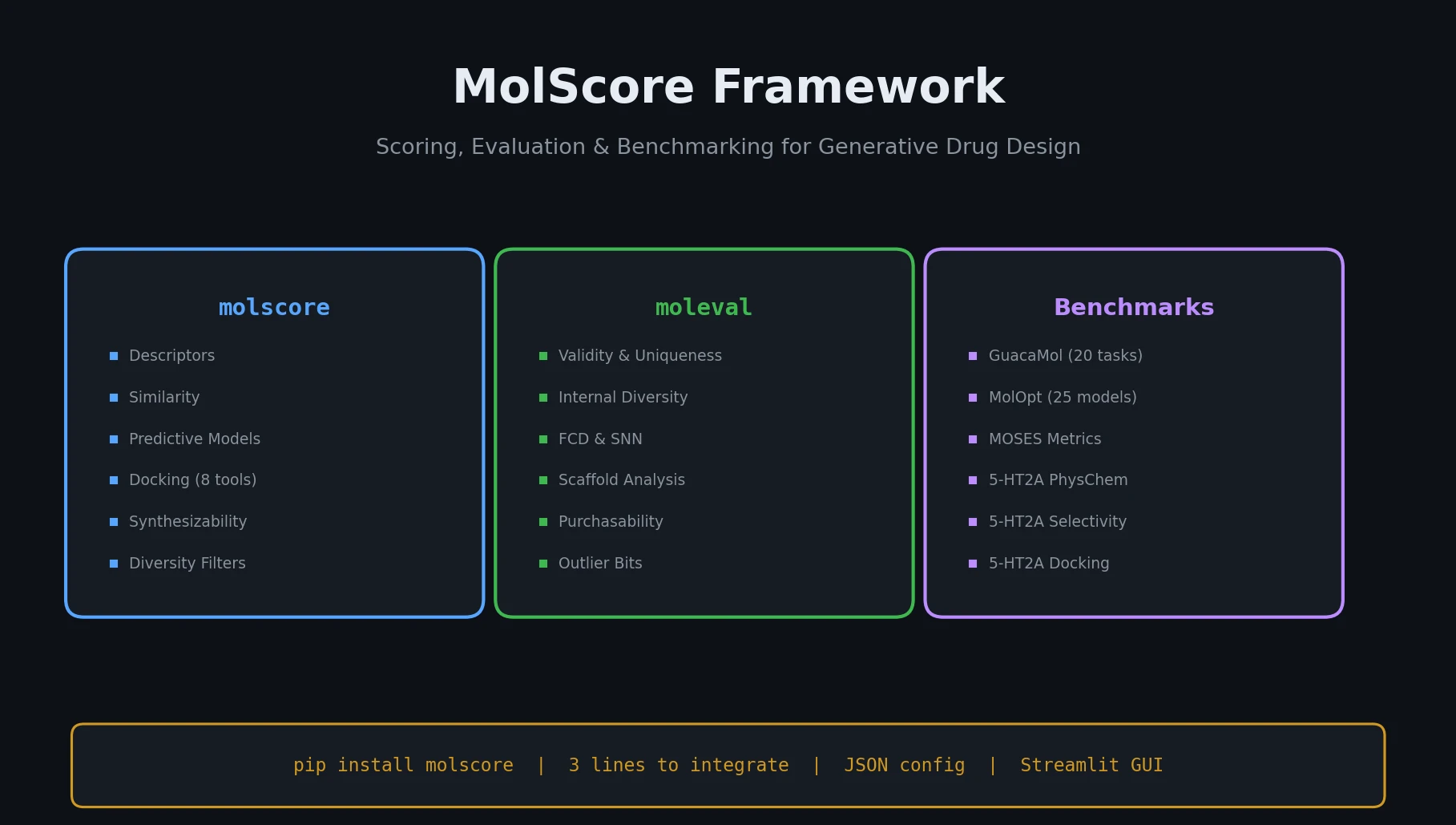
Diagram showing MolScore framework components: scoring functions, evaluation metrics, and benchmark modes

MolScore: Scoring and Benchmarking for Drug Design

MolScore is an open-source framework that unifies scoring functions, evaluation metrics, and benchmarks for generative molecular design, with configurable objectives and GUI support.

Predictive Chemistry
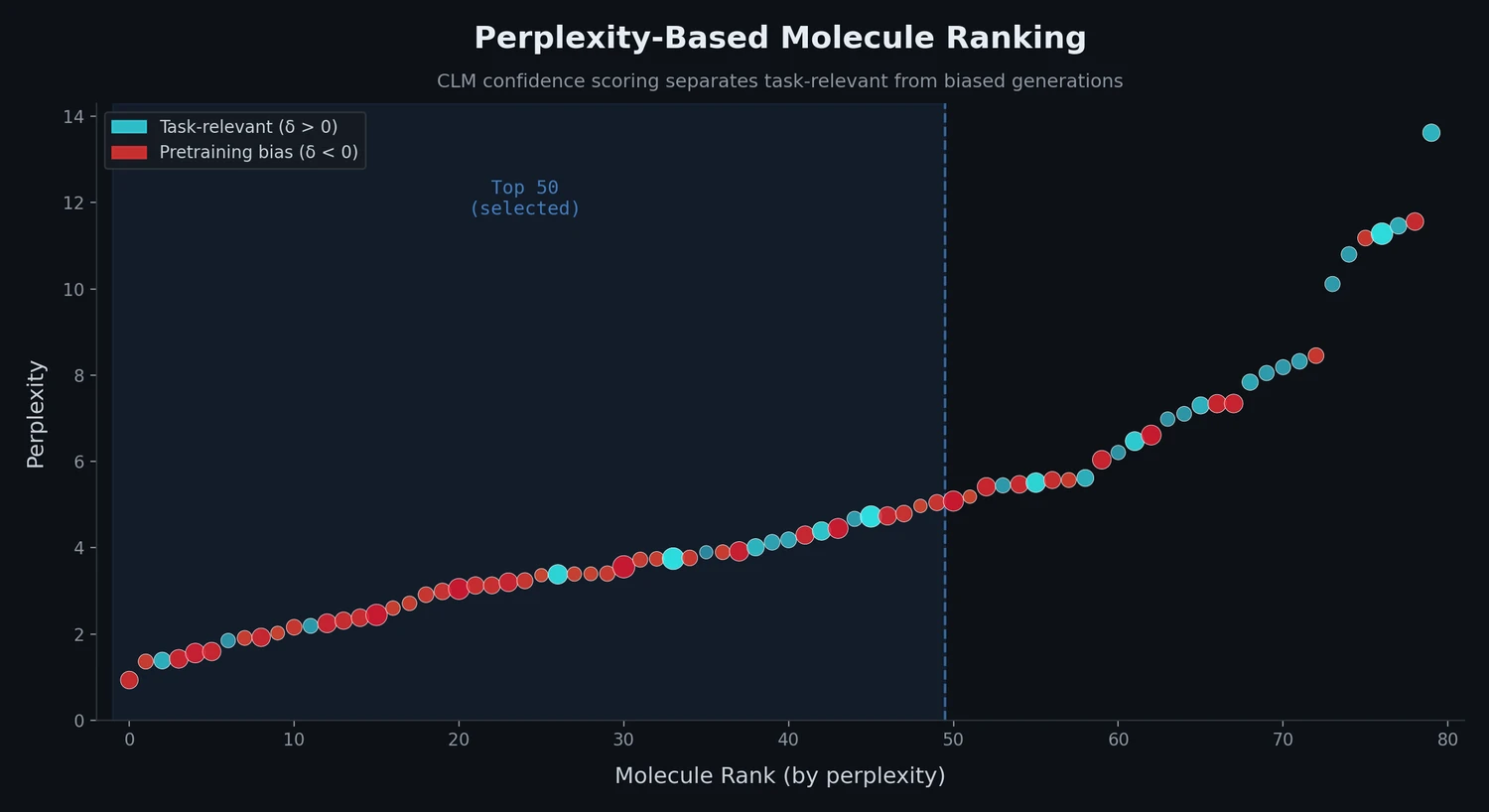
Scatter plot showing molecules ranked by perplexity score with color coding for task-relevant (positive delta) versus pretraining-biased (negative delta) generations

Perplexity for Molecule Ranking and CLM Bias Detection

This study applies perplexity, a model-intrinsic metric from NLP, to rank de novo molecular designs generated by SMILES-based chemical language models and introduces a delta score to detect pretraining bias in transfer-learned CLMs.

Molecular Generation
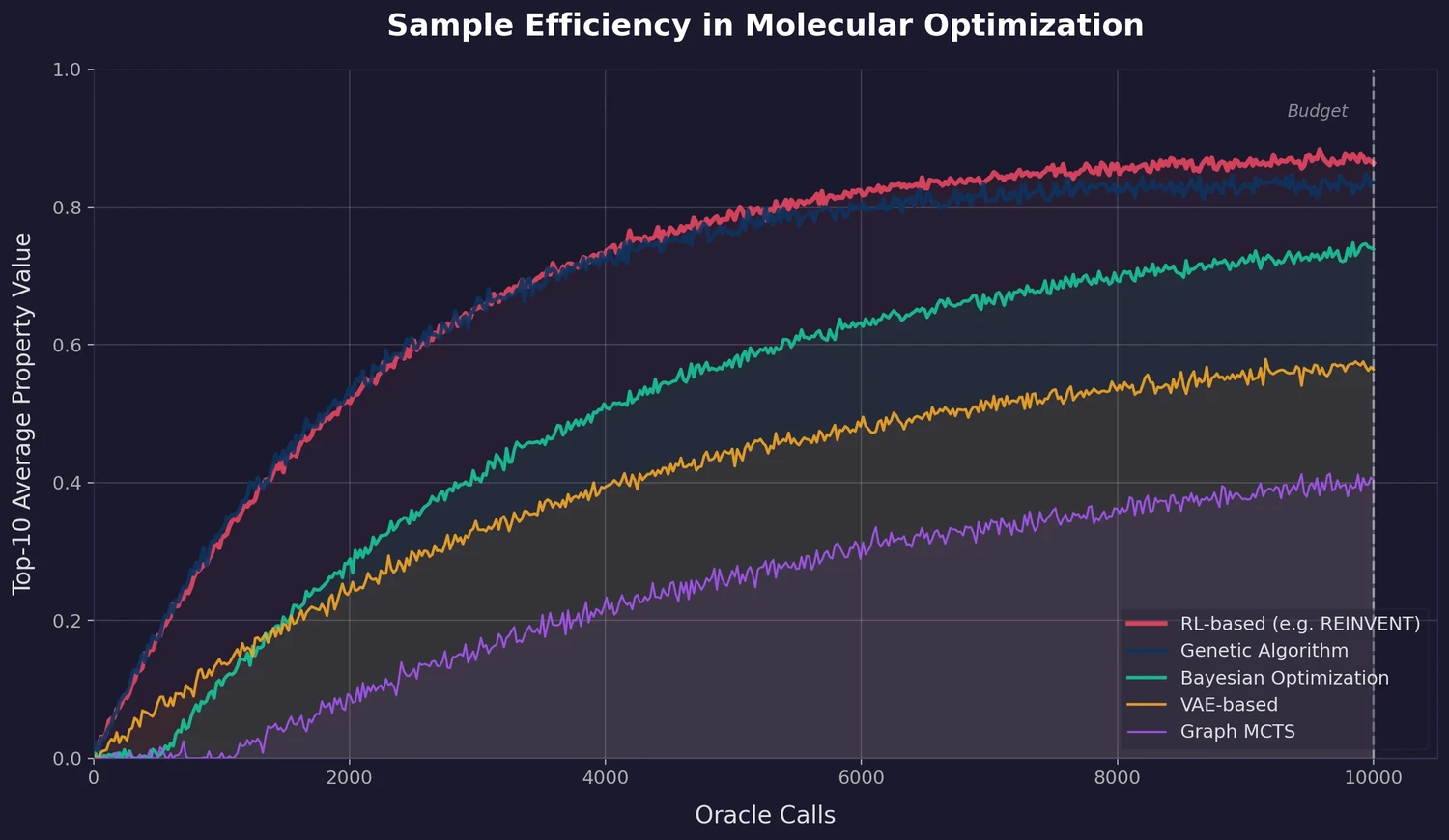
Sample efficiency curves showing different molecular optimization algorithm families converging at different rates under a fixed oracle budget

PMO: Benchmarking Sample-Efficient Molecular Design

A large-scale benchmark of 25 molecular optimization methods on 23 oracles under constrained oracle budgets, showing that sample efficiency is a critical and often neglected dimension of evaluation.

Molecular Generation
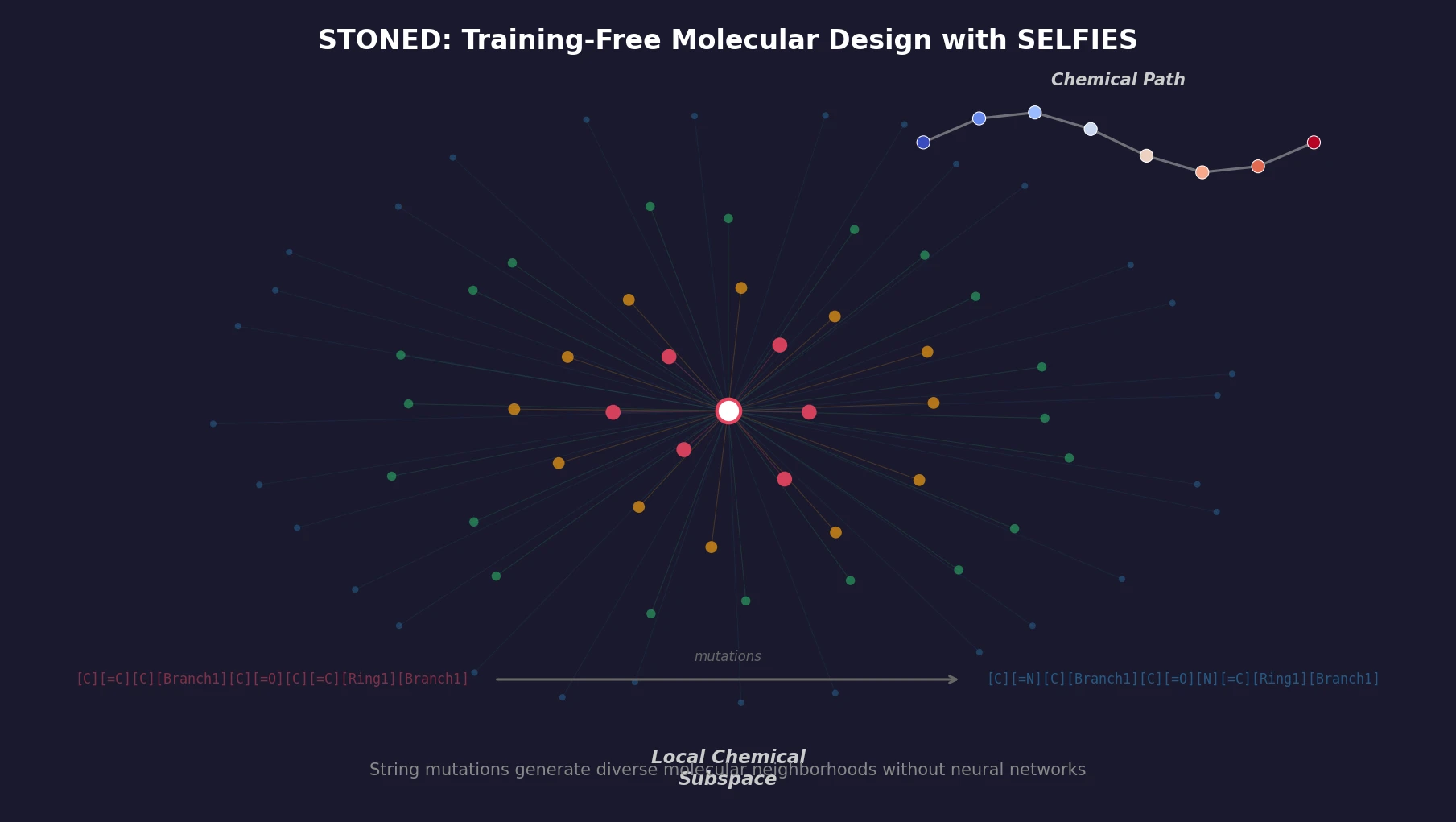
Visualization of STONED algorithm generating a local chemical subspace around a seed molecule through SELFIES string mutations, with a chemical path shown between two endpoints

STONED: Training-Free Molecular Design with SELFIES

STONED introduces simple string manipulation algorithms on SELFIES for molecular design, achieving competitive results with deep generative models while requiring no training data or GPU resources.

Molecular Generation
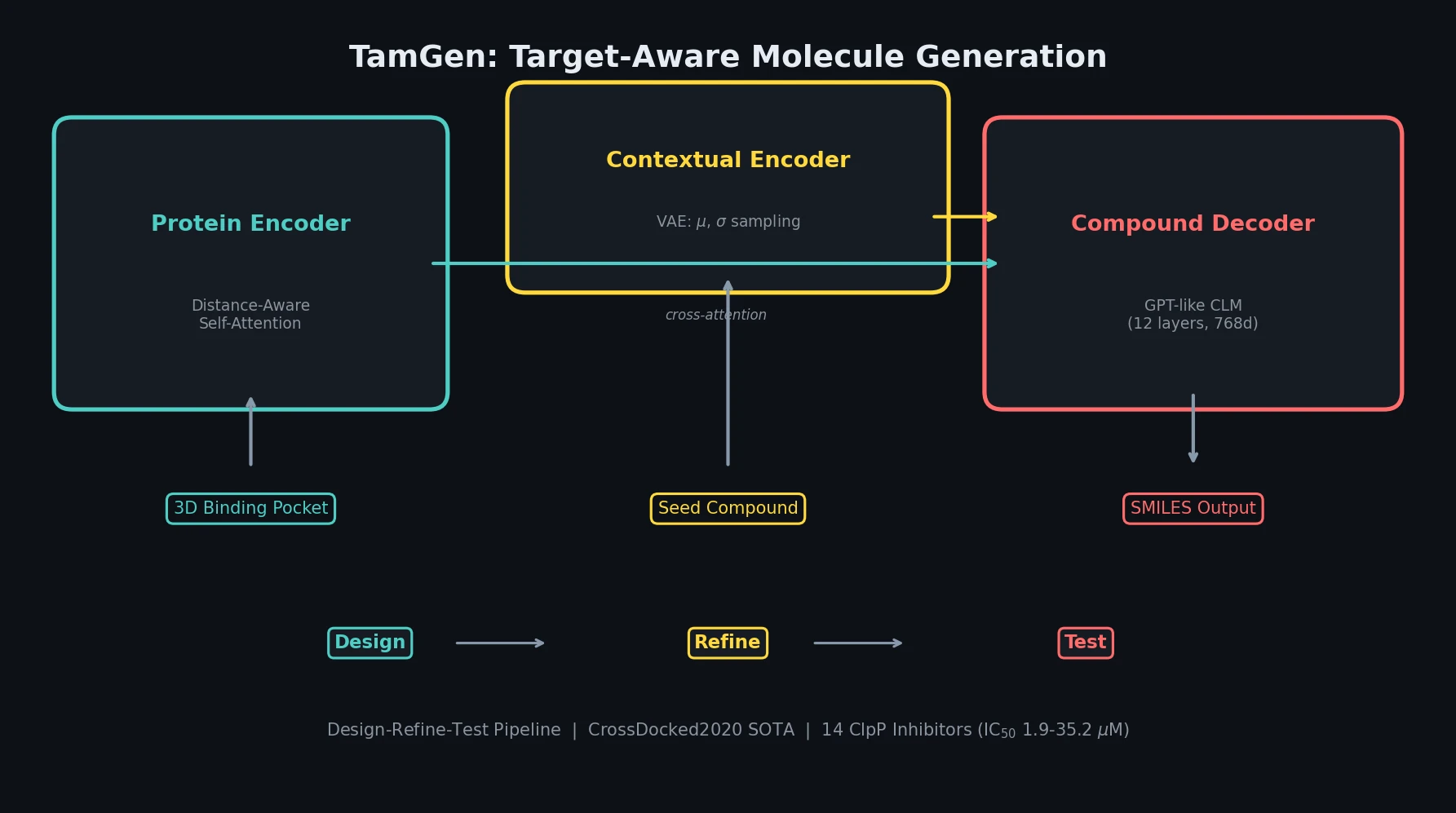
Diagram showing the TamGen three-stage pipeline from protein pocket encoding through compound generation to experimental testing

TamGen: GPT-Based Target-Aware Drug Design and Generation

Introduces TamGen, a target-aware molecular generation method using a pre-trained GPT-like chemical language model with protein structure conditioning. A Design-Refine-Test pipeline discovers 14 inhibitors against tuberculosis ClpP protease, with IC50 values as low as 1.9 uM.

Molecular Generation
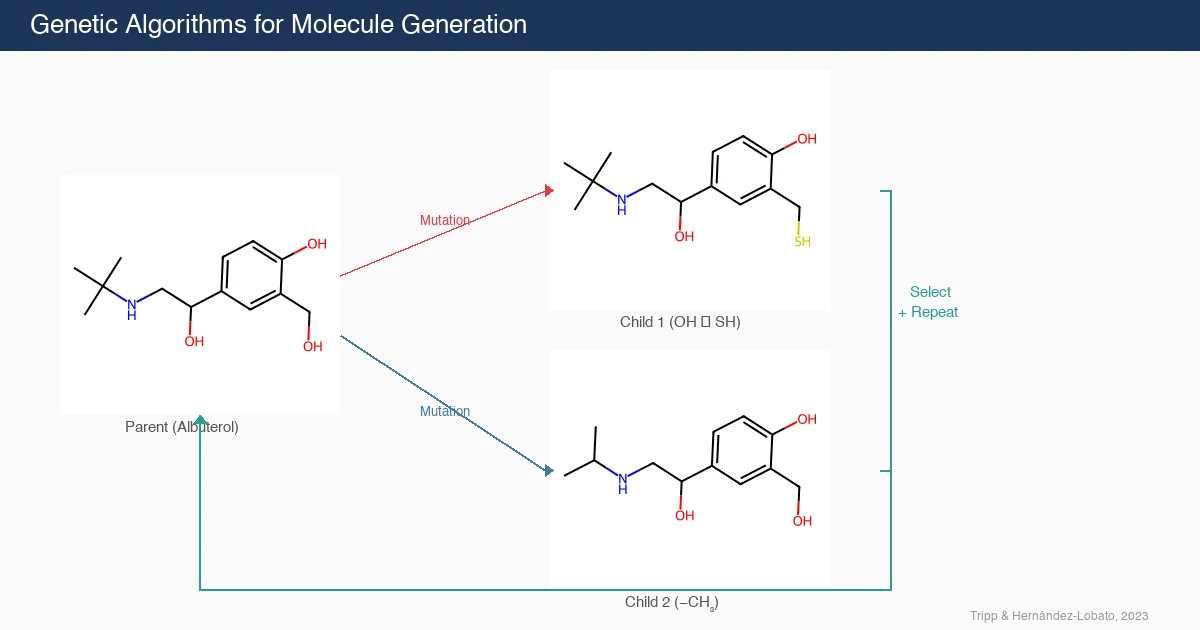
Diagram showing a genetic algorithm for molecules where a parent albuterol molecule undergoes mutation to produce two child molecules, with a selection and repeat loop

Genetic Algorithms as Baselines for Molecule Generation

This position paper demonstrates that genetic algorithms (GAs) perform surprisingly well on molecular generation benchmarks, often outperforming complex deep learning methods. The authors propose the GA criterion: new molecule generation algorithms should demonstrate a clear advantage over GAs.