Predictive Chemistry
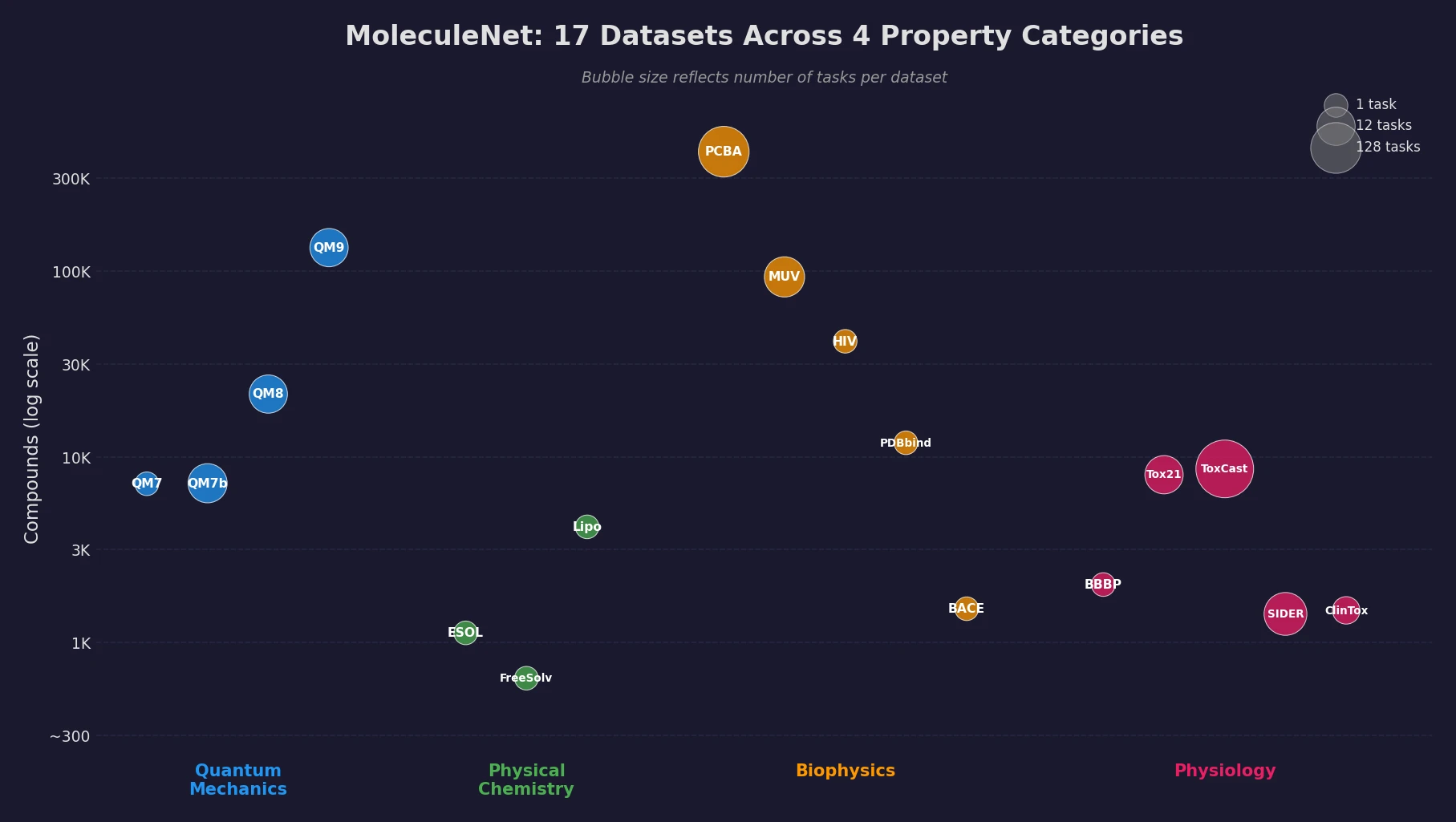
Overview of MoleculeNet dataset categories and task counts across quantum mechanics, physical chemistry, biophysics, and physiology

MoleculeNet: Benchmarking Molecular Machine Learning

MoleculeNet introduces a large-scale benchmark suite for molecular machine learning, curating over 700,000 compounds across 17 datasets with standardized metrics, data splits, and featurization methods integrated into the DeepChem open-source library.
Predictive Chemistry
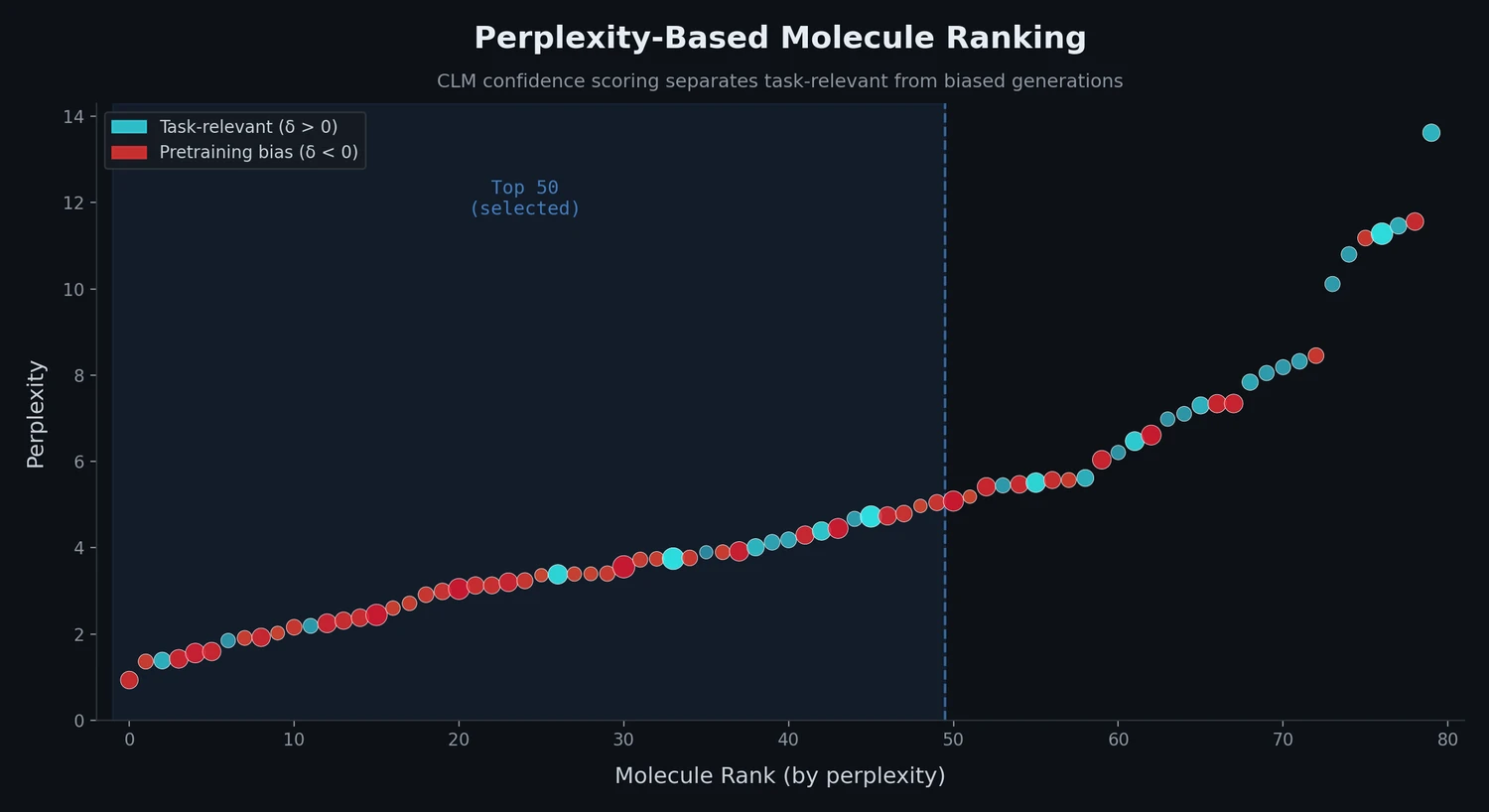
Scatter plot showing molecules ranked by perplexity score with color coding for task-relevant (positive delta) versus pretraining-biased (negative delta) generations

Perplexity for Molecule Ranking and CLM Bias Detection

This study applies perplexity, a model-intrinsic metric from NLP, to rank de novo molecular designs generated by SMILES-based chemical language models and introduces a delta score to detect pretraining bias in transfer-learned CLMs.

Predictive Chemistry
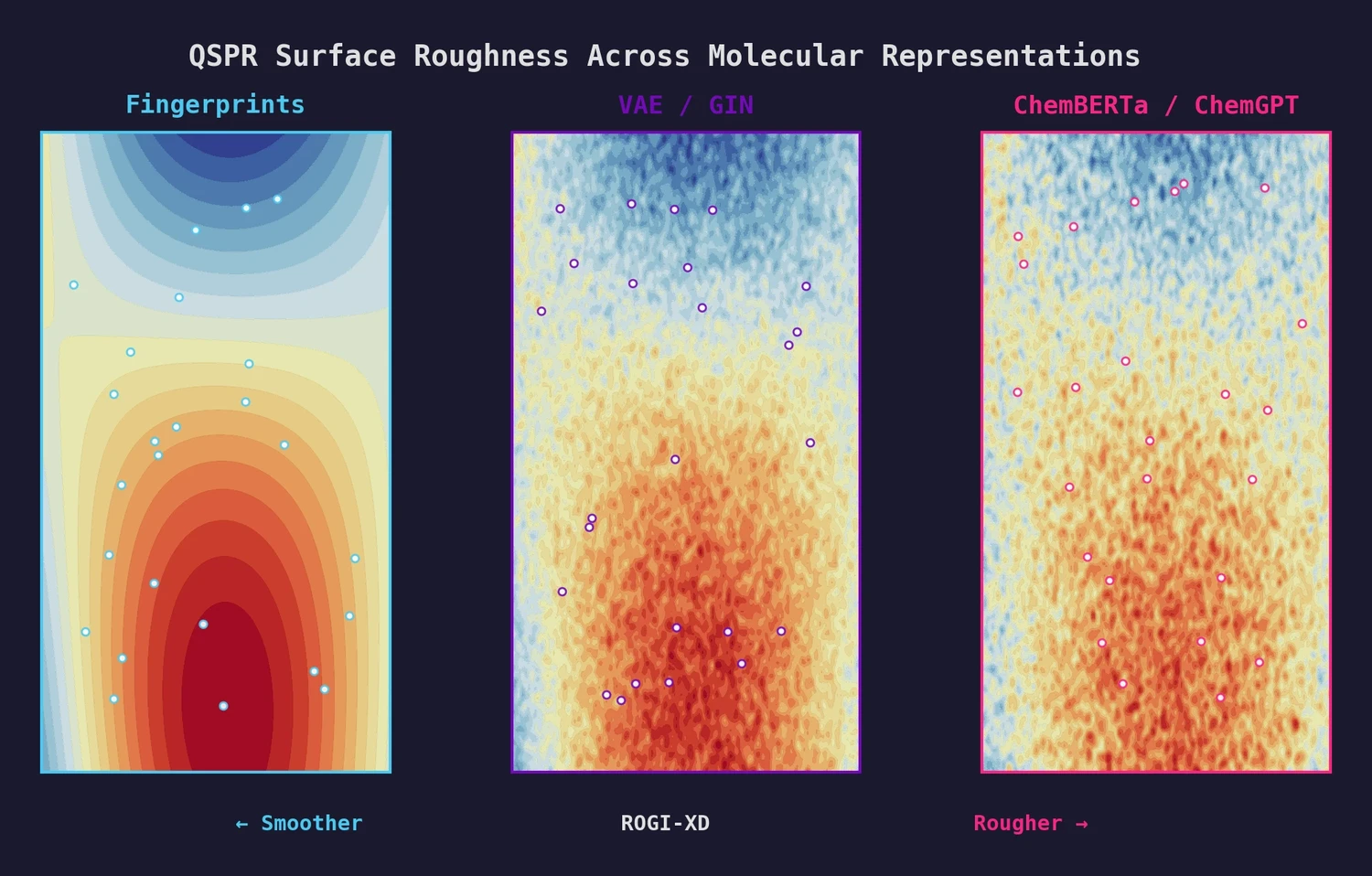
QSPR surface roughness comparison across molecular representations, showing smooth fingerprint surfaces versus rougher pretrained model surfaces

ROGI-XD: Roughness of Pretrained Molecular Representations

This paper introduces ROGI-XD, a reformulation of the ROuGhness Index that enables fair comparison of QSPR surface roughness across molecular representations of different dimensionalities. Evaluating VAE, GIN, ChemBERTa, and ChemGPT representations, the authors show that pretrained chemical models do not produce smoother structure-property landscapes than simple molecular fingerprints or descriptors.

Molecular Generation
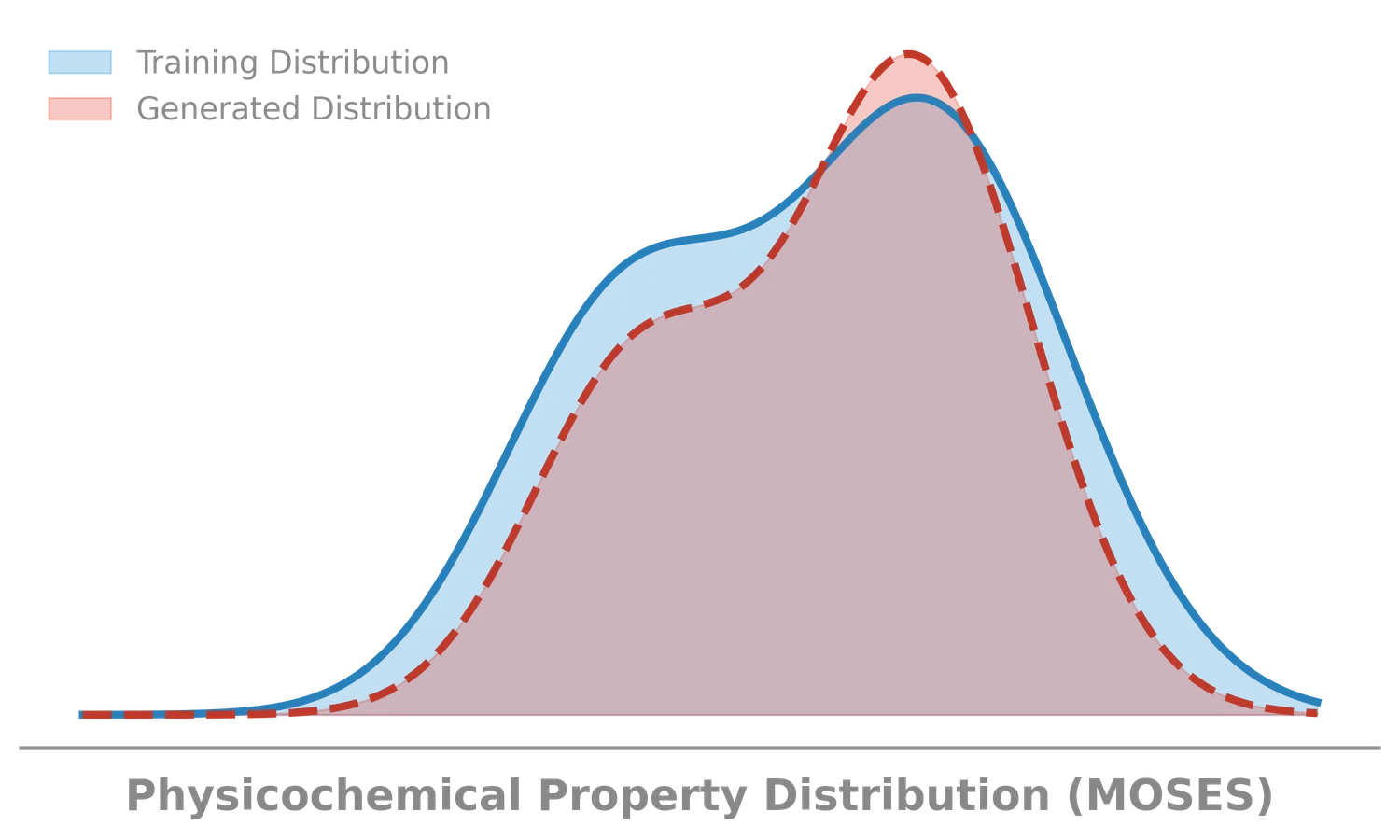
Density plot showing training vs generated physicochemical property distribution

Molecular Sets (MOSES): A Generative Modeling Benchmark

MOSES introduces a comprehensive benchmarking platform for molecular generative models, offering standardized datasets, evaluation metrics, and baselines. By providing a unified measuring stick, it aims to resolve reproducibility challenges in chemical distribution learning.

Document Processing
Chart showing the trade-off between accuracy and throughput in document automation

The Reliability Trap: The Limits of 99% Accuracy

We explore the ‘Silent Failure’ mode of LLMs in production: the limits of 99% accuracy for reliability, how confidence decays in long documents, and why standard calibration techniques struggle to fix it.

Optical Chemical Structure Recognition

String Representations for Chemical Image Recognition

This empirical study isolates the impact of chemical string representations on image-to-text translation models. It finds that while SMILES offers the highest overall accuracy, SELFIES provides a guarantee of structural validity, offering a trade-off for OCSR tasks.

Optical Chemical Structure Recognition

Imago: Open-Source Chemical Structure Recognition (2011)

Imago is an open-source, cross-platform C++ toolkit designed to recognize 2D chemical structure images from scientific papers and convert them into machine-readable molecule formats using a rule-based pipeline.

Optical Chemical Structure Recognition
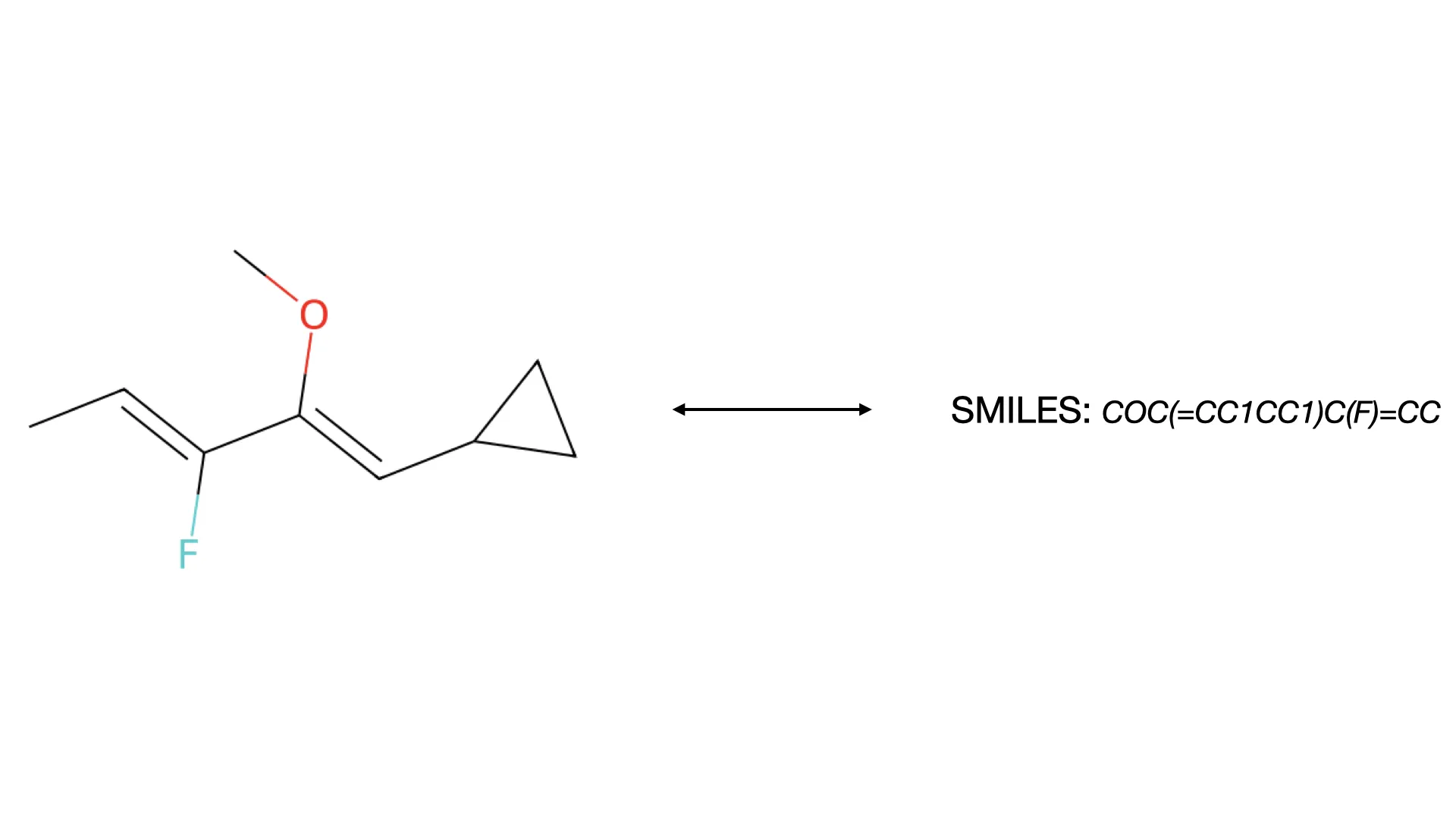
Optical chemical structure recognition example

MolRec: Chemical Structure Recognition at CLEF 2012

Performance evaluation of MolRec at the CLEF 2012 competition reveals a large performance gap between the automatic evaluation set (94-96% accuracy) and the manual evaluation set of complex patent structures (46-59% accuracy), with systematic analysis of failure modes including character grouping bugs, touching characters, and four-way junction vectorization.

Optical Chemical Structure Recognition
Optical chemical structure recognition example

MolRec: Rule-Based OCSR System at TREC 2011 Benchmark

Details the MolRec system for converting chemical diagram images into MOL files using vectorization, geometric rules, and graph construction. Achieved 95% accuracy on 1000 TREC 2011 benchmark images with comprehensive failure analysis of limitations.

Molecular Simulation
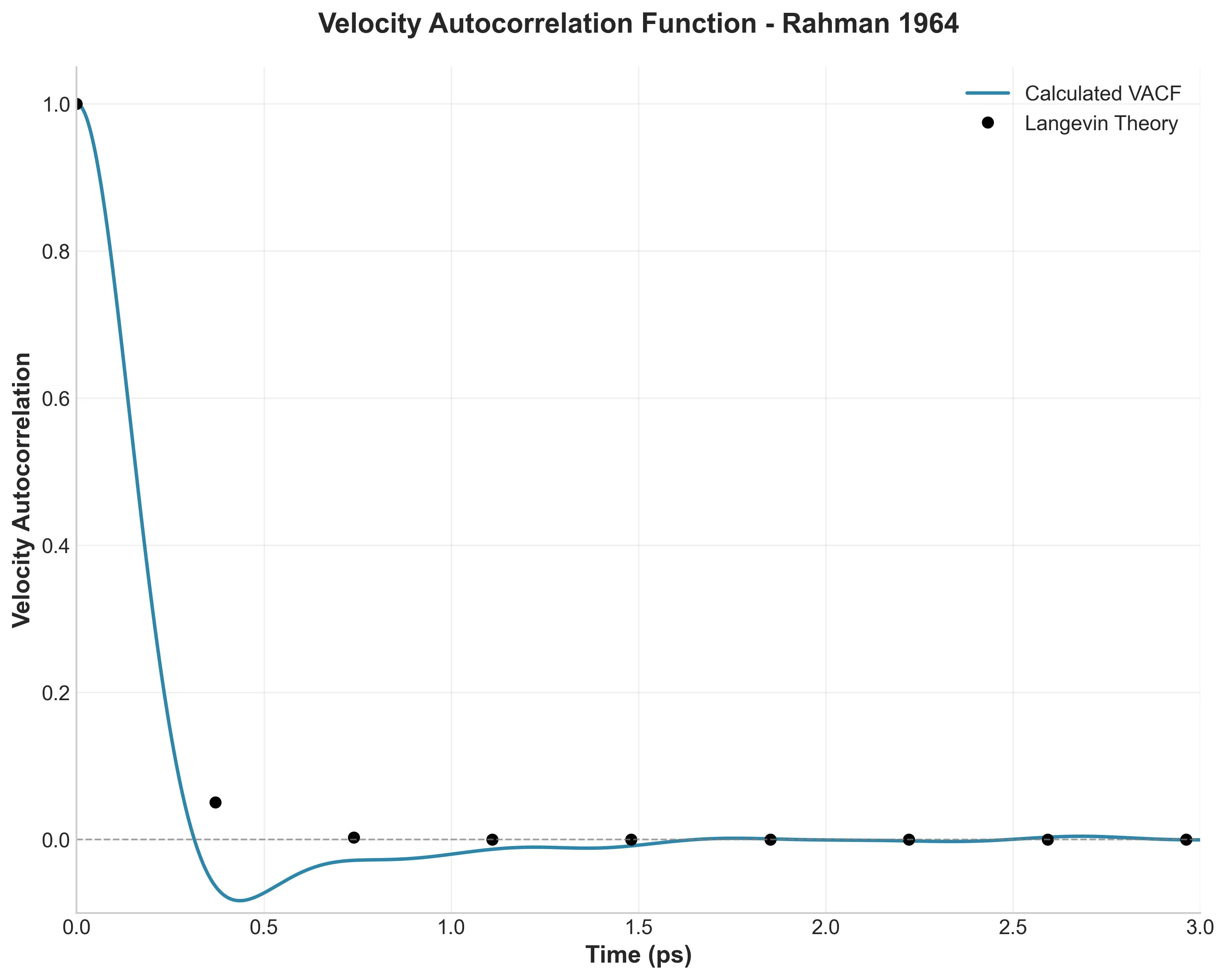
Velocity Autocorrelation Function showing the signature negative region characteristic of liquid dynamics and the cage effect discovered by Rahman

Modernizing Rahman's 1964 Argon Simulation

A modern replication of Rahman’s 1964 argon molecular dynamics paper in LAMMPS, with a cached, vectorized Python analysis pipeline and an agreement table.

Document Processing
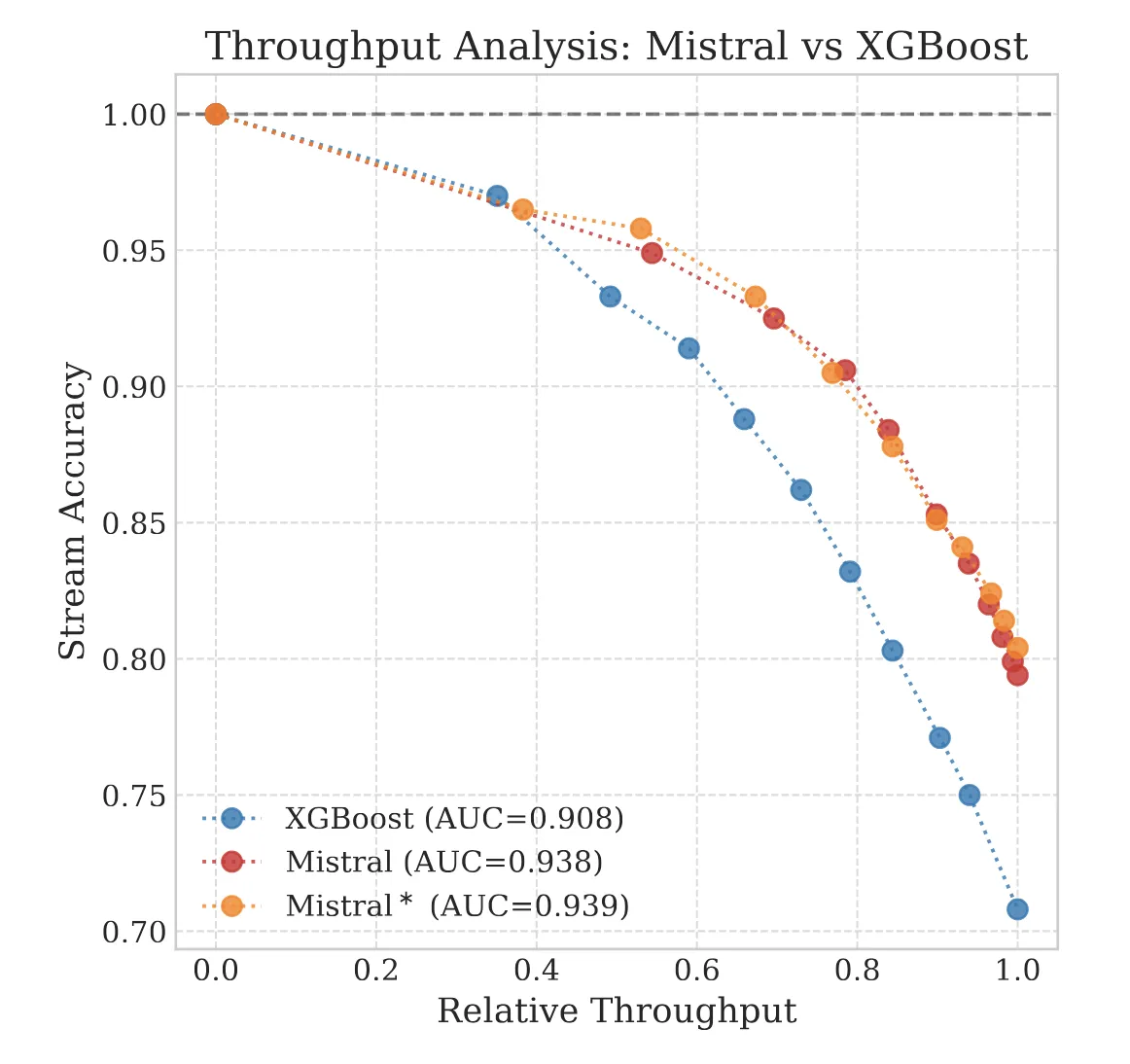
Stream accuracy versus relative throughput for Mistral-7B and XGBoost models

LLMs for Insurance Document Automation

We explore LLM applications for page stream segmentation in insurance document processing, demonstrating that parameter-efficient fine-tuning achieves strong accuracy but revealing significant calibration challenges that limit deployment confidence.

Natural Language Processing
Word vector illustration showing text classification and NLP concepts

Sarcasm Detection with Transformers: A Cautionary Tale

What happens when you achieve 99.8% accuracy on sarcasm detection? You might have accidentally built a domain classifier. A cautionary ML tale about dataset bias.