Computational Chemistry
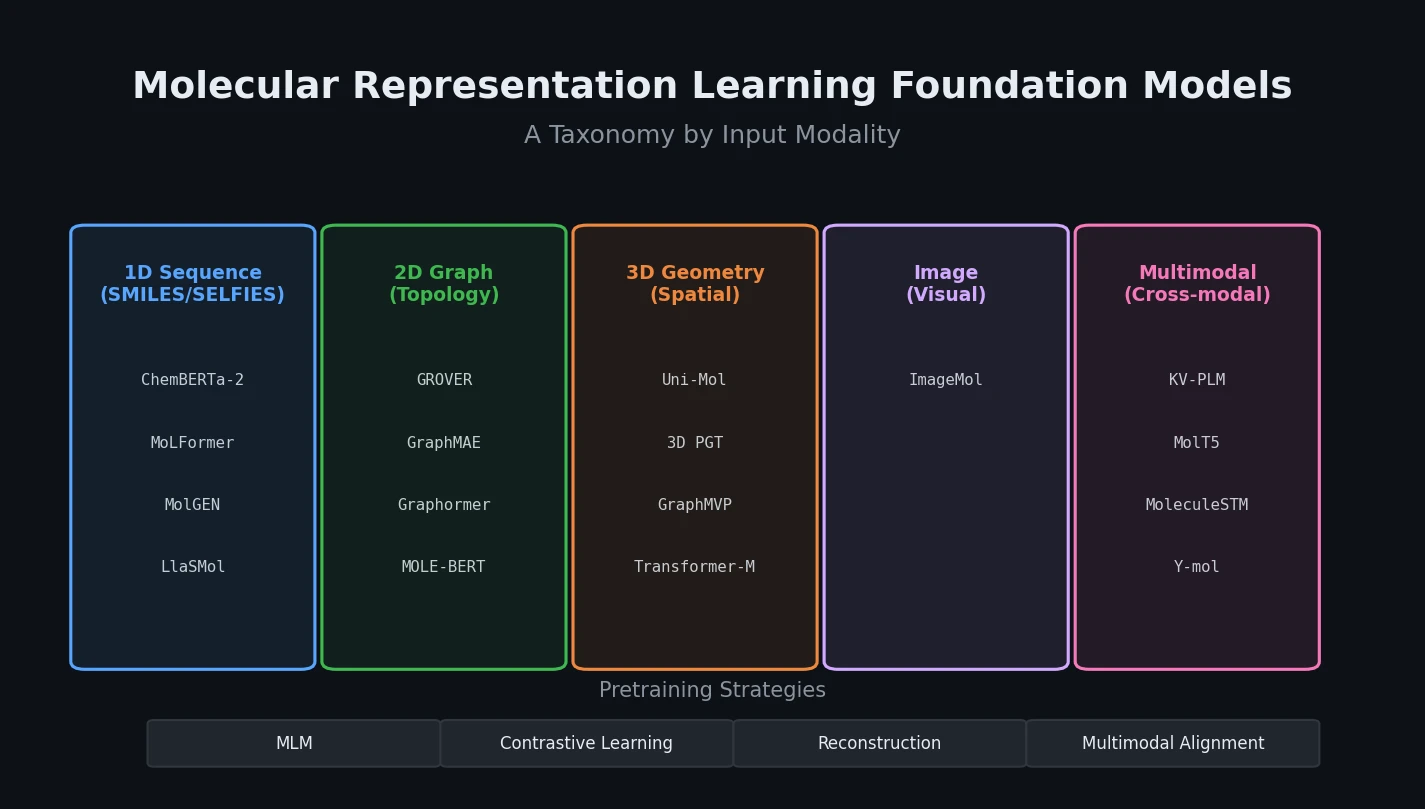
Taxonomy of molecular representation learning foundation models organized by input modality

Review of Molecular Representation Learning Models

A comprehensive survey classifying molecular representation learning foundation models by input modality (sequence, graph, 3D, image, multimodal) and analyzing four pretraining paradigms for drug discovery tasks.
Computational Chemistry
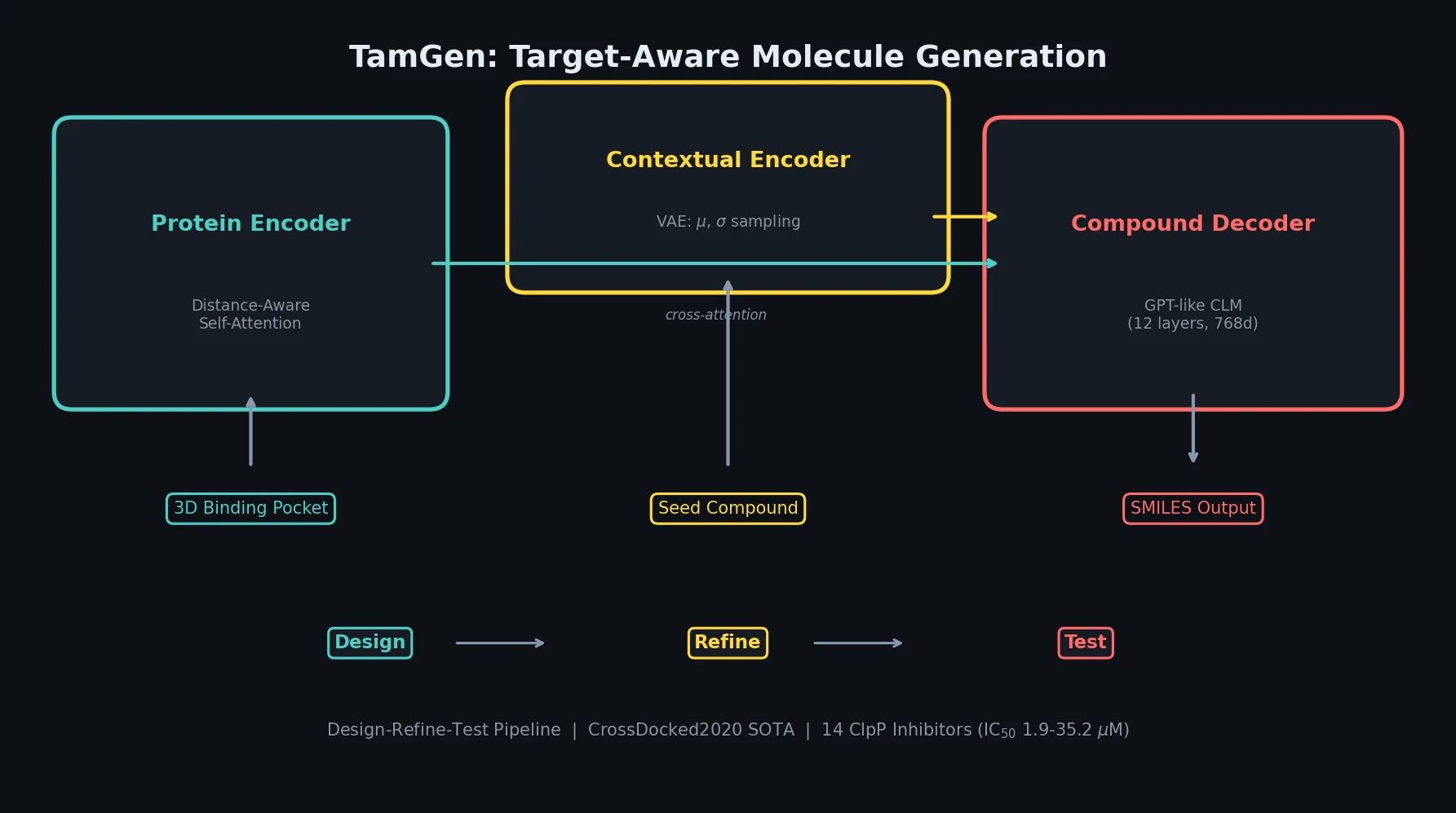
Diagram showing the TamGen three-stage pipeline from protein pocket encoding through compound generation to experimental testing

TamGen: GPT-Based Target-Aware Drug Design and Generation

Introduces TamGen, a target-aware molecular generation method using a pre-trained GPT-like chemical language model with protein structure conditioning. A Design-Refine-Test pipeline discovers 14 inhibitors against tuberculosis ClpP protease, with IC50 values as low as 1.9 uM.

Computational Chemistry
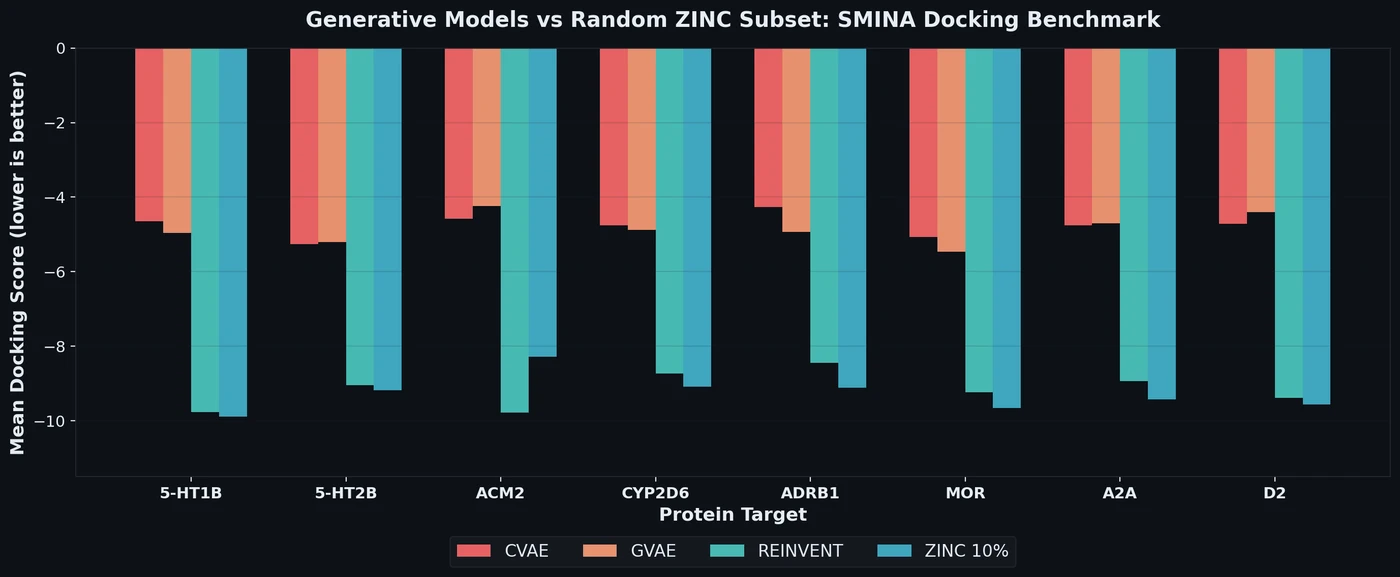
Bar chart comparing SMINA docking scores of CVAE, GVAE, and REINVENT against a random ZINC 10% baseline across eight protein targets

SMINA Docking Benchmark for De Novo Drug Design Models

Proposes a benchmark for de novo drug design using SMINA docking scores across eight drug targets, revealing that popular generative models fail to outperform random ZINC subsets.

Computational Chemistry
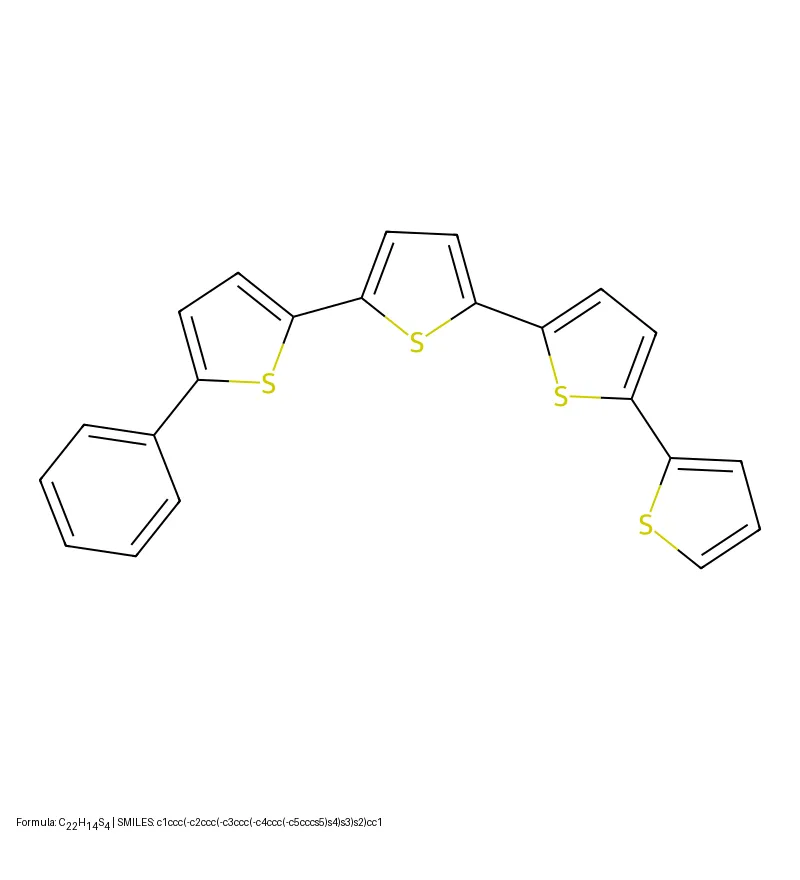
2D structure of a phenyl-quaterthiophene, a conjugated organic molecule representative of the photovoltaic donor materials benchmarked in the Tartarus platform

Tartarus: Realistic Inverse Molecular Design Benchmarks

Tartarus introduces a modular suite of realistic molecular design benchmarks grounded in computational chemistry simulations. Benchmarking eight generative models reveals that no single algorithm dominates all tasks, and simple genetic algorithms often outperform deep generative models.

Computational Chemistry
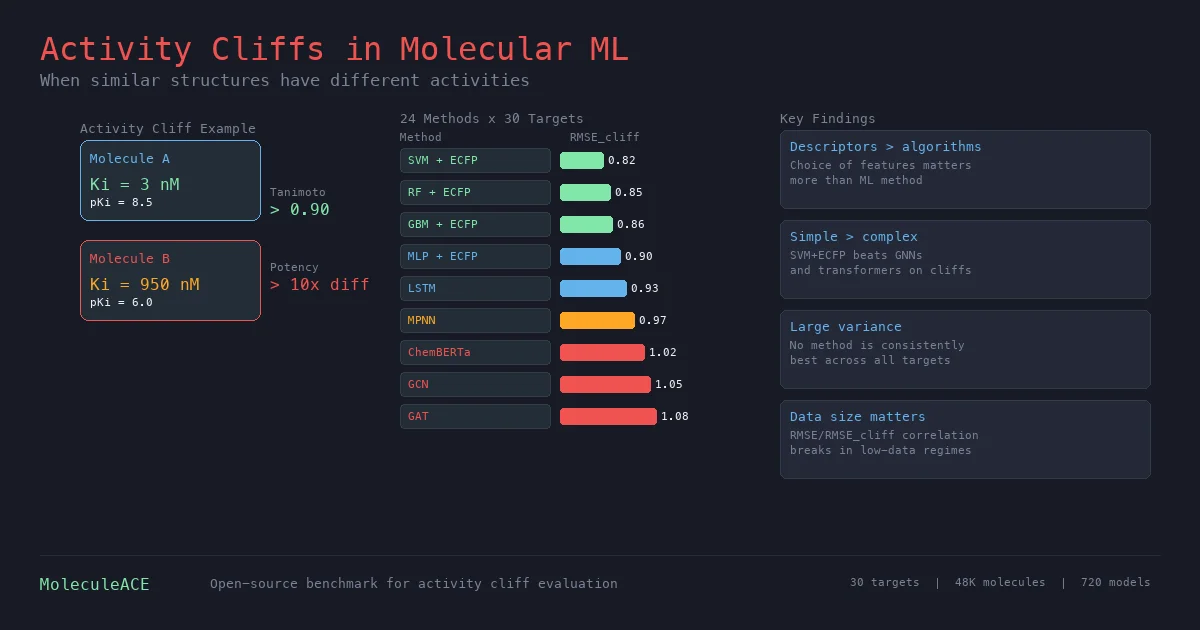
Activity cliffs benchmark showing method rankings by RMSE on cliff compounds, with SVM plus ECFP outperforming deep learning approaches

Exposing Limitations of Molecular ML with Activity Cliffs

This paper benchmarks 24 machine and deep learning methods on activity cliff compounds (structurally similar molecules with large potency differences) across 30 macromolecular targets. Traditional ML with molecular fingerprints consistently outperforms graph neural networks and SMILES-based transformers on these challenging cases, especially in low-data regimes.

Computational Chemistry
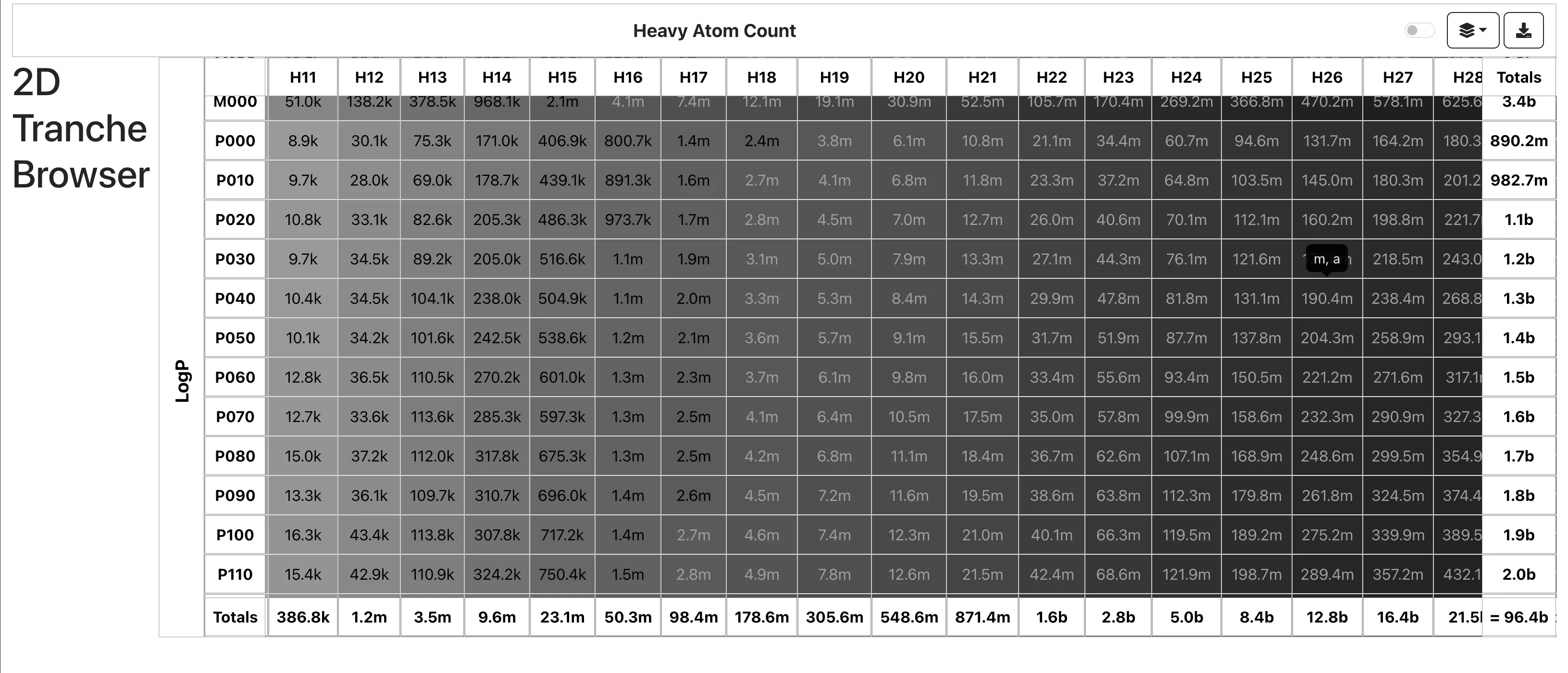
ZINC-22 Tranche Browser showing molecular count distribution

ZINC-22: A Multi-Billion Scale Database for Ligand Discovery

ZINC-22 is a multi-billion-scale public database containing over 37 billion make-on-demand molecules. It utilizes distributed infrastructure and specialized search algorithms to support modern ultra-large virtual screening campaigns.