Computational Chemistry
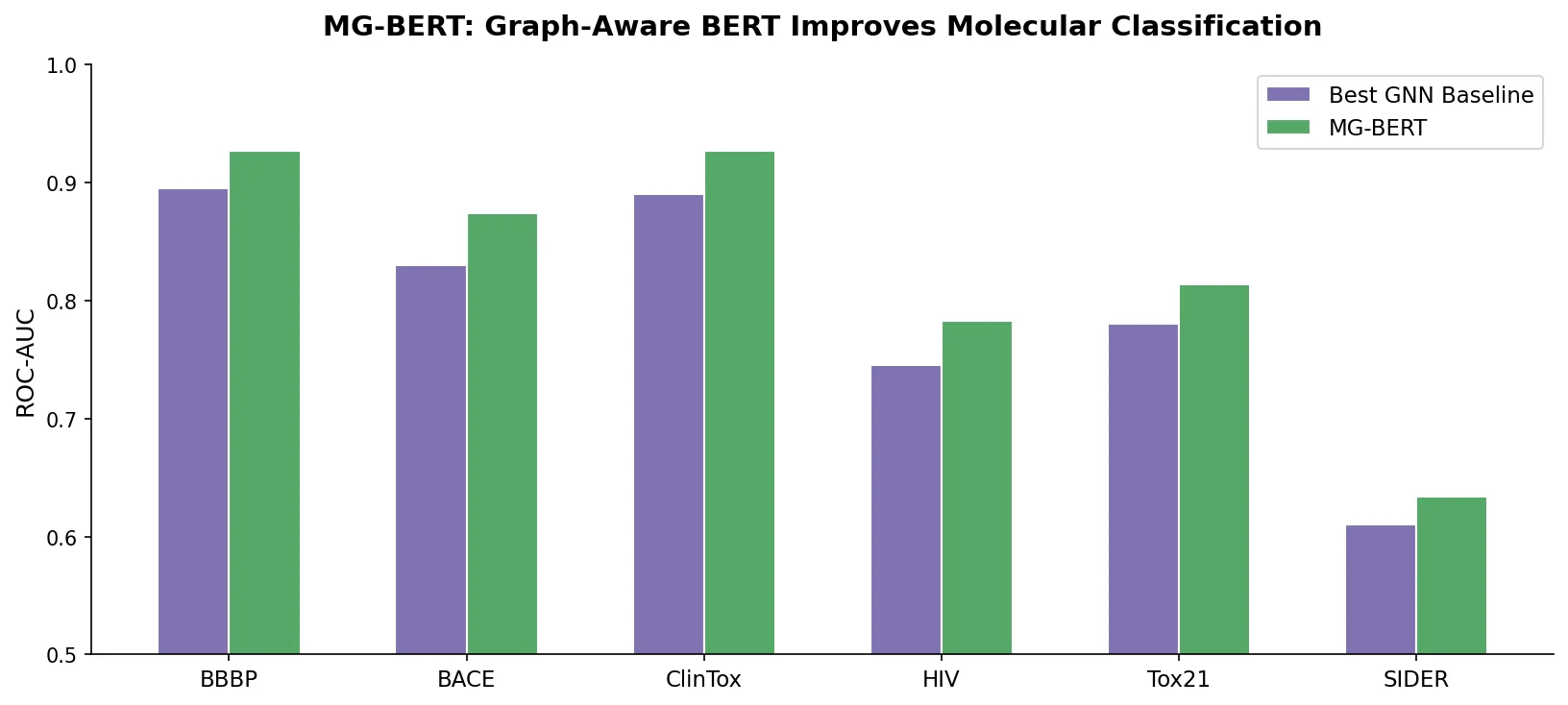
Bar chart comparing MG-BERT vs GNN baselines on six MoleculeNet classification tasks

MG-BERT: Graph BERT for Molecular Property Prediction

MG-BERT combines GNN-style local attention with BERT’s masked pretraining on molecular graphs, learning context-sensitive atomic representations that improve ADMET property prediction across 11 benchmark datasets.
Computational Chemistry
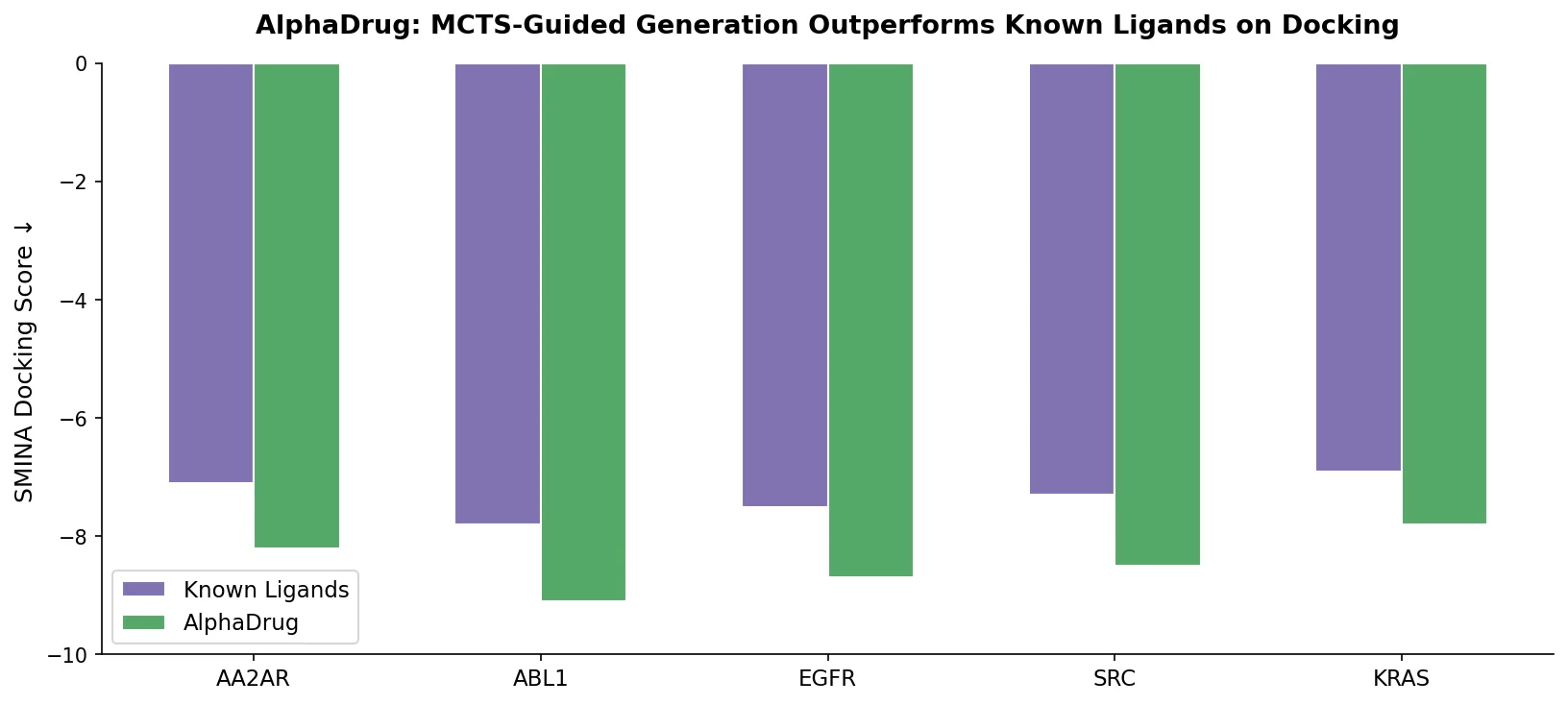
Bar chart comparing AlphaDrug docking scores against known ligands across five protein targets

AlphaDrug: MCTS-Guided Target-Specific Drug Design

AlphaDrug generates drug candidates for specific protein targets by combining an Lmser Transformer (with hierarchical encoder-decoder skip connections) and Monte Carlo tree search guided by docking scores, achieving higher binding affinities than known ligands on 86% of test proteins.

Computational Chemistry
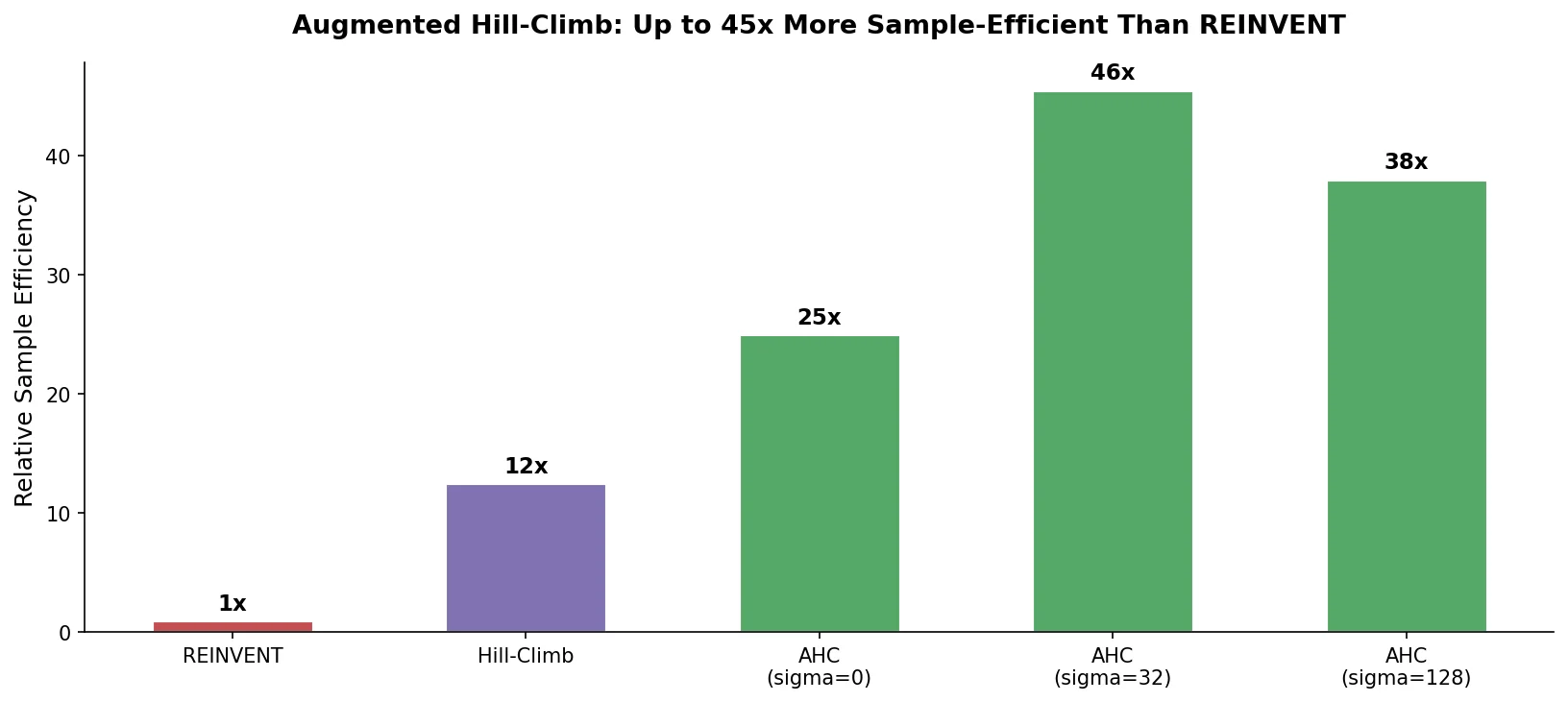
Bar chart showing Augmented Hill-Climb achieves up to 45x sample efficiency over REINVENT

Augmented Hill-Climb for RL-Based Molecule Design

Proposes Augmented Hill-Climb, a hybrid RL strategy for SMILES-based generative models that improves sample efficiency ~45-fold over REINVENT by filtering low-scoring molecules from the loss computation, with diversity filters to prevent mode collapse.

Computational Chemistry
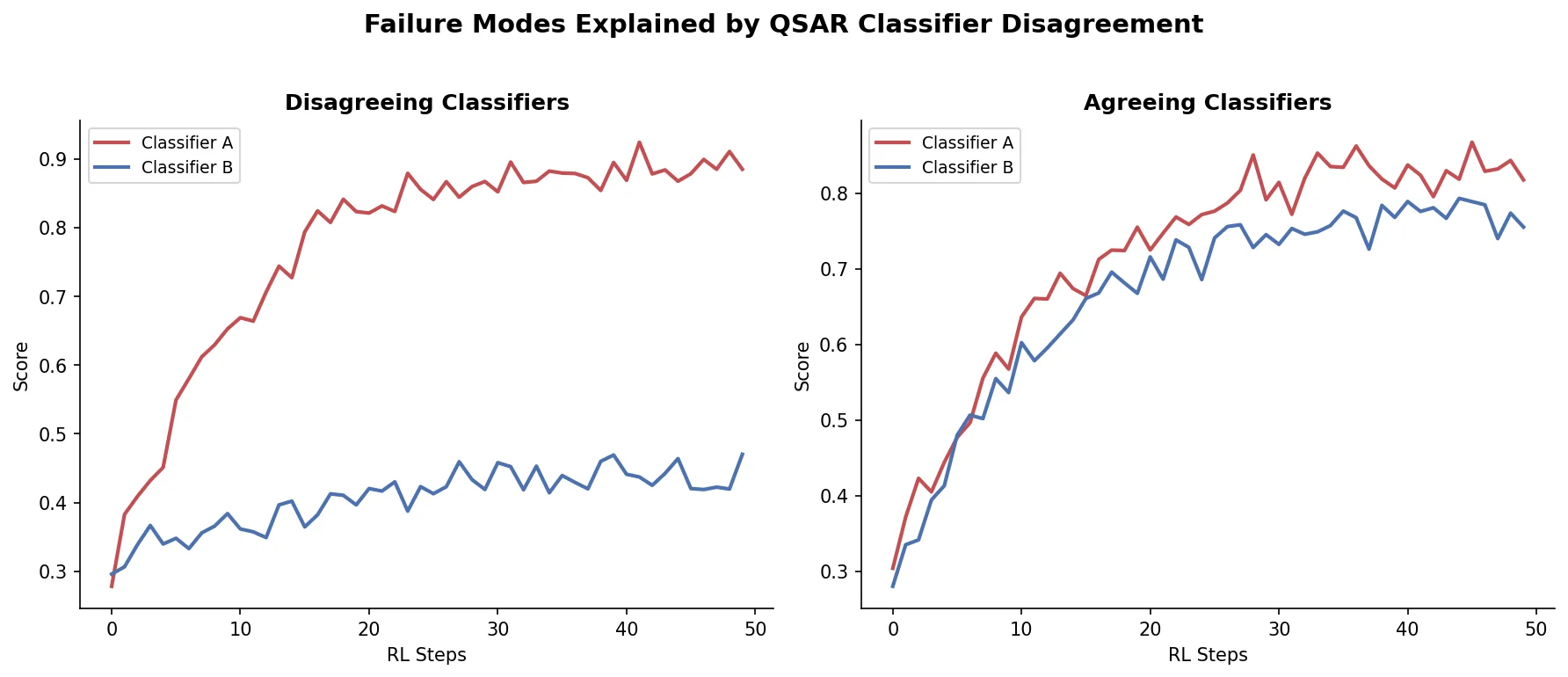
Two-panel plot showing score divergence with disagreeing classifiers vs convergence with agreeing classifiers

Avoiding Failure Modes in Goal-Directed Generation

Shows that divergence between optimization and control scores during goal-directed molecular generation is explained by pre-existing disagreement among QSAR models on the training distribution, not by algorithmic exploitation of model-specific biases.

Computational Chemistry
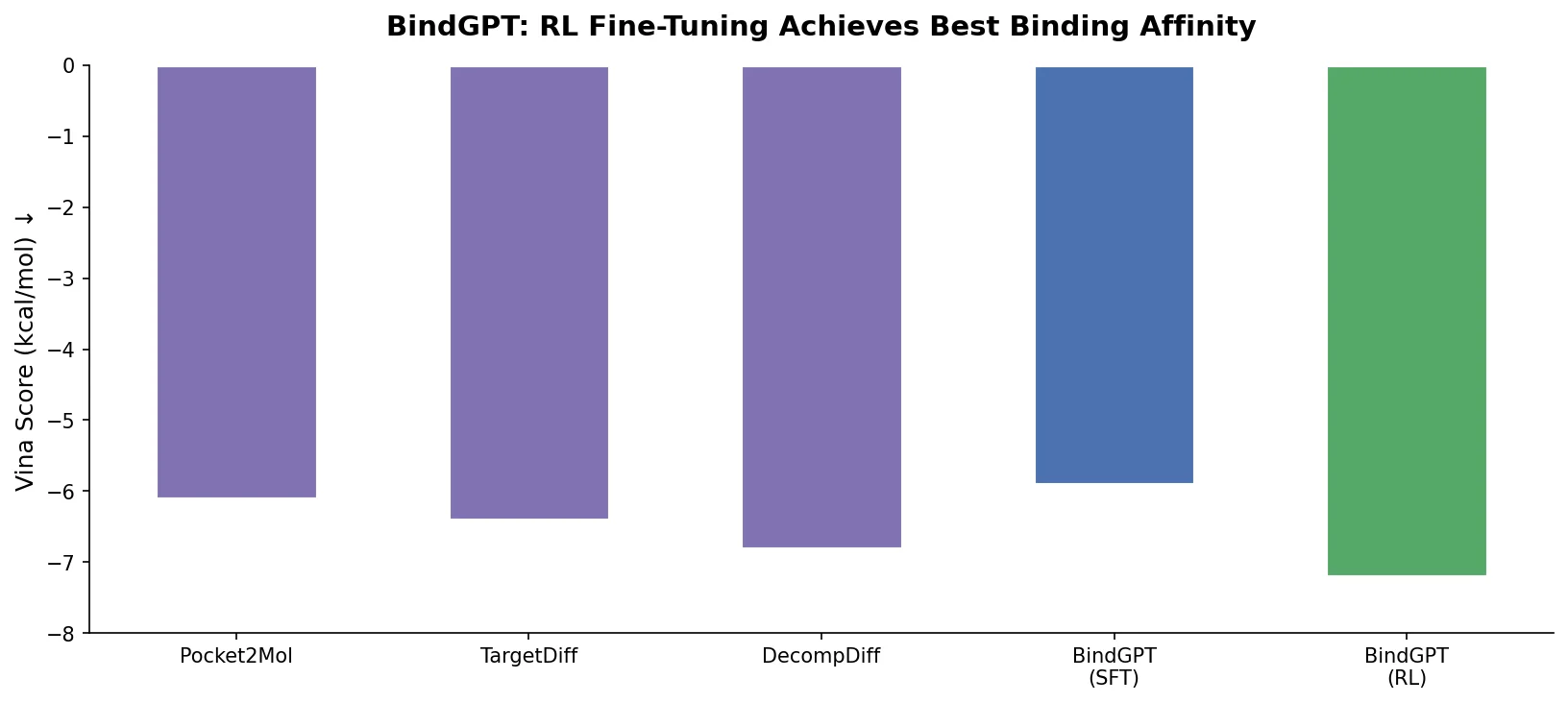
Bar chart showing BindGPT RL achieves best Vina binding scores compared to baselines

BindGPT: GPT for 3D Molecular Design and Docking

BindGPT formulates 3D molecular design as autoregressive text generation over combined SMILES and XYZ tokens, using large-scale pre-training and reinforcement learning to achieve competitive pocket-conditioned molecule generation.

Computational Chemistry
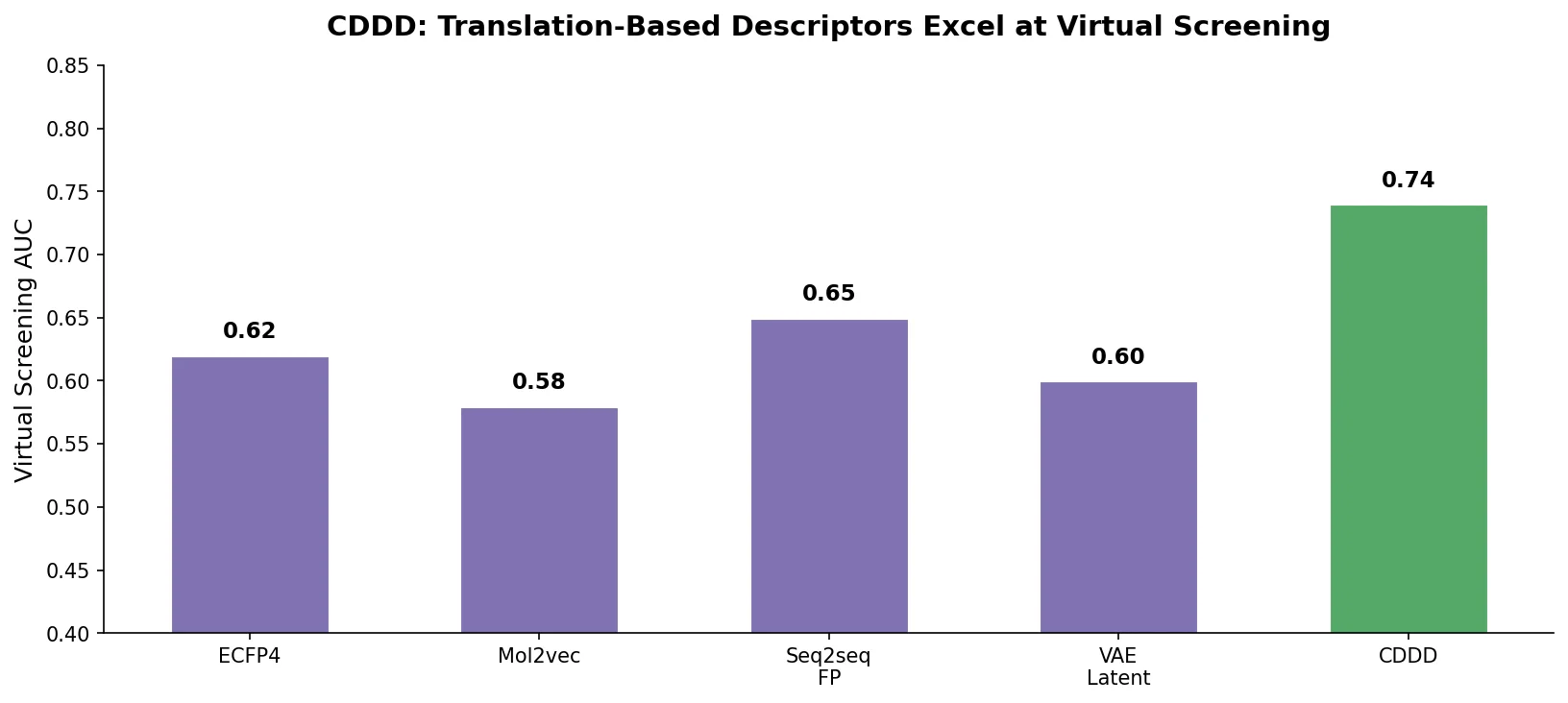
Bar chart comparing CDDD virtual screening AUC against ECFP4, Mol2vec, Seq2seq FP, and VAE baselines

CDDD: Learning Descriptors by Translating SMILES

Winter et al. propose CDDD, a translation-based encoder-decoder that learns continuous molecular descriptors by translating between equivalent chemical representations like SMILES and InChI, pretrained on 72 million compounds.

Computational Chemistry
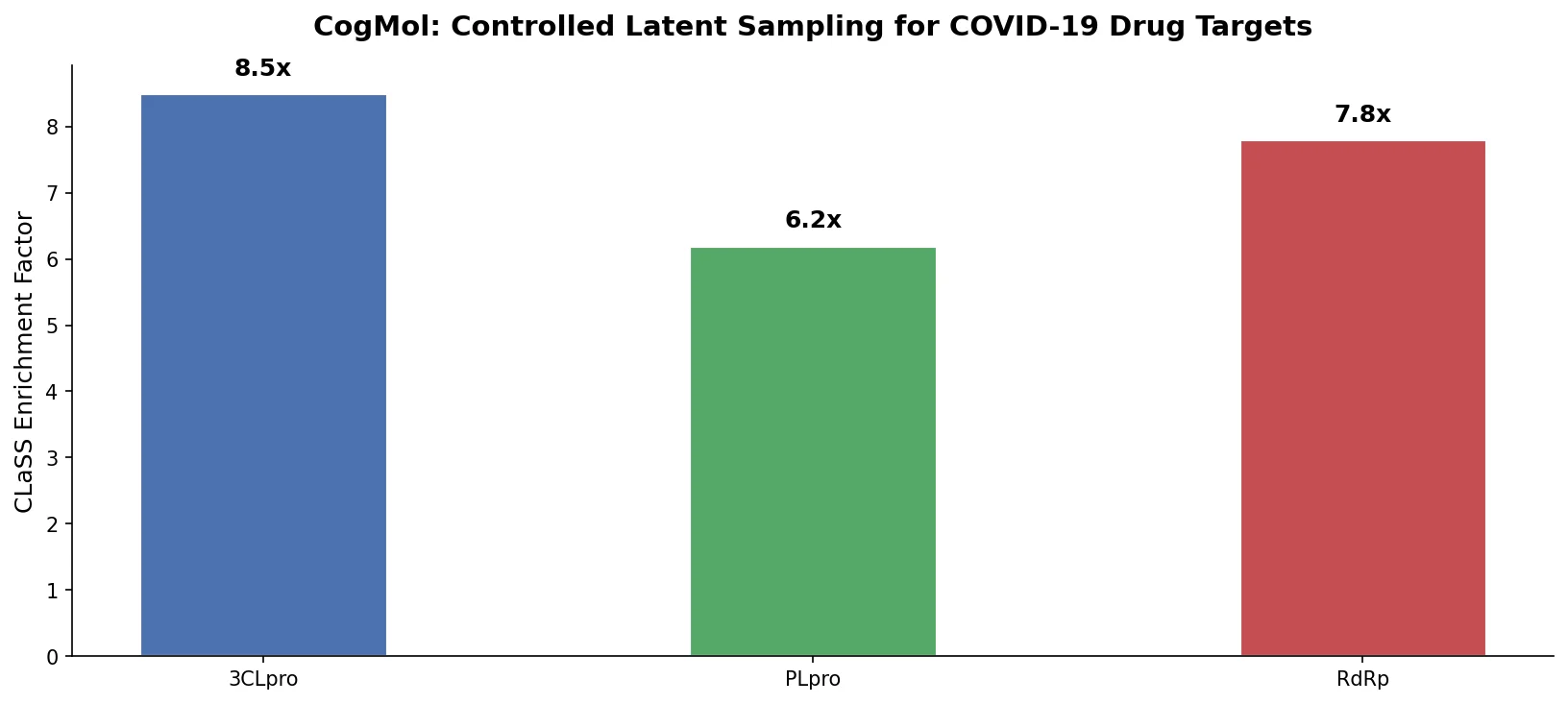
Bar chart showing CogMol CLaSS enrichment factors across three COVID-19 drug targets

CogMol: Controlled Molecule Generation for COVID-19

CogMol uses a SMILES VAE and multi-attribute controlled sampling (CLaSS) to generate novel, target-specific drug molecules for unseen SARS-CoV-2 proteins without model retraining.

Computational Chemistry
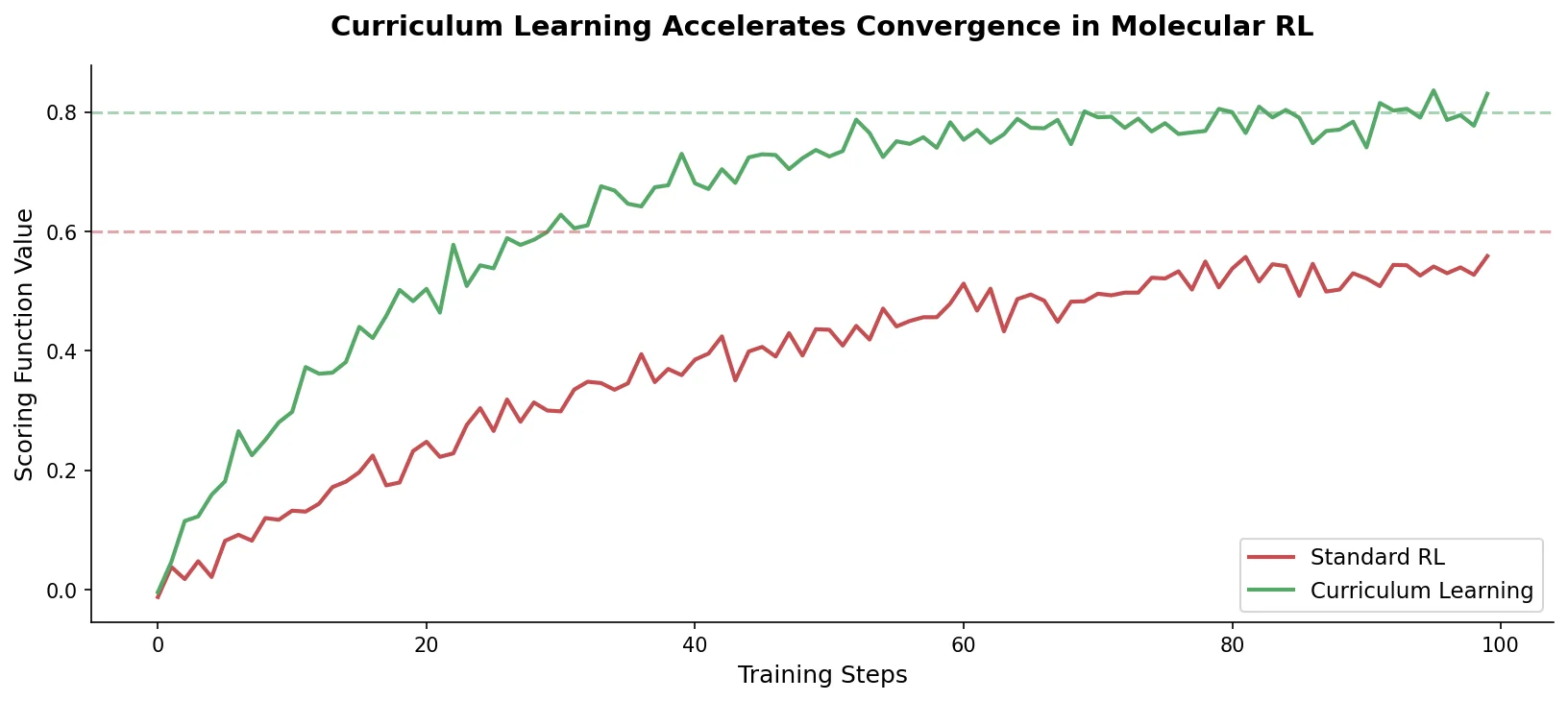
Line chart showing curriculum learning converges faster than standard RL for molecular generation

Curriculum Learning for De Novo Drug Design (REINVENT)

Introduces curriculum learning to the REINVENT de novo design platform, decomposing complex drug design objectives into simpler sequential tasks that accelerate agent convergence and improve output quality over standard reinforcement learning.

Computational Chemistry
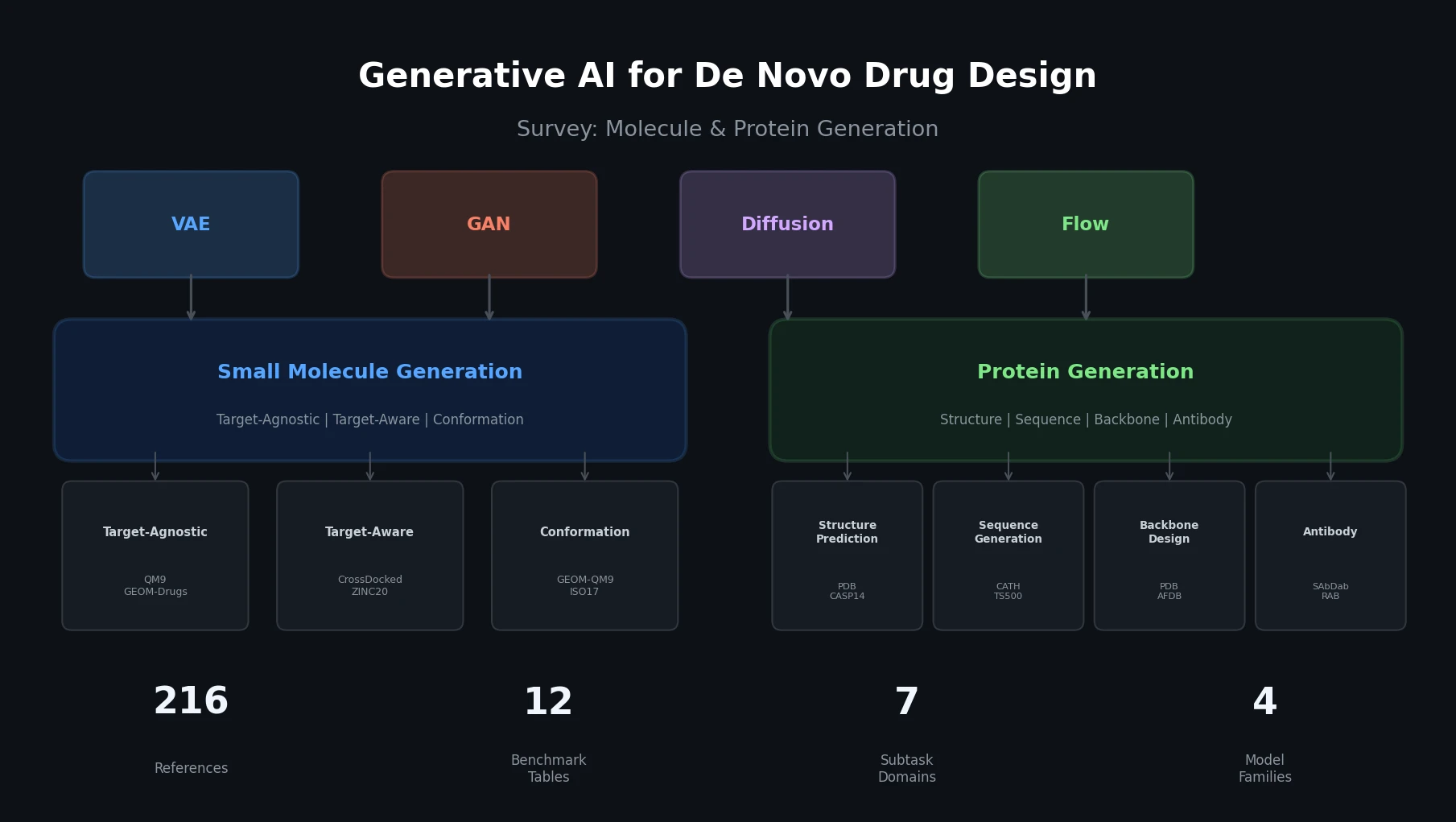
Taxonomy diagram showing four generative model families (VAE, GAN, Diffusion, Flow) connecting to small molecule generation and protein generation subtasks

Generative AI Survey for De Novo Molecule and Protein Design

This survey organizes generative AI for de novo drug design into two themes: small molecule generation (target-agnostic, target-aware, conformation) and protein generation (structure prediction, sequence generation, backbone design, antibody, peptide). It covers four generative model families (VAEs, GANs, diffusion, flow-based), catalogs key datasets and benchmarks, and provides 12 comparative benchmark tables across all subtasks.

Computational Chemistry
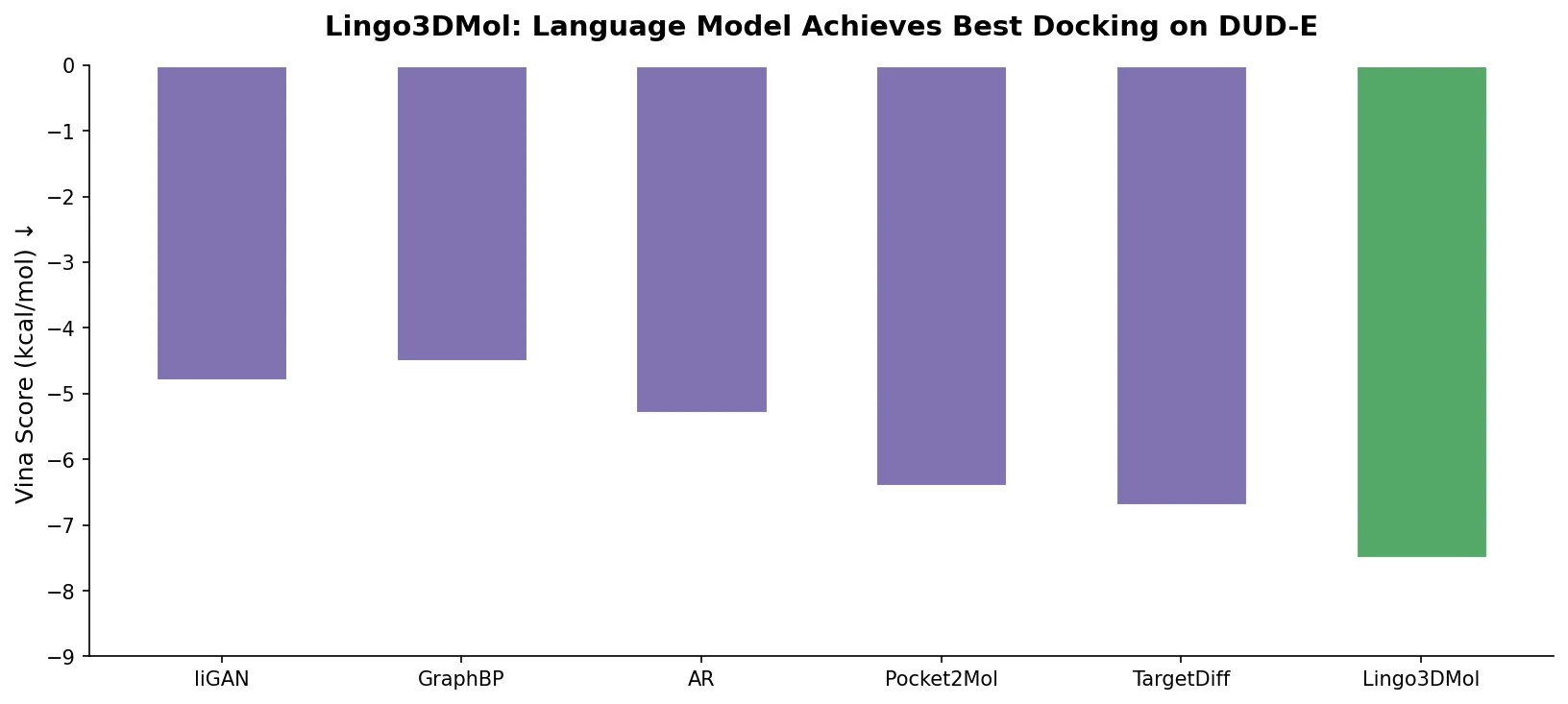
Bar chart showing Lingo3DMol achieves best Vina docking scores on DUD-E compared to five baselines

Lingo3DMol: Language Model for 3D Molecule Design

Lingo3DMol introduces FSMILES, a fragment-based SMILES representation with local and global coordinates, to generate drug-like 3D molecules in protein pockets via a transformer language model.

Computational Chemistry
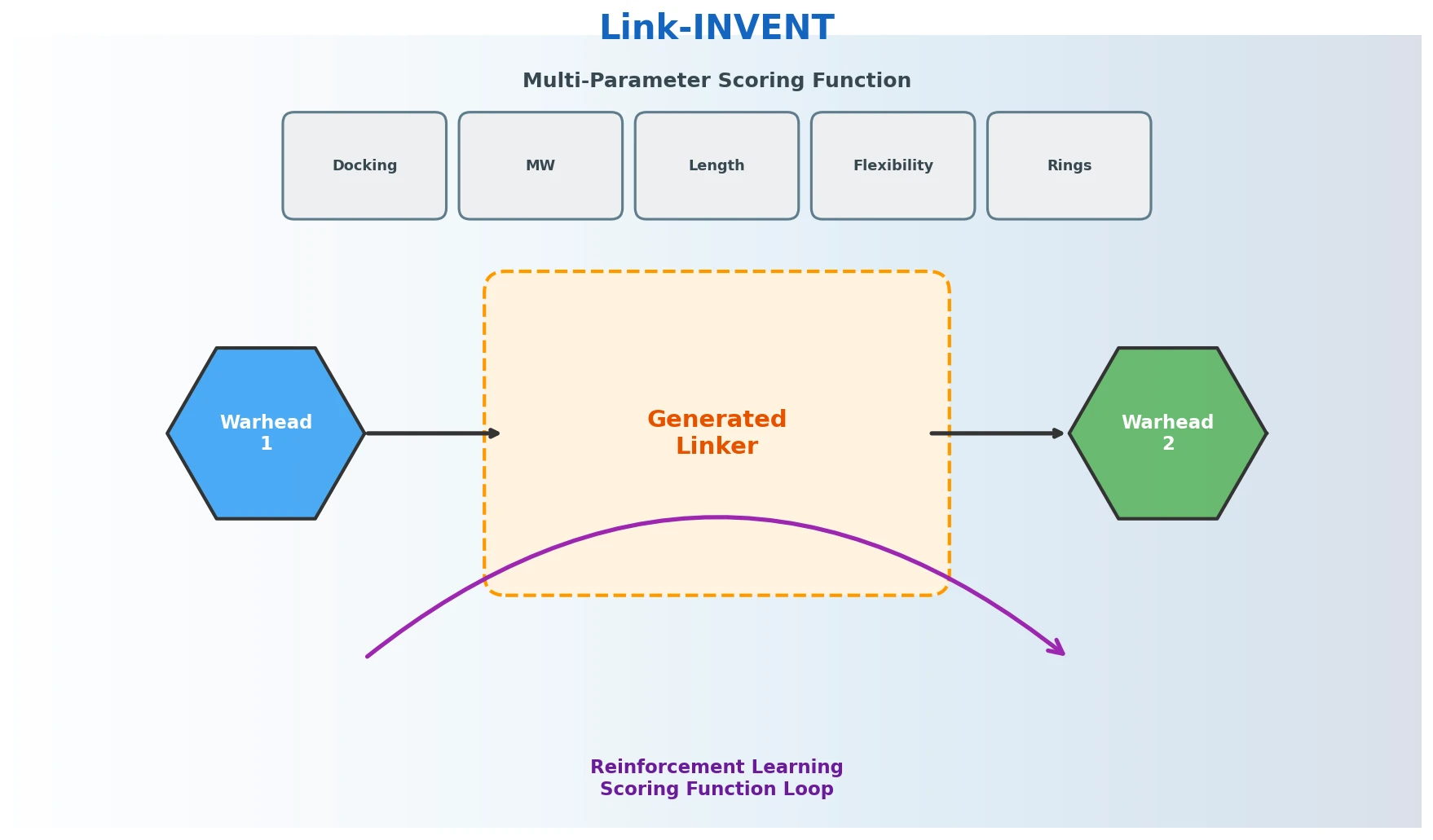
Schematic of Link-INVENT architecture showing encoder-decoder RNN with reinforcement learning scoring loop

Link-INVENT: RL-Driven Molecular Linker Generation

Link-INVENT is an RNN-based generative model for molecular linker design that uses reinforcement learning with a flexible scoring function, demonstrated on fragment linking, scaffold hopping, and PROTAC design.

Computational Chemistry
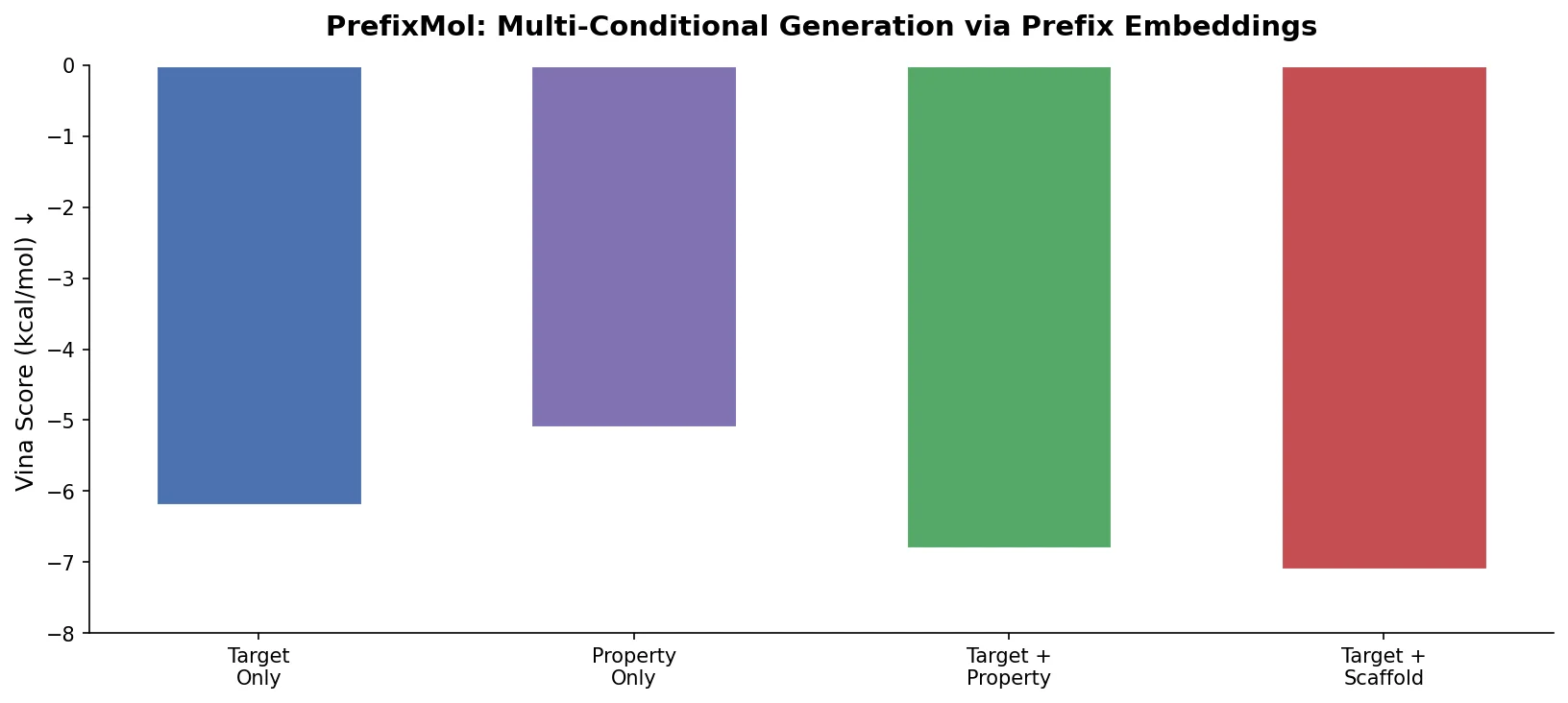
Bar chart showing PrefixMol Vina scores across different conditioning modes: target, property, combined, and scaffold

PrefixMol: Prefix Embeddings for Drug Molecule Design

PrefixMol prepends learnable condition vectors to a GPT transformer for SMILES generation, enabling joint control over binding pocket targeting and chemical properties like QED, SA, and LogP.