Computational Chemistry
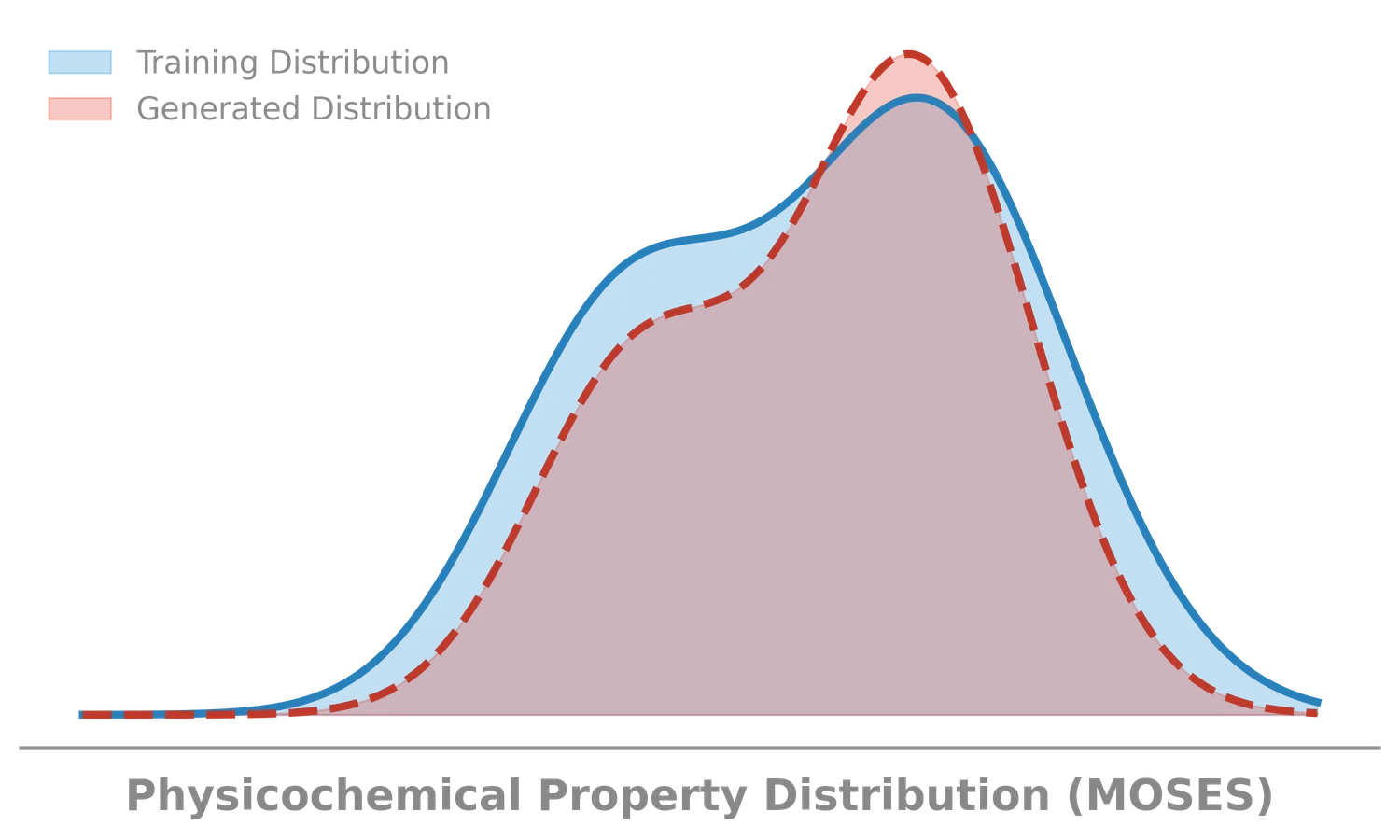
Density plot showing training vs generated physicochemical property distribution

Molecular Sets (MOSES): A Generative Modeling Benchmark

MOSES introduces a comprehensive benchmarking platform for molecular generative models, offering standardized datasets, evaluation metrics, and baselines. By providing a unified measuring stick, it aims to resolve reproducibility challenges in chemical distribution learning.
Document Processing
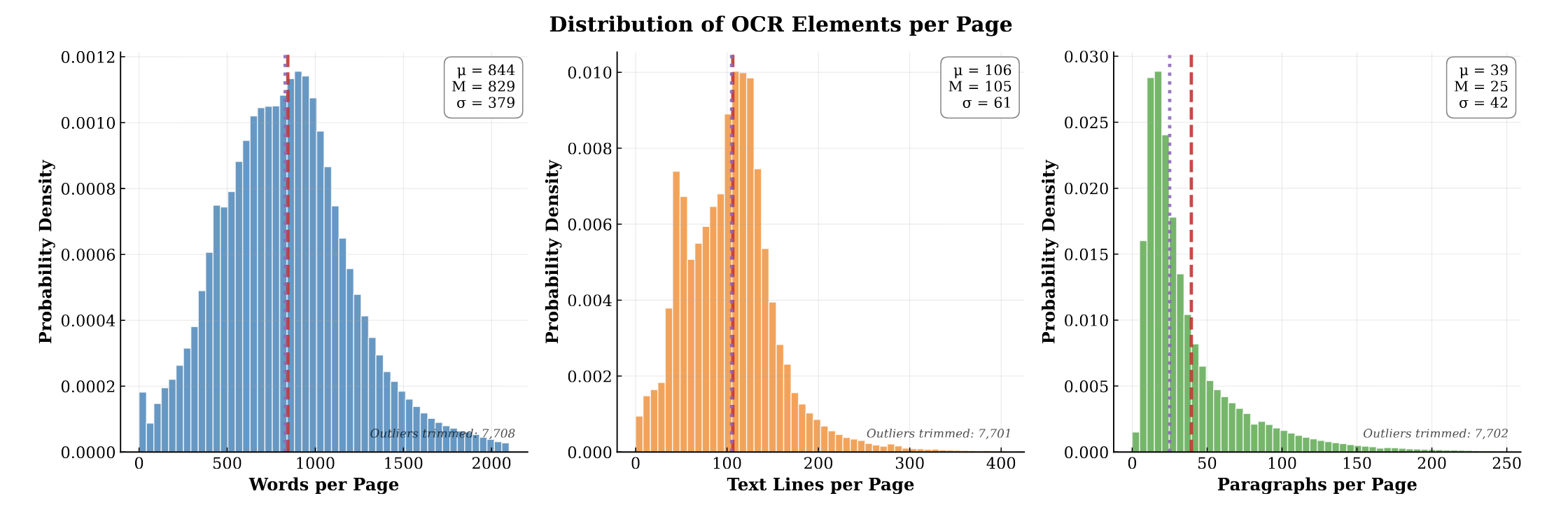
Statistics of the PubMed-OCR dataset including number of articles, pages, words, and bounding boxes.

PubMed-OCR: PMC Open Access OCR Annotations

PubMed-OCR provides 1.5M pages of scientific articles with comprehensive OCR annotations and bounding boxes to support layout-aware modeling and document analysis.

Computational Chemistry
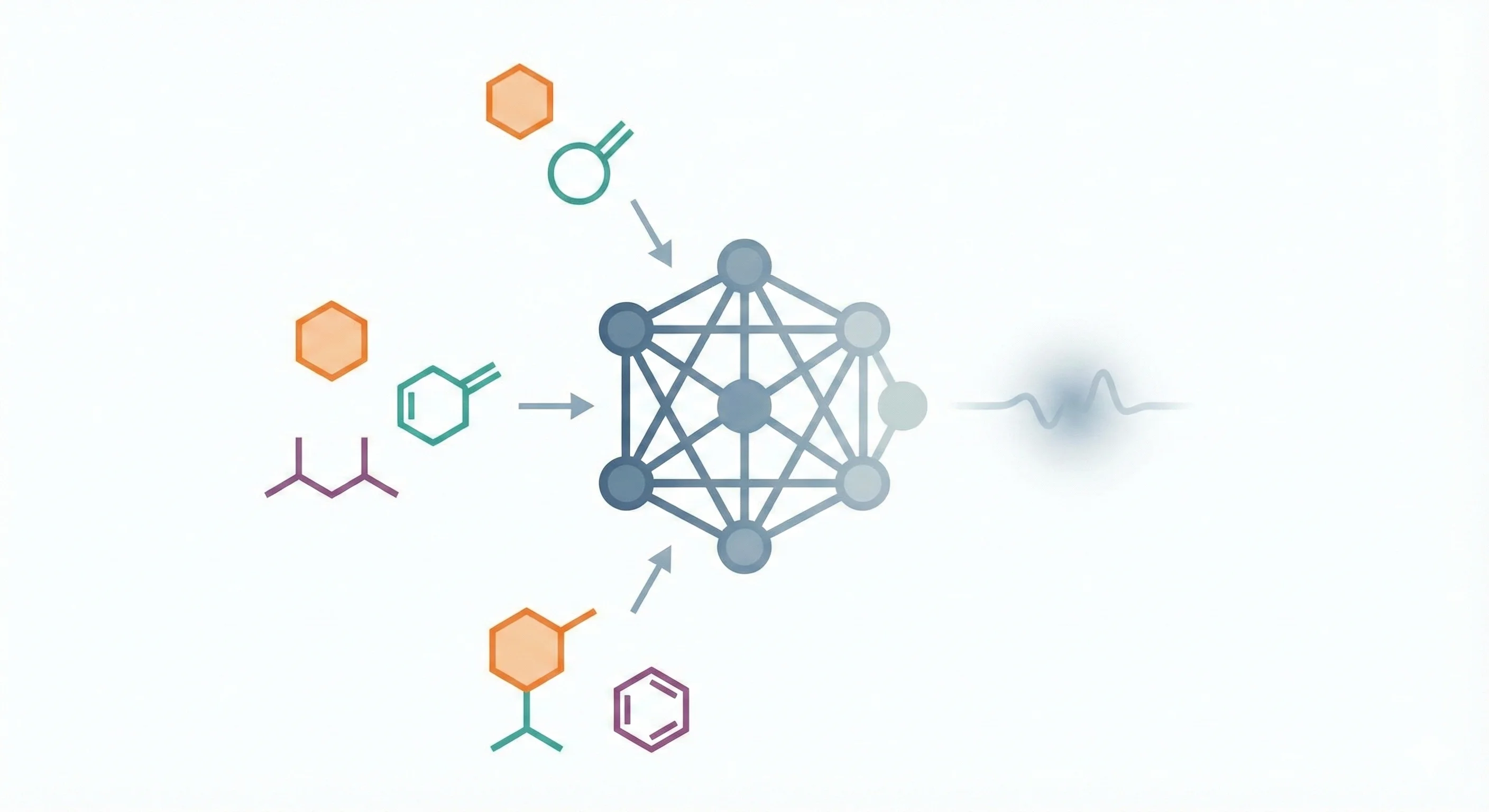
Chemical structures and molecular representations feeding into a neural network model that processes atomized chemical knowledge

ChemDFM-R: Chemical Reasoner LLM

ChemDFM-R is a 14B-parameter chemical reasoning model that integrates a 101B-token dataset of atomized chemical knowledge. Using a novel mix-sourced distillation strategy and domain-specific reinforcement learning, it achieves state-of-the-art performance on chemical benchmarks.

Computational Chemistry
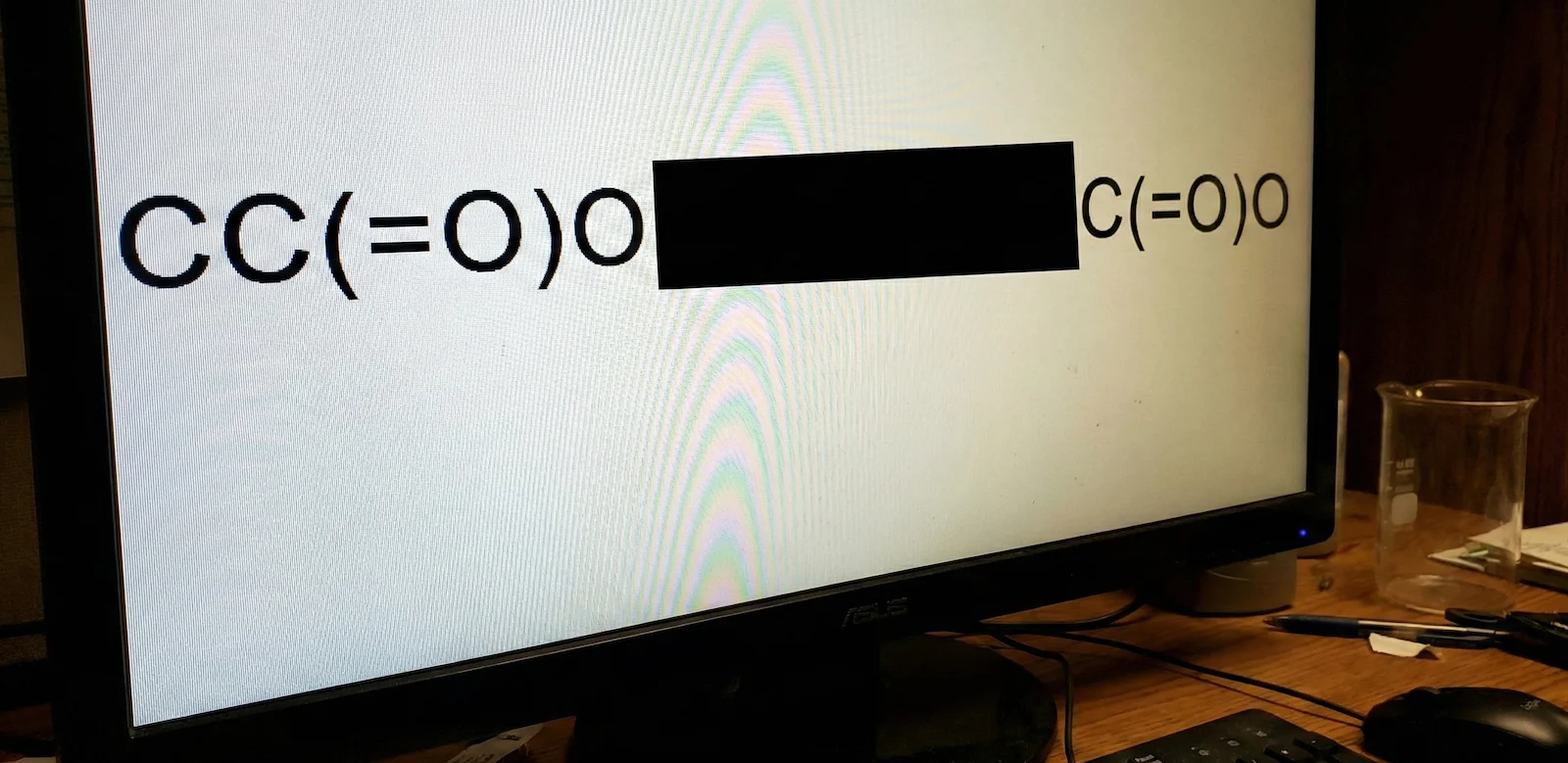
ChemBERTa masked language modeling visualization showing SMILES string CC(=O)O with masked tokens

ChemBERTa: Molecular Property Prediction via Transformers

This paper introduces ChemBERTa, a RoBERTa-based model pretrained on 77M SMILES strings. It systematically evaluates the impact of pretraining dataset size, tokenization strategies, and input representations (SMILES vs. SELFIES) on downstream MoleculeNet tasks, finding that performance scales positively with data size.

Computational Chemistry
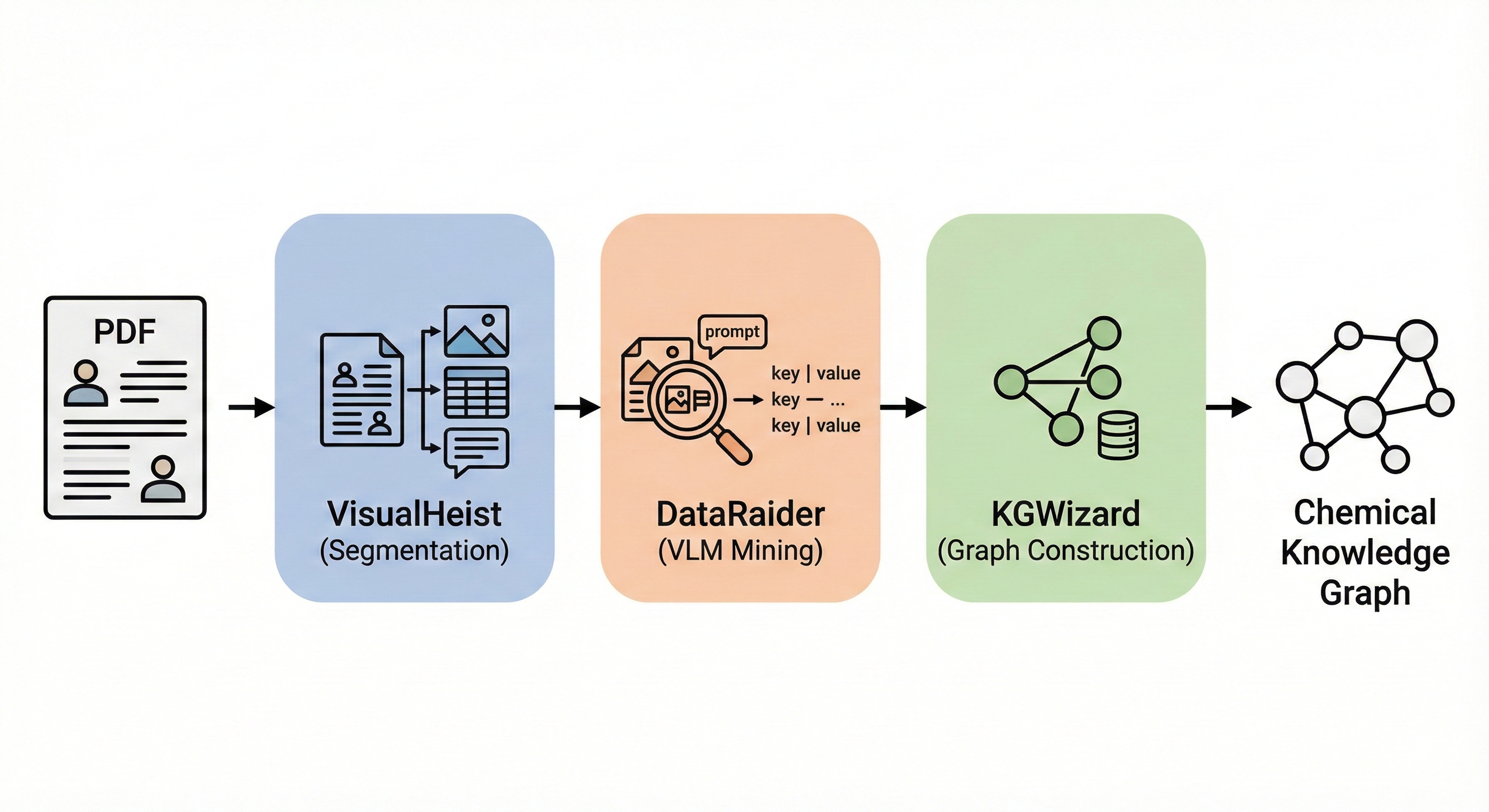
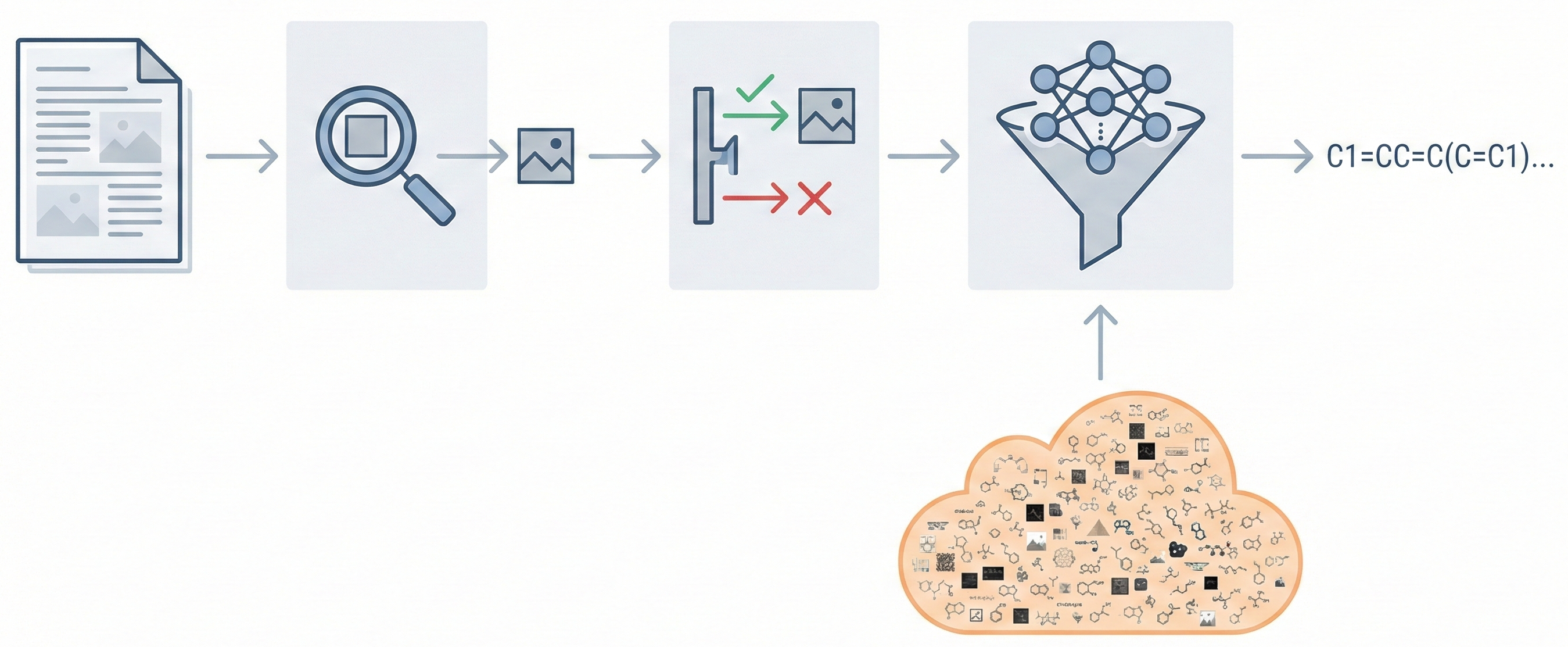
MERMaid pipeline diagram showing PDF processing through VisualHeist segmentation, DataRaider VLM mining, and KGWizard graph construction to produce chemical knowledge graphs

MERMaid: Multimodal Reaction Mining

MERMaid leverages fine-tuned vision models and VLM reasoning to mine chemical reaction data directly from PDF figures and tables. By handling context inference and coreference resolution, it builds high-fidelity knowledge graphs with 87% end-to-end accuracy.

Computational Chemistry
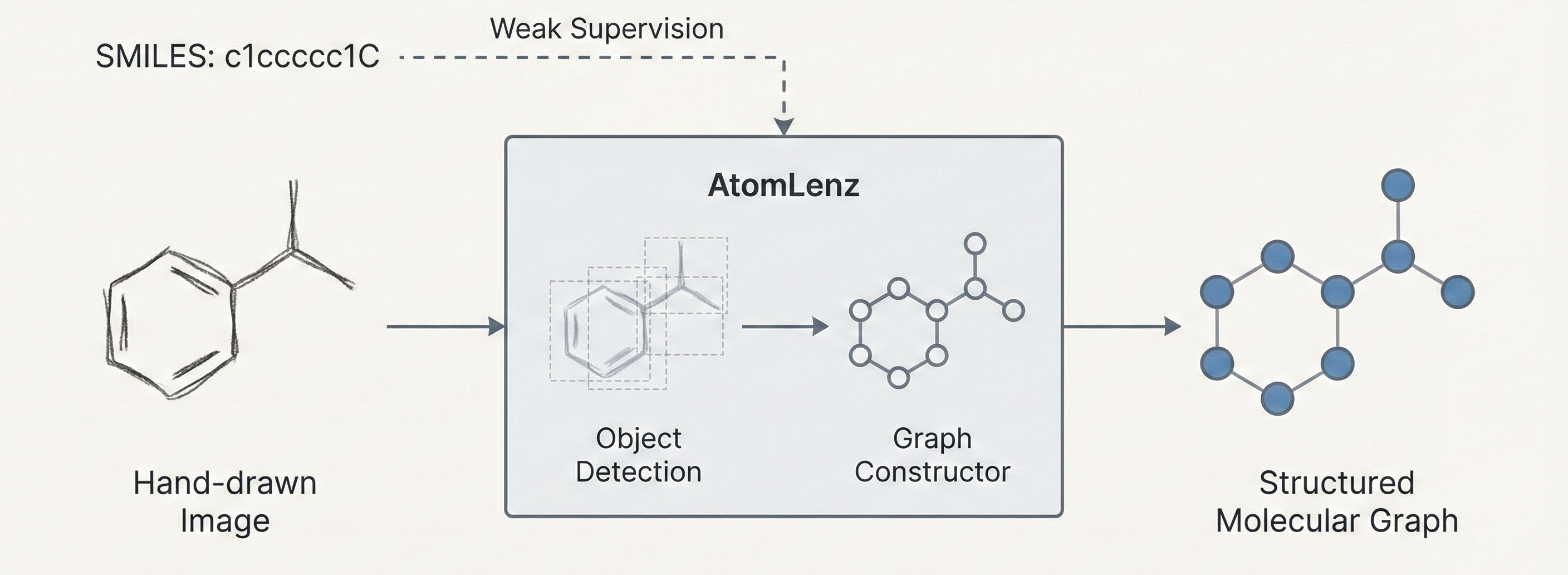
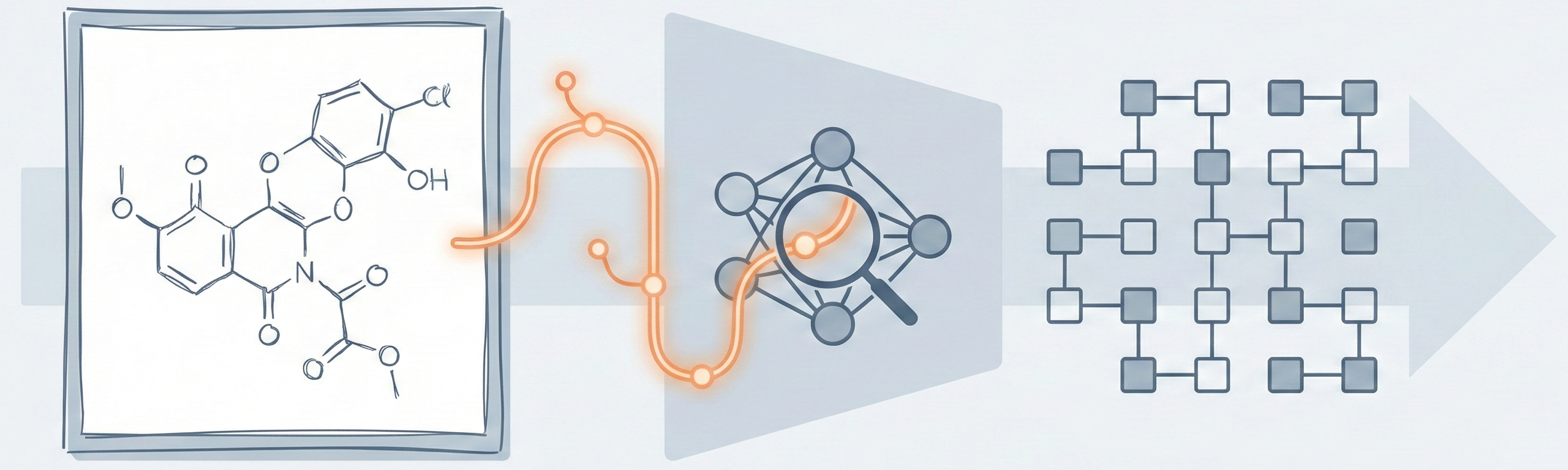
AtomLenz learns atom-level detection from hand-drawn molecular images with weak supervision

AtomLenz: Atom-Level OCSR with Limited Supervision

Introduces AtomLenz, an OCSR tool that combines object detection with a molecular graph constructor. Features a novel weakly supervised training scheme (ProbKT*) to learn atom-level localization from SMILES-only data, achieving state-of-the-art results on hand-drawn images.

Computational Chemistry
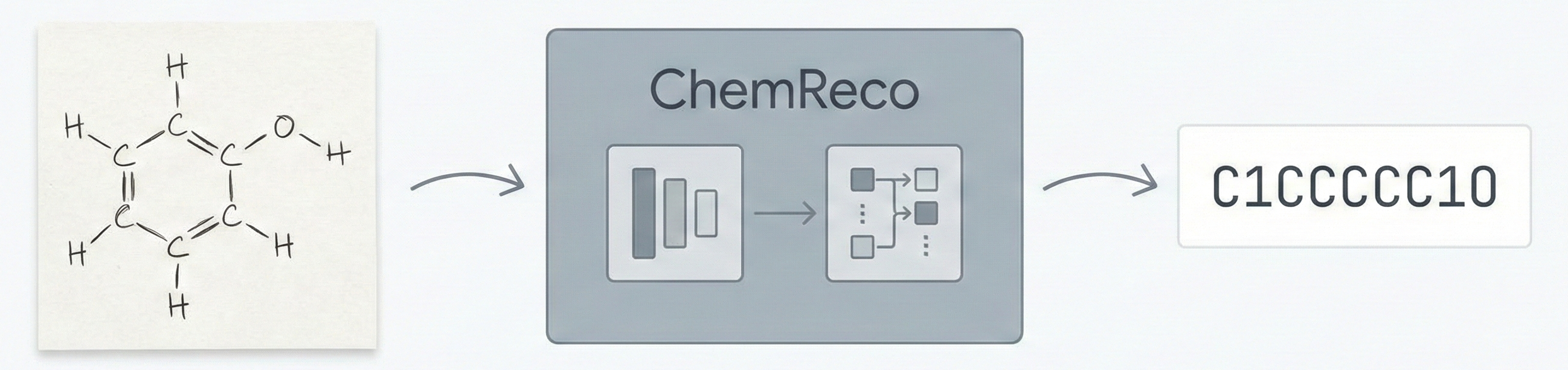
ChemReco: Hand-Drawn Chemical Structure Recognition

ChemReco: Hand-Drawn Chemical Structure Recognition

ChemReco automates the recognition of hand-drawn chemical structures using a synthetic data pipeline and an EfficientNet+Transformer architecture, achieving 96.90% accuracy on C-H-O molecules.

Computational Chemistry
DECIMER.ai: Optical Chemical Structure Recognition

DECIMER.ai: Optical Chemical Structure Recognition

DECIMER.ai addresses the lack of open tools for Optical Chemical Structure Recognition (OCSR) by providing a comprehensive, deep-learning-based workflow. It features a novel data generation pipeline (RanDepict), a web application, and models for segmentation and recognition that rival or exceed proprietary solutions.

Computational Chemistry
MolGrapher: Graph-based Visual Recognition of Chemical Structures

MolGrapher: Graph-based Chemical Recognition

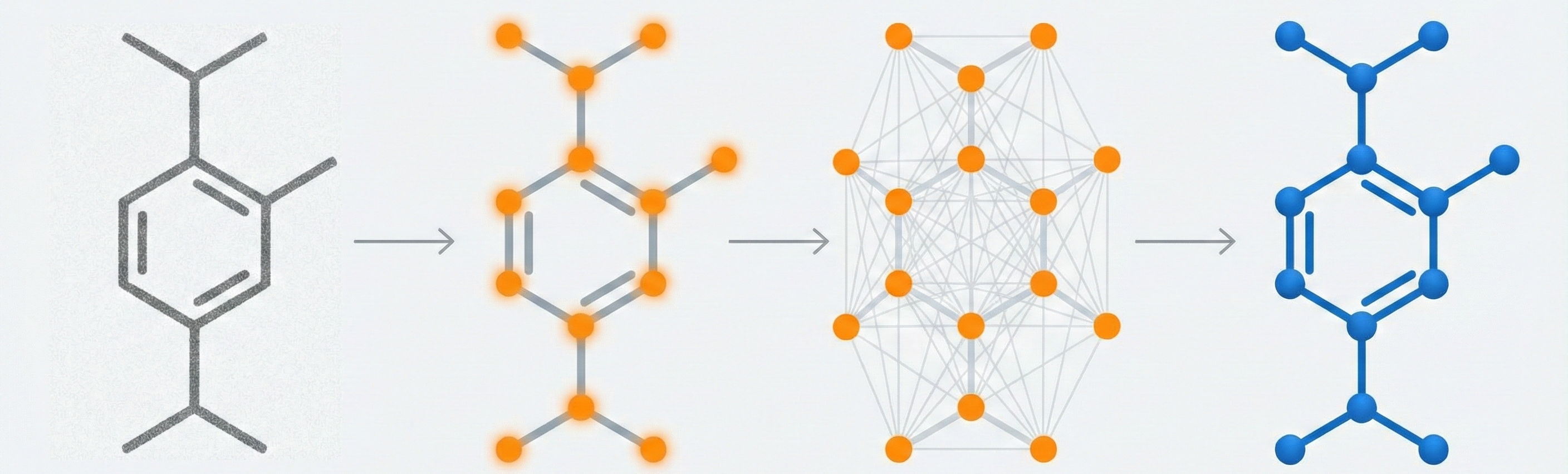
MolGrapher introduces a novel three-stage pipeline (keypoint detection, supergraph construction, GNN classification) for recognizing chemical structures from images. It achieves state-of-the-art results by treating molecules as graphs, and introduces the USPTO-30K benchmark.

Computational Chemistry
OCSU: Optical Chemical Structure Understanding

OCSU: Optical Chemical Structure Understanding

Proposes the ‘Optical Chemical Structure Understanding’ (OCSU) task to translate molecular images into multi-level descriptions (motifs, IUPAC, SMILES). Introduces the Vis-CheBI20 dataset and two paradigms: DoubleCheck (OCSR-based) and Mol-VL (OCSR-free).

Computational Chemistry
Handwritten chemical structure recognition with RCGD and SSML

Handwritten Chemical Structure Recognition with RCGD

Proposes a Random Conditional Guided Decoder (RCGD) and a Structure-Specific Markup Language (SSML) to handle the ambiguity and complexity of handwritten chemical structure recognition, validated on a new benchmark dataset (EDU-CHEMC) with 50,000 handwritten images.

Computational Chemistry

MolMiner: Deep Learning OCSR with YOLOv5 Detection

MolMiner replaces traditional rule-based vectorization with a deep learning object detection pipeline (YOLOv5) to extract chemical structures from PDFs. It achieves state-of-the-art performance on benchmarks and introduces a new real-world dataset of 3,040 images.