Optical Chemical Structure Recognition
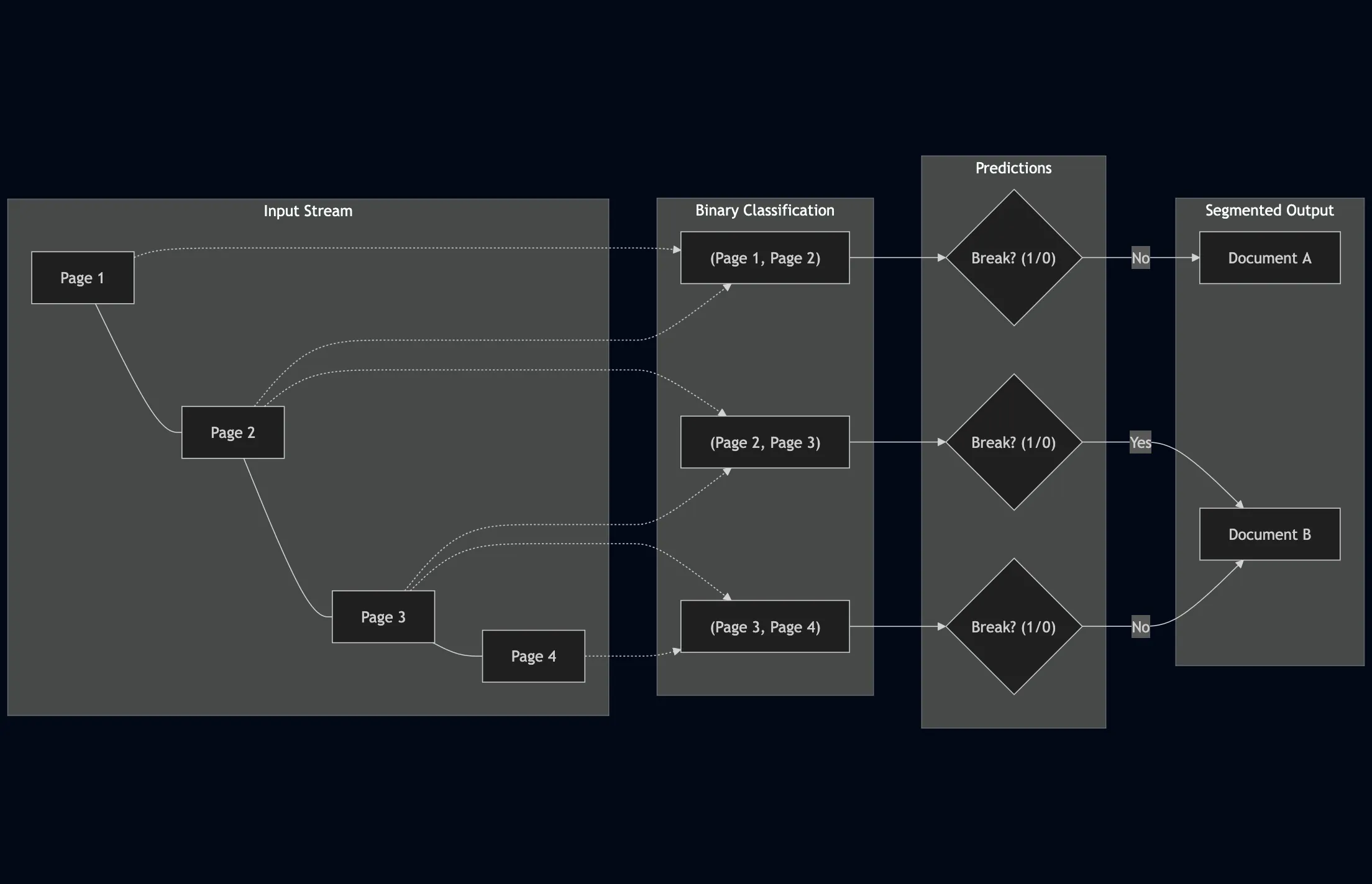
Markush structure diagram

SubGrapher: Visual Fingerprinting of Chemical Structures

SubGrapher introduces a visual fingerprinting approach to Optical Chemical Structure Recognition that detects functional groups directly from images, enabling chemical database searches without full structure reconstruction and handling complex patent images including Markush structures.
Machine Learning
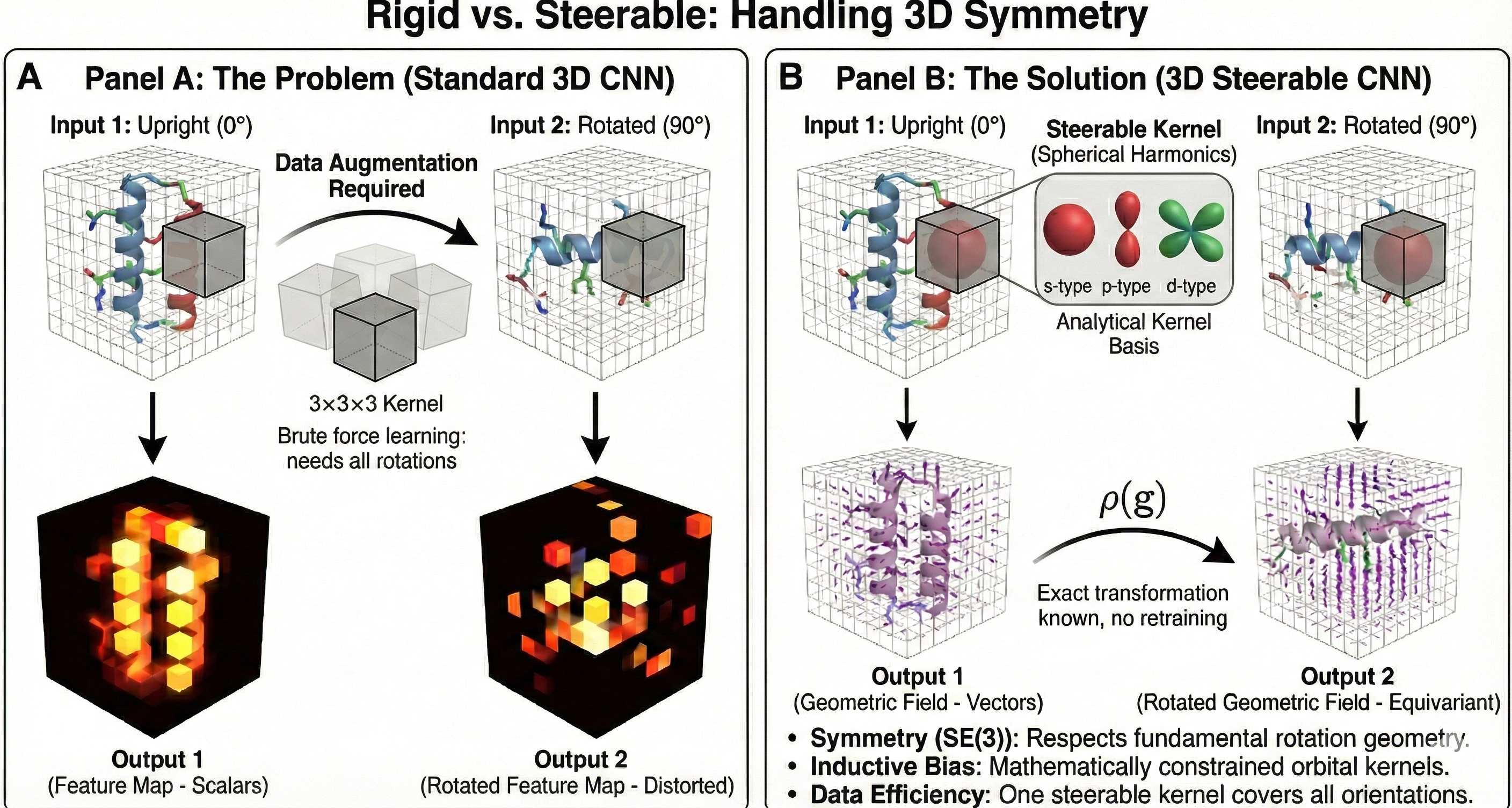
Comparison of standard 3D CNN versus 3D Steerable CNN for handling rotational symmetry

3D Steerable CNNs: Rotationally Equivariant Features

Weiler et al.’s NeurIPS 2018 paper introducing 3D Steerable CNNs that achieve SE(3) equivariance through group representation theory and spherical harmonic convolution kernels, eliminating the need for rotational data augmentation and improving data efficiency for scientific applications with rotational symmetry like molecular and protein structures.

Optical Chemical Structure Recognition
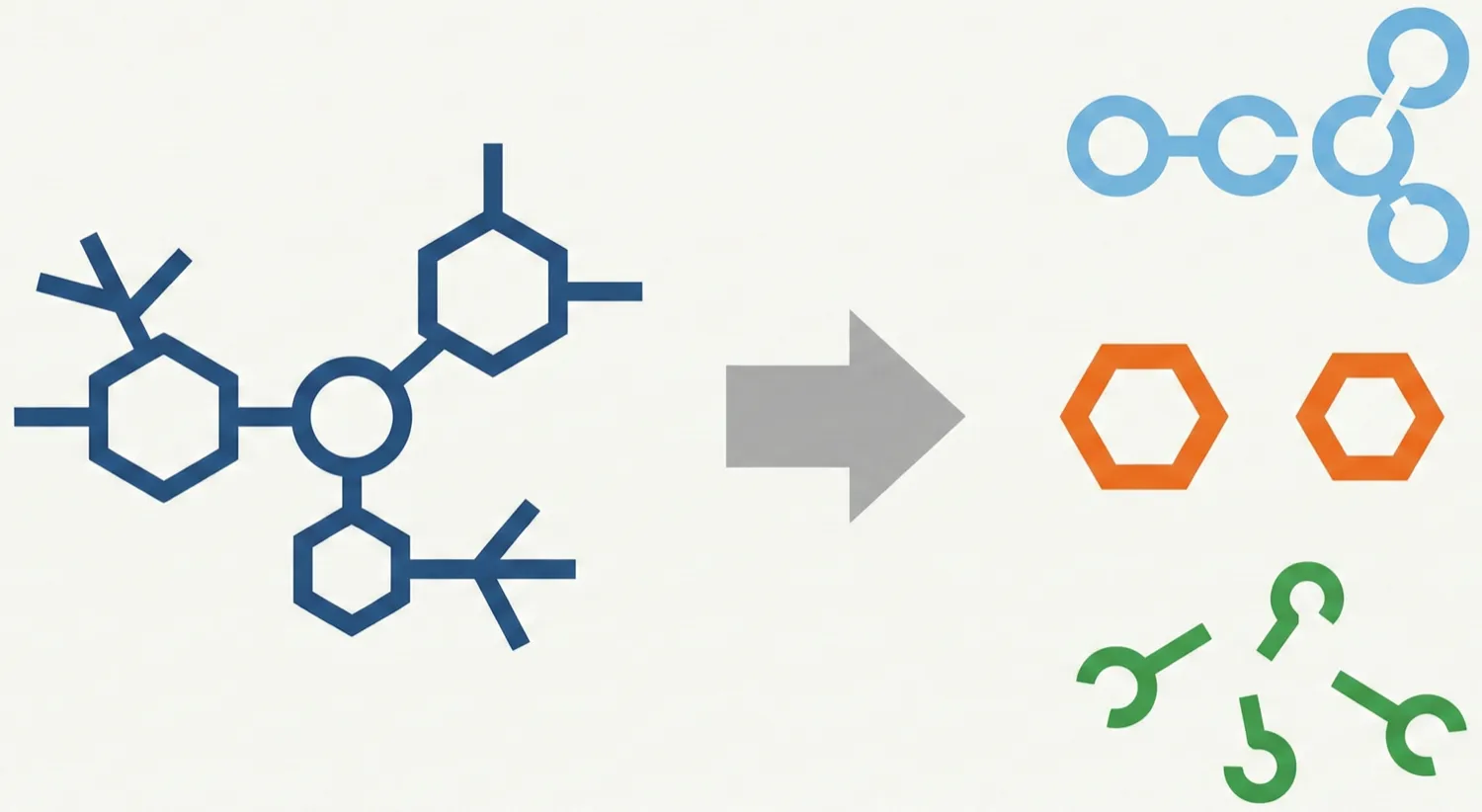
Diagram showing how Ring-Free Language decouples a molecular graph into skeleton, ring structures, and branch information

RFL: Simplifying Chemical Structure Recognition (AAAI 2025)

Proposes Ring-Free Language (RFL) to hierarchically decouple molecular graphs into skeletons, rings, and branches, solving issues with 1D serialization of complex 2D structures. Introduces the Molecular Skeleton Decoder (MSD) to progressively predict these components, achieving strong results on handwritten and printed chemical structure recognition benchmarks.

Document Processing
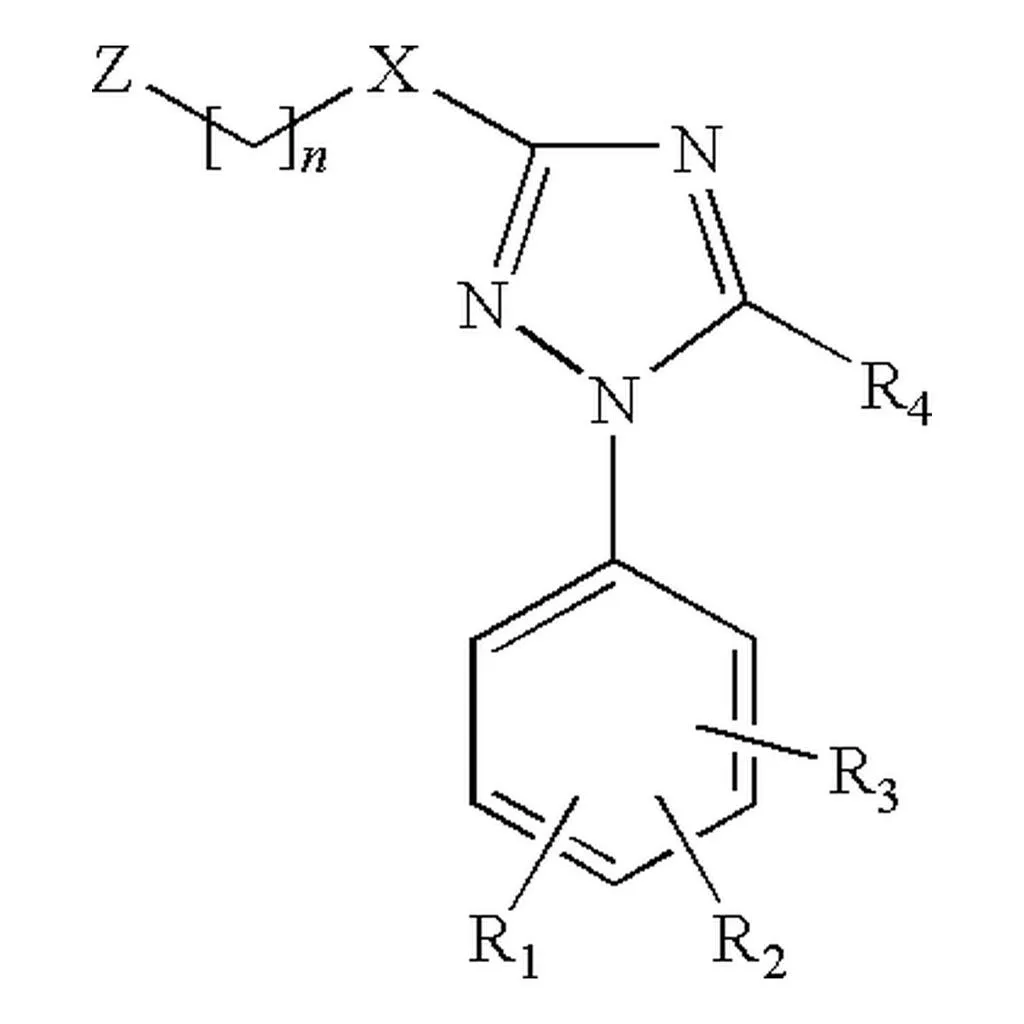
Diagram showing page stream segmentation workflow: an input stream of pages is processed through binary classification of page pairs to predict document breaks, producing segmented output documents

LLMs for Page Stream Segmentation

We create TabMe++, an enhanced page stream segmentation benchmark with commercial-grade OCR, and show that parameter-efficiently fine-tuned decoder-based LLMs like Mistral-7B achieve 80% straight-through processing rates, outperforming encoder-based models.

Creative Work
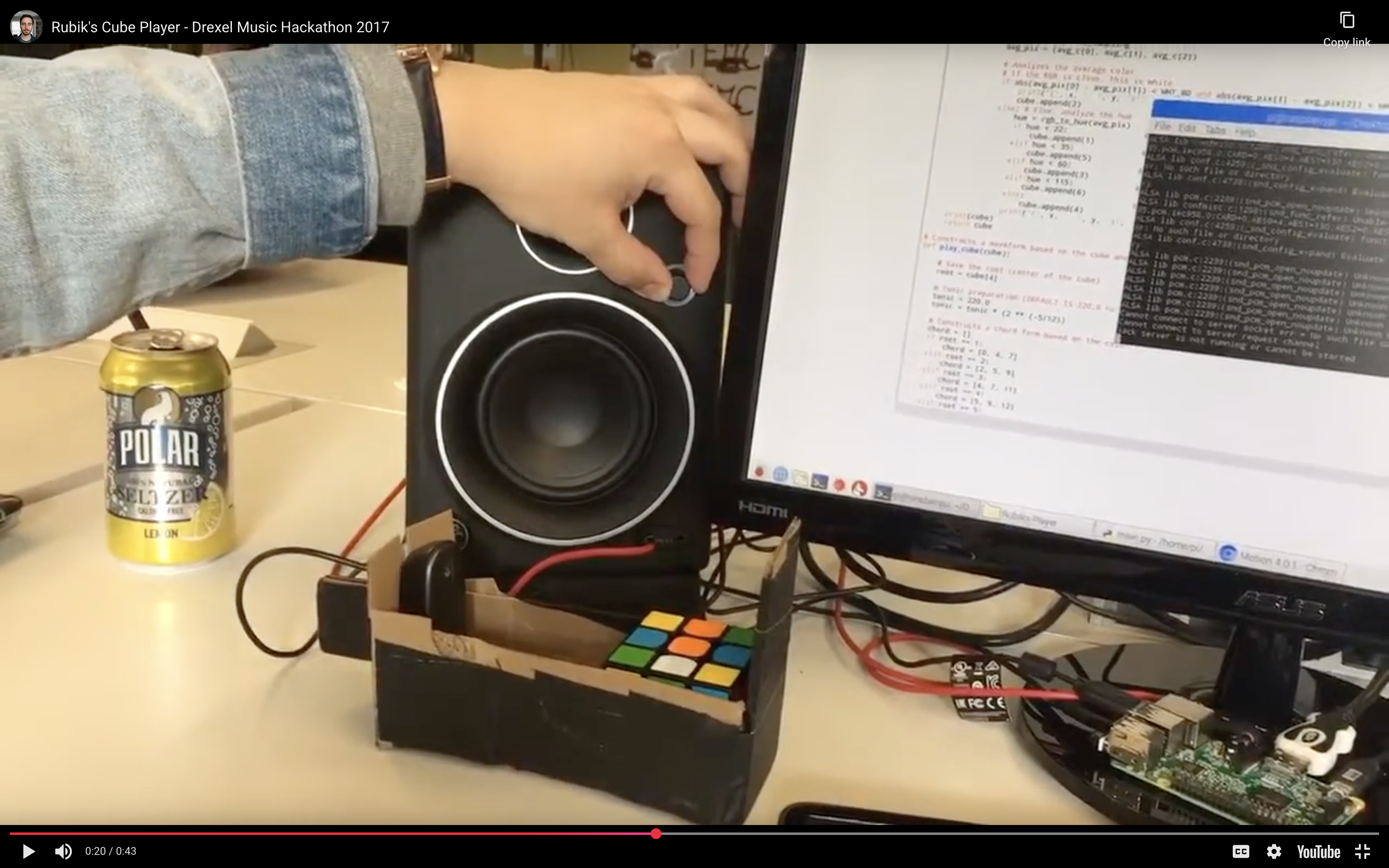
Rubik's cube solver interface

Rubik's Cube Player - Drexel Music Hackathon 2017

A project I built with Emmanuel Espino and Jason Zogheb at the 2017 Drexel Music Hackathon. It uses computer vision to read a Rubik’s cube and generates music based on how solved each face is.