Computational Chemistry
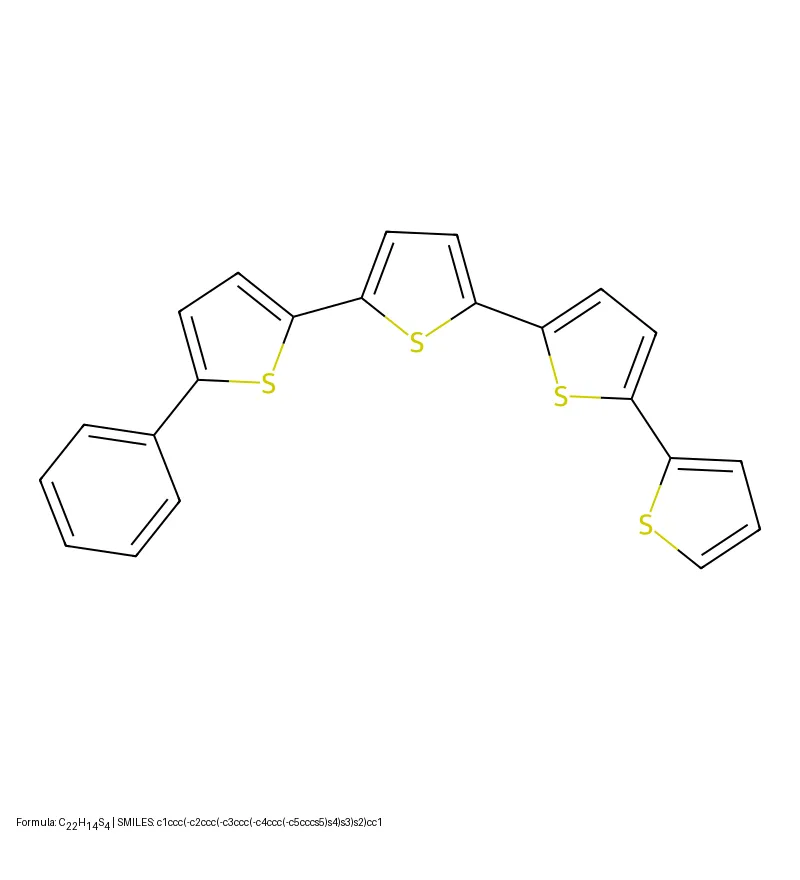
GDB-17 molecule structure showing complex polycyclic architecture

GDB-17: Chemical Universe Database (166B Molecules)

GDB-17 contains 166 billion systematically generated small organic molecules with up to 17 atoms, representing the most comprehensive exploration of drug-relevant chemical space achieved through computational enumeration.

Computational Chemistry
Comparison of 2D molecular graph versus 3D conformer ensemble showing latanoprost molecule in multiple conformations

GEOM Dataset: 3D Molecular Conformer Generation

Get a practical overview of the GEOM dataset and learn how it’s advancing 3D molecular machine learning by bridging static graphs and dynamic reality.

Computational Chemistry
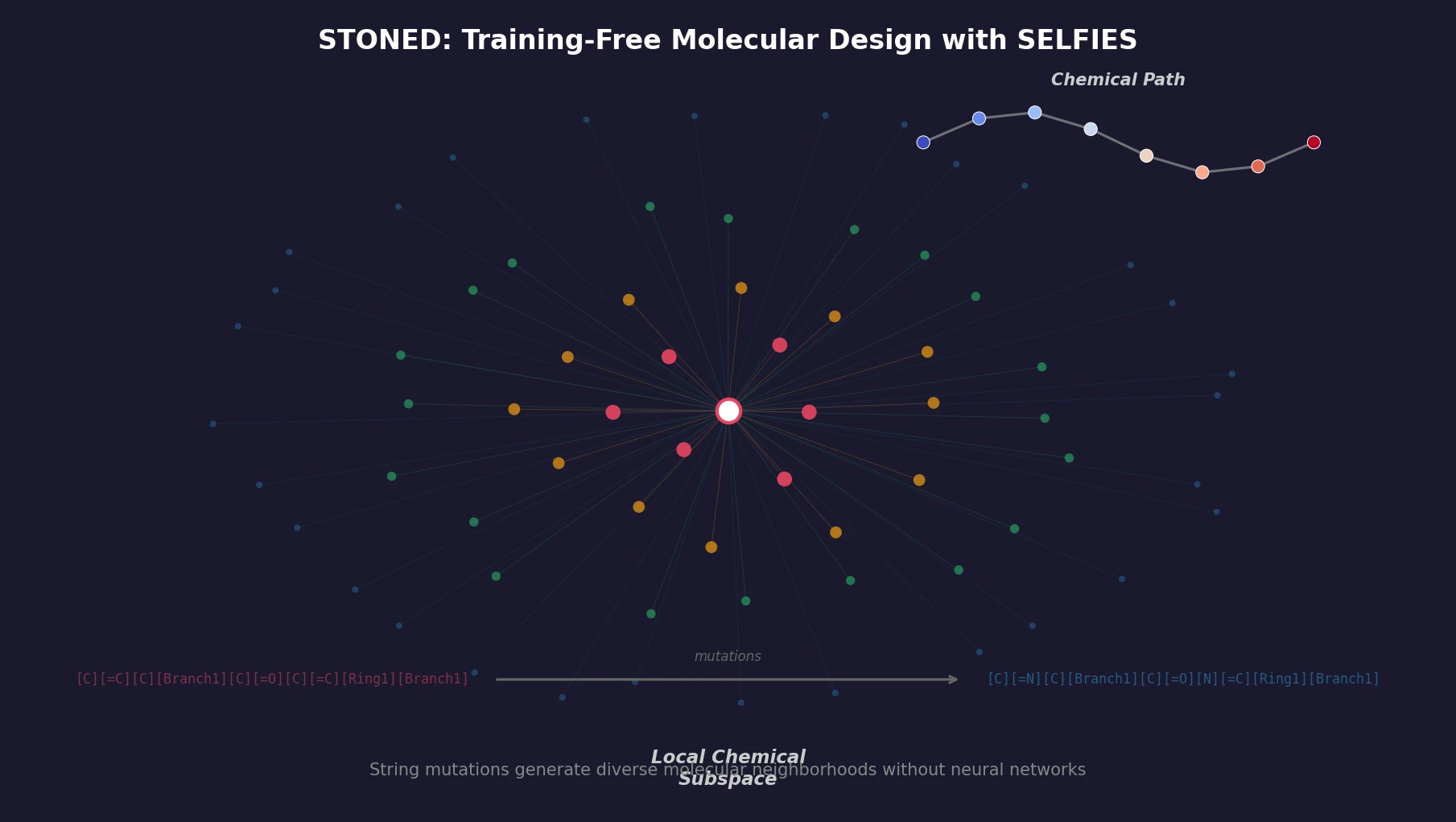
SELFIES robustness demonstration

Invalid SMILES Benefit Chemical Language Models: A Study

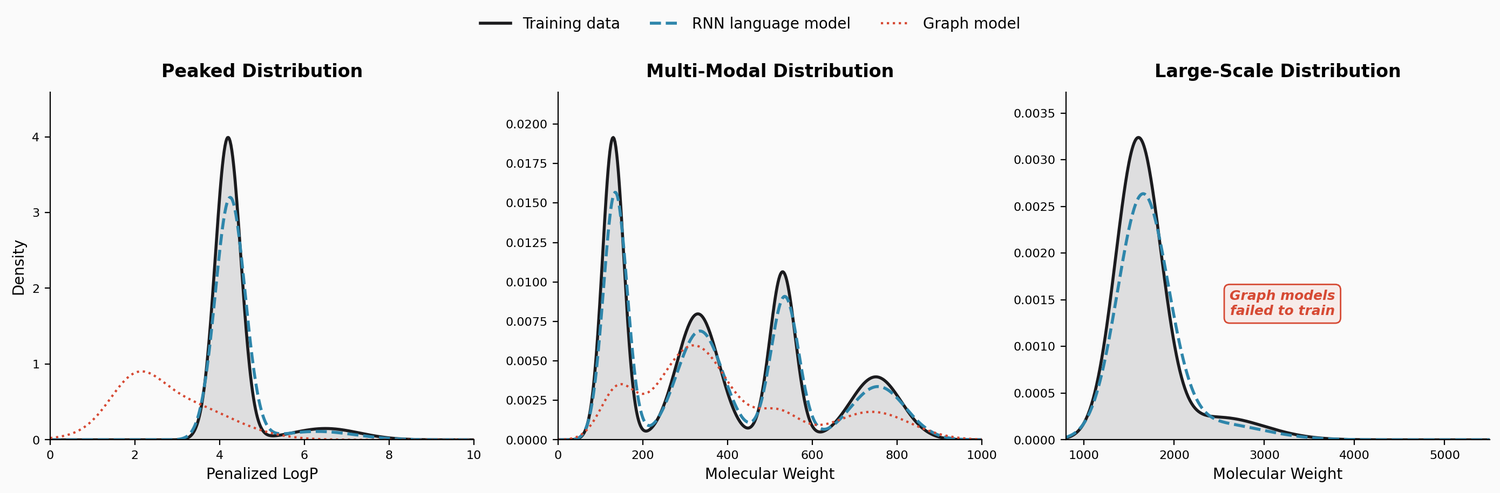
A provocative 2024 Nature Machine Intelligence paper challenging the assumption that invalid SMILES are failures, showing empirically that the ability to generate invalid outputs actually improves chemical language model performance by enabling quality filtering and providing richer training signals.

Computational Chemistry
3D ball-and-stick model of butane molecule representing the structural isomer generation process

Synthetic Isomer Data Generation Pipeline

An end-to-end data factory for molecular machine learning that transforms raw chemical formulas (e.g., C6H14) into labeled 3D conformer datasets, using MAYGEN for structural isomer enumeration, RDKit for 3D embedding, and physics-based featurization to address data scarcity in computational drug discovery.

Computational Chemistry
3D ball-and-stick model of butane molecule showing linear carbon chain structure

Hearing Molecular Shape via Coulomb Matrix Eigenvalues

Can mathematical signatures capture molecular shape? We test whether Coulomb matrix eigenvalues can distinguish alkane constitutional isomers, from unsupervised clustering failures to supervised learning successes.

Computational Chemistry
Coulomb matrix heatmap visualization showing molecular structure encoding on logarithmic scale

Coulomb Matrices for Molecular Machine Learning

A practical introduction to Coulomb matrices: how they transform molecular 3D structures into ML features, complete with Python examples and honest assessment of their limitations.

Computational Chemistry
SELFIES robustness demonstration

SELFIES and the Future of Molecular String Representations

A 2022 perspective paper by Krenn, Aspuru-Guzik, and colleagues reviewing 250 years of chemical notation evolution and proposing 16 concrete research projects to extend SELFIES beyond traditional organic chemistry into polymers, crystals, reactions, and other complex chemical systems where traditional representations break down.