Computational Chemistry

OSRA at CLEF-IP 2012: Native TIFF Processing for Patents

Benchmarks OSRA on CLEF-IP 2012 patent data, showing native image processing improves precision from 0.433 to 0.708 over external splitting tools. Describes OSRA’s pairwise distance algorithm for segmentation that handles overlapping molecules better than bounding boxes.
Computational Chemistry

Overview of the TREC 2011 Chemical IR Track Benchmark

This resource paper details the third TREC Chemical IR campaign, introducing a novel Image-to-Structure task and analyzing 36 runs from 9 groups to benchmark chemical information retrieval.

Computational Chemistry
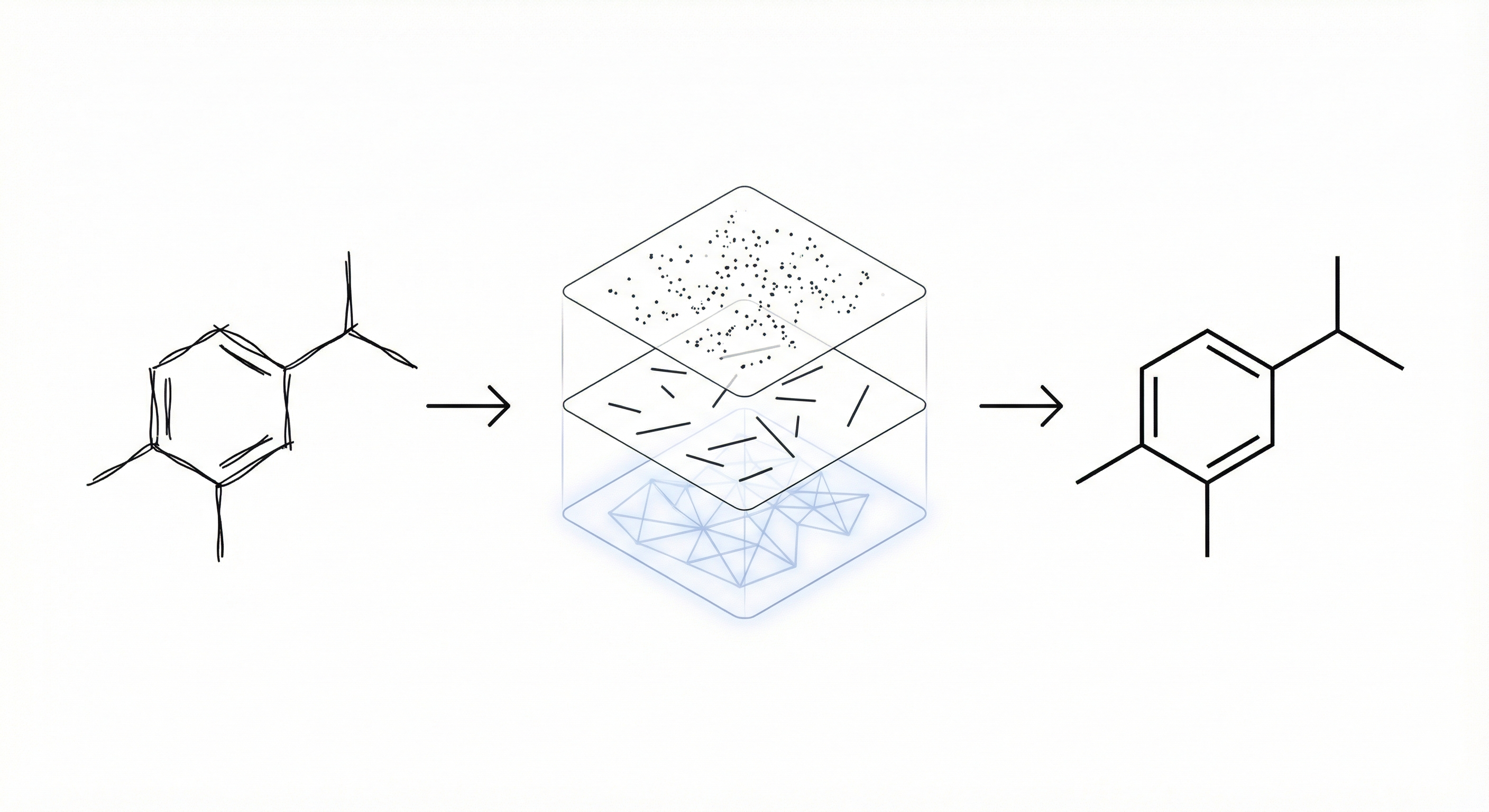
Diagram of the ChemInk sketch recognition system converting freehand chemical drawings into structured molecular data

ChemInk: Real-Time Recognition for Chemical Drawings

ChemInk introduces a sketch recognition system for chemical diagrams that combines multi-level visual features via a joint Conditional Random Field (CRF), achieving 97.4% accuracy and outperforming CAD tools in user speed.

Computational Chemistry
Diagram of the CLiDE Pro system for segmenting document images and reconstructing chemical connection tables

CLiDE Pro: Optical Chemical Structure Recognition Tool

This paper introduces CLiDE Pro, an advanced OCSR system that segments document images and reconstructs chemical connection tables. It features novel handling for crossing bonds and generic structures, validating performance on a publicly released benchmark of 454 scanned images.

Computational Chemistry

OSRA at TREC-CHEM 2011: Optical Structure Recognition

This paper details the algorithmic pipeline of OSRA, an open-source tool that converts raster images of chemical diagrams into connection tables (SMILES/SDF). It outlines specific heuristics for page segmentation, vectorization, and atom recognition used in the TREC-CHEM Image2Structure task.

Computational Chemistry
Automatic chemical image recognition pipeline from raster image to structured file

Automatic Recognition of Chemical Images

This methodological paper presents a system for digitizing chemical images into SDF files. It utilizes a custom vectorization algorithm and chemical rule validation, achieving 94% accuracy on benchmark datasets compared to 50% for commercial tools.

Computational Chemistry
Overview of the ChemReader pipeline for extracting chemical structures from raster images using Hough transform and OCR

ChemReader: Automated Structure Extraction

This paper presents ChemReader, a fully automated optical structure recognition tool that converts raster images of chemical diagrams into machine-readable formats. It introduces a modified Hough transform for bond detection and a chemical spell checker that improves OCR accuracy from 66% to 87%.

Computational Chemistry
Chemical structure diagram for optical recognition

OSRA: Open Source Optical Structure Recognition

This paper presents OSRA, the first open-source utility for converting graphical chemical structures from documents into machine-readable formats (SMILES/SD). It outlines a pipeline combining existing image processing tools with custom heuristics for bond and atom detection, establishing a foundation for accessible chemical information extraction.

Computational Chemistry
Five-stage pipeline for reconstructing chemical molecules from raster images

Reconstruction of Chemical Molecules from Images

This methodological paper proposes a comprehensive pipeline to digitize chemical structure images. It achieves 97% reconstruction accuracy on benchmarks by combining a topology-preserving vectorizer with a chemical knowledge validation module.

Computational Chemistry
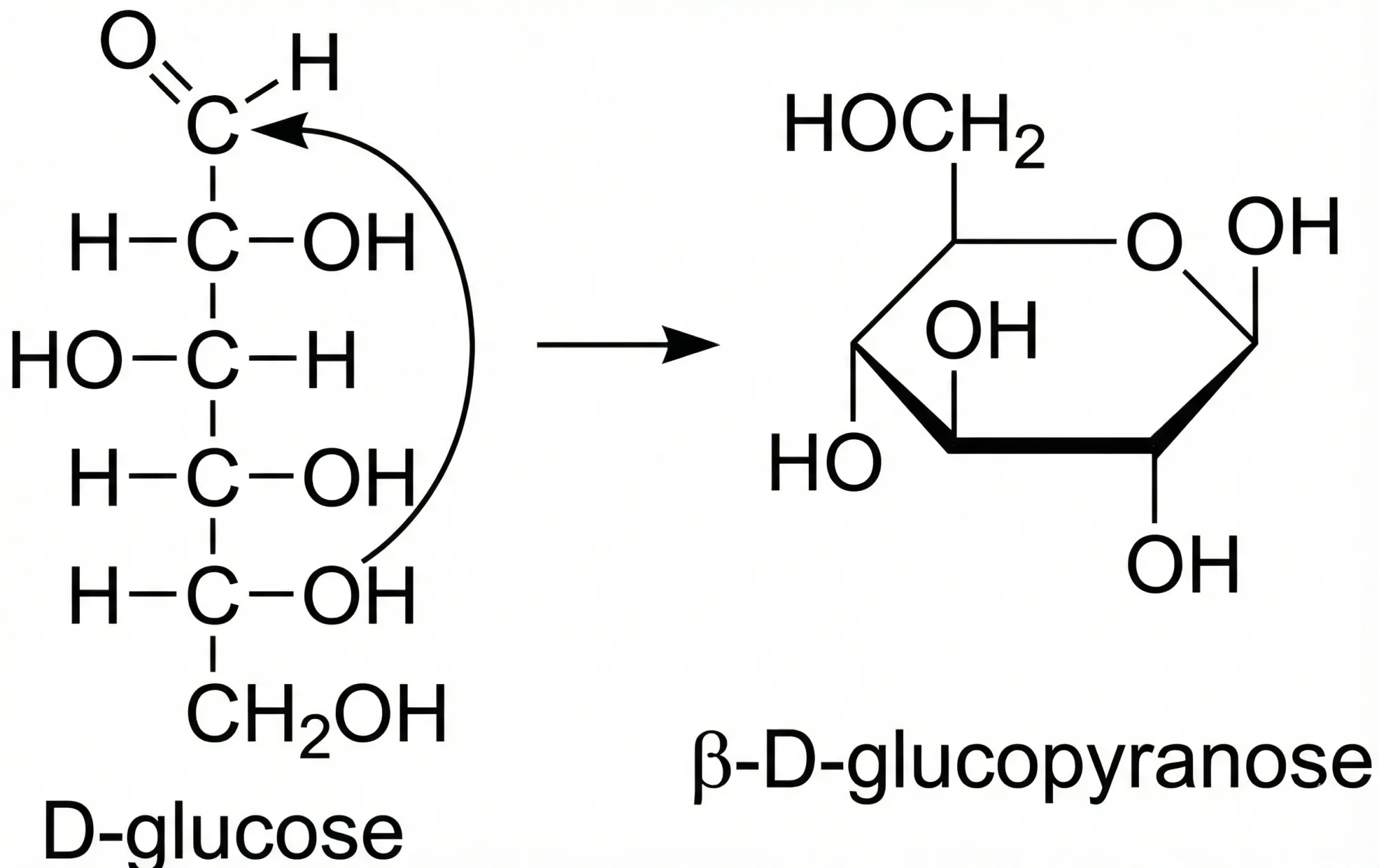
D-glucose open-chain aldehyde form converting to beta-D-glucopyranose ring form, illustrating ring-chain tautomerism

InChI and Tautomerism: Toward Comprehensive Treatment

A comprehensive 2020 analysis of the tautomerism problem in chemical databases, compiling 86 tautomeric transformation rules (20 existing, 66 new) and validating them across 400M+ structures to inform algorithmic improvements for InChI V2.

Computational Chemistry
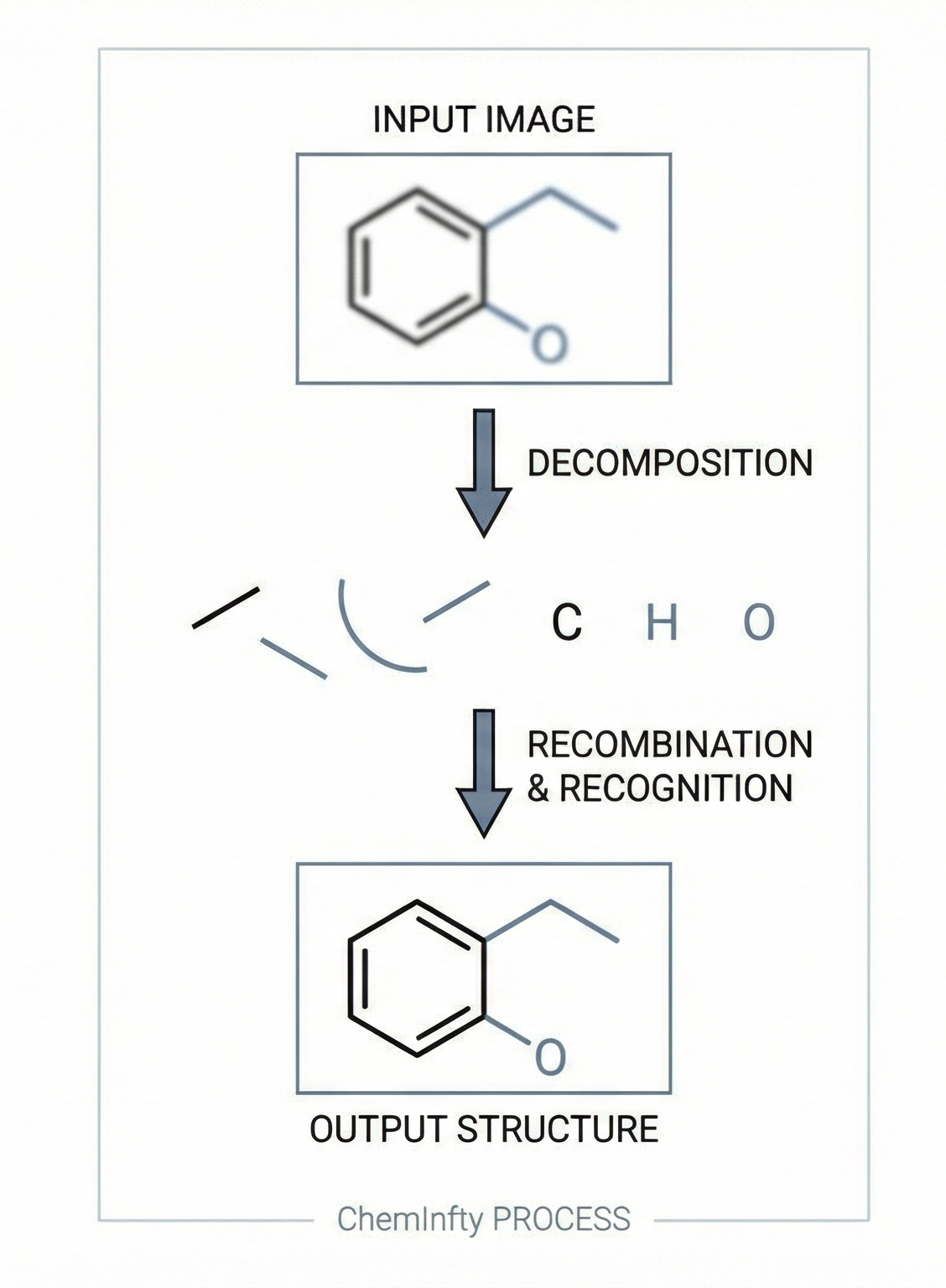
Segment-based chemical structure recognition pipeline for low-quality patent images with touching characters and broken lines

ChemInfty: Chemical Structure Recognition in Patent Images

A 2011 rule-based OCSR system designed specifically for the challenging low-quality images in Japanese patent applications, using segment-based methods to handle pervasive problems like touching characters, merged atom labels with bonds, and broken lines.

Computational Chemistry
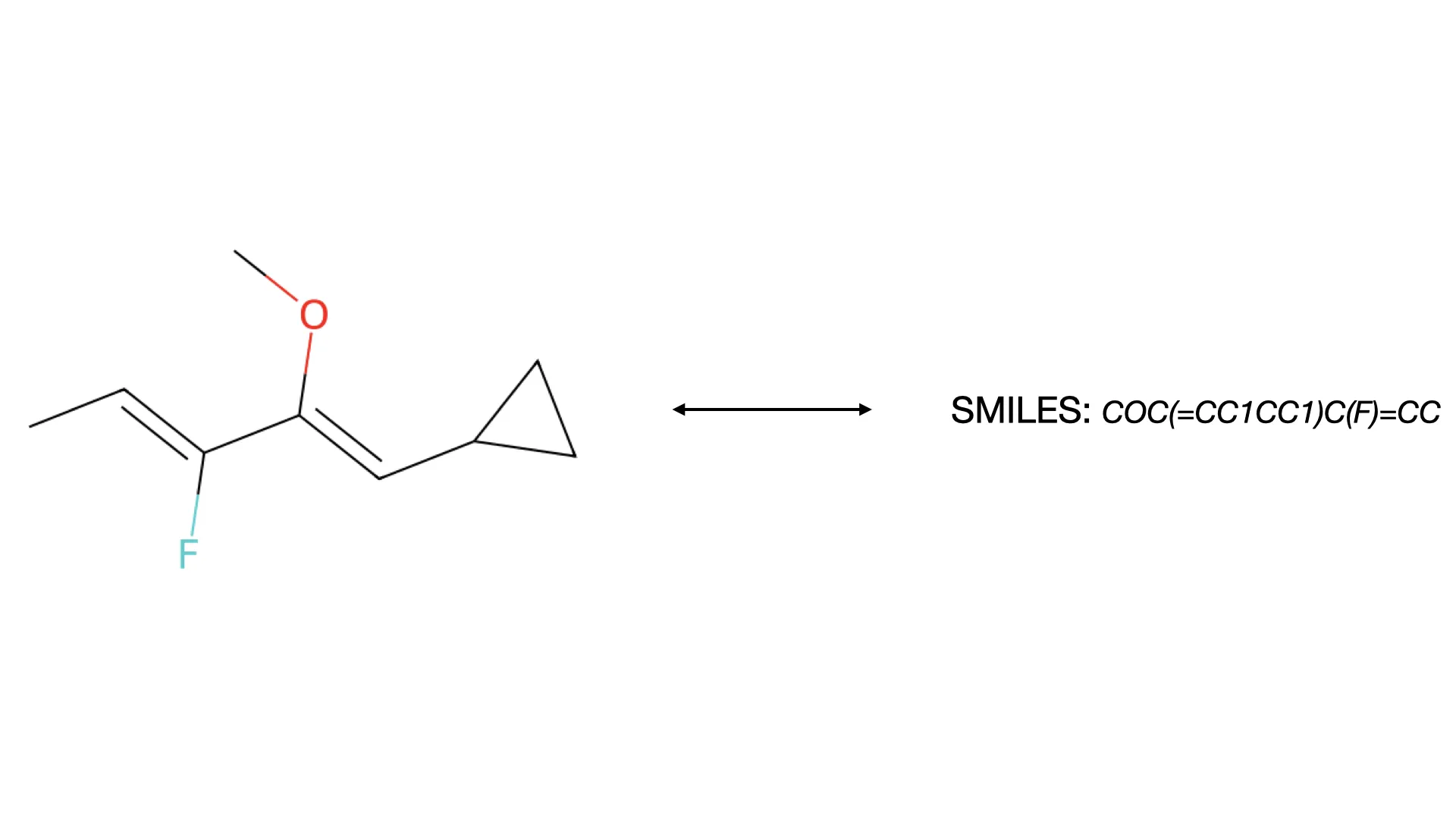
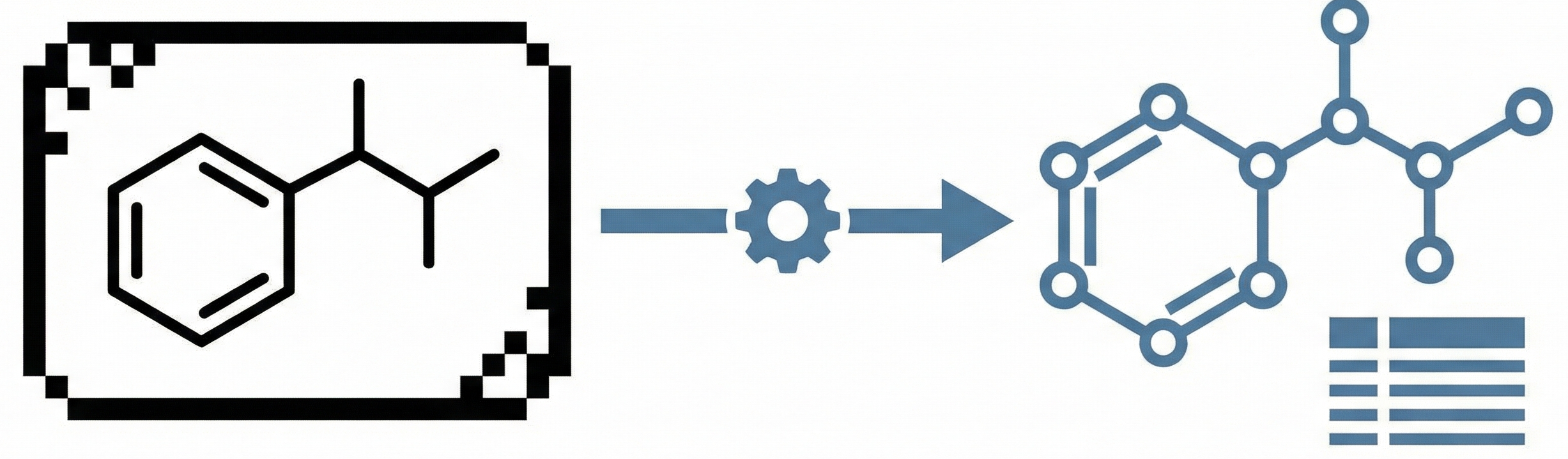
Optical chemical structure recognition example

MolParser: End-to-End Molecular Structure Recognition

A 2025 end-to-end OCSR system addressing both technical and data challenges, introducing MolParser-7M (7M+ image-text pairs) and MolDet (YOLO-based detector) for extracting and recognizing molecular structures from real-world documents with diverse quality and styles.