Computational Chemistry
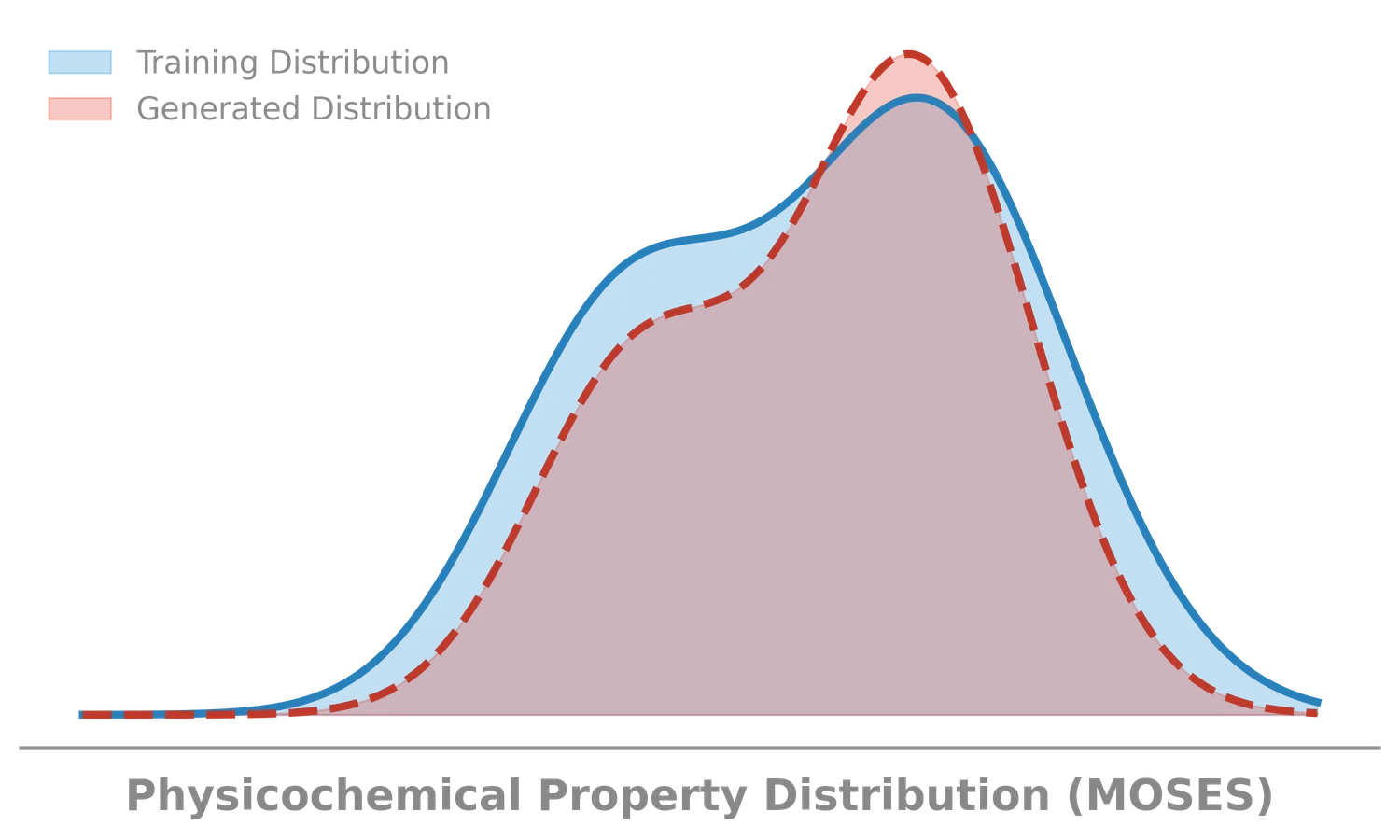
Density plot showing training vs generated physicochemical property distribution

Molecular Sets (MOSES): A Generative Modeling Benchmark

MOSES introduces a comprehensive benchmarking platform for molecular generative models, offering standardized datasets, evaluation metrics, and baselines. By providing a unified measuring stick, it aims to resolve reproducibility challenges in chemical distribution learning.
Computational Chemistry
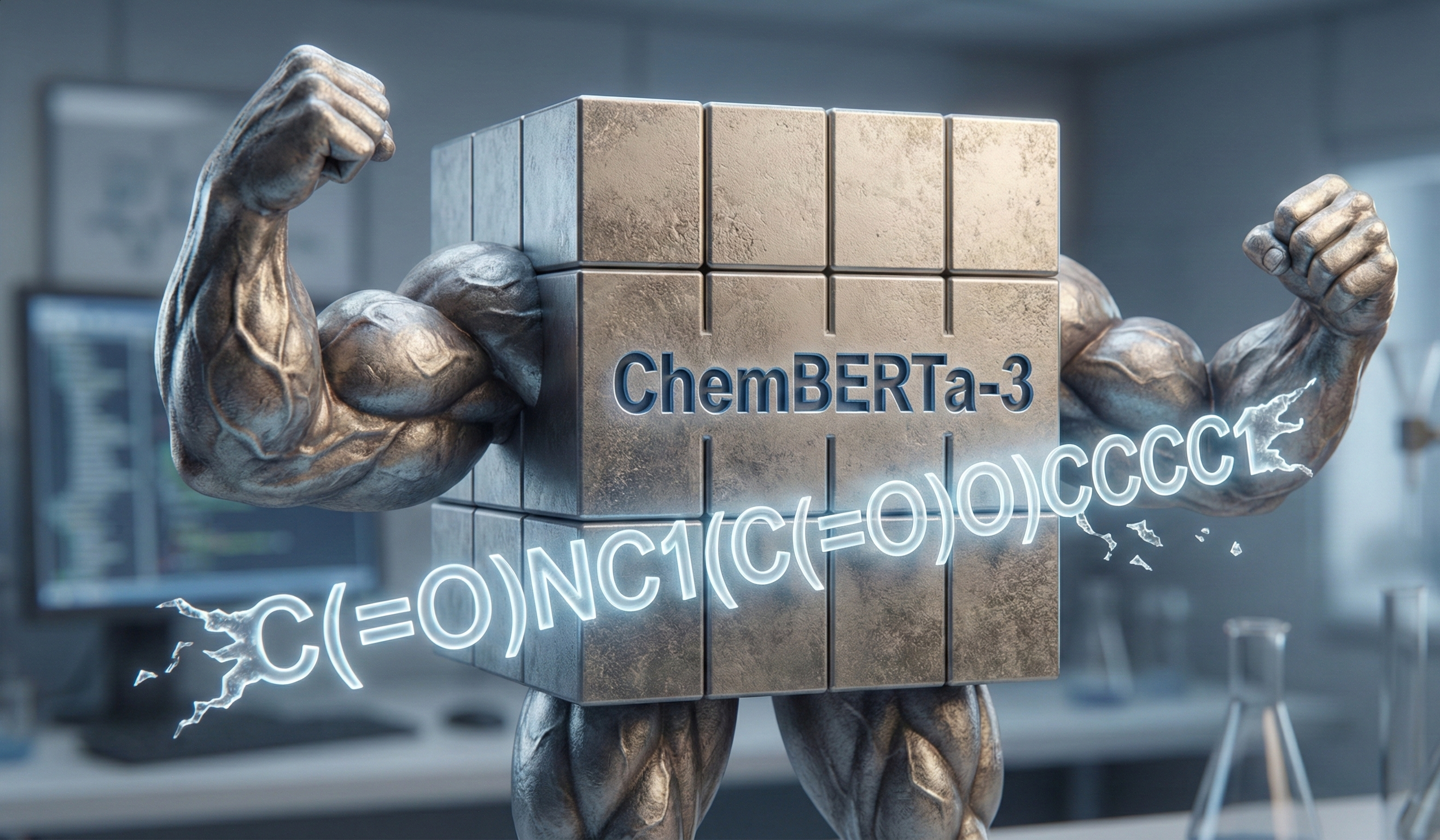
ChemBERTa-3 visualization showing muscular arms lifting a stack of building blocks representing molecular data with SMILES notation, symbolizing the power and scalability of the open-source training framework

ChemBERTa-3: Open Source Chemical Foundation Models

ChemBERTa-3 provides a unified, scalable infrastructure for pretraining and benchmarking chemical foundation models. It addresses reproducibility gaps in previous studies like MoLFormer through standardized scaffold splitting and open-source tooling.

Computational Chemistry
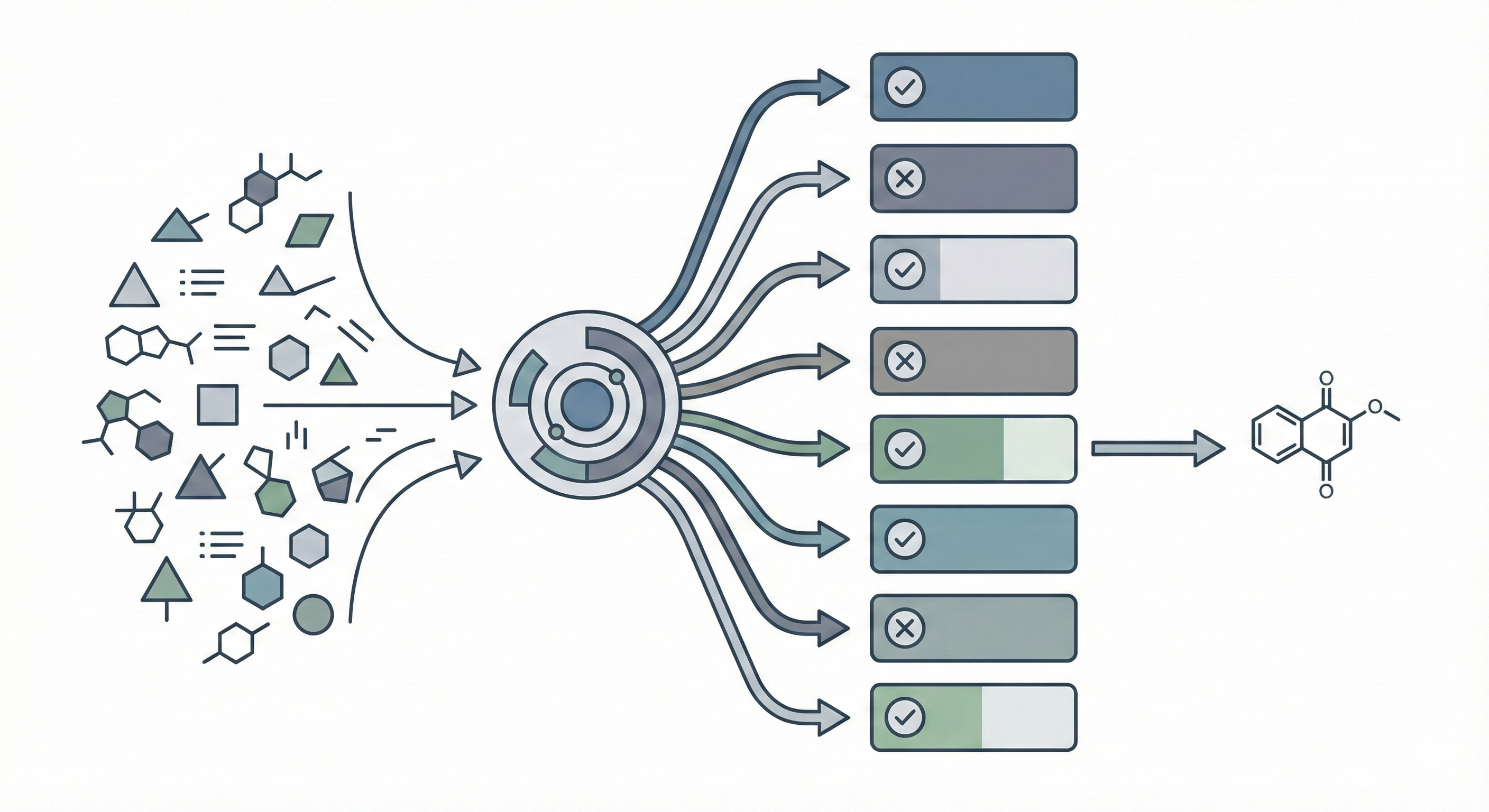
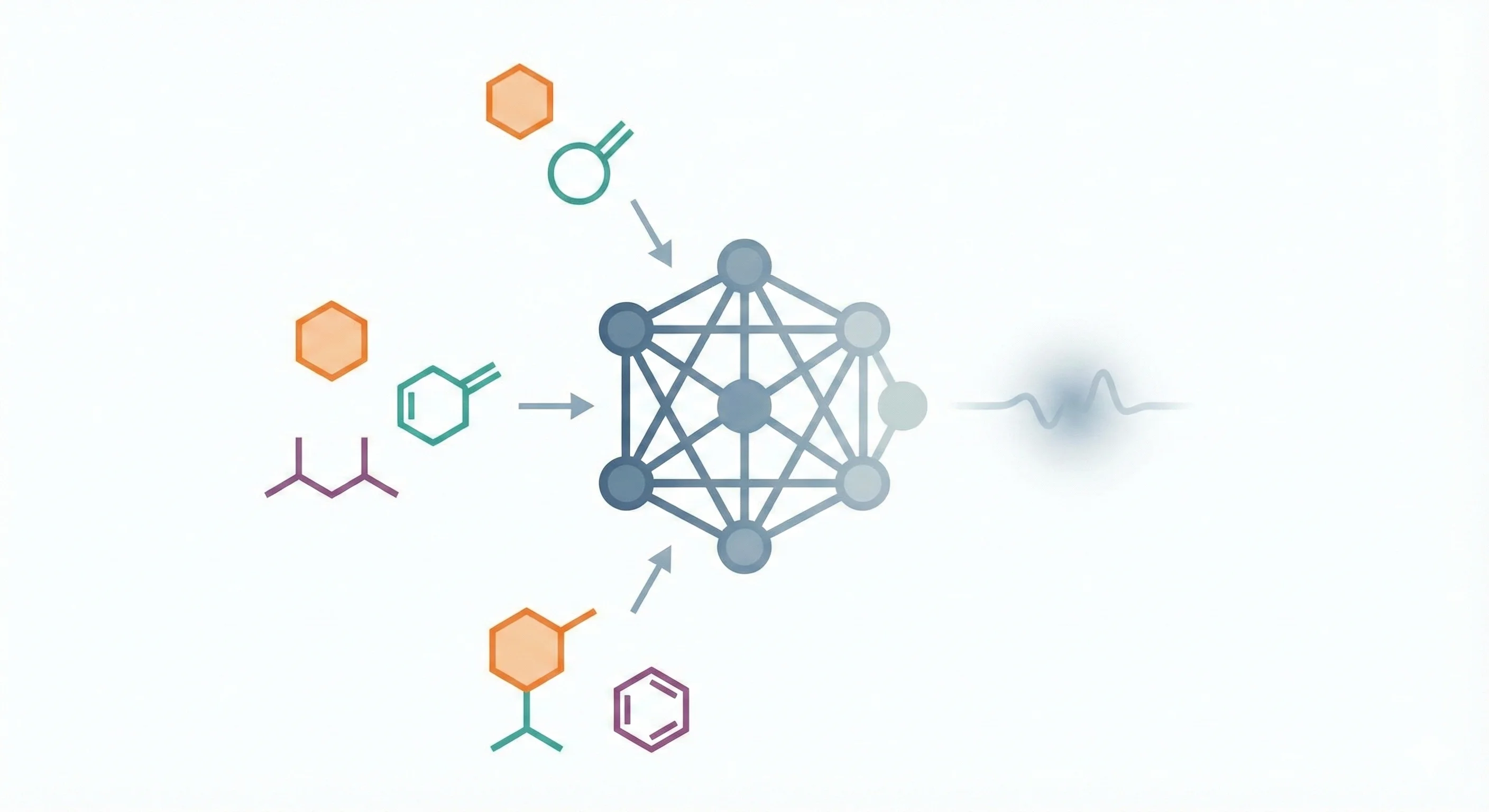
Chemical structures and molecular representations feeding into a neural network model that processes atomized chemical knowledge

ChemDFM-R: Chemical Reasoning LLM with Atomized Knowledge

ChemDFM-R is a 14B-parameter chemical reasoning model that integrates a 101B-token dataset of atomized chemical knowledge. Using a mix-sourced distillation strategy and domain-specific reinforcement learning, it outperforms similarly sized models and DeepSeek-R1 on ChemEval.

Computational Chemistry
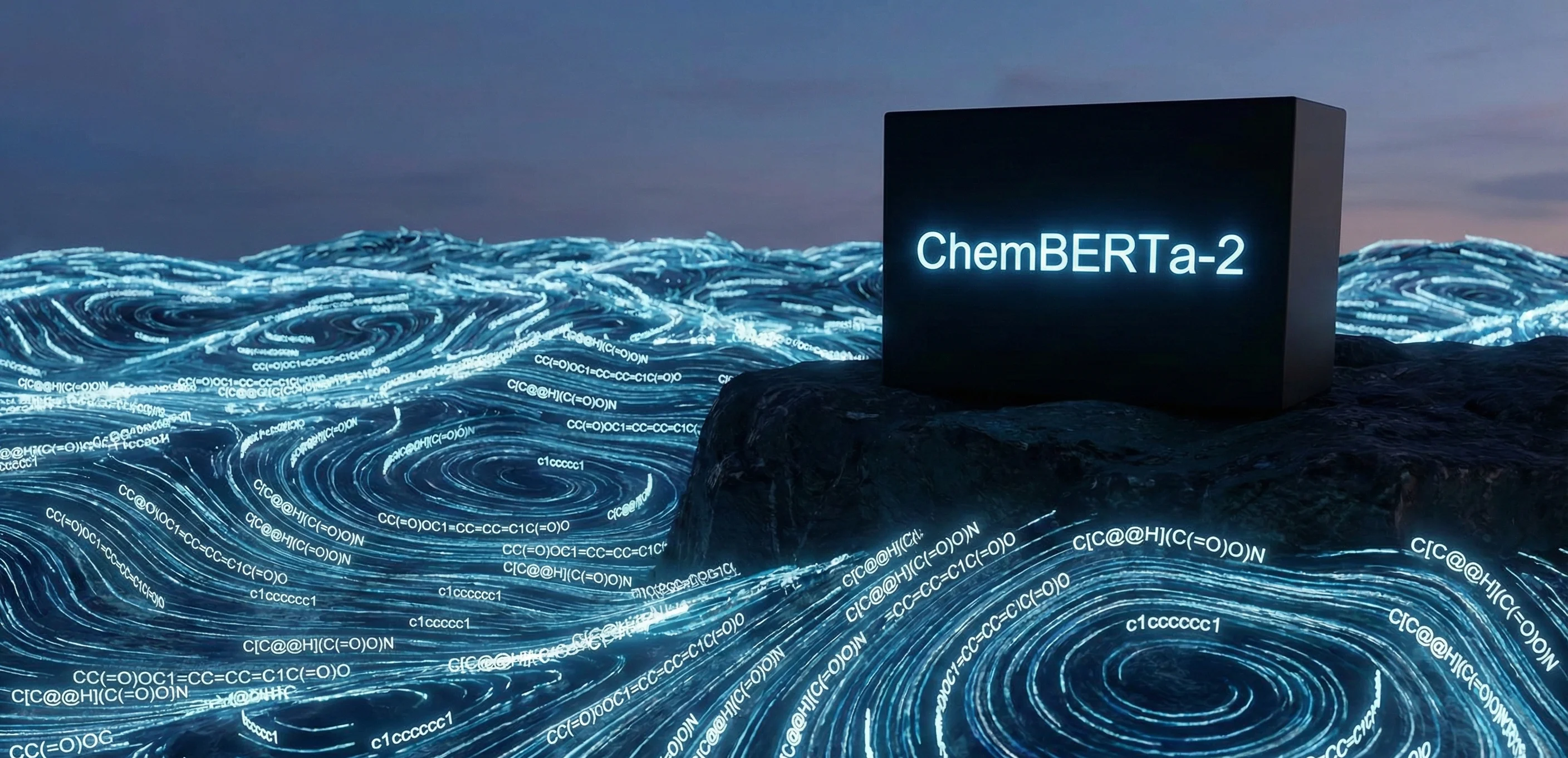
ChemBERTa-2 visualization showing flowing SMILES strings in blue tones representing molecular data streams

ChemBERTa-2: Scaling Molecular Transformers to 77M

This work investigates the scaling hypothesis for molecular transformers, training RoBERTa models on 77M SMILES from PubChem. It compares Masked Language Modeling (MLM) against Multi-Task Regression (MTR) pretraining, finding that MTR yields better downstream performance but is computationally heavier.

Computational Chemistry
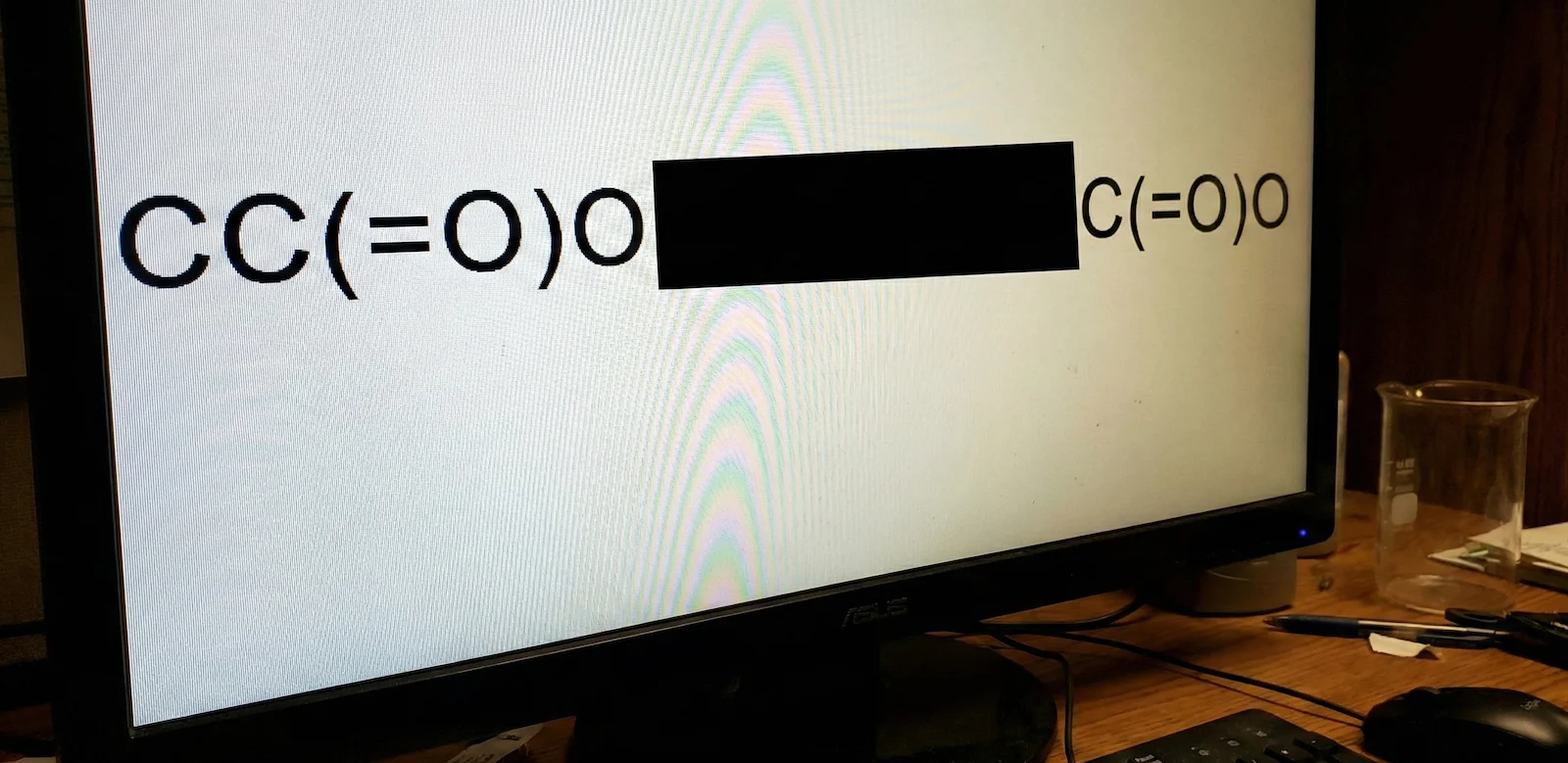
ChemBERTa masked language modeling visualization showing SMILES string CC(=O)O with masked tokens

ChemBERTa: Molecular Property Prediction via Transformers

This paper introduces ChemBERTa, a RoBERTa-based model pretrained on 77M SMILES strings. It systematically evaluates the impact of pretraining dataset size, tokenization strategies, and input representations (SMILES vs. SELFIES) on downstream MoleculeNet tasks, finding that performance scales positively with data size.

Computational Chemistry
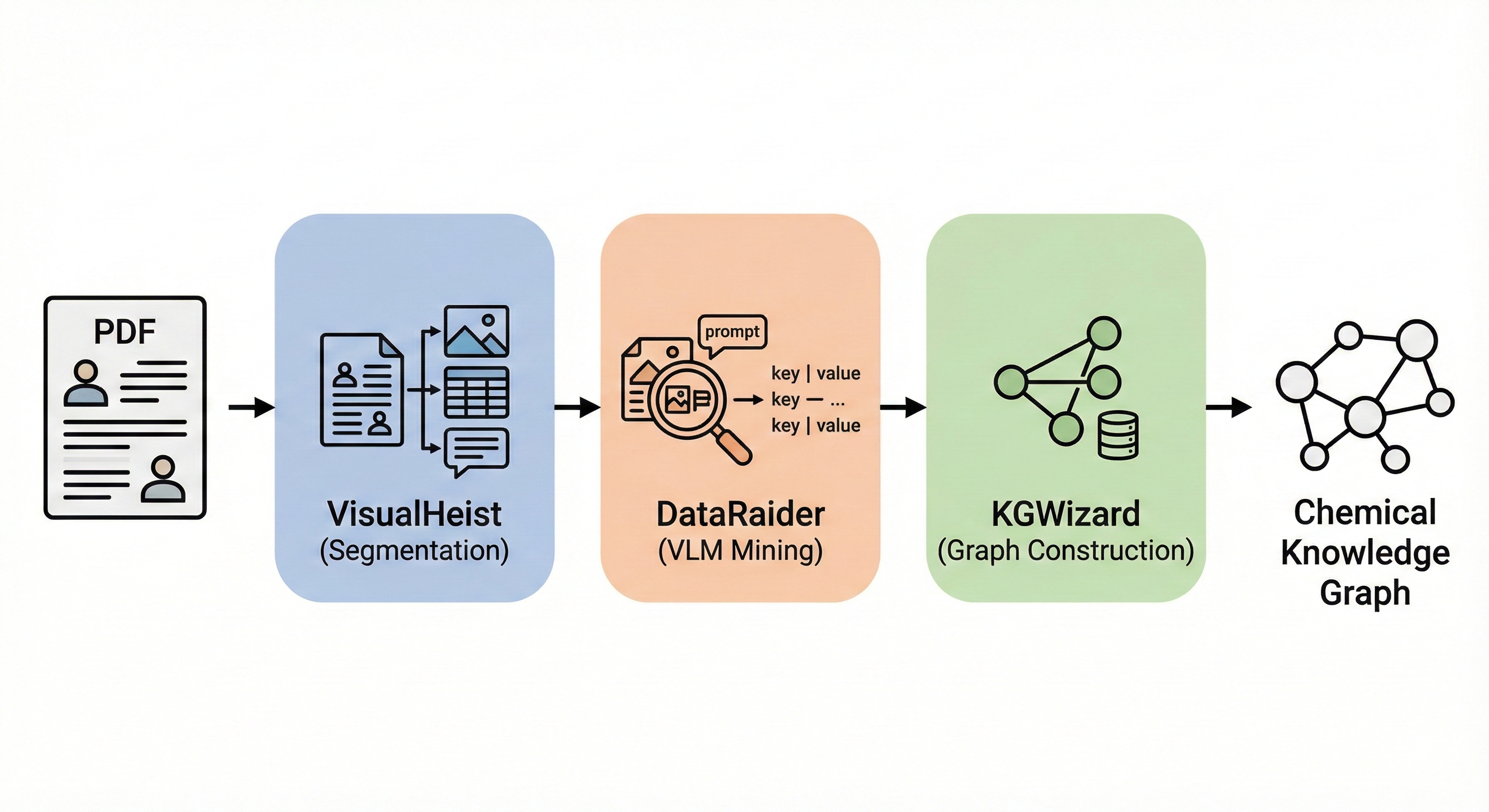
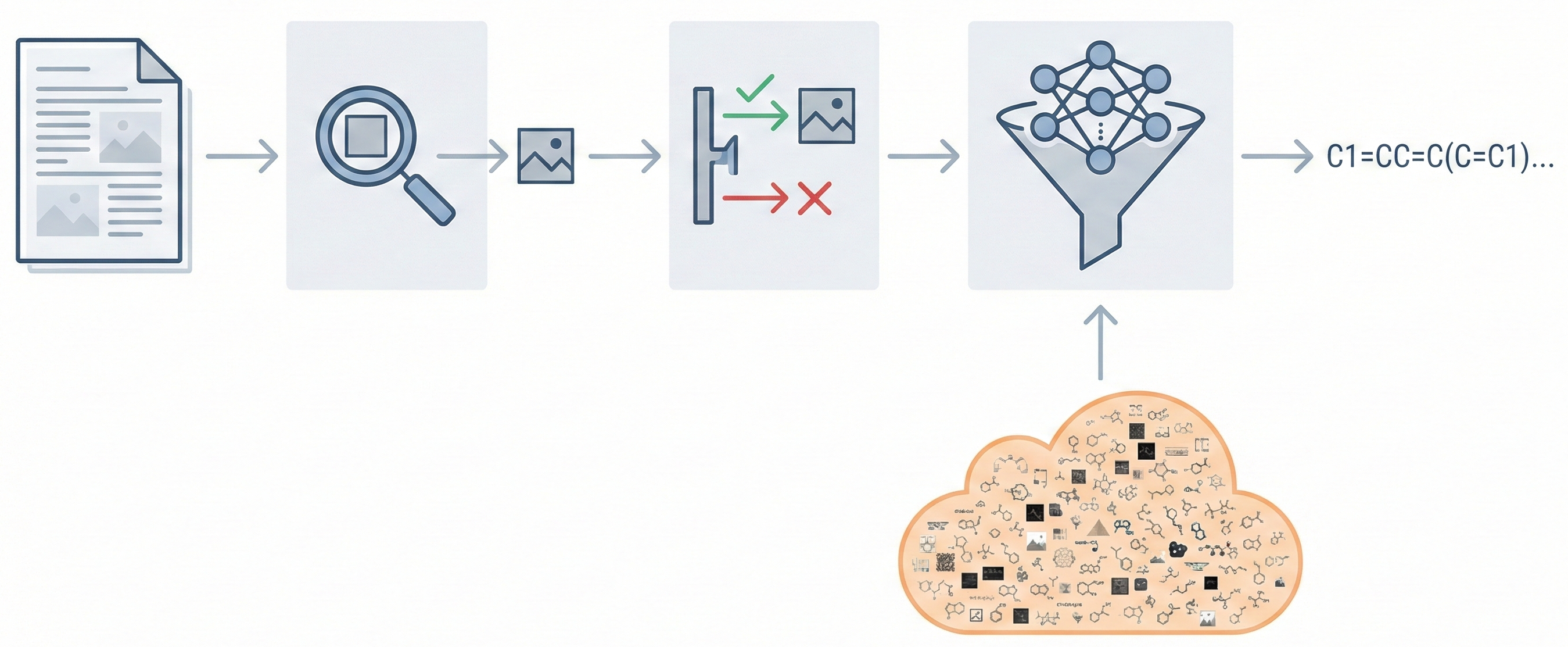
MERMaid pipeline diagram showing PDF processing through VisualHeist segmentation, DataRaider VLM mining, and KGWizard graph construction to produce chemical knowledge graphs

MERMaid: Multimodal Chemical Reaction Mining from PDFs

MERMaid leverages fine-tuned vision models and VLM reasoning to mine chemical reaction data directly from PDF figures and tables. By handling context inference and coreference resolution, it builds high-fidelity knowledge graphs with 87% end-to-end accuracy.

Computational Chemistry
Precision and recall comparison of 8 OCSR tools on patent images

Benchmarking Eight OCSR Tools on Patent Images (2024)

Comprehensive evaluation of 8 optical chemical structure recognition tools using a newly curated dataset of 2,702 patent images. Proposes ChemIC, a ResNet-50 classifier to route images to specialized tools based on content type, demonstrating that no single tool excels at all tasks.

Computational Chemistry
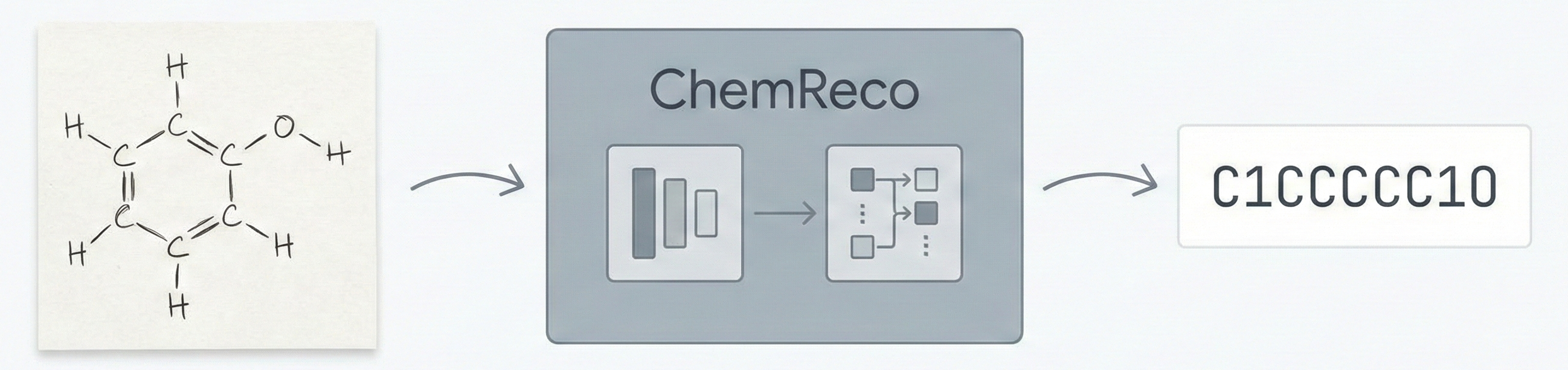
Overview of the ChemReco pipeline showing synthetic data generation and EfficientNet+Transformer architecture for hand-drawn chemical structure recognition

ChemReco: Hand-Drawn Chemical Structure Recognition

ChemReco automates the recognition of hand-drawn chemical structures using a synthetic data pipeline and an EfficientNet+Transformer architecture, achieving 96.90% accuracy on C-H-O molecules.

Computational Chemistry
Overview of the DECIMER.ai platform combining segmentation, classification, and image-to-SMILES recognition

DECIMER.ai: Optical Chemical Structure Recognition

DECIMER.ai addresses the lack of open tools for Optical Chemical Structure Recognition (OCSR) by providing a comprehensive, deep-learning-based workflow. It features a novel data generation pipeline (RanDepict), a web application, and models for segmentation and recognition that rival or exceed proprietary solutions.

Computational Chemistry
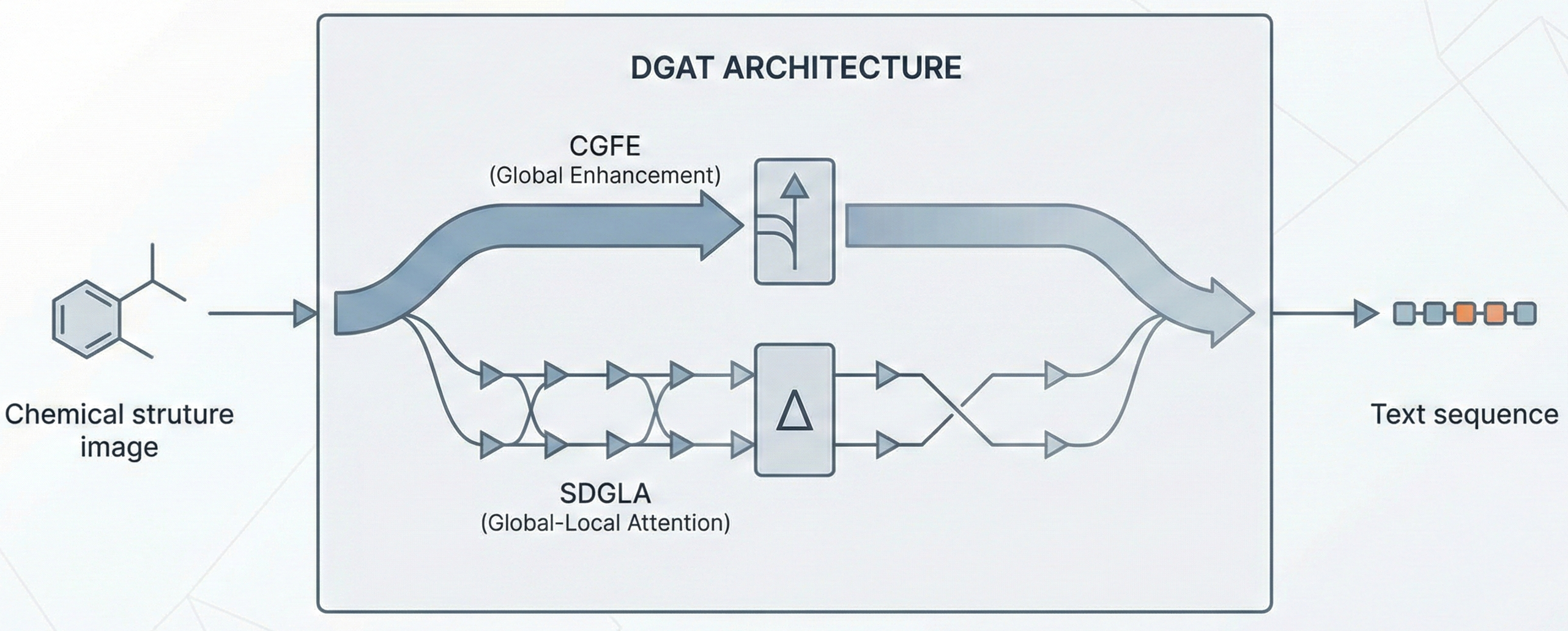
Architecture diagram of the DGAT model showing dual-path decoder with CGFE and SDGLA modules

Dual-Path Global Awareness Transformer (DGAT) for OCSR

Proposes a new architecture (DGAT) to resolve global context loss in chemical structure recognition. Introduces Cascaded Global Feature Enhancement and Sparse Differential Global-Local Attention, achieving 84.0% BLEU-4 and handling complex chiral structures implicitly.

Computational Chemistry
Diagram showing the DECIMER hand-drawn OCSR pipeline from hand-drawn chemical structure image through EfficientNetV2 encoder and Transformer decoder to predicted SMILES output

Enhanced DECIMER for Hand-Drawn Structure Recognition

This paper presents an enhanced deep learning architecture for Optical Chemical Structure Recognition (OCSR) specifically optimized for hand-drawn inputs. By pairing an EfficientNetV2 encoder with a Transformer decoder and training on over 150 million synthetic images, the model achieves 73.25% exact match accuracy on a real-world hand-drawn benchmark of 5,088 images.

Computational Chemistry
Diagram of the MMSSC-Net architecture showing the SwinV2 encoder and GPT-2 decoder pipeline for molecular image recognition

MMSSC-Net: Multi-Stage Sequence Cognitive Networks

MMSSC-Net introduces a multi-stage cognitive approach for OCSR, utilizing a SwinV2 encoder and GPT-2 decoder to recognize atomic and bond sequences. It achieves 75-98% accuracy across benchmark datasets by handling varying image resolutions and noise through fine-grained perception of atoms and bonds.