Computational Chemistry
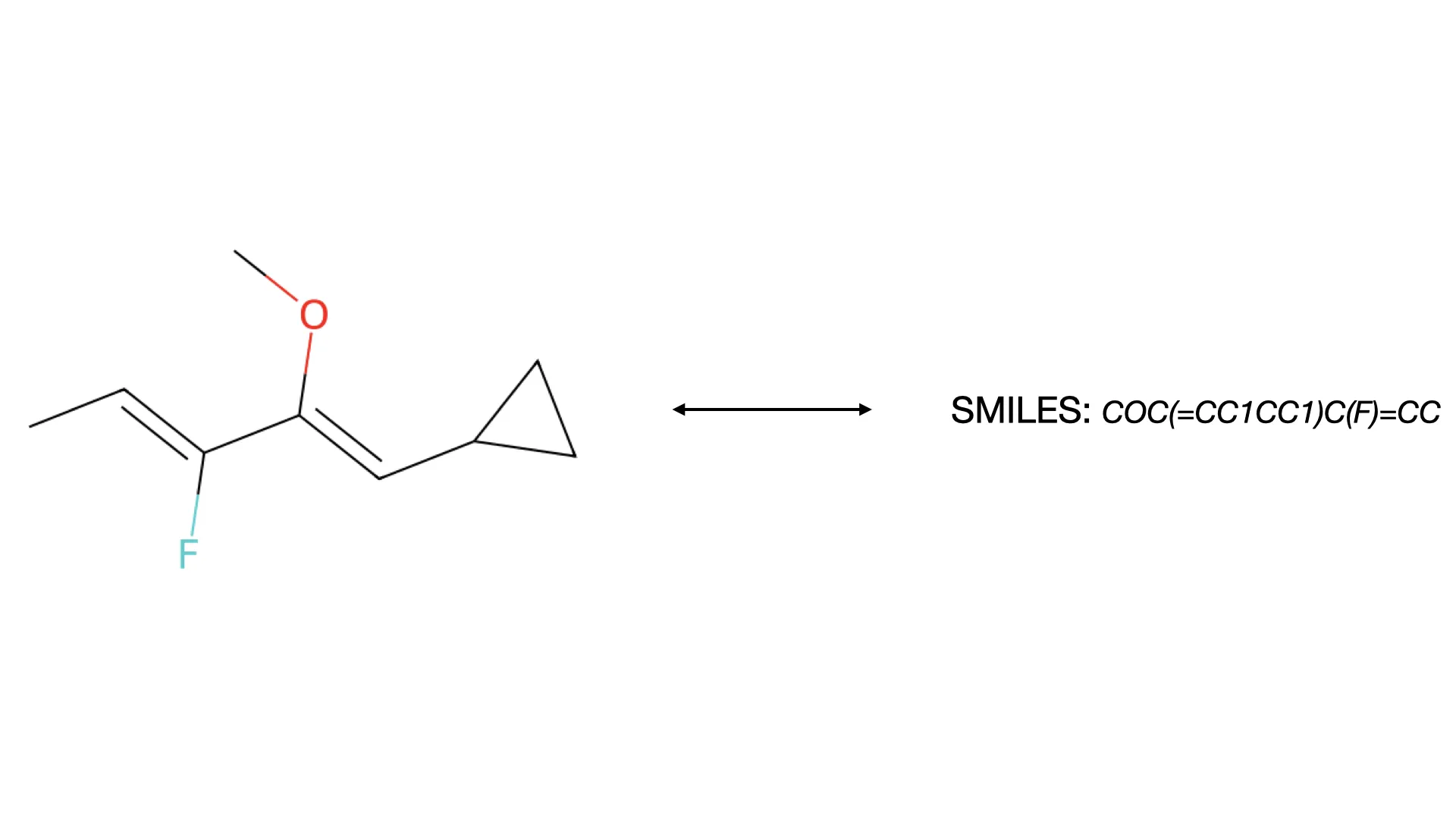
Optical chemical structure recognition example

MolRec: Rule-Based OCSR System at TREC 2011 Benchmark

Details the MolRec system for converting chemical diagram images into MOL files using vectorization, geometric rules, and graph construction. Achieved 95% accuracy on 1000 TREC 2011 benchmark images with comprehensive failure analysis of limitations.
Computational Chemistry
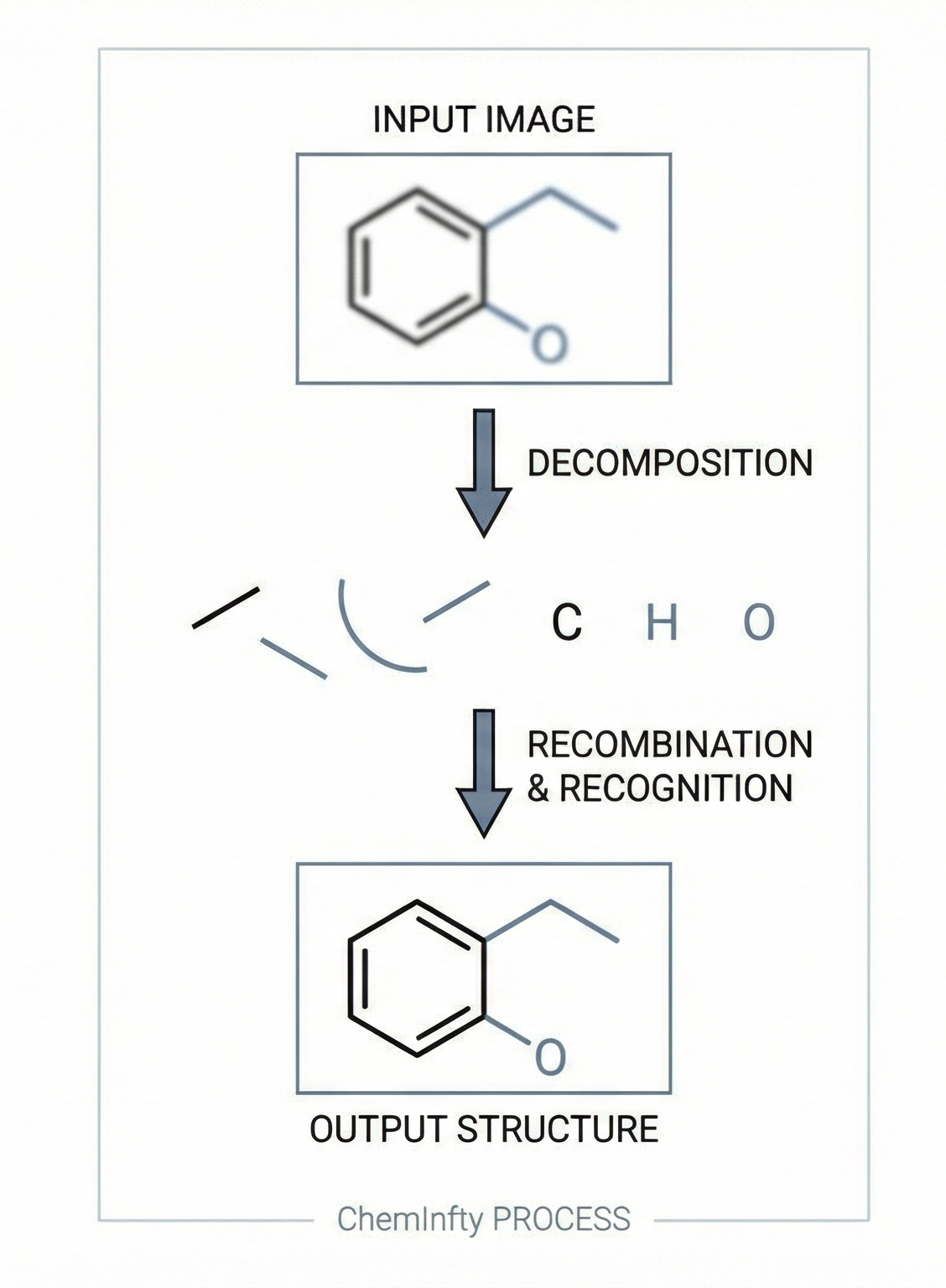
ChemInfty: Chemical Structure Recognition in Patent Images

ChemInfty: Chemical Structure Recognition in Patent Images

A 2011 rule-based OCSR system designed specifically for the challenging low-quality images in Japanese patent applications, using segment-based methods to handle pervasive problems like touching characters, merged atom labels with bonds, and broken lines.

Machine Learning Fundamentals
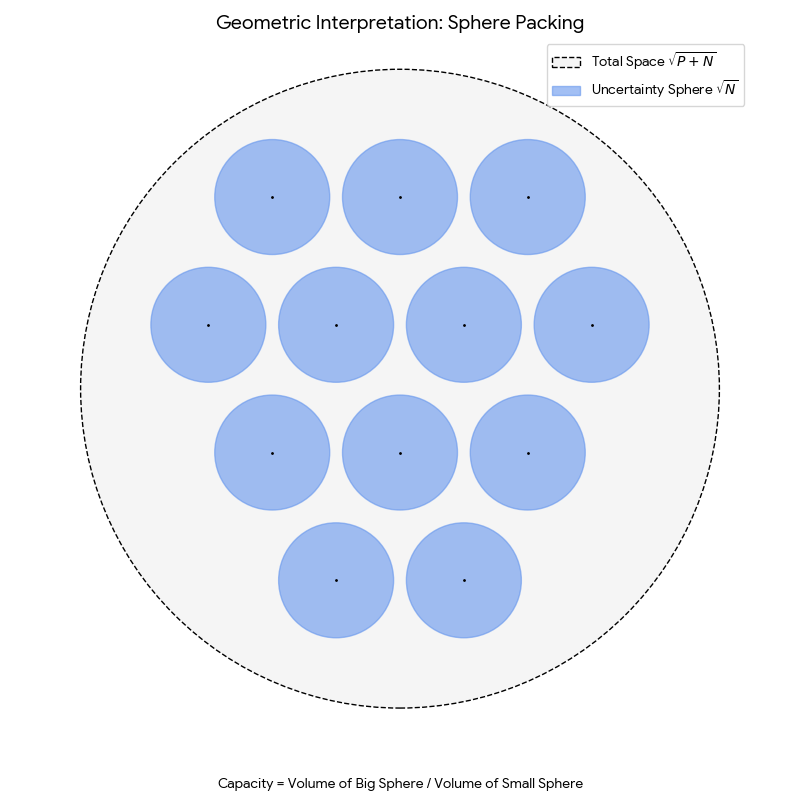
Sphere packing illustration showing Shannon's geometric interpretation of channel capacity

Communication in the Presence of Noise: Shannon's 1949 Paper

Shannon’s foundational 1949 paper establishing the mathematical framework for modern information theory, defining channel capacity as the fundamental limit for reliable communication over noisy channels and introducing the sampling theorem (Nyquist-Shannon) that underpins all digital signal processing.

Computational Biology
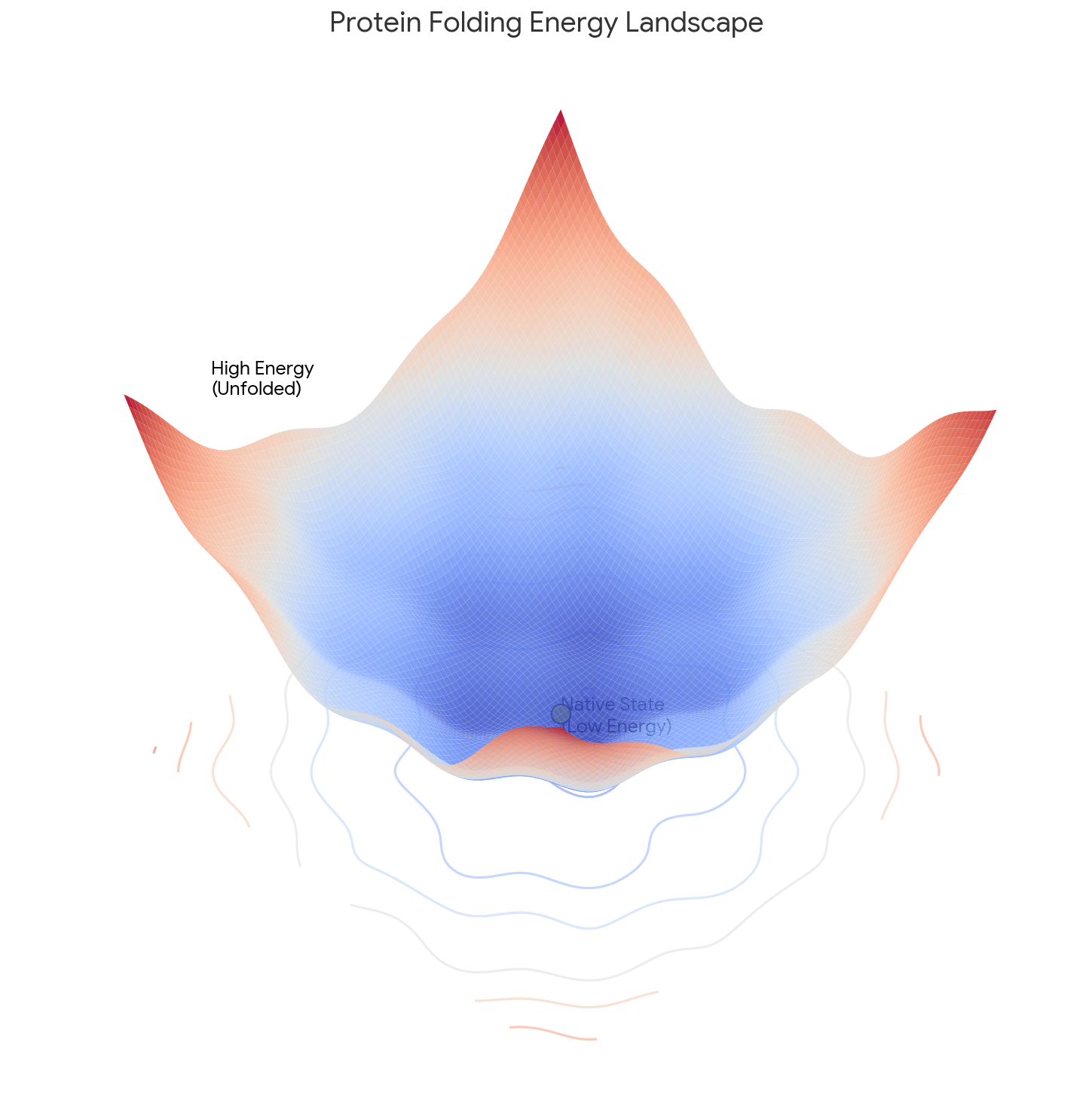
Protein folding energy landscape funnel showing high-energy unfolded states converging to the native state

How to Fold Graciously: Levinthal's Paradox (1969)

Levinthal’s 1969 perspective paper defined the protein folding paradox by demonstrating the impossibility of random search, establishing the need for kinetic pathways that guide folding faster than thermodynamic equilibration allows.

Computational Chemistry
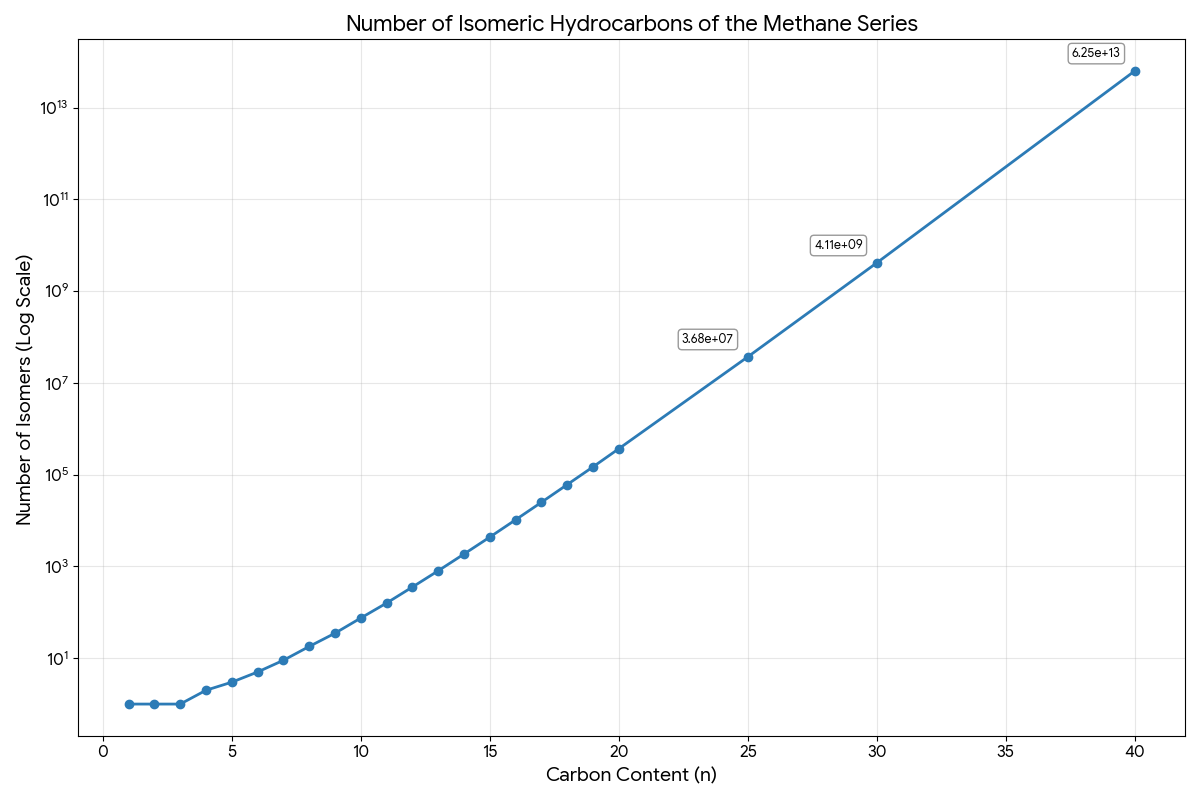
Log-scale plot showing exponential growth of alkane isomer counts from C1 to C40

The Number of Isomeric Hydrocarbons of the Methane Series

A foundational 1931 paper that derives exact recursive formulas for counting alkane structural isomers, correcting historical errors and establishing the first systematic enumeration up to C₄₀.

Scientific Computing
Comparison of exponential sampling methods showing histograms from both inverse transform and von Neumann methods overlaid with the theoretical exponential distribution

Exponential Random Numbers: Two Classic Algorithms

Explore two fundamental approaches to generating exponentially distributed random numbers: the modern inverse transform method using logarithms and von Neumann’s ingenious 1951 comparison-based algorithm that avoids transcendental functions entirely.

Computational Chemistry
Spherical harmonics visualization

Efficient DFT Hamiltonian Prediction via Adaptive Sparsity

ICML 2025 methodological paper introducing SPHNet, which uses adaptive network sparsification to overcome the computational bottleneck of tensor products in SE(3)-equivariant networks, achieving up to 7x speedup and 75% memory reduction on DFT Hamiltonian prediction tasks.

Computational Chemistry
Protein folding funnel diagram illustrating energy landscape

Umbrella Sampling: Monte Carlo Free-Energy Estimation

Torrie and Valleau’s 1977 paper introducing importance sampling with non-physical distributions to overcome the sampling gap problem in Monte Carlo free-energy calculations, particularly for phase transitions.

Natural Language Processing
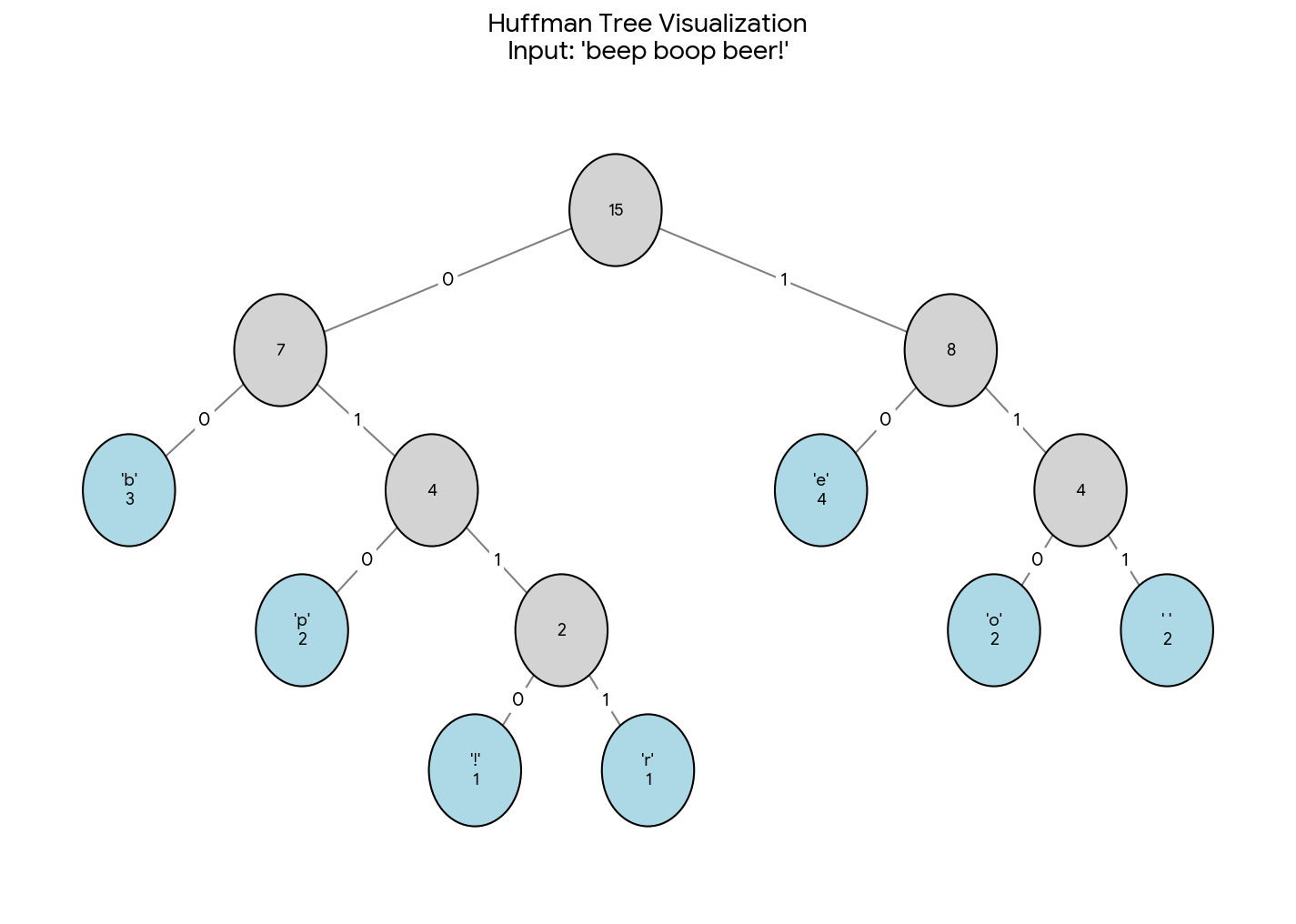
Huffman Tree visualization for the input 'beep boop beer!' showing internal nodes with frequency counts and leaf nodes with characters

High-Performance Word2Vec in Pure PyTorch

A ground-up PyTorch implementation of Word2Vec treating it as a systems engineering challenge, with “tensorized tree” architecture converting pointer-chasing Hierarchical Softmax into dense GPU operations, infinite streaming datasets with Zipfian subsampling, and torch.compile compatibility for production-grade efficiency.

Machine Learning Fundamentals
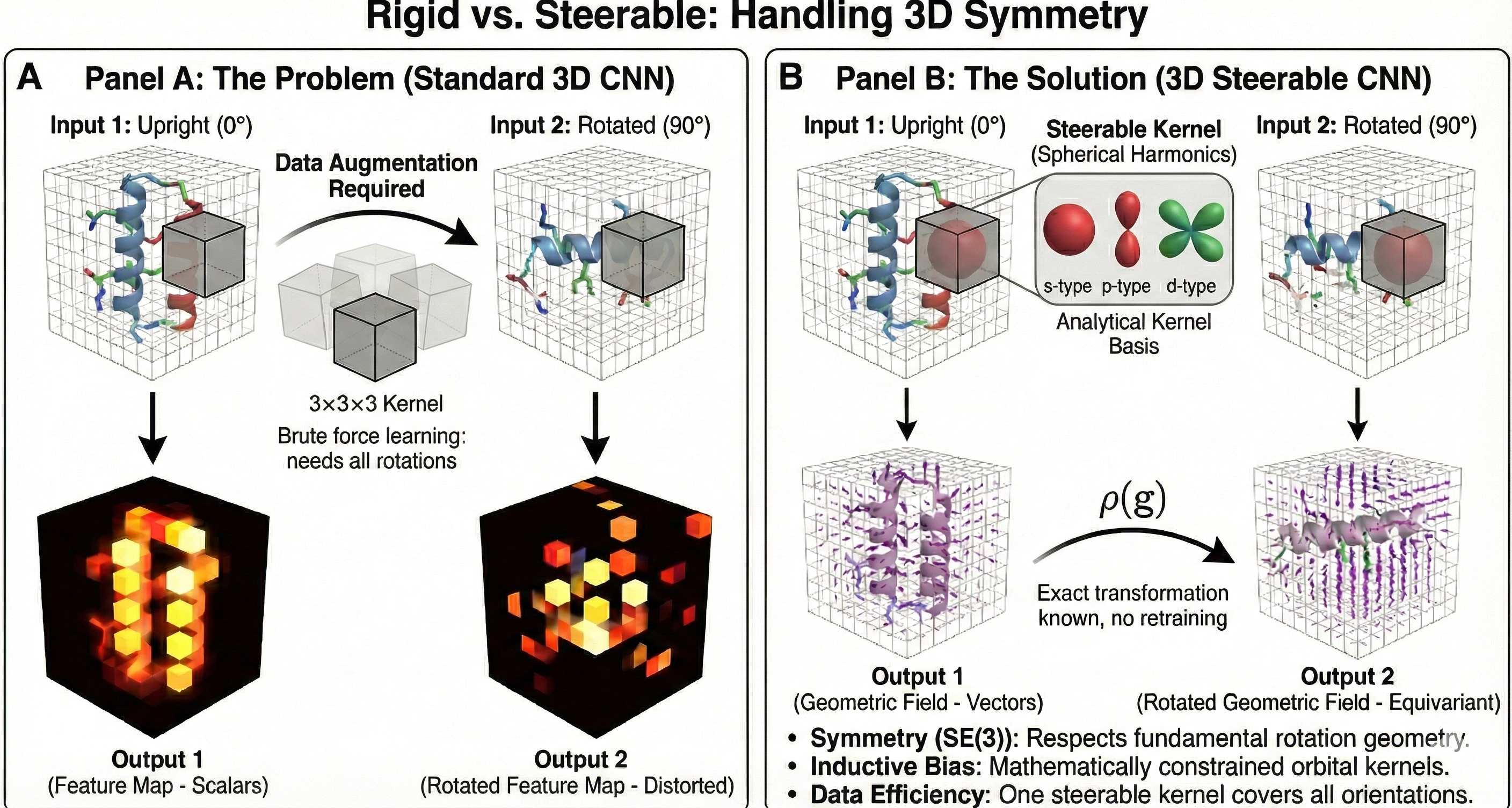
Comparison of standard 3D CNN versus 3D Steerable CNN for handling rotational symmetry

3D Steerable CNNs: Rotationally Equivariant Features

Weiler et al.’s NeurIPS 2018 paper introducing 3D Steerable CNNs that achieve SE(3) equivariance through group representation theory and spherical harmonic convolution kernels, eliminating the need for rotational data augmentation and improving data efficiency for scientific applications with rotational symmetry like molecular and protein structures.

Scientific Computing
Molecular structure alignment showing protein conformations and RMSD calculation

Kabsch Algorithm: NumPy, PyTorch, TensorFlow, and JAX

Learn to align molecular structures and point clouds using the Kabsch algorithm, with differentiable implementations for modern ML frameworks.

Scientific Computing
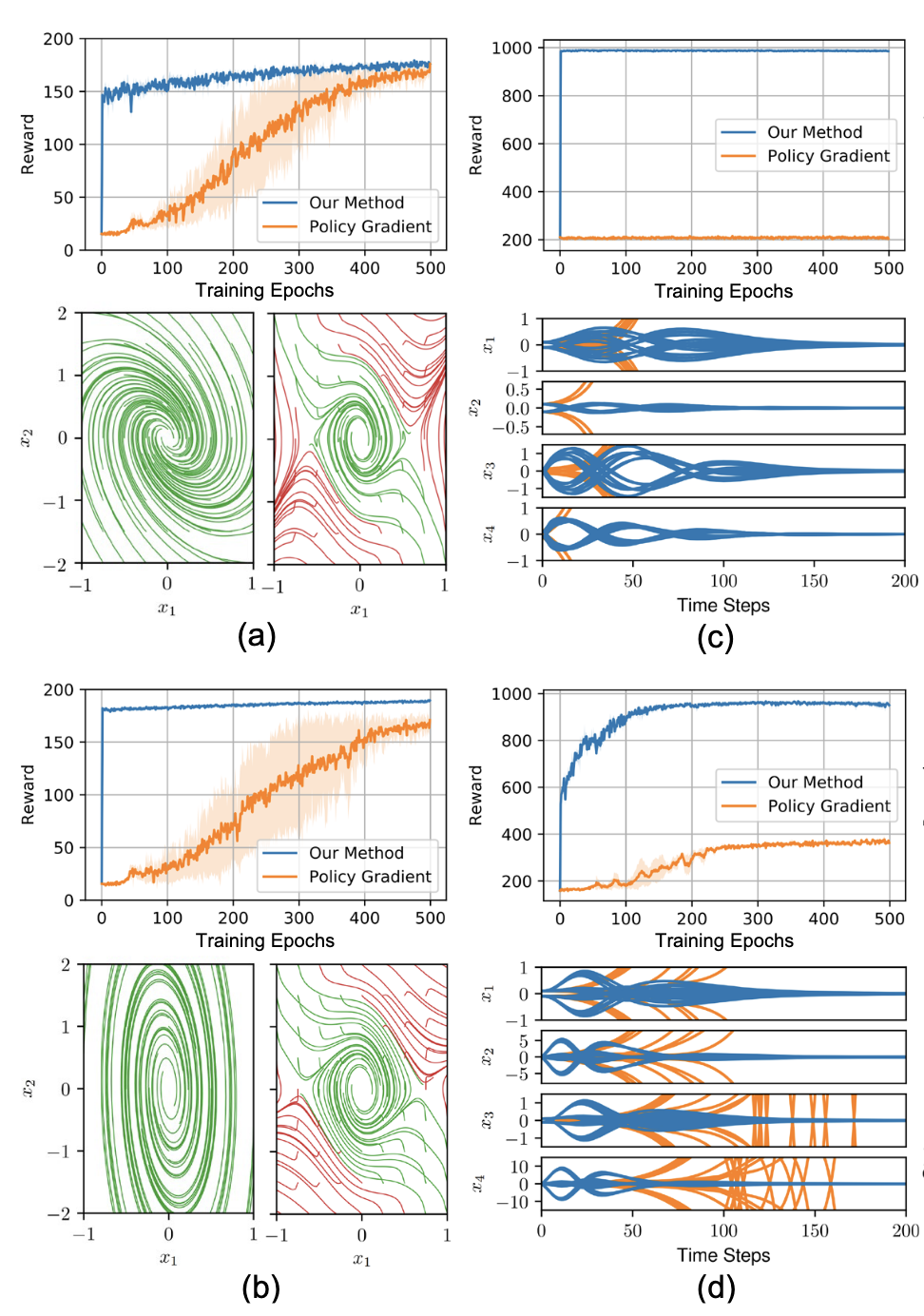
Comparison of IQCRNN (Our Method) vs standard Policy Gradient showing training curves, phase portraits, and state trajectories for control tasks

IQCRNN: Certified Stability for Neural Networks

A PyTorch implementation enforcing strict Lyapunov stability guarantees on recurrent neural network controllers through Integral Quadratic Constraints, bridging 1990s robust control theory with modern deep reinforcement learning by solving semidefinite programs inside the gradient descent loop to provide mathematical certificates of safety.