Overview
Word2Vec is often treated as a “solved problem” or a black box inside libraries like Gensim. This project deconstructs the algorithm to treat it as a systems engineering challenge.
I built a ground-up, typed, and compiled PyTorch implementation that bridges the gap between the original C code’s efficiency and modern GPU acceleration. The core innovation lies in “tensorizing the tree”, converting the pointer-chasing logic of Hierarchical Softmax into dense, vectorized operations compatible with torch.compile.
Features
1. Vectorized Hierarchical Softmax
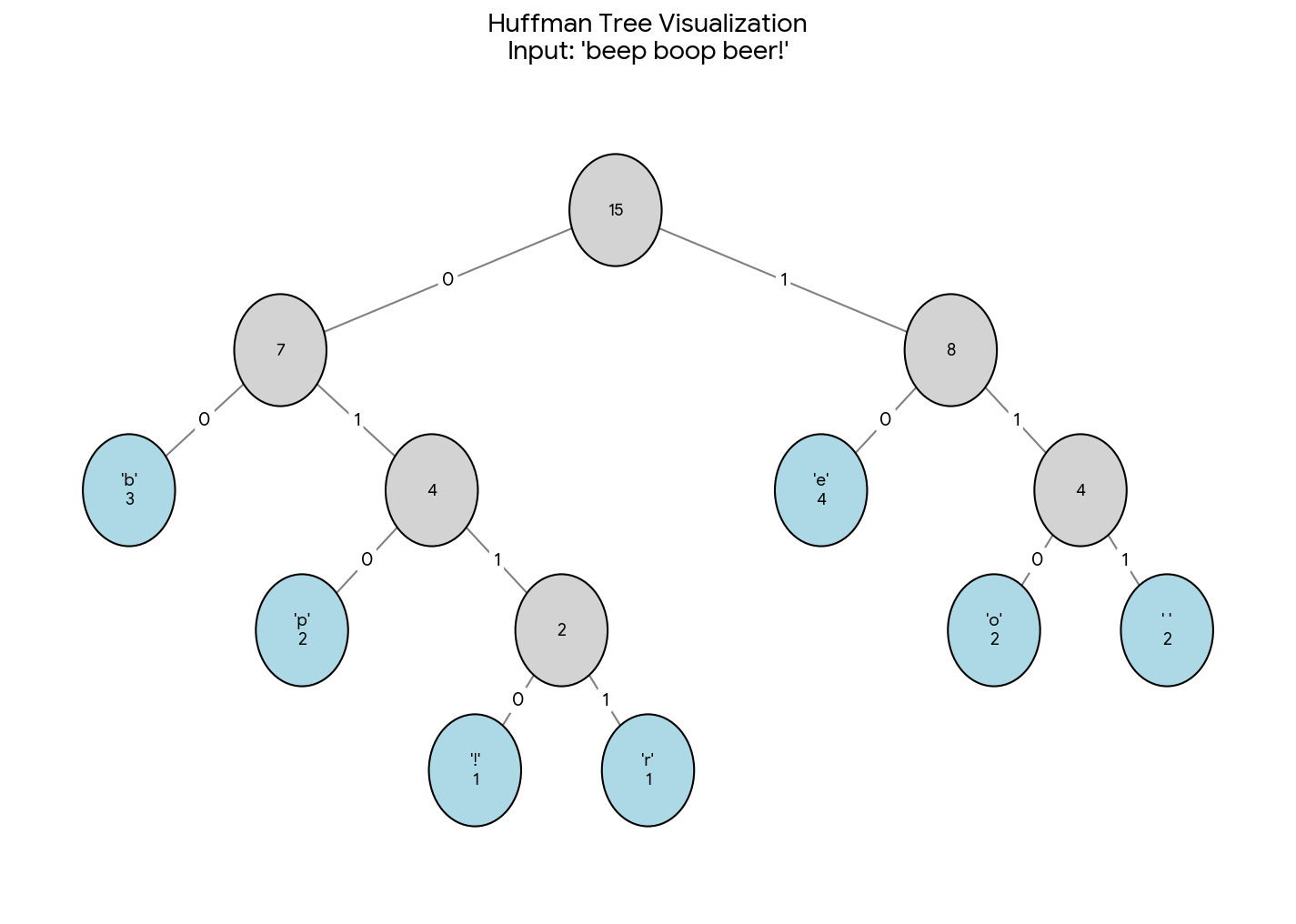
Classically, Hierarchical Softmax involves traversing a binary Huffman tree. While efficient on a CPU, this approach creates divergent execution paths on GPUs.
- The Solution: I implemented a “pre-computed path” strategy. The tree traversal for every vocabulary word is flattened into fixed-size tensors (
word_path_indices,word_codes_tensor) padded to the maximum depth. - The Result: The forward pass becomes a massive, masked batch dot-product against internal node embeddings, allowing the GPU to crunch the probability tree without branching logic.
2. Infinite Streaming & Sliding Windows
To handle datasets larger than RAM (e.g., Wikipedia/CommonCrawl), I built a custom IterableDataset that performs a true single-pass read.
- Efficient Windowing: It uses a
collections.dequebuffer to slide over the token stream, generating training pairs only when a new token enters the center context. - Zipfian Subsampling: Implemented a probabilistic rejection sampling layer that downsamples frequent words (like “the” or “of”) on-the-fly, strictly adhering to the original Mikolov et al. paper’s distribution.
3. Modern Production Tooling
This project uses a strict “software 2.0” stack:
- Dependency Management: Built with
uvfor deterministic, lightning-fast environment resolution. - Compilation: Fully compatible with
torch.compile(PyTorch 2.0+), allowing for graph fusion of the custom loss functions.
Usage
The library can be installed via pip and used as a drop-in replacement for Gensim’s Word2Vec, with the added benefit of GPU acceleration.
Results
- Correct Embeddings: The produced vectors pass qualitative semantic similarity checks (e.g., analogical reasoning tasks), confirming the tensorized tree produces the same geometry as sequential traversal.
- GPU-Scalable: The batched Huffman tree approach eliminates divergent GPU execution, enabling meaningful throughput gains on large vocabularies (100k+ tokens).
- OOM-Free on Large Corpora: The streaming
IterableDatasetwith Zipfian subsampling runs on Wikipedia/CommonCrawl-scale text without loading data into RAM. torch.compileCompatible: The custom loss functions fuse correctly undertorch.compile, achieving kernel fusion unavailable in eager mode.
Related Work
This project connects to related NLP work on this site:
- An Introduction to Word Embeddings: conceptual background on the representations this library produces
- Word Company Vicinity: research applying word vector semantics to company names
- Semantic Network Induction: research on inducing semantic graphs from embedding spaces