Machine Learning
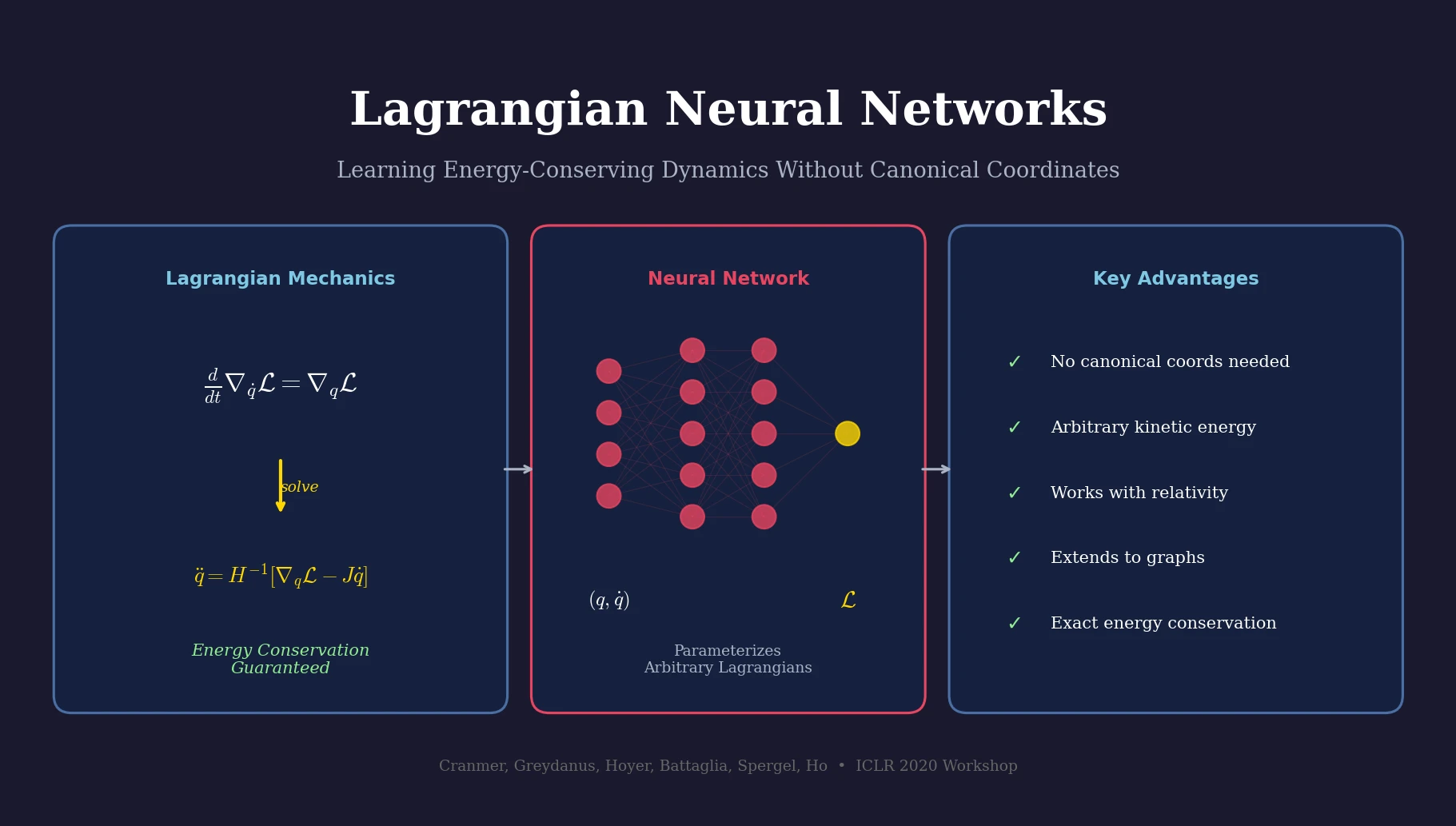
Diagram showing the Lagrangian Neural Network pipeline from coordinates through a learned Lagrangian to energy-conserving dynamics

Lagrangian Neural Networks for Physics

Lagrangian Neural Networks (LNNs) use neural networks to parameterize arbitrary Lagrangians, enabling energy-conserving learned dynamics without canonical coordinates. Unlike Hamiltonian approaches, LNNs handle relativistic systems and extend to graphs via Lagrangian Graph Networks.
Machine Learning
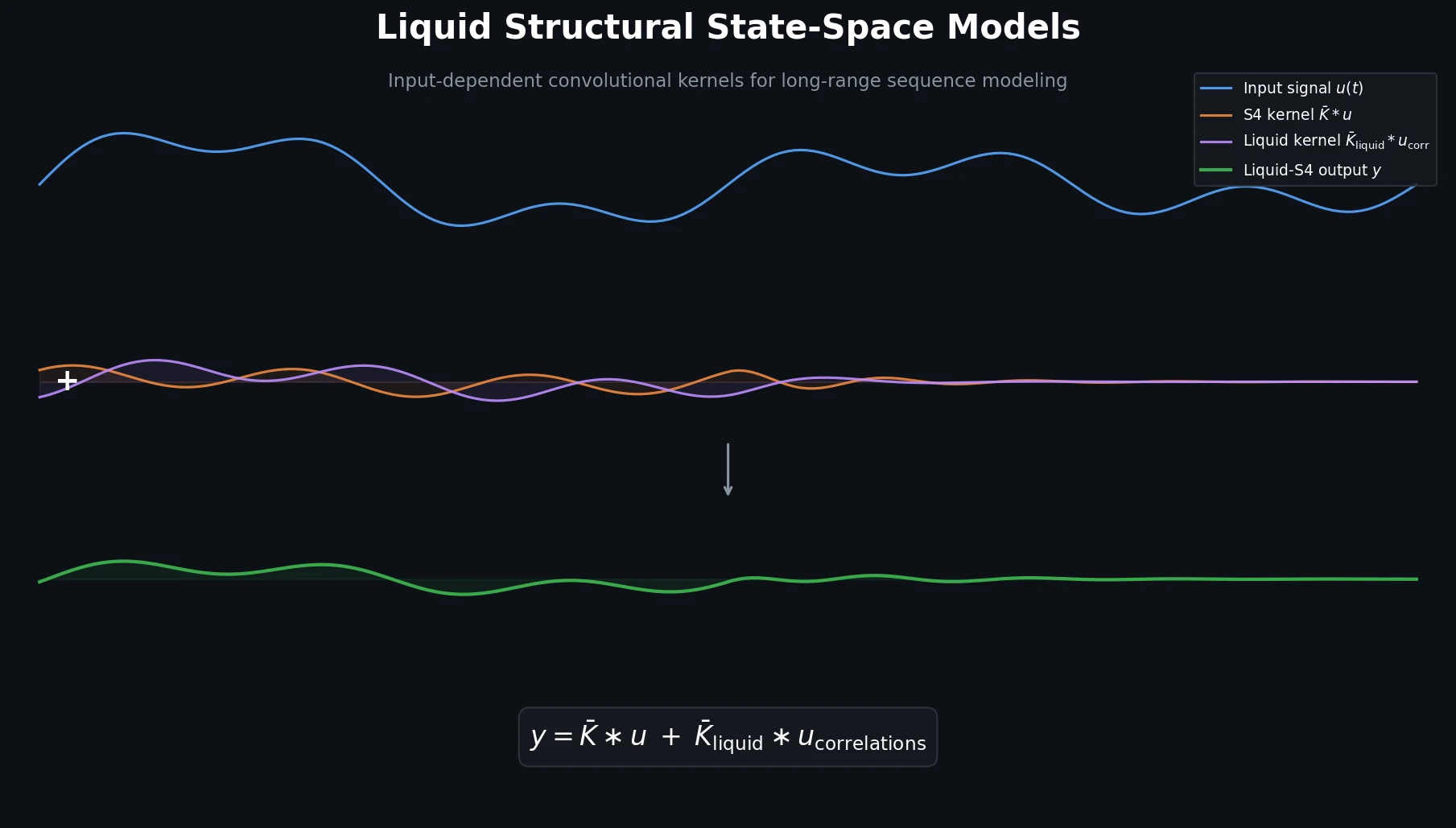
Visualization of Liquid-S4 kernel decomposition showing input signal, S4 kernel, liquid kernel, and combined output

Liquid-S4: Input-Dependent State-Space Models

Liquid-S4 extends the S4 framework by incorporating a linearized liquid time-constant formulation that introduces input-dependent state transitions. This yields an additional convolutional kernel capturing input correlations, improving generalization across long-range sequence tasks.

Natural Language Processing
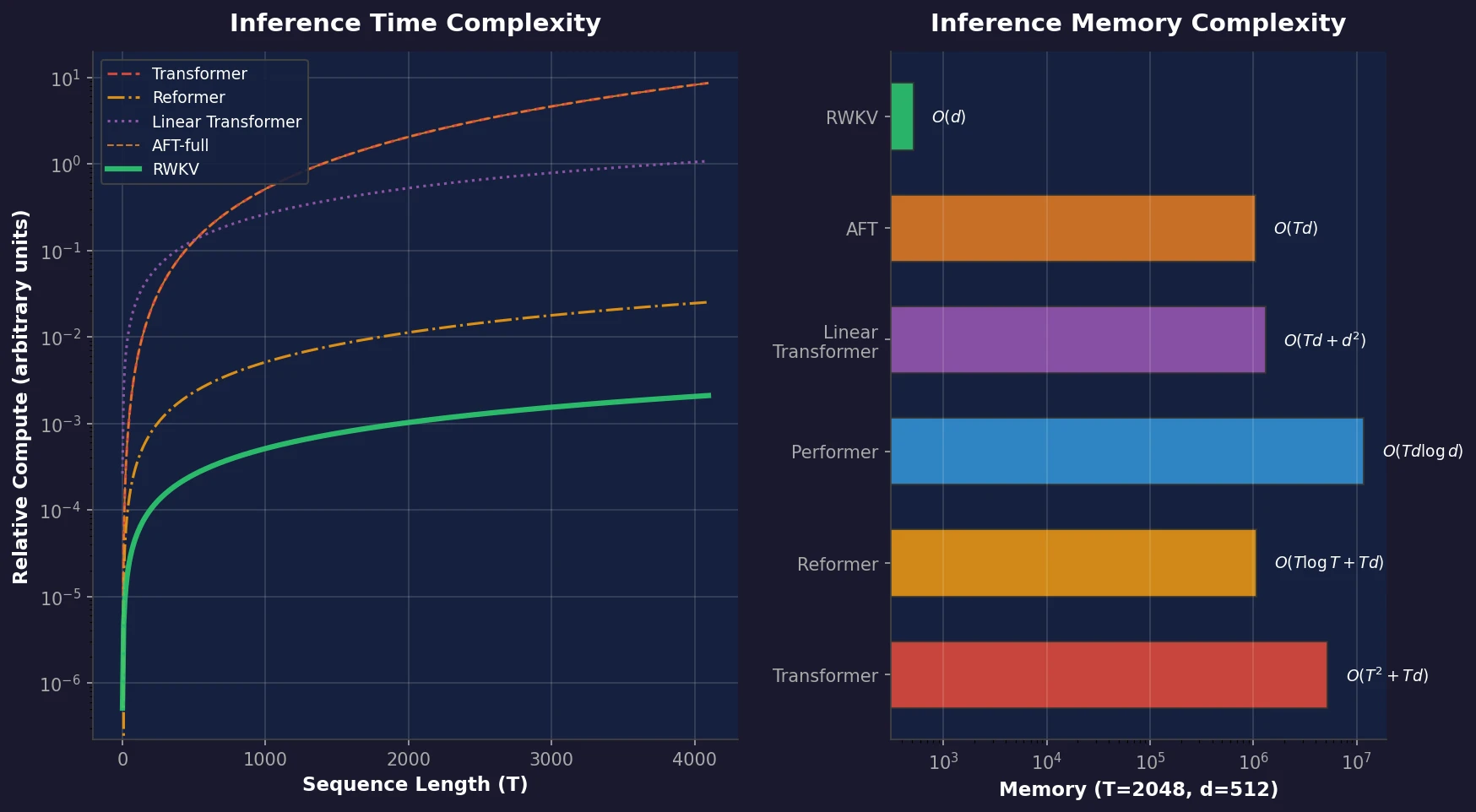
Diagram comparing RWKV inference complexity against Transformers and efficient variants

RWKV: Linear-Cost RNN with Transformer Training

RWKV is a novel sequence model that achieves transformer-level performance while maintaining linear time and constant memory complexity during inference, scaled up to 14 billion parameters.

Optical Chemical Structure Recognition
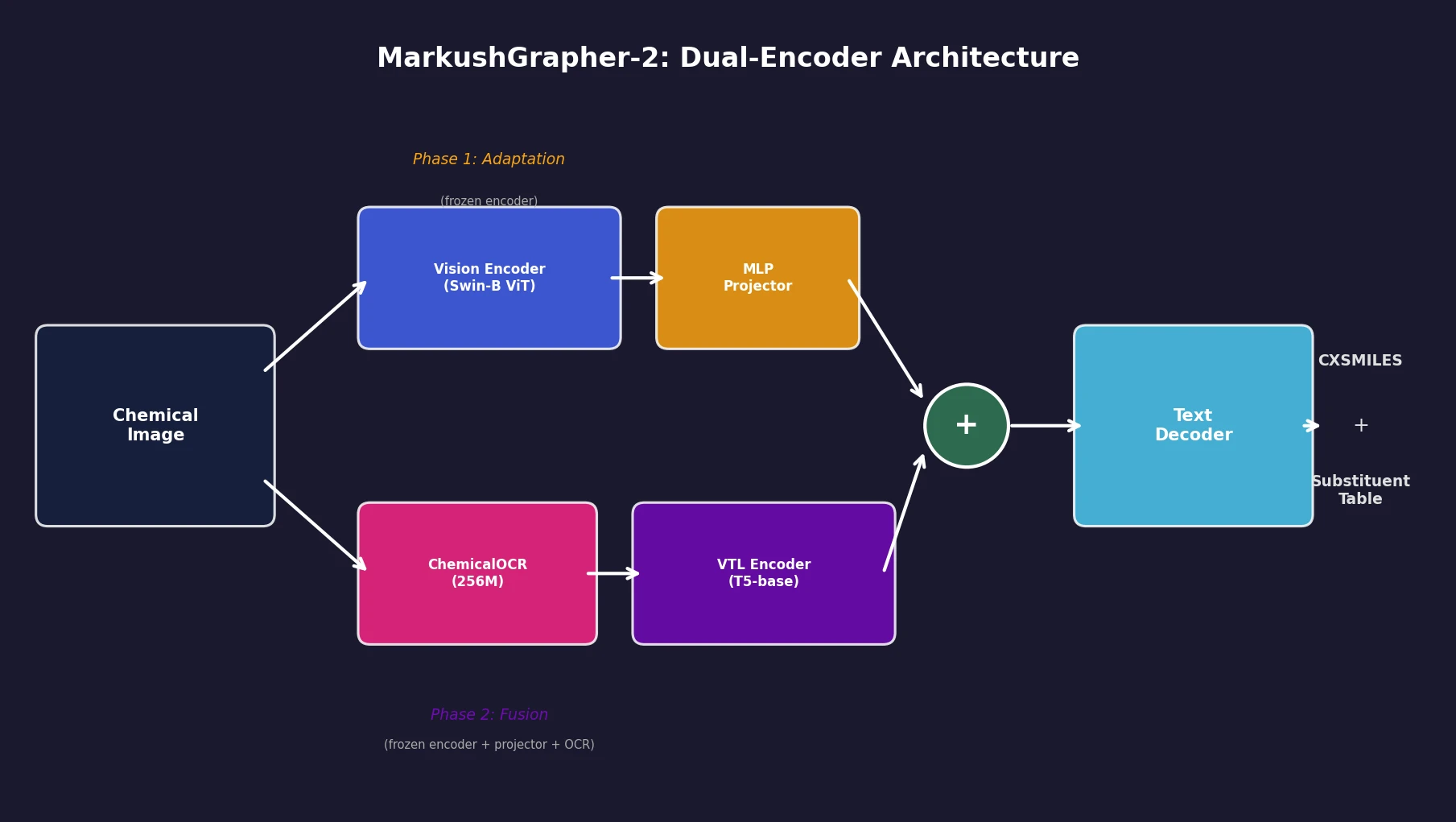
Dual-encoder architecture diagram for MarkushGrapher-2 showing vision and VTL encoding pipelines

MarkushGrapher-2: End-to-End Markush Recognition

An 831M-parameter encoder-decoder model that jointly encodes image, OCR text, and layout information through a two-stage training strategy, achieving state-of-the-art multimodal Markush structure recognition while remaining competitive on standard molecular structure recognition.

Machine Learning
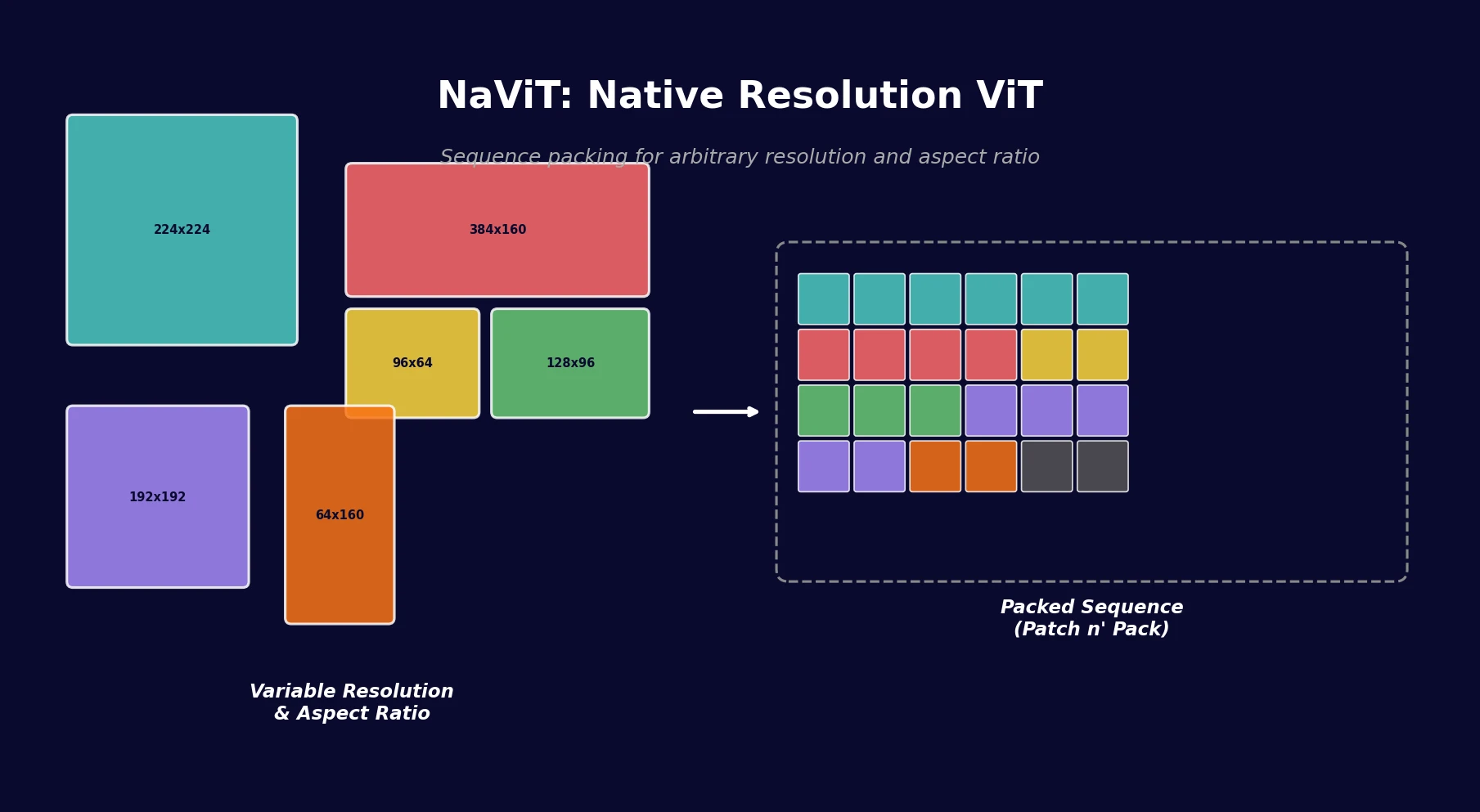
Diagram showing NaViT packing variable-resolution image patches into a single sequence

NaViT: Native Resolution Vision Transformer

NaViT applies sequence packing (Patch n’ Pack) to Vision Transformers, enabling training on images of arbitrary resolution and aspect ratio while improving training efficiency by up to 4x over standard ViT.

Molecular Representations
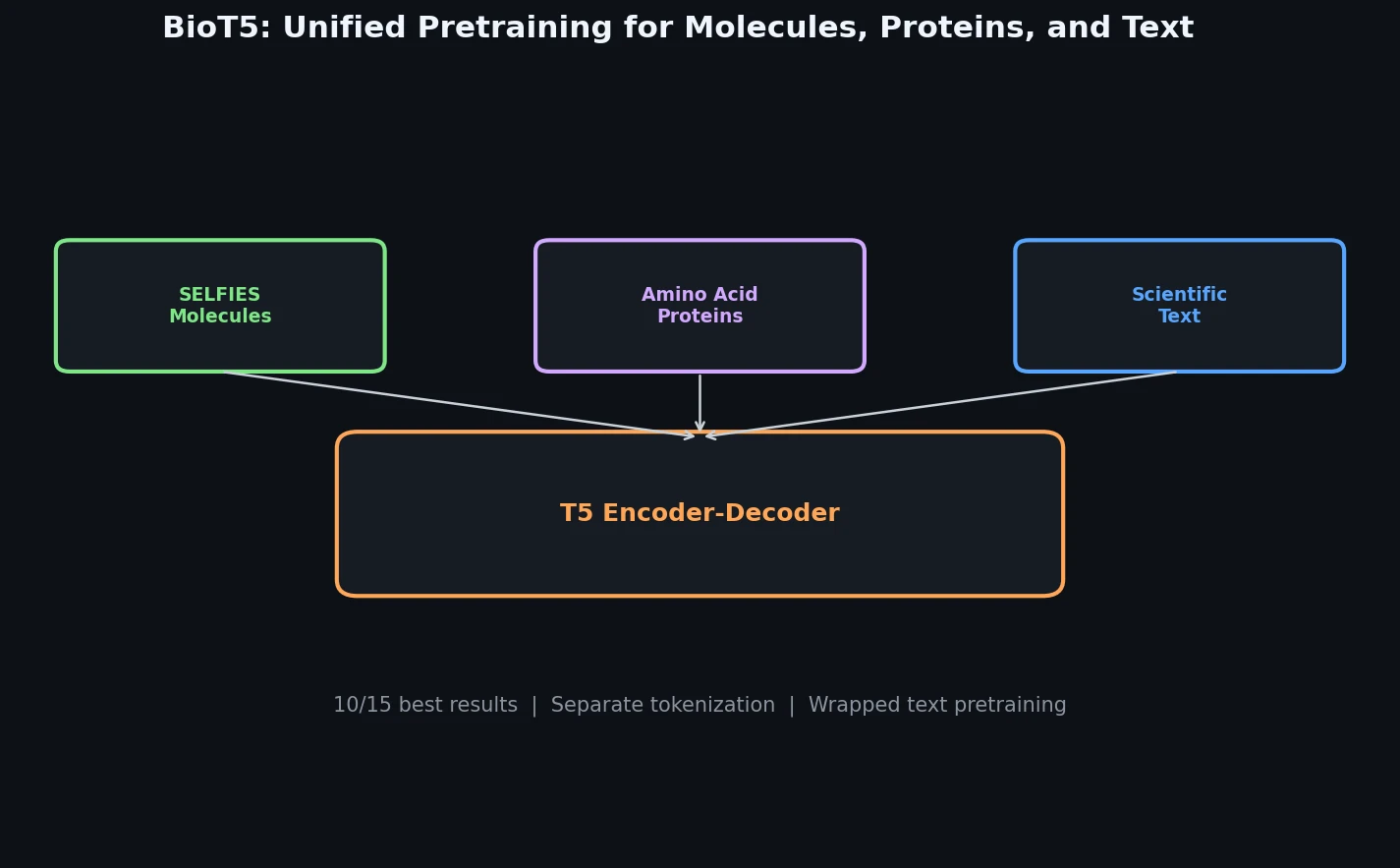
BioT5 architecture showing SELFIES molecules, amino acid proteins, and scientific text feeding into a T5 encoder-decoder

BioT5: Cross-Modal Integration of Biology and Chemistry

BioT5 uses SELFIES representations and separate tokenization to pre-train a unified T5 model across molecules, proteins, and text, achieving state-of-the-art results on 10 of 15 downstream tasks.

Computational Chemistry
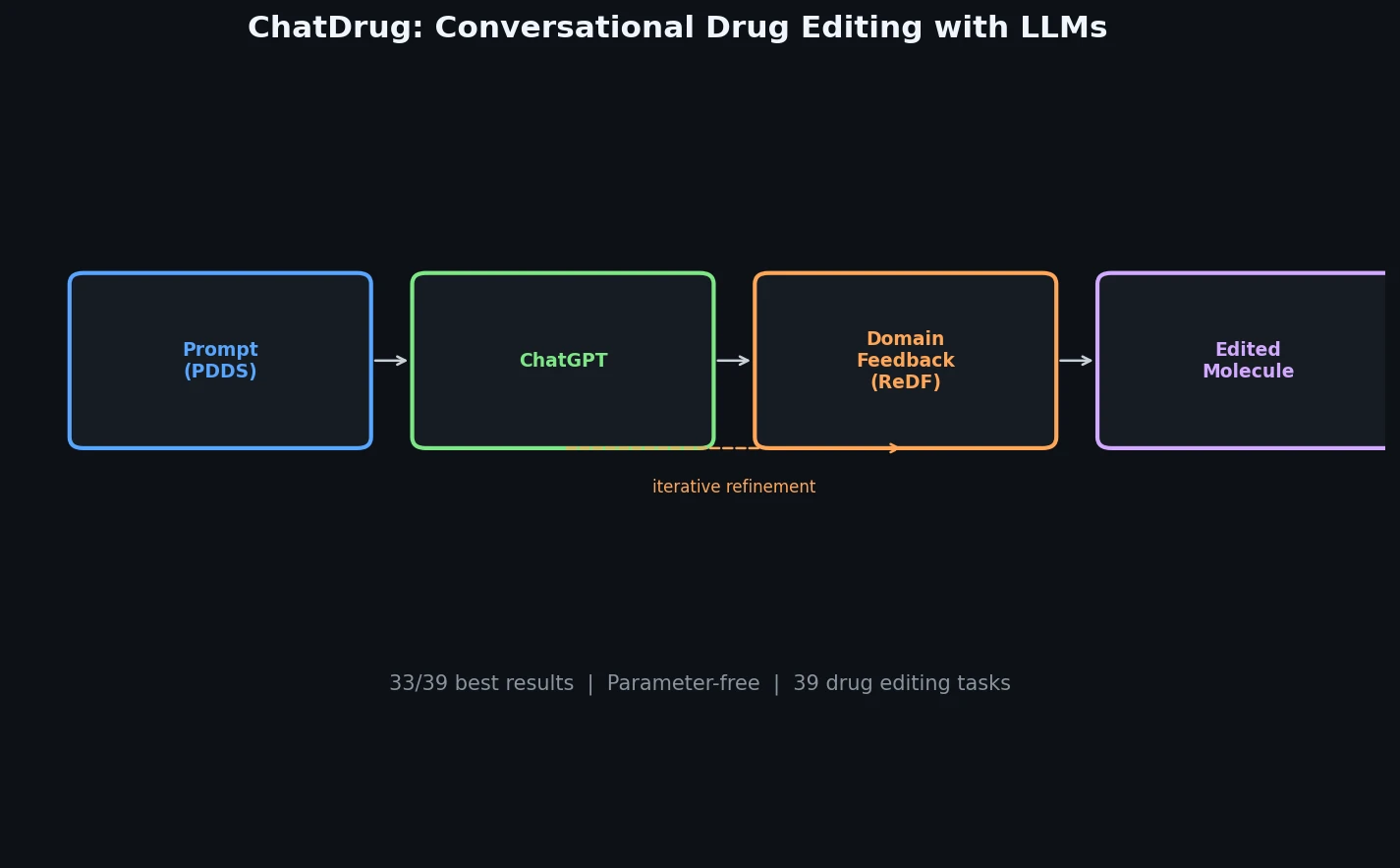
ChatDrug pipeline from prompt design through ChatGPT to domain feedback and edited molecule output

ChatDrug: Conversational Drug Editing with ChatGPT

ChatDrug is a parameter-free framework that combines ChatGPT with retrieval-augmented domain feedback and iterative conversation to edit drugs across small molecules, peptides, and proteins.

Computational Chemistry
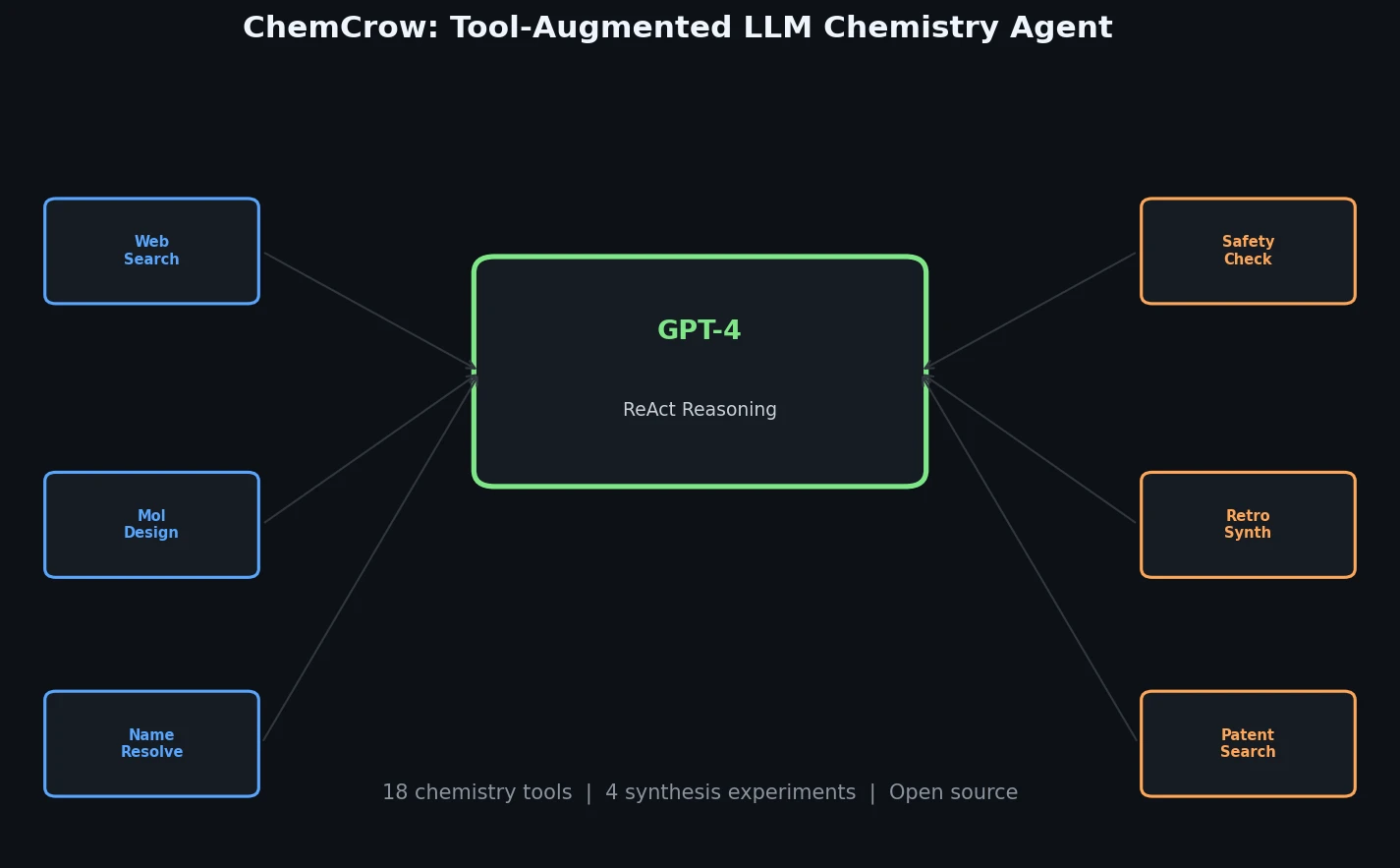
ChemCrow architecture with GPT-4 central planner connected to 18 chemistry tools via ReAct reasoning

ChemCrow: Augmenting LLMs with 18 Chemistry Tools

ChemCrow augments GPT-4 with 18 chemistry tools to autonomously plan and execute syntheses, discover novel chromophores, and solve diverse chemical reasoning tasks.

Molecular Generation
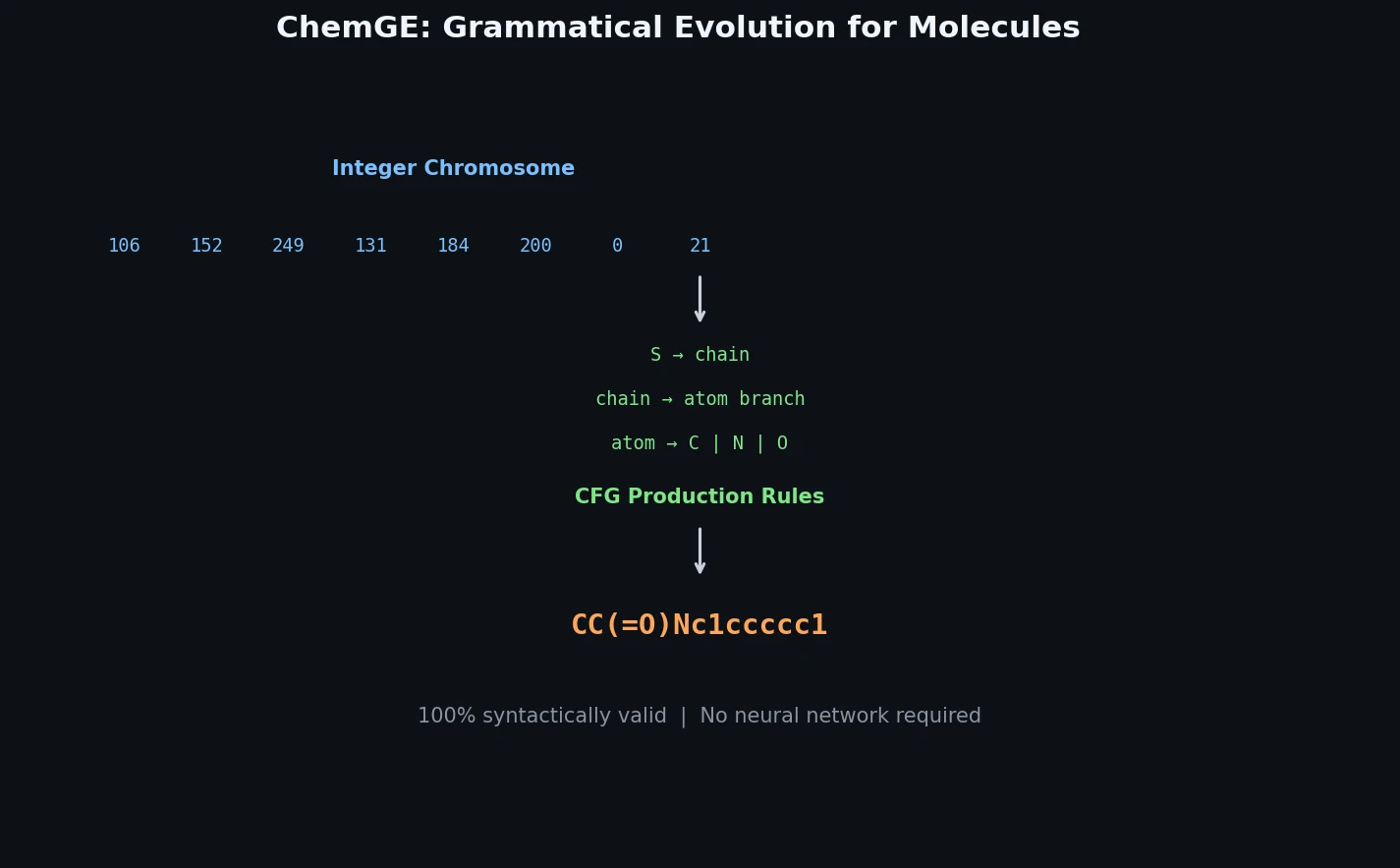
ChemGE pipeline from integer chromosome through CFG grammar rules to valid SMILES output

ChemGE: Molecule Generation via Grammatical Evolution

ChemGE uses grammatical evolution over SMILES context-free grammars to generate diverse drug-like molecules in parallel, outperforming deep learning baselines in throughput and molecular diversity.

Computational Chemistry
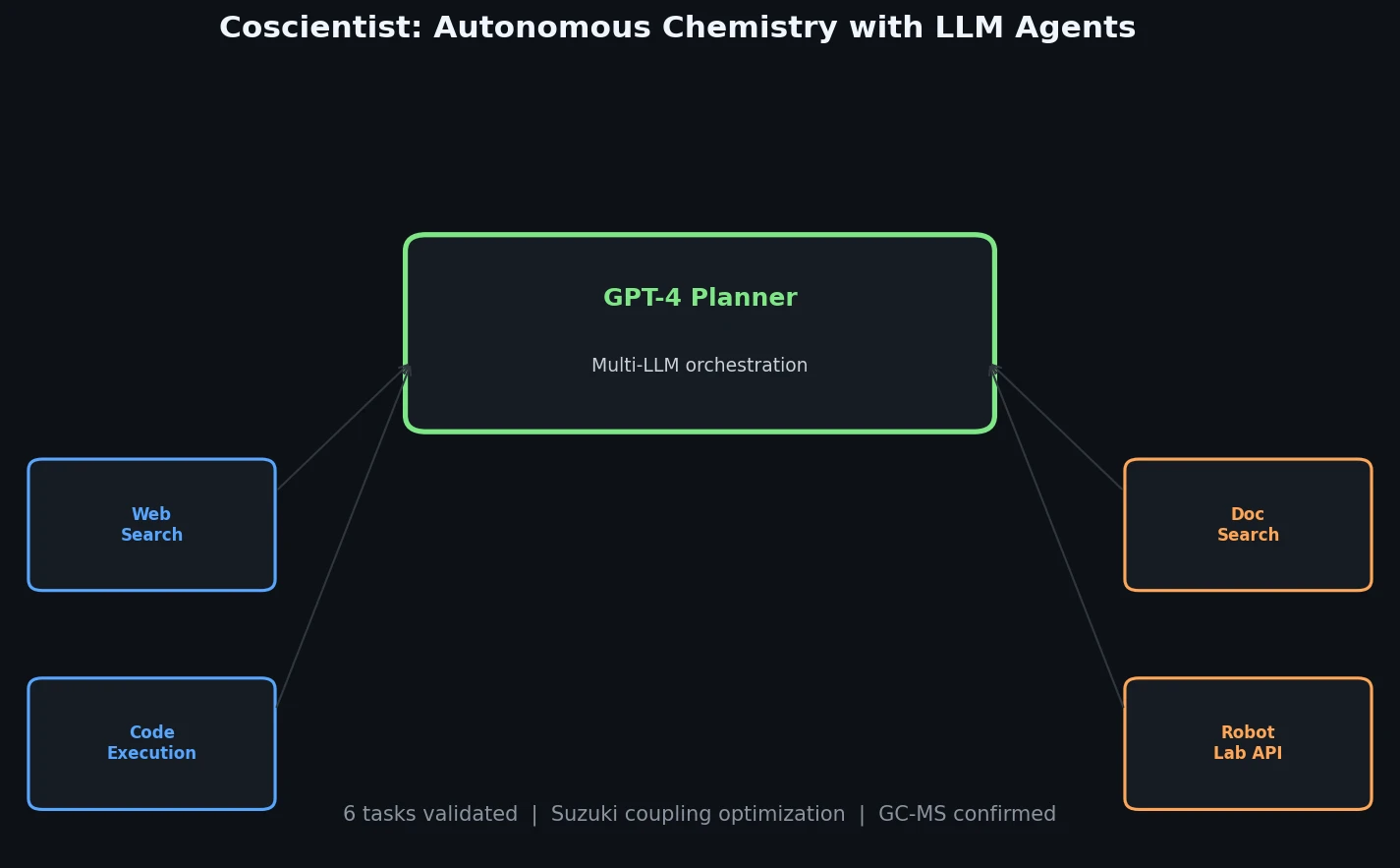
Coscientist architecture with GPT-4 planner orchestrating web search, code execution, document search, and robot lab API modules

Coscientist: Autonomous Chemistry with LLM Agents

Introduces Coscientist, a GPT-4-driven AI system that autonomously designs and executes chemical experiments using web search, code execution, and robotic lab automation.

Computational Chemistry
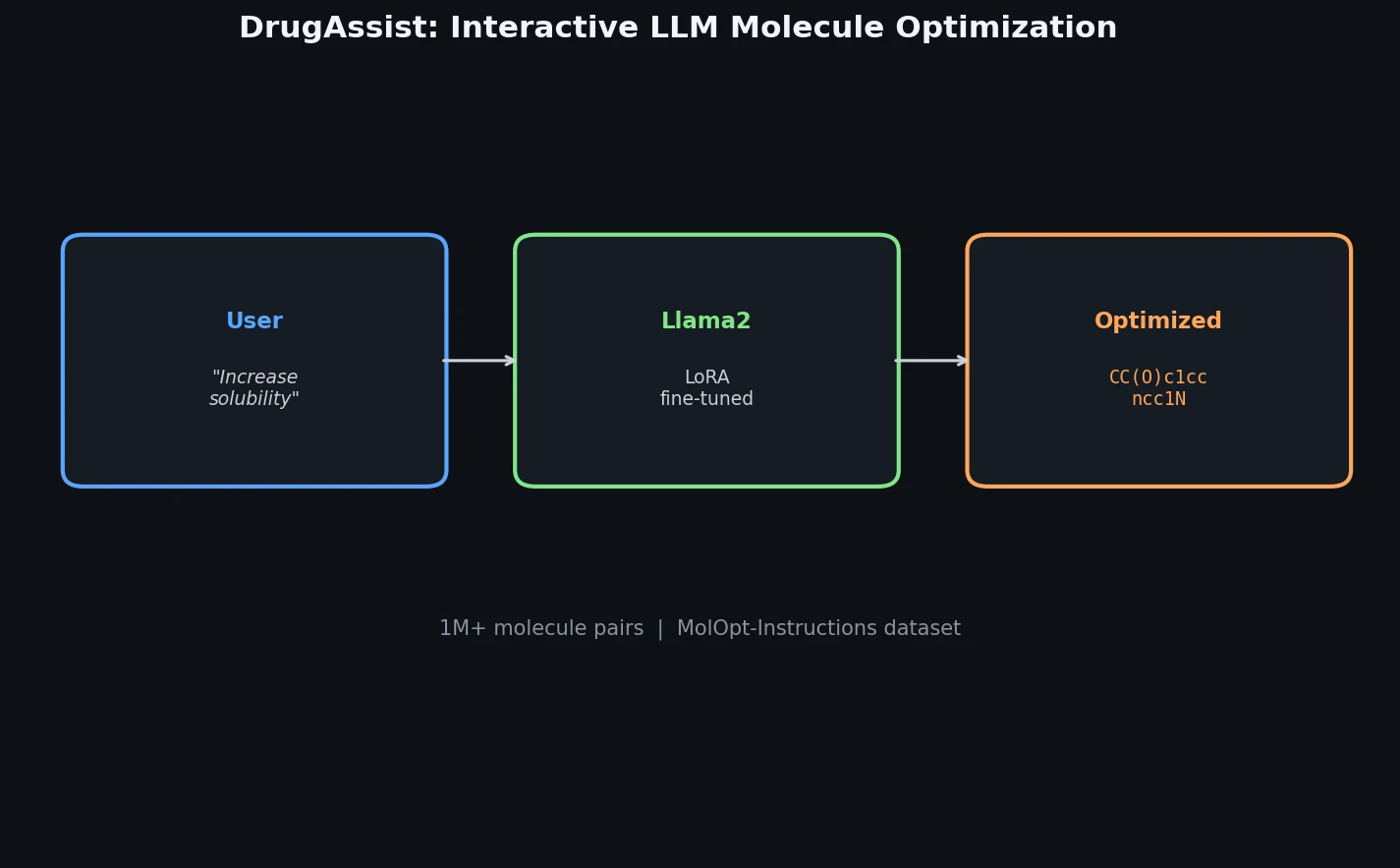
DrugAssist workflow from user instruction through LoRA fine-tuned Llama2 to optimized molecule output

DrugAssist: Interactive LLM Molecule Optimization

DrugAssist fine-tunes Llama2-7B-Chat on over one million molecule pairs for interactive, dialogue-based molecule optimization across six molecular properties.

Computational Chemistry
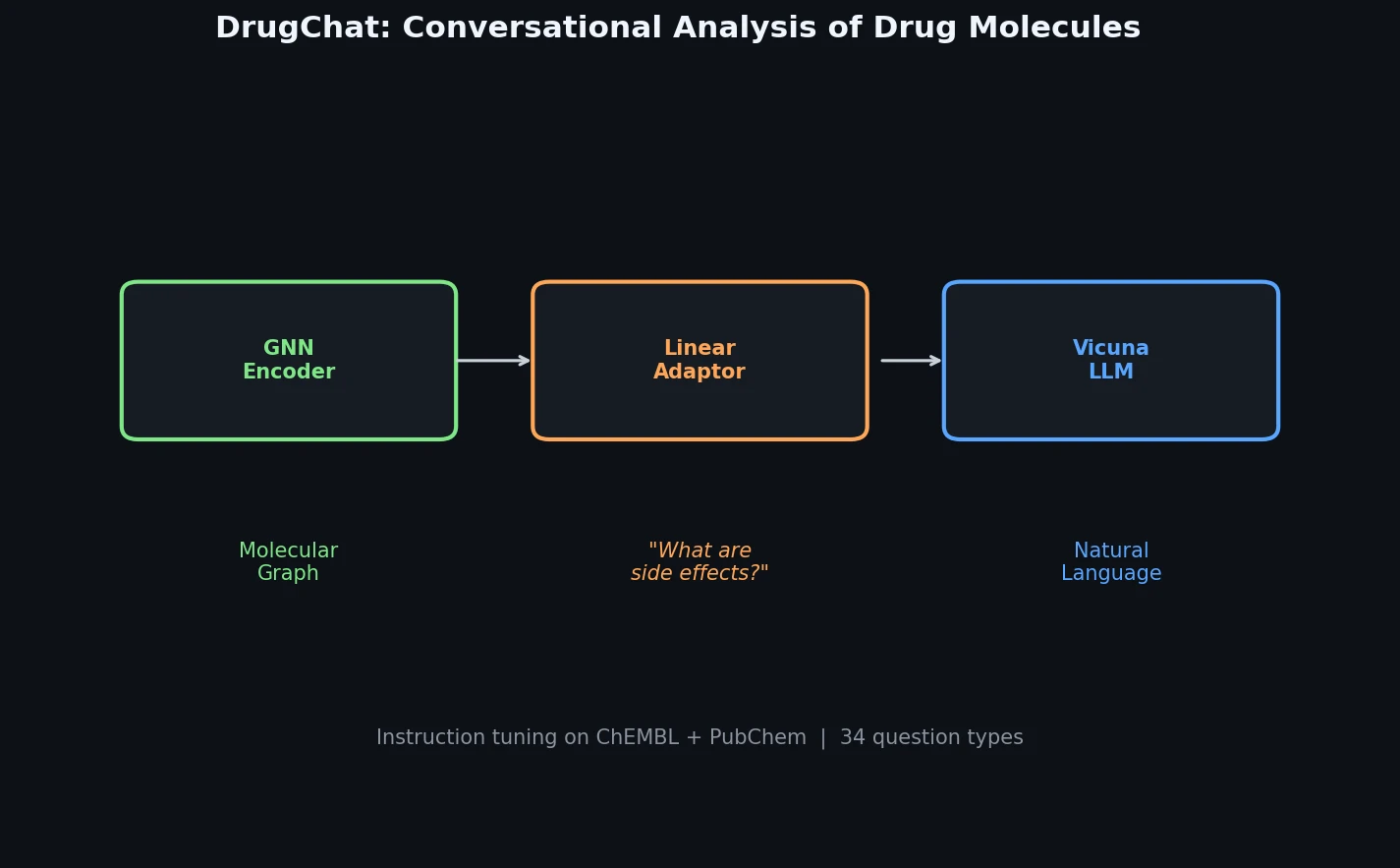
DrugChat architecture showing GNN encoder, linear adaptor, and Vicuna LLM for conversational drug analysis

DrugChat: Conversational QA on Drug Molecule Graphs

DrugChat is a prototype system that bridges molecular graph neural networks with large language models for interactive, multi-turn question answering about drug compounds. It trains only a lightweight linear adaptor between a frozen GNN encoder and Vicuna-13B using 143K curated QA pairs from ChEMBL and PubChem.