Optical Chemical Structure Recognition
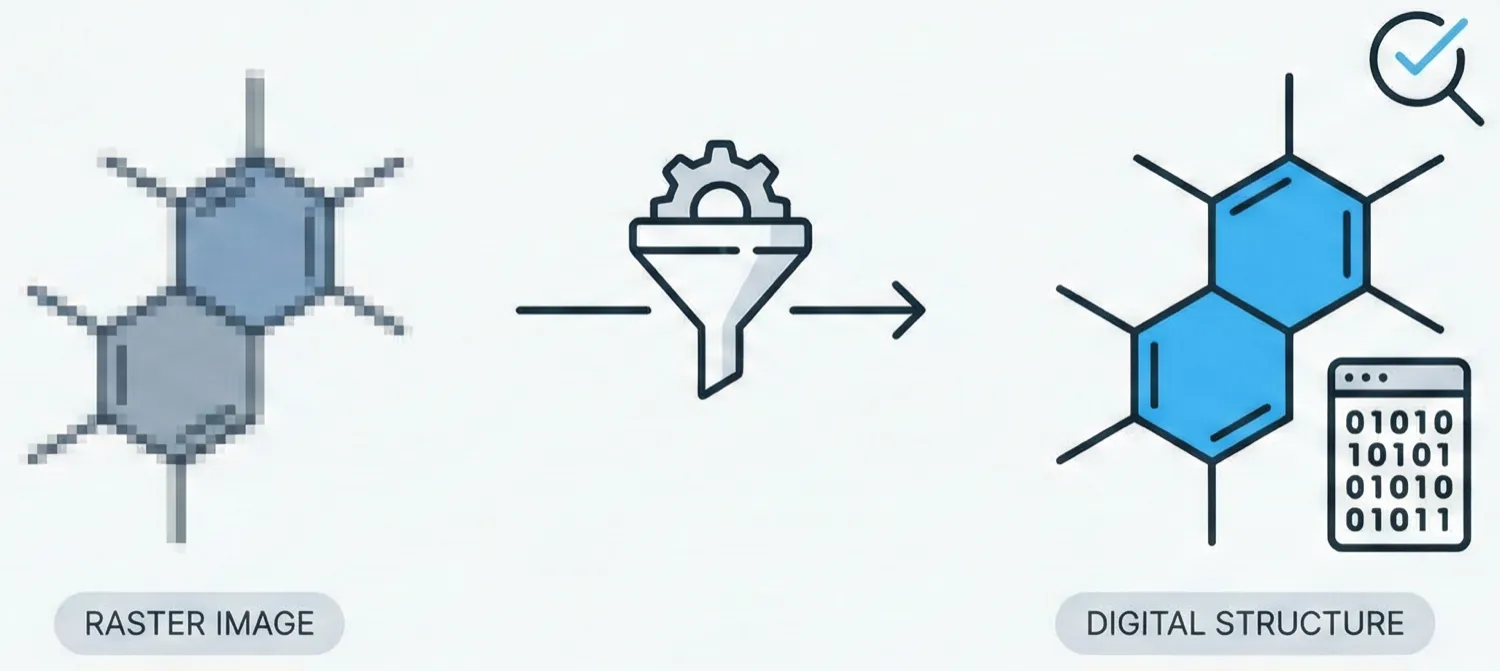
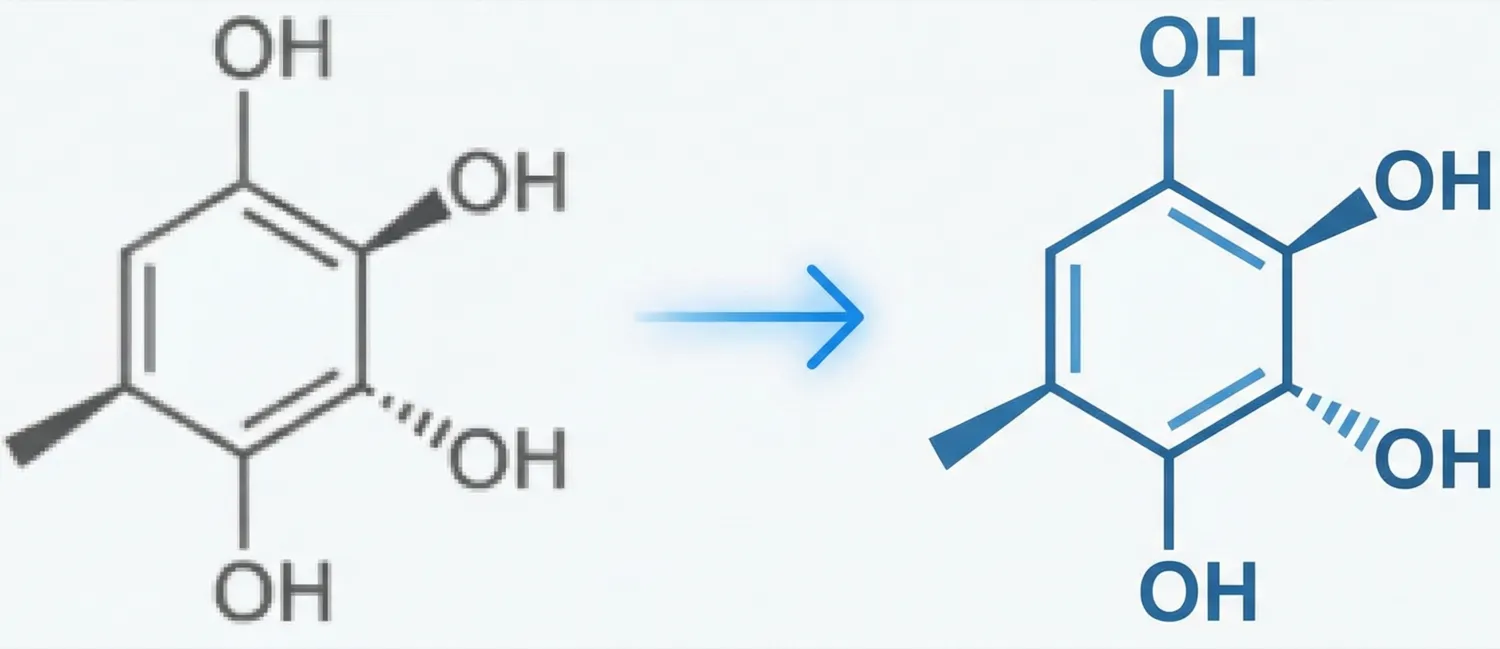
Optical Chemical Structure Recognition workflow visualization

Research on Chemical Expression Images Recognition

Proposes a new OCSR workflow that improves recognition rates by separating adhesive chemical symbols and specifically handling virtual/real wedge bonds using vectorization, achieving 90% exact match vs 82.2% for OSRA baseline.
Optical Chemical Structure Recognition

Chemical Structure Recognition (Rule-Based)

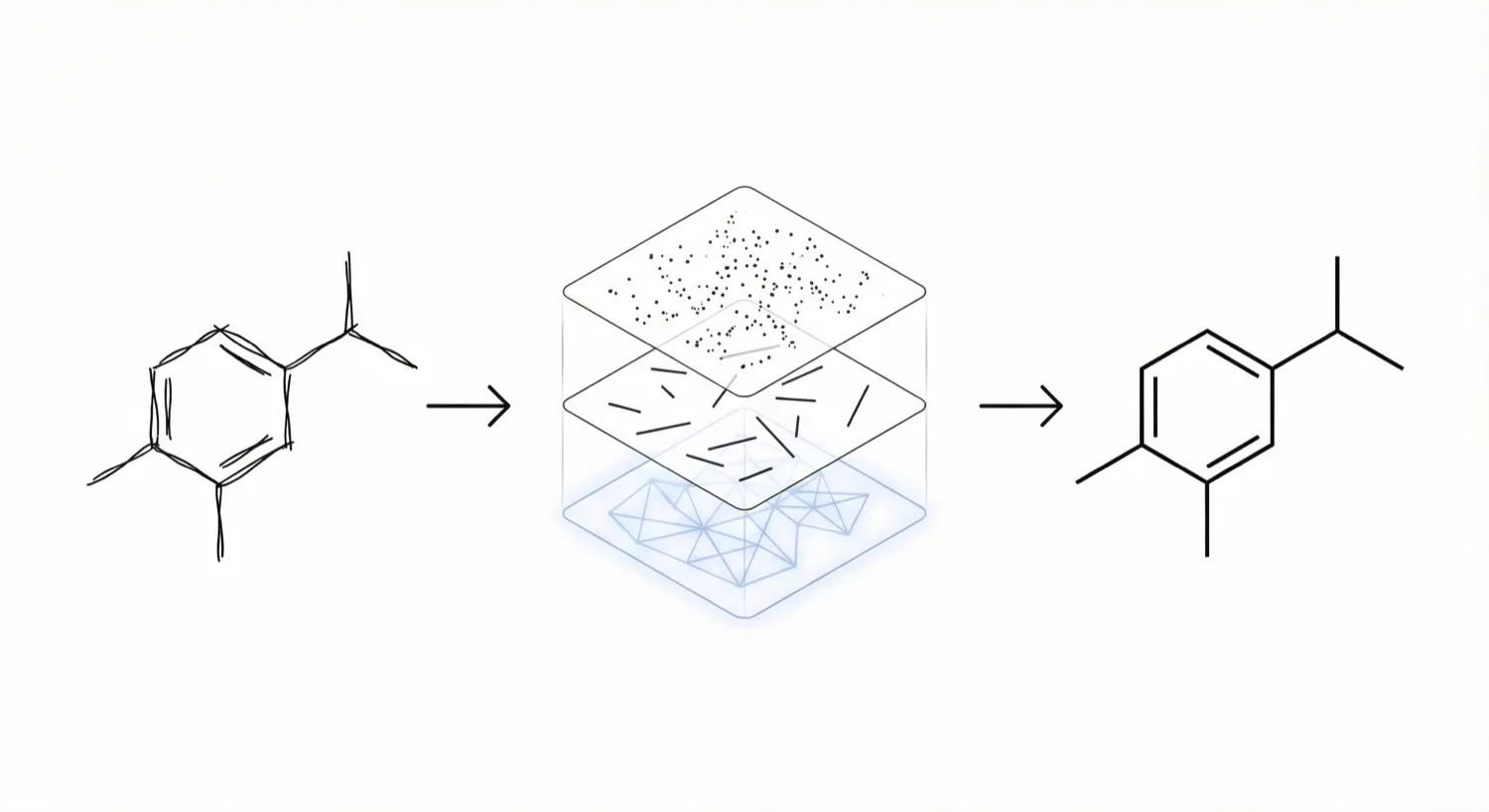
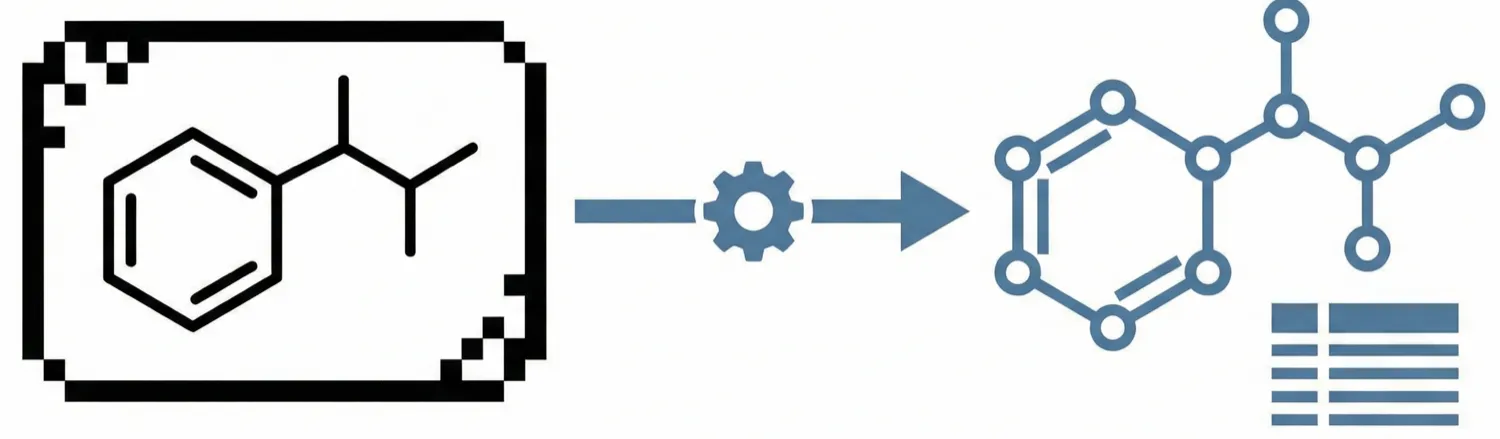
This paper introduces MolRec, a rule-based system for Optical Chemical Structure Recognition (OCSR). It defines a set of 18 geometric rewrite rules to disambiguate bonds and atoms in vectorised diagram images, demonstrating higher accuracy than the contemporary state-of-the-art (OSRA).

Optical Chemical Structure Recognition
Diagram of the ChemInk sketch recognition system converting freehand chemical drawings into structured molecular data

ChemInk: Real-Time Recognition for Chemical Drawings

ChemInk introduces a sketch recognition system for chemical diagrams that combines multi-level visual features via a joint Conditional Random Field (CRF), achieving 97.4% accuracy and outperforming CAD tools in user speed.

Optical Chemical Structure Recognition
Diagram of the CLiDE Pro system for segmenting document images and reconstructing chemical connection tables

CLiDE Pro: Optical Chemical Structure Recognition Tool

This paper introduces CLiDE Pro, an advanced OCSR system that segments document images and reconstructs chemical connection tables. It features novel handling for crossing bonds and generic structures, validating performance on a publicly released benchmark of 454 scanned images.

Optical Chemical Structure Recognition

Kekulé-1 System for Chemical Structure Recognition

This paper introduces Kekulé-1, one of the first successful Optical Chemical Structure Recognition (OCSR) systems. It details a hybrid approach using neural networks for character recognition and heuristic vectorization for bond detection, achieving 98.9% accuracy on a test set of 524 structures.

Optical Chemical Structure Recognition

OSRA at TREC-CHEM 2011: Optical Structure Recognition

This paper details the algorithmic pipeline of OSRA, an open-source tool that converts raster images of chemical diagrams into connection tables (SMILES/SDF). It outlines specific heuristics for page segmentation, vectorization, and atom recognition used in the TREC-CHEM Image2Structure task.

Optical Chemical Structure Recognition

Structural Analysis of Handwritten Chemical Formulas

This paper proposes a strategy for interpreting handwritten chemical formulas by converting bitmap images into a dynamic structural graph of quadrilaterals. It achieves ~97% recognition on graphical elements by using recursive ‘specialists’ to identify chemical bonds and rings.

Computational Social Science
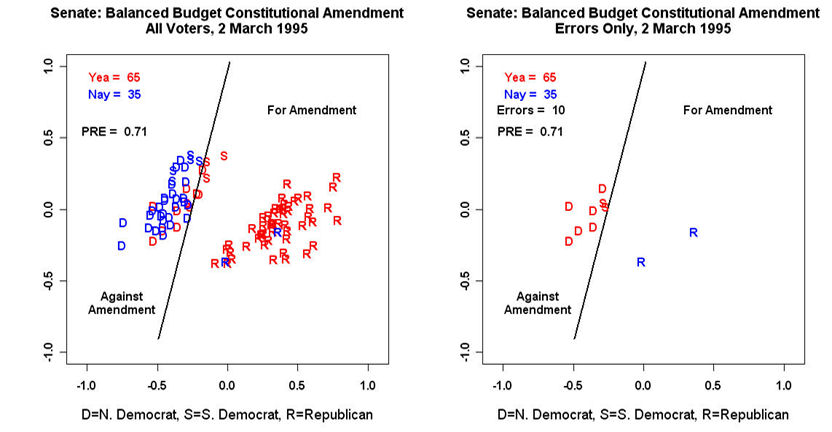
NOMINATE spatial plot showing Senate vote on Balanced Budget Amendment (1995) with legislators positioned on liberal-conservative dimension

A Spatial Model for Legislative Roll Call Analysis

This paper introduces NOMINATE, a probabilistic spatial model that recovers metric coordinates for legislators and roll calls from nominal voting data, demonstrating that a single liberal-conservative dimension explains the vast majority of Congressional voting behavior.

Optical Chemical Structure Recognition
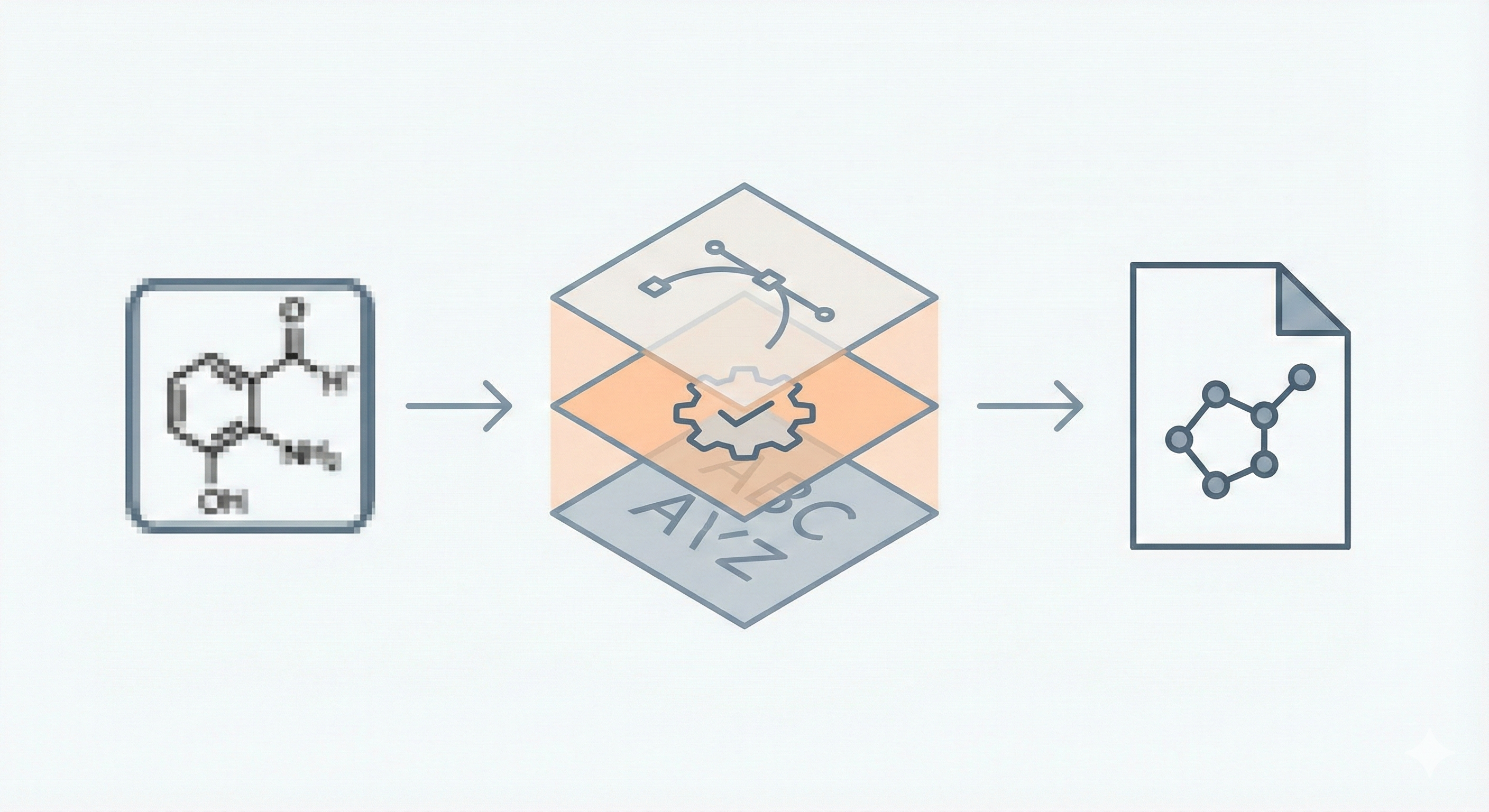
Automatic chemical image recognition pipeline from raster image to structured file

Automatic Recognition of Chemical Images

This methodological paper presents a system for digitizing chemical images into SDF files. It utilizes a custom vectorization algorithm and chemical rule validation, achieving 94% accuracy on benchmark datasets compared to 50% for commercial tools.

Optical Chemical Structure Recognition
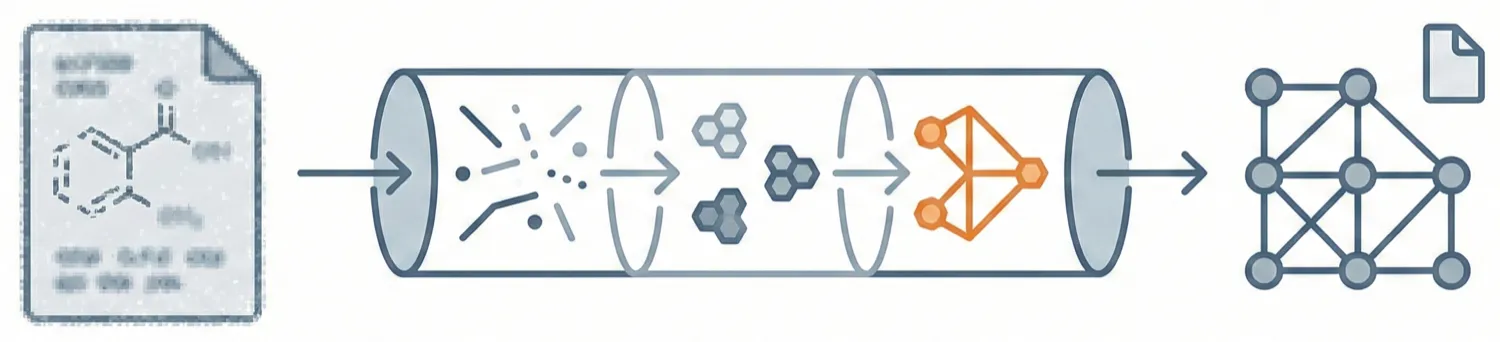
Three-phase pipeline converting scanned chemical diagrams into connection tables via primitive recognition and semantic interpretation

Chemical Literature Data Extraction: The CLiDE Project

The CLiDE project presents a foundational architecture for Optical Chemical Structure Recognition (OCSR). It details a three-phase pipeline to convert bitmapped journal pages into chemically significant connection tables, handling complex features like stereochemistry.

Optical Chemical Structure Recognition
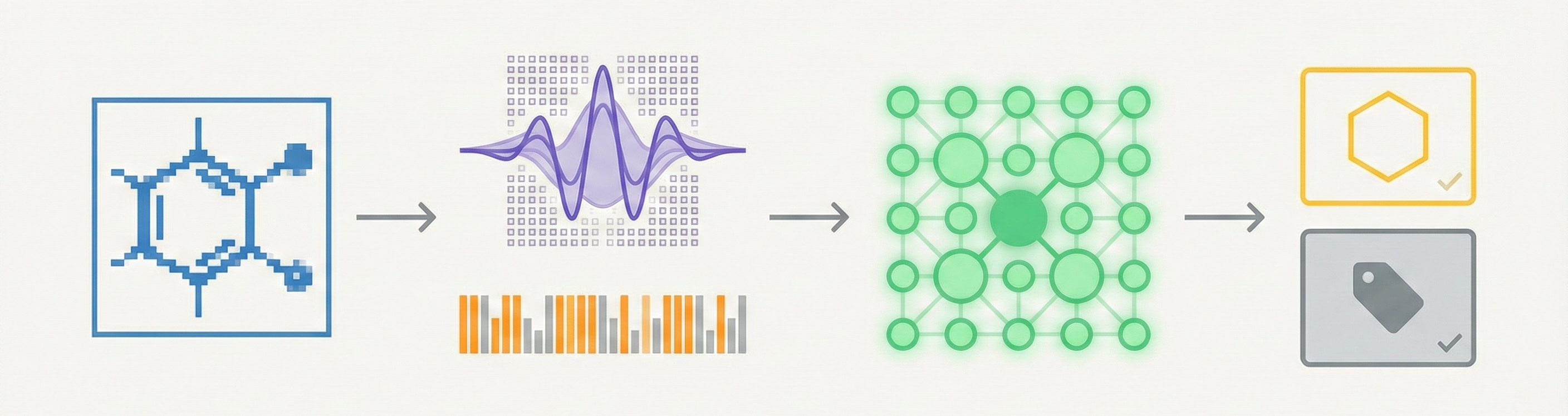
Visualization of Gabor wavelets and Kohonen networks for chemical image classification

Chemical Machine Vision

This 2003 paper introduces a machine vision approach for extracting chemical metadata from raster images. By using Gabor wavelets for feature extraction and Kohonen networks for classification, it distinguishes between chemical and non-chemical images, as well as ring and non-ring systems, without requiring high-resolution inputs.

Optical Chemical Structure Recognition
Overview of the ChemReader pipeline for extracting chemical structures from raster images using Hough transform and OCR

ChemReader: Automated Structure Extraction

This paper presents ChemReader, a fully automated optical structure recognition tool that converts raster images of chemical diagrams into machine-readable formats. It introduces a modified Hough transform for bond detection and a chemical spell checker that improves OCR accuracy from 66% to 87%.