Recognition of On-line Handwritten Chemical Expressions
Proposes a novel two-level algorithm for on-line handwritten chemical expression recognition, combining substance-level matching with character-level segmentation to achieve 96% accuracy.
Proposes a novel two-level algorithm for on-line handwritten chemical expression recognition, combining substance-level matching with character-level segmentation to achieve 96% accuracy.
This paper proposes a double-stage architecture using SVM for rough classification and HMM for fine recognition. It features a novel Point Sequence Reordering (PSR) algorithm that significantly improves accuracy on organic ring structures.
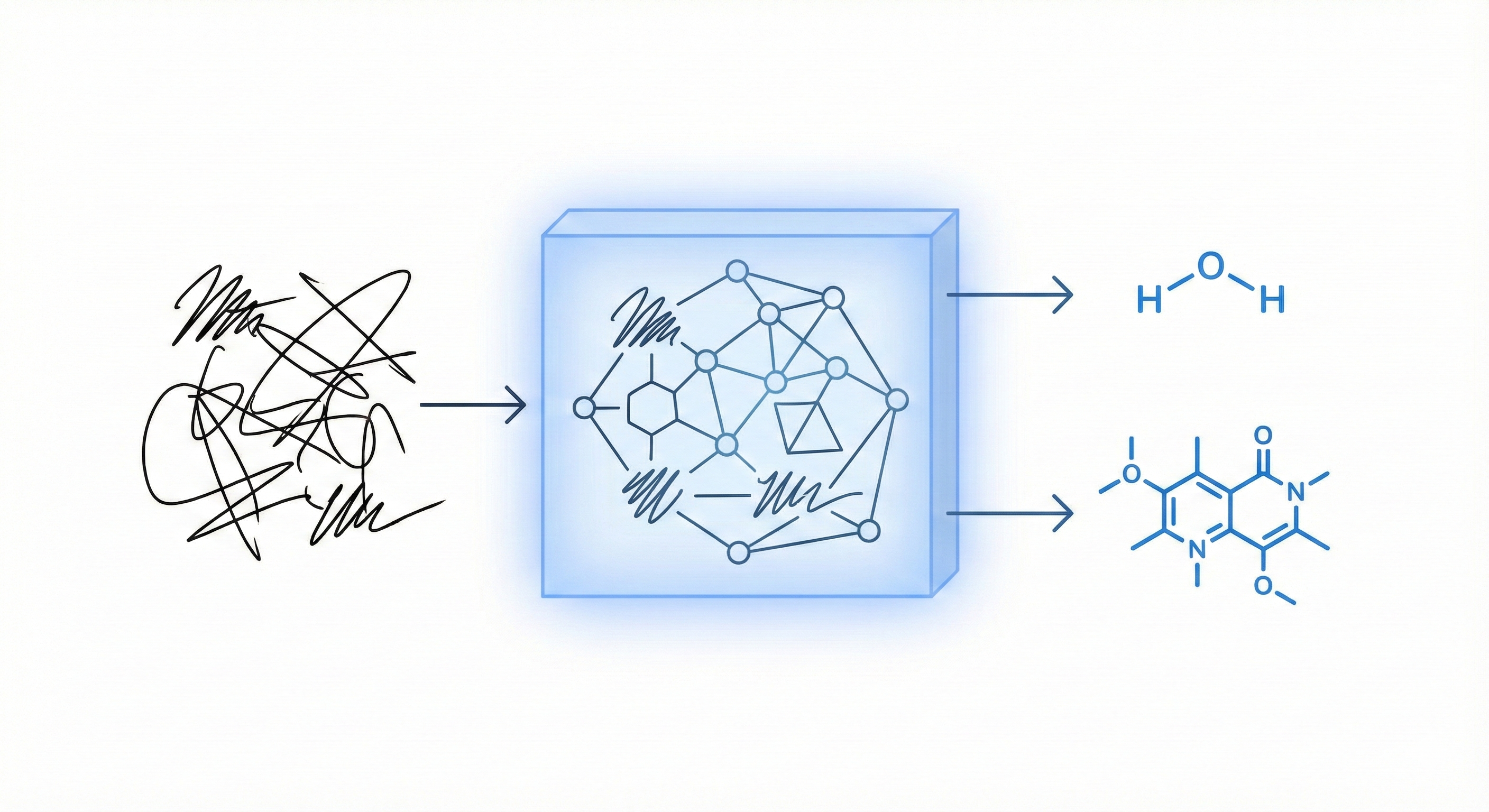
Proposes a unified statistical framework for recognizing both inorganic and organic handwritten chemical expressions. Introduces the Chemical Expression Structure Graph (CESG) and uses a weighted direction graph search for structural analysis, achieving 83.1% top-5 accuracy on a large proprietary dataset.
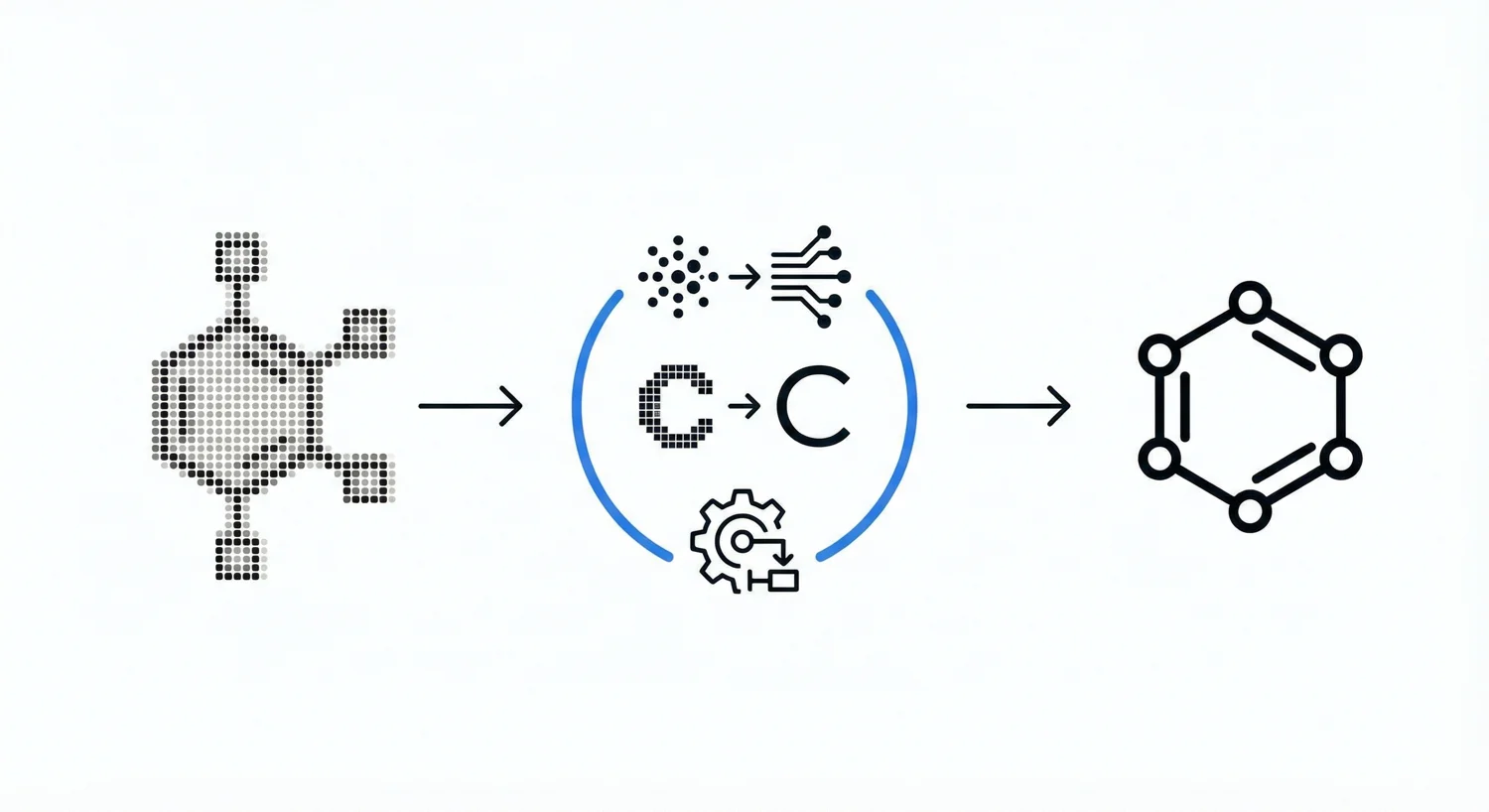
Describes chemoCR, a system that converts bitmap chemical diagrams into connection tables using a pipeline of texture-based vectorization, OCR, and a rule-based expert system, achieving 65.6% perfect recall on the TREC 2011 task.

ChemReader achieved 93% accuracy on the TREC 2011 Image-to-Structure task, with detailed error analysis revealing the need for improved chemical intelligence in bond recognition and node merging algorithms.
Describes the MolRec system’s performance in the CLEF 2012 Chemical Structure Recognition task, detailing its rule-based vectorization engine and analyzing failure modes like touching characters and complex bond types.
Benchmarks OSRA on CLEF-IP 2012 patent data, showing native image processing improves precision from 0.433 to 0.708 over external splitting tools. Describes OSRA’s pairwise distance algorithm for segmentation that handles overlapping molecules better than bounding boxes.
This paper introduces MLOCSR, a system that pipelines low-level image vectorization with a high-level probabilistic Markov Logic Network to recognize chemical structures. It replaces brittle heuristics with weighted logic rules, significantly outperforming state-of-the-art systems like OSRA on degraded or low-resolution images.
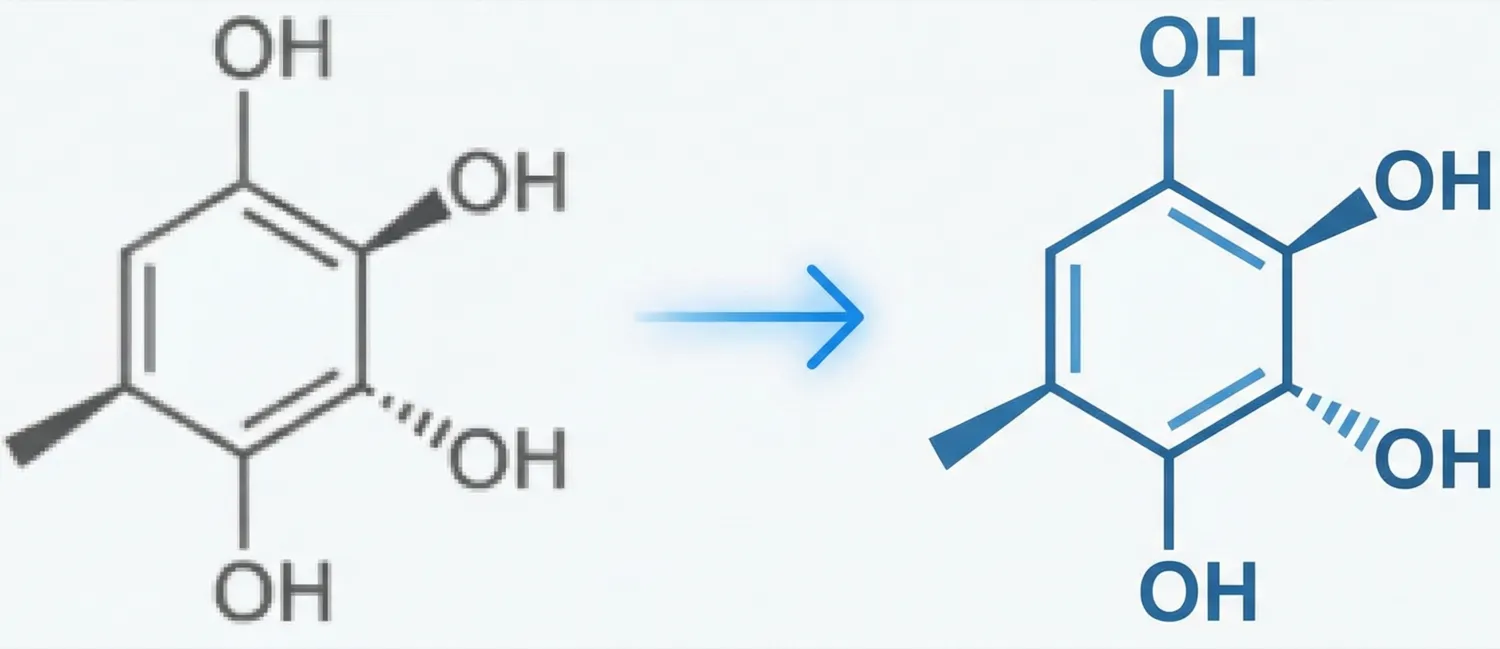
Proposes a new OCSR workflow that improves recognition rates by separating adhesive chemical symbols and specifically handling virtual/real wedge bonds using vectorization, achieving 90% exact match vs 82.2% for OSRA baseline.
This paper introduces MolRec, a rule-based system for Optical Chemical Structure Recognition (OCSR). It defines a set of 18 geometric rewrite rules to disambiguate bonds and atoms in vectorised diagram images, demonstrating higher accuracy than the contemporary state-of-the-art (OSRA).
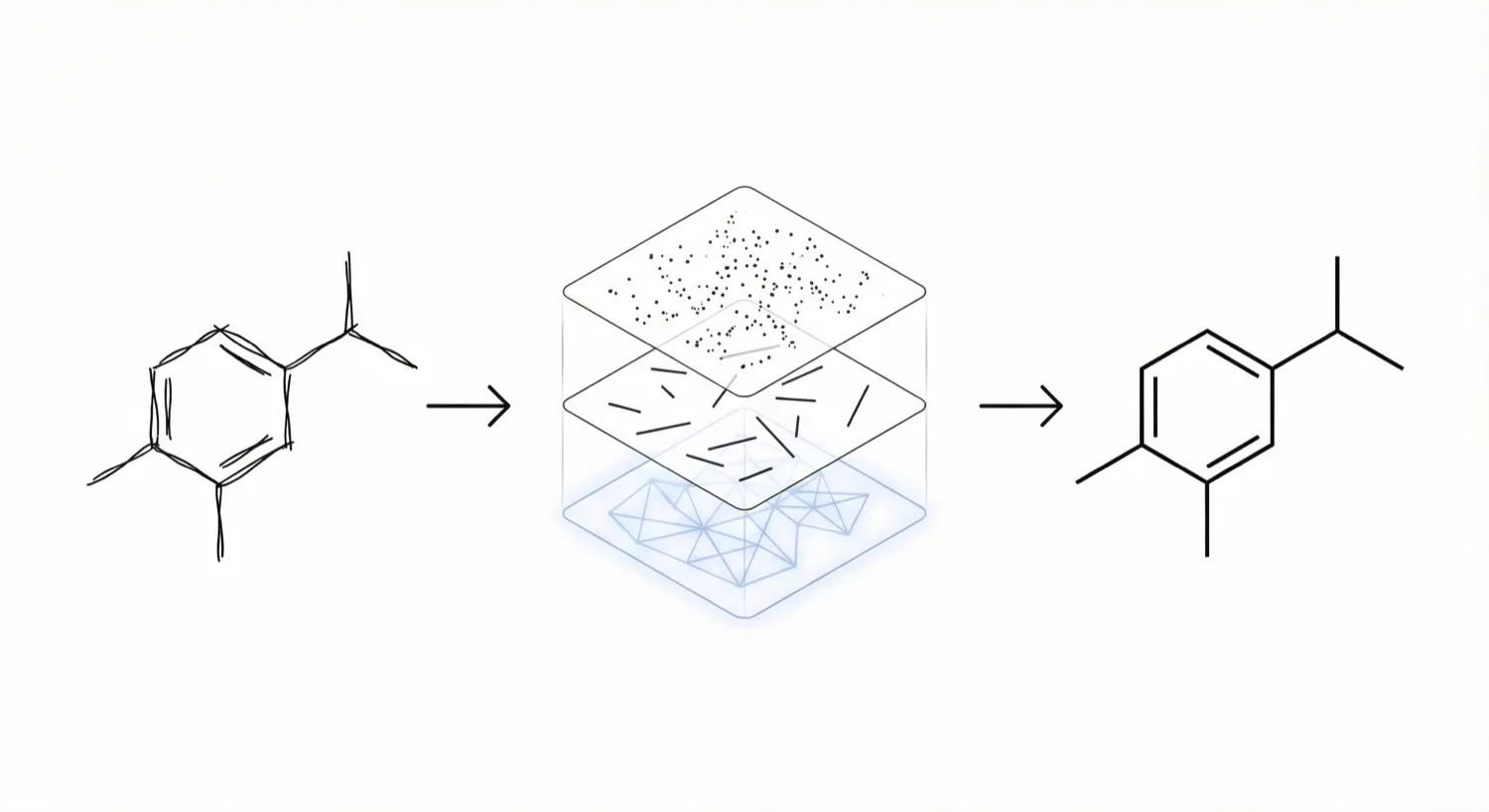
ChemInk introduces a sketch recognition system for chemical diagrams that combines multi-level visual features via a joint Conditional Random Field (CRF), achieving 97.4% accuracy and outperforming CAD tools in user speed.
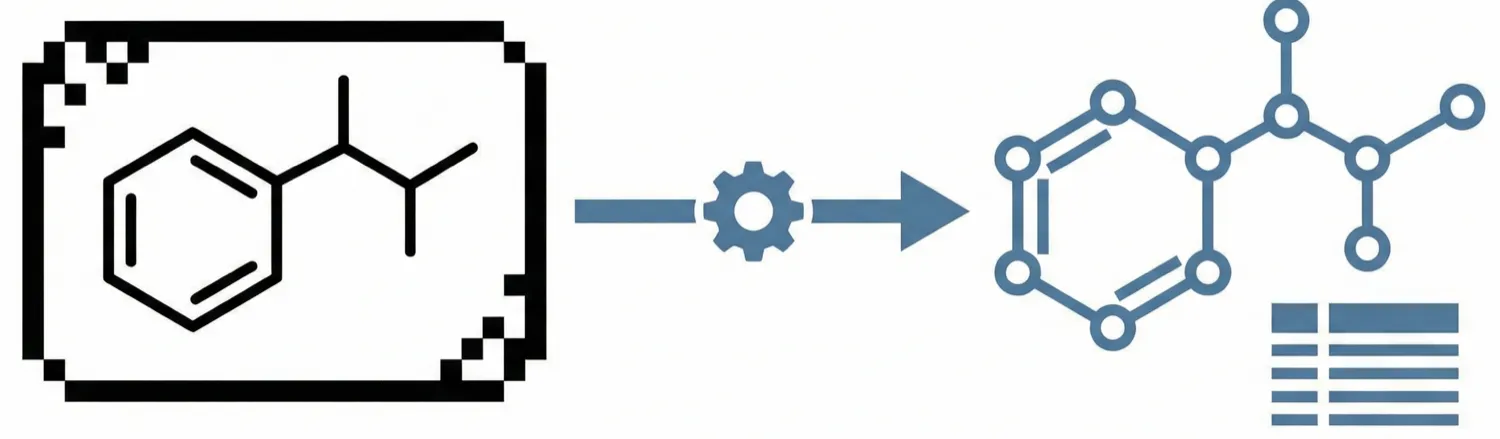
This paper introduces CLiDE Pro, an advanced OCSR system that segments document images and reconstructs chemical connection tables. It features novel handling for crossing bonds and generic structures, validating performance on a publicly released benchmark of 454 scanned images.