Optical Chemical Structure Recognition
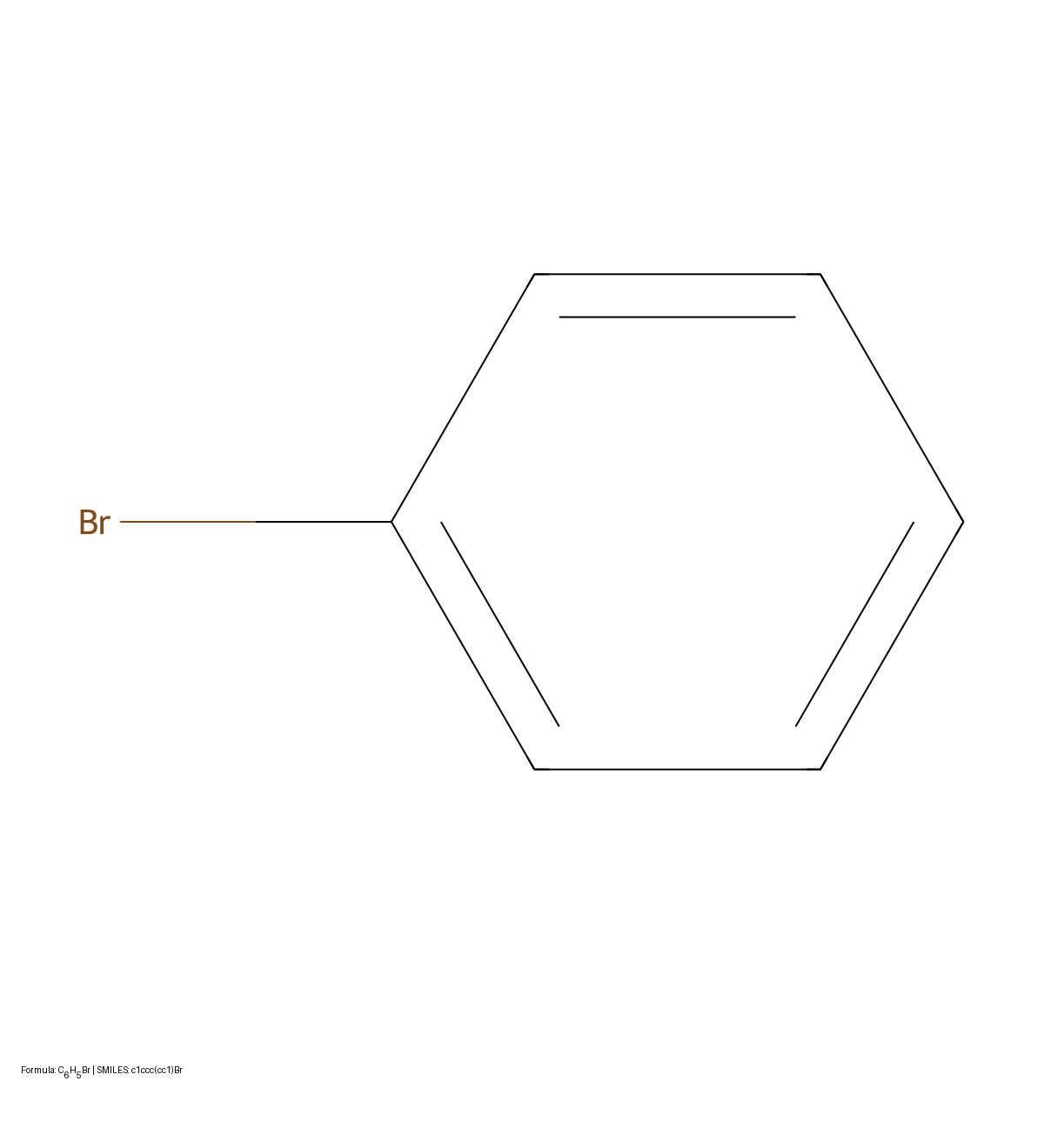
Bromobenzene molecular structure diagram for MICER OCSR

MICER: Molecular Image Captioning with Transfer Learning

MICER treats optical chemical structure recognition as an image captioning task, using transfer learning with a fine-tuned ResNet encoder and attention-based LSTM decoder to convert molecular images into SMILES strings, reaching 97.54% sequence accuracy on synthetic data and 82.33% on real-world images.
Optical Chemical Structure Recognition
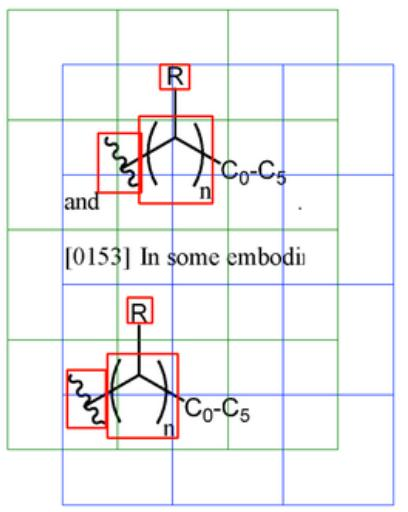
Patch-based classification pipeline showing overlapping green and blue grids over a chemical image with Markush indicators highlighted in red.

One Strike, You're Out: Detecting Markush Structures

Proposes a patch-based image processing pipeline using Inception V3 to filter Markush structures from chemical documents, outperforming traditional fixed-feature (ORB) methods on low-SNR images.

Optical Chemical Structure Recognition
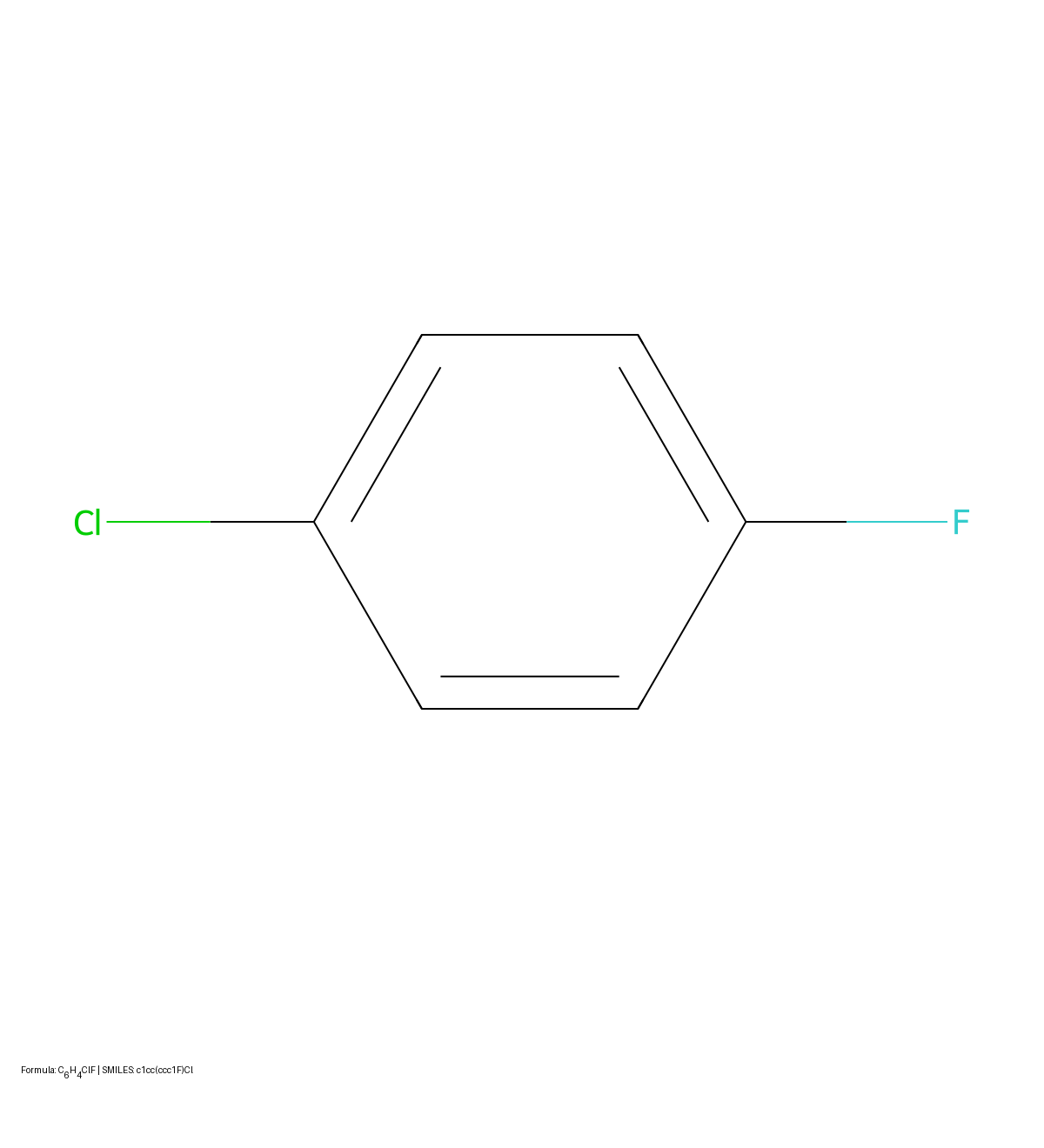
4-chlorofluorobenzene molecular structure diagram for SwinOCSR

SwinOCSR: End-to-End Chemical OCR with Swin Transformers

Proposes an end-to-end architecture replacing standard CNN backbones with Swin Transformer to capture global image context. Introduces Multi-label Focal Loss to handle severe token imbalance in chemical datasets.

Optical Chemical Structure Recognition
ChemGrapher pipeline overview showing segmentation and classification stages

ChemGrapher: Deep Learning for Chemical Graph OCSR

ChemGrapher replaces rule-based chemical OCR with a deep learning pipeline using semantic segmentation to identify atom and bond candidates, followed by specialized classification networks to resolve stereochemistry and bond multiplicity, reducing error rates compared to OSRA across all tested styles.

Optical Chemical Structure Recognition
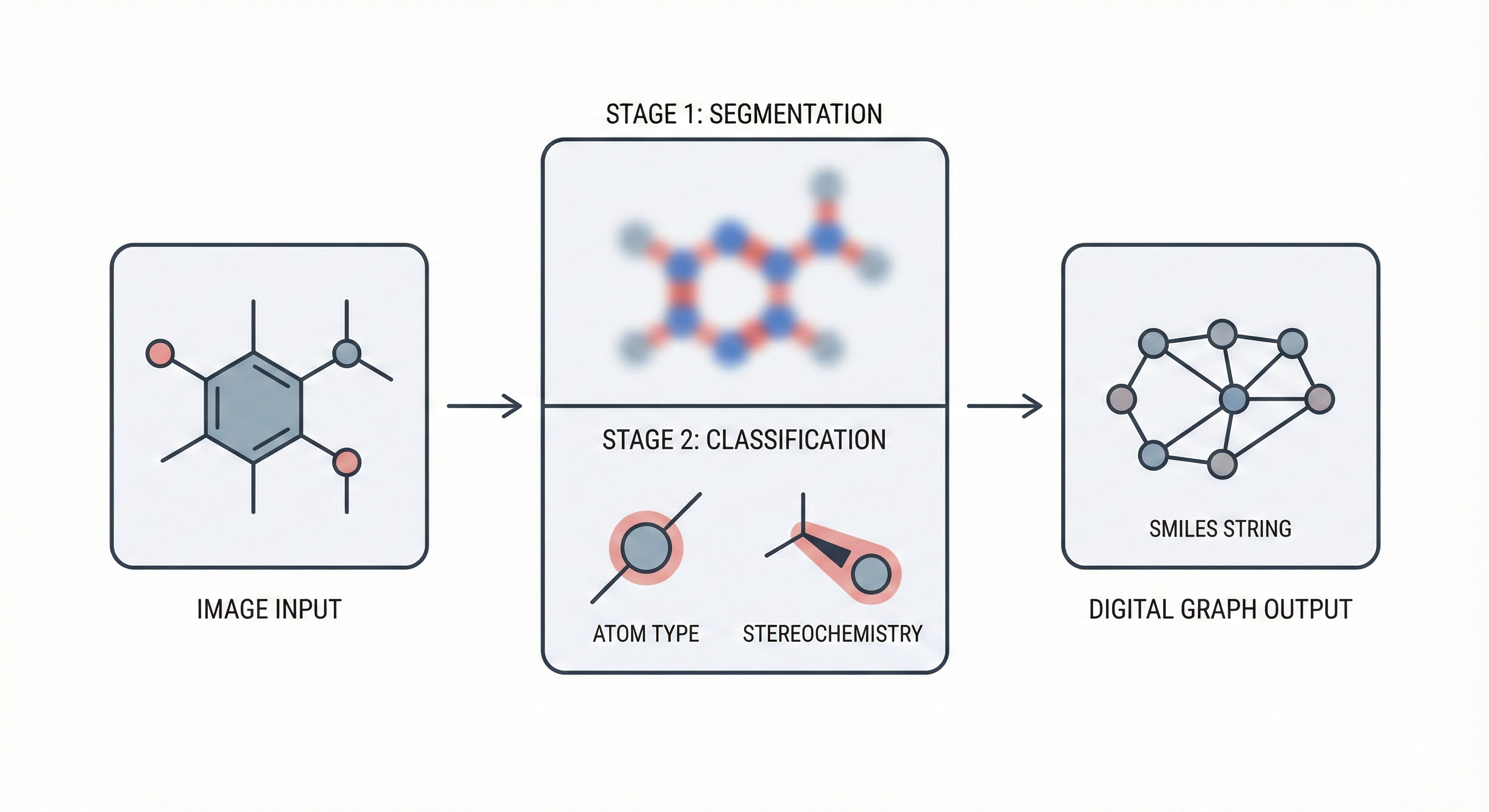
Encoder-decoder architecture translating a chemical structure bitmap into a SMILES string

DECIMER: Deep Learning for Chemical Image Recognition

DECIMER adapts the “Show, Attend and Tell” image captioning architecture to translate chemical structure images into SMILES strings. By leveraging massive synthetic datasets generated from PubChem, it demonstrates that deep learning can perform optical chemical recognition without complex, hand-engineered rule systems.

Optical Chemical Structure Recognition
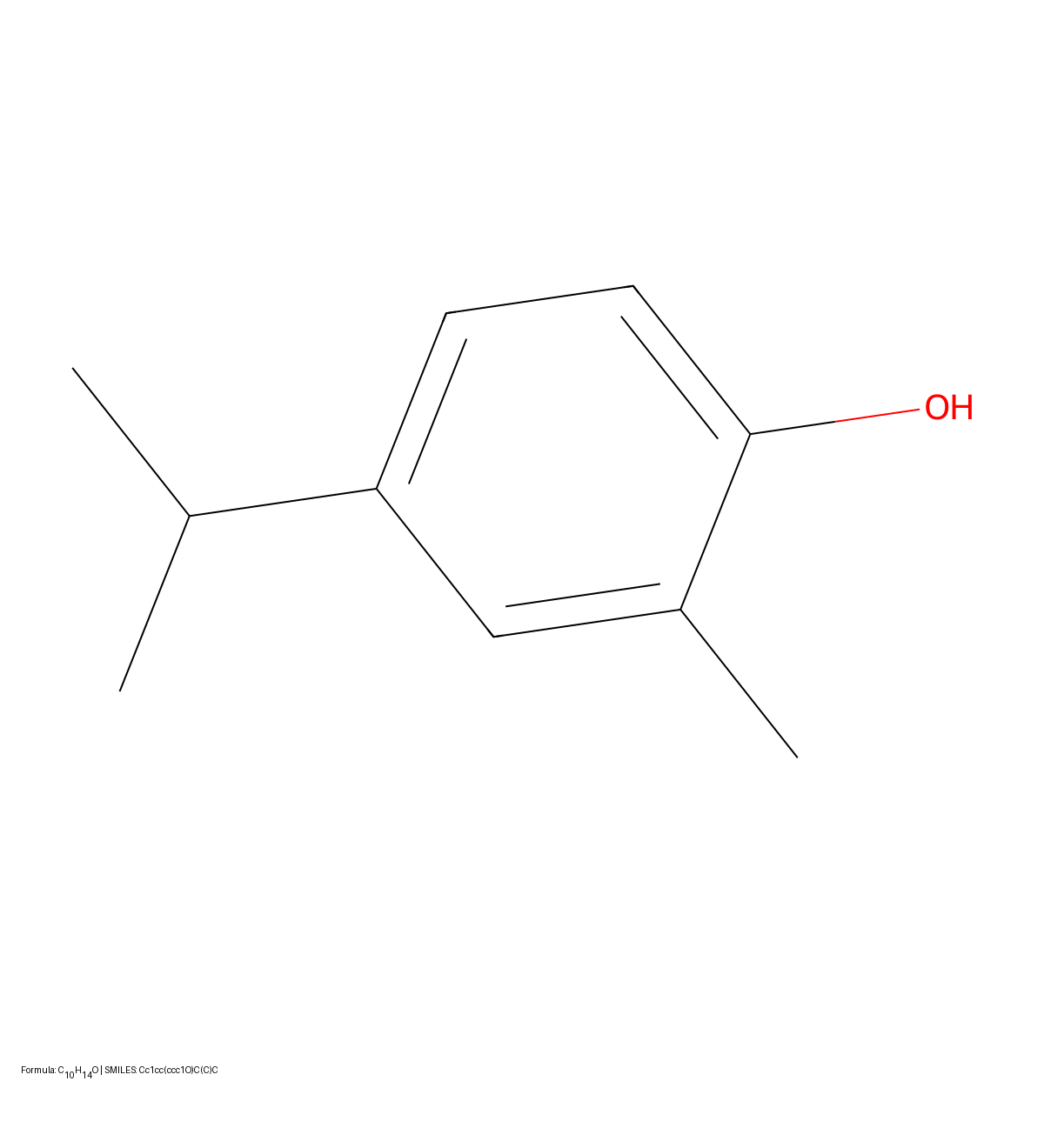
Thymol molecular structure diagram for Staker deep learning OCSR

Deep Learning for Molecular Structure Extraction (2019)

This paper presents a two-stage deep learning pipeline to extract chemical structures from documents and convert them to SMILES strings. By training on large-scale synthetic data, the method overcomes the brittleness of rule-based systems and demonstrates high accuracy even on low-resolution and noisy input images.

Optical Chemical Structure Recognition
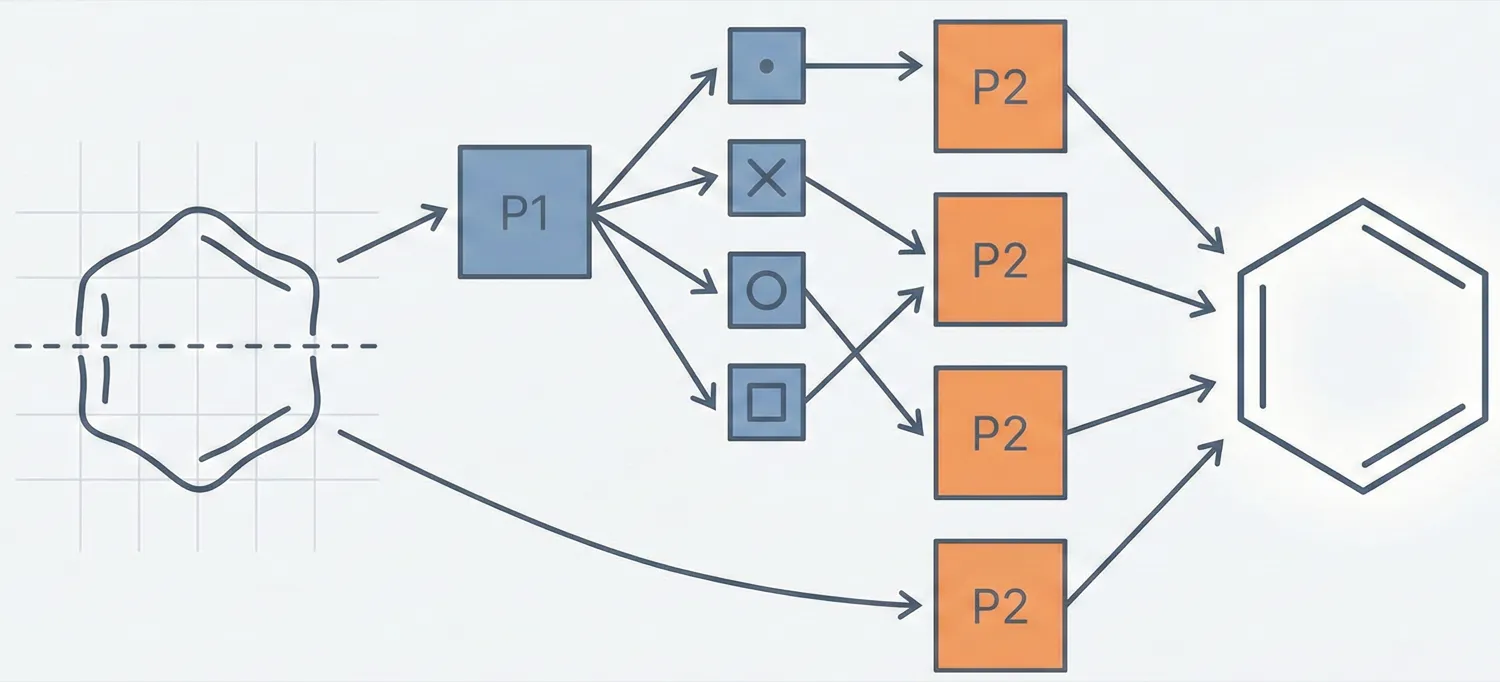
Handwritten chemical ring recognition neural network architecture

Handwritten Chemical Ring Recognition with Neural Networks

Proposes a specialized Classifier-Recognizer architecture that first categorizes rings by heteroatom (S, N, O) and then identifies the specific ring using optimized grid inputs.

Optical Chemical Structure Recognition

Handwritten Chemical Symbol Recognition Using SVMs

A 2013 paper introducing a hybrid recognition system for handwritten chemical symbols on touch devices. Combines Support Vector Machines (SVM) for classification with elastic matching for geometric verification, achieving 89.7% top-1 accuracy on pen-based input for chemical structure drawing applications.

Optical Chemical Structure Recognition

HMM-based Online Recognition of Chemical Symbols

HMM-based method for recognizing online handwritten chemical symbols using 11-dimensional local features including derivatives, curvature, and linearity. Achieves 89.5% top-1 accuracy and 98.7% top-3 accuracy on a custom dataset of 64 chemical symbols.

Optical Chemical Structure Recognition
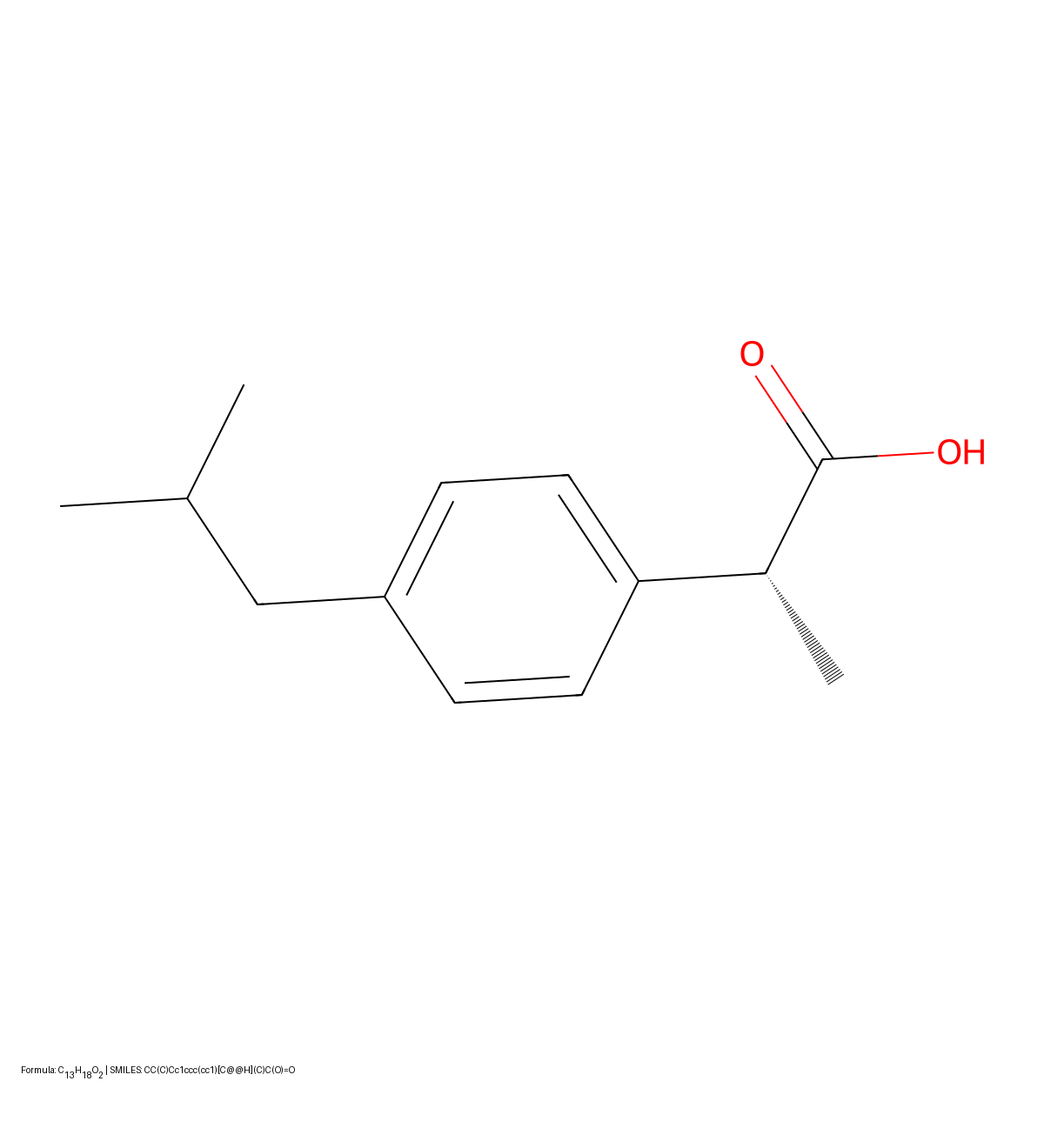
Ibuprofen molecular structure diagram for Img2Mol OCSR

Img2Mol: Accurate SMILES Recognition from Depictions

A 2021 deep learning system using a two-stage approach for OCSR, encoding images into continuous CDDD embeddings before decoding to SMILES. It leverages extensive data augmentation to handle rotations, distortions, and rendering variations for fast and robust molecular structure recognition.

Optical Chemical Structure Recognition

On-line Handwritten Chemical Expression Recognition

Yang et al. propose a two-level recognition system for handwritten chemical formulas, combining global structural analysis to identify substances with local character recognition using ANNs, achieving ~96% accuracy on a dataset of 1197 expressions.

Optical Chemical Structure Recognition

Online Handwritten Chemical Formula Structure Analysis

A three-level grammatical framework (formula, molecule, text) for parsing online handwritten chemical formulas, generating semantic graphs that capture both connectivity and layout using context-free grammars and HMMs.