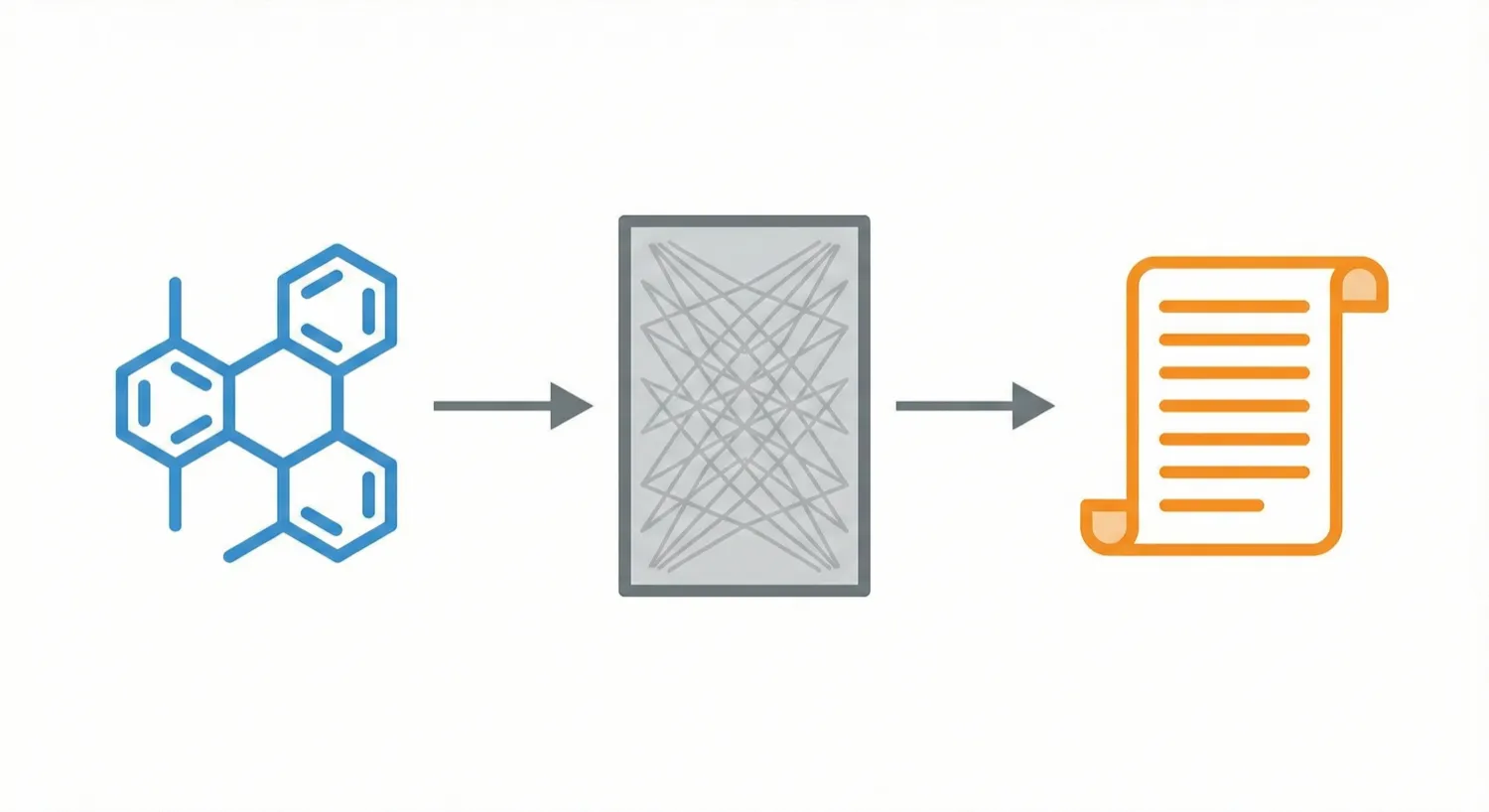
STOUT V2.0: Transformer-Based SMILES to IUPAC Translation
STOUT V2.0 uses Transformers trained on ~1 billion SMILES-IUPAC pairs to accurately translate chemical structures into systematic names (and vice-versa), outperforming its RNN predecessor.
STOUT V2.0 uses Transformers trained on ~1 billion SMILES-IUPAC pairs to accurately translate chemical structures into systematic names (and vice-versa), outperforming its RNN predecessor.
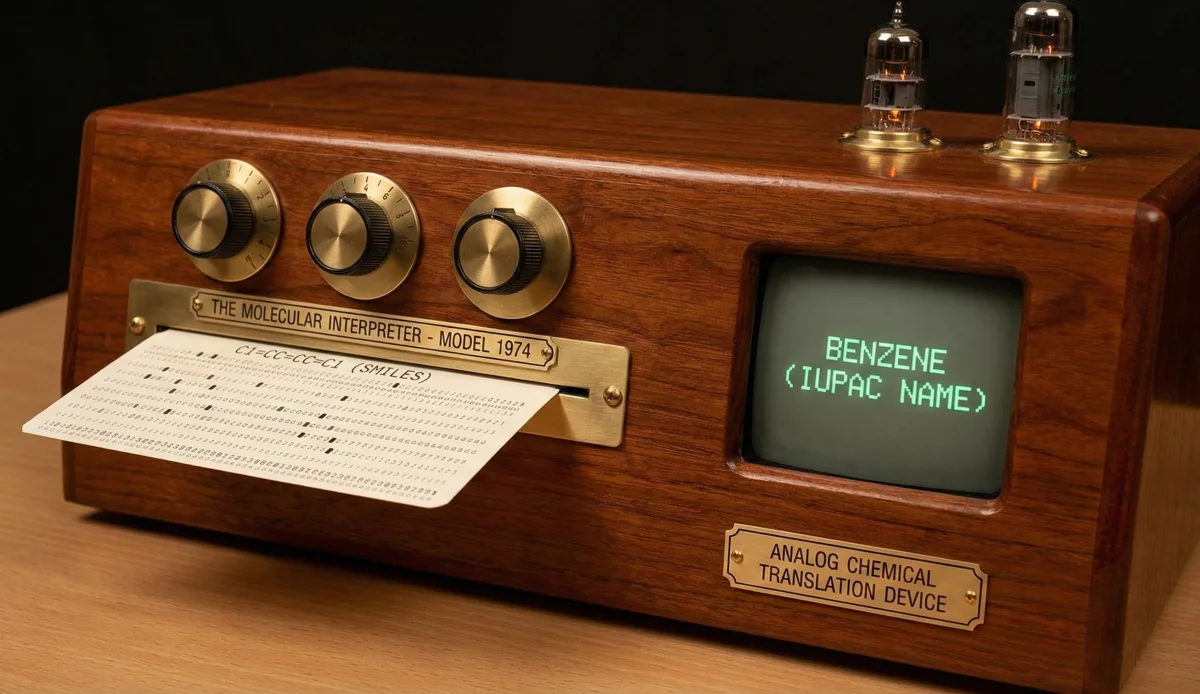
STOUT (SMILES-TO-IUPAC-name translator) uses neural machine translation to convert chemical line notations to IUPAC names and vice versa, achieving ~90% BLEU score. It addresses the lack of open-source tools for algorithmic IUPAC naming.
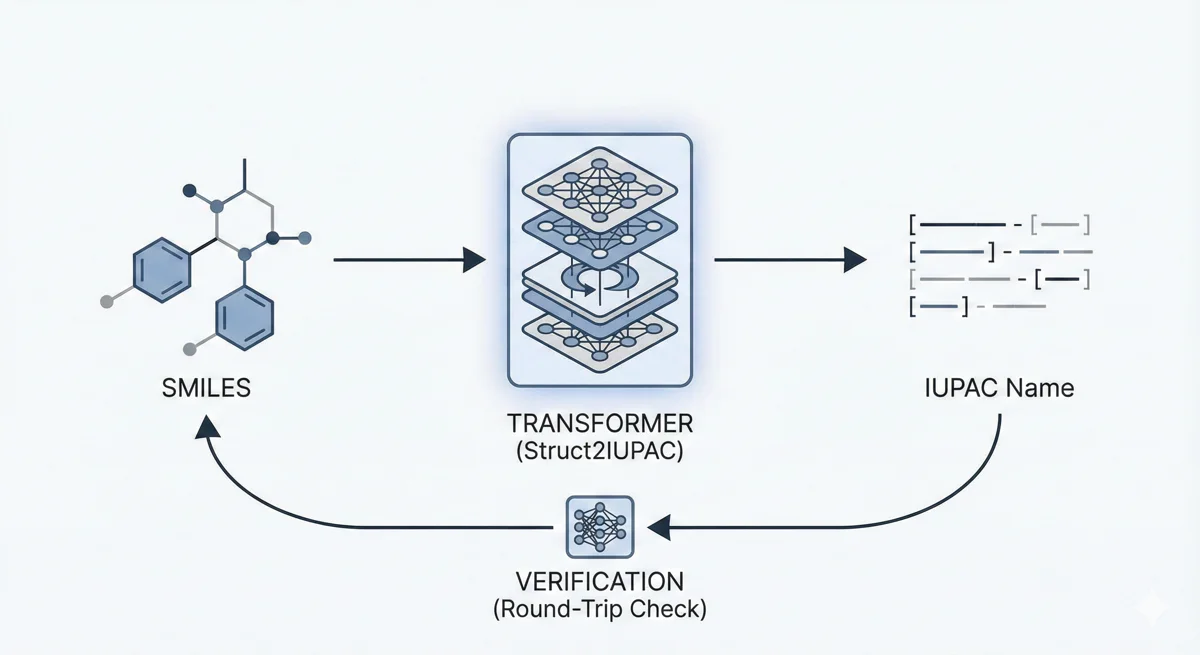
This paper proposes a Transformer-based approach (Struct2IUPAC) to convert chemical structures to IUPAC names, challenging the dominance of rule-based systems. Trained on ~47M PubChem examples, it achieves near-perfect accuracy using a round-trip verification step with OPSIN.
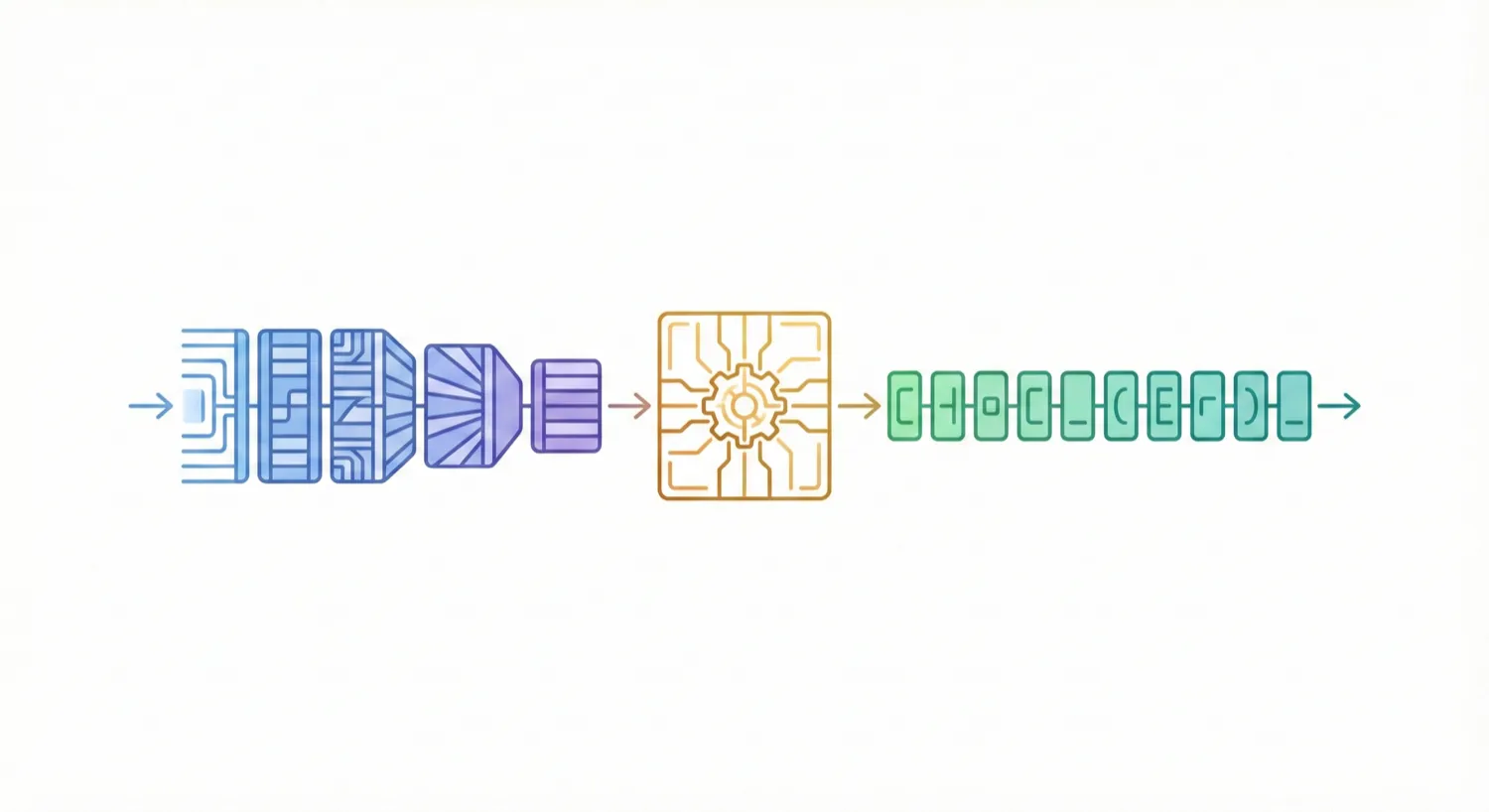
This study presents a sequence-to-sequence Transformer model that translates InChI identifiers into IUPAC names character-by-character. Trained on 10 million PubChem pairs, it achieves 91% accuracy on organic compounds, performing comparably to commercial software.
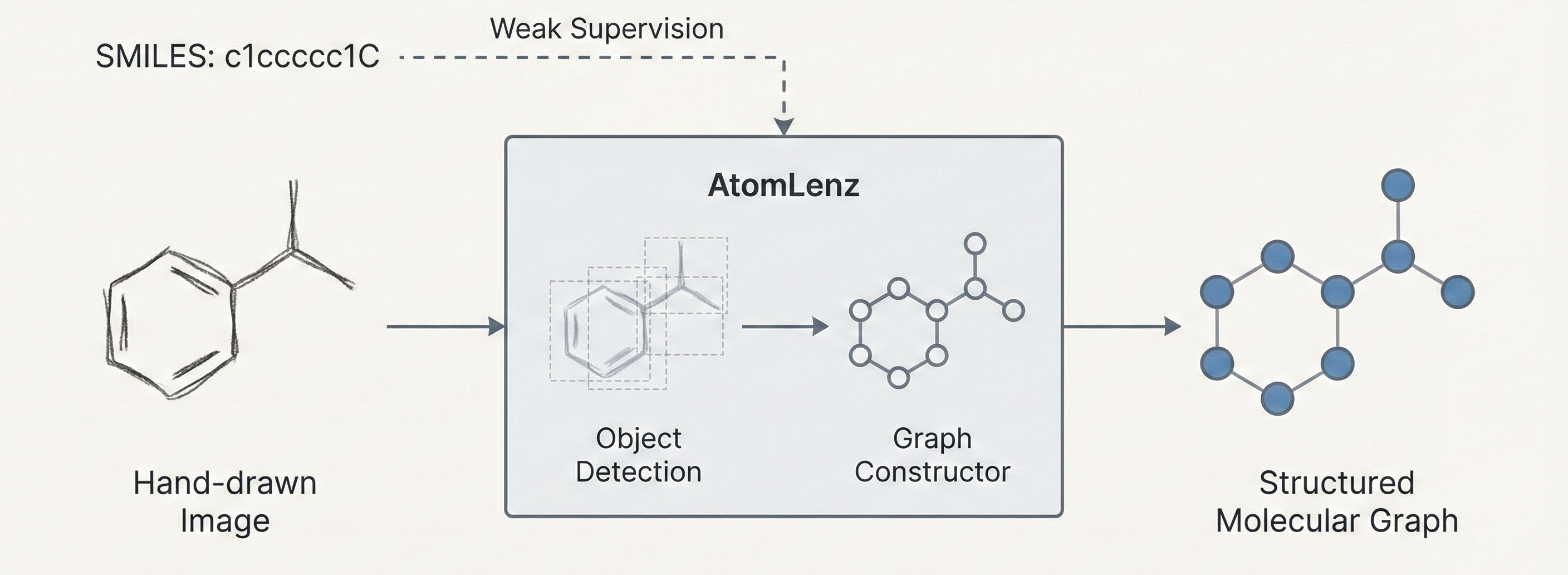
Introduces AtomLenz, an OCSR tool that combines object detection with a molecular graph constructor. Features a novel weakly supervised training scheme (ProbKT*) to learn atom-level localization from SMILES-only data, achieving state-of-the-art results on hand-drawn images.
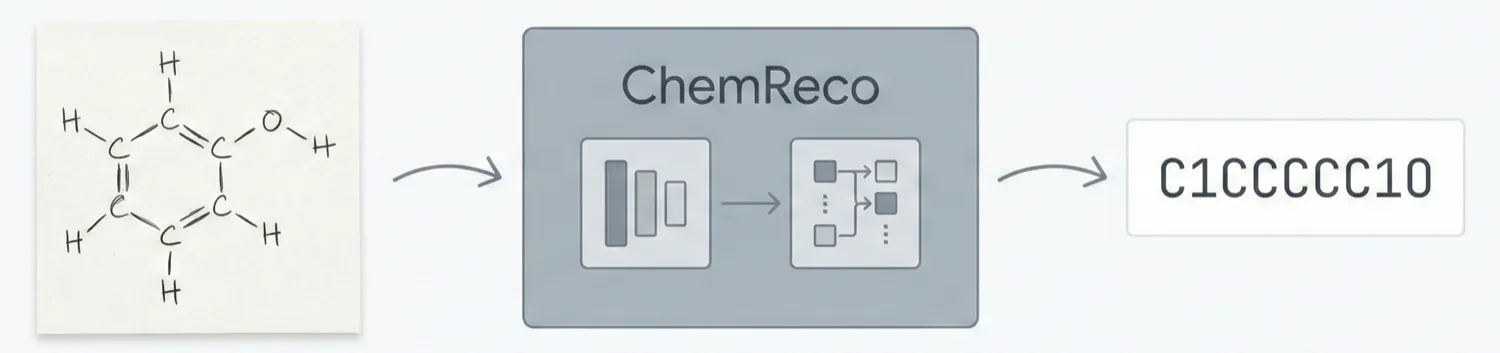
ChemReco automates the recognition of hand-drawn chemical structures using a synthetic data pipeline and an EfficientNet+Transformer architecture, achieving 96.90% accuracy on C-H-O molecules.
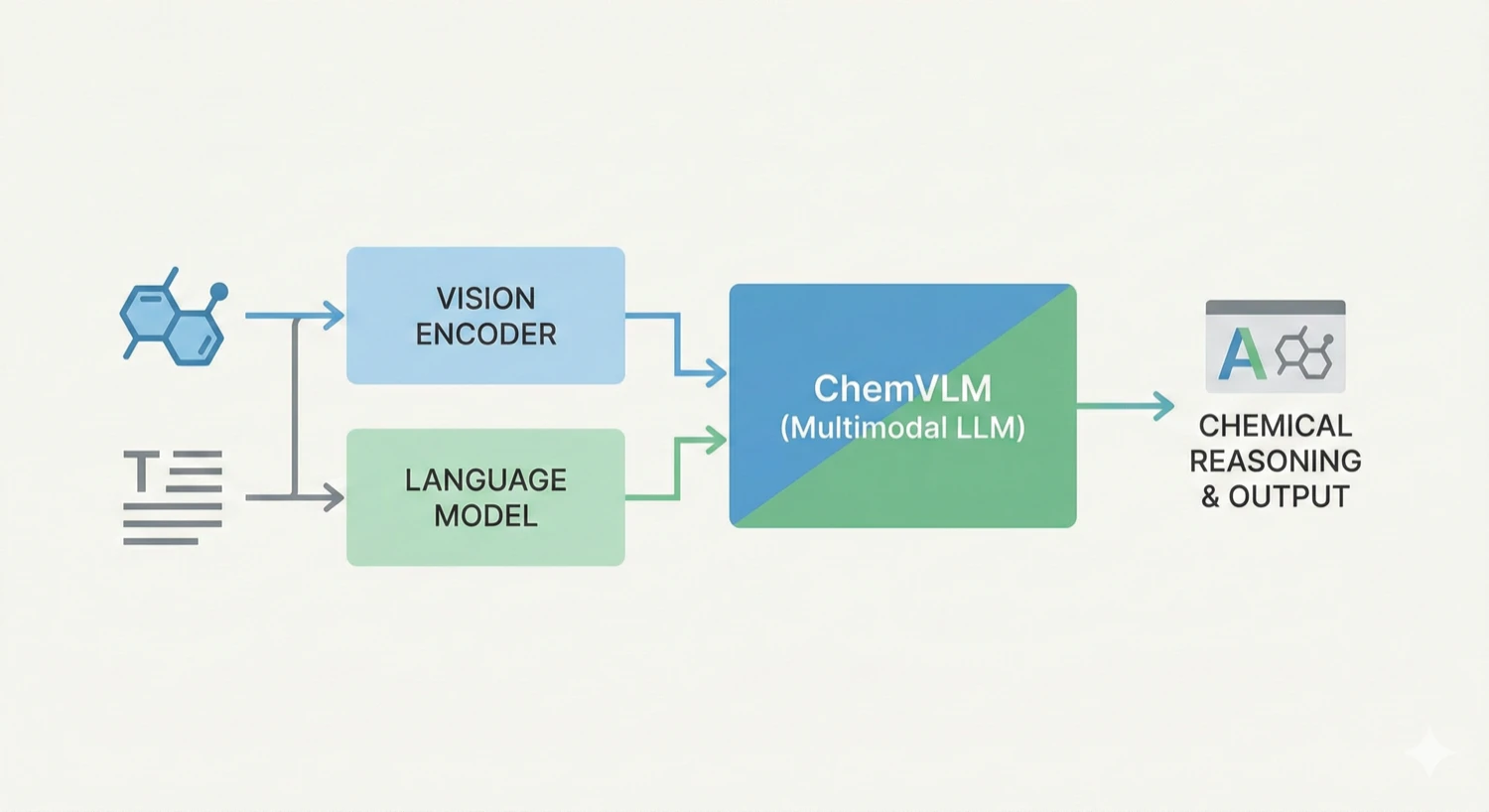
A 2025 AAAI paper introducing ChemVLM, a domain-specific multimodal LLM (26B parameters). It achieves state-of-the-art performance on chemical OCR, reasoning benchmarks, and molecular understanding tasks by combining vision and language models trained on curated chemistry data.
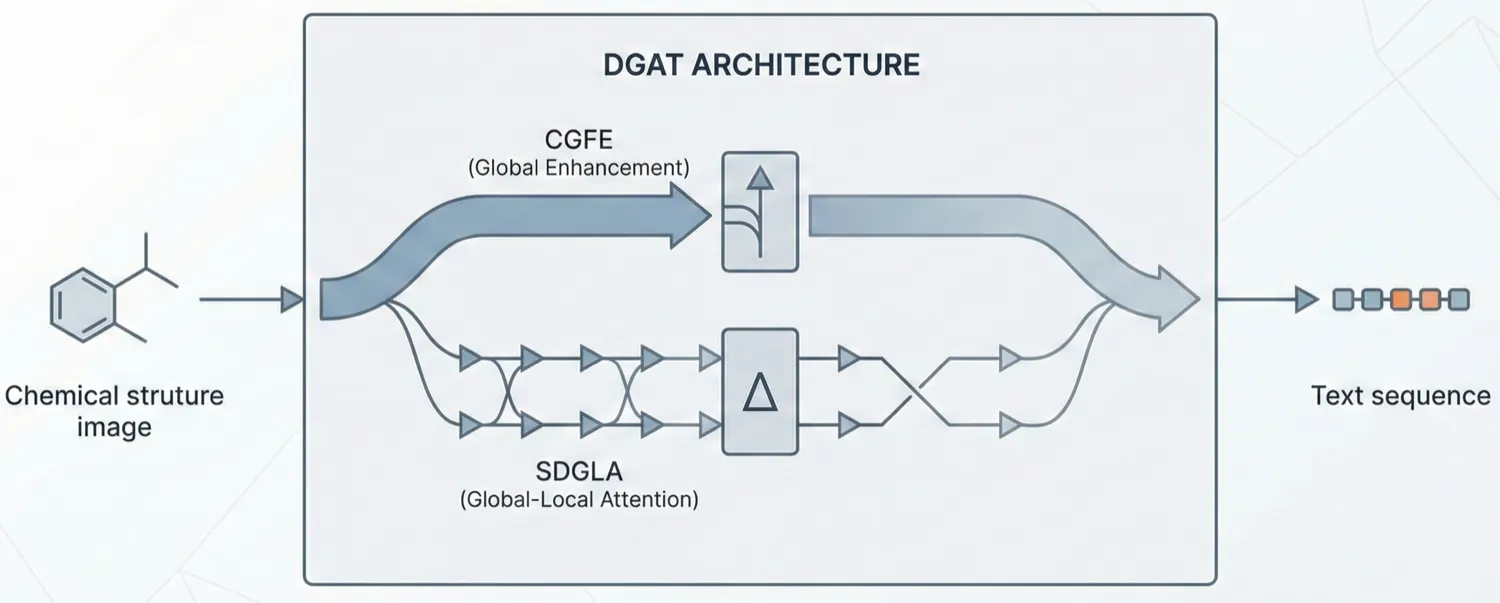
Proposes a new architecture (DGAT) to resolve global context loss in chemical structure recognition. Introduces Cascaded Global Feature Enhancement and Sparse Differential Global-Local Attention, achieving 84.0% BLEU-4 and handling complex chiral structures implicitly.

This paper presents an enhanced deep learning architecture for Optical Chemical Structure Recognition (OCSR) specifically optimized for hand-drawn inputs. By pairing an EfficientNetV2 encoder with a Transformer decoder and training on over 150 million synthetic images, the model achieves 73.25% exact match accuracy on a real-world hand-drawn benchmark of 5,088 images.

Proposes Image2InChI, an OCSR model with improved SwinTransformer encoder and novel feature fusion network with attention mechanisms that achieves 99.8% InChI accuracy on the BMS dataset.
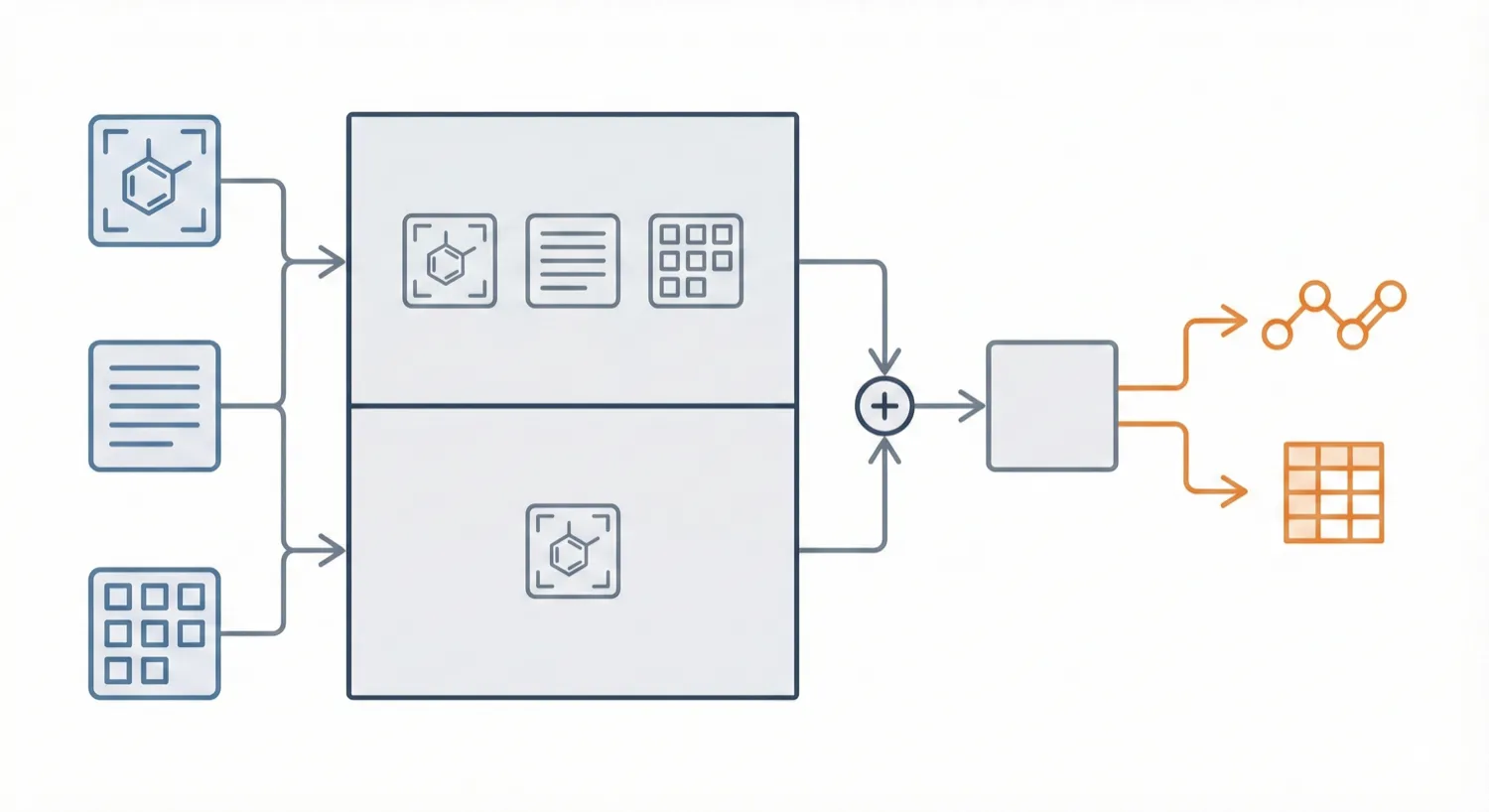
This paper introduces a multi-modal approach for extracting chemical Markush structures from patents, combining a Vision-Text-Layout encoder with a specialized chemical vision encoder. It addresses the lack of training data with a synthetic generation pipeline and introduces M2S, a new real-world benchmark.

MMSSC-Net introduces a multi-stage cognitive approach for OCSR, utilizing a SwinV2 encoder and GPT-2 decoder to recognize atomic and bond sequences. It achieves 75-98% accuracy across benchmark datasets by handling varying image resolutions and noise through fine-grained perception of atoms and bonds.