Hunter Heidenreich | ML Research Scientist — Page 16

Machine Learning
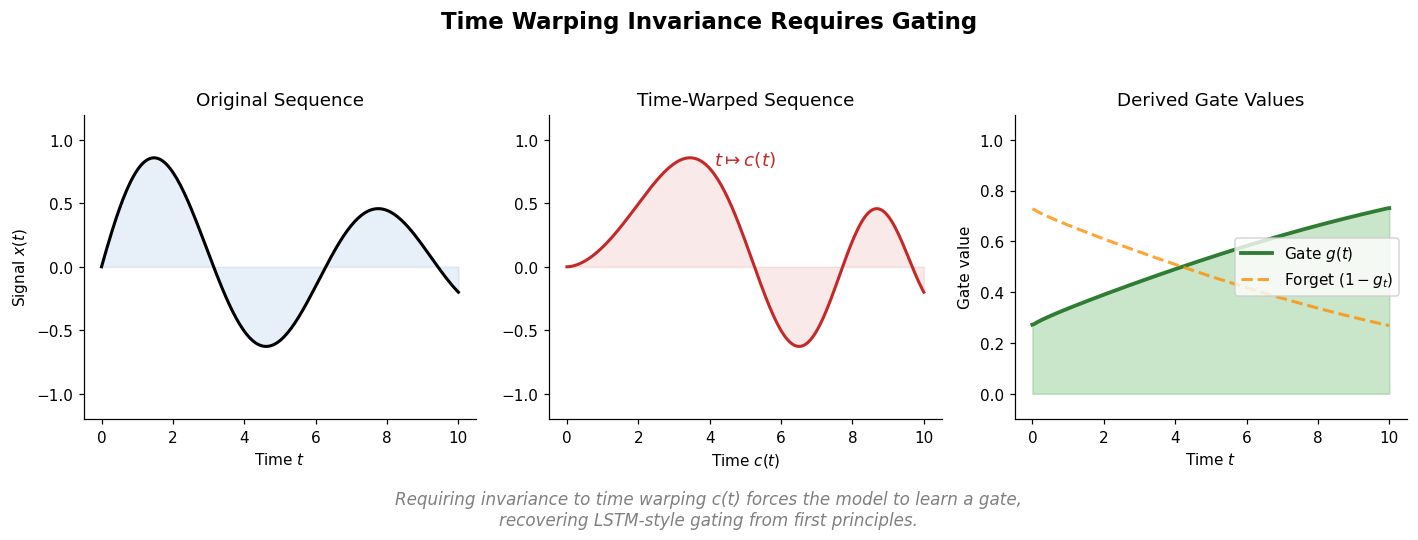
Three-panel diagram showing an original sequence, its time-warped version, and the gate values derived from requiring time warping invariance

Can Recurrent Neural Networks Warp Time? (ICLR 2018)

Tallec and Ollivier show that requiring invariance to time transformations in recurrent models leads to gating mechanisms, recovering key LSTM components from first principles. They propose the chrono initialization for gate biases that improves learning of long-term dependencies.

Optical Chemical Structure Recognition
Diagram showing graph traversal chain-of-thought parsing of a molecular structure image into atom and bond predictions

GTR-CoT: Graph Traversal Chain-of-Thought for Molecules

A 2025 Vision-Language Model for OCSR that uses graph traversal chain-of-thought reasoning and a two-stage SFT plus GRPO training scheme to handle both printed molecules (including chemical abbreviations like Ph and Et) and hand-drawn structures, achieving strong performance on the new MolRec-Bench benchmark.

Optical Chemical Structure Recognition
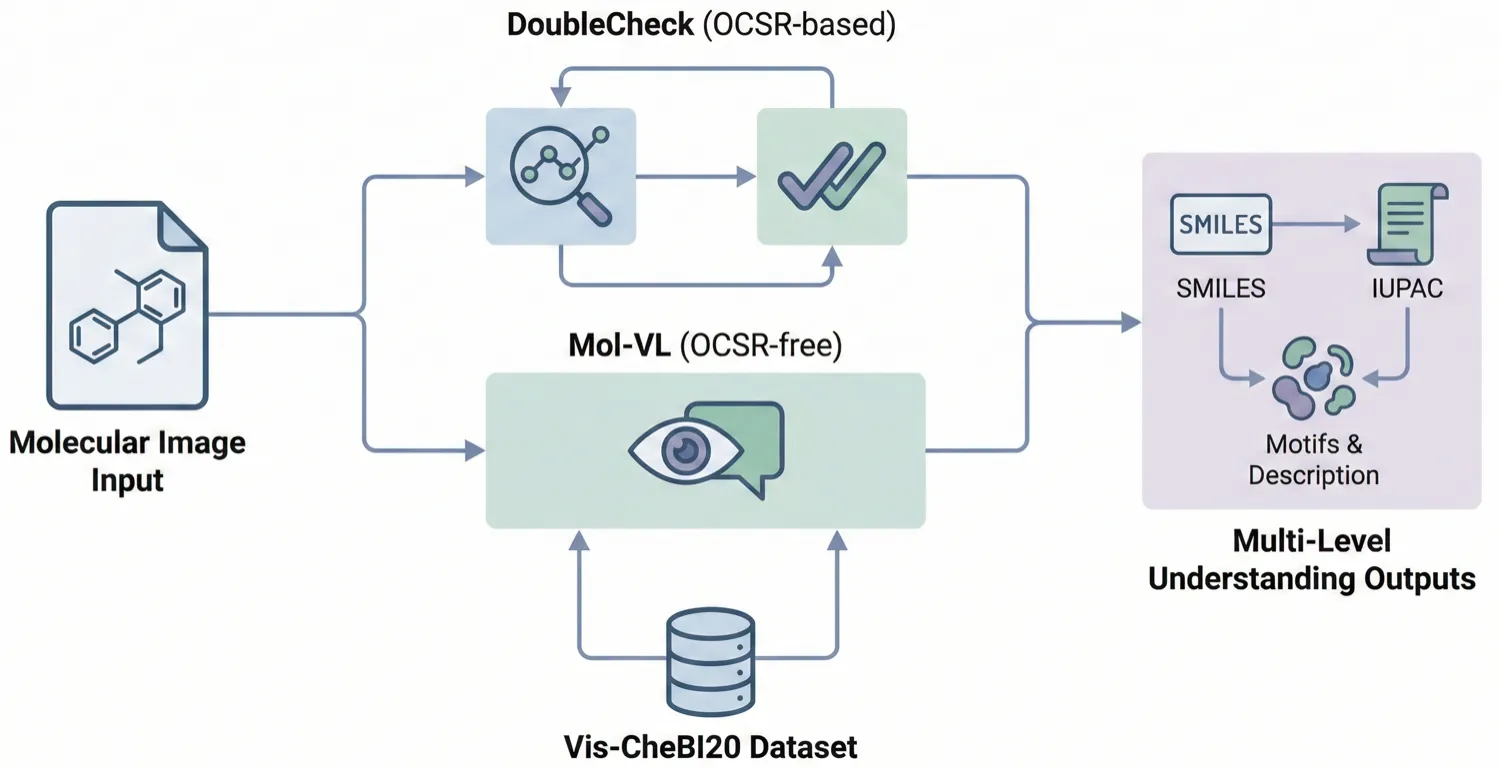
OCSU: Optical Chemical Structure Understanding

OCSU: Optical Chemical Structure Understanding (2025)

Proposes the ‘Optical Chemical Structure Understanding’ (OCSU) task to translate molecular images into multi-level descriptions (motifs, IUPAC, SMILES). Introduces the Vis-CheBI20 dataset and two paradigms: DoubleCheck (OCSR-based) and Mol-VL (OCSR-free).

Machine Learning
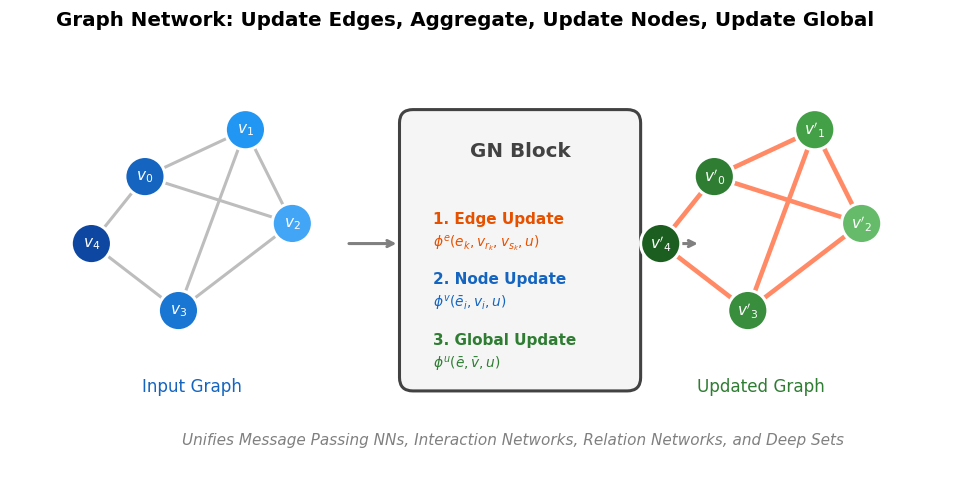
Graph network block diagram showing input graph transformed through edge, node, and global update steps to produce an updated graph

Relational Inductive Biases in Deep Learning (2018)

Battaglia et al. argue that combinatorial generalization requires structured representations, systematically analyze the relational inductive biases in standard deep learning architectures (MLPs, CNNs, RNNs), and present the graph network as a unifying framework that generalizes and extends prior graph neural network approaches.

Machine Learning
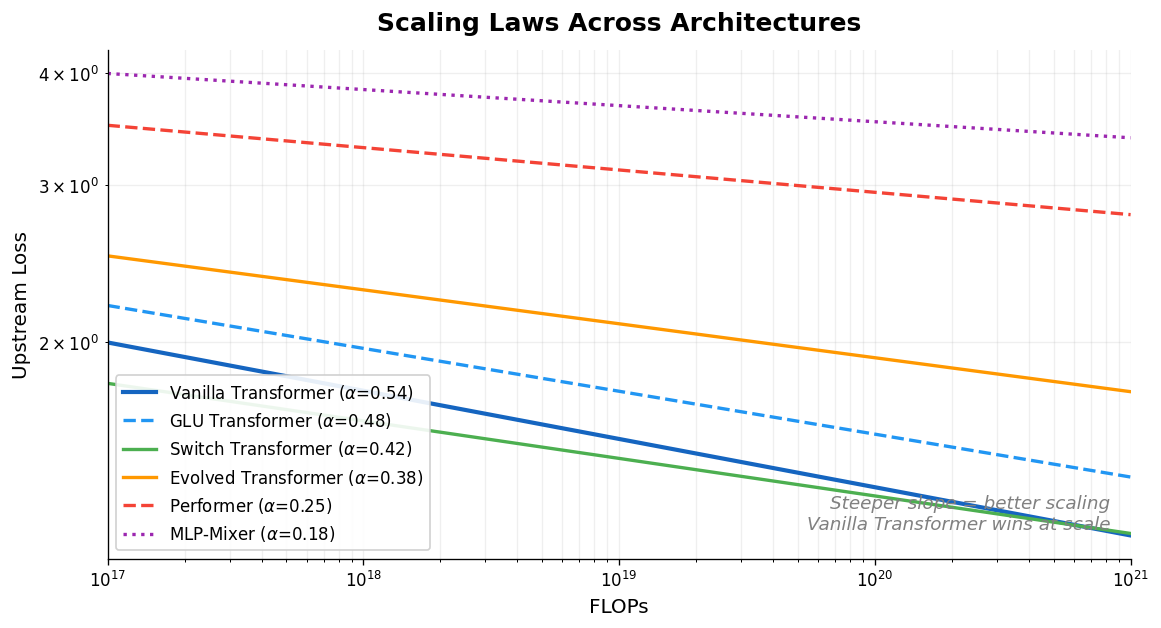
Log-log plot comparing scaling laws across six architectures showing the vanilla Transformer has the steepest slope

Scaling Laws vs Model Architectures: Inductive Bias

Tay et al. systematically compare scaling laws across ten diverse architectures (Transformers, Switch Transformers, Performers, MLP-Mixers, and others), finding that the vanilla Transformer has the best scaling coefficient and that the best-performing architecture changes across compute regions.

Machine Learning
SE(3)-Transformer architecture showing invariant attention weights modulating equivariant value messages on a 3D point cloud

SE(3)-Transformers: Equivariant Attention for 3D Data

Fuchs et al. introduce the SE(3)-Transformer, which combines self-attention with SE(3)-equivariance for 3D point clouds and graphs. Invariant attention weights modulate equivariant value messages from tensor field networks, resolving angular filter constraints while enabling data-adaptive, anisotropic processing.

Machine Learning
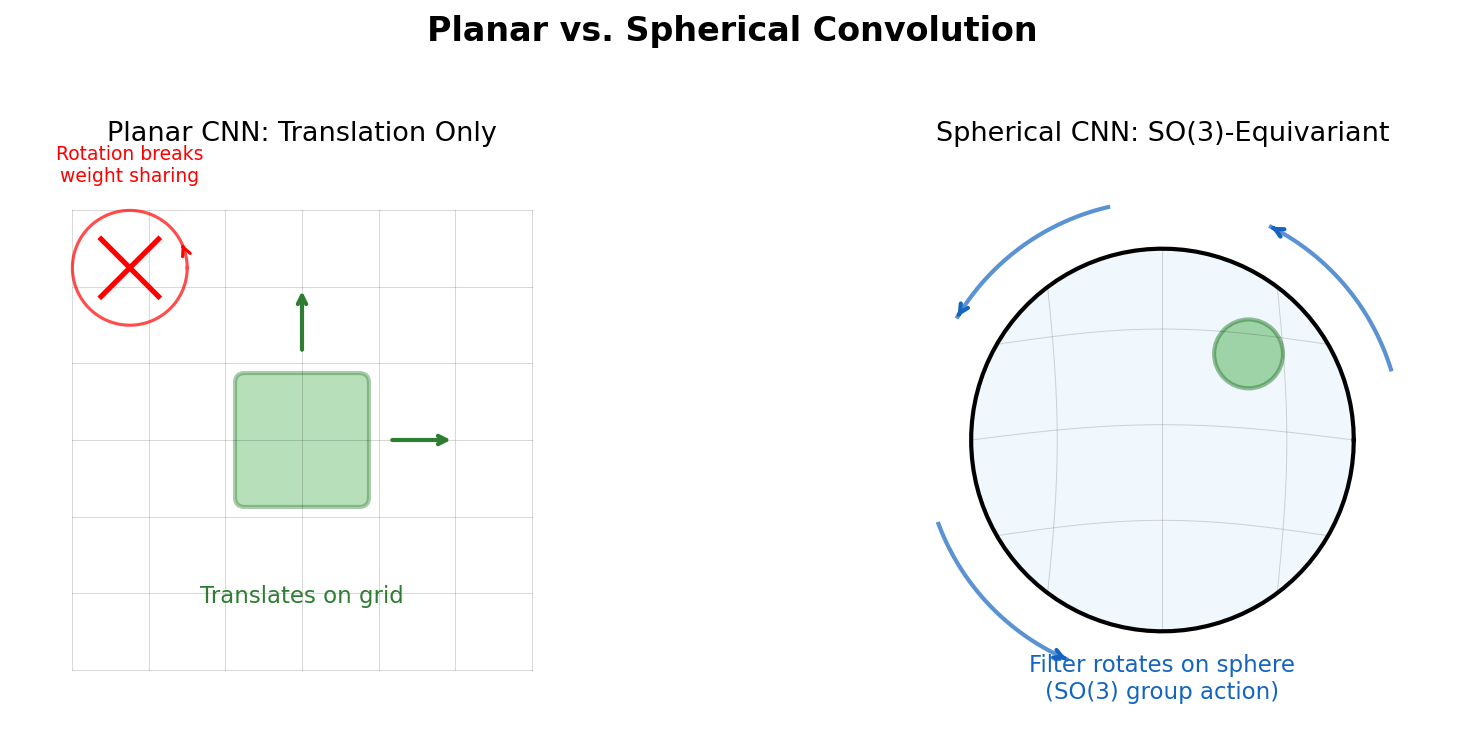
Comparison of planar CNN (translation only) versus spherical CNN (SO(3)-equivariant) showing how filters rotate on the sphere

Spherical CNNs: Rotation-Equivariant Networks on the Sphere

Cohen et al. introduce Spherical CNNs that achieve SO(3)-equivariance by defining cross-correlation on the sphere and rotation group, computed efficiently via generalized FFT algorithms from non-commutative harmonic analysis.

Machine Learning
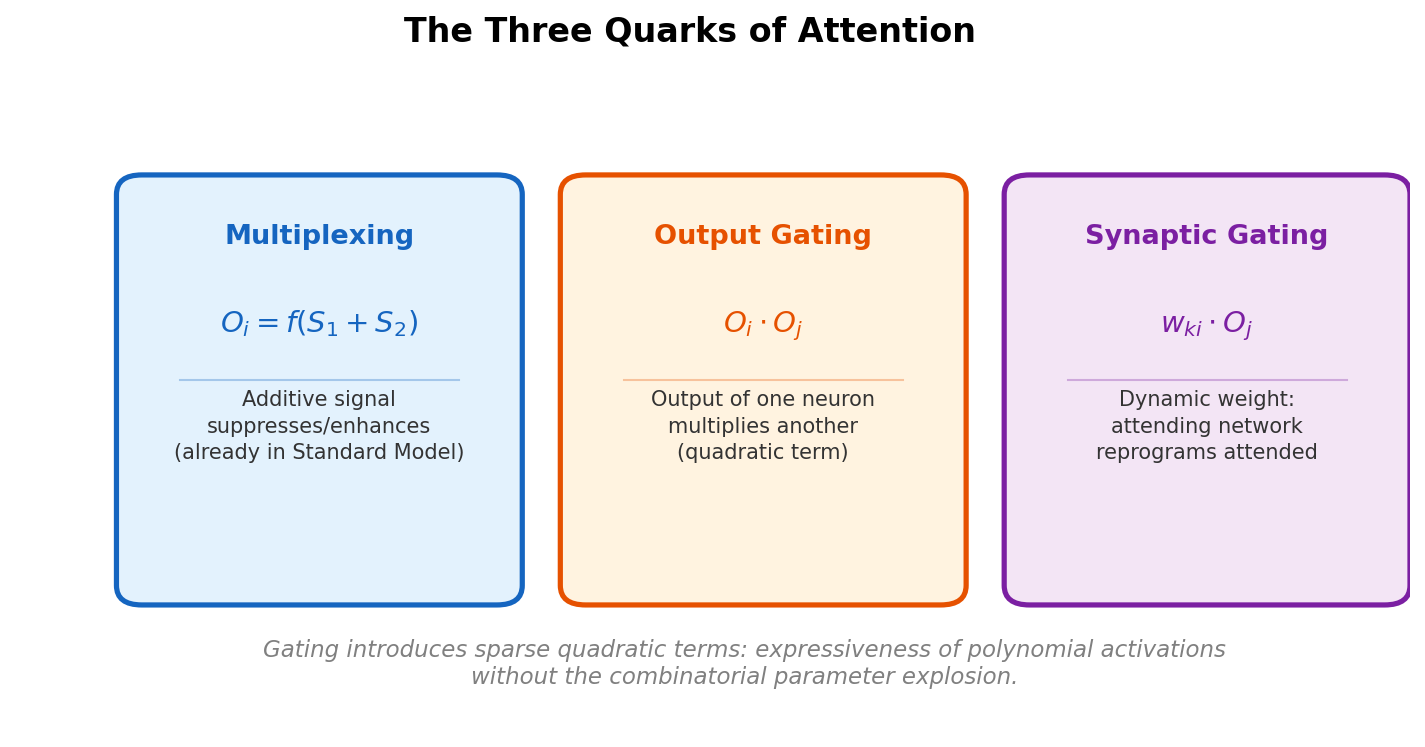
The three quarks of attention: multiplexing (additive), output gating (multiplicative output), and synaptic gating (multiplicative weight)

The Quarks of Attention: Building Blocks of Attention

Baldi and Vershynin systematically classify the fundamental building blocks of attention (activation attention, output gating, synaptic gating) by source, target, and mechanism, then prove capacity bounds showing that gating introduces quadratic terms sparsely, gaining expressiveness without the full cost of polynomial activations.

Evolutionary Biology
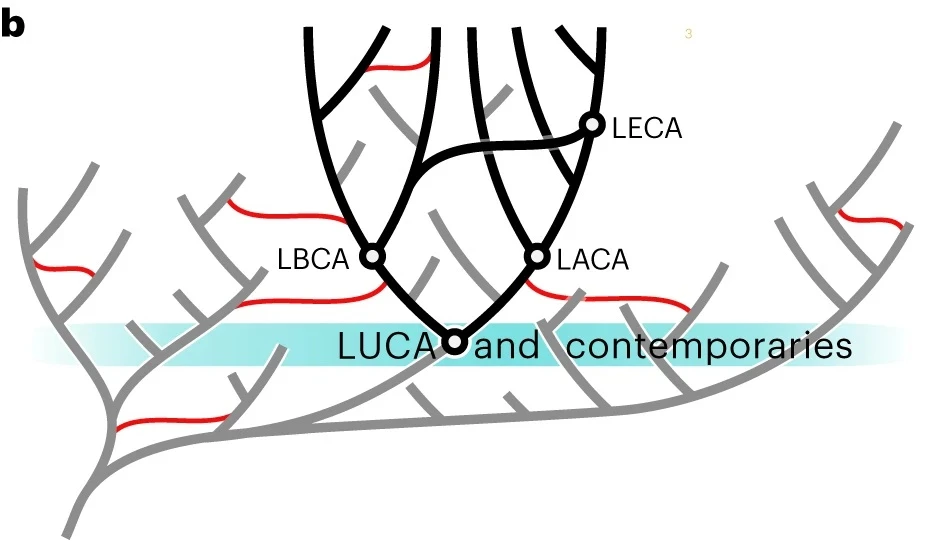
A reconstruction of LUCA within its evolutionary and ecological context

The Nature of LUCA and Its Impact on the Early Earth System

A comprehensive phylogenomic study dating LUCA to ~4.2 Ga and reconstructing it as a complex, anaerobic acetogen. The authors apply the cross-bracing molecular clock method alongside gene-tree-species-tree reconciliation to infer that LUCA possessed an early immune system and lived within a hydrogen-recycling ecosystem.

Molecular Generation
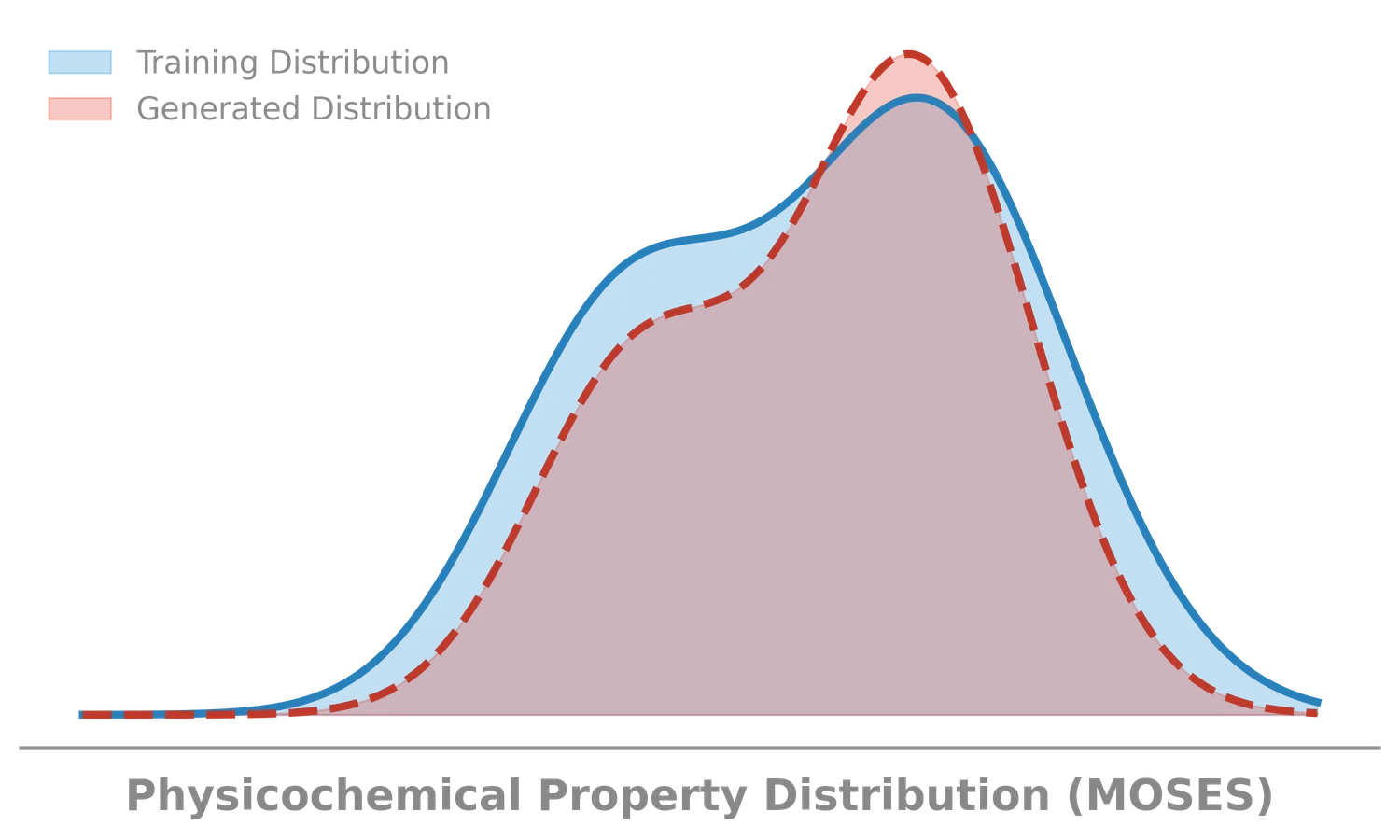
Density plot showing training vs generated physicochemical property distribution

Molecular Sets (MOSES): A Generative Modeling Benchmark

MOSES introduces a comprehensive benchmarking platform for molecular generative models, offering standardized datasets, evaluation metrics, and baselines. By providing a unified measuring stick, it aims to resolve reproducibility challenges in chemical distribution learning.

Document Processing
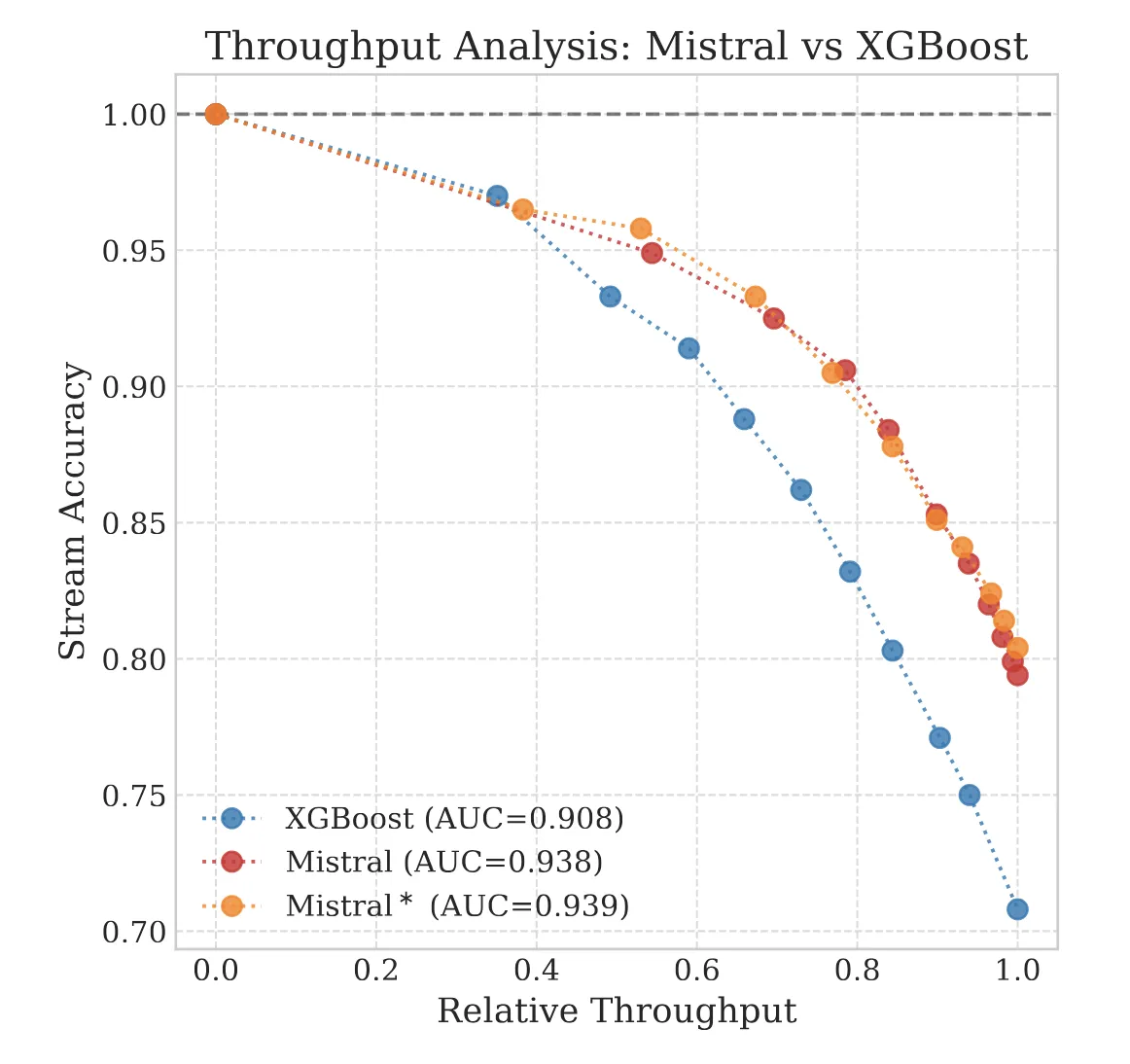
Chart showing the trade-off between accuracy and throughput in document automation

The Reliability Trap: The Limits of 99% Accuracy

We explore the ‘Silent Failure’ mode of LLMs in production: the limits of 99% accuracy for reliability, how confidence decays in long documents, and why standard calibration techniques struggle to fix it.

Document Processing
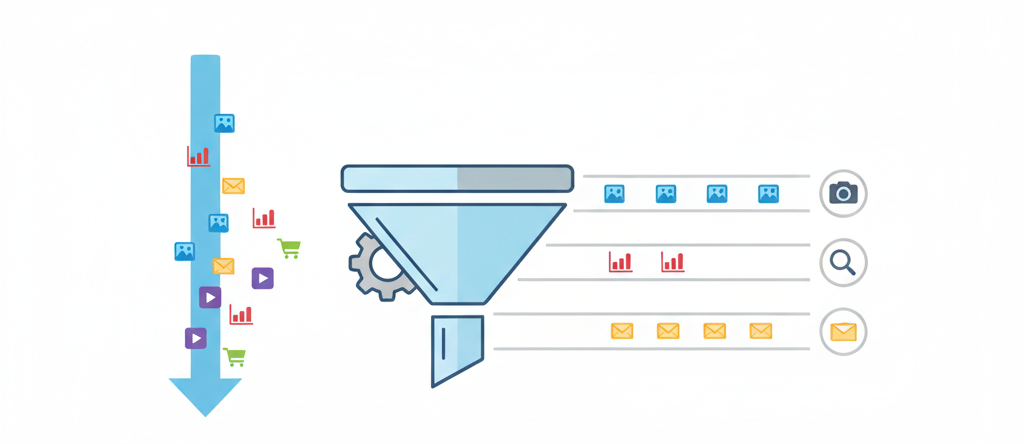
Conceptual diagram of page stream segmentation sorting pages into documents

The Evolution of Page Stream Segmentation: Rules to LLMs

We trace the history of Page Stream Segmentation (PSS) through three eras (Heuristic, Encoder, and Decoder) and explain how privacy-preserving, localized LLMs enable true semantic processing.