Planetary Science
Venus as seen by Mariner 10, showing swirling cloud patterns in the dense atmosphere

Venus Evolution Through Time

A comprehensive 2023 roadmap for Venus exploration synthesizing open questions about the planet’s evolution from potentially habitable to extreme greenhouse state, detailing the coordinated VERITAS, DAVINCI, and EnVision missions planned for the 2030s and identifying future technology requirements for answering fundamental habitability questions.

Planetary Science
Venus as seen by Mariner 10, showing swirling cloud patterns in the dense atmosphere

Life on Venus? Astrobiology and Habitability Limits

A deep dive into the physical limits of life on Venus, reviewing Charles Cockell’s foundational 1999 analysis while connecting it to modern discoveries like the 2020 phosphine detection and upcoming DAVINCI+ missions.

Scientific Computing
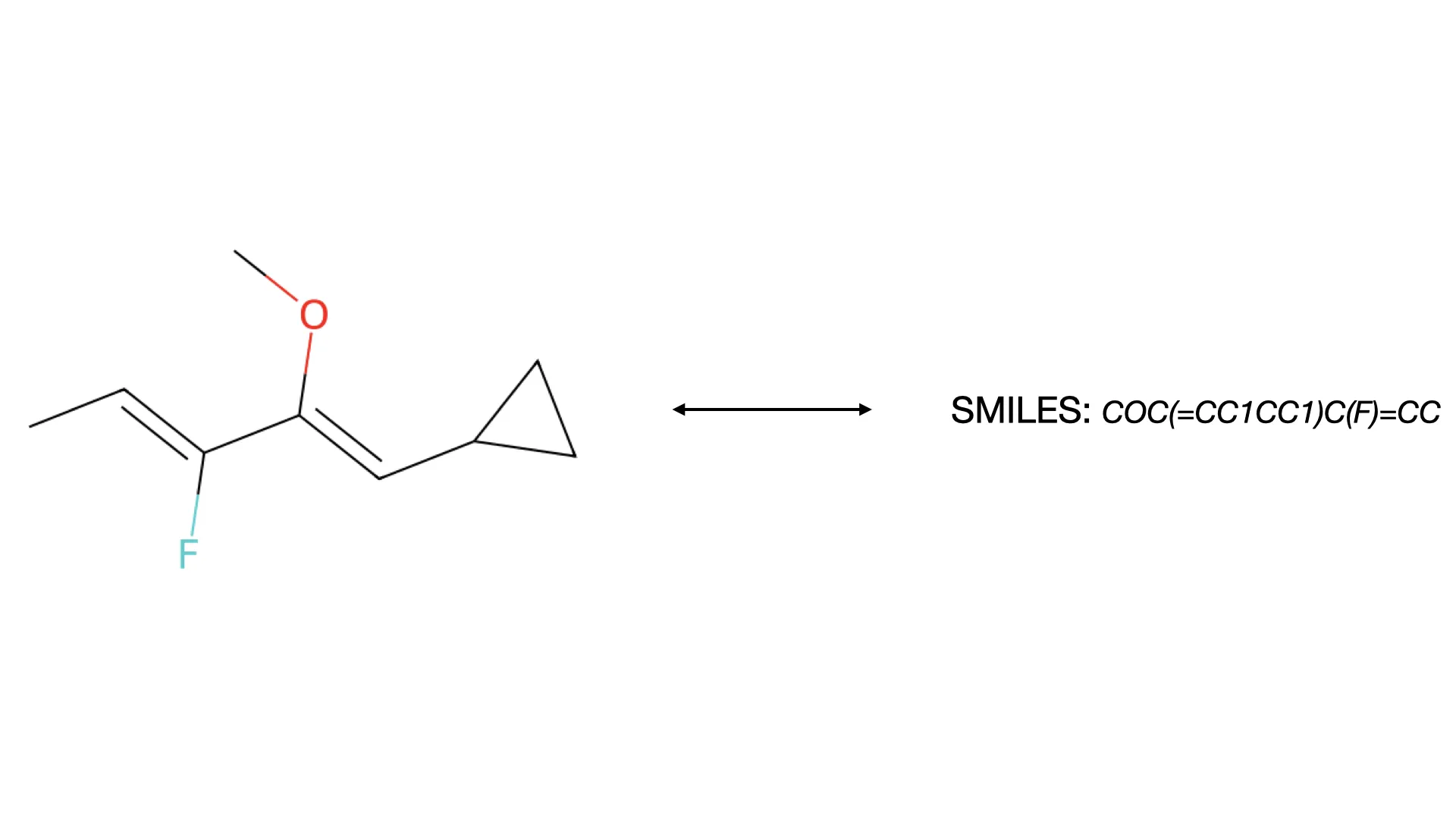
Grid of complex molecular structures rendered from SELFIES and SMILES strings

Molecular String Renderer: Robust Visualization Tool

A fault-tolerant RDKit wrapper treating molecular visualization as a software engineering problem, implementing strategy pattern for SVG generation with automatic raster fallback, native SELFIES support for generative AI workflows, and strict type safety for reliable batch processing of millions of molecules in training pipelines.

Generative Modeling
Diagram comparing standard stochastic sampling (gradient blocked) vs the reparameterization trick (gradient flows)

Auto-Encoding Variational Bayes: VAE Paper Summary

Kingma and Welling’s foundational 2013 paper introducing Variational Autoencoders and the reparameterization trick, enabling end-to-end gradient-based training of generative models with continuous latent variables by making the sampling operation differentiable through a clever mathematical transformation.

Generative Modeling
MNIST digit samples generated from a Variational Autoencoder latent space

Importance Weighted Autoencoders: Beyond the Standard VAE

Discover how Importance Weighted Autoencoders (IWAEs) use the same architecture as VAEs with a fundamentally more powerful objective to leverage multiple samples effectively.

Generative Modeling
Flowchart comparing VAE and IWAE computation showing the key difference in where averaging occurs relative to the log operation

IWAE: Importance Weighted Autoencoders

Burda et al.’s ICLR 2016 paper introducing Importance Weighted Autoencoders, which use importance sampling to derive a strictly tighter log-likelihood lower bound than standard VAEs, addressing posterior collapse and improving generative quality. The model architecture remains the same.

Computational Chemistry
D-glucose open-chain aldehyde form converting to beta-D-glucopyranose ring form, illustrating ring-chain tautomerism

InChI and Tautomerism: Toward Comprehensive Treatment

A comprehensive 2020 analysis of the tautomerism problem in chemical databases, introducing 86 new tautomeric transformation rules and proposing algorithmic improvements for InChI V2 to recognize when different molecular representations are the same molecule in different tautomeric states.

Computational Chemistry
2D molecular structure diagram of tricyclohexylphosphine showing a central phosphorus atom bonded to three cyclohexyl groups

InChI: The Worldwide Chemical Structure Identifier Standard

A comprehensive 2013 review explaining how InChI emerged as the global standard for chemical structure identifiers, covering its history as a response to the Internet’s need for non-proprietary molecular linking, its governance under IUPAC, and the technical layers that ensure uniqueness across diverse chemical databases.

Computational Chemistry
Crystal structure of Na8Si46 clathrate displaying dodecahedral and tetrakaidecahedral coordination polyhedra

Making InChI FAIR and Sustainable for Inorganic Chemistry

A 2025 Faraday Discussions paper describing the major overhaul of InChI v1.07 that fixed thousands of bugs, added robust support for inorganic and organometallic compounds, and modernized the system to align with FAIR data principles for chemistry databases.

Computational Chemistry
A cobalt sulfate and ethylenediamine mixture being prepared

Mixfile & MInChI: Machine-Readable Mixture Formats

A 2019 format specification introducing two complementary standards for chemical mixtures. Mixfile provides comprehensive mixture descriptions and MInChI provides compact canonical identifiers. This addresses the long-standing lack of standardized machine-readable formats for multi-component chemical systems.

Computational Chemistry
Colorized electron microscope image of nanostructured indium phosphide surface showing spatially oriented cubic crystallites

NInChI: Toward a Chemical Identifier for Nanomaterials

Can we create a SMILES-like notation for nanomaterials? A collaborative workshop tackles the challenge of representing complex, multi-component nanomaterials with a proposed extension to the established InChI system.

Computational Chemistry
Benzene in SELFIES notation

Recent Advances in the SELFIES Library (2023)

A 2023 software update paper documenting major improvements to the SELFIES Python library, including architectural redesign using directed molecular graphs for faster performance, expanded chemical feature support, semantic constraints for validity, and user-friendly customization APIs that transform SELFIES from proof-of-concept into production-ready tool.