Computational Social Science
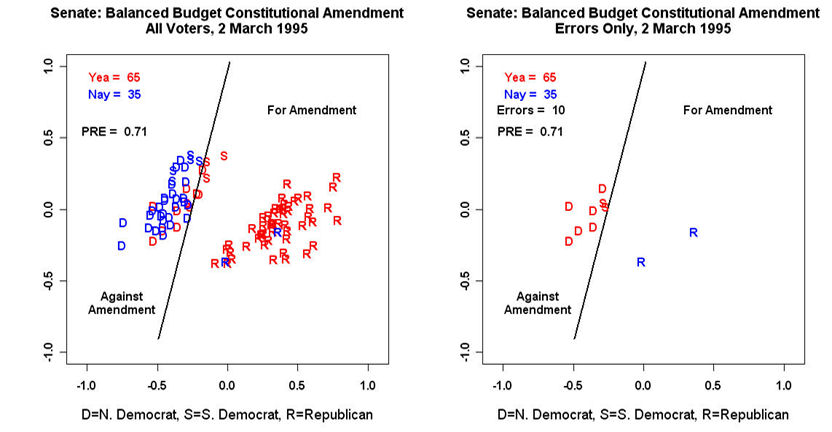
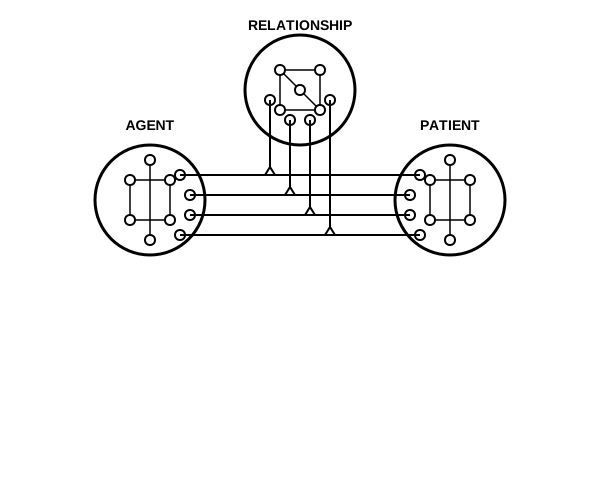
Visualization of party-based legislative embeddings

Party Matters: Enhancing Legislative Embeddings

This paper introduces a neural architecture that combines bill text embeddings (CNN/MWE) with sponsor ideology metadata to improve vote prediction accuracy, particularly in out-of-session contexts where political dynamics shift.

Computational Chemistry
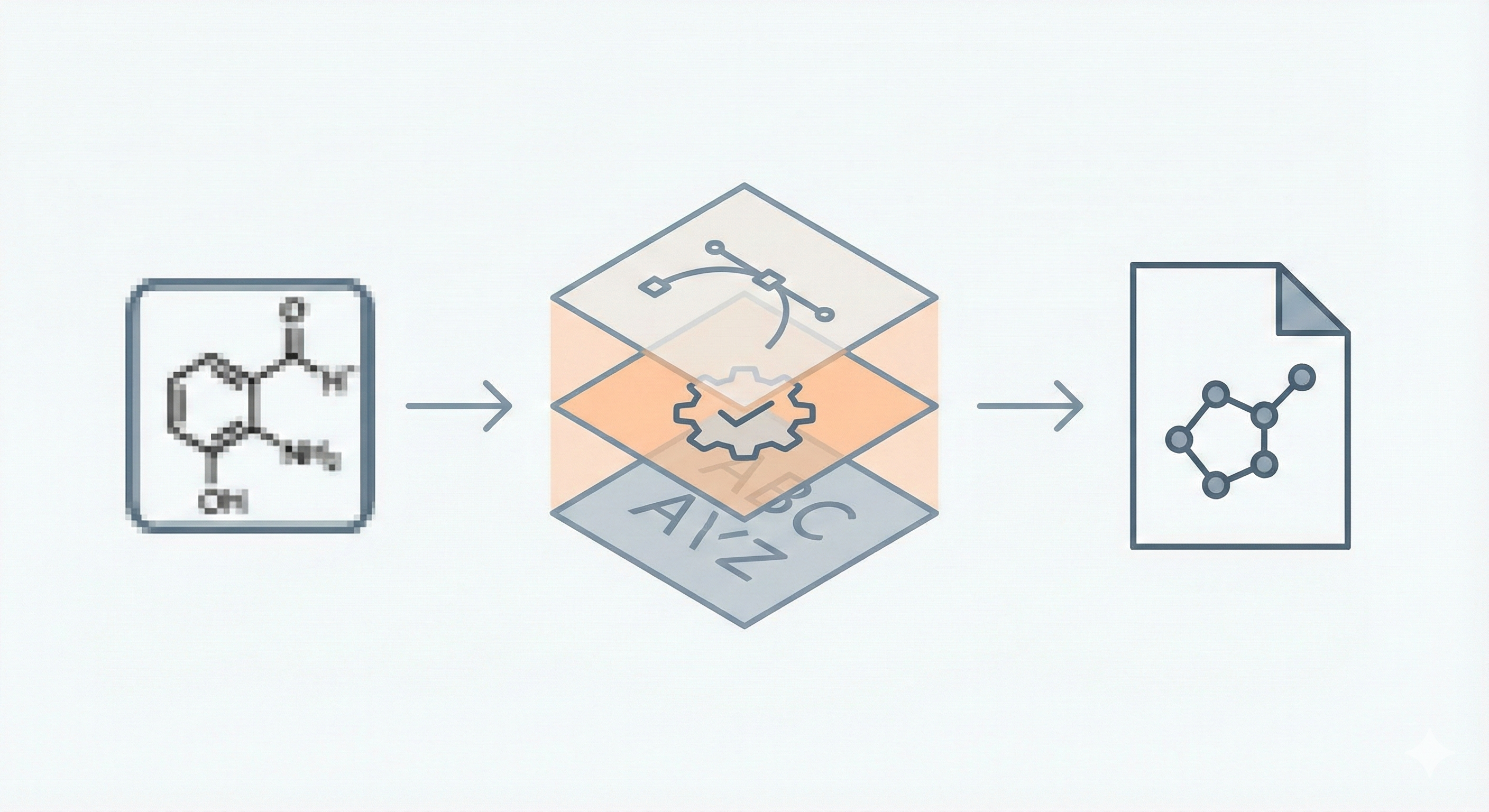
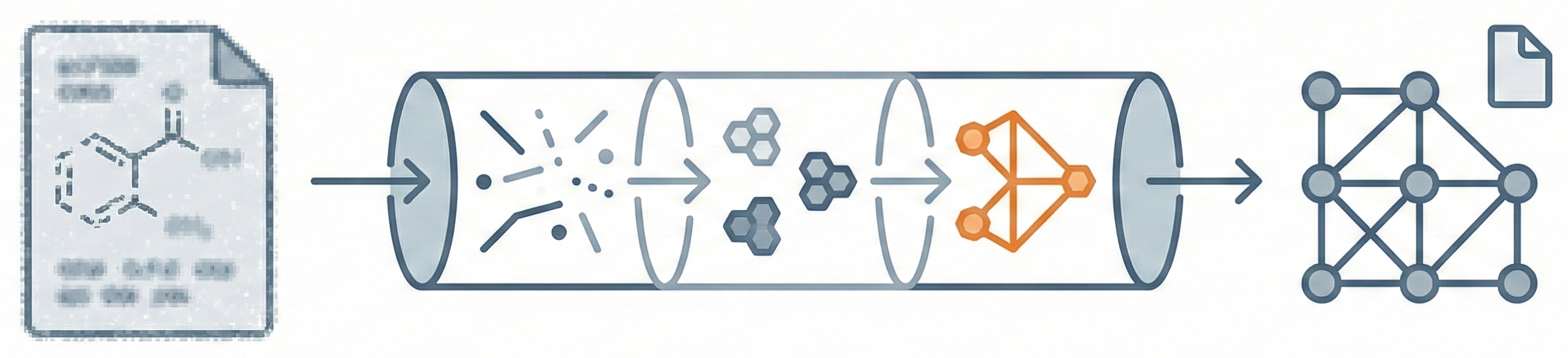
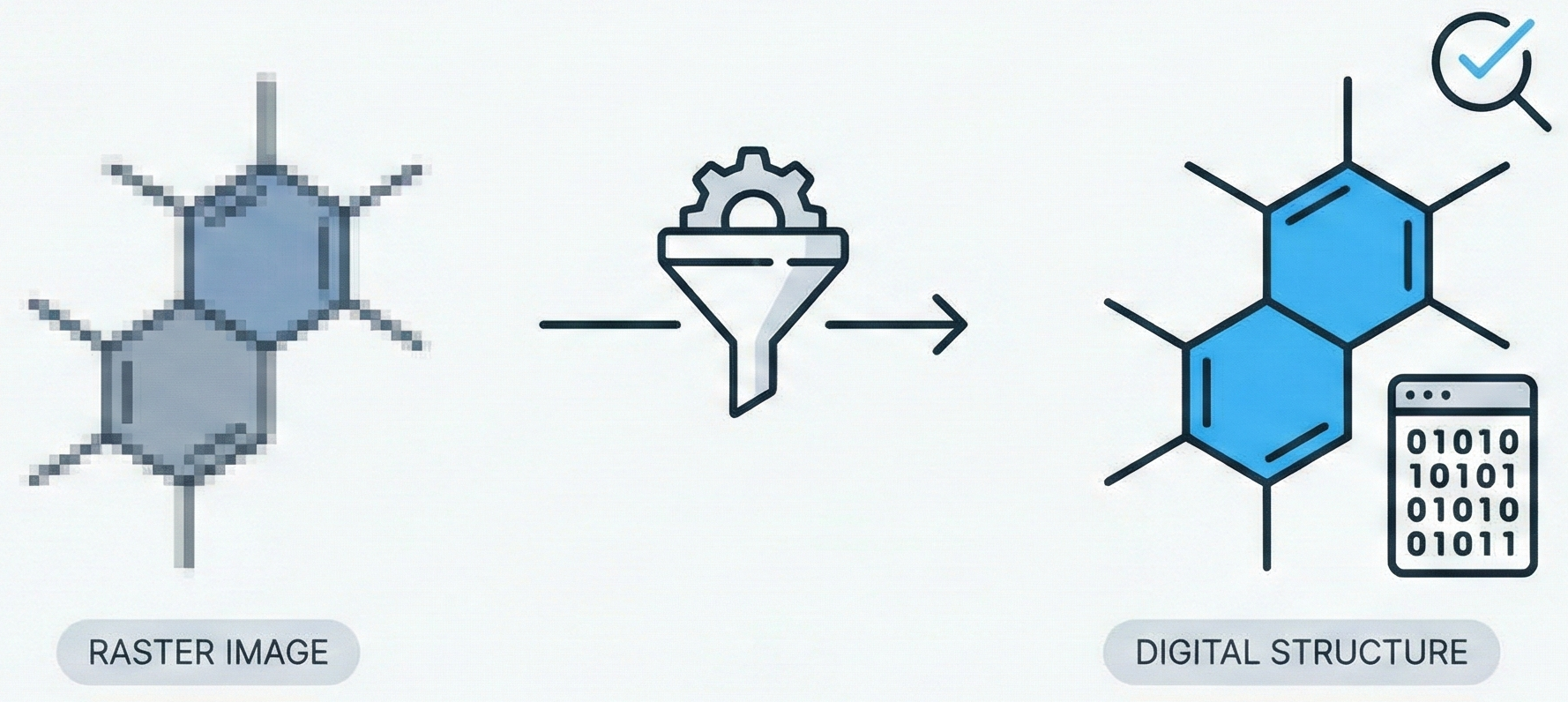
Five-stage pipeline for reconstructing chemical molecules from raster images

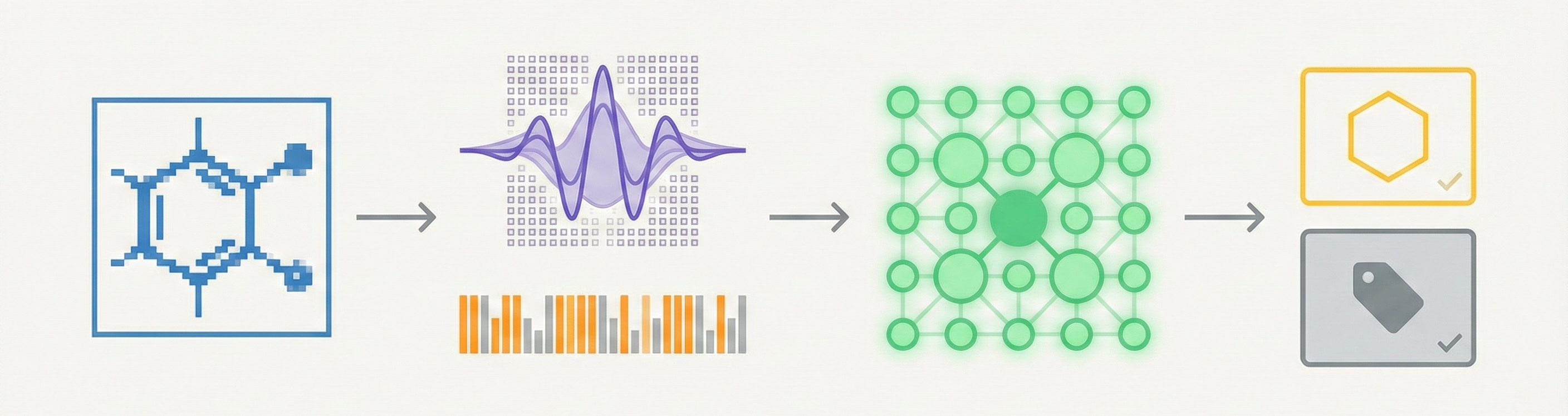
Reconstruction of Chemical Molecules from Images

This methodological paper proposes a comprehensive pipeline to digitize chemical structure images. It achieves 97% reconstruction accuracy on benchmarks by combining a topology-preserving vectorizer with a chemical knowledge validation module.

Scientific Computing
Three-dimensional Brownian motion trajectory showing random walk behavior

Second-Order Langevin Equation for Field Simulations

Proposes the Hyperbolic Algorithm for Euclidean field theory simulations. By adding a second-order fictitious time derivative to the Langevin equation, the method reduces systematic errors to O(ε²) compared to the standard Langevin O(ε), enabling significantly faster autocorrelation times and more efficient simulations.

Computational Chemistry
Visualization of the Stillinger-Weber potential showing the two-body radial term and three-body angular penalty

Stillinger-Weber Potential for Silicon

This foundational work proposes the Stillinger-Weber potential, a 3-body interaction model that successfully stabilizes the diamond crystal structure of silicon and reproduces its liquid properties, overcoming the limitations of standard pair potentials.

Computational Social Science
Hierarchical Ideal Point Topic Model visualization showing political polarization

Tea Party in the House

This paper introduces the Hierarchical Ideal Point Topic Model (HIPTM) to analyze the 112th U.S. Congress. By jointly modeling votes and text, it uncovers how Tea Party Republicans and establishment Republicans differ in both voting records and how they frame specific policy issues.

Computational Biology
Abstract artistic representation of alkaline hydrothermal vents with spiraling geological formations

The Drive to Life on Wet and Icy Worlds

This paper reformulates the submarine alkaline hydrothermal theory for the origin of life, positing that life emerged as a free energy converter driven by specific geological disequilibria - specifically redox and pH gradients across inorganic precipitate membranes - utilizing hydrogen, methane, and CO2 as primary feedstocks.

Computational Chemistry
Graph of the Lennard-Jones 12-6 potential showing the characteristic attractive and repulsive forces

Thermal Conductivity of the Lennard-Jones Fluid

This paper validates the homogeneous Evans method for calculating thermal conductivity against experimental Argon data. It demonstrates broad agreement across the phase diagram but identifies significant non-monotonic behavior and enhanced long-time tails near the critical point.

Computational Biology
Electron microscope image of Pyrolobus fumarii showing irregular coccoid cell structure

Three Domains of Life: Woese's Phylogenetic Revolution

This foundational paper established the three-domain classification system that transformed our understanding of evolutionary relationships, identifying Archaea as a separate domain of life based on molecular evidence from ribosomal RNA sequences.

Research Methods
Abstract visualization of six basis vectors represented as curved lines with dots, centered around a psi symbol

AI & Physical Sciences Taxonomy: A Six-Vector Framework

Reference framework for categorizing papers as Method, Theory, Resource, Systematization, Position, or Discovery contributions using a superposition model.

Computational Chemistry
Delayed convolution approximation for distinct Van Hove function showing comparison between simulated data and theoretical model

Correlations in Motion of Atoms in Liquid Argon

This seminal work validated the use of classical Molecular Dynamics for simulating liquids, revealing the ‘cage effect’ in velocity autocorrelation and establishing the standard predictor-corrector integration algorithms for N-body problems.

Computational Chemistry
Visualization of argon dimer on fcc(111) surface

Diffusion of Adatom Dimers on (111) Surfaces

This molecular dynamics study reveals that adatom dimers on fcc(111) surfaces exhibit simultaneous multiple jumps at intermediate temperatures, migrating with mobility comparable to single adatoms.

Planetary Science
Conceptual cross-section of the Cloud Continent proposal showing three layers: the CO2 atmosphere below, the nitrogen-filled honeycomb structure at 50 km altitude, and the habitable atmosphere above

Terraforming Venus: The Cloud Continent Proposal

A speculative 2022 engineering proposal for terraforming Venus by constructing a nitrogen-filled honeycomb structure floating at 50 km altitude where temperature and pressure are Earth-like, avoiding the need to remove Venus’s massive atmosphere while using photosynthesis to convert CO2 into breathable air and structural materials.