Computational Chemistry
Graph Perception for Chemical Structure OCR

Graph Perception for Chemical Structure OCR

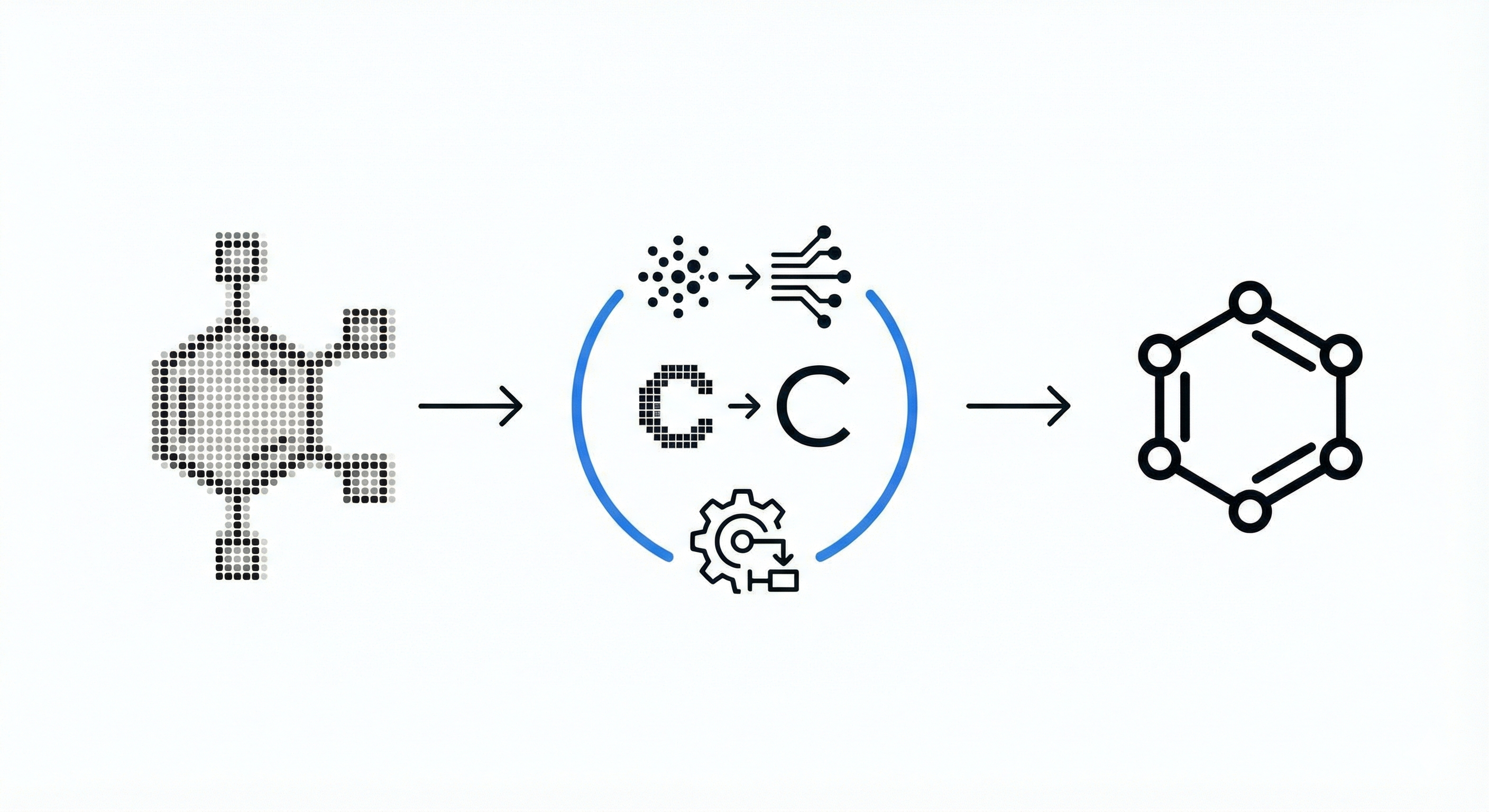
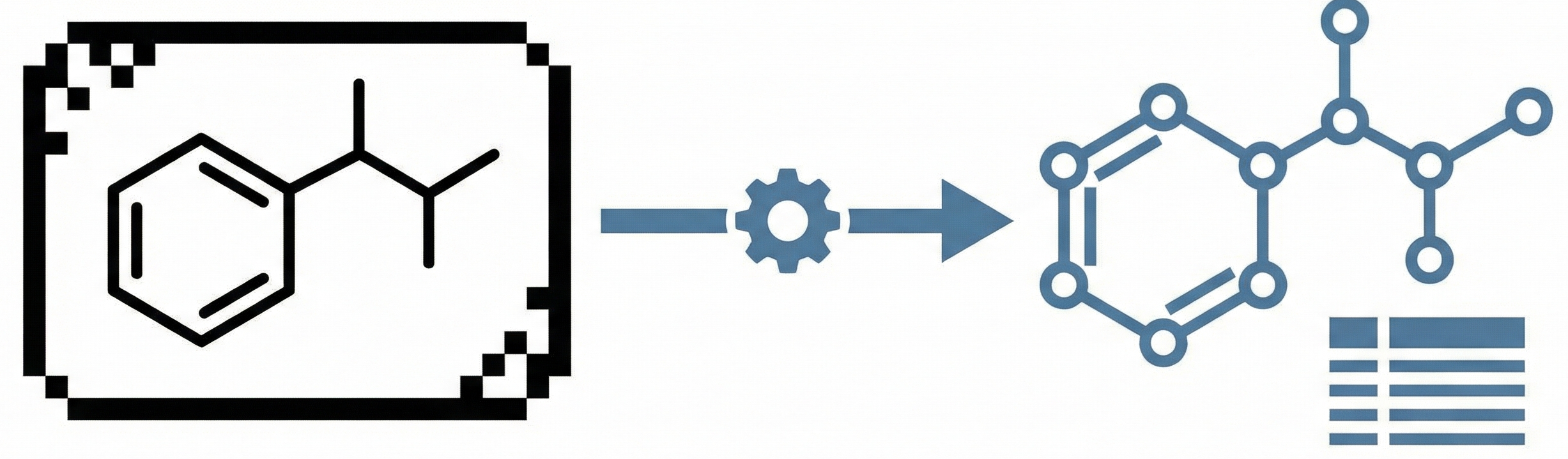
This 1990 paper presents an early OCR pipeline for converting hand-drawn or printed chemical structures into connectivity tables. It introduces novel sweeping algorithms for graph perception and a matrix-based feature extraction method for character recognition.

Computational Chemistry

Hand Drawn Chemical Diagram Recognition

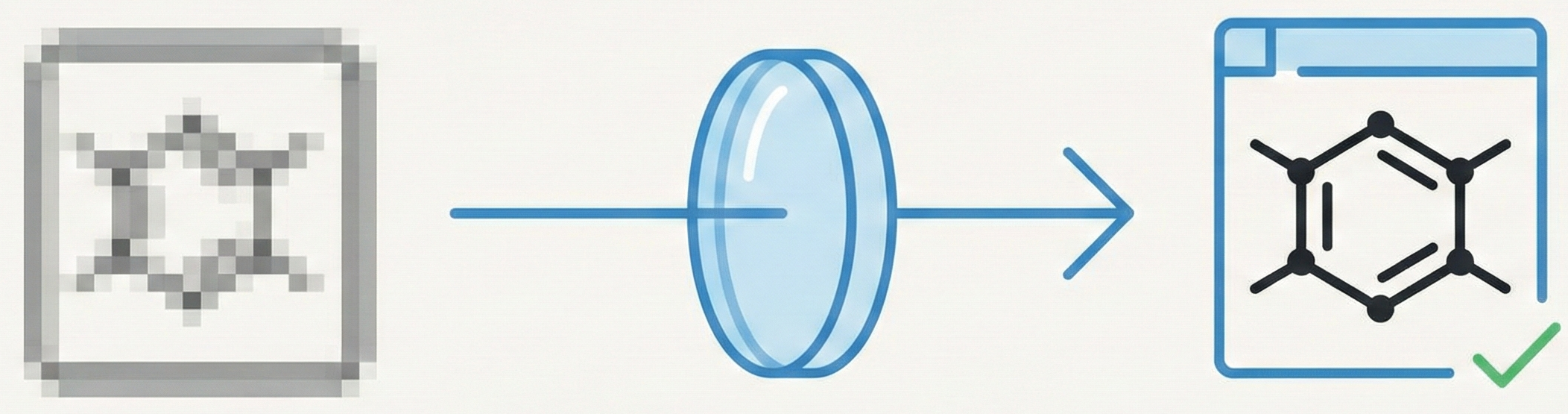
An early method paper (AAAI ‘07) proposing a multi-stage sketch recognition pipeline. It introduces a domain verification step that uses chemical rules to refine ink parsing, achieving a 27% error reduction over geometric-only baselines.

Computational Chemistry
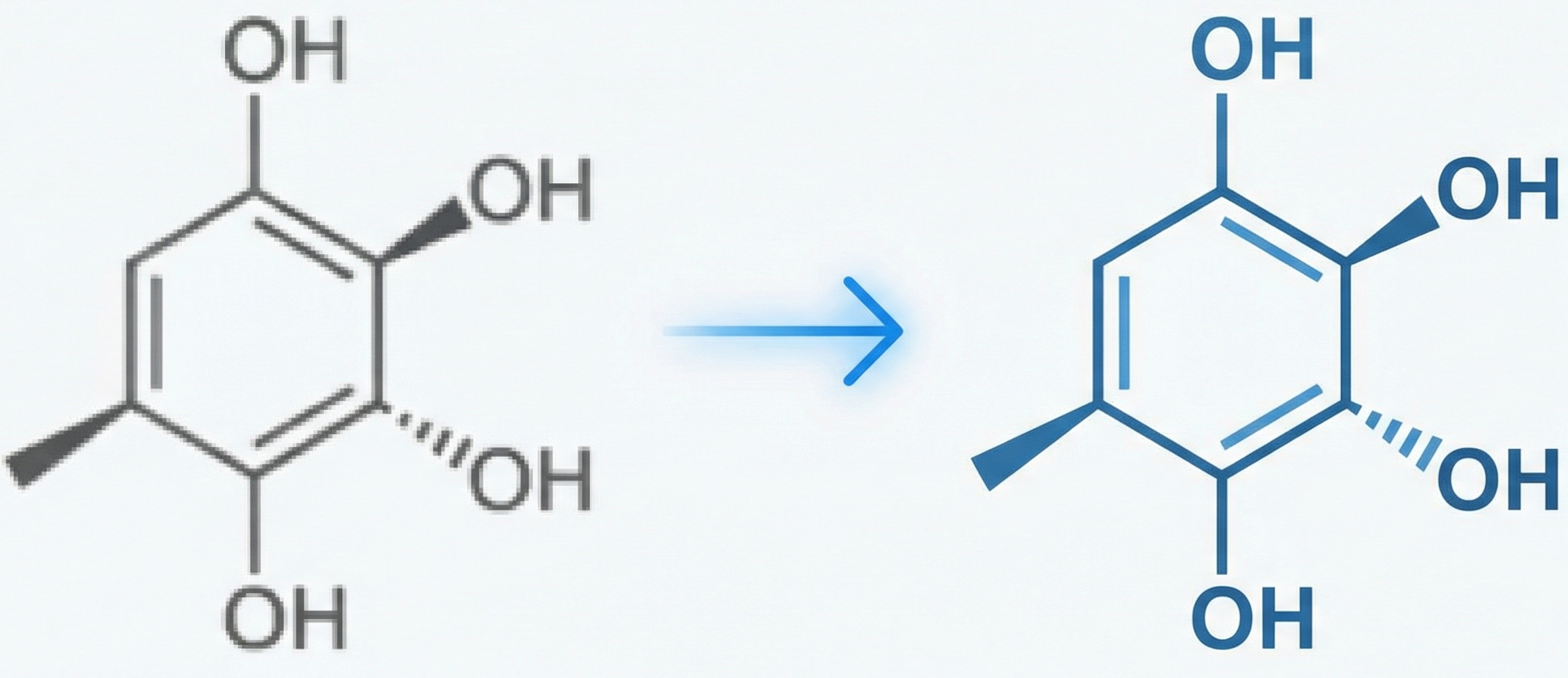
Optical chemical structure recognition example

IMG2SMI: Translating Molecular Structure Images to SMILES

A 2021 image-to-text approach treating OCSR as an image captioning task, using Transformers with SELFIES intermediate representation to convert molecular structure diagrams into SMILES strings, addressing the bottleneck of unlocking visual chemical knowledge from scientific literature and patents.

Computational Chemistry

Kekulé: OCR-Optical Chemical Recognition

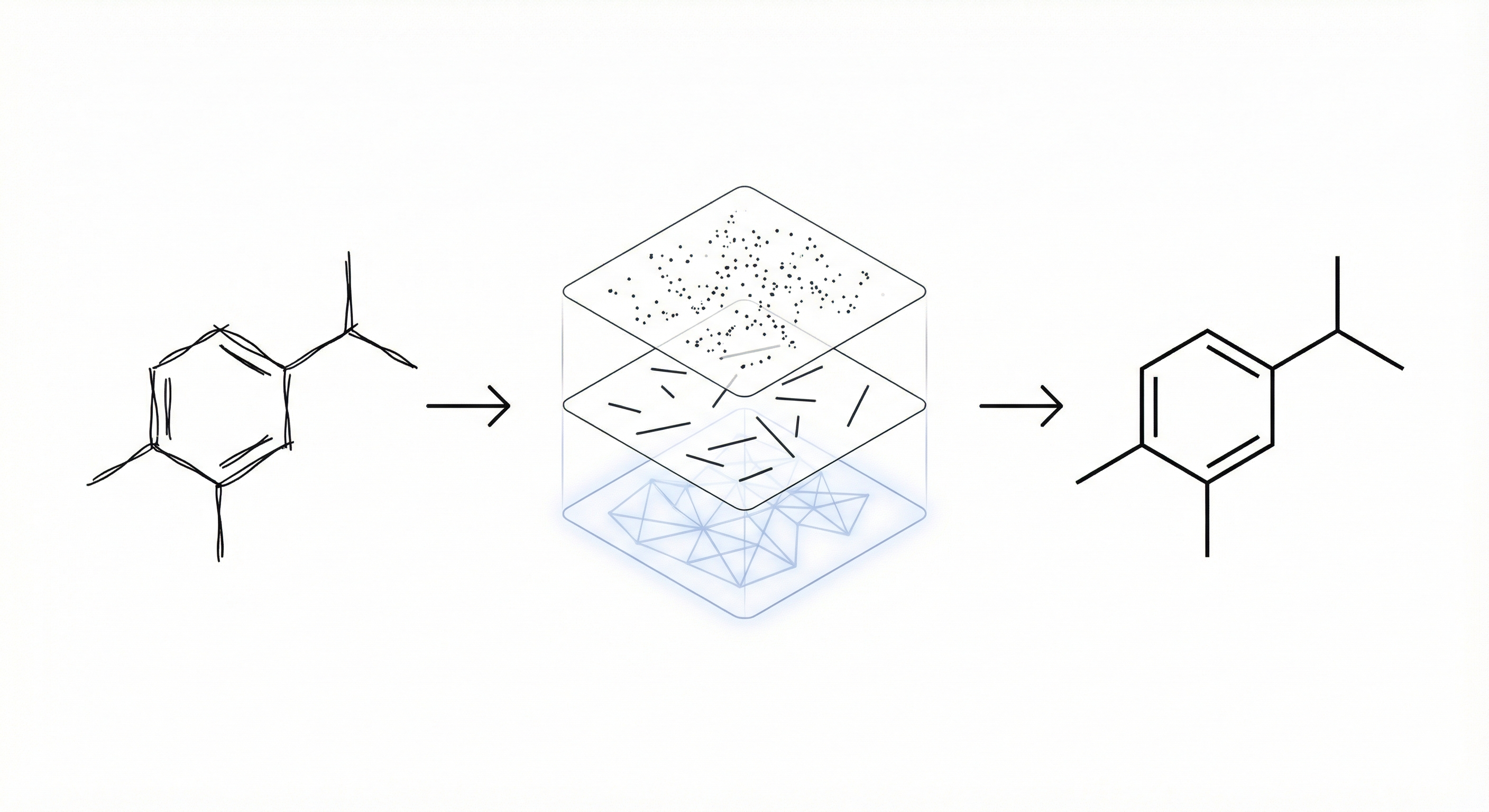
This 1992 paper introduces Kekulé, one of the first complete Optical Chemical Structure Recognition (OCSR) systems. It details a pipeline integrating raster-to-vector conversion, neural network-based OCR, and rule-based logic to convert printed chemical diagrams into connection tables.

Computational Chemistry
Carbon monoxide molecule adsorbed on Pt(100) FCC surface in hollow site configuration

Kinetic Oscillations on Pt(100): Theory

Imbihl et al. establish the first detailed microscopic model for CO oxidation oscillations on Pt(100), identifying the adsorbate-induced hex to 1x1 phase transition as the driving force. The study combines linear stability analysis with numerical reaction-diffusion simulations.

Computational Chemistry
Iridium fcc(001) surface with adatom

MD Study of Self-Diffusion on Metal Surfaces

A molecular dynamics investigation using EAM and many-body potentials to elucidate atomic exchange mechanisms on Iridium surfaces, verifying Field Ion Microscope observations.

Machine Learning Fundamentals
Visualization of inverse problem showing one input mapping to multiple valid outputs

Mixture Density Networks: Modeling Multimodal Distributions

A foundational 1994 paper identifying why standard least-squares networks fail at inverse problems (multi-valued mappings). It introduces the Mixture Density Network (MDN), which predicts the parameters of a Gaussian Mixture Model to capture the full conditional probability density.

Computational Chemistry

OCSR Methods: A Taxonomy of Approaches

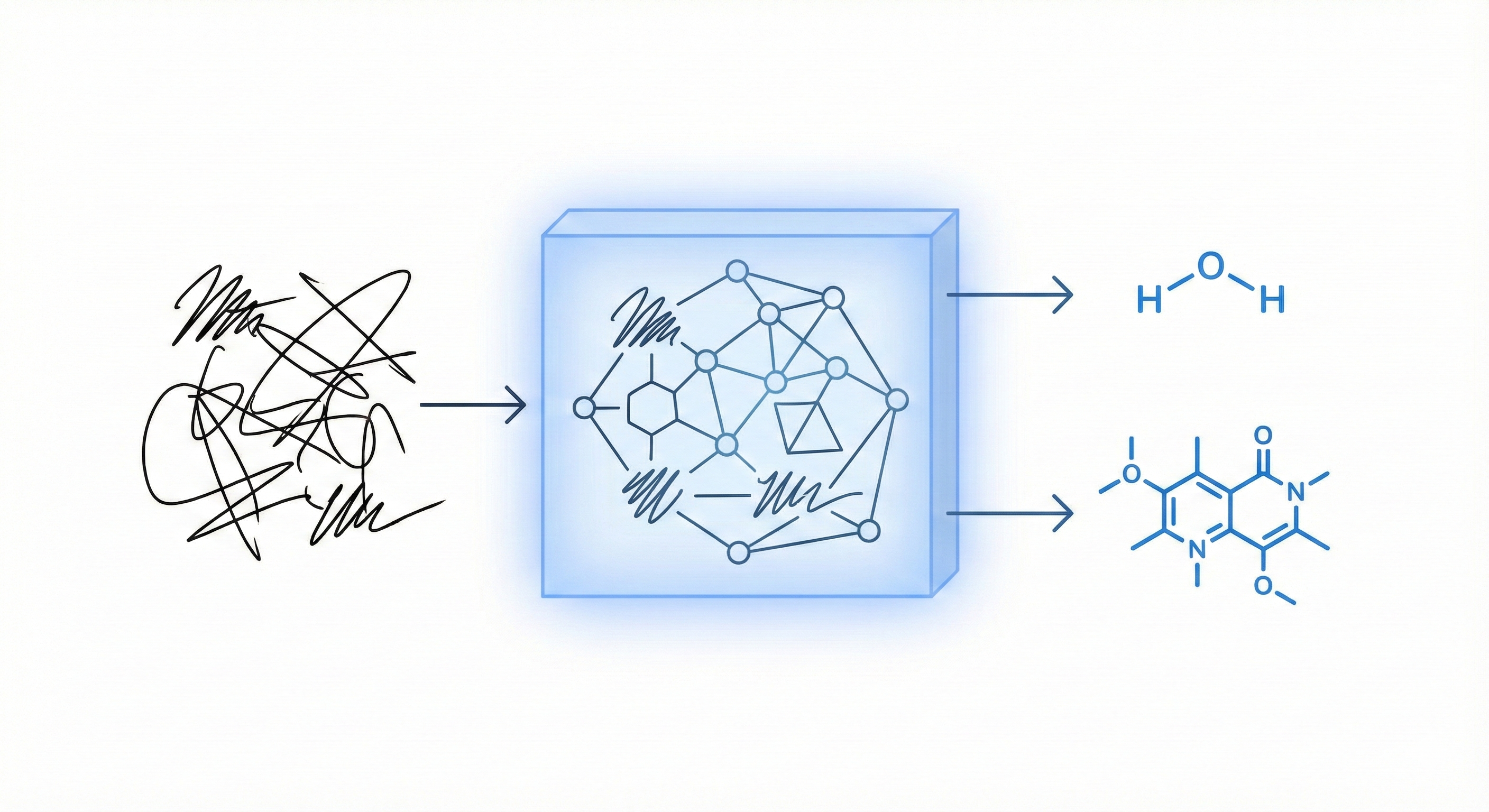
A comprehensive categorization of OCSR methods, organizing techniques by their fundamental approach: deep learning, traditional ML, and rule-based systems.

Computational Chemistry
Early optical recognition system converts scanned chemical diagrams to connection tables

Optical Recognition of Chemical Graphics

This paper describes an early prototype system that digitizes chemical structure diagrams from scanned documents. It employs a multi-stage pipeline involving convex bounding polygon extraction, vectorization, and rule-based heuristics to generate MDL Molfiles.

Computational Chemistry
Replication of Figure 7 showing stable oscillations in CO oxidation on Pt(110)

Oscillatory CO Oxidation on Pt(110)

This paper presents a 4-variable kinetic model coupling surface reaction dynamics with structural phase transitions to reproduce complex oscillatory behavior on Pt(110).

Computational Chemistry
Chemical structure diagram for optical recognition

OSRA: Open Source Optical Structure Recognition

This paper presents OSRA, the first open-source utility for converting graphical chemical structures from documents into machine-readable formats (SMILES/SD). It outlines a pipeline combining existing image processing tools (ImageMagick, Potrace, GOCR) with custom heuristics for bond and atom detection, establishing a foundation for accessible chemical information extraction.

Computational Chemistry
Carbon monoxide molecule adsorbed on Pt(100) FCC surface in hollow site configuration

Oxidation/Reduction Oscillations on Pt/SiO2

This study provides the first direct experimental proof that rate oscillations in catalytic CO oxidation on supported Pt are driven by a periodic oxidation and reduction of the catalyst surface. By monitoring Bragg peak intensities in situ, the authors confirm the ‘oxide model’ over competing reconstruction or carbon models.