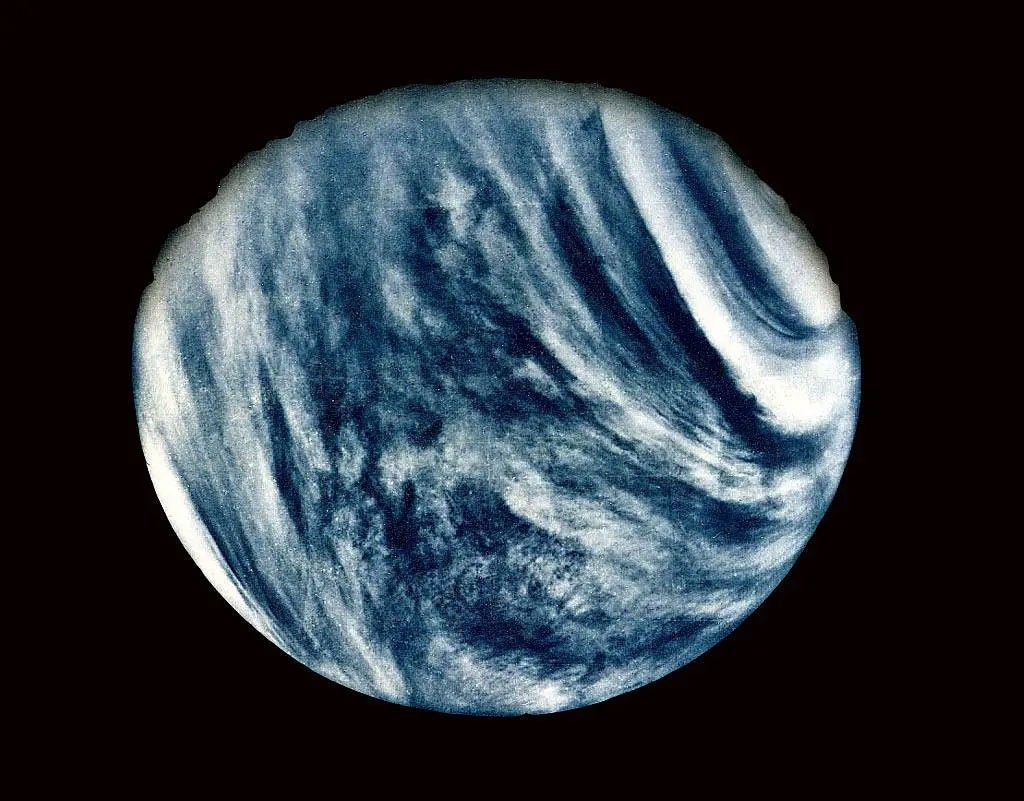
What kind of paper is this?
This is a synthetic review that evaluates Venus’s past and present habitability by comparing physical conditions against the known limits of terrestrial extremophiles. It is a systematization of knowledge paper that rigorously analyzes environmental constraints based on existing literature.
What is the motivation?
The core question is: To what degree were past habitats or are present habitats on Venus suitable for life? Beyond the solar system, Cockell frames Venus as a critical template for extrasolar greenhouse planets, using it to establish baseline habitability constraints that should guide spectroscopic observations of Venus-like exoplanets. The paper systematically examines each environmental parameter (temperature, pressure, atmospheric composition, UV radiation, pH) to identify which are true biological barriers and which are surmountable based on what we know from terrestrial extremophiles.
What is the novelty here?
The paper provides a rigorous, parameter-by-parameter assessment of Venus’s habitability. The key insight is that temperature acts as the critical constraint, establishing a hierarchy for greenhouse planets where thermal limits are reached well before pressure limits. This suggests that surface pressure is rarely the primary exclusion factor for life on Venus-like exoplanets. While the surface is sterile, the cloud layers between 48-57 km altitude present a more nuanced picture where temperature and pressure fall within habitable ranges, though extreme acidity and low water activity pose the primary biological challenges.
What experiments were performed?
This review paper evaluates Venus’s environmental conditions by synthesizing data from the Venera and Pioneer missions and comparing them against the documented limits of terrestrial extremophiles (thermophiles like Pyrolobus fumarii, acidophiles like Picrophilus, and obligate barophiles from the Mariana Trench). It assesses theoretical metabolic pathways based on available chemical energy sources in the clouds.
What outcomes/conclusions?
The paper concludes that:
- Surface: Uninhabitable due to extreme temperature ($464^\circ\text{C}$), which exceeds biochemical limits
- Cloud layers (48-57 km): Physically compatible with life (temperature, pressure, nutrients) but extreme acidity ($81\text{–}98%\ \text{H}_2\text{SO}_4, \text{pH} \approx 0$) and low water activity present severe challenges
- Early Venus: May have had habitable oceans during a “moist greenhouse” period, with possible interplanetary exchange with early Earth
- Future missions: Should target cloud samples between 48-57 km altitude and look for sulfur isotope fractionation as biosignatures
How Cockell’s 1999 Predictions Hold Up Today
From a modern perspective (2025), Cockell’s analysis remains the foundational baseline for Venusian astrobiology, though specific details have evolved:
- Phosphine Detection (2020): Cockell correctly identified the importance of searching for non-equilibrium trace gases. The controversial detection of phosphine ($\text{PH}_3$) in 2020 (later constrained by re-analysis of ALMA data) reignited interest in the cloud layer hypothesis, aligning with his suggestion to look for chemical anomalies.
- Water Activity Limits (2021): Later work (e.g., by Hallsworth et al.) quantified the water activity in Venus’s clouds as ~0.004, far below the limit for terrestrial life (~0.585). This reinforces Cockell’s concern that acidity and desiccation are the primary barriers, potentially even more severe than he estimated.
- Upcoming Missions: The DAVINCI and VERITAS missions (launching late 2020s) are directly targeting the deep atmosphere and cloud chemistry, fulfilling the “Descent Probe” requirement outlined in this 1999 paper.
Physical Limits of the Venusian Surface
The paper evaluates surface conditions against the known limits of terrestrial extremophiles.
Temperature (Critical Constraint)
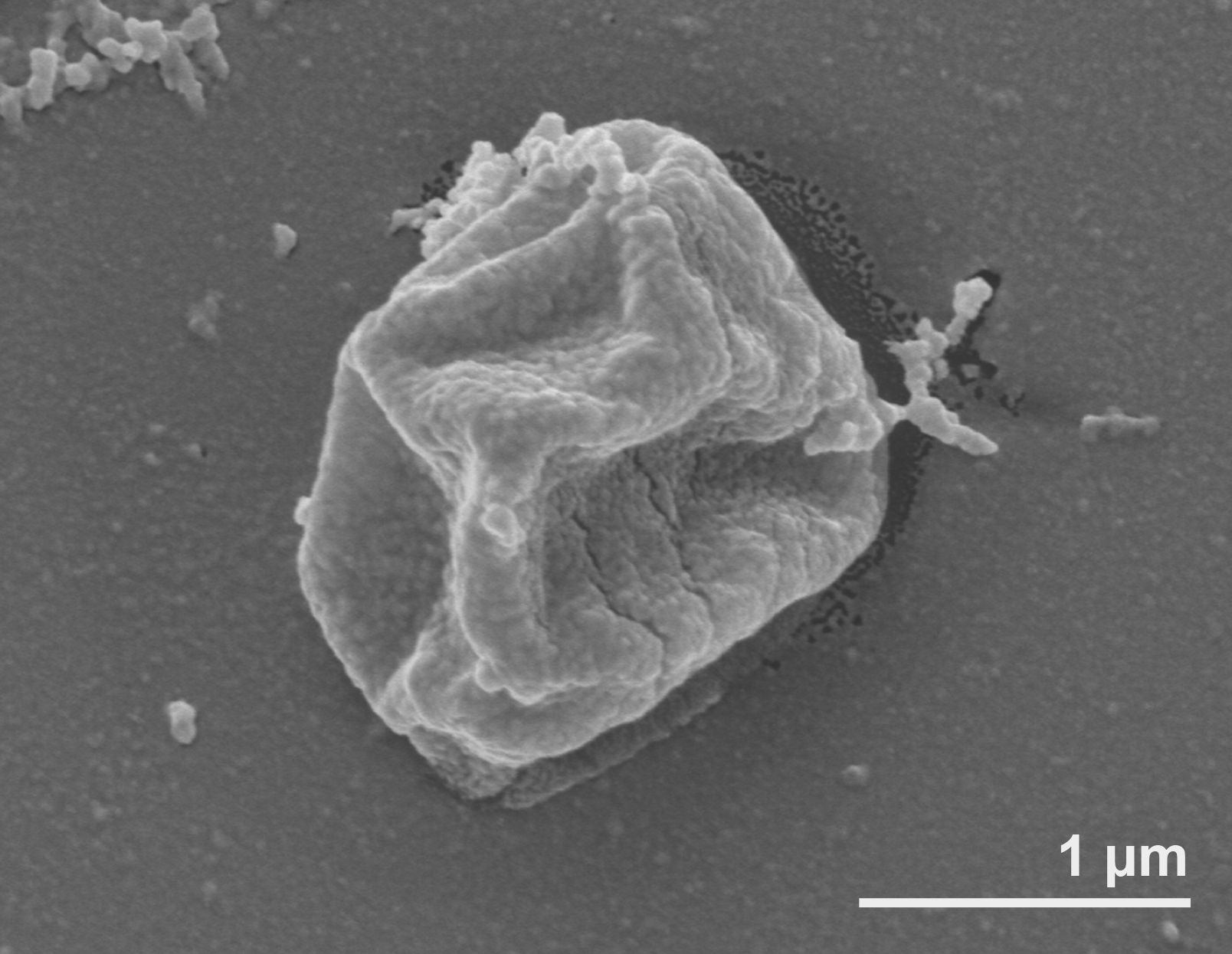
- Condition: The surface is almost globally isothermal at $464^\circ\text{C}$.
- Biological Limit: While the known limit at the time was $113^\circ\text{C}$ (Pyrolobus fumarii), Cockell posits a generic theoretical upper limit of $150^\circ\text{C}$ for his analysis.
- Biochemical Barrier: This theoretical limit sits well below $250^\circ\text{C}$, where peptide bonds hydrolyze rapidly (in minutes) and ATP decomposes in seconds.
- Conclusion: The surface temperature is a hard limit to life. Liquid water cannot exist because $464^\circ\text{C}$ exceeds the critical temperature of water ($374^\circ\text{C}$).
Pressure (Habitable Range)
- Condition: Surface pressure is 9.5 MPa (~95 atm).
- Biological Context: This is equivalent to ~950 m ocean depth on Earth.
- Limit: Life exists at the Mariana Trench (~110 MPa); researchers have isolated obligate barophiles (such as Shewanella, Moritella, and Colwellia) that grow optimally at high pressures.
- Conclusion: Pressure levels on the surface are within the known tolerance range for piezophilic life.
Atmospheric Composition (Bio-Compatible)
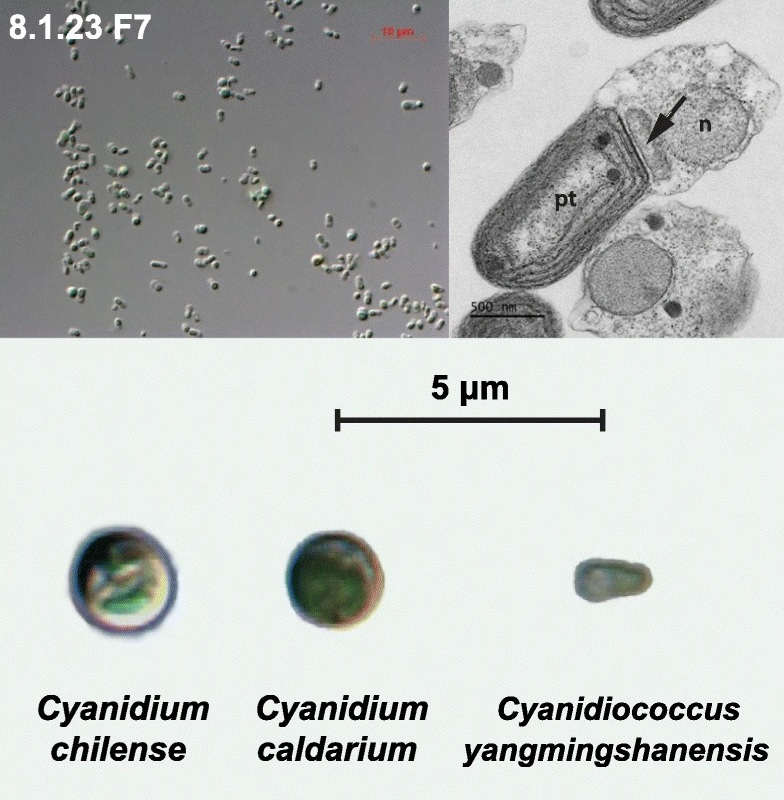
- Condition: $96.5%\ \text{CO}_2, 3.5%\ \text{N}_2$.
- Biological Context: Terrestrial algae like Cyanidium caldarium can tolerate pure $\text{CO}_2$. High $\text{CO}_2$ actually makes carbon assimilation energetically easier compared to Earth’s 0.03%.
UV Radiation (Not a Constraint)
- Condition: The thick atmosphere ($CO_2$) scatters most harmful UVC/UVB via Rayleigh scattering, while sulfur-based absorbers in the upper clouds remove the penetrating remainder.
- Evolutionary Argument: The UV flux in the upper clouds is comparable to the surface of Archean Earth (when life evolved), despite Venus being closer to the Sun.
- Conclusion: Since life emerged on Earth under similar radiation conditions, UV flux cannot be considered a life-limiting constraint on Venus today or in its past.
The Cloud Habitat: A Potential Niche?
The paper identifies a “habitable zone” within the lower and middle cloud layers where physical parameters relax.
Altitude and Conditions (48-57 km)
| Layer | Altitude | Temperature | Pressure |
|---|---|---|---|
| Lower Cloud | 48-51 km | $\approx 60^\circ\text{C}$ | ~1 atm |
| Middle Cloud | 51-57 km | $0^\circ\text{C}\text{–}38^\circ\text{C}$ | < 1 atm |
- Droplet Size: Particles range from 0.4 to 6.7 µm, sufficient to hold bacteria (0.2-2 µm).
- Residence Time: A microbial assemblage could float for > 200 days before raining out, allowing ample time for reproduction.
The Primary Challenge: Acidity and Water Activity
- Acidity: Cloud droplets are composed of concentrated sulfuric acid, ranging from $\approx 81%$ in the upper clouds to $\approx 98%$ in the lower layers.
- pH: The pH is effectively 0.
- Biological Limit: While terrestrial acidophiles (e.g., Picrophilus) grow at pH 0, they require high water activity. The hygroscopic nature of concentrated $\text{H}_2\text{SO}_4$ creates extreme desiccation (osmotic) stress. Microbes typically combat this by synthesizing “biocompatible solutes” (like betaine, proline, or glycerol) to balance internal pressure, but the energy cost at this extreme may be prohibitive.
Metabolism in the Clouds (Theoretical)
If a microbe could survive the acidity, the paper proposes a theoretical metabolism based on the sulfur cycle.
Energy Sources
- Photosynthesis: Solar flux in the clouds is ~15% of incident light (comparable to Earth’s surface), sufficient for photosynthesis.
Chemoautotrophy
- Electron Acceptor: Sulfate ($\text{SO}_4^{2-}$) is abundant.
- Electron Donors: Hydrogen ($\text{H}_2$) exists at ~25 ppm; Carbon Monoxide ($\text{CO}$) exists at 30-50 ppm.
- Analogs: Terrestrial sulfate-reducing bacteria (e.g., Desulfobacterium autotrophicum) serve as biochemical templates.
Nutrients
- Phosphorus: Present (likely as phosphoric acid).
- Nitrogen: 3.5% of atmosphere, available for fixation.
Early Venus and Evolutionary Implications
Moist Greenhouse Model
- Deuterium/Hydrogen ratios suggest early Venus had ~100x more water than today.
- A “moist greenhouse” period may have existed with hot oceans (< 100°C) for several hundred million years.
Interplanetary Ecology
- High impact rates on early Earth favored thermophiles.
- Transfer of material between Earth and Venus suggests a possible early “interplanetary ecology” where life could have transferred to Venusian oceans before the runaway greenhouse took over.
Venus as an Exoplanet Analog
Cockell explicitly frames Venus as a template for understanding extrasolar greenhouse planets. By defining the sequence of habitability constraints, the paper argues that temperature becomes a limiting factor well before pressure.
- Hierarchy of Limits: On runaway greenhouse planets, surface temperatures will exceed biochemical limits ($>150^\circ\text{C}$) long before pressures exceed piezophilic limits (>110 MPa).
- Spectroscopic Strategy: Consequently, exoplanet surveys should prioritize thermal characterization over pressure estimates when screening for surface habitability. High atmospheric pressure is not, in itself, a disqualifier for life.
Future Directions and Search Strategies
The paper concludes with specific recommendations for exobiology missions.
Planetary Protection
The extreme acidity and temperature of the lower atmosphere likely sterilize incoming spacecraft, mitigating contamination risks.
Proposed Missions
- Descent Probe: Equipped with a sample collector arm to analyze cloud droplets between 48-57 km.
- Balloon Mission: A free-floating platform to study cloud chemistry and potentially culture organisms in situ.
Key Biomarkers to Search For
- Isotopic Fractionation: Biological sulfate reduction prefers $^{32}\text{S}$ over $^{34}\text{S}$; analyzing sulfur isotopes in rocks could reveal past life.
- Trace Gases: Precise measurement of non-equilibrium gases ($\text{H}_2, \text{CO}$) in the clouds.
Earth-Based Research: The Missing Venus Analog
We have yet to find a terrestrial microbe that is simultaneously hyperthermophilic, acidophilic, and xerophilic (tolerant of low water activity). This absence points to the “multiple-stressor problem,” which is arguably the most significant biochemical barrier to life on Venus.
- The Bioenergetic Cost of Polyextremophily: Survival requires more than just managing individual stressors; it requires overcoming the overwhelming energy cost of handling them simultaneously. A Venusian microbe would need to continuously pump protons to maintain neutral pH against sulfuric acid, synthesize massive amounts of compatible solutes to prevent desiccation, and constantly repair thermally damaged proteins. The cumulative metabolic demand of these competing defense mechanisms may simply exceed the energy available from chemosynthesis, rendering such an organism biologically impossible.
- Ecological Absenteeism: Alternatively, such organisms may be biologically possible, but Earth simply lacks stable “Venus-like” environments (boiling + acidic + salty) to drive their evolution. Life may not have evolved to fill a niche that doesn’t exist here.
Connecting Habitability to Terraforming
Understanding the baseline habitability of Venus is the first step in conceptualizing planetary engineering. The extreme limits identified here, especially the $464^\circ\text{C}$ surface temperature and $81\text{–}98%\ \text{H}_2\text{SO}_4$ clouds, must be mitigated before complex life can take hold.
To explore how we might overcome these physical limits and engineer a second Earth, read my notes on:
- The Surface of Venus for details on the geological constraints.
- Venus Evolution Through Time for the history of its climate catastrophe and potential paths to recovery.
Paper Information
Citation: Cockell, C. S. (1999). Life on Venus. Planetary and Space Science, 47(12), 1487-1501. https://doi.org/10.1016/S0032-0633(99)00036-7
Publication: Planetary and Space Science, 1999
Additional Resources:
@article{cockell1999life,
  author = {Cockell, Charles S.},
  title = {Life on {Venus}},
  journal = {Planetary and Space Science},
  volume = {47},
  number = {12},
  pages = {1487--1501},
  year = {1999},
  doi = {10.1016/S0032-0633(99)00036-7}
}