Notes on quantitative methods, algorithms, and datasets for analyzing social and political phenomena.
Research notes on computational approaches to social science, including political analysis, legislative behavior, social networks, and quantitative methods for understanding human systems.
A Spatial Model for Legislative Roll Call Analysis
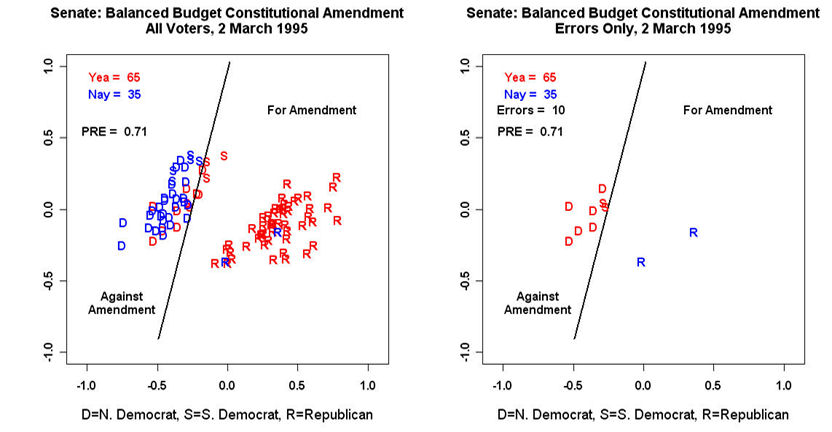
This paper introduces NOMINATE, a probabilistic spatial model that recovers metric coordinates for legislators and roll calls from nominal voting data, demonstrating that a single liberal-conservative dimension explains the vast majority of Congressional voting behavior.
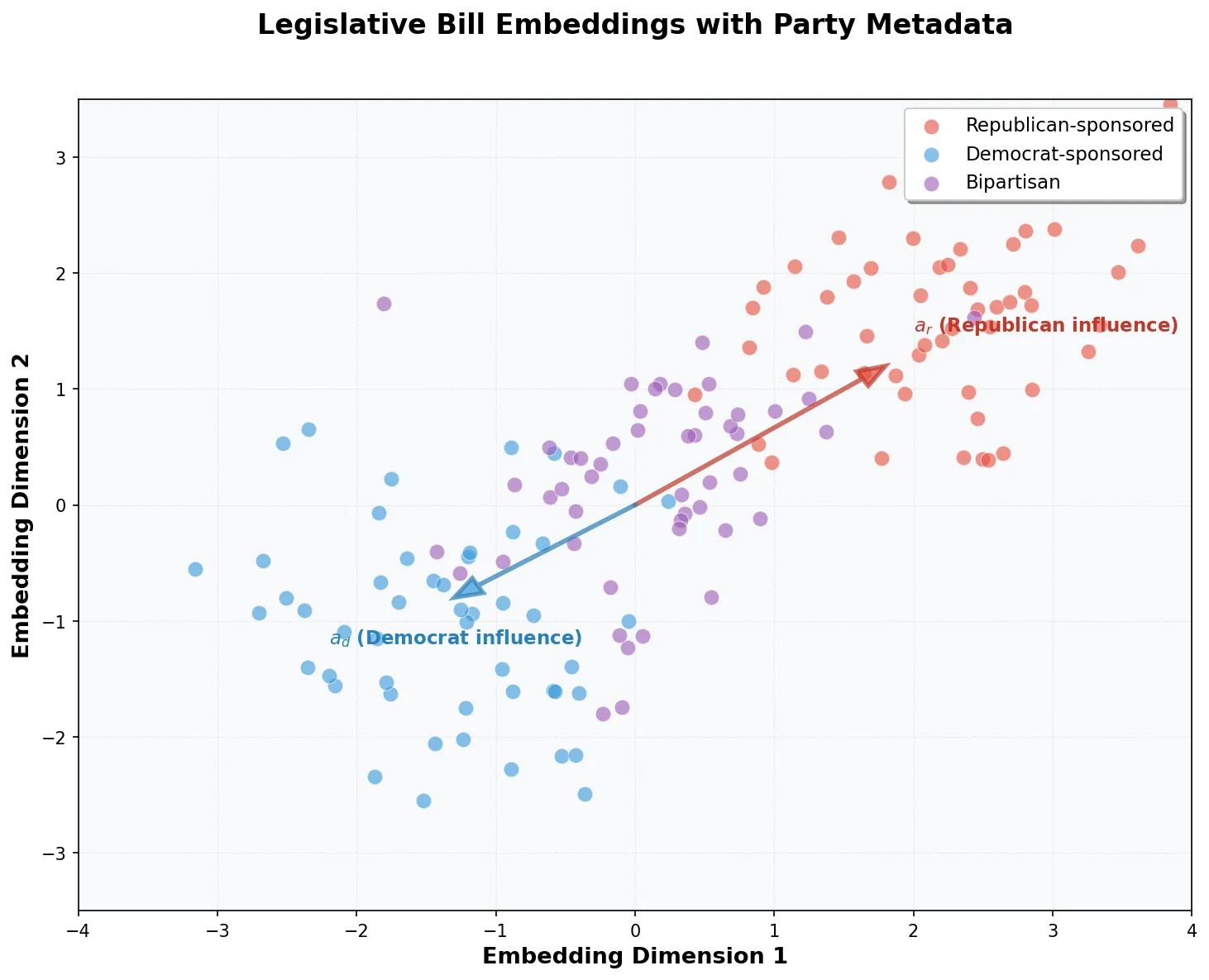
This paper introduces a neural architecture that combines bill text embeddings (CNN/MWE) with sponsor ideology metadata to improve vote prediction accuracy, particularly in out-of-session contexts where political dynamics shift.
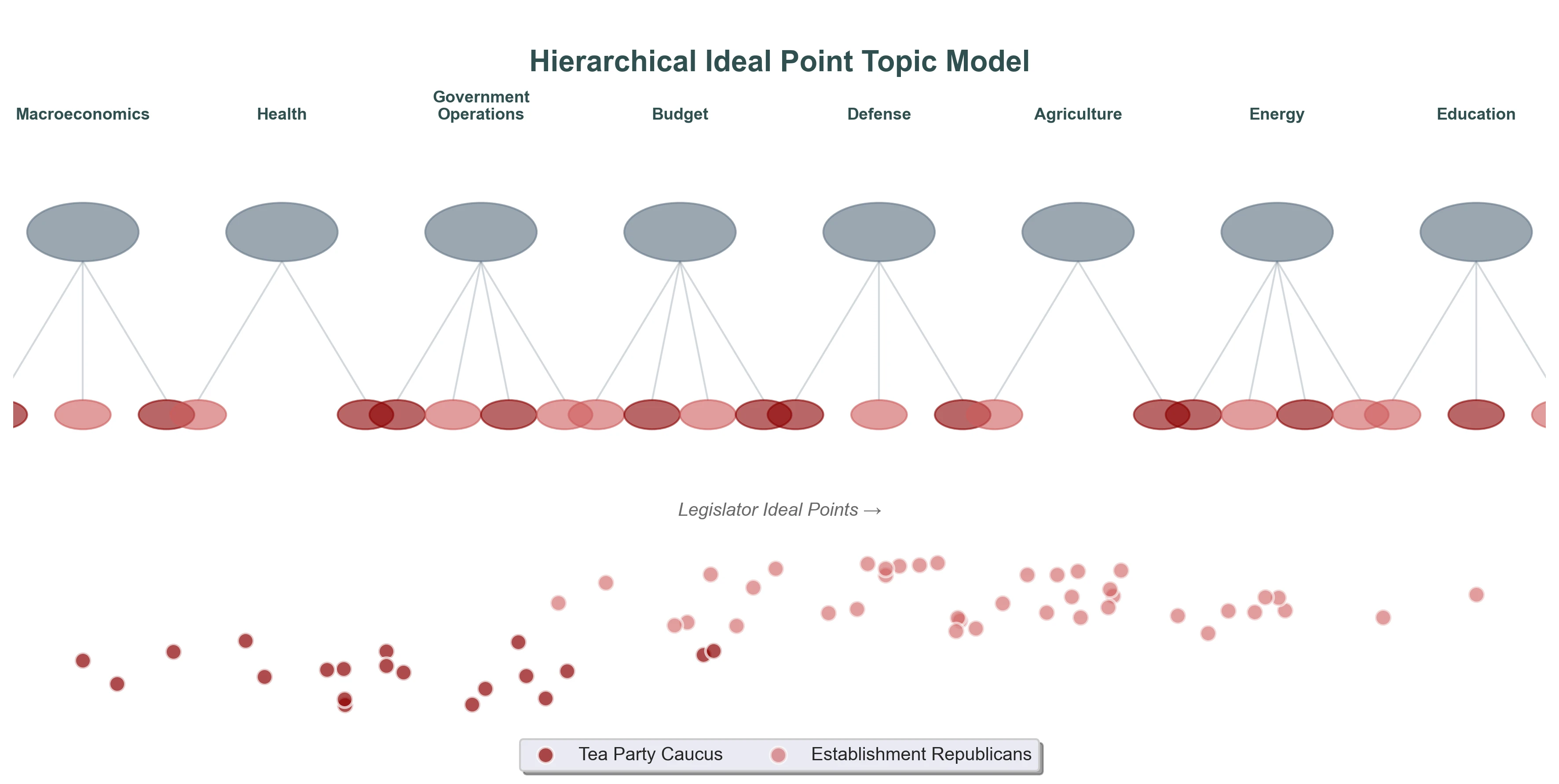
This paper introduces the Hierarchical Ideal Point Topic Model (HIPTM) to analyze the 112th U.S. Congress. By jointly modeling votes and text, it uncovers how Tea Party Republicans and establishment Republicans differ in both voting records and how they frame specific policy issues.