Notes on planetary geology, astrobiology, and related topics. Covers research on Mars, ocean worlds, and the search for life beyond Earth.
This section holds notes on planetary science papers, with a particular focus on Venus and the question of habitability. Topics include Venus’s geological and atmospheric evolution, the limits of life under extreme conditions, and the scientific context around potential biosignatures like phosphine. These papers were read as background for understanding astrobiology more broadly: what conditions life requires, how planets diverge in their histories, and what comparative planetology can tell us about Earth.
Chaotic Evolution of the Solar System (Sussman 1992)
Sussman and Wisdom’s 1992 study used the Supercomputer Toolkit and symplectic mapping to integrate the entire Solar System for 100 million years, confirming chaotic behavior with an exponential divergence timescale of ~4 million years and demonstrating that long-term planetary motion is fundamentally unpredictable.
Terraforming Venus With the Cloud Continent Proposal
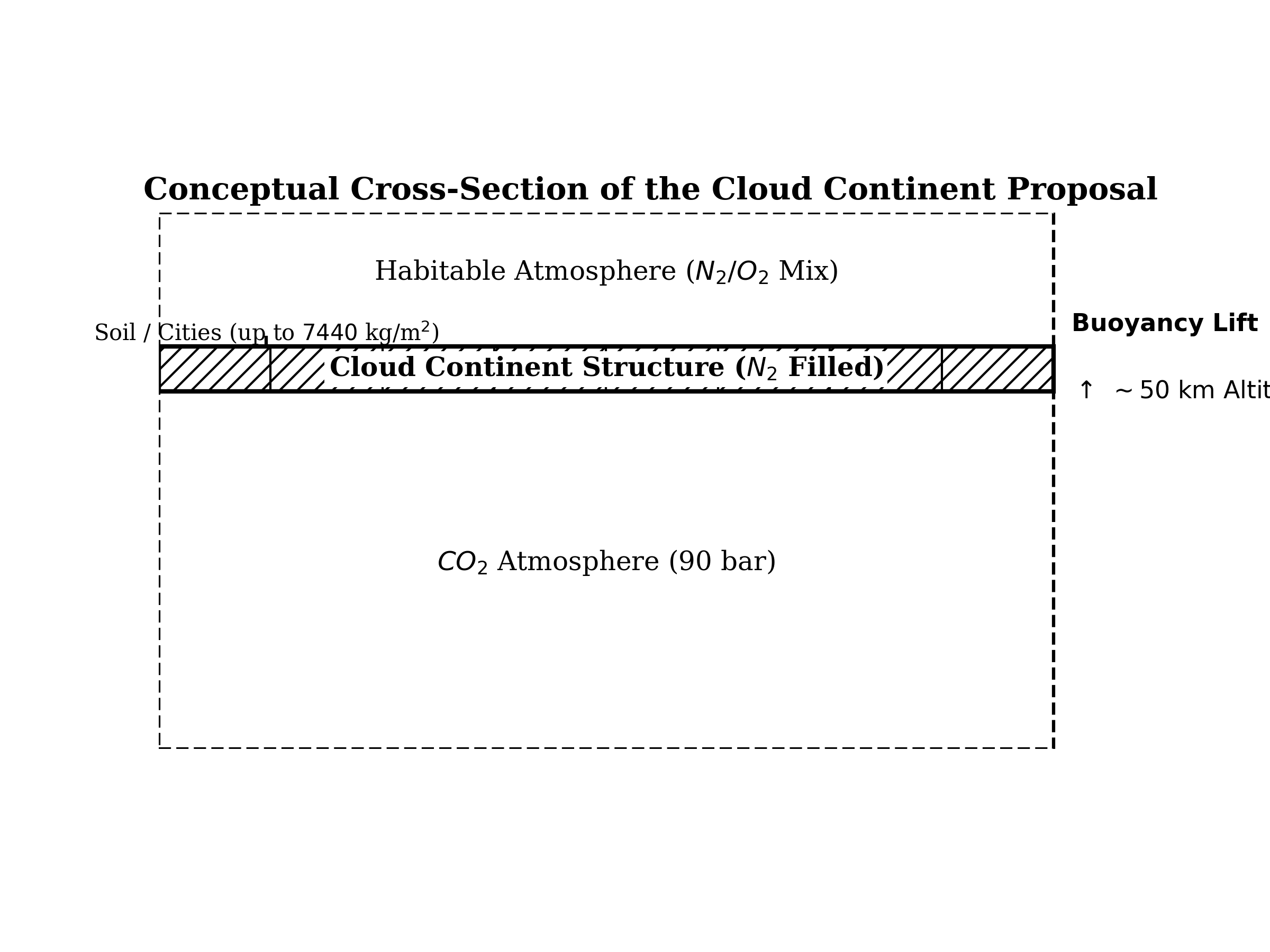
A speculative 2022 engineering proposal for terraforming Venus by constructing a nitrogen-filled honeycomb structure floating at 50 km altitude where temperature and pressure are Earth-like, avoiding the need to remove Venus’s massive atmosphere while using CO2 electrolysis to produce breathable oxygen and carbon nanostructures for construction.
Venus Evolution Through Time: Key Questions and Missions
A comprehensive 2023 roadmap for Venus exploration synthesizing open questions about the planet’s evolution from potentially habitable to extreme greenhouse state, detailing the coordinated VERITAS, DAVINCI, and EnVision missions planned for the 2030s and identifying future technology requirements for answering fundamental habitability questions.
Life on Venus? Astrobiology and the Habitability Limits
A deep dive into the physical limits of life on Venus, reviewing Charles Cockell’s foundational 1999 analysis while connecting it to modern discoveries like the 2020 phosphine detection and upcoming DAVINCI+ missions.
The Surface of Venus: Stratigraphy and Resurfacing History
Basilevsky and Head’s comprehensive synthesis reveals a planet that undergoes catastrophic global resurfacing events. We explore the “stagnant lid” model, the synchronous stratigraphy, coronae, and the divergence of Venus’s geological history from Earth’s.