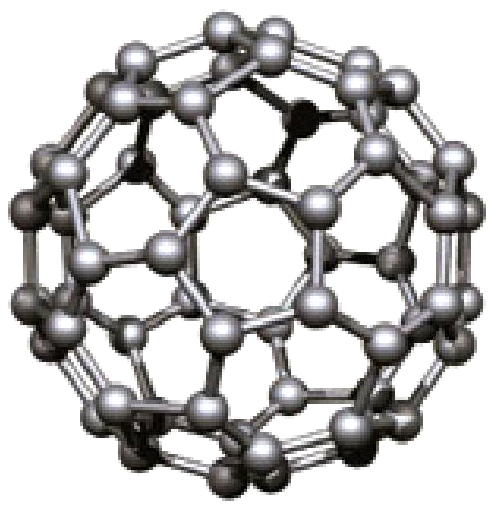
Notes on 3D molecular representations, conformer generation, and neural network potentials for learning smooth, physical energy surfaces.
This section focuses on 3D molecular modeling: representing and reasoning about molecules in three-dimensional space rather than as flat strings or 2D graphs. Notes here cover conformer generation, neural network interatomic potentials, and architectures that model the continuous volumetric space around a molecule. A recurring theme is the tension between atom-centric representations and approaches that capture broader spatial context, including how to learn smooth and physically meaningful potential energy surfaces from data.
Genetic Algorithms as Baselines for Molecule Generation
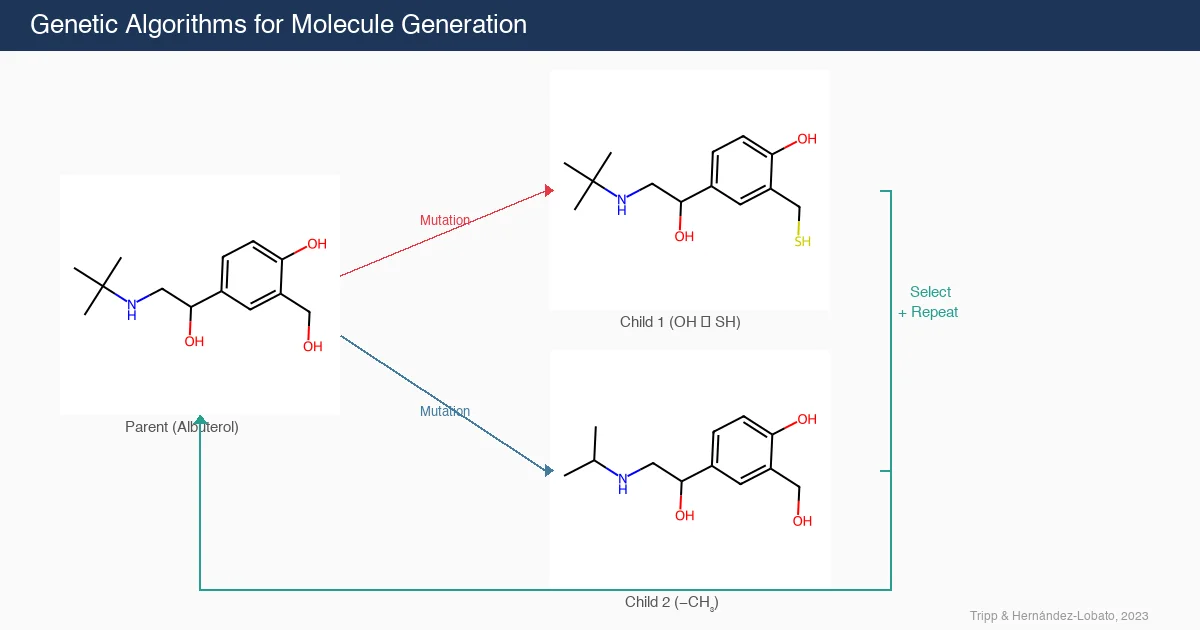
This position paper demonstrates that genetic algorithms (GAs) perform surprisingly well on molecular generation benchmarks, often outperforming complex deep learning methods. The authors propose the GA criterion: new molecule generation algorithms should demonstrate a clear advantage over GAs.
MOFFlow: Flow Matching for MOF Structure Prediction
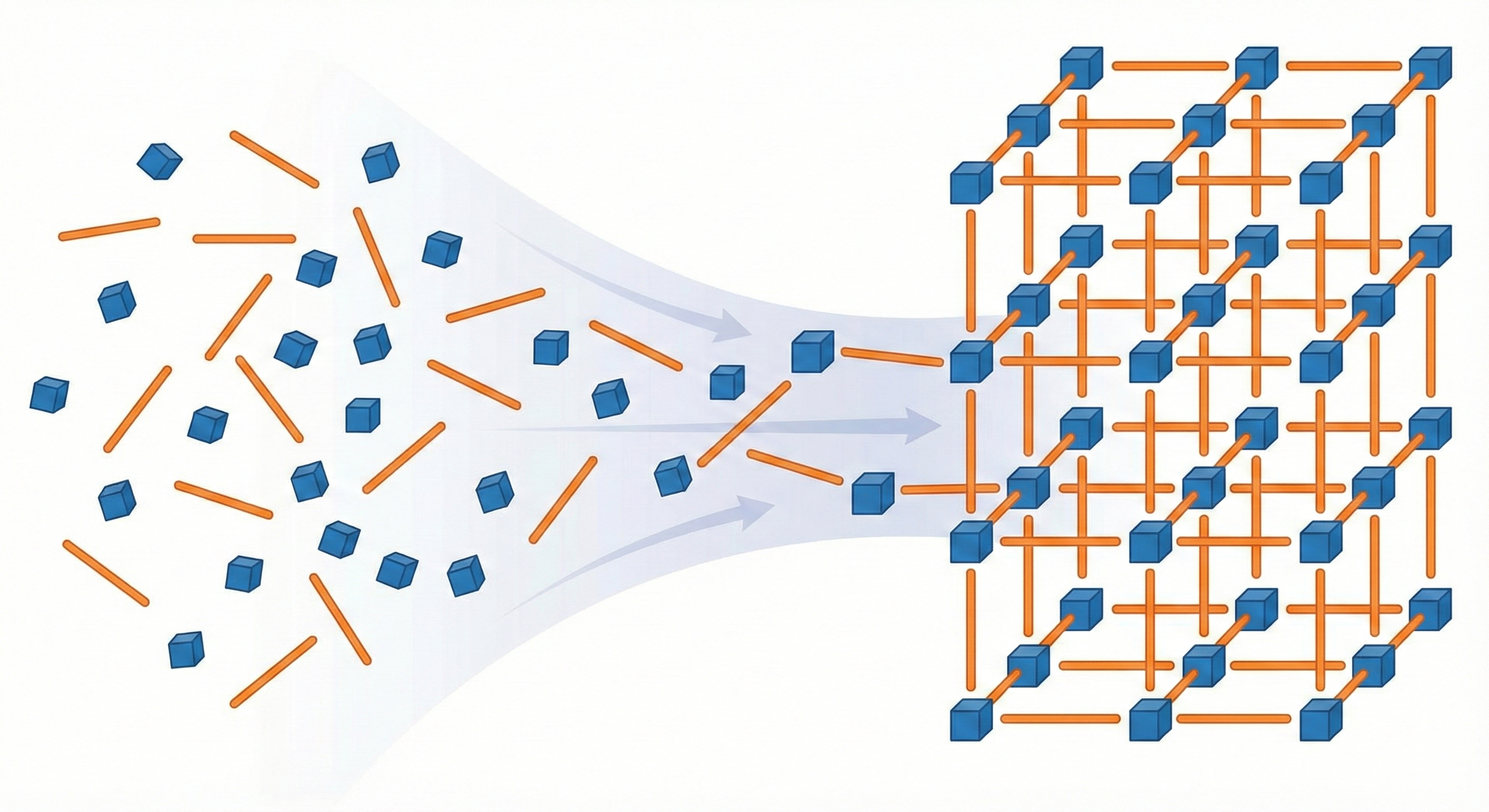
MOFFlow is the first deep generative model tailored for Metal-Organic Framework (MOF) structure prediction. It utilizes Riemannian flow matching on SE(3) to assemble rigid building blocks (metal nodes and organic linkers), achieving higher accuracy and scalability than atom-based methods on large systems.
DenoiseVAE: Adaptive Noise for Molecular Pre-training
ICLR 2025 paper introducing DenoiseVAE, which learns adaptive, atom-specific noise distributions through a VAE framework to improve denoising-based pre-training for molecular force field prediction, outperforming fixed Gaussian noise approaches on quantum chemistry benchmarks.
Beyond Atoms: 3D Space Modeling for Molecular Pretraining
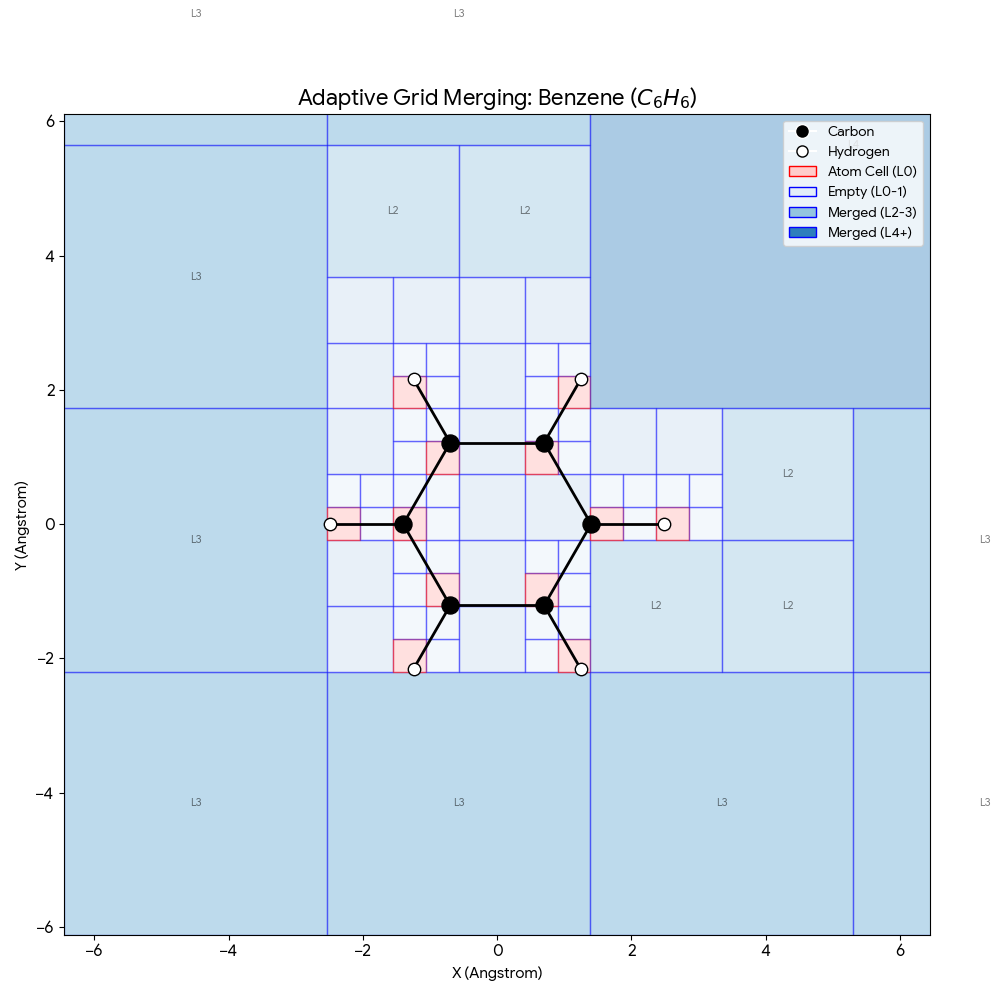
ICML 2025 paper introducing SpaceFormer, a Transformer architecture that challenges the atom-centric paradigm by modeling the continuous 3D space surrounding molecules using adaptive multi-resolution grids, ranking first in 10 of 15 molecular property prediction tasks.
Efficient DFT Hamiltonian Prediction via Adaptive Sparsity
ICML 2025 methodological paper introducing SPHNet, which uses adaptive network sparsification to overcome the computational bottleneck of tensor products in SE(3)-equivariant networks, achieving up to 7x speedup and 75% memory reduction on DFT Hamiltonian prediction tasks.
Learning Smooth Interatomic Potentials with eSEN (ICML)
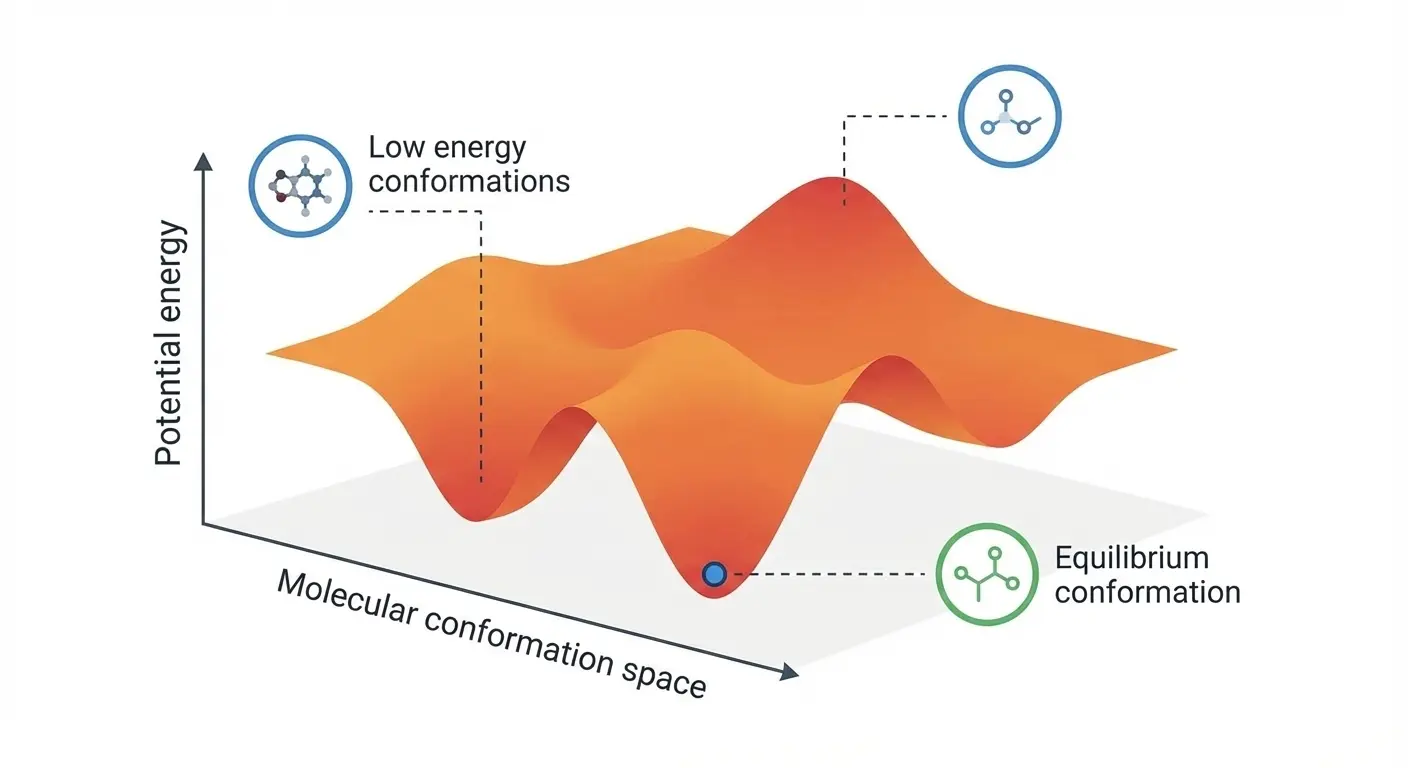
ICML 2025 paper proposing energy conservation metrics as critical diagnostics for machine learning interatomic potentials and introducing eSEN, a novel architecture designed to bridge the gap between test-set accuracy and real simulation performance on materials property prediction.