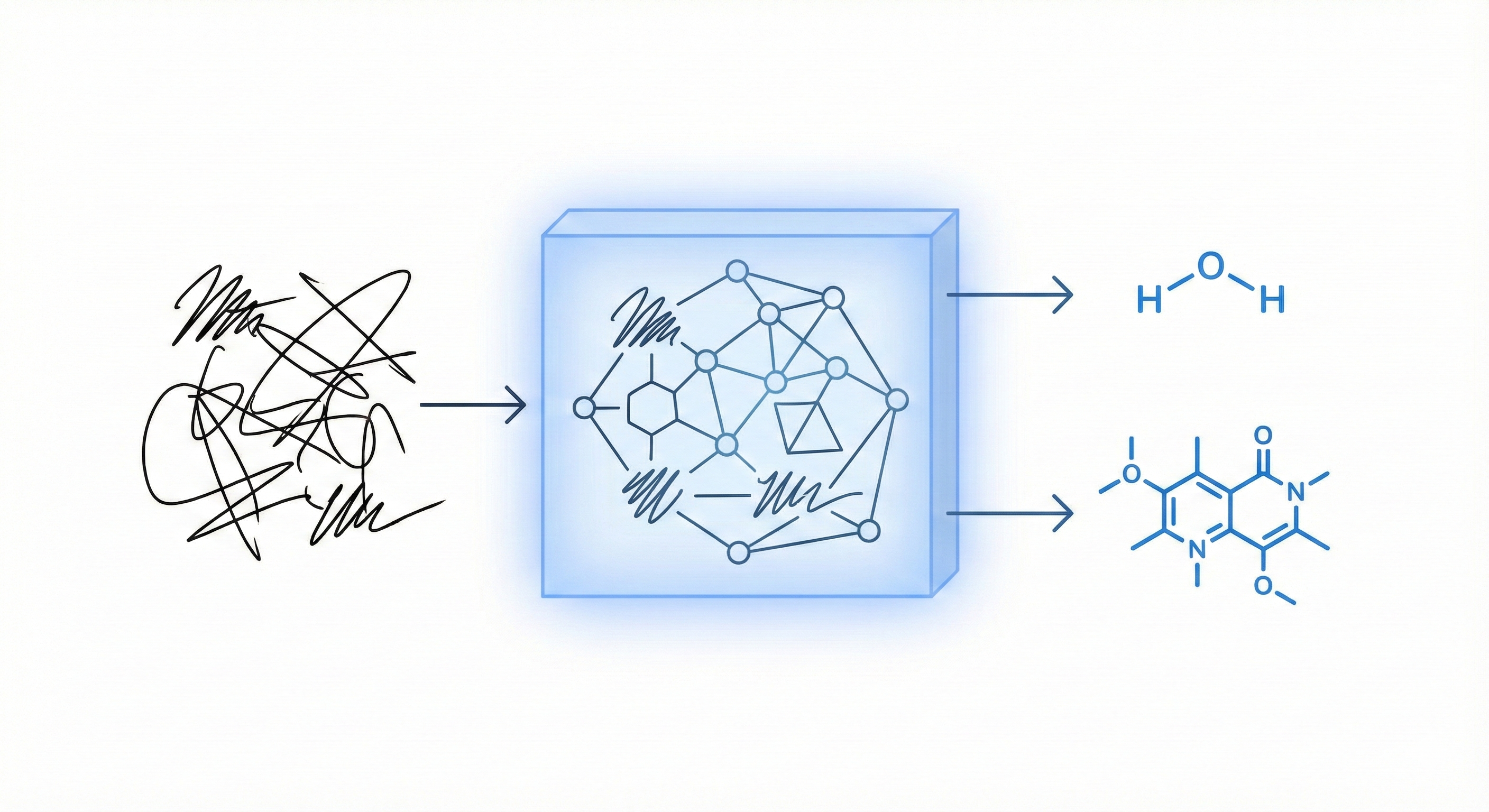
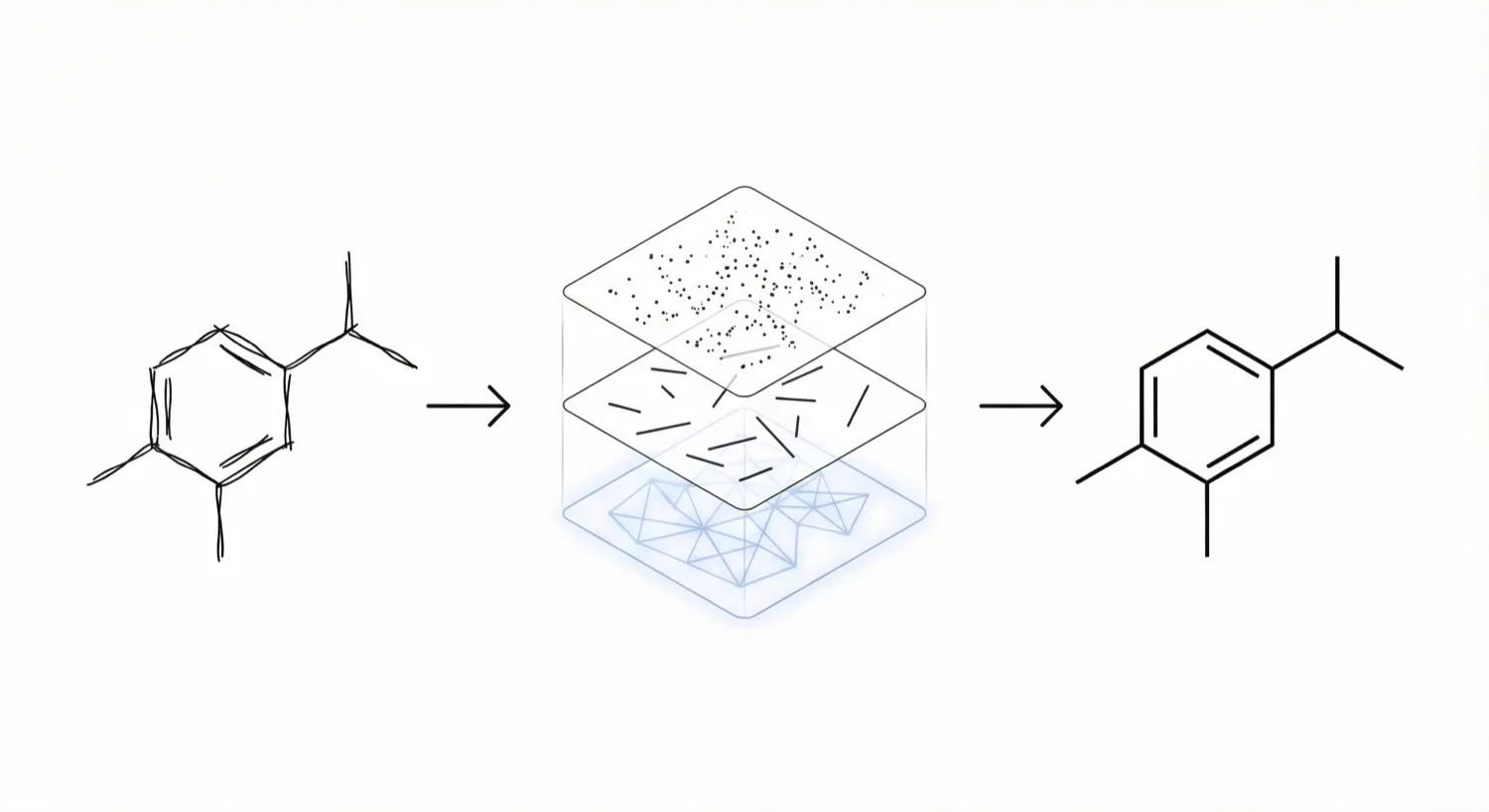
Online chemical structure recognition processes temporal sequences of pen strokes rather than static images, enabling real-time interpretation on tablets and touch devices. This sub-problem differs from hand-drawn image recognition in that the system has access to stroke order, timing, and velocity, providing richer signal for disambiguation. The notes here cover symbol-level classifiers (HMM and SVM-HMM approaches from Zhang et al., SVM with elastic matching from Tang et al.) and expression-level systems that parse full chemical formulas from stroke input (Yang et al.’s structural analysis, Wang et al.’s hierarchical grammar, Chang et al.’s unified framework for inorganic and organic expressions, and ChemInk’s joint CRF model).
| Year | Paper | Key Idea |
|---|---|---|
| 2008 | On-line Handwritten Chemical Expression Recognition | Two-level recognition system for handwritten chemical formulas |
| 2008 | Recognition of On-line Handwritten Chemical Expressions | Two-level algorithm for on-line handwritten chemical expression recognition |
| 2009 | Unified Framework for Handwritten Chemical Expressions | Unified statistical framework for inorganic and organic expressions |
| 2009 | Online Handwritten Chemical Formula Structure Analysis | Three-level grammatical framework (formula, molecule, text) |
| 2009 | HMM-based Online Recognition of Chemical Symbols | HMM-based method using 11-dimensional directional features |
| 2010 | SVM-HMM Online Classifier for Chemical Symbols | Double-stage SVM-HMM architecture for chemical symbol classification |
| 2011 | ChemInk: Real-Time Recognition for Chemical Drawings | Sketch recognition system combining CRF with chemical grammar |
| 2013 | Handwritten Chemical Symbol Recognition Using SVMs | Hybrid SVM recognition system for handwritten chemical symbols |