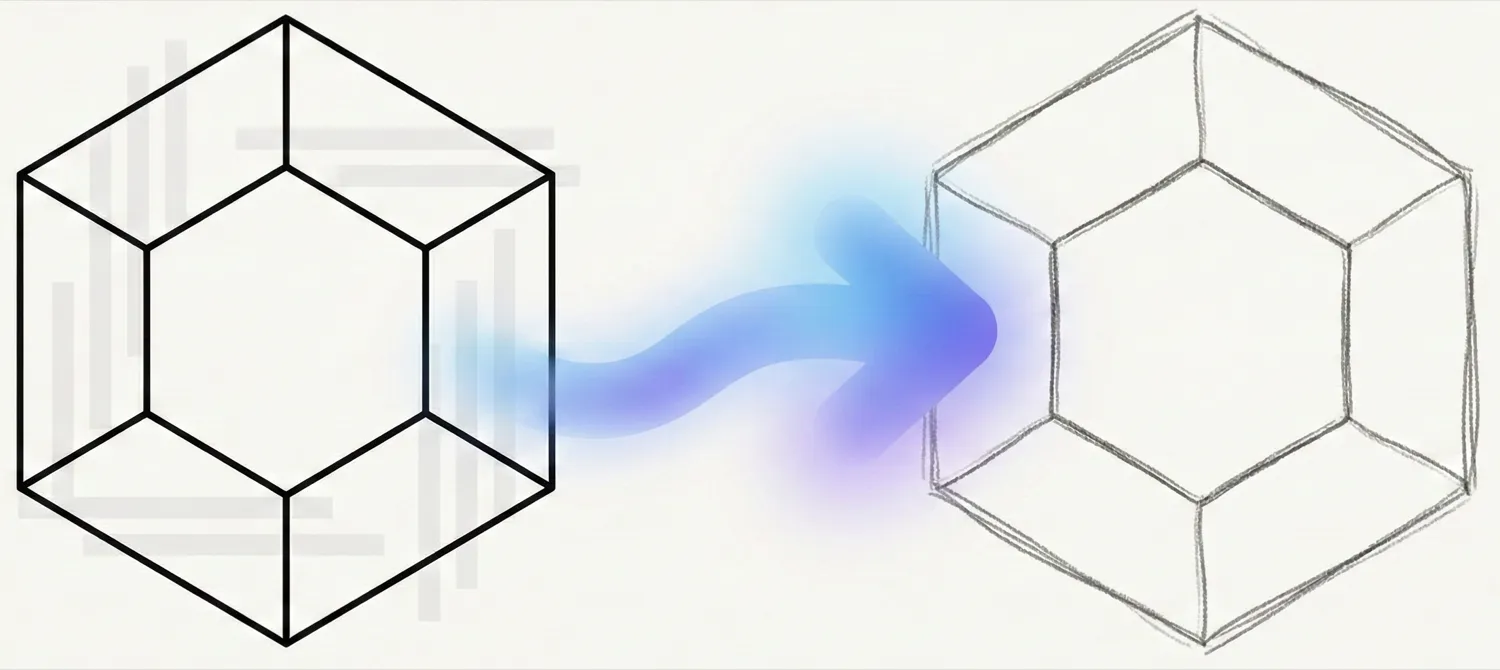
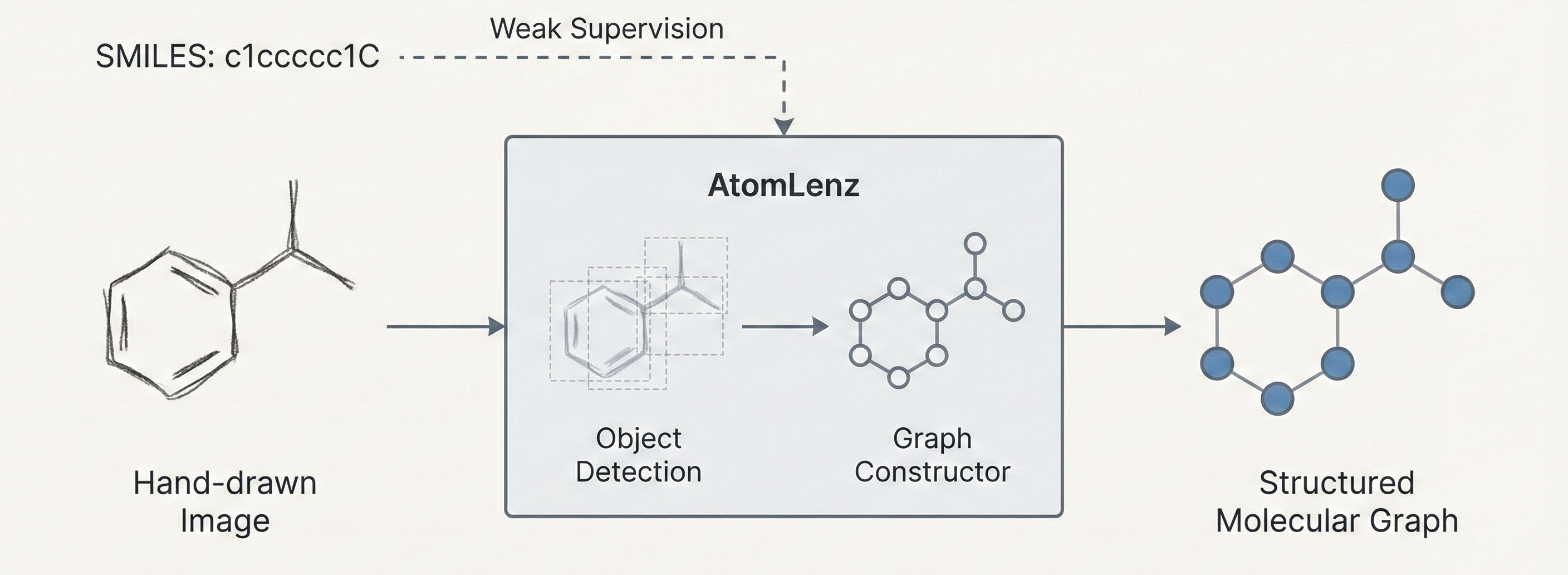
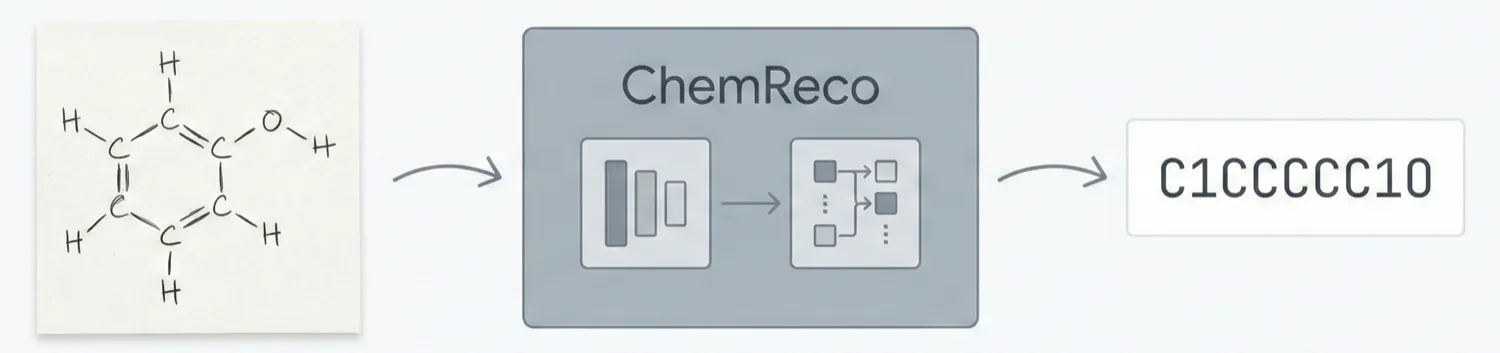
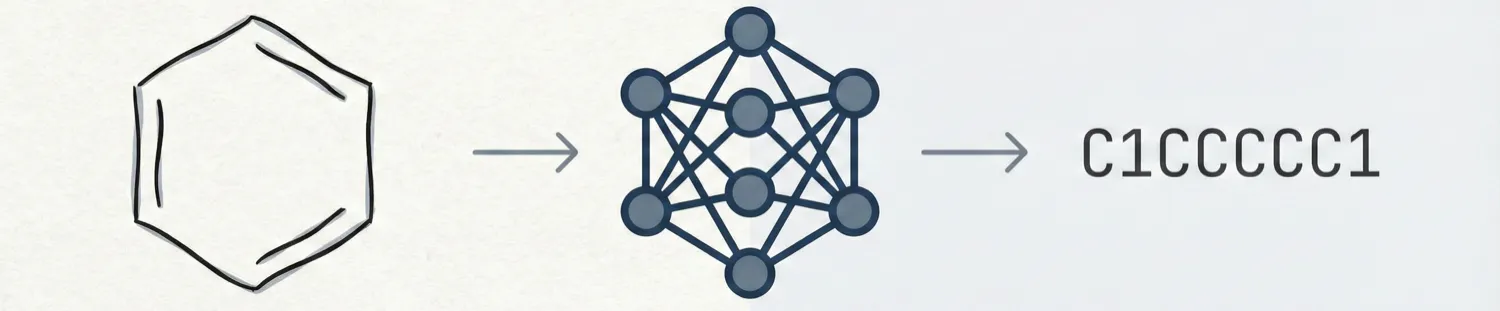
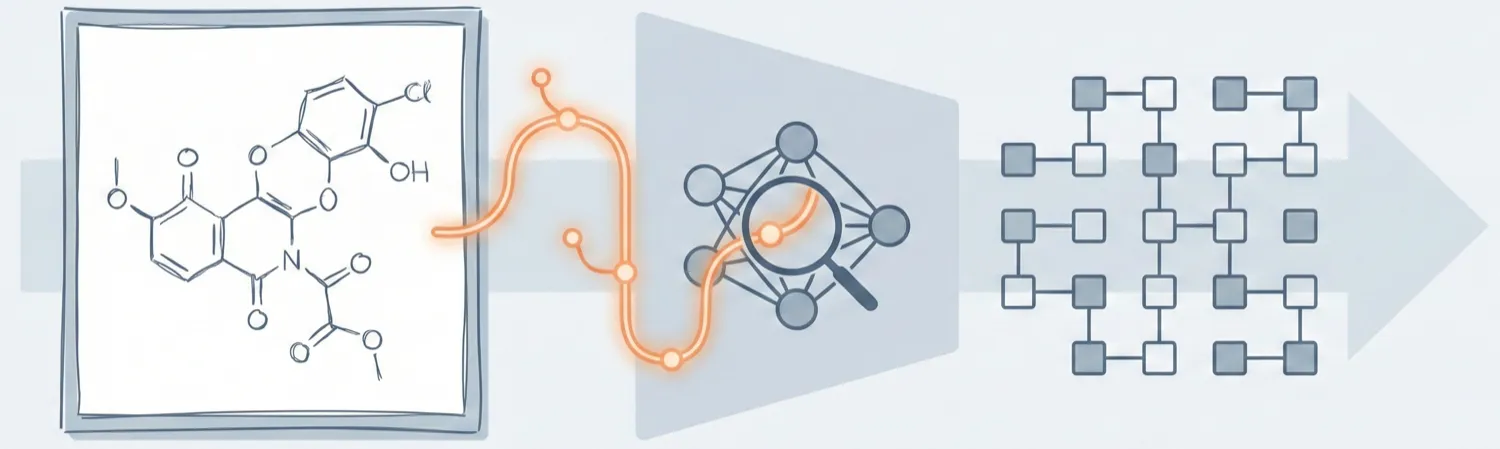
Hand-drawn chemical structure recognition addresses the challenge of interpreting molecules sketched by hand, whether photographed from paper, scanned from notebooks, or captured from whiteboard images. These inputs differ substantially from the clean, typeset diagrams that most OCSR systems target: strokes vary in thickness and regularity, characters are ambiguous, and bond angles are imprecise. Early work like Ramel (1999) and Ouyang & Davis (2007) applied structural analysis and domain-constrained sketch recognition. More recent approaches use deep learning, including DECIMER’s hand-drawn variant, ChemReco’s EfficientNet-Transformer pipeline, and data augmentation strategies like OCSAug’s diffusion-based pipeline to bridge the domain gap between synthetic training data and real hand-drawn inputs.
| Year | Paper | Key Idea |
|---|---|---|
| 1999 | Structural Analysis of Handwritten Chemical Formulas | Structural graph representation with recursive specialists |
| 2007 | Hand-Drawn Chemical Diagram Recognition (AAAI 2007) | Sketch recognition using chemical valence to correct errors |
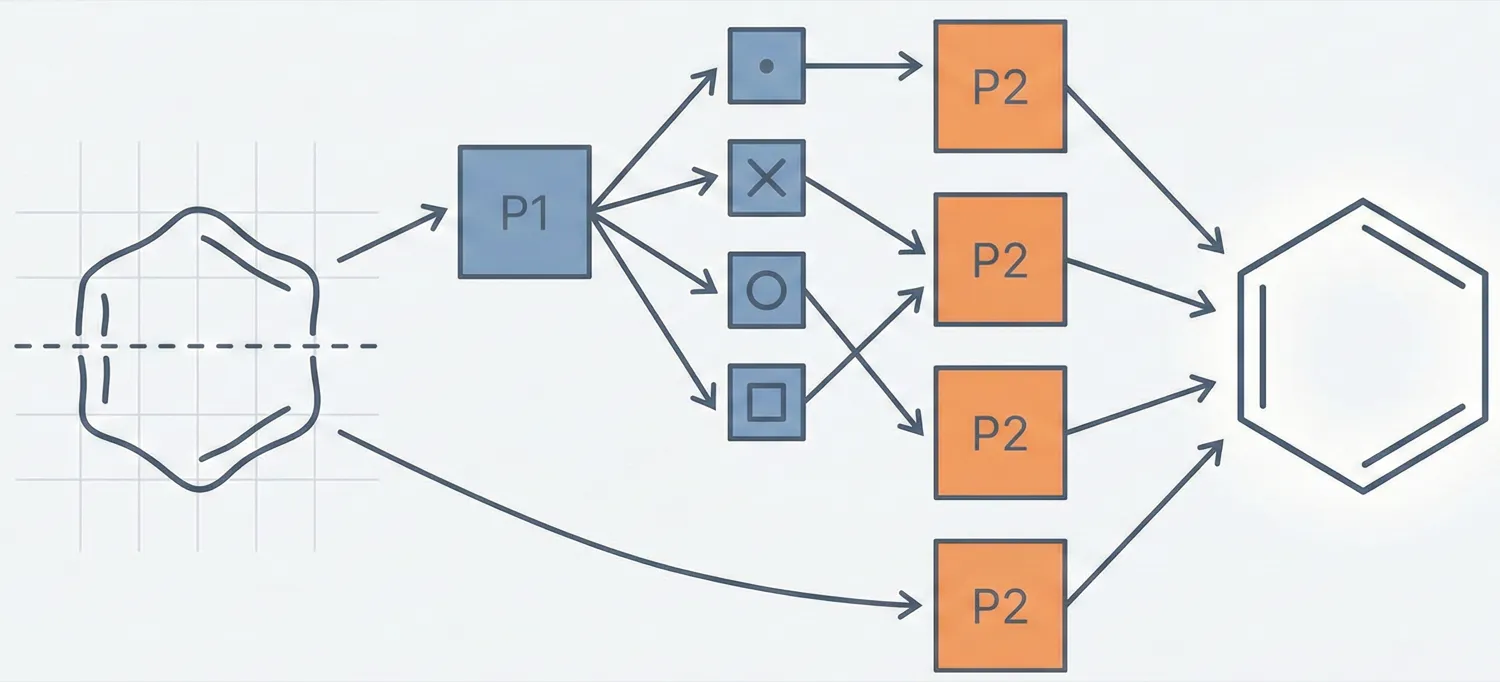
| 2008 | Handwritten Chemical Ring Recognition with Neural Networks | Two-phase neural network pipeline for 23 types of heterocyclic rings |
| 2021 | ChemPix: Hand-Drawn Hydrocarbon Structure Recognition | CNN-LSTM image captioning for hand-drawn hydrocarbons to SMILES |
| 2023 | Handwritten Chemical Structure Recognition with RCGD | End-to-end framework with guided graph traversal and SSML markup |
| 2024 | AtomLenz: Atom-Level OCSR with Limited Supervision | Weakly supervised object detection and graph construction for OCSR |
| 2024 | ChemReco: Hand-Drawn Chemical Structure Recognition | EfficientNet and Transformer achieving 96.9% accuracy |
| 2024 | Enhanced DECIMER for Hand-Drawn Structure Recognition | EfficientNetV2 + Transformer for hand-drawn structures to SMILES |
| 2025 | OCSAug: Diffusion-Based Augmentation for Hand-Drawn OCSR | DDPM and RePaint augmentation to bridge synthetic-to-real domain gap |