Molecular Simulation
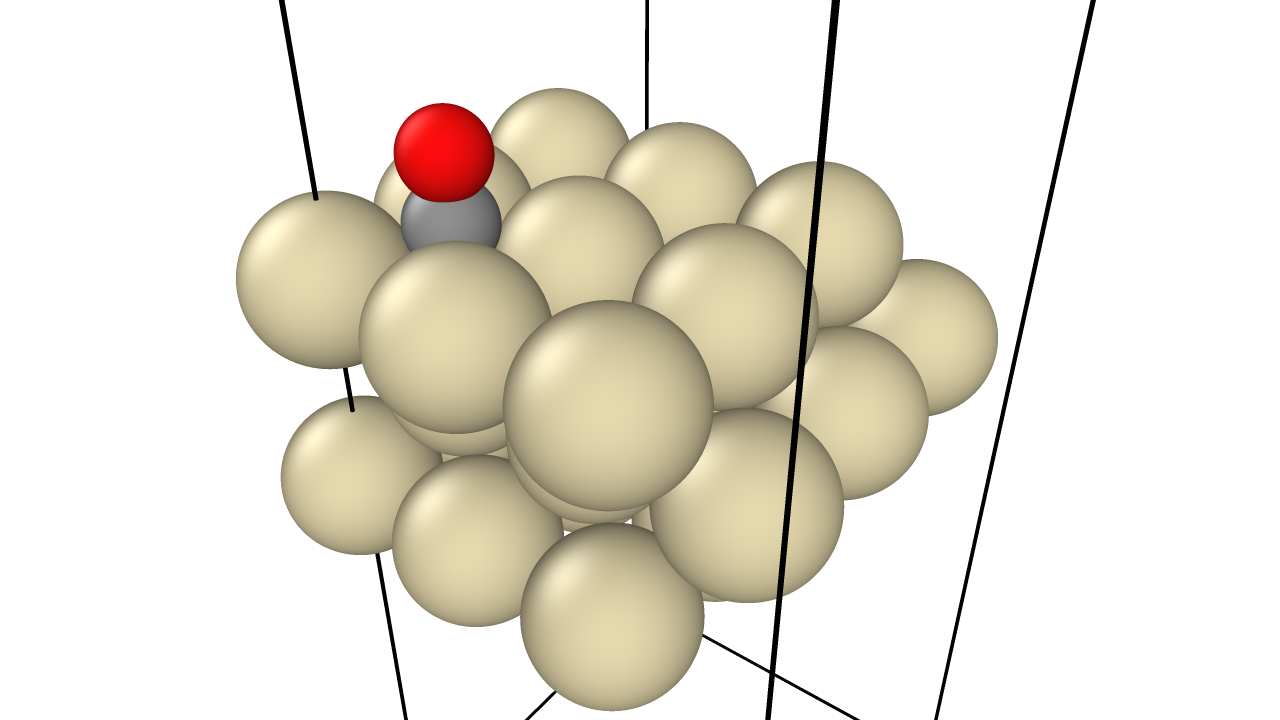
Carbon monoxide molecule adsorbed on Pt(100) FCC surface in hollow site configuration

In Situ XRD of Oxidation-Reduction Oscillations on Pt/SiO2

This study provides the first direct experimental proof that rate oscillations in catalytic CO oxidation on supported Pt are driven by a periodic oxidation and reduction of the catalyst surface. By monitoring Bragg peak intensities in situ, the authors confirm the ‘oxide model’ over competing reconstruction or carbon models.
Molecular Simulation
Carbon monoxide molecule adsorbed on Pt(100) FCC surface in hollow site configuration

Kinetic Oscillations in CO Oxidation on Pt(100): Theory

Imbihl et al. establish the first detailed microscopic model for CO oxidation oscillations on Pt(100), identifying the adsorbate-induced hex to 1x1 phase transition as the driving force. The study combines linear stability analysis with numerical reaction-diffusion simulations.

Molecular Simulation
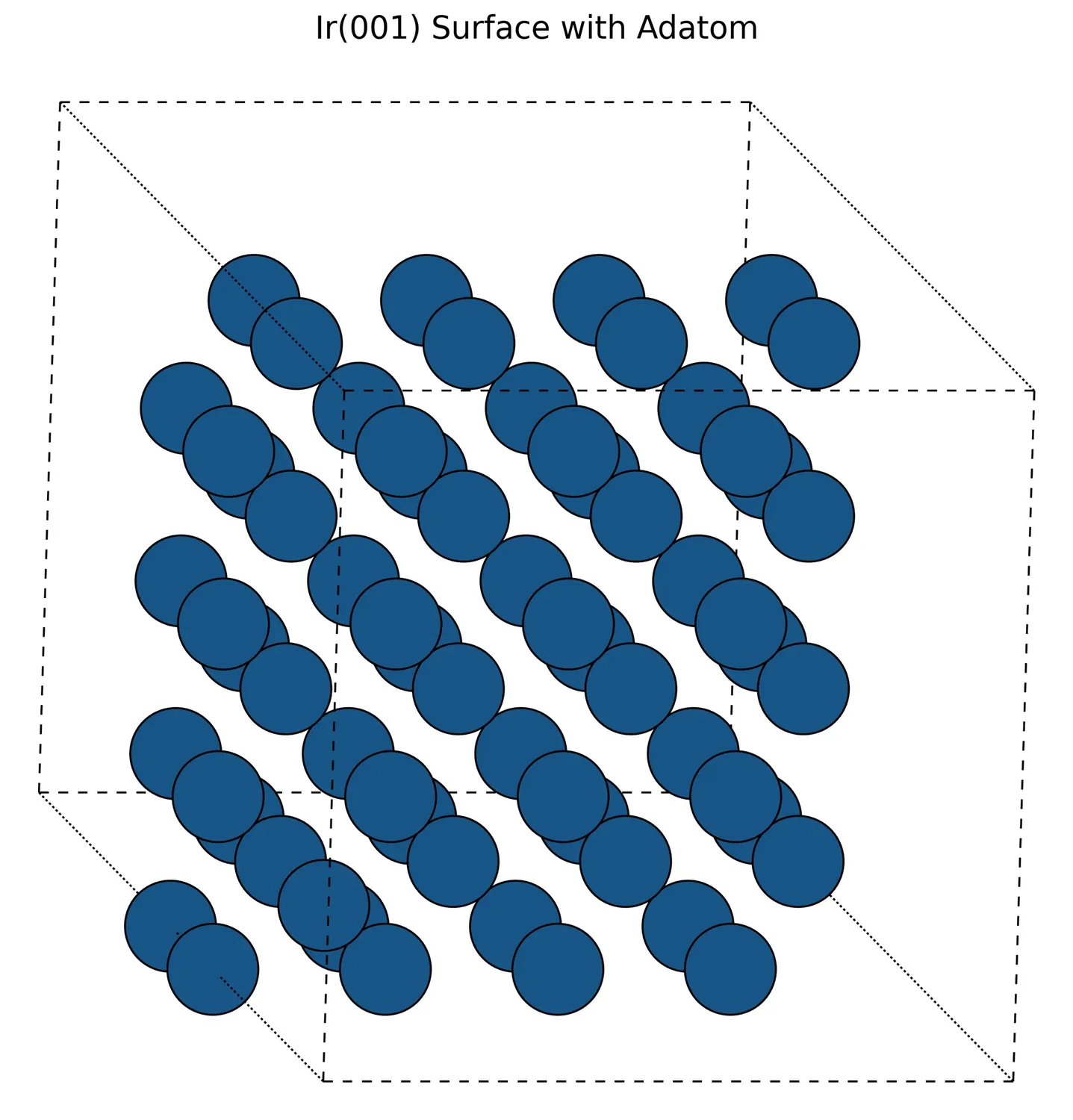
Iridium fcc(001) surface with adatom

MD Simulation of Self-Diffusion on Metal Surfaces (1994)

A molecular dynamics investigation using EAM and many-body potentials to elucidate atomic exchange mechanisms on Iridium surfaces, verifying Field Ion Microscope observations.

Molecular Simulation
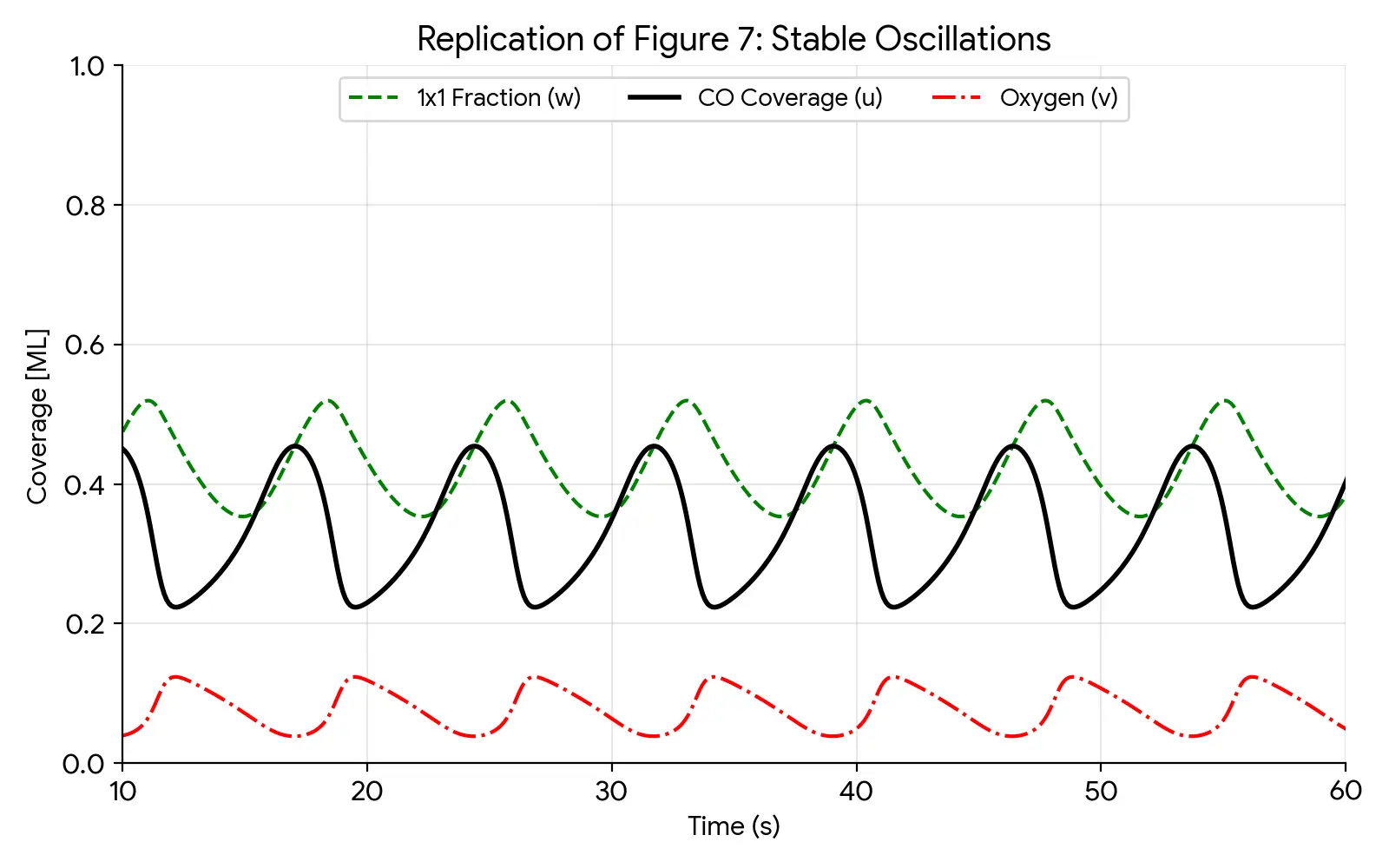
Replication of Figure 7 showing stable oscillations in CO oxidation on Pt(110)

Oscillatory CO Oxidation on Pt(110): Temporal Modeling

This paper presents a 4-variable kinetic model coupling surface reaction dynamics with structural phase transitions to reproduce complex oscillatory behavior on Pt(110).

Molecular Simulation
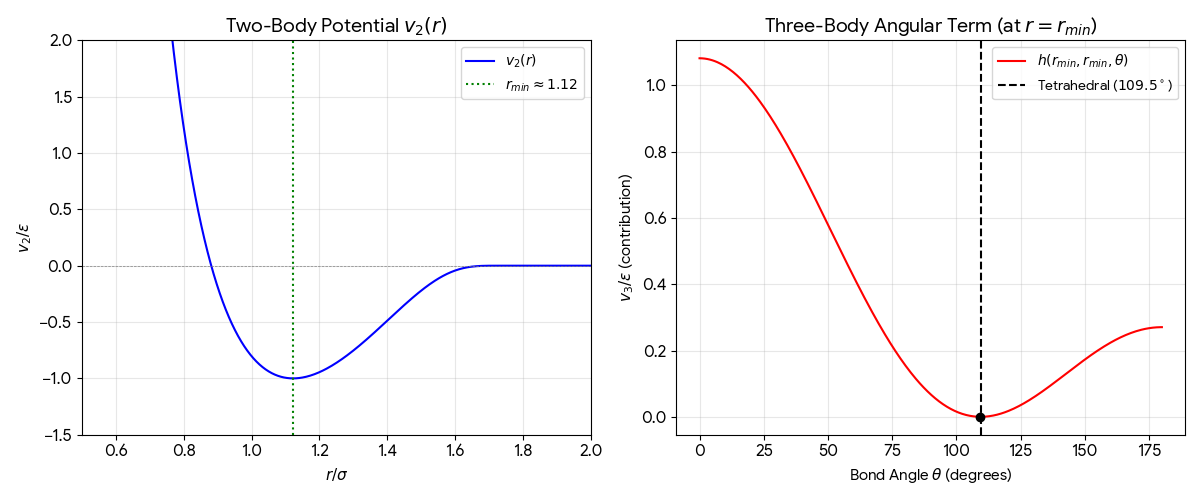
Visualization of the Stillinger-Weber potential showing the two-body radial term and three-body angular penalty

Stillinger-Weber Potential for Silicon Simulation

Stillinger and Weber propose a 3-body interaction potential that stabilizes the diamond crystal structure of silicon and reproduces liquid properties through molecular dynamics, addressing the inability of standard pair potentials to model tetrahedral semiconductors.

Molecular Simulation
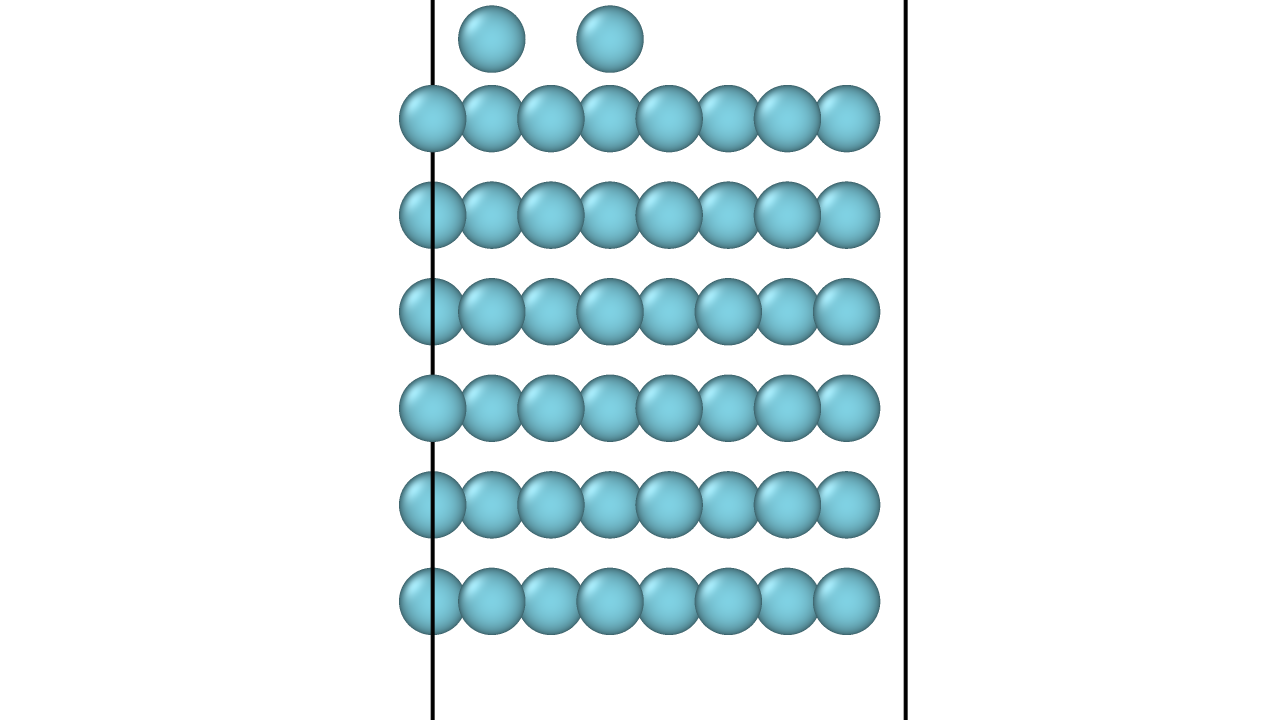
Visualization of argon dimer on fcc(111) surface

Adatom Dimer Diffusion on fcc(111) Crystal Surfaces

This molecular dynamics study reveals that adatom dimers on fcc(111) surfaces exhibit simultaneous multiple jumps at intermediate temperatures, migrating with mobility comparable to single adatoms.

Molecular Simulation
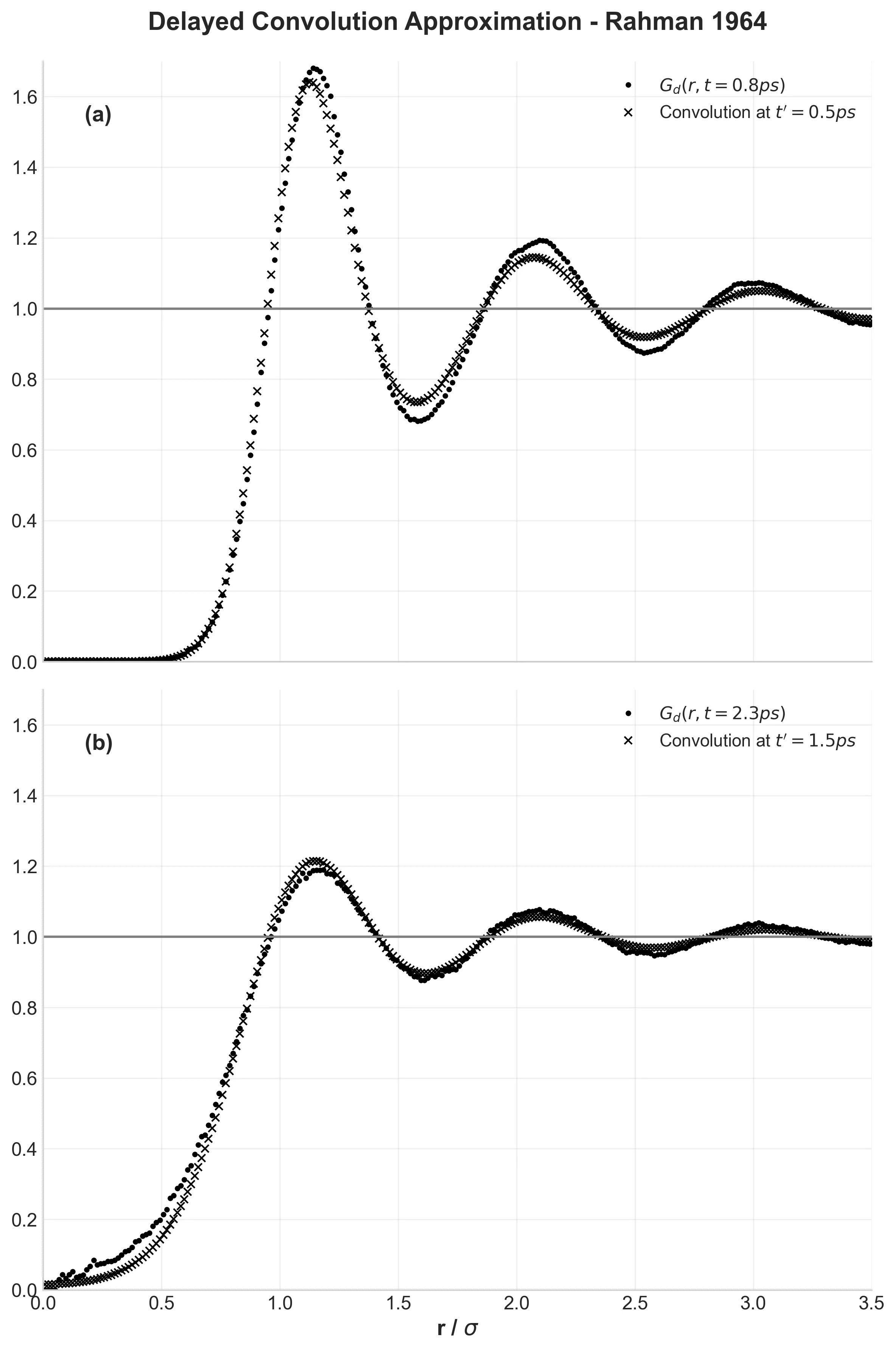
Delayed convolution approximation for distinct Van Hove function showing comparison between simulated data and theoretical model

Correlations in the Motion of Atoms in Liquid Argon

This work validated classical Molecular Dynamics for simulating liquids, revealing the ‘cage effect’ in velocity autocorrelation and establishing predictor-corrector integration algorithms for N-body problems.

Molecular Simulation
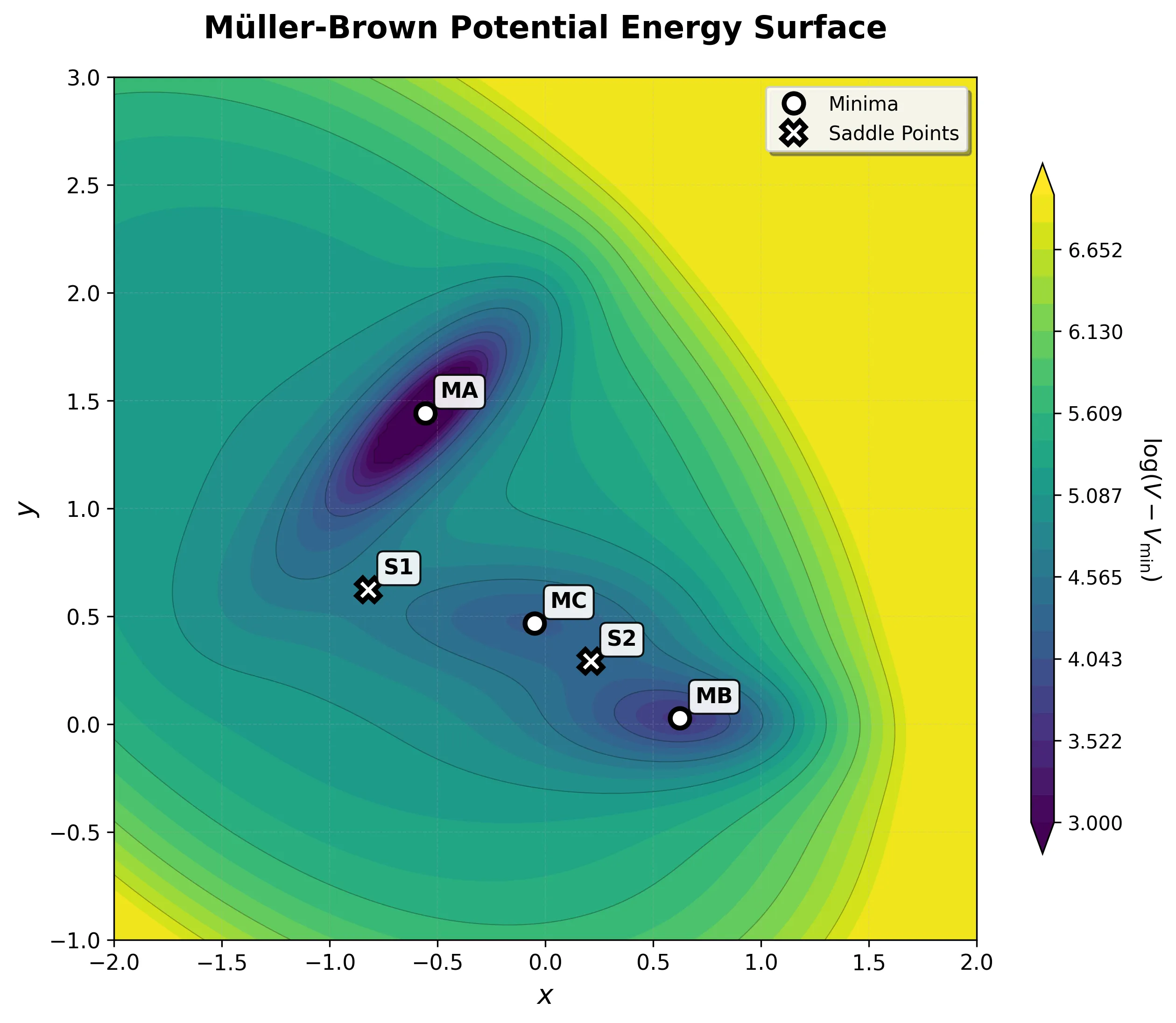
Müller-Brown Potential Energy Surface showing the three minima and two saddle points

The Müller-Brown Potential: A 2D Benchmark Surface

A two-dimensional analytical potential energy surface introduced in 1979 for testing optimization algorithms. It features three minima and curved transition pathways that evaluate an algorithm’s ability to navigate non-trivial topologies.

Molecular Simulation
Müller-Brown Potential Energy Surface showing the three minima and two saddle points

Implementing the Müller-Brown Potential in PyTorch

Step-by-step implementation of the classic Müller-Brown potential in PyTorch, with performance comparisons between analytical and automatic differentiation approaches for molecular dynamics and machine learning applications.

Molecular Simulation
Muller-Brown potential energy surface

Müller-Brown Basin MA: Langevin Dynamics Simulation

Observe confined particle motion in the deep reactant well of the Müller-Brown potential. This simulation demonstrates thermal motion within a stable energy minimum at -146.70 kJ/mol.

Molecular Simulation
Muller-Brown potential energy surface

Müller-Brown Basin MB: Langevin Dynamics Simulation

Watch particle dynamics in the product minimum of the Müller-Brown potential. This simulation shows intermediate thermal motion behavior at -108.17 kJ/mol energy level.

Molecular Simulation
Müller-Brown Potential Energy Surface showing the three minima and two saddle points

Müller-Brown Potential: A PyTorch ML Testbed

A high-performance, GPU-accelerated PyTorch testbed for ML-MD algorithms featuring JIT-compiled analytical Jacobian force kernels achieving 3-10x speedup over autograd, robust Langevin dynamics with Velocity-Verlet integration, and modular architecture designed as ground-truth validation for novel machine learning approaches in molecular dynamics.