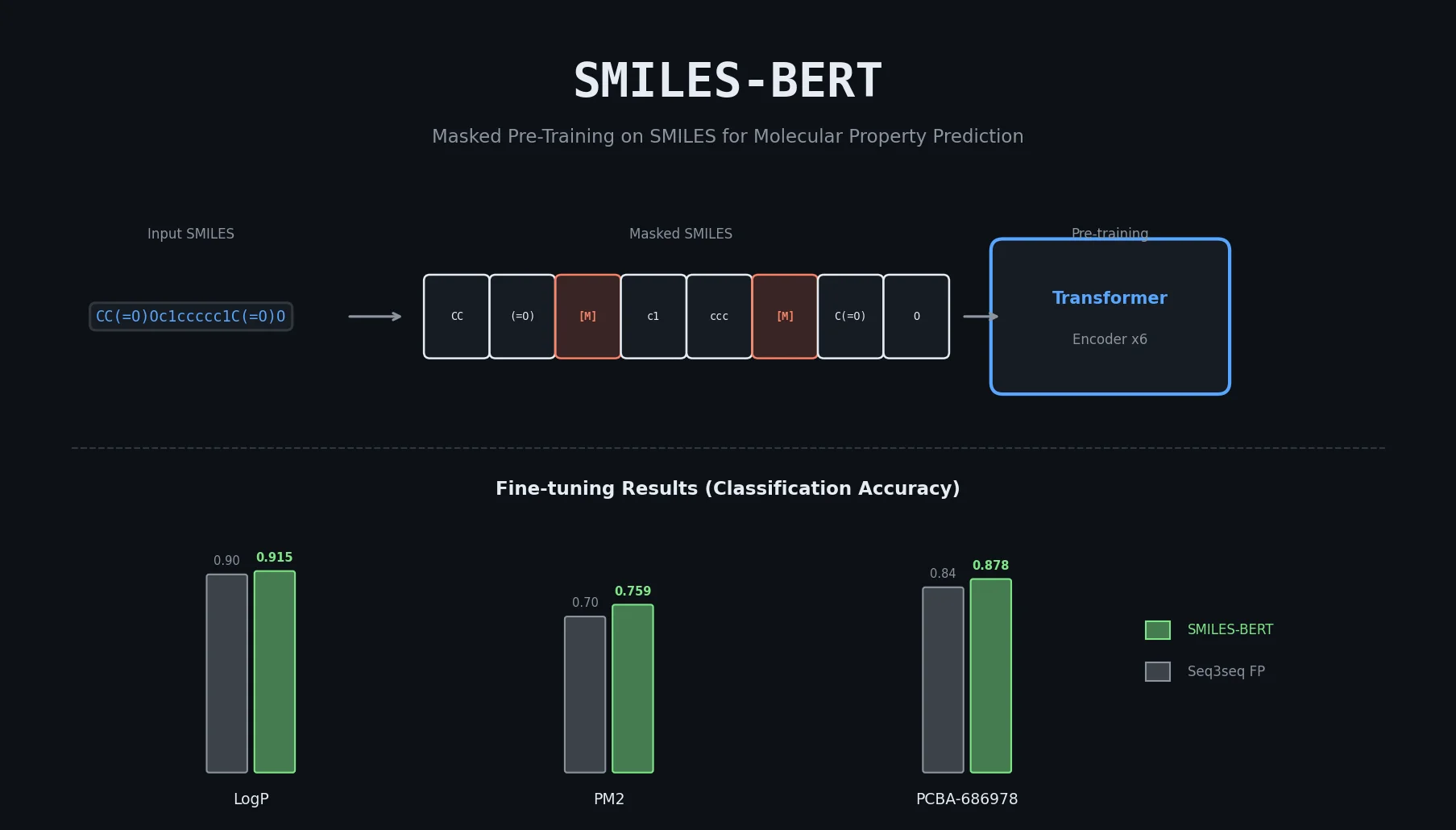
SMILES-BERT: BERT-Style Pre-Training for Molecules
SMILES-BERT pre-trains a Transformer encoder on 18M+ SMILES from ZINC using a masked recovery task, then fine-tunes for molecular property prediction, outperforming prior methods on three datasets.
SMILES-BERT pre-trains a Transformer encoder on 18M+ SMILES from ZINC using a masked recovery task, then fine-tunes for molecular property prediction, outperforming prior methods on three datasets.
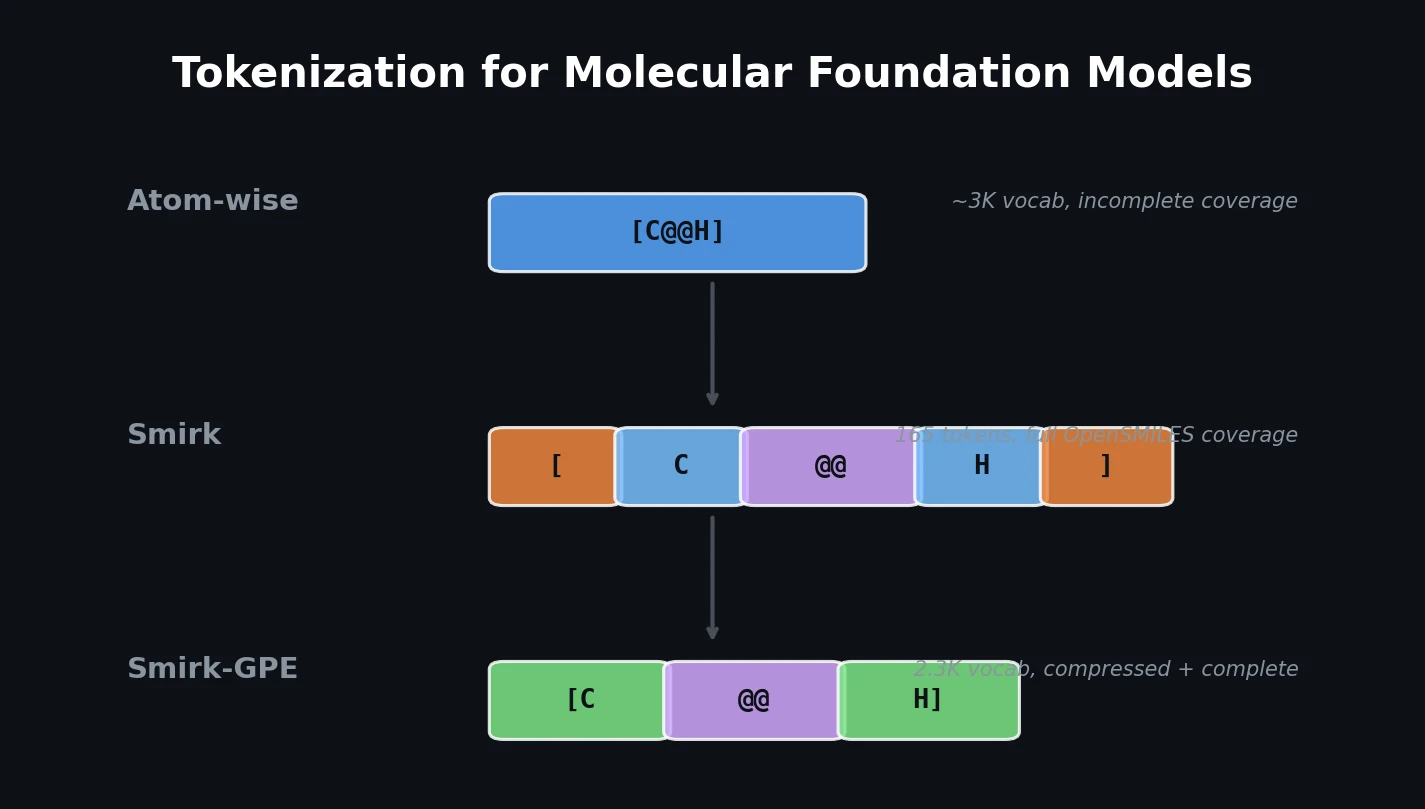
Introduces Smirk and Smirk-GPE tokenizers that fully cover the OpenSMILES specification, proposes n-gram language models as low-cost proxies for evaluating tokenizer quality, and benchmarks 34 tokenizers across intrinsic and extrinsic metrics.
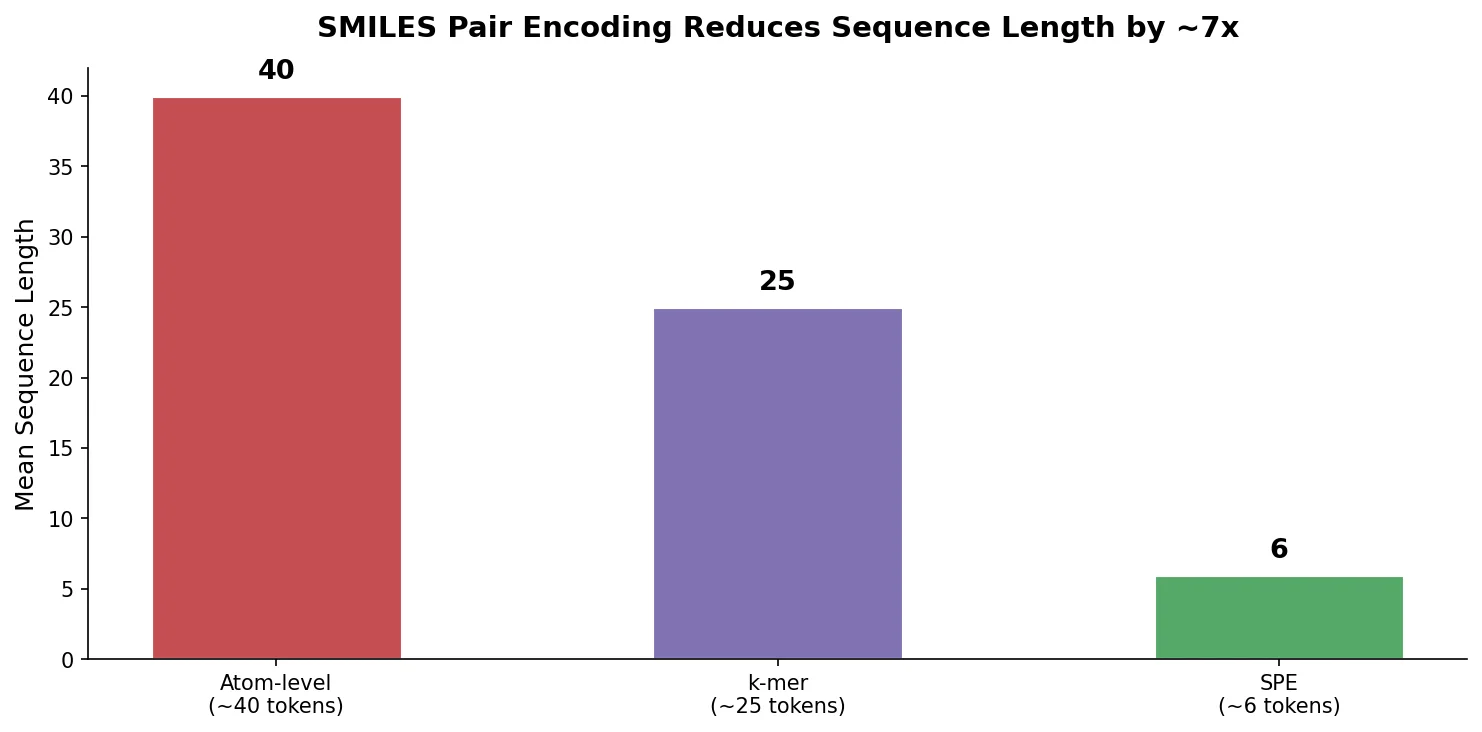
Introduces SMILES Pair Encoding (SPE), a data-driven tokenization algorithm that learns high-frequency SMILES substrings from ChEMBL to produce shorter, chemically interpretable token sequences for deep learning.
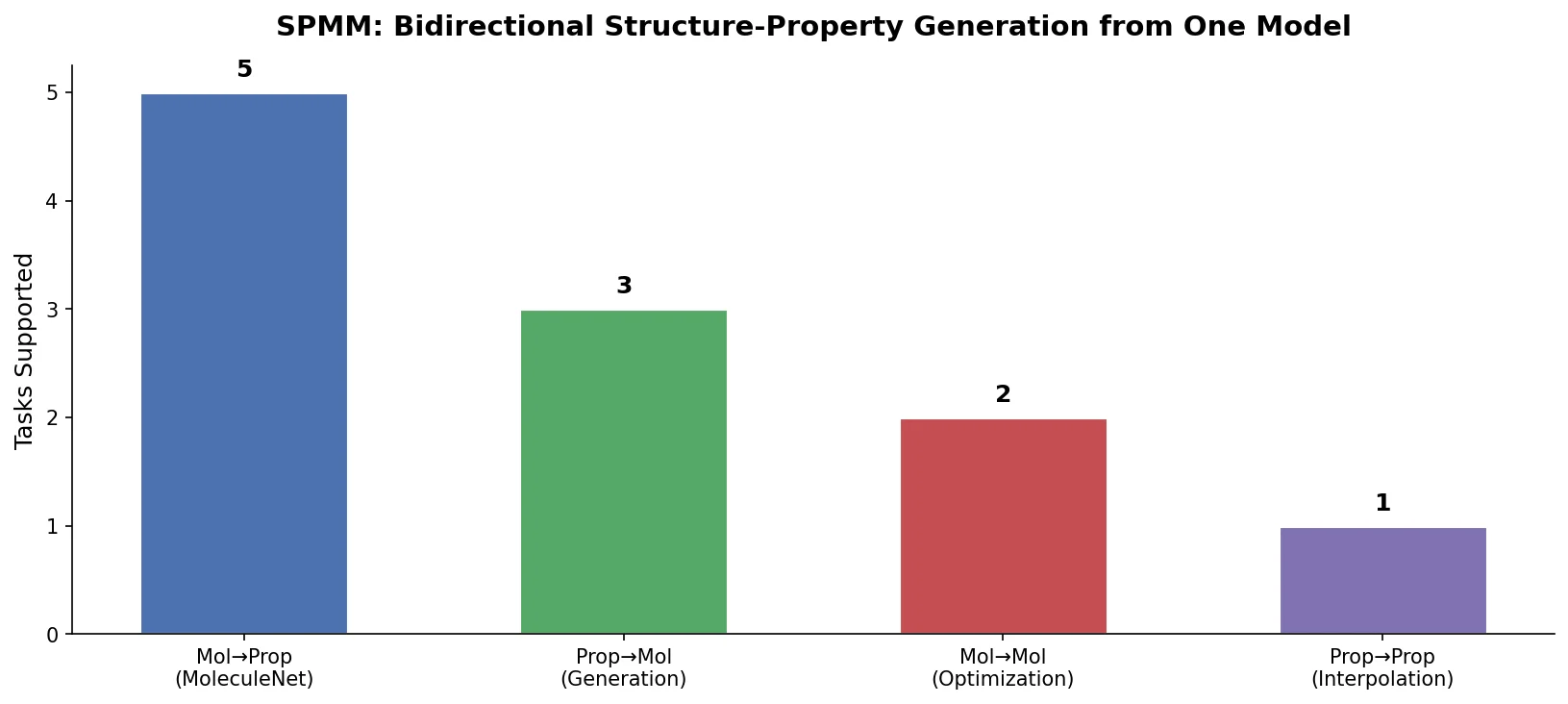
SPMM pre-trains a dual-stream transformer on SMILES and 53 molecular property vectors using contrastive learning and cross-attention, enabling bidirectional structure-property generation, property prediction, and reaction prediction through a single model.
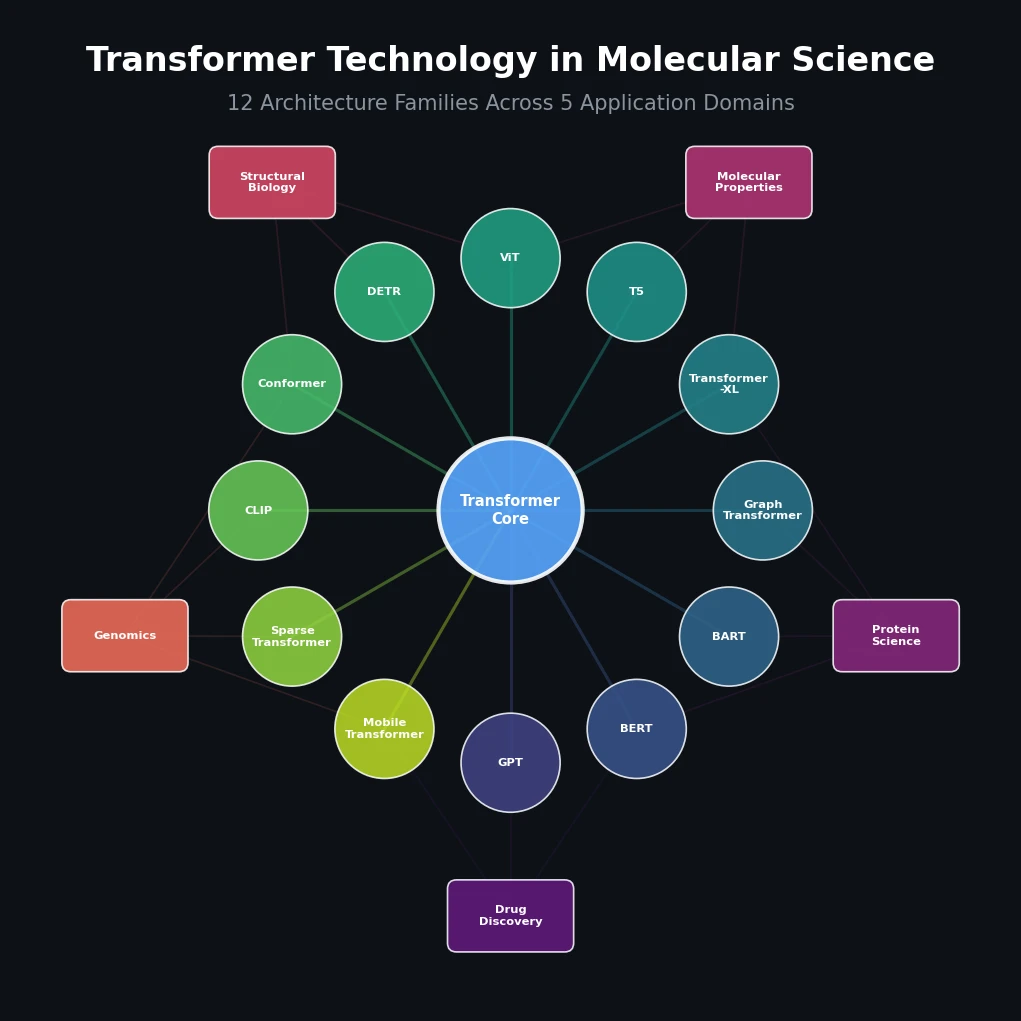
Jiang et al. survey 12 families of transformer architectures in molecular science, covering GPT, BERT, BART, graph transformers, Transformer-XL, T5, ViT, DETR, Conformer, CLIP, sparse transformers, and mobile/efficient variants, with detailed algorithmic descriptions and molecular applications.
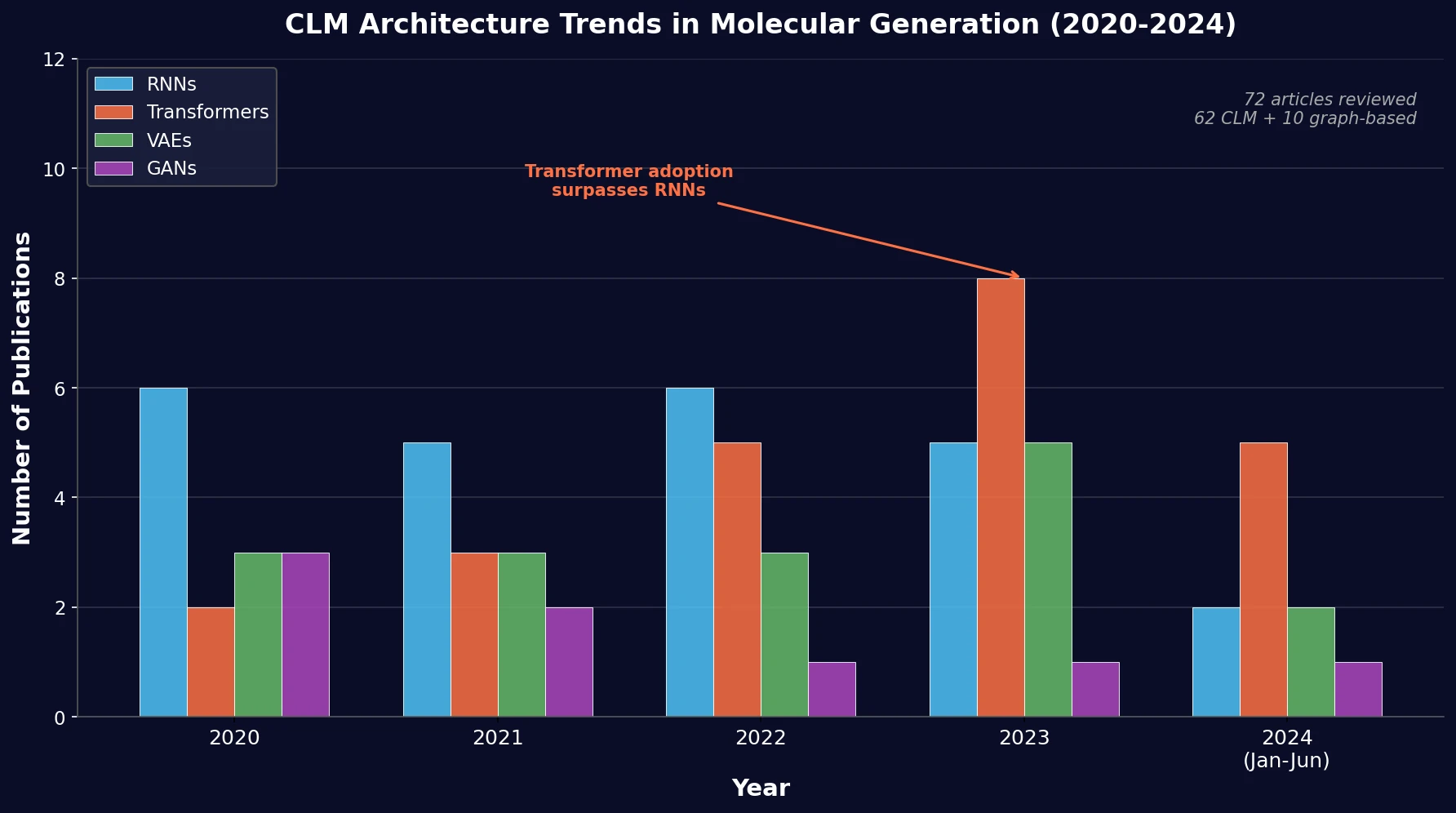
PRISMA-based systematic review of 72 papers on chemical language models for molecular generation, comparing architectures and biased methods using MOSES metrics.
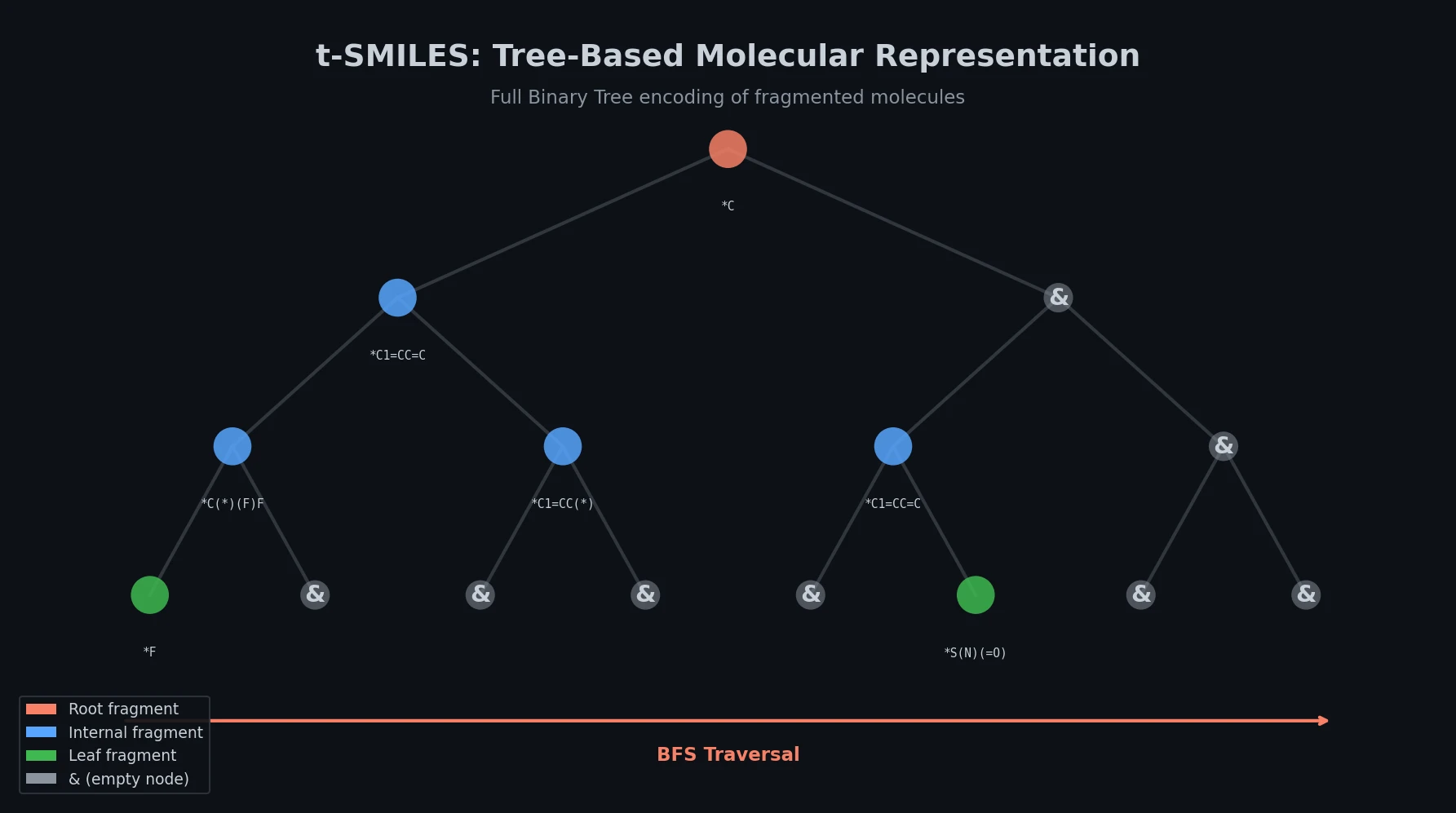
t-SMILES represents molecules by fragmenting them into substructures, building full binary trees, and traversing them breadth-first to produce SMILES-type strings that reduce nesting depth and outperform SMILES, DeepSMILES, and SELFIES on generation benchmarks.
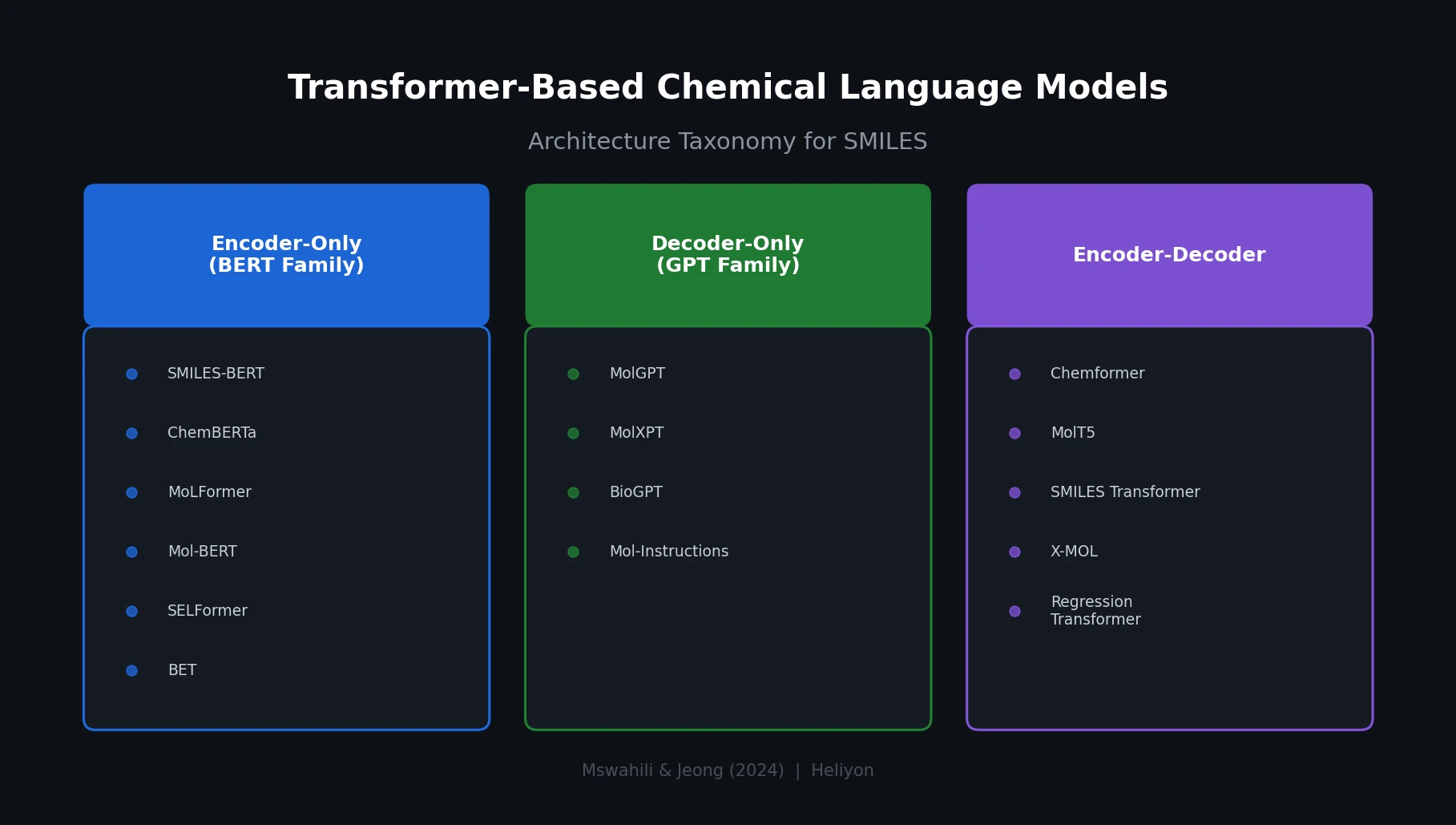
A comprehensive review of transformer-based chemical language models operating on SMILES, categorizing encoder-only (BERT variants), decoder-only (GPT variants), and encoder-decoder models with analysis of tokenization strategies, pre-training approaches, and future directions.
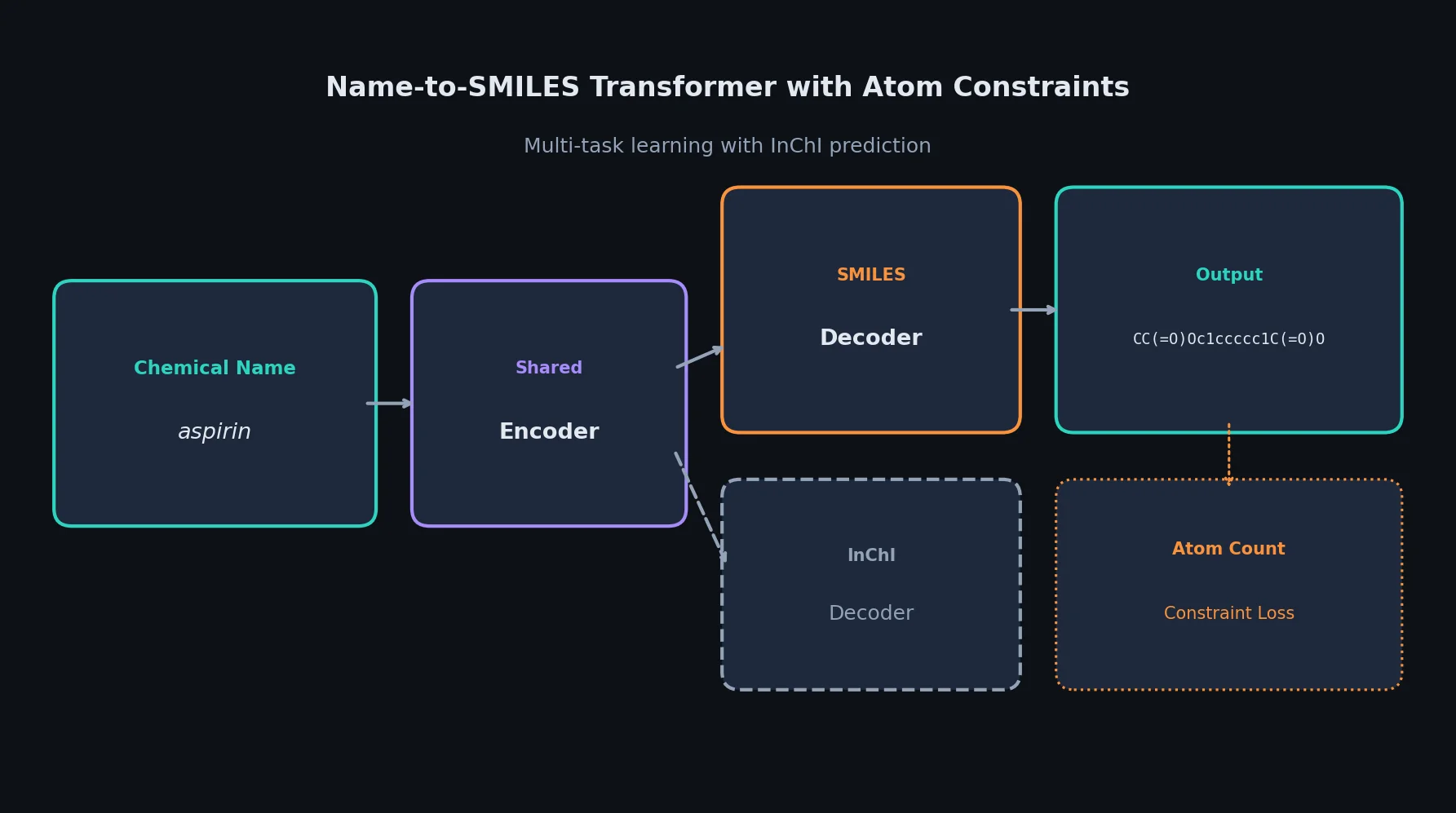
This paper applies a Transformer sequence-to-sequence model to predict SMILES strings from chemical compound names (Synonyms). Two enhancements, an atom-count constraint loss and SMILES/InChI multi-task learning, improve F-measure over rule-based and vanilla Transformer baselines.
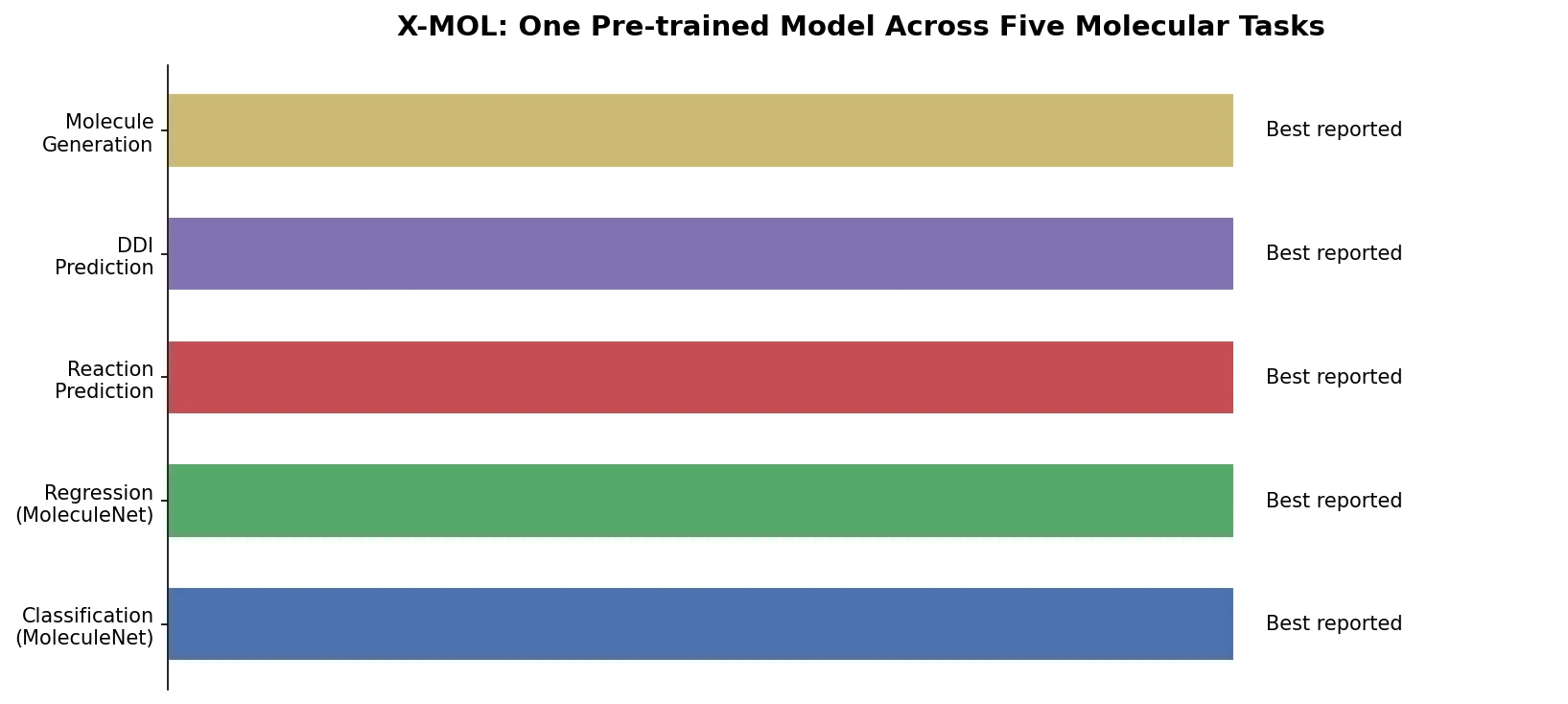
X-MOL applies large-scale Transformer pre-training on 1.1 billion molecules with a generative SMILES-to-SMILES strategy, then fine-tunes for five molecular analysis tasks including property prediction, reaction analysis, and de novo generation.
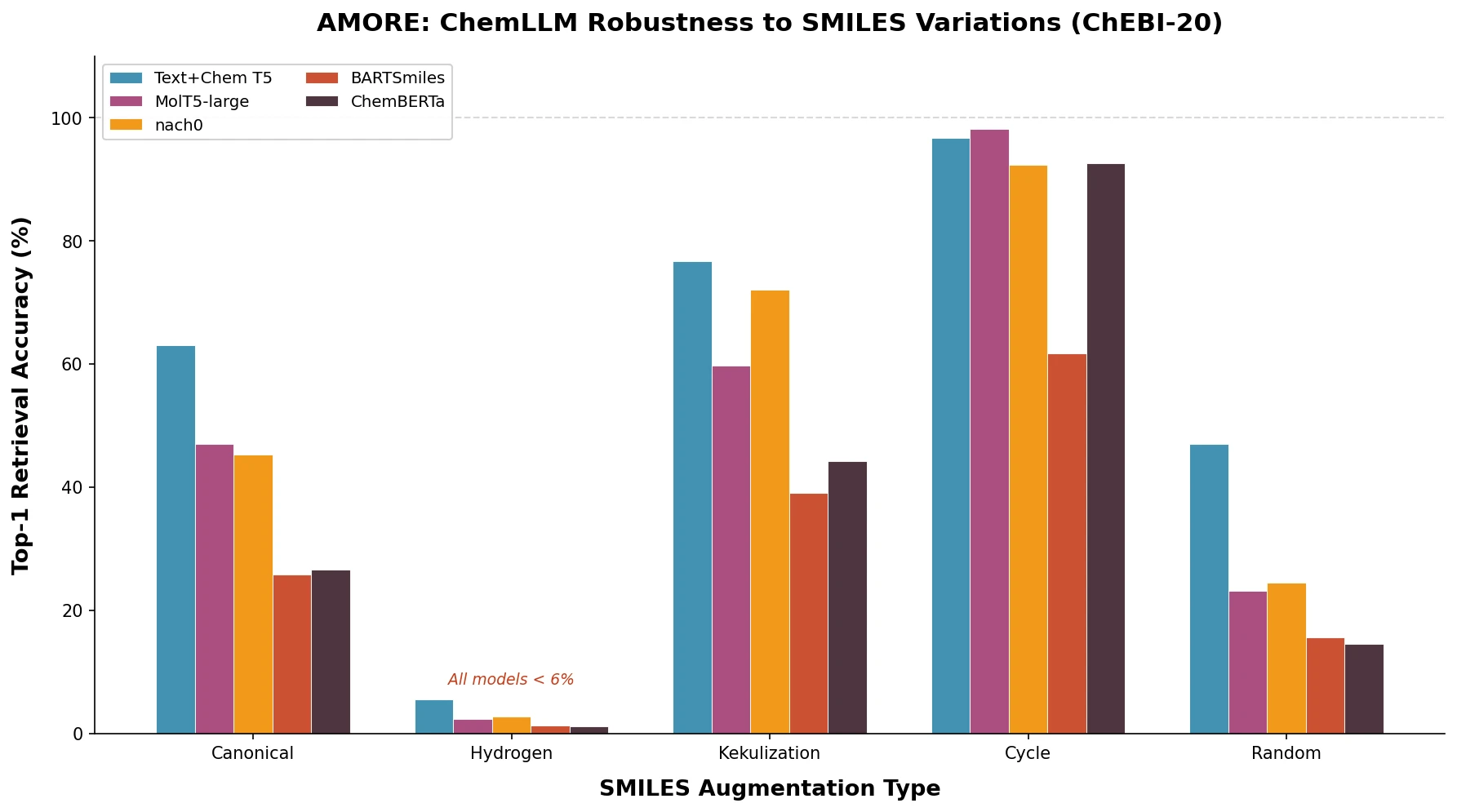
Introduces AMORE, an embedding-based retrieval framework that evaluates whether chemical language models can recognize the same molecule across different SMILES representations. Results show current models are not robust to identity-preserving augmentations.
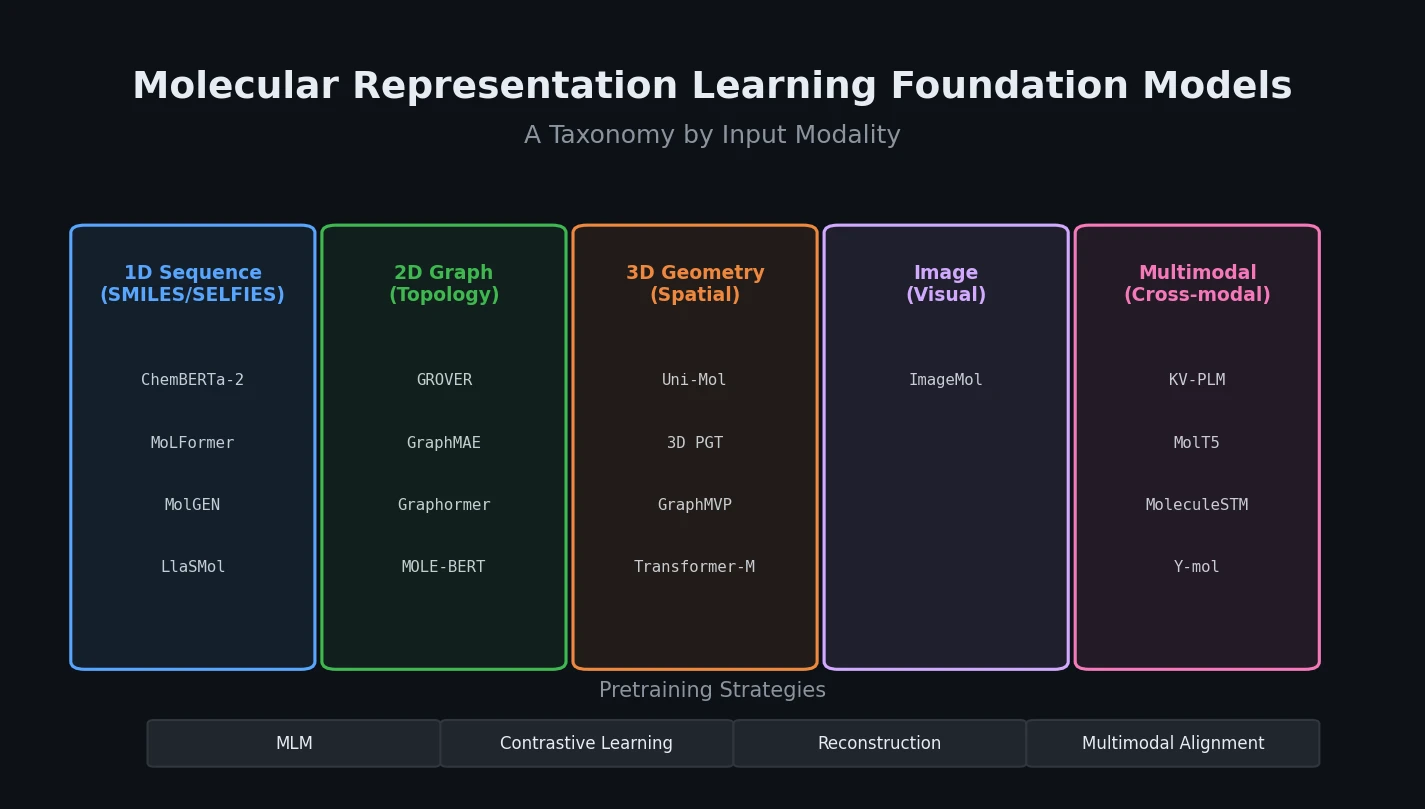
A comprehensive survey classifying molecular representation learning foundation models by input modality (sequence, graph, 3D, image, multimodal) and analyzing four pretraining paradigms for drug discovery tasks.