Molecular Generation
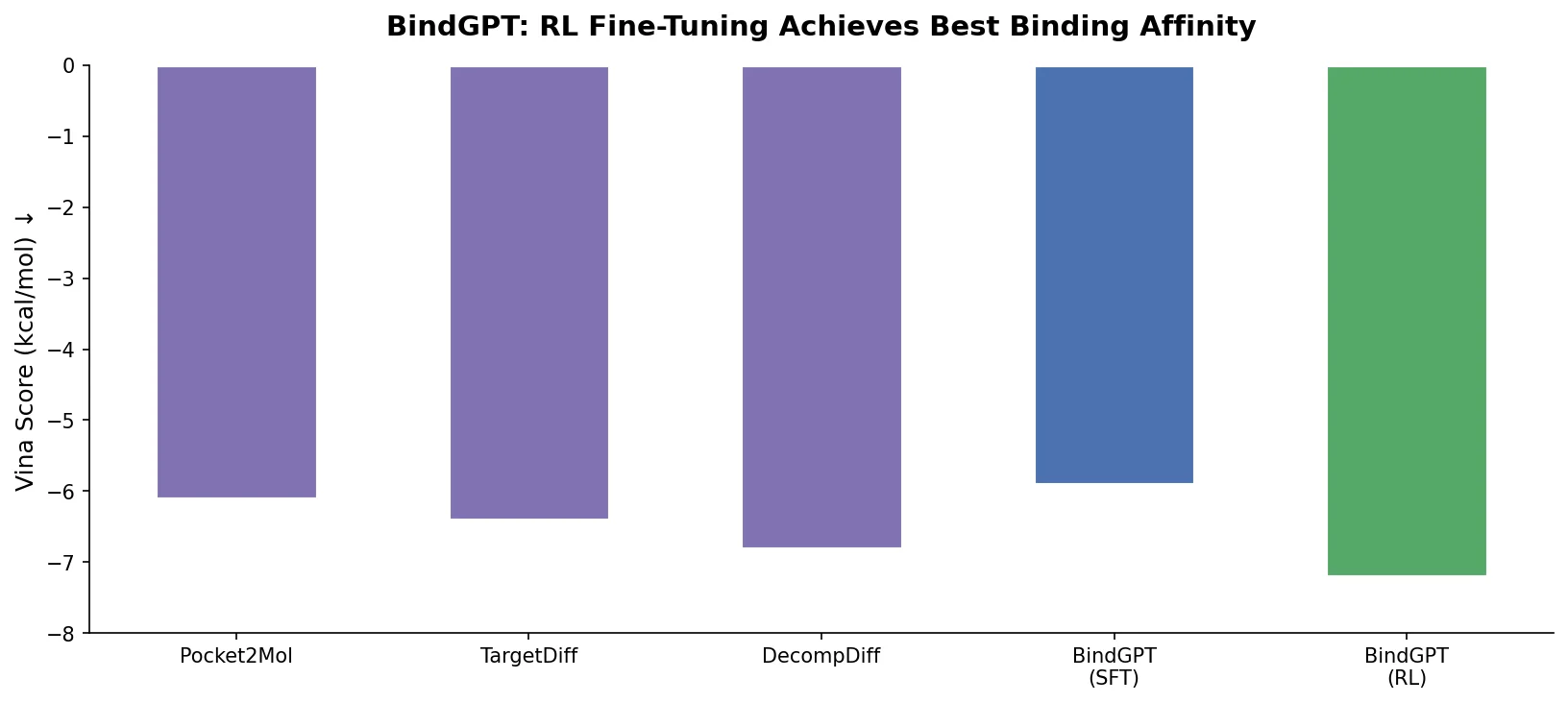
Bar chart showing BindGPT RL achieves best Vina binding scores compared to baselines

BindGPT: GPT for 3D Molecular Design and Docking

BindGPT formulates 3D molecular design as autoregressive text generation over combined SMILES and XYZ tokens, using large-scale pre-training and reinforcement learning to achieve competitive pocket-conditioned molecule generation.
Molecular Generation
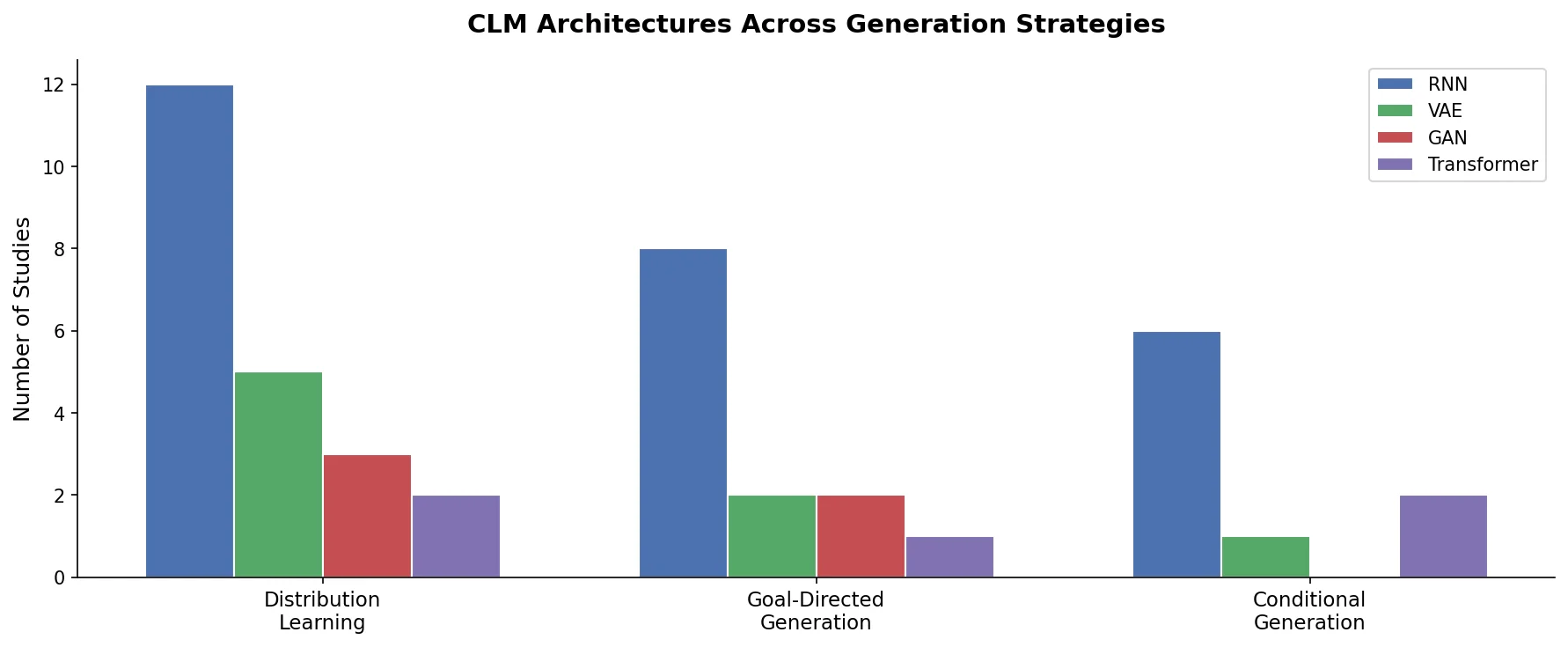
Grouped bar chart showing CLM architectures (RNN, VAE, GAN, Transformer) across generation strategies

Chemical Language Models for De Novo Drug Design Review

A minireview of chemical language models for de novo molecule design, covering SMILES and SELFIES representations, RNN and Transformer architectures, distribution learning, goal-directed and conditional generation, and prospective experimental validation.

Molecular Generation
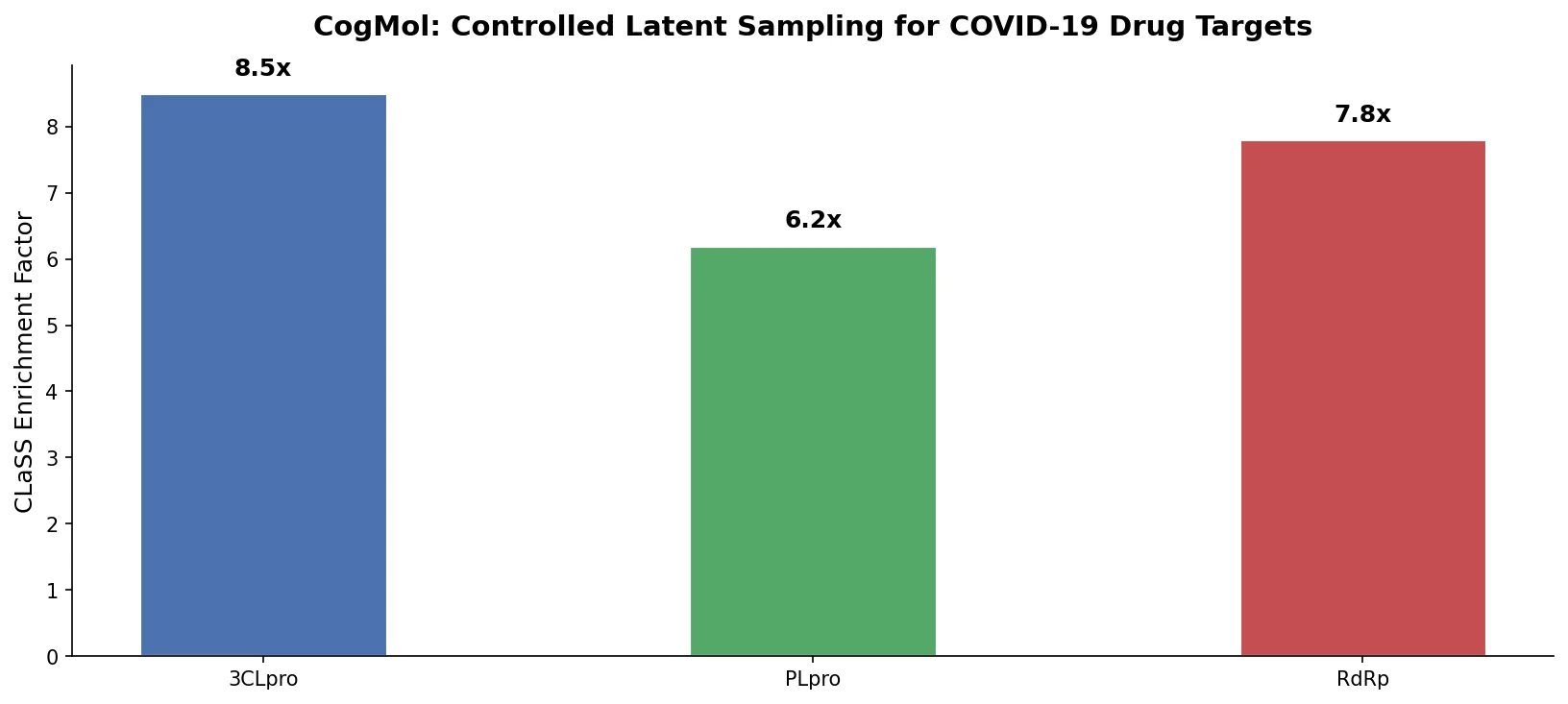
Bar chart showing CogMol CLaSS enrichment factors across three COVID-19 drug targets

CogMol: Controlled Molecule Generation for COVID-19

CogMol uses a SMILES VAE and multi-attribute controlled sampling (CLaSS) to generate novel, target-specific drug molecules for unseen SARS-CoV-2 proteins without model retraining.

Molecular Generation
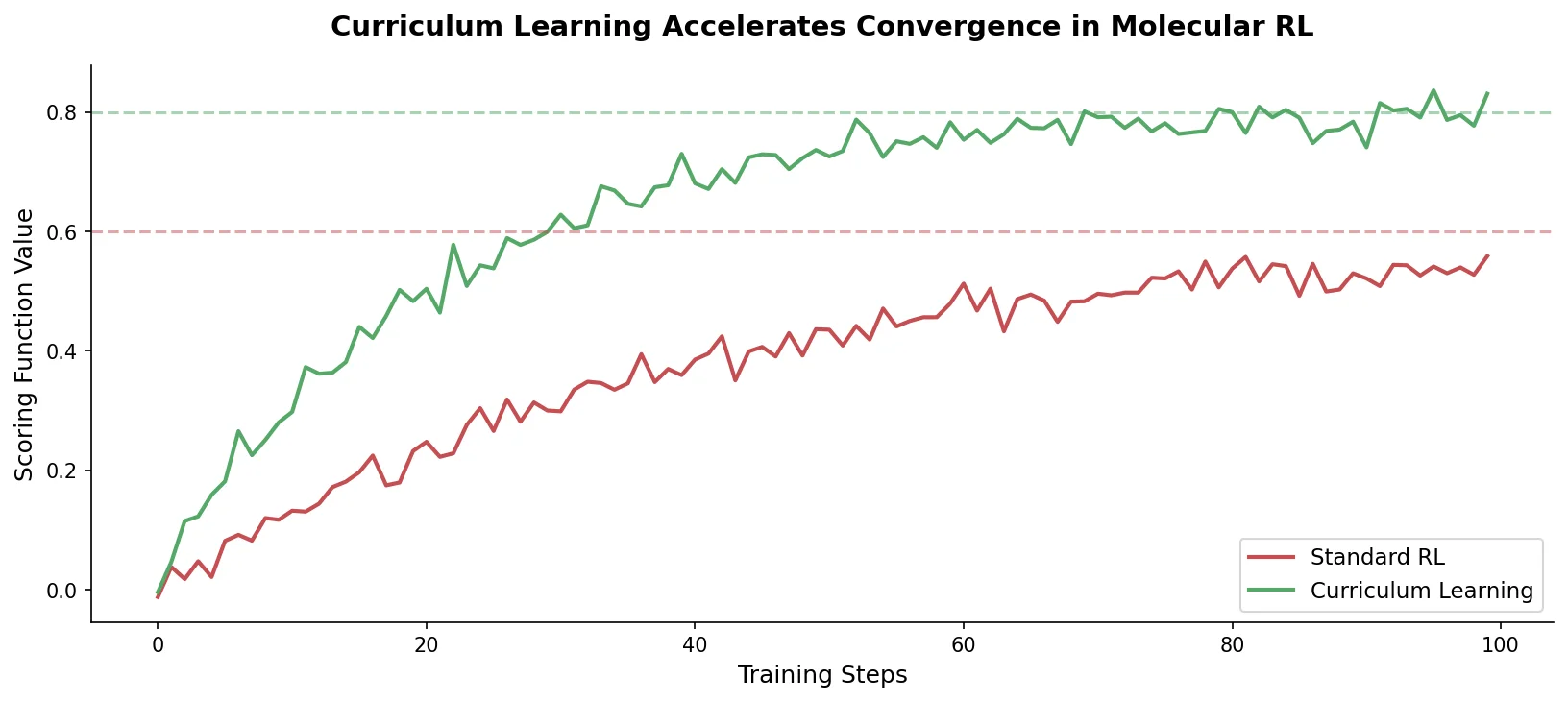
Line chart showing curriculum learning converges faster than standard RL for molecular generation

Curriculum Learning for De Novo Drug Design (REINVENT)

Introduces curriculum learning to the REINVENT de novo design platform, decomposing complex drug design objectives into simpler sequential tasks that accelerate agent convergence and improve output quality over standard reinforcement learning.

Molecular Generation
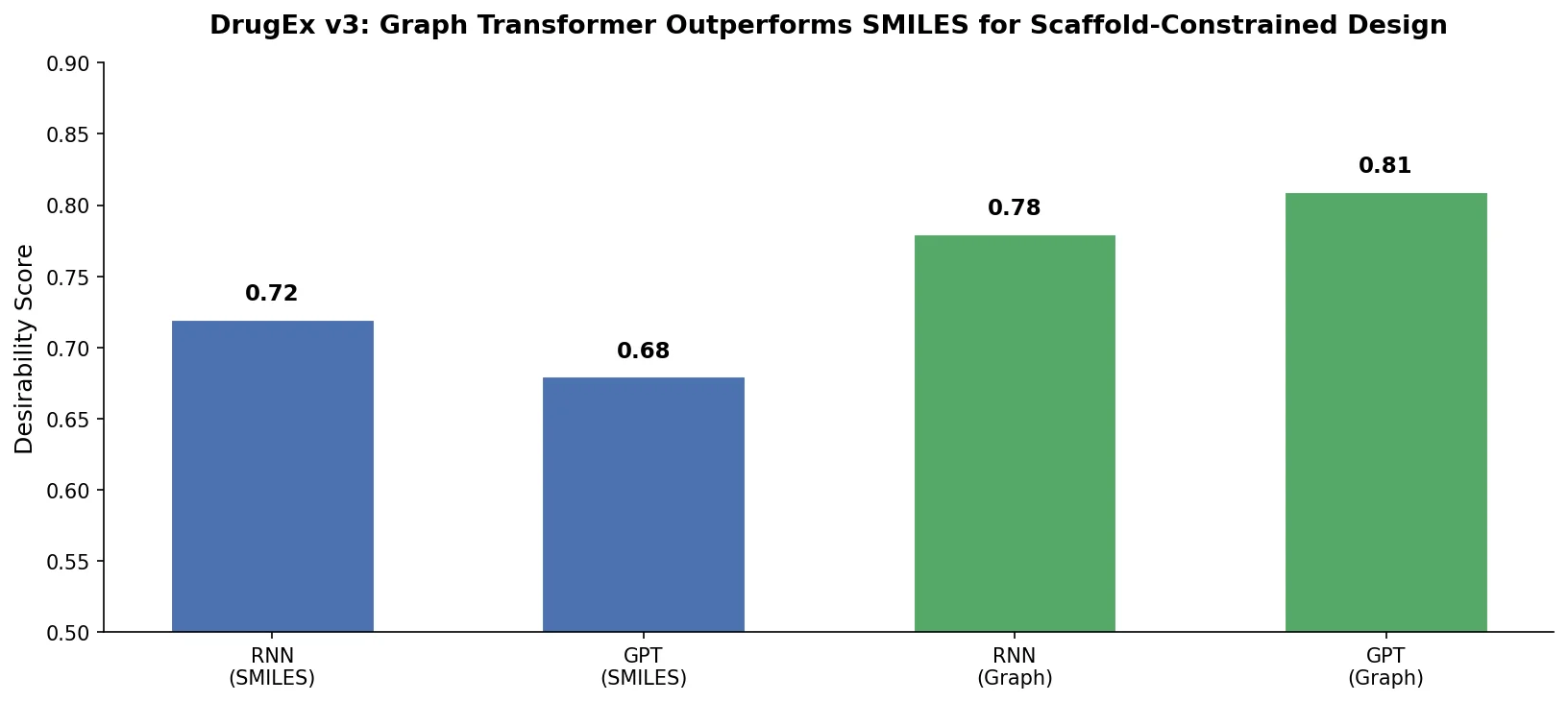
Bar chart comparing RNN and GPT architectures with SMILES and Graph representations on desirability scores

DrugEx v3: Scaffold-Constrained Graph Transformer

DrugEx v3 extends scaffold-constrained drug design by introducing a Graph Transformer with adjacency-matrix-based positional encoding, achieving 100% molecular validity and high predicted affinity for adenosine A2A receptor ligands.

Molecular Generation
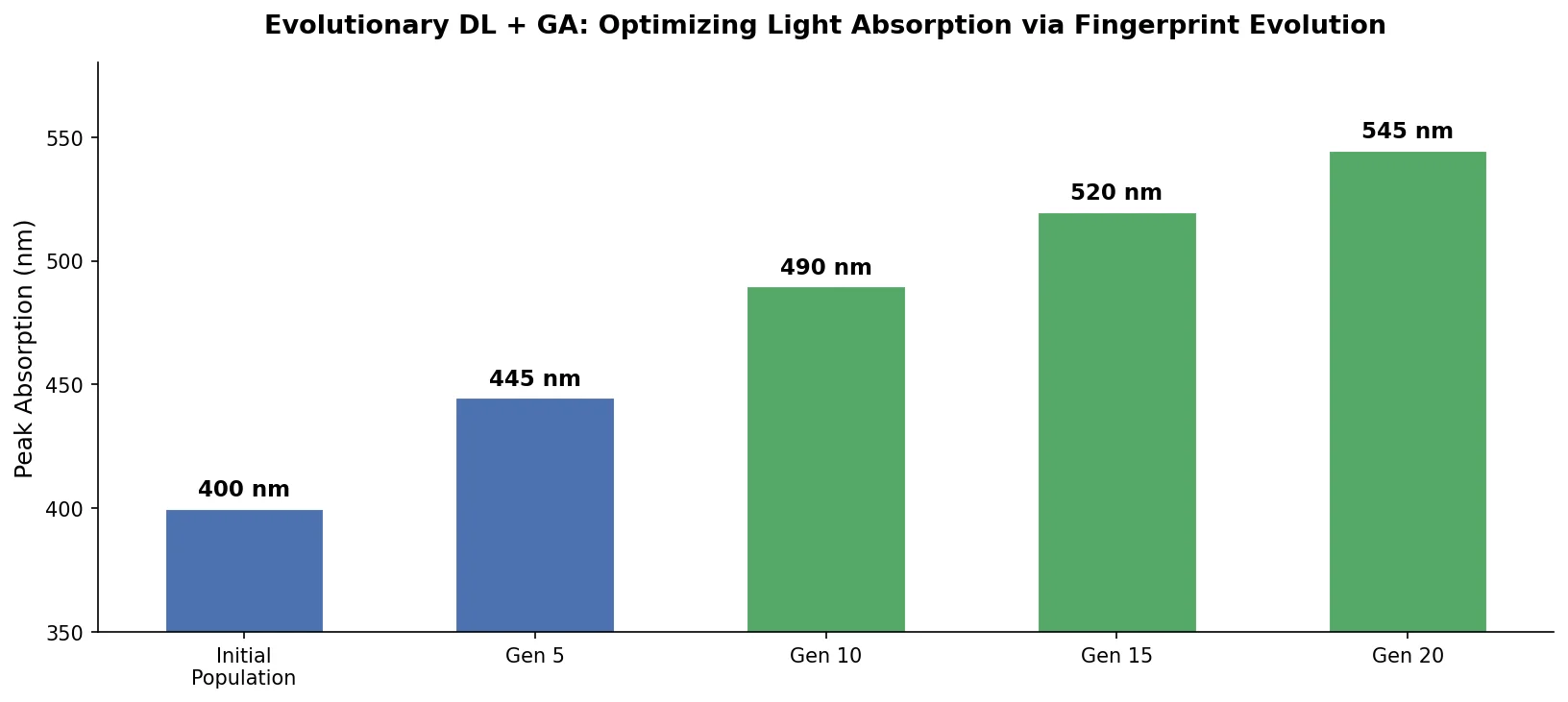
Bar chart showing peak absorption wavelength increasing across evolutionary generations

Evolutionary Molecular Design via Deep Learning + GA

An evolutionary molecular design framework that evolves ECFP fingerprint vectors using a genetic algorithm, reconstructs valid SMILES via an RNN decoder, and evaluates fitness with a DNN property predictor.

Molecular Generation
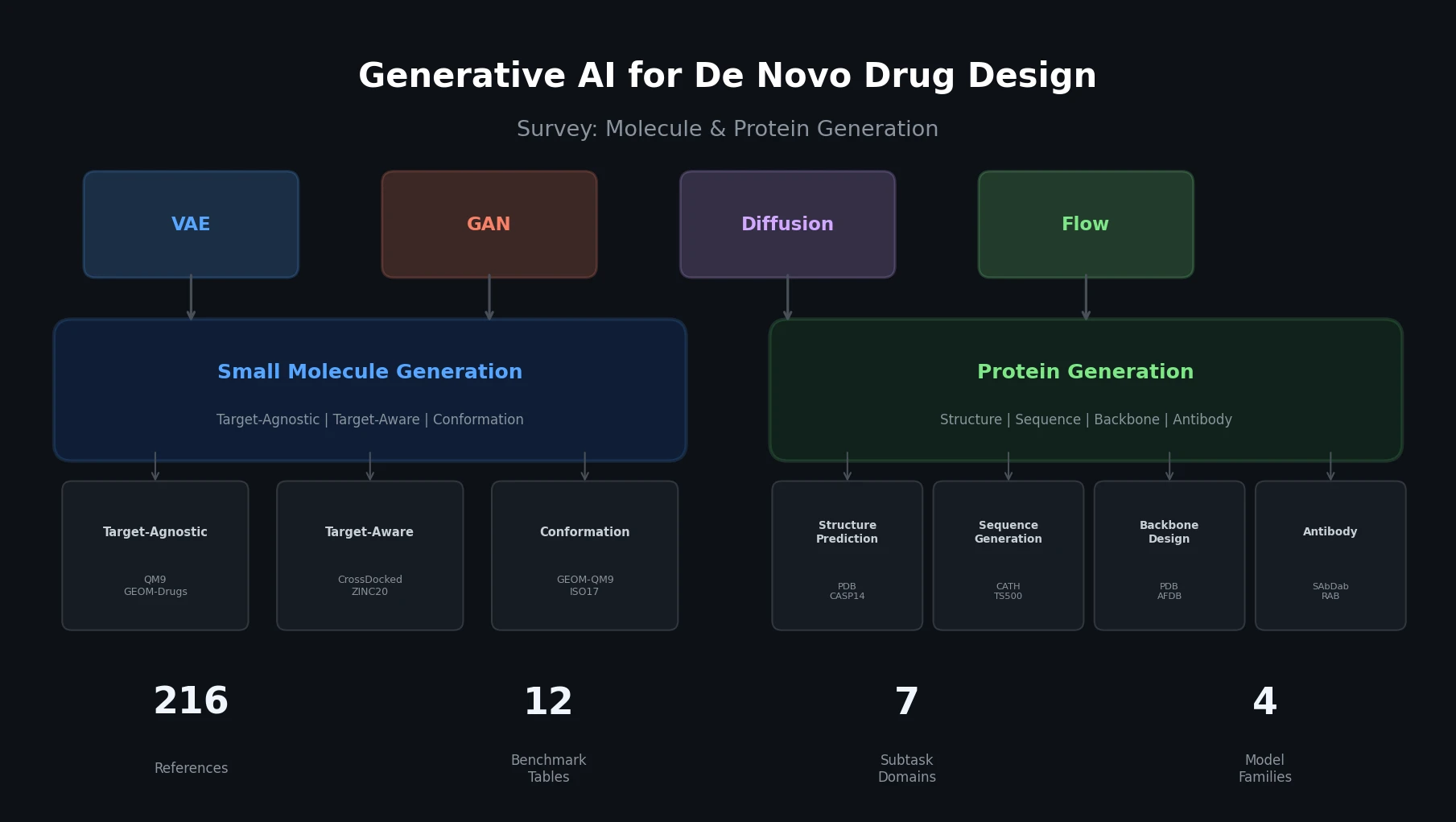
Taxonomy diagram showing four generative model families (VAE, GAN, Diffusion, Flow) connecting to small molecule generation and protein generation subtasks

Generative AI Survey for De Novo Molecule and Protein Design

This survey organizes generative AI for de novo drug design into two themes: small molecule generation (target-agnostic, target-aware, conformation) and protein generation (structure prediction, sequence generation, backbone design, antibody, peptide). It covers four generative model families (VAEs, GANs, diffusion, flow-based), catalogs key datasets and benchmarks, and provides 12 comparative benchmark tables across all subtasks.

Molecular Generation
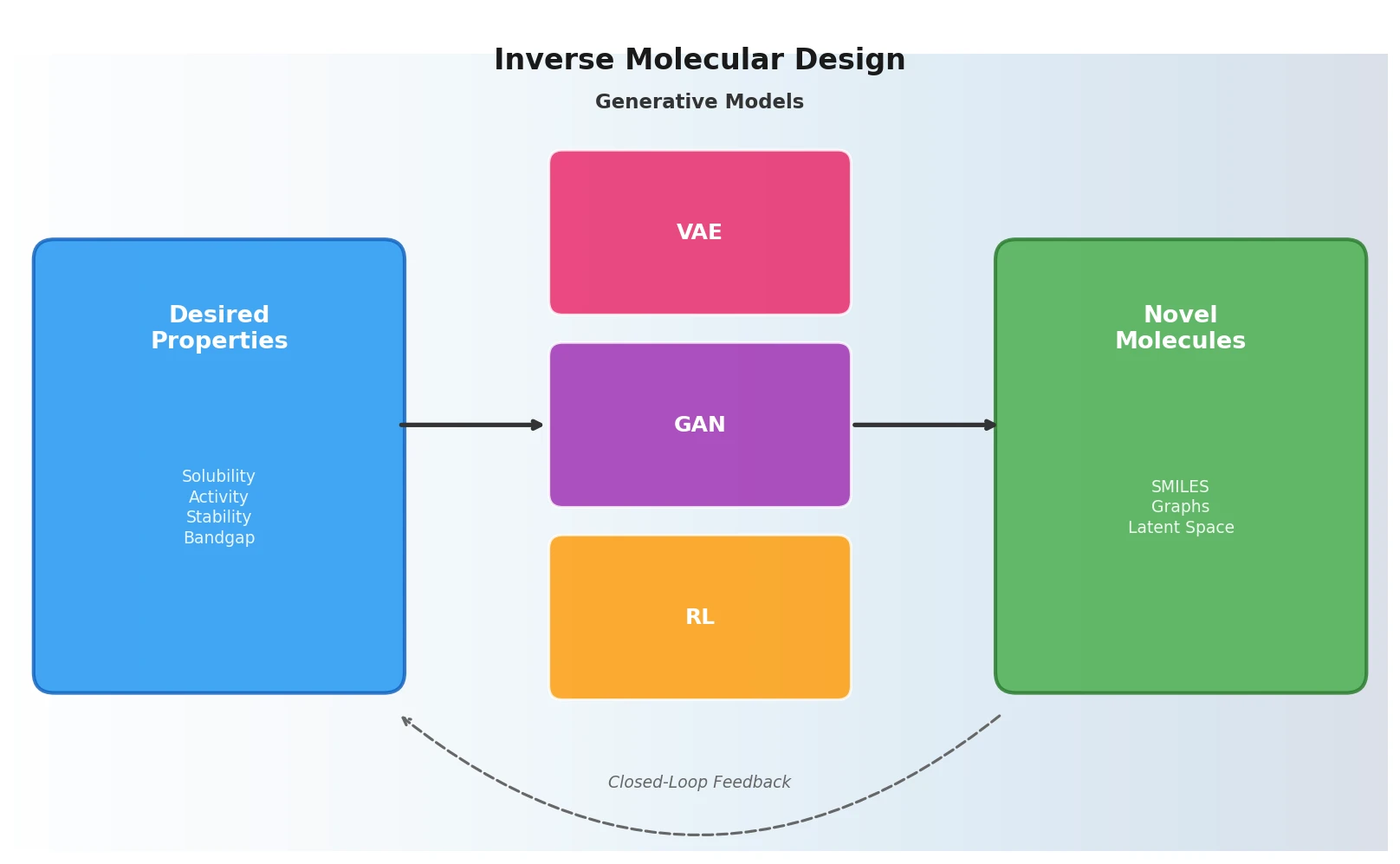
Schematic of inverse molecular design paradigm mapping desired properties to molecular structures through generative models

Inverse Molecular Design with ML Generative Models

A foundational review surveying how deep generative models (VAEs, GANs, reinforcement learning) enable inverse molecular design, covering molecular representations, chemical space navigation, and applications from drug discovery to materials engineering.

Molecular Generation
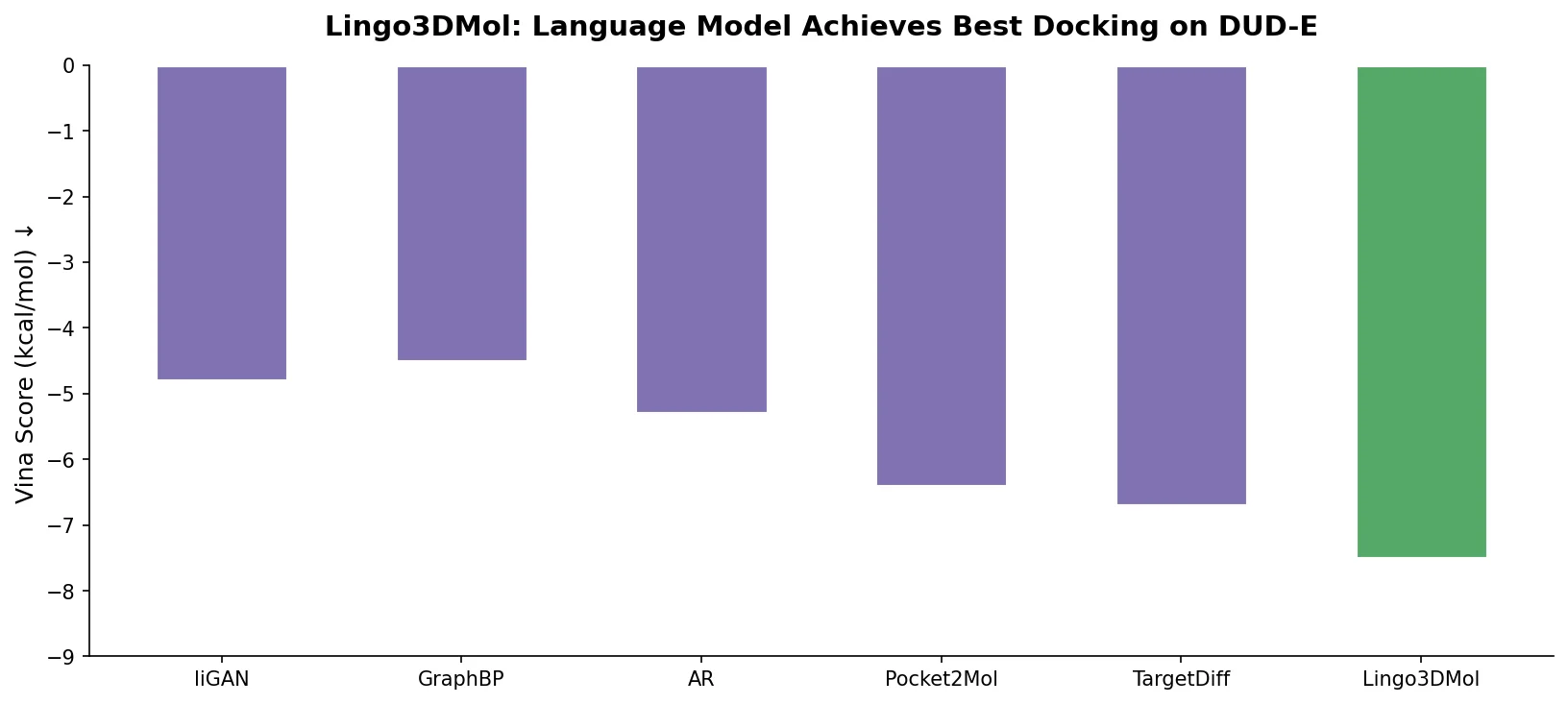
Bar chart showing Lingo3DMol achieves best Vina docking scores on DUD-E compared to five baselines

Lingo3DMol: Language Model for 3D Molecule Design

Lingo3DMol introduces FSMILES, a fragment-based SMILES representation with local and global coordinates, to generate drug-like 3D molecules in protein pockets via a transformer language model.

Molecular Generation
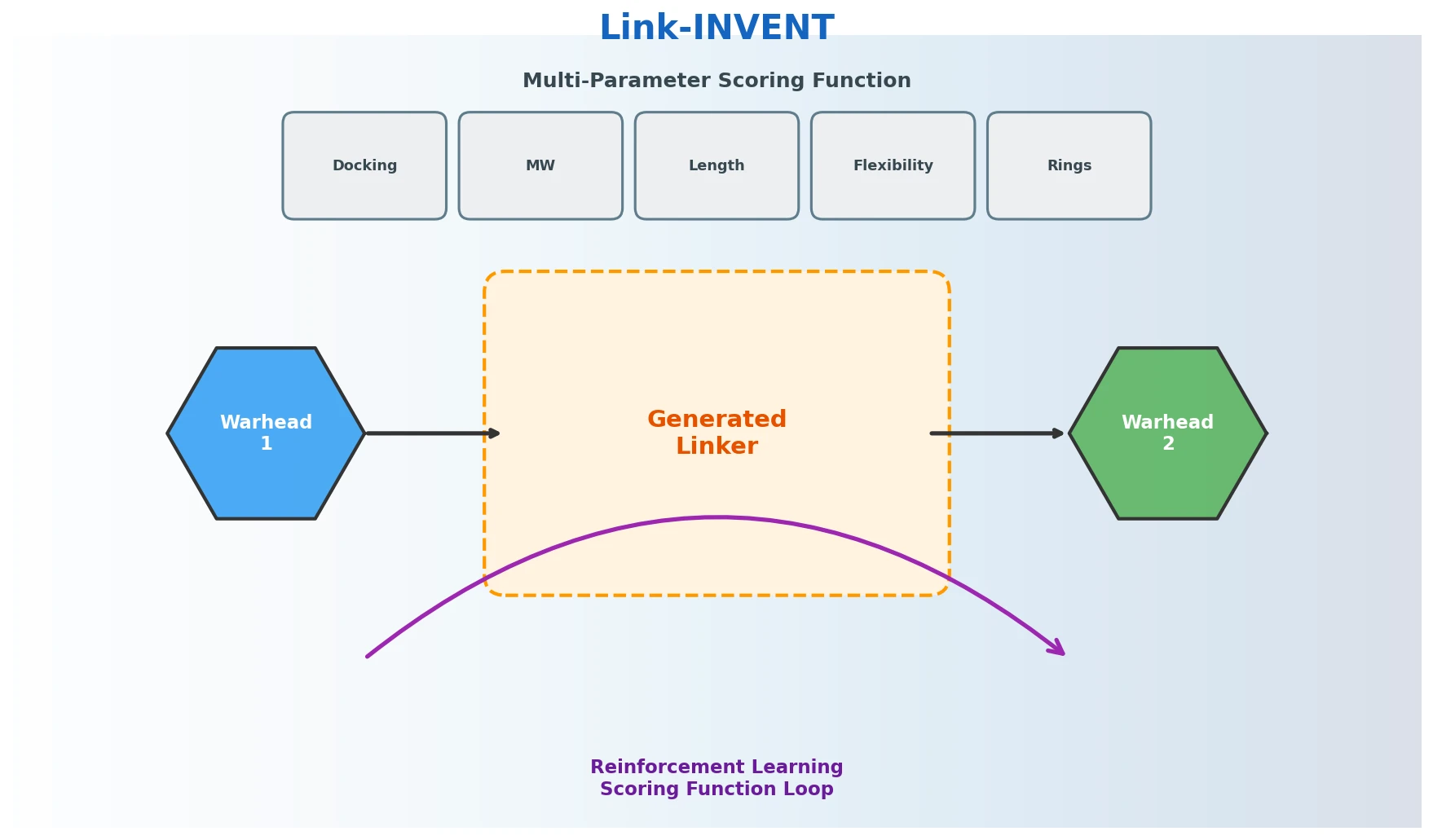
Schematic of Link-INVENT architecture showing encoder-decoder RNN with reinforcement learning scoring loop

Link-INVENT: RL-Driven Molecular Linker Generation

Link-INVENT is an RNN-based generative model for molecular linker design that uses reinforcement learning with a flexible scoring function, demonstrated on fragment linking, scaffold hopping, and PROTAC design.

Molecular Generation
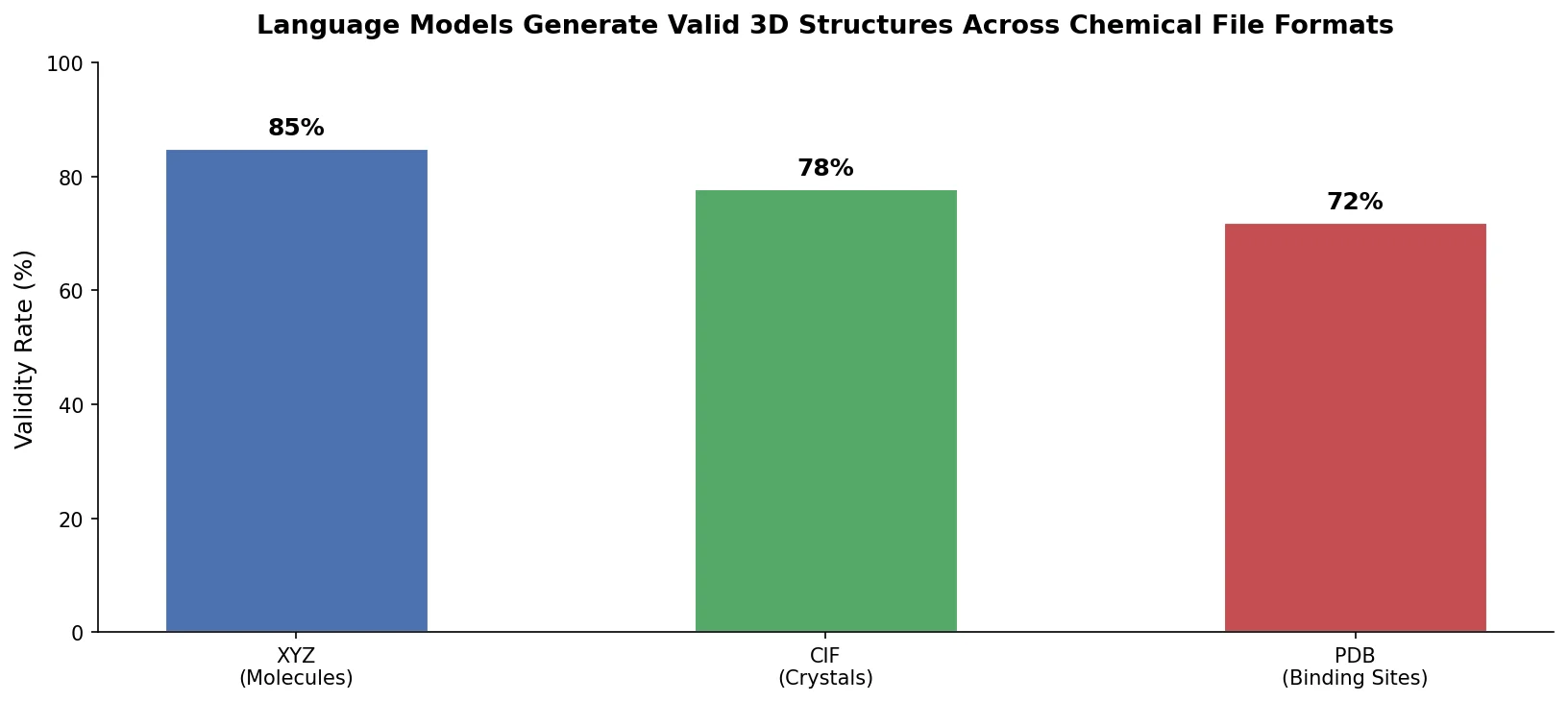
Bar chart showing language model validity rates across XYZ, CIF, and PDB 3D chemical file formats

LMs Generate 3D Molecules from XYZ, CIF, PDB Files

Demonstrates that standard transformer language models, trained with next-token prediction on sequences from XYZ, CIF, and PDB files, can generate valid 3D molecules, crystals, and protein binding sites competitive with domain-specific 3D generative models.

Molecular Generation
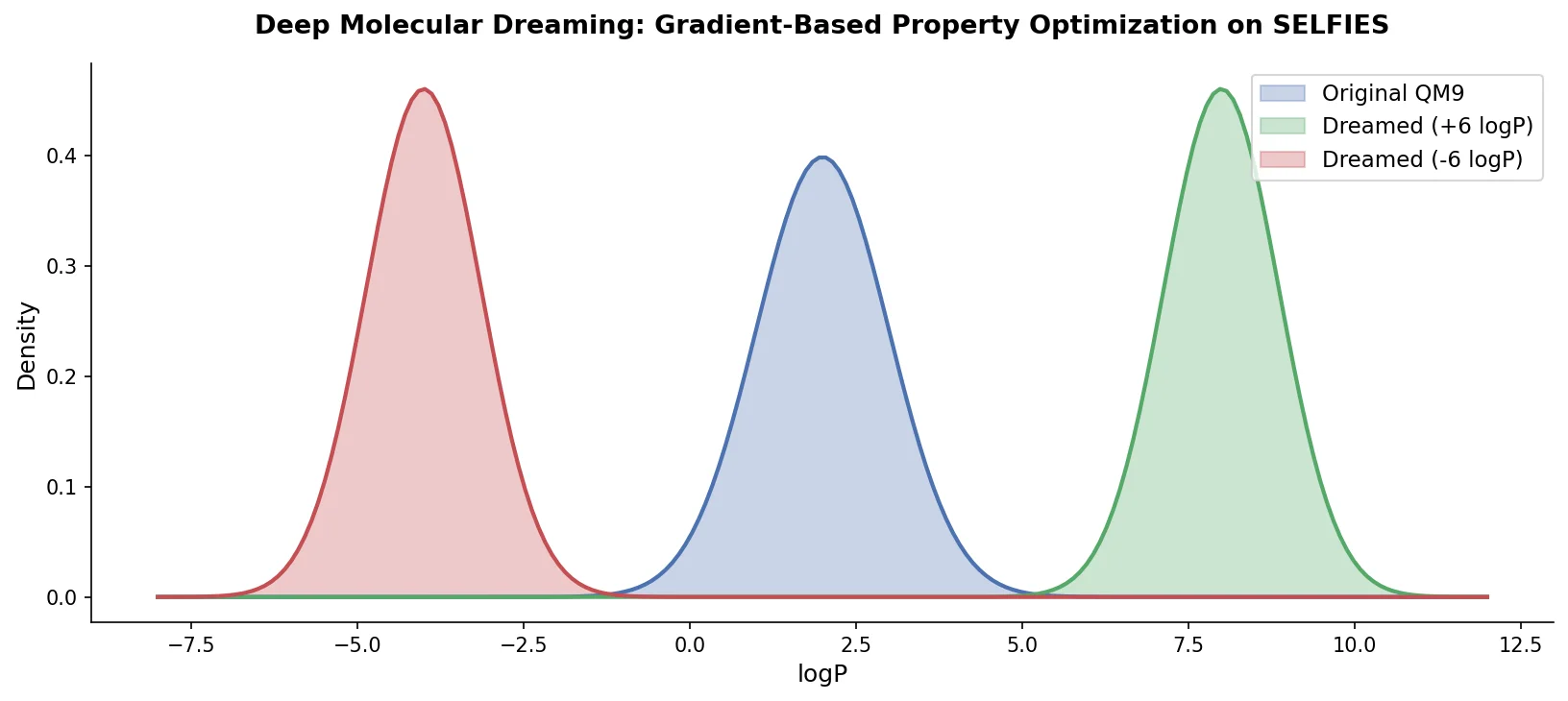
Distribution plot showing original QM9 logP shifted toward +6 and -6 targets via gradient-based dreaming

PASITHEA: Gradient-Based Molecular Design via Dreaming

PASITHEA adapts deep dreaming from computer vision to molecular design, directly optimizing SELFIES-encoded molecules for target chemical properties via gradient-based inversion of a trained regression network.